MUSIC and DANCE INSTEAD OF PILLS


mq1tTIEMPO LIBREADVENTURES IN LIVINGNESS – CUBAN STYLE

SOMETIMES AN INTERVIEW WITH A MUSICIAN GOES DEEPER than a narrative history of recordings, concert calendar and early training. That happened when I met Jorge Gomez; founder, keyboardist and musical director of Tiempo Libre, an all Cuban born Timba band.

We met in a modest hotel room in Santa Fe, New Mexico where he and his six band members were invited to play for the second time at the Lensic Theater. It was steam-bath hot and muggy that Friday afternoon. As I stood in the doorway, Jorge wrapped up a recording session. After introductions’ everyone cleared out except Jorge and Raul Rodriguez, the trumpet player. Raul, propped up against the headboard of an unmade bed, one leg bent at the knee, the other straight out. He reminded me of Miles; cool in his skin and unflappable.

Jorge and I sat at the kitchenette bar, between us his keyboard on the countertop. Eagerness to begin was dilating from his eyes, so I began with my favorite question to all immigrants; how did it feel when you landed in the United States?

“Oh my God! It was my dream; all through childhood in Havana.”

“Do you love America now?”

His arms shot straight up, as he rose from his chair.

“Are you kidding? We love America! How can you not? This is the best country in the world. I’ve been all over: Europe, Asia, Mexico, and Caribbean. You have all the opportunities; you make your own life here, whatever you want.”  He shifts his attention to Raul, agreeably excluded.

“You can’t do this in Cuba—right Raul?” Jorge leans forward and I’m struck by the indisputable untainted smile.  Jorge continues to dramatize his arrival in Manhattan, with arms and eyes, “I got out because I had friends in New York.  They helped me get gigs in the bars, weddings, and then we got into the clubs.”  The room is silent except for Jorge’s satin smooth transitions from one question to the next. That alone is reason enough to meet Jorge for conversation.

“We were not allowed to listen to Cuban salsa music, or American music; only classical. I trained at the Conservatory all my childhood. I play all of them; Beethoven, Brahms, all of them.”

“Where did you learn Salsa?”

“From America! Yes. As teenagers we climb to the roof and we to wait till state programmed Cuban music goes off the air at 1:00am. Then we wrap aluminum around the antenna and turn our radio on. We pick up American music; like Gloria Esteban, Michael Jackson, everyone. We listened all night so we’d take the rhythms’ in our heads you know.”

“What’s the difference between Cuban Salsa and Latin Salsa?”

“Everyone claims this is their Salsa; it’s Latin, Marenge, Colombian… it is a blend of many cultures and musical influence. We take from each other. All the instruments I learn come from listening. They teach me everything; and I teach them.”

“Do Americans play Conga different than Cubans?”

“It depends on the person. See if the person is open to learn everything then he push through. For example we have been playing all these places like Michigan, Minnesota, Minneapolis…all those places that are so.” He pauses to express it precisely. Cold he says, laughing out loud.

“And I’ve seen American band playing Cuban salsa so so good, my God, so well. Blue eyes and blond hair.” Jorge breaks to howl out his enthusiasm and surprise, and demonstrate the memory.

“Who do you like to listen to do today?”

“I don’t know the names, but I have a lot of friends, and they call me and say, ‘I have a band, you come and hear me.’ So I go to the club and Wow! This is good music! Everyone is dancing. I love to see them dancing! I want to see them happy. If they want to sit and listen, good, if they want to sing along, good, they want to dance good.  Everybody have a different reaction. My job is to transfer the energy to the person; that’s the idea. Not to play the music for me; I want them to be happy.”

“ How do you do that?”

“ Sometimes you are sick, and no matter how many pills you take you are still sick. Right?”

I nod and watch his facial expressions twitch in thought.

“Then let’s say I come and say, Wow! You look so good man, you are looking good, and he claps’ his hands and pantomimes the joy he’s transferring. ‘You wanna a coffee cake and coffee, yea, come with me, (clapping again) you want to sit here? Yea sit here and see the sun.’ Suddenly, you feel good.” He nods his head. “Trust me.”

Jorge is toe tapping in place, his arms positioned in a warm world embrace.

“You forget all about the pills. Trust me, that is the kind of energy I give.”

“I suppose you don’t get sick?”

“Never. For sure. Never. I don’t know what this head pain is… how you say, headache? Like friends say I have so many problems, so many headaches, I can’t go out. I say, ‘What! Come on we go the beach, to the sand. Bring your conga. What are you crazy! Come on!’ So he comes and we play on the beach in Miami.”

Jorge drums on the counter top. “Have a beer, have another.’ And everyone on the beach comes to us. The whole idea is to forget your problems. So my friend says to me, ‘I had the best day of my life.’ Yea! Be happy! This is youth; this is how you stay young. Life is so big.”

I shake my head, “Not in America; we concentrate on sickness and misery.”

“Yea! You don’t have sickness yet, but you are going to get it.” He ruptures into laughter, and takes a sip of beer. My father tell me one time you have to hear your body; your body going to take you in the right direction. Just listen and you are going to feel so good. Sometimes I can’t go to sleep at night. All the songs and ideas in my head and I can’t sleep. I must write it down, and the next morning I feel so good, because I didn’t go to sleep. I drink beer because I am too happy-over happy.”

“Where did you learn this happiness?”

“From all the difficult paths I have in my life. Childhood was very difficult;no food, no water, no electricity, no plumbing. What you going to do? Party, go outside, dance, play basketball, baseball. I get my friends and they say, my problems’ are bigger than yours. Bla bla bla.”

I’m laughing now as Jorge continues to articulate his life philosophy.

“ At the end of the day you are so happy because you see people less fortunate and some more, and you are in the middle, and you want to help those people, you can’t go it alone.”

He chuckles again. His smile is broad as his cheek line. A streak of sunlight crossed the keyboard, and Jorge’s eye and brows are in motion, as much as his legs arms and hands.

“ What you’re going to hear tonight is a lot of crazy crazy energy, good music, a lot of stories. You’re going to see a lot of soul. When Raul plays his trumpet you’re going to turn inside out.”

“What is Timba music?”

“A mixture of jazz, classical, rock, and Cuban music.”

“Sounds like a musical.”

“Yes, Yes! We are in preparing for that.”

Four hours later I was in the Lensic Theater, twelve rows from the stage. Lead singer Xavier Mill, Jorge, Raul, Louis Betran Castillo on flute and sax, Wilvi Rodriguez Guerra on bass, Israel Morales Figueroa on drums and Leandro Gonzales on Congas opened the set, and five minutes into it I was below the stage. Two and half hours later I was still dancing, along with half the audience. That’s entertainment! http://www.tiempolibremusic.com

The three-time Grammy nominated band will perform Thu, Sep 26, 2013 at a Special Event at the Arts Garage in support of AVDA, Inc. Arts Garage in Delray Beach, Florida.


THE ORDER OF DISORDER


Whispers of The Past
Whispers of The Past (Photo credit: tj.blackwell)

 The order of this week is disorder. Not the trivial disorder of a closet, or a work in progress; this week is the unraveling of the self which comes with separating from someone you love dearly.  It is the subject of: poetry, theater, film, literature, dance, visual arts and music — all forms of music from opera to rap. For all of you who have mothers’ and fathers’ close to death, and you don’t want them to leave.

Adults protect you from the brutality of death when you’re very young. They keep it behind locked phrases like ‘she had to go away to a better place; you’ll understand when you grow up.’

The camouflage of death may go on indefinitely until one day, you are hit over the head with a block of ice, and it splits you right down the middle. You can see your guts spilling out, and everything is all out of order. Walking is an effort. Thinking clogs with the big question: Why? Why can’t we all stay here together and live forever?

Flashback to 1966 — I was very young, not so much in years, but when I was 13 my mental and emotional age were more of an 8-year-old. I don’t know if I was ADD or DDT because those acronyms were not in vogue yet.

My development was arrested because I was raised on a fantasia of false identities, fiction, and privledge. I thought we were rich, happy, and would live together forever. The fantasia of falseness was abruptly taken away on June 19, 1966. On that day, I saw for the first time, my father weep uncontrollably. I was told my mother was in heaven.  My father was seated on my mother’s  avocado green sofa in our tidy mid-century apartment in Westwood. Nana — mother’s mother — was seated on the sofa next to my father.  Nana and Dad had reconciled for the period of time my mother was sick with cancer. They both were sobbing. I was not. There was nothing inside of me but resistance; a blockage of emotion that remained there for so many years.

I was left in my father’s care. He was busy out chasing government subpoenas’  and running the Fontainebleau Hotel in Florida.   He kept a command post on my emotions. He would not tolerate my grief, because he could not tolerate his own. So, I had to chin-up, chest out, walk up and down Doheny Drive in Hollywood where he lived and pretend I was going to be fine.

When I turned eighteen and left my father’s apartment was the first time I was free to unravel my feelings. The emptiness filled with confusion, anger and drugs. If college was supposed to be my best years, then I missed that chapter. Looking back, the real leap to personal growth came at that time when I was left unattended to wander through life with my own eyes as guardian, and my heart as my compass. That is when I missed my mother the most. It was my fortune to have my father back in Los Angeles, throwing his weight around from a distance. He kept me under radar by having a friend’s son working in the admittance office of Sonoma State College.

I remember days when my mental attitude needed electric shock therapy. Miraculously, I did find my way home, and to the matter of my mother, and growing up with gangsters. From a wafer of stability, very slowly, I’ve built a nice lifeboat to keep me afloat. My screaming, cantankerous, and intimidating father who loved me beyond measure is in this imaginary boat, and my mother who loved with a silent gentle hand she gave to me whenever I needed assurance.

All I have to do is look at her photograph placed in every corner of my house, and I regain momentum in my lifeboat. When I am particularly insolvent with life’s measures, I recall the years she spent fighting cancer so she could continue to hold my hand. How can I disappoint such a woman? I cannot, and I know that with more certainty than I know anything.

We all have a basement strength that rises up and balances us when we need it. Each time we cross that unpleasant road, and say good-bye to our friends, our pets, our parents, or our siblings, we have to find our basement strength.

You can read poetry and essays, listen to opera or rap and find five-thousand ways  of expressing the same painful stab of separation. If the comfort comes in just knowing — we all have that in common — then all you have to do is tap the shoulder of the man in front of you, and ask, “How did you handle it?”

Or as Henry Miller said, “All growth is a leap in the dark, a spontaneous unpremeditated act without the benefit of experience.”

Any dice to throw, e-mail it to folliesls@aol.com.

LOOKING BEYOND


What if we entered the day without the purpose of attainment for ourselves, and rather brought gifts of friendship, attention, and comfort to others. DSC02846

WHERE DID SHE GO?


I feel myself crossing the double yellow line,

into the lane of a demon woman and full of hellish fire. It is the line that divides those that still care from those that just, whatever.  

Never thought I’d be a don’t care, no dreamer, no hope woman
but I am there.  What is God telling me? What is the message?

Why am I meeting pitiful people? Do they reflect me?
Do they mimic me? Do breasts mean everything?
Was my youth my only charm?

Why are men blocking instead of
buying me drinks?

Why do they
prick, instead of prune?

Only when they are detonated with insults do they respond.
Is the strong female driven Hollywood character
emblazoning every commercial, film, ad, and song
Stolen the testosterone?

I am going to look for the eighties woman I was. She was

full of laughter, confidence, romance and aspiration.

DSC00130-1

ONE DAY AT A TIME


Reader View: Random chats make life sweeter


Posted: Saturday, June 8, 2013 10:00 pm


One day at a time. People with terminal illness, suffering from a shattered romance, a death of a friend, a natural disaster, always say the same thing: One day at a time.

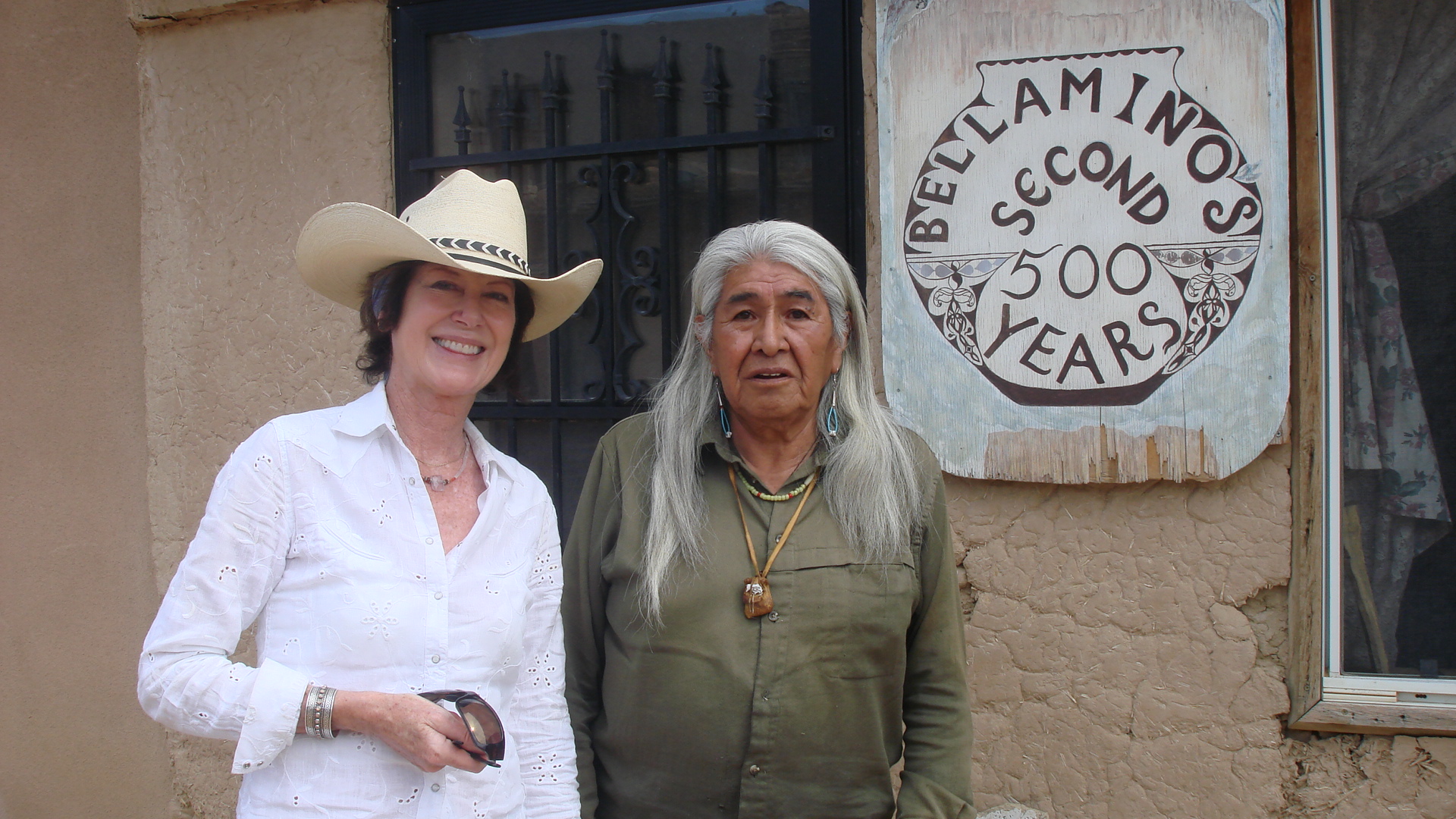
Walking up Palace Avenue on a day spread with sunlight, and a continuum of power walkers, bikers and runners, passing by in whiffs of urgency, I took my time. I didn’t feel like flexing, just evaporating into the shadows and the moving clouds. I walked by a little adobe that once was a dump site for empty bottles, cartons, worn-out furniture and piles of wood. A year later, the yard is almost condominium clean. Just as I was passing the driveway, the little woman whom I’d seen walking up Palace with her bag of groceries, appeared like a gust of history in the driveway of her adobe casita. She wore her heavy, blanket-like coat and a bandanna on her head. Regardless of weather, she’s bundled up in the same woven Indian coat and long wool skirt. I stood next to her, a foot or so taller, and she unraveled history, without my prompting. She told me about the Martinez family, the Montoyas and the Abeytas, all families she knew, all with streets named after them.

Estelle asked me my name, and then took my hand in her weathered unyielding grip, “Oh, I had an Aunt named Lucero, and we called her LouLou.” She didn’t let go of my hand, and then she told me that the families, some names I’ve forgotten, bought homes on Palace in 1988 for $50,000, She shook her finger to demonstrate her point. “You know how many houses they bought? Five! Then they fixed them up and sold them.”

I could have stood there in the gravel driveway listening to Estelle all afternoon. She owns the oral history I love to record; but it is difficult to understand her, she talks with the speed of a Southwest wind. We parted and I thought about the times in my life when the smallest of interactions elevates my spirit. In older people, who are not addicted to gadgets and distant intimacy, I’m reminded of how speed socializing has diminished the opportunity for a sidewalk chat.

Luellen “LouLou” Smiley is a creative nonfiction writer and award-winning newspaper columnist.


)


LAS VEGAS WHEN WE WERE YOUNG


I wasn’t allowed in the Copa when the Rat Pack performed; I listened to the uproar

The Sands 1963
The Sands 1963 (Photo credit: D’oh Boy (Mark Holloway))

from outside the door, and caught a glimpse when Uncle Jack let someone in. It was a wild charade of slapstick, improvisation, and politically incorrect slurs, swearing and insults, all dressed up in comedic song and dance.

That’s how I remembered Las Vegas. When I returned for the grand opening of the Mob Experience Las Vegas,  I bounced into the spot lights, press conferences,

introductions, and interviews in a shiny aquamarine pants suit, I hadn’t worn in six years. Congregating with the sons and daughters of my Dad’s associates, who were raised in a similar fashion of privilege and secrecy, was my homecoming to

Las Vegas. There I was, speaking into a microphone about my father, who obsessed over me, as I was now doing in Las Vegas. What was the importance of this seventeen year battle? To re write history that was written about him, by people who never even met him. They couldn’t get the camera off of me, “Luellen, we’ll turn it over to the station now,” while I am still stating the case of Allen Smiley. What would Meyer and Dad and Roselli think of all this. They’d say, “Wish the Brain (Arnold Rothstein) could have seen this racket.

BOSTON BOMBS BACK


IMAGINE, if you were in Boston
On the day of the flare
and it fired your daughter
and you dived in the dare
Hell rises
and heaven opens
the souls are not lost
they are moments to bare
BOSTON, is the angel
that brought the fire to lair.

MIDDLE CLASS, MIDDLE-AGE MAP TO WHERE??


I rolled the dice this morning; got seven. This always lifts me UN-proportionately to

the triumph.   What is a seven going to do? Nothing. The dice don’t do it;  what happens Is

I believe it’s a lucky day;  like the wind won’t knock down my outdoor writing arrangement,

and I’ll be able to write for hours, and not be interrupted by registered letters, construction noise coming

from the new Drury Hotel,  or tenant complaints.

What  we all treasure and wish we could stack up in a treasure chest is piles of peace from whatever our lives do to make us nervous, edgy, and cuffed. Or we stop the behavior which I think is more difficult.

If you’re a middle class, middle-aged person who expected  to be retired in Costa Rica by now with a book and a bottle, then you have to rearrange the internal map. 0414131321

I ‘ll never retire from writing; I hope one day I can live in my home again.

THE LEGEND LADY OF PALACE AVE


0124130930

The throw of the dice this week lands on adventures in livingness; one day at a time. People with terminal illness, suffering from a shattered romance, a death of a friend, a natural disaster, always say the same thing; One day at a time.

Walking up Palace Avenue on a day spread with sunlight, and a continuum of power walkers, bikers and runners, passing by in whiffs of urgency, I took my time. I didn’t feel like flexing, just evaporating into the shadows, and the moving clouds. I walked by a little adobe, that once was a dump site for empty bottles, cartons, worn out furniture, and piles of wood. A year later, the yard is almost condominium clean. Just as I was passing the driveway, the little woman whom I’d seen walking up Palace with her bag of groceries, appeared like a gust of history in the driveway of her adobe casita. She wore her heavy blanket like coat and a bandanna on her head. Regardless of weather, she’s bundled up in the same woven Indian coat and long wool skirt. I stood next to her, a foot or so taller, and she unraveled history, without my prompting. She told me about the Martinez family, the Montoyas, and the Abeytas, all families she knew, all with streets named after them. Estelle asked me my name, and then took my hand in her weathered unyielding grip, ‘Oh I had an Aunt named Lucero, and we called her LouLou.’ She didn’t let go of my hand, and then she told me that the families, some names I’ve forgotten, bought homes on Palace in 1988 for $50,000, She shook her finger to demonstrate her point. ‘You know how many houses the Garcias bought? Five! Then they fixed them up and sold them.’

I could have stood there in the gravel driveway listening to Estelle all afternoon. She owns the oral history I love to record; but it is difficult to understand her, she talks with the speed of a southwest wind. We parted and I thought about the times in my life when the smallest of interactions elevates my spirit. In older people, who are not addicted to gadgets and distant intimacy, I’m reminded of how speed socializing has diminished the opportunity for a sidewalk chat.


PAIN OR PLEASANTRY- SHOVELING SNOW IN SANTA FE


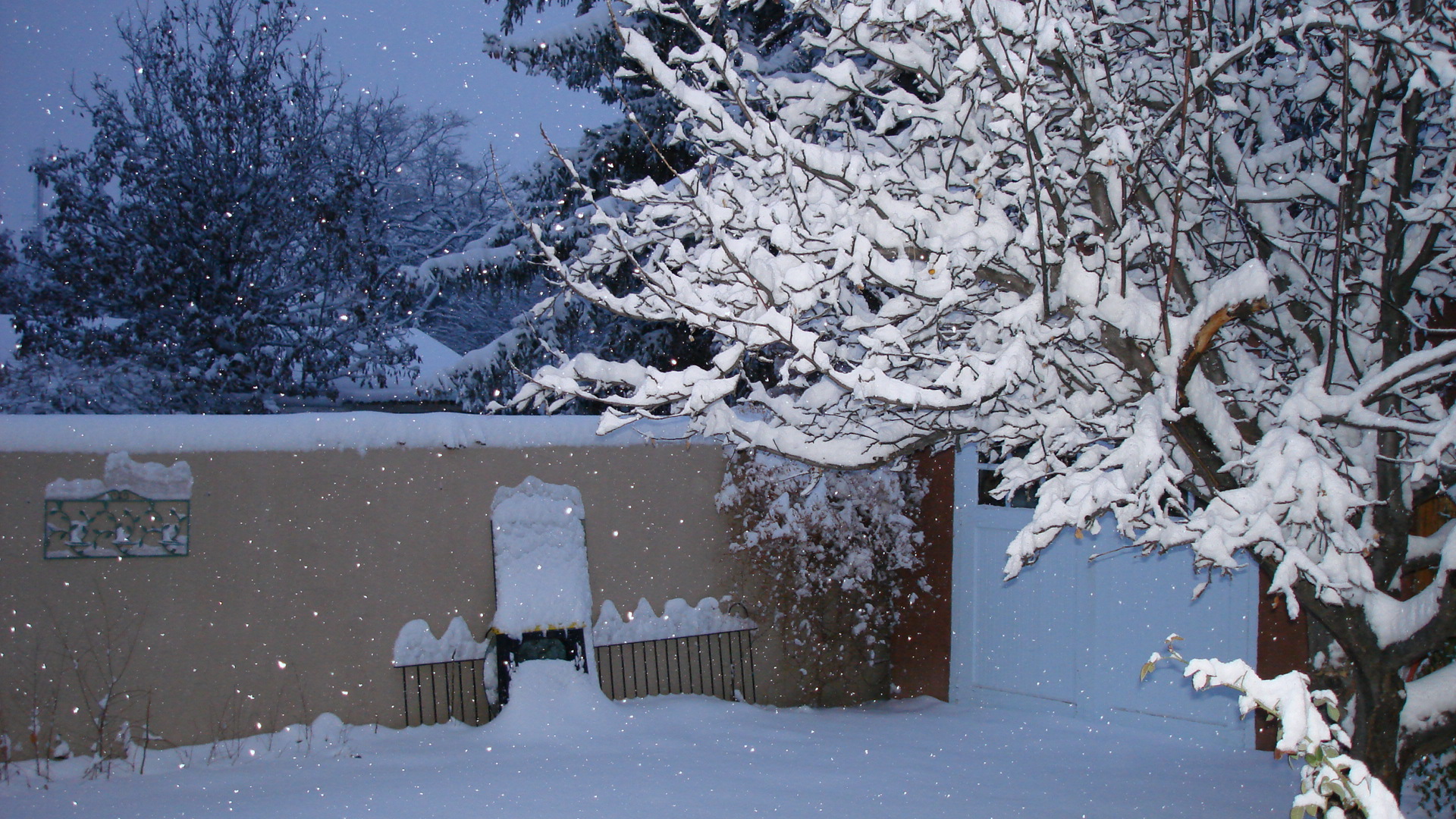
WRITING BY HAND at my tiny Eurasian desk facing the window to the west; framed by time and familiarity into the branches of JD’s pine tree, today ward-robed in bacon colored leaves.   The black silky toned crows are still basking like prowesses on the branches, and waiting for the crumbs that fall out of the garbage cans at the hotel across the street. My bird family has already eaten through a full day’s feeding, and is fleecing each other to first place at the table. The silky drape of the winter sky sometimes adorned with lacy clouds is blue as sea and has shaken the clouds all night. N08041215581.jpgO SNOW. I am selfishly opposed to snow because  I don’t happen to get snow shoveling without gut-wrenching lower back pain.  How do you shovel snow?

I’m wearing one cotton camisole, one shapeless thermo  turtle neck, a down vest, and when I go outside I wear a down jacket. I’m so bundled up it feels like my limbs are bound in masking tape.  My teeth look whiter and my hair is flat instead of frizzy. Snow changes everything.   From my desk, I write, without thoughts predefined, just a drain of emotional threads from my heart, listening to Zap Mama as she takes me to the wild, naked, warm region of Africa.

This year isn’t like last year. The absentee man, fussing with the fireplace, making me afternoon espresso, kissing me when I cook, hugging me when I pull a folly, has excused himself from my adventures in livingess.  It is not at all like last year. Long time friend Rudy is in San Diego and so I am not interpreting the division of attention, between two men laughing at the kitchen table, and eating my blueberry pancakes, as they did last year.

I had the song of Judy Garland’s rainbow in my heart.  It was a time I will never forget, or regret, because I was satisfied for several years. Unabridged ecstasy poured out of body, and spread over my attitude, abundant spirit, mood, facial expressions, and my dreams were filled with amusement instead of nightmares.  I wander into unfamiliar snowy woods unsteady, juxtaposed between, acceptance and self anger for being so so… whatever it is that I pump into myself.  If I was judged by my adventures and not my accomplishments I would be a contender.

Growing up with gangsters teaches you to live with risk, to invite challenge, and  not complain if you loose. It’s wrong but it’s right.   Nothing is worthless; not one moment should be wasted because there is always that window of escape. Our minds are there to take us away. I’m escaping now, Zap Mama Pandora station on the headset, and writing. This is taking the moment out of frustration and into pleasantry.

My steps inward reply with emotional break-troughs, mundane tasks accomplished, solo ventures, match.com dates (another story) and a comedic sideshow as I wrestle with sealed boxes, make repairs, and toggle in my patent leather too stylish boots to actually be called snow shoes.   In these moments, I assure myself that evolving is never ending, and we do not ever know what to expect from ourselves.   If I write down the pleasantries surrounding my life, the blessings rise up and give me a softened comfort.  The sweet peace may vanish the next day, or be intercepted by the news, a wreck in the street, an unexpected phone call. The crossroads of everyday life comes and goes. Between all of these uncontrollable incidents we are writing stories that some day will be told in conversation, or written in journals and books. The essence of our changing lives is universal. Why am I doing this now, why am I feeling this now? Etc.

Remember your pleasantries, and bring them closer.   A few of my snow cold freezing feet remedies:  Kneipps Herbal Lavender Bath: Do not apply to the face!

Ralph Lauren Candles: I paid too much, but the scent is like having a man around the house.

Homeland.  Sunday nights Showtime. Clare Danes has replaced my empty strong female lead on television. I mean, this is one to Watch! ( season ended. Vegas on Tuesday’s is the other one to watch)

My friend Loren visits three times a  week at least: Snow means, silence, and hermitizing, so I  can’t wait to open the door to Luxury Limo Loren, and make him brunch.  We harmonize for hours;  on tones of fretful fear, wicked secrets, sex,  laughter, Santa Fe, immigration, buy American, and the crust of survival that is stale and must be reheated.

Treats: Snicker bars, Vodka and snacks that I can nibble on while indoors more than I’d like to be.

Bar Bells: For those combative moments on hold with Comcast, SWA or Verizon.

Books: Time for Virginia Wolf and Jack London.

Movies- Zorba the Greek, Auntie Mame, U-Turn, Breakfast at Tiffany’s, and Once Upon a Time in America.

I AM PACKED FOR THE BEACH, JUST IN CASE.

ENTERTAINMENT WEEKLY


I didn’t subscribe to this weekly trade rag, and I’m not in the entertainment business. Still they pile up on the island counter in the kitchen, because  it’s what’s happening baby. So I opened one last night. My younger than I look paradigm dissolved, as I viewed musicians, celebrities, TV, film/ trends that were as unfamiliar to me as I would be to them. Should I develop an interest in what they are pitching? I kept reading about bands I never heard of,

Thirty Something Kufiya
Thirty Something Kufiya (Photo credit: tsweden)

books, new killer thriller suspense series that will make my blood curdle,  single women who make love to themselves,  murderers to fall in love with, and ten pages on the OSCARS.

I’m grateful for those artists of mercy that I have been turned on to in my life. Those are the ones I’ll cherish. That first Stones concert, first performance artist,  exhibits at Mass Moca, an Afro-Cuban dance performance, Baryshnikov, Miles Davis, Cab Calloway, Tito Puente,  the movie Women In Love, and Thirty Something.

← Back

Thank you for your response. ✨

OUR NEIGHBORHOOD, OUR LIFE


As a child I understood in a subliminal fashion that my father was unlike other neighborhood fathers who left each day to go to the office.   My father worked from his home-office in Bel Air, California, and hotels: The Beverly Wilshire Hotel, the Bel Air Hotel, The old Beverly Glen Terrace, and restaurants:  La Dolca Vita, Matteos, Copa de Ora, Scandia, La Scala, Purinos, Chasens, and building lobby’s,  parking lots, telephone booths, and race tracks.   Sometimes he talked about a really  big deal he was working on, and other times he said he was returning favors.  The exchange of favors between my father and his associate friends was written about way before I came along, by Damon Runyon and Mark Hellinger.

Deals and favors is what I understood as my father’s business. This kind of business made him available to me during the day, while other father’s had left their homes to go to an office. From the outside looking in; we were a stylish Westside family, with colorful friends, members of Sinai Temple, and frequently seen in the company of established Doctor’s, Oilmen, and Attorney’s.  My mother went door to door as a Red Cross Volunteer, and my father’s charity went to the United Jewish Federation Fund.

Our next door neighbors were movie actors:  John Forsythe, Burt Lancaster, James Gardner and Peter Morton, the legendary Hard Rock Café founder.   Peter was a few years older than I, and I loved his  mess of tousled curly brown hair, and his gentle birch brown eyes, slanted into the curve of sadness. I waited for him on some mornings to walk me to the bus stop.  I remember he looked after his little sister, and maybe I needed looking after too.  The memory of his kindness is sealed.   Most of the families in the circle had children, and it was only natural that we played together. At some point, all the kids quit meeting up at my house, and even my friends at Bellagio Elementary quit coming  to our house.

In the foyer of our home, there was a wall mirror and wall mounted table. That is where my father kept his grey fedora and trench coat. I remember the times he dashed out of the house with the coat and hat.

“Daddy why are you wearing your coat and hat today; it’s not raining?”

“I have to be ready for anything little sweetheart.  Daddy never knows what the weather will be like out there.”    The answer was a riddle, like almost everything my father taught me. A  simplistic statement on the surface, and a double down meaning hidden inside.  That is how he communicated with me, and it had a purpose like everything else.

When I was five years old, my father took me out driving in his powder blue the Cadillac, and he made regular stops,  to meet a guy about something, had the car serviced and washed, visit a friend, have the poodle bathed, and a stop at Schwab’s to see if there was any action.   He loved to sing in the car, with all the windows rolled down, and his arm wrapped around the back of the leather seat. He was as relaxed driving his car as he was lounging at home on the sofa. He drove with one hand, while he sang,

“Que sera sera.” When I asked him what it meant, he said,

“Whatever will be will be, the future is not ours to see, Oue sera sera–that’s the song of life sweetheart.”  He didn’t pay attention to stop signs, signals or fellow drivers; he perceived them as second in line.   Once a policeman stopped us as we were driving out of Thurston Circle, and my father opened the car door, got out, and, moaned,  “Oh my God, Oh God I’m having a heart attack!”  I watched him, and yelled out “Daddy Daddy–what’s wrong,” but he kept howling.  The policeman didn’t take notice at all.   “I’m having a heart attack, let me go officer, I can’t breathe you SOB. You’re going to kill me!”  By this time I was crying, and making a lot of noise in the front seat.  The policeman then approached my father, and handed him a ticket, while my father continued to whale, “HEART ATTACK.”  After the policeman drove away, my father got in the car, steely eyed, and swearing. “Stop crying. “Stop that right now!  Can’t you see I’m all right? Daddy just pretended to have an attack.  That stinking cop is always hanging around here. He should be ashamed of himself.  Policemen have better things to do, then give tickets. ”

“ You’re not sick?” I mumbled.

“ No, of course not.  Don’t tell your mother about this sweetheart, she doesn’t understand these things.  Remember now what I told you, when I say something you listen, and don’t question it.  I have reasons for the way I do things. ”

Adults try to deceive children with whispers, false identities, and lies, but a child has a superior emotional vision.  From that day on, I was always watching my father closely to see if he was acting, or playing it straight.

The outings gave me a chance to meet dozens of men and women who exaggerated their feelings for me with overt gestures that sometimes I recognized as an act. Picking out genuine friends developed into a sense I couldn’t necessarily ignore.  It got in the way of my comfort around many of my father’s friends later on in life.  Nothing seemed to please him more than to present me to his friends, and wait for their praise, “You’re lucky to have such a beautiful little girl, and so well behaved.”  I remember this line because it is the same line I heard throughout adolescence.  My behavior was conditional on my father’s mood.  If I misbehaved, spoiled my dress, or broke something, it would ruin everything. My father would blame my mother, she would retreat from the living room, and I would be left alone.  This was the second of the lessons, I learned very young, not to make any mistakes.   One error can ruin your whole life, he told me on all the occasions that I erred.

Today, it’s not too surprising that I am ready to sit in the front seat with a man of choice, while he drives around and shows off his driving and leadership skills.  It’s not that I just don’t get excited about driving myself,  it is one of those childhood activities that evolved into a life long course of pleasure. I escaped working in offices in 1993 after ten years of tolerating the cubicle life, and I work out of my home office much like my father, only I am not involved in illegal activities, even though it seems everything is becoming illegal.

When now, I have finished this personal essay I began two years ago, I went looking for images.   A photo of the house I grew up in at 11508 Thurston Circle popped up.   Our home burned in the Bel Air fire in 1961, and so I peeked through the interior of the house that was built on the lot after Dad sold it.  All post modern, nothing like ours, except this photograph I chose, the swimming pool he built, another childhood activity that evolved into a life pleasure.  The house is listed for sale, $2,075,000.  Dad bought our home for $50,000.