LUELLEN SMILEY ADVENTURERS IN LIVINGNESS

Where Gaps of Expression are Liberated

ABOUT

Luellen Smiley is a creative nonfiction writer, author, columnist, and historian whose writing is deeply rooted in a controversial personal history. She is the daughter of Allen Smiley, a close friend, associate, and business partner of notorious Las Vegas gangster Benjamin “Bugsy” Siegel. Her father was sitting only feet from Siegel when Siegel was murdered in Beverly Hills on June 20, 1947.

That extraordinary childhood history became the foundation for Smiley’s first book, Cradle of Crime: A Daughter’s Tribute, published in 2017. The memoir explores what it was like to grow up as the daughter of a man connected to organized crime while trying to reconcile her love for her father with the secrecy, fear, and criminal world surrounding him.

Smiley’s work has appeared in publications including the New York Post, MORE Magazine, Southern California newspapers, and Authorlink. She wrote the newspaper column Smiley’s Dice—Adventures in Livingness, which earned a Blue-Ribbon Award from the California Newspapers Association for her Growing Up With Gangsters columns.

Her interest in her father’s history also led her to become a researcher and commentator on organized crime history. She has participated in television, radio, and documentary interviews.

Smiley’s next book, Gaslighting Greta, will be published this year. A personal story that reads like fiction. Her own website describes the project as exploring a woman whose life is destabilized by gaslighting and psychological manipulation.

Her writing career reflects a recurring theme: using personal experience and research to uncover the truth behind complicated relationships and extraordinary lives. From the secretive world surrounding her father and Bugsy Siegel to the deeply personal territory of Gaslighting Greta, Smiley’s work transforms difficult experiences into stories of survival, discovery, and ultimately reclaiming one’s voice.

Luellen Smiley is an author whose life has given her an unusual perspective on secrecy, manipulation, family loyalty, betrayal, and survival—and she uses that perspective as the raw material for her nonfiction storytelling.

LAS VEGAS WHEN WE WERE YOUNG


I wasn’t allowed in the Copa when the Rat Pack performed; I listened to the uproar

The Sands 1963
The Sands 1963 (Photo credit: D’oh Boy (Mark Holloway))

from outside the door, and caught a glimpse when Uncle Jack let someone in. It was a wild charade of slapstick, improvisation, and politically incorrect slurs, swearing and insults, all dressed up in comedic song and dance.

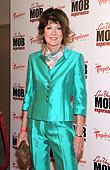
That’s how I remembered Las Vegas. When I returned for the grand opening of the Mob Experience Las Vegas,  I bounced into the spot lights, press conferences,

introductions, and interviews in a shiny aquamarine pants suit, I hadn’t worn in six years. Congregating with the sons and daughters of my Dad’s associates, who were raised in a similar fashion of privilege and secrecy, was my homecoming to

Las Vegas. There I was, speaking into a microphone about my father, who obsessed over me, as I was now doing in Las Vegas. What was the importance of this seventeen year battle? To re write history that was written about him, by people who never even met him. They couldn’t get the camera off of me, “Luellen, we’ll turn it over to the station now,” while I am still stating the case of Allen Smiley. What would Meyer and Dad and Roselli think of all this. They’d say, “Wish the Brain (Arnold Rothstein) could have seen this racket.


3 responses to “LAS VEGAS WHEN WE WERE YOUNG”

  1. this is Excellent 🙂 !  hope you like the little gift , i called the contact this morning to check availability & price went up since i last purchased  a few months ago . keep dry & warm ! love audrey & pumkin 🙂

    Like

  2. Ok, I want to go, unfortunately that was a different time and place. So lets turn back the clock. Great post about the Old Las Vegas.

    Like

Leave a Comment