
L. Smiley
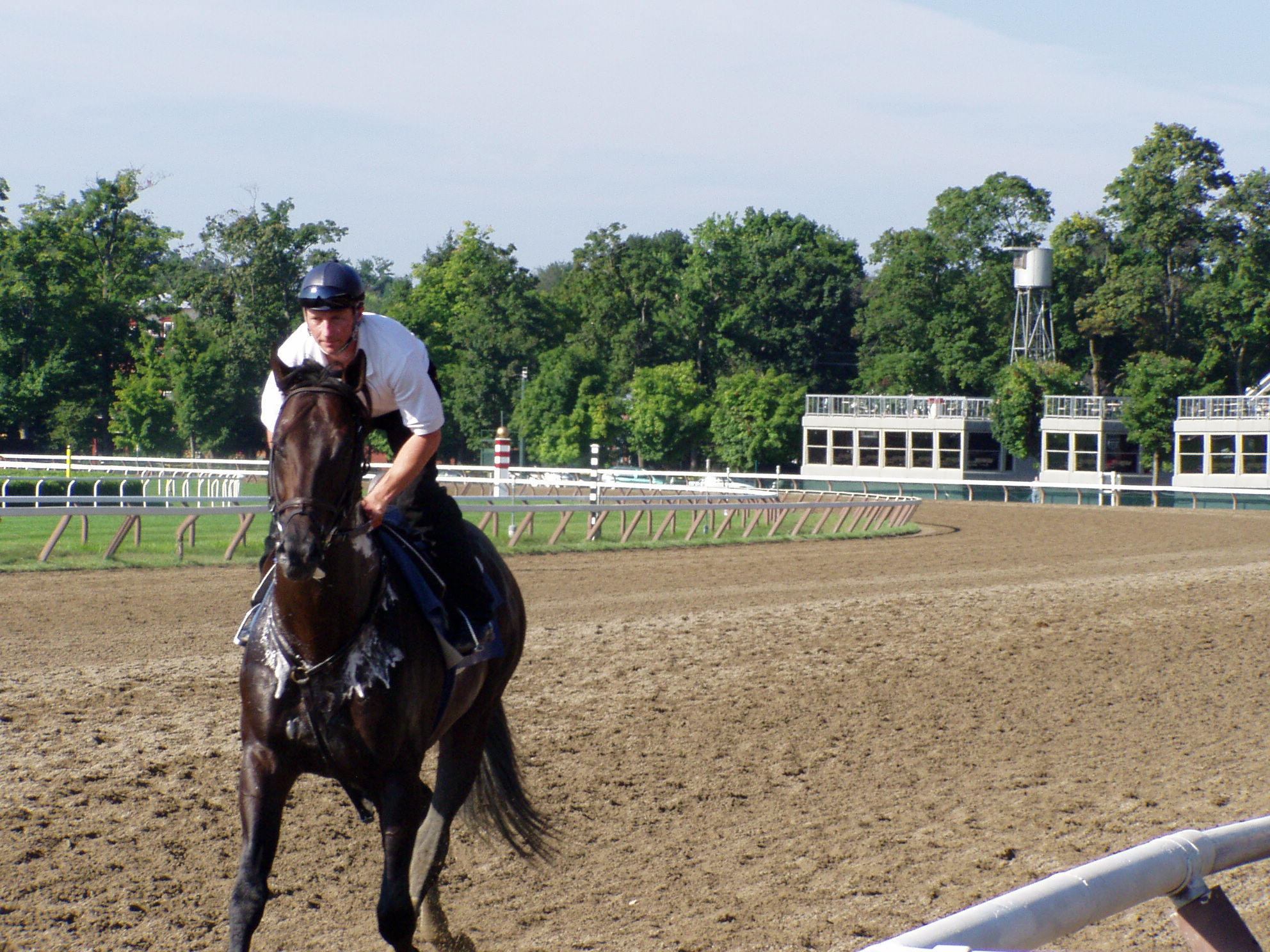
After spending several summers at Saratoga Race Track, I discovered I loved thoroughbred horseracing. All my life, I’ve been a spectator of the performing arts. I never watch any sports on television, and I only attend baseball games when my father needs a companion. The art of performance is what led me to experience the racetrack as live theatre.
The racetrack is the stage, the jockeys’ are the actors, and the men and women who fill the bleachers, picnic grounds, Turf Club, and private boxes are the audience. The racehorse is the star celebrity.
The admission tickets, like any show, are based on your seating. You can walk through the gates for $3.00, or you can buy a Box for $100,000 a year. The collage of human emotions, drama, suspense, and danger, are key components to good theater.
Gambling personifies the Shakespearean twist of the racetrack. High rollers and drugstore cowboys wager to win. Some men walk out with a grocery cart of recycled cans, some walk out with enough money to buy a racehorse. They leave by the same gate, and the next day, they come back for more. But why, I ask, is thoroughbred racing not considered an all-around American sport? Why don’t jockeys get athletic respect? These two spheres of lightning truth struck me while I trampled through the mud, one rainy August day at Saratoga Racetrack.
I asked around for opinions. The Governor’s bodyguard remarked that it was a good question. He did not think gambling was the reason, because people bet on sports all the time. He thought maybe that it was because as kids we don’t learn to race horses, like baseball and football. “The public is naïve about Jockeys, because they have never raced.” Another answer I heard was that 200,000 fans fill a ballgame on any given day, and that those numbers don’t compare with horseracing.
I’m not a bettor, and I don’t ride very well, but I am a drama whore. I took my notebook to the Jockeys’ room to ask the Jockeys’ what they thought about this irregularity in sports. Jose Santos had a few minutes to spare.
“Jose, do you feel like America thinks of you as an athlete?”
“We don’t get the respect that we should. I think it’s the gambling. This is the greatest racetrack in America, and there is gambling in every sport, but when you come to the track, you see it right there, and people cannot avoid it. Pound for pound, we are more fit than most athletes.”
I asked Jose what he does aside from riding. He jogs three miles every day, and walks for a mile. He reminded me that if he goes down with the horse, his strength is what gets him back up again. Another misconception is that jockeys only ride for 2 minutes. Well, the race is 2 minutes, but they ride every day of the year. They do not take breaks.
“How does the public perceive you?” I asked.
“In Europe they are treated like movie stars, over here the Jockey is just another person, and in sports, the Jockey is low. I wish we had more respect, but we don’t get the publicity.”
This feels like the guts of the truth; our little minds like to align with other like minds. The leaders of the pack go to football and baseball, and the media follows behind.
Jose remarked that the only time he felt real enthusiasm and support was when he won the Triple Crown. Otherwise, they get a little column in the paper with the results. “The Racing Form is 100 pages, and nothing is written about us.”
“What if there was a Jockey Magazine?”
“Well, that would be great, then the companies would be interested, and we’d get sponsors. When I go out to the park and run, I wear Nikes.” He chuckled, and I lowered my head in shame. My bet is that this can, should, and will change.
 ADVENTURERS IN LIVINGNESS