STILL A MYSTERY WHO MURDERED BENJAMIN ” BUGSY” SIEGEL


STILL A MYSTERY WHO SHOT BENJAMIN “BUGSY” SIEGEL .ย ย 

ย  JUNE 20,1947

Several years ago, I received an email from a reporter in Las Vegas. George Knapp had read some of my memoir posted on my website and asked for an exclusive interview. He asked about my fatherโ€™s relationship with Ben Siegel “Bugsy” and what I knew about their friendship, and why Ben Siegel was shot. I declined the interview, but George persevered. Three weeks later I agreed to the interview, because my father was not there to stop me.

We met in Del Mar at the Inn Auberge. I showed up with a notepad to remind me what not to say, a photograph of my father when he was a producer for Cecil B. De Mille, and a borrowed calmness that comes when I am approaching an extremely anxious situation.

My first interview about Dad was not anything like I imagined. George approached the subject with respect, and I relaxed and began talking, and talking, and talking. The only time I hesitated was when he asked if I knew who killed Ben, and I had to answer swiftly, โ€œI think Bush did it.โ€ He was not too impressed with the answer; but it saved me from theorizing.

At the end of the interview, I walked out of the hotel without regret. I said what I felt should be told; that my fatherโ€™s best friend was Ben Siegel. If he loved Ben and my mother loved Ben, than there is a lot more to โ€œBugsyโ€ than what the public has been told. The interview aired on a Friday night, and my life was no different from before. George got a call from someone who claimed my father once told him, Virginia Hillโ€™s brother was the shooter. It sounds like my father; he enjoyed sending people down the wrong path. He always said, โ€œYou donโ€™t inherit friends,โ€ and so I declined to remain friends with family members of his group, because I respected his orders, even after he died.

I doubt any of his mob friends are still alive today. Many people have claimed they knew my father, but in essence, what they mean is they met at Ciroโ€™s, or had a game of cards, or went to the racetrack. My fatherโ€™s only friends were connected to organized crime. I learned this when he died; three people showed up for the service. He warned me to keep away from reporters, and not to trust anyone. Still, strange incidents followed his death that I was unprepared to handle.

A man Iโ€™d never heard of called and informed me, โ€˜Your Dad and Ben buried a safe deposit box in downtown Los Angeles. You should look for the key, there may be a lot of cash.โ€™ My father was not about to leave this world without telling me he had stashed money in a safe deposit box. I will bet every dollar on that.
Another man, posing as a friend, came to my aid offering help settling the estate. A few weeks later another man I had never heard of, placed a claim on the estate for an old gambling debt of $5,000. The two of them were conspiring. Had I known gambling debts are erased when the bettor dies, I would not have allowed my sister to sell his Patek Philippe diamond and ruby pocket watch, which I suspect belonged to Ben Siegel at one time. The end of my fatherโ€™s life was as mysterious as when he was living. That is how he liked it, and that is how he lived it.ย  ย 

I had to wait until my father was in his seventies to go to the racetrack with him. He took me to Santa Anita, we sat in the clubhouse, and he watched the track from behind tinted dark sunglasses. He was quiet and observant. He watched me eat and then handed me a twenty-dollar bill to bet on the Exacta. He told me how to bet and which horses to bet. I walked away from the cashier thinking I would be a big winner. Instead, I walked away a big loser. This was a setup, he picked the losing horses, so I’d get the lesson ” Even your old Dad loses at the track, remember that.’ There wasnโ€™t anything exciting about going to the track, he made sure of that. I suppose he was concerned, that I had inherited a taste for betting. Lucky for me;get-attachment.aspxDAD AFTER MURDER I discovered Dad’sย  ย gambling didn’t pay off. When he was with Siegel in the forties, controlling the wire service he’d bet up to $50,000 in one day. And lose it on the next gamble. I don’t bet on sports, or gamble in casinos. I do gamble on life, and aim for the outlandish, improbable questionable odds.ย 

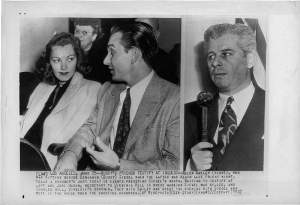
Photo: Leaving Beverly Hills Police Department day after the murder.
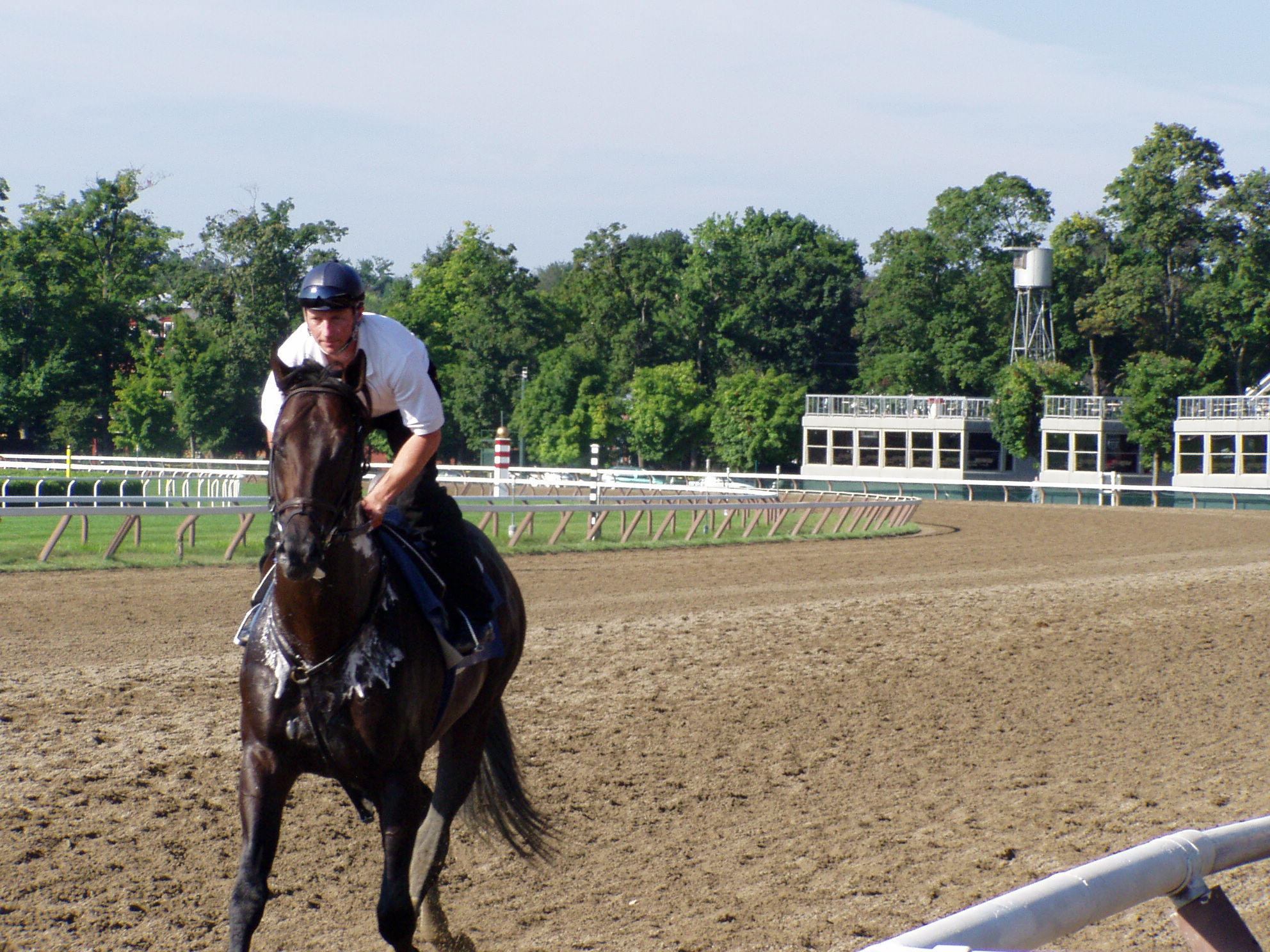
JOCKEYS’ WEAR NIKES TOO


L. Smiley

OLYMPUS DIGITAL CAMERA

     After spending several summers at Saratoga Race Track, I discovered I loved thoroughbred horseracing. All my life, Iโ€™ve been a spectator of the performing arts. I never watch any sports on television, and I only attend baseball games when my father needs a companion. The art of performance is what led me to experience the racetrack as live theatre.

ย ย ย ย ย ย  The racetrack is the stage, the jockeys’ are the actors, and the men and women who fill the bleachers, picnic grounds, Turf Club, and private boxes are the audience. The racehorse is the star celebrity.

            The admission tickets, like any show, are based on your seating. You can walk through the gates for $3.00, or you can buy a Box for $100,000 a year.  The collage of human emotions, drama, suspense, and danger, are key components to good theater.        

            Gambling personifies the Shakespearean twist of the racetrack. High rollers and drugstore cowboys wager to win. Some men walk out with a grocery cart of recycled cans, some walk out with enough money to buy a racehorse. They leave by the same gate, and the next day, they come back for more. But why, I ask, is thoroughbred racing not considered an all-around American sport? Why donโ€™t jockeys get athletic respect?  These two spheres of lightning truth struck me while I trampled through the mud, one rainy August day at Saratoga Racetrack.

I asked around for opinions.  The Governorโ€™s bodyguard remarked that it was a good question. He did not think gambling was the reason, because people bet on sports all the time. He thought maybe that it was because as kids we donโ€™t learn to race horses, like baseball and football. “The public is naรฏve about Jockeys, because they have never raced.” Another answer I heard was that 200,000 fans fill a ballgame on any given day, and that those numbers donโ€™t compare with horseracing.

ย Iโ€™m not a bettor, and I donโ€™t ride very well, but I am a drama whore. I took my notebook to the Jockeys’ room to ask the Jockeys’ what they thought about this irregularity in sports. Jose Santos had a few minutes to spare.

            โ€œJose, do you feel like America thinks of you as an athlete?โ€

            โ€œWe donโ€™t get the respect that we should. I think itโ€™s the gambling. This is the greatest racetrack in America, and there is gambling in every sport, but when you come to the track, you see it right there, and people cannot avoid it. Pound for pound, we are more fit than most athletes.โ€

 I asked Jose what he does aside from riding. He jogs three miles every day, and walks for a mile. He reminded me that if he goes down with the horse, his strength is what gets him back up again. Another misconception is that jockeys only ride for 2 minutes. Well, the race is 2 minutes, but they ride every day of the year. They do not take breaks.

           “How does the public perceive you?โ€ I asked.

            โ€œIn Europe they are treated like movie stars, over here the Jockey is just another person, and in sports, the Jockey is low. I wish we had more respect, but we donโ€™t get the publicity.โ€

            This feels like the guts of the truth; our little minds like to align with other like minds. The leaders of the pack go to football and baseball, and the media follows behind.

            Jose remarked that the only time he felt real enthusiasm and support was when he won the Triple Crown. Otherwise, they get a little column in the paper with the results. โ€œThe Racing Form is 100 pages, and nothing is written about us.โ€

            โ€œWhat if there was a Jockey Magazine?โ€

            โ€œWell, that would be great, then the companies would be interested, and weโ€™d get sponsors. When I go out to the park and run, I wear Nikes.โ€  He chuckled, and I lowered my head in shame.  My bet is that this can, should, and will change.

INTO DEL MAR OCEAN


OLYMPUS DIGITAL CAMERA

The sea is like rolled oil, and the breaking waves are the size of lake ripples. At this momentary recess of chaotic beach activity, all the heaviness of life rolls out with the waves. Observing the elan of beach life carousing, suntanning bodies already tanned leather, joggers and runners, bicyclists, fishermen, volleyball players, and the surfers.

Thatโ€™s my garden of grace and glory. They are like ballet dancers, some of them, some seem to think theyโ€™re driving a car or motorcycle, but the longboarders, old school aged surfers, skim waves athletically and spiritually, one with the board like a musician with an instrument.

And the fisherman, the other clan, is worth watching because they are interlopers in Del Mar. They come alone, dressed in rubber boots, floppy, stained hats, and pocket vests, like longshoremen or train conductors, an aura antiquated in Del Mar history, when fishermen were in greater numbers than joggers, lifeguards, and beach parties. ย ย ย ย ย ย ย ย ย 

OLYMPUS DIGITAL CAMERA

JOCKEYS & SARATOGA SPRINGS NEW YORK RACE TRACK


OLYMPUS DIGITAL CAMERA


     After several summers in Saratoga Springs, I discovered I loved thoroughbred horseracing. All my life Iโ€™ve been a performing arts spectator. I never watched any sports on television and only attended baseball games when my father needed a companion. The art of performance led me to experience the racetrack as live theater.

     The racetrack is a stage, the jockeys are the actors, and the men and women that fill the bleachers, the picnic grounds, the Turf Club, and the private boxes are the audience. The racehorse is the star celebrity.

     The tickets for admission, like any show, are based on your seating. You can walk through the gates for $3.00 or buy a box for $100,000 a year. The collage of human emotions, drama, suspense, and danger are key components to good theater.

     Gambling personifies the Shakespearean twist of the racetrack. High rollers and drugstore cowboys wager to win. Some men walk out with a grocery cart of recycled cans; some walk out with enough money to buy a racehorse. They leave by the same gate, and the next day, they return for more. But why, I ask, is thoroughbred racing not considered an all-around American sport? Why donโ€™t jockeys get athletic respect? These two spheres of lightning truth struck me while I trampled through the mud one rainy August day at Saratoga Racetrack.

I asked around for opinions. The Governorโ€™s bodyguard remarked that it was a good question. He did not think gambling was the reason because people always bet on sports. He thought maybe that it was because, as kids, we donโ€™t learn to race horses, like baseball and football. The public is naรฏve about jockeys because they have never raced. Another answer I heard was that 200,000 fans fill a ballgame on any given day and that those numbers donโ€™t compare with horseracing.

     Iโ€™m not a gambler,  and I donโ€™t ride very well, but I am a drama whore. I took my notebook to the jocksโ€™ room to ask the jockeys what they thought about this irregularity in sports. Jose Santos had a few minutes to spare.

     โ€œJose, do you feel like America thinks of you as an athlete?โ€

     โ€œWe donโ€™t get the respect that we should. I think itโ€™s the gambling. This is the greatest racetrack in America, and there is gambling in every sport, but when you come to the track, you see it right there, and people cannot avoid it. Pound for pound, we are more fit than most athletes.โ€

     I asked Jose what he does aside from riding. He jogs three miles every day and walks for a mile. He reminded me that if he goes down with the horse, his strength is what gets him back up again. Another misconception is that jockeys only ride for 2 minutes. Well, the race is 2 minutes, but they ride every day of the year. They do not take breaks.

     โ€œHow does the public perceive you?โ€ I asked.

     โ€œIn Europe, they are treated like movie stars. Over here the jockey is just another person, and in sports, the jockey is low. I wish we had more respect, but we donโ€™t get the publicity.โ€

     This feels like the guts of the truth; our little minds like to align with other like minds. The leaders of the pack go to football and baseball, and the media follows behind.

     Jose remarked that he only felt real enthusiasm and support when he won the Triple Crown. Otherwise, they get a little column in the paper with the results. โ€œThe Racing Form is 100 pages, and nothing is written about us.โ€

     โ€œWhat if there was a Jockey Magazine?โ€

     โ€œWell, that would be great. Then, the companies would be interested, and weโ€™d get sponsors. When I go out to the park and run, I wear Nikes too.โ€ He chuckled.

    โ€œHave they ever approached you for sponsorship?โ€

    โ€œNo, I donโ€™t expect they will.โ€

 A few days later, I found Jerry Bailey before a race. It was a cinch to get into the jocksโ€™ room in those days. That was before Elliott Spitzer sipped all the fizz out of Saratoga Race Track. These days the Press canโ€™t walk inside the Jocksโ€™ room.  Jerry hopped onto a counter and extended his hand.

โ€œHow are you?โ€

โ€œGreat, Jerry, thank you for meeting me.โ€

โ€œSure.โ€

โ€œJerry, Iโ€™m very interested in the lack of sports sponsorship offered jockeys. Why do you think that is?

โ€œBecause no one is promoting us.  If you donโ€™t do anything to promote us, how does anyone know? They have bobbleheads and gimmicks like that, but there isnโ€™t even a Jockey Calendar. Excuse me now; Iโ€™ve got to ride a race.โ€

 Of all the risk-takers and entrepreneurs in the world, horse racing is the champion in all categories. If I decided to understand the business,  attend every race, meet every owner, jockey, and trainer, thereโ€™s no chance Iโ€™d understand anything more because I do not love the horse the way a jockey does, and you canโ€™t fool the horse!

   During the Hall of Fame Induction presentation at Saratoga a few years back, D. Wayne Lucas made a speech that drew a full house of gregarious applause. This is an excerpt:

 โ€œYou ride a great horse, and the owner wakes up the next day and decides to switch to Bailey. The adversity is gut-wrenching, bringing you to your knees and humbling, whether youโ€™re a rider, trainer, owner, or breeder. Thereโ€™s one thing that will keep you going, and that is simply your attitude. Attitude is the most important decision you make every day. Make it early, and make sure you make the right one. You will have a very full and very peaceful life.โ€

 Maybe itโ€™s time for a Jocks Nike, call it the Two Minute Nike. 

ย ย 

      Leave a Comment

      WHY LIE


      When do we begin to lie about our life our feelings, our fears, our everything? I ask this because of simple observation, knowing when someone is not telling me their truth and I remain silent, it’s not my way to ask, why do you lie to me? My friends are not lying, it’s more like a social cultural mask. My wise father once told me ‘Tell them your sister or father just died, and they’ll respond, excellent because they do not want to hear your problems.’ But I do, I’ve always wanted to know the truth. Why should we shield our traumas and hardship, more than our triumphs and accomplishments? Do you know who does not lie? ART and SPORTS. That is why we listen to music, read books, go to galleries and museums, films, the theater, and ballet or other dance performances. I cannot comment on sports because I’m not a spectator although I do love basketball.

      We, and I mean this in only a visceral sense, do not believe the politicians, news, social media, or advertisements. We want to, but deep in our inner truth, we know it is the manipulation of our individual thoughts. And that my friends is why I trust art to deepen my understanding of the human condition. Thank you to all the artists and athletes who share their pain and glory.

      FOUND ON THE INTERNET

      THE PHILADELPHIA PHILHARMONIC

      MAXFIELD PARRISH

      PHILIP TOWNSEND

      THANK TOU OLYMPICS, I WANT TO BE A CHAMPION TOO


      Only minutes after the Olympic closing ceremony and your song, I asked, will they tribute John?
      AND YOU DID IT. YOU DID IT PAUL. AND JOHN WAS LISTENING.
      WE CAN ALL BE CHAMPIONS. YOU DON’T NEED A COMPETITOR, YOU HAVE YOUR CONSCIENCE. LET THOSE 85 COUNTRIES, AND THOUSANDS OF PERFORMANCES INSPIRE YOU TO BE YOUR OWN CHAMPION.

      DEL MAR


      THE pacific ocean stung me with awe. I miss her, she’ll see me tomorrow, when I dive in and embrace the currents, so many of them lately, the ocean is t he one I need now.