


SEASONAL AND SENSUAL OVERTURE TO REVERIE.
SUMMER is not a memory yet; my skin too sensitive, and my heart still attached to the moments. I’ve misplaced my journals and so I have to read my to-do list to recall the events. Let’s go back to June; well my head was bent like a candle wick in this memoir. By then I was into the first rewrite, the worst of the next ten. That first one is deceivingly promising, the chapters line up, the suspense tickled, and it was five-hundred pages. The first draft was actually two books, as I dared to try and run the 100 meter in two different directions.
I must have had some standout memories, but I don’ recall June being amusing. Writing about my deceased parents was not summer reading. A year had already passed since I began, and I was now at the last stretch. My sense of completion was annoying. I began to hate the word focus. My body ached for water, in any form, a pool, a river, and the ocean. June was also the month when rejection letters arrived. For a moment, I’d forgotten. Whoa! Stay away from LouLou, her nerves are visible! On the flip, it was also acceptance of those letters. I had to prove to myself that I could take it, and continue writing.
Outside my window, Palace Avenue raised to motorcycles, skateboarders, conversational bicycle riders, and families out for a walk. My concentration was beguiled. So I turned on the fan, the loud kind that screens the room in a hum. I tried to imagine as waves just after they have capitulated into bubbles.
Memorial weekend was gemstone sunlit of color and clarity. I’d decided to break and go to a party at La Posada. Yes, that was my first grasp of summer, the sudden appearance of flowers, greenness of the landscape, flowers, and light. I think it was warm enough to sit outdoors all night. We were not yet ready to kick and scream, it was more of a real memorial kind of party. For our troops who finally are reaching us through the news, the films, and the books.
Most every evening I’d walk across the street to La Posada, have a glass of wine while listening to the chattering guests, age-out themselves by immobilizing a very liberated and young spirit. It’s a beautiful sight. Most people in my experience, come to Santa Fe and strip 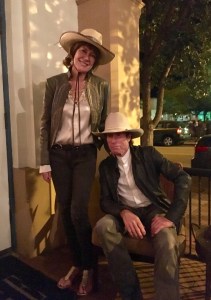 down to vulnerable. They invite conversation and are genuinely interested. I am asked, ‘What’s it like living in Santa Fe?’ To be continued.
IT’S UNLIKE ANY OTHER CITY I’VE EXPERIENCE.D It’s called the city different, it is also the city difficult. She ( I see Santa Fe in the feminine gender) has to be treated gently. Her weather patterns resemble a menopausal woman,her stature demands respect, and she can be congenial and patient.
You can walk this city as if it were a neighborhood. If you do that consistently you’ll meet people, and get to know them. Unless you’re like me, a standoffish fast walker dazed by the outdoors.
If you’re dazed and illusional you can master this city very well, as the drowsy pace and cordiality allow freakish freedom. I ‘ve seen the liberating soul of Santa Fe, teenagers racing down the middle of a commercial street one foot on the skateboard, bad-ass bikers talking with bad-ass cops, women with parrots on their shoulder, dogs in baby carriages, cats in a bag, and women on horseback galloping up Palace Avenue.
At night you’ll see raging midnight ramblers dancing on the sidewalk, and all of this is appealing to an LA transplant. I have driven in my robe, danced in the street and broken the heels on most of my shoes because of the pot-holes. They are always working on a street, but never the sidewalks. I ‘ve been bounced out of the locals night-howl El Farol for accidently pushing a dancer, who knew the manager, who came running after me and took down my license plate.
So many of us are loners, the serious kind, that have to be rigged out of our nests. Luckily I live on a commercial street and have no choice but to be commercially friendly. After nine years, my seasonal behavior is obvious: sprite in summer, blissful in fall, giddy in spring, and withdrawan in winter. I’ve learned patience, understanding, and adopted a mixture of cultural traditions. I’m close to fifty percent certain I’ll miss Santa Fe terribly when I do leave.
Has living in Santa Fe given me more than I’ve given back? Yes, it has and that’s why when I’m asked what’s it like living in Santa Fe, I try to reveal the blessings here and not the bullshit. 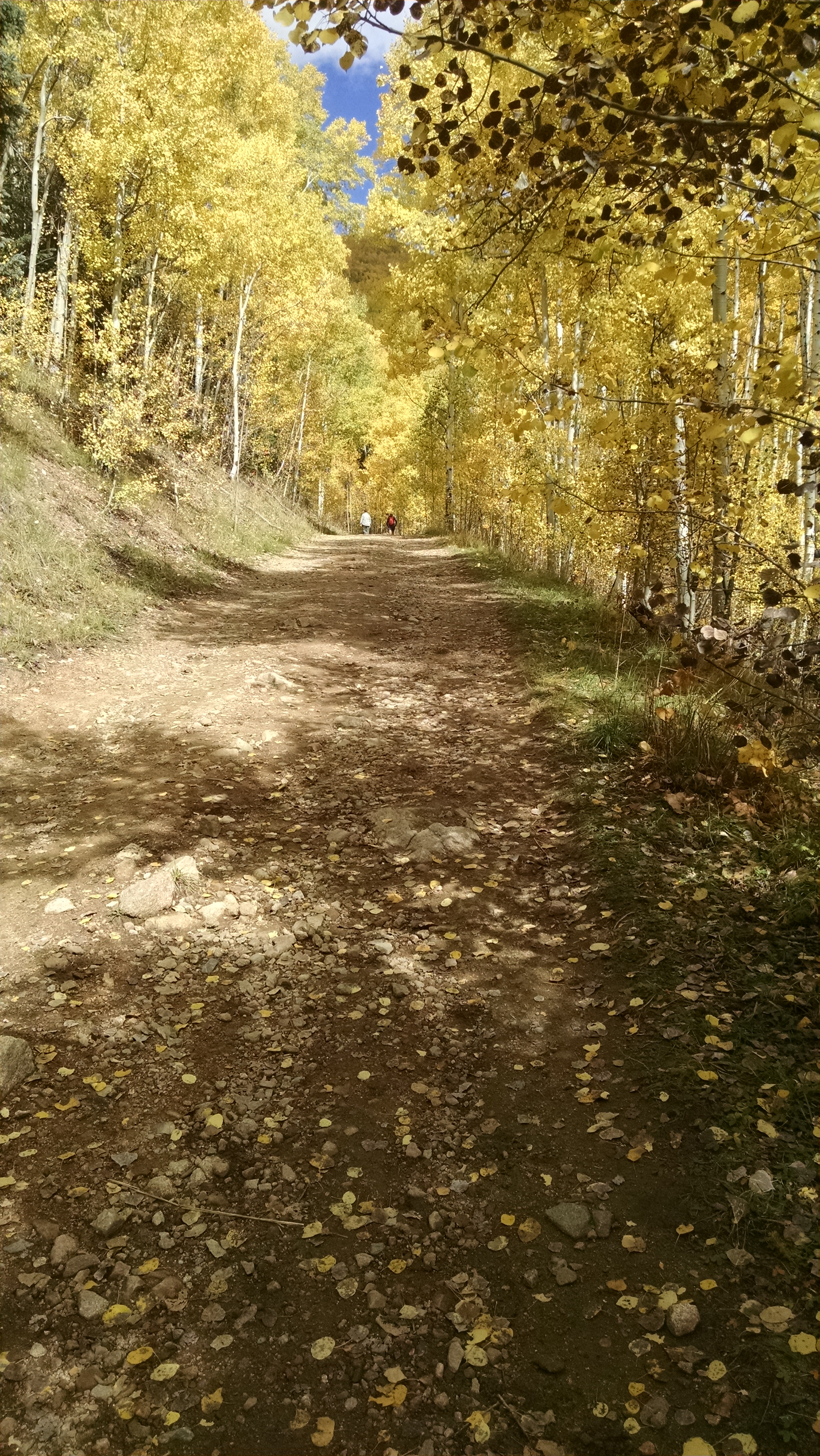


Leave a Comment