Luellen Smiley is a creative nonfiction writer, author, columnist, and historian whose writing is deeply rooted in a controversial personal history. She is the daughter of Allen Smiley, a close friend, associate, and business partner of notorious Las Vegas gangster Benjamin “Bugsy” Siegel. Her father was sitting only feet from Siegel when Siegel was murdered in Beverly Hills on June 20, 1947.
That extraordinary childhood history became the foundation for Smiley’s first book, Cradle of Crime: A Daughter’s Tribute, published in 2017. The memoir explores what it was like to grow up as the daughter of a man connected to organized crime while trying to reconcile her love for her father with the secrecy, fear, and criminal world surrounding him.
Smiley’s work has appeared in publications including the New York Post, MORE Magazine, Southern California newspapers, and Authorlink. She wrote the newspaper column Smiley’s Dice—Adventures in Livingness, which earned a Blue-Ribbon Award from the California Newspapers Association for her Growing Up With Gangsters columns.
Her interest in her father’s history also led her to become a researcher and commentator on organized crime history. She has participated in television, radio, and documentary interviews.
Smiley’s next book, Gaslighting Greta, will be published this year. A personal story that reads like fiction. Her own website describes the project as exploring a woman whose life is destabilized by gaslighting and psychological manipulation.
Her writing career reflects a recurring theme: using personal experience and research to uncover the truth behind complicated relationships and extraordinary lives. From the secretive world surrounding her father and Bugsy Siegel to the deeply personal territory of Gaslighting Greta, Smiley’s work transforms difficult experiences into stories of survival, discovery, and ultimately reclaiming one’s voice.
Luellen Smiley is an author whose life has given her an unusual perspective on secrecy, manipulation, family loyalty, betrayal, and survival—and she uses that perspective as the raw material for her nonfiction storytelling.
I’ve written in the genre of Creative Nonfiction, integrating the events through dialogue, journal entries, and a third-person narrative. Within three locations, Santa Fe, New Mexico, Los Angeles, California, and Saratoga Springs, NY. Greta (me) exposes the mutilation gaslighting abuse inflicts on her emotions, psychology, mental and physical health, and her finances.
I read in one of my books on writing that the middle of the novel is where most writers face the demon. The beginning is a gallop, the end is a relief, but the middle wiggles in and out of your grasp. The middle of our lives reflects this same obscurity.
The middle of a life span reflects all we have accomplished and all we have left incomplete. This is what they call a mid-life crisis. I get it every year. I’ve finally accepted that my constant relocating, reinventing, and being restless is not going to be solved. At the bottom of the restlessness is the fear of finding rest more enjoyable than movement. This flotation of comedy rotated around me last night while I was standing out on the porch observing the peacefulness. The scenery of Ballston Spa is a comforting, historical beauty that comes from the harmony of architecture and nature. The flow of villagers downtown is along two main two-lane streets, all the shops, services and restaurants are a patchwork, and all the business owners know each other.
All I can think of is where I should go next. This is wholly a village of ancestral families, with defensible adaptation to the severe climate, simplicity, and uncomplicated lives. My discomfort comes from trying to assimilate.
Many years ago, in the summer of 1987, I was seated in a café in Monaco, truly, and a man that I was traveling with told me, “You have to make a choice.” He embarked on a long discussion about choices we make in life and how everything depends on these choices: how you live and with whom, and what you do. He pointed out to me over my first really authentic Salad Niçoise that I was an oblivious example of a woman refusing to choose. I was more interested in the salad, the yachts, the casino around the corner, and the fact that I didn’t have an evening gown to wear to dinner. I listened without argument or insult, but I was disturbed by what he said. I didn’t understand completely, but he was older and had much experience and conviction. That conversation now fits into the mid-life crisis, the comedy of errors in my life, and maybe in yours, and just how much travesty we can ignore. For my fault, as it WAS, I did not want to sign, commit, or make final decisions. I wanted it all to be a temporary placement that allows me the freedom to change.
Ihave lost track of my European friend, but if he met me today, he would say, “You have not changed at all.” So that is why I was standing there in the darkness on the porch and laughing like a silly girl because it is true. I have not changed at all.
The choice facing us at mid-life is making a change now, risking losing all we have accomplished, compiled, and attached, or throwing the dice.
Beyond the obvious changes in activity, relationships, and scenery are the internal travels. They are not so easily engaged. You cannot wake up one day and say, “I ‘m off to become more compassionate, or more practical, or more generous.” These journeys are taken when other factors play into our lives, such as when we get sick, demoted, or experience a trauma.
It is a very subtle inconsistency. When I unplug all the voices and listen to the one that understands, that is when I write. The middle of the story and the middle of life is the same. We and our characters have to make a choice.
I’ve written in the genre of Creative Nonfiction, integrating the events through dialogue, journal entries, and a third-person narrative. Within three locations, Santa Fe, New Mexico, Los Angeles, California, and Saratoga Springs, NY. Greta (me) exposes the mutilation gaslighting abuse inflicts on her emotions, psychology, mental and physical health, and her finances.
I think of the comforts of exhibiting my life on paper. It is not the act of writing with pen and paper moving along at a steady rhythm; it’s the activation of the heart and mind, collaborating to unravel the relevant from the irrelevant. To reach this state of matrimony a writer needs not a Tuscan Villa, or an English Castle, but experiences that flake off the skin, the mise en scene that shakes its relevance.
I’ve written in the genre of Creative Nonfiction, integrating the events through dialogue, journal entries, and a third-person narrative. Within three locations, Santa Fe, New Mexico, Los Angeles, California, and Saratoga Springs, NY. Greta (me) exposes the mutilation gaslighting abuse inflicts on her emotions, psychology, mental and physical health, and her finances.
Page 525. Terrified to post this but it is Sunday and I’m brave on Sunday. The book is fiction, first-person, and close third person so you’ll need a jogging suit to read. Based on true events.
Greta let the moment of the village rescue stay with her, like a new pet for as long as she could hold on to its beneficial ointment, away from what she calls her immersion into self. She gives me examples that illustrate her obsession with matching outfits in her closet.
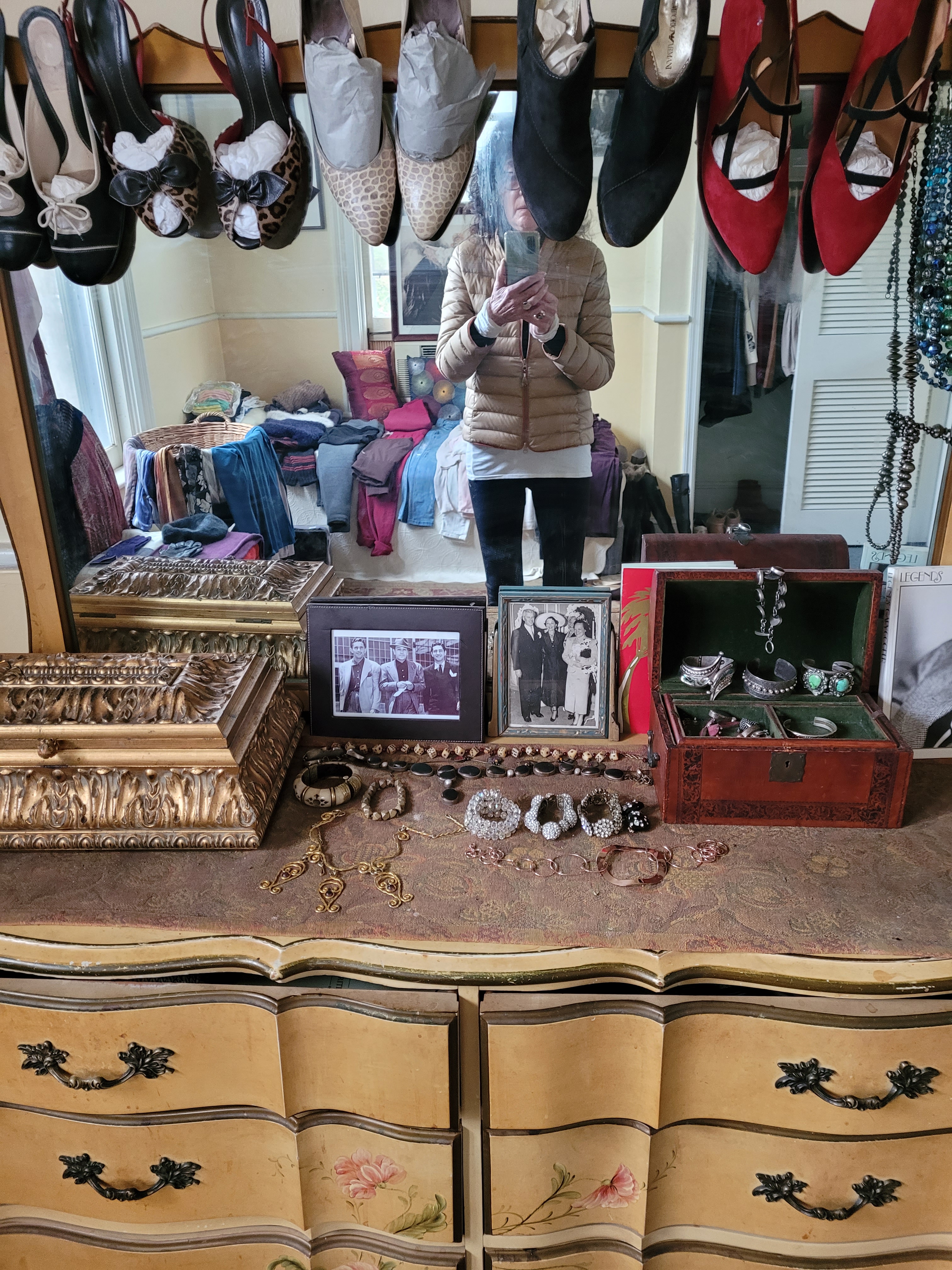
It’s a bedroom she converted into a dressing room. There’s a single bed against one wall, a cabinet where she stores the winter boots, and an eight-drawerFrench nouveau dresser and mirror. She sits on a chair facing the windows so she can watch the trees live through sun, wind, rain, and snow. Across from the chair is the bed. She diligently arranged her summer pastel skinny jeans on the bed, and next to that row she arranged the T-shirts, camisoles, and shorts. It’s quite practical considering Greta as she has admitted to me half a dozen times, that she was born without common sense or practicality. At the base of the bed, she lined up her shoes, the slip-ons, the flats, the pumps stuffed with tissue paper to preserve their shape, and the wedges. After a breach of sanity, she goes into this room and visualizes outfits and color matching like someone might play chess. ‘ It does have a purpose, this way I visualize without wrangling with hangers and you know it just takes too much time when you’re in a closet.
‘”These days I look at them as if they belonged to someone else, I mean the red suede with gold heels that I wore on a New Year’s Eve of gaiety and not since, the black velvet pumps that always make me feel dainty and light. What care I give to all these garments when in the other part of the house, Dodger was descending into a financial coma.”
Greta did not acknowledge the few months before his departure that he was riddled with abject unfulfilling tasks, bills, and construction jobs that no longer fed him purpose and accomplishment. She did not notice that his slacking posture on the front porch, head lowered and staring out without any body movement was a sign, she in fact despised it and walked away. In the last few months, all of this seemed to rise up like a curtain before a play, in a theater and she witnessed his insolence and his silent howl for help.
The irony of her activity is that she doesn’t go to the events that she plans on going to wear the outfits.
I’ve written in the genre of Creative Nonfiction, integrating the events through dialogue, journal entries, and a third-person narrative. Within three locations, Santa Fe, New Mexico, Los Angeles, California, and Saratoga Springs, NY. Greta (me) exposes the mutilation gaslighting abuse inflicts on her emotions, psychology, mental and physical health, and her finances.
You see a chime, the moment it responds to a breeze, the sound is beautiful, like Chopin’s Nocturne 1. Sounds that accompany a descending light mist, or setting sun, but the chime improvises its sounds and movements when a vivacious wind girdles its ether. This abstraction reminds me of sensitivity. It can be soft and gentle, nurturing to the souls of those less peaceful, but when the velocity of attack hits, sensitivity is a walloping eruption of rage, drifting on uncontrollable. I’ve been punitively and cordially of being too sensitive. There are more good reasons to alter my sensitivity than not to, but the one reason that hovers above all else is that everything we do, feel and act in life needs revision. We should never stop evolving into more thoughtful, loving, or wise human beings. Every day, there is an opportunity to leap into saintly hood. It is the same with my writing it can be better.
The next adventure is closing in on me as foreclosure is over the June horizon. The dismantling of possessions brings me some sort of twisted alignment to my life. Picking and choosing what to pack, eliminating what Dodger and I bought together, and vacillating over treasures that are now more weight than worth. If I am ever to rest in one address, I’m sure it will be a headstone and a plot of dirt. I chose a destiny to relocate, and so the highway off-ramp will evolve, I just have to be patient.
It is the inner self that concerns me, and how I will adjust and adapt to leaving my favorite house. When I was thirty, I was afraid of getting married, and when I was forty, I was afraid of not having children. Now that I am sixty-nine, I have a fear that once was my chant, the idea of moving.
The word coddiwomple is English slang, defined as “to travel in a purposeful manner towards a vague destination”. If you are anything like me you may be coddiwompling your way through life, which is not necessarily a bad thing.
I’ve written in the genre of Creative Nonfiction, integrating the events through dialogue, journal entries, and a third-person narrative. Within three locations, Santa Fe, New Mexico, Los Angeles, California, and Saratoga Springs, NY. Greta (me) exposes the mutilation gaslighting abuse inflicts on her emotions, psychology, mental and physical health, and her finances.
The latest poll on our opinion about NUCLEAR WAR revealed that seventy-five percent of us are worried about NUCLEAR WAR.
April 1, 2022 Day 34
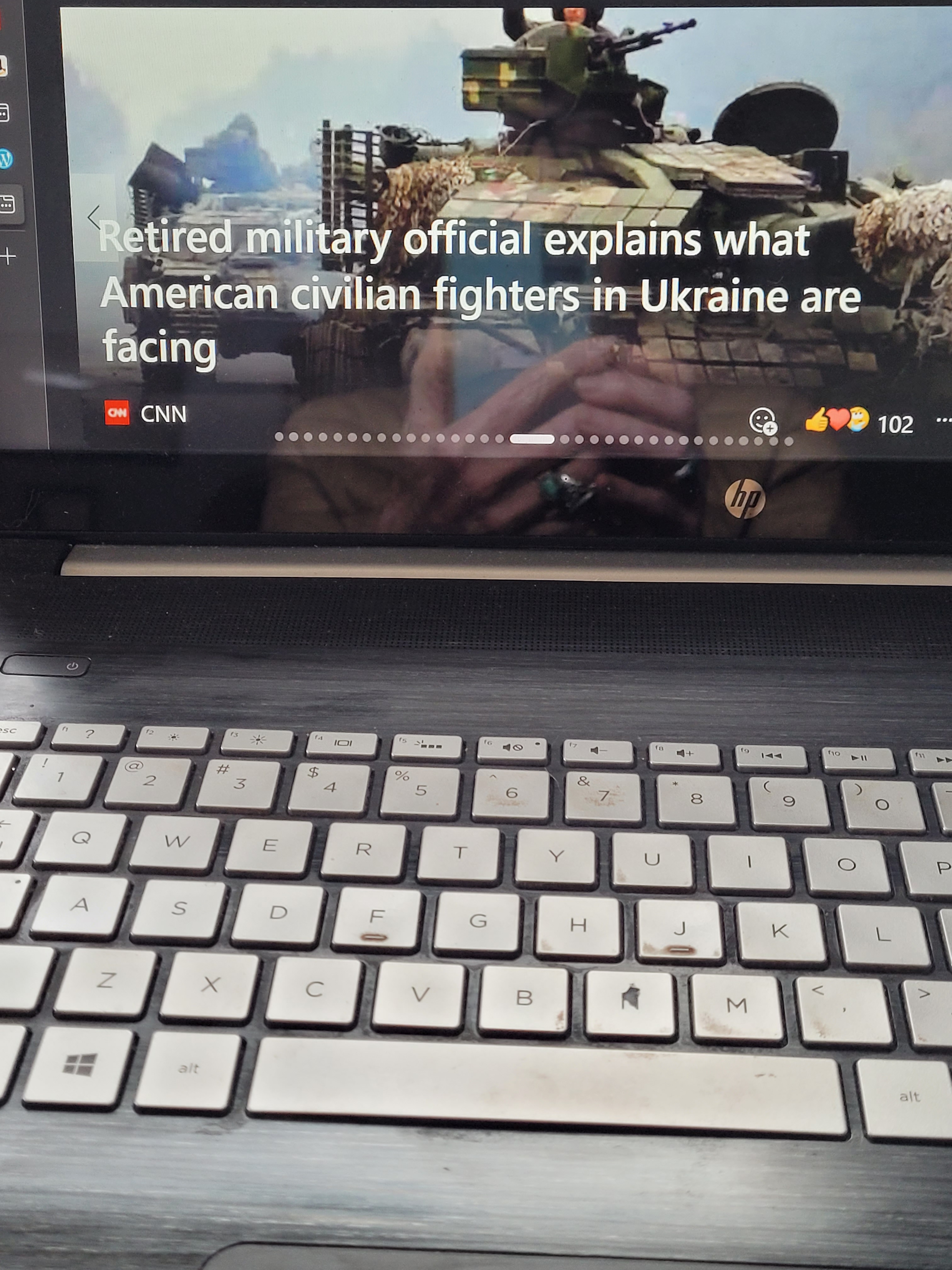
Listening to the news on and off today to collate my life with Ukraine. My tasks and routines are dismissed or performed fecklessly. Just now at four-thirty pm, a splash of the sun touched down to give me a moment to sit on the porch and let the warmth saturate through my gloves and coat.
I’m looking at the magnificent great great grandfather spruce tree across the street. A ballet wind fan is blowing the branches as if they are in toe shoes. Nature granulates humanity. We don’t live for thousands of years like rocks, rivers, oceans, mountains, waterfalls, and trees. Then I think of the Ukrainians, they will survive. I watched three hours of news today. The longevity and persistence of nature emulates the Ukrainian heart and spirit. My dice, cards, everything is on their winning this war.
I’ve written in the genre of Creative Nonfiction, integrating the events through dialogue, journal entries, and a third-person narrative. Within three locations, Santa Fe, New Mexico, Los Angeles, California, and Saratoga Springs, NY. Greta (me) exposes the mutilation gaslighting abuse inflicts on her emotions, psychology, mental and physical health, and her finances.
I’ve often wondered what people think about when they are alone; taking a run or walk, dining alone, in the shower or tub, or just being on their own. Artists in all genres spend more time alone in the process of creating art.
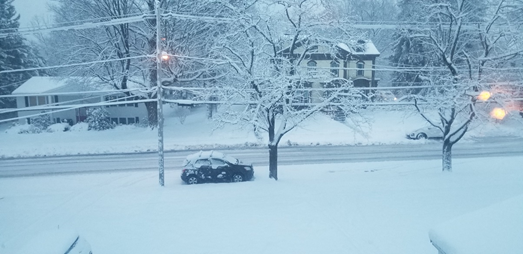
Waking alone, I step out to open the drape to see if it has snowed. If it has then I’m on landlord duty to wait for the snowblower to arrive, so my tenants can get to their cars. If it hasn’t snowed then I am thankful, not that the snow-white lawns and rooftops aren’t magically transforming, it’s that time of year when the power goes out or some other nuisance like scraping snow off my car and porch.
Then thoughts leap like little squirrels, from musing on my friends, who I need to call, do I feel like writing today, can I stomach thirty minutes of news and a bit of punishment for past mistakes. The one thread that rises in nightmares, and the first moment I wake up is unconquerable, fear is a thread I cannot snip and toss away. Fear is really about the unknown, we cannot supersede circumstances that are in the waiting room of our lives. Either they have already occurred or you know they are on their way to your front door.
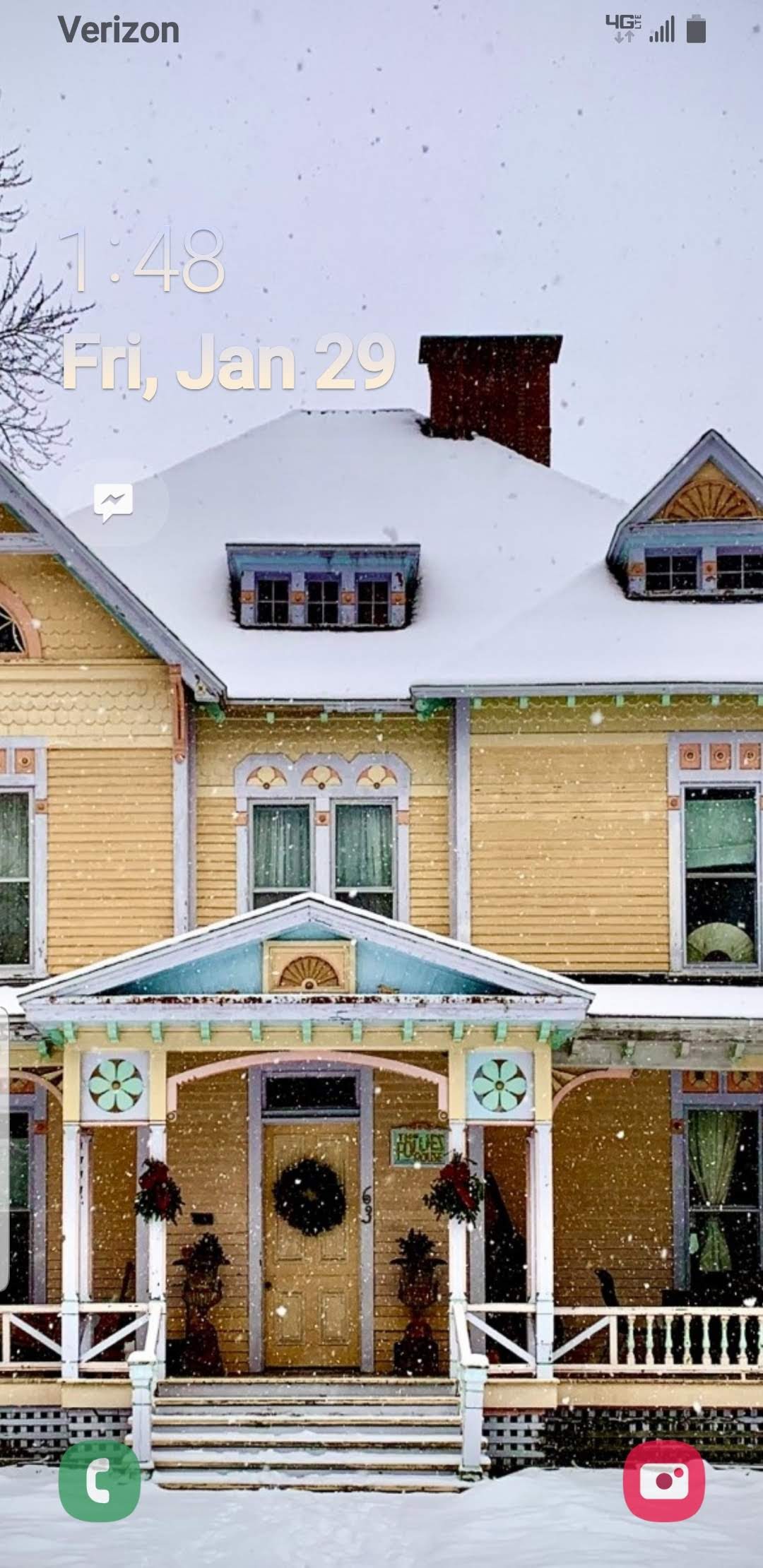
THE FOLLIES HOUSE
Now with the coldness, at six or seven in the morning, I crawl back in bed with coffee and think of the past, then the present, then the future, and then my thoughts drift like snowflakes. You know the saying when you are despondent or troubled you will be told to keep busy. I have not understood that advice until now. My life prior to the last two years was dizzy bizzy. And yes, it eliminated fear and malaise, so now without all the lists, commitments, and responsibilities absent, I am on time with my thoughts.
I’ve written in the genre of Creative Nonfiction, integrating the events through dialogue, journal entries, and a third-person narrative. Within three locations, Santa Fe, New Mexico, Los Angeles, California, and Saratoga Springs, NY. Greta (me) exposes the mutilation gaslighting abuse inflicts on her emotions, psychology, mental and physical health, and her finances.
I ROSE AT 3:00 AM to turn the heat on, pick up my writing journal, and discern the week’s theme. I wonder for a moment if I should boil water for tea or coffee, and settle on decaf. The street is hollowed like a tunnel, the light of day is shining in some distant country, and the sky appears tinted with primer. Somewhere someone is dressing for work, breathing by the tick of the clock until he or she ( can’t figure out the right pronouns) must report for work.
The draft of sleep lingers in my eyes, and my feet shuffle on the wood floors while I grind the beans and think through the remains of the week. There are themes to our lives. Sometimes a year, sometimes one single day launches the theme, or it may just tumble into our path unexpectedly and replace whatever we were holding on to dearly, and deliver something unpleasant, like sickness, or separation. The sensations leading up to my theme jilted my creativity, and the pages I wrote were jammed with contradictions, maybe they still are.
Thoughts begin to form and ruminate, what is important? The theme of my week began when I finally was in the Dentists office. It’s been a year, and at sixty that was enough. Now Dr. FX’s office calls me every six months because I am over sixty-five. Still can’t really grasp my age. When I was thirty-something sixty-eight seemed very old. Do you remember that?
Dr. FX is the Music Man dressed in a white tunic. When he comes into my cubicle, he sort of prances on his toes and gives me an elbow safe bump.
“ Hello, oh I see,” as he looks into my mouth that has been open too long and my cheeks start to stiffen. The hygienist takes that white suck-up tube out of my mouth.
“ She has some tarter that I can’t remove so I suggest she come back because her gums are so sensitive and nonvaccine her for the water treatment .”
Dr. FX nods and bounces out of the room. Now she begins to sort of authoritatively advise me again that I have serious tarter. I think this is the third time.
“ I think I got a little lazy flossing during covid.”
“Everyone did.”
“And I also started snacking on those crunchy health bars at night.”
“That wouldn’t cause that.”
Now I am ready to leave and I’m elated to get out. The receptionist starts talking and advising me about Dental Insurance and she leaves her desk and meets me in the waiting room, and starts stretching.
“ I have to do this as much as I can, sitting in that chair all day long.”
“Oh, of course,” I raise my arms and swing my hips beside hers. I walked out into a day of clouds and a peek a boo sun feeling a mood change, a spark of energy from a few moments of improvisational dancing. We all crave an irreplaceable swarming of joy, that comes unexpectedly. I was awakened to my detachment from feeling truly alive.
Writing with a pen is so different from the keyboard, journaling is always with a pen, but columns are on the keyboard. I understand what tranquilizes all the peripheral complaints, mental pains, and wounds that lie dormant or at least manageable. Without thinking of the tormented hours, I think of the comforts of exhibiting my life on paper. My desk is sealed into a corner of the bedroom, next to a double pane window (original 1885) forty feet in length. It is not the act of writing with pen and paper moving along at a steady rhythm; it’s the activation of the heart and mind, collaborating to unravel the relevant from the irrelevant. To reach this state of matrimony a writer needs not a Tuscan Villa, or a Moorish Castle, but experiences that flake off the skin, or recall of the experience that gives it relevance.
I return to the porch for one more gulp of landscape that I share with the stars. The street is unfamiliar, a temporary scene like a bus stop, and I am merely waiting to move on. Some of the neighbors are friendly, some have no interest, one kind of spies on me when he thinks I’m not looking. There’s a reason for that but it’s too much of a separate story right now.
If I continue to roam around the task of writing this story, the intensity of irritation will escalate, my neck and shoulders will not loosen, my walk will be feigned, my smile forced, my heart longing for padding, my ego striving for recognition in the wrong places, and my soul roaming the hallways at 3:00 in the morning. I read a quote the other day on some website, to paraphrase: When I’m writing I know I can’t do anything else. The theme of the week is to bring back LouLou, a clownish, spirited, curious, joy seeker.
I’ve written in the genre of Creative Nonfiction, integrating the events through dialogue, journal entries, and a third-person narrative. Within three locations, Santa Fe, New Mexico, Los Angeles, California, and Saratoga Springs, NY. Greta (me) exposes the mutilation gaslighting abuse inflicts on her emotions, psychology, mental and physical health, and her finances.
I’ve written in the genre of Creative Nonfiction, integrating the events through dialogue, journal entries, and a third-person narrative. Within three locations, Santa Fe, New Mexico, Los Angeles, California, and Saratoga Springs, NY. Greta (me) exposes the mutilation gaslighting abuse inflicts on her emotions, psychology, mental and physical health, and her finances.
I wonder what you all are doing this July 4th. The last year had pressed us closer, and friends from years past have knocked on my FB door. Someone switched the light on our lives and I for one will find pages of material as a memoirist to unleash all that happened within and without. What took me all the way down was seeing the number of deaths. NY lost more than thirty-five thousand people, that would be like all of Saratoga County.
I vote for a Memorial somewhere in the US, maybe a wall, inscribed with the names of those lost to Covid-19. Grateful is the word of the times. I wish you all a big, loud, closely adjoined unmasked party.
I’ve written in the genre of Creative Nonfiction, integrating the events through dialogue, journal entries, and a third-person narrative. Within three locations, Santa Fe, New Mexico, Los Angeles, California, and Saratoga Springs, NY. Greta (me) exposes the mutilation gaslighting abuse inflicts on her emotions, psychology, mental and physical health, and her finances.
If you’re a writer, then I imagine you are either writing a screenplay, historical book, or commentary, or you are in the other class; how does reimagining the USA come into my writing without offending someone. For me it is too soon, my thoughts are awry, like blowing leaves dropping from their branch in Autumn. There is shock, fear, and distrust rattling our recent liberation from the directives, warnings, citations, fines, crumbled businesses, life savings, and jobs from COVID-19. I’m still mourning three million lives unexpectedly ending in a hospital without any family.
My chutzpah does not rise to the occasion of revealing my opinions, because I don’t want to be found, and renounced because I said pregnant instead of birthing mother. I hope someone writes a new dictionary we can keep in a safe place in case we are asked to speak. Those of you in your late sixties, I mean is this welcoming or alarming? Have you had this conversation,
“You’re a Republican! or You’re a Democrat!”
Talking about Politics today is like revealing your net worth. The most pitiful, aggravating, incendiary, and the repellant outcome is that today everything is, whose side are you on? This is not my kind of party. Maybe ask the Pillow Man to join in on a hearing or vote in congress, and afterward, have a pillow fight and some cocktails.
I’ve written in the genre of Creative Nonfiction, integrating the events through dialogue, journal entries, and a third-person narrative. Within three locations, Santa Fe, New Mexico, Los Angeles, California, and Saratoga Springs, NY. Greta (me) exposes the mutilation gaslighting abuse inflicts on her emotions, psychology, mental and physical health, and her finances.
Looking west to a smear of dusty crimson sunlight, a young man of twenty stood on the shoulder of Highway 66 waiting to hitch a ride. A powder blue Cadillac pulled up and the lad was caught in a puff of loose gravel. When the dust settled, a woman dressed in a two piece matching suit leaned over from the driver’s seat. “Say fella, can you drive one of my cars to California? I’ll pay the expenses,” she yelled out the window. Another Cadillac pulled up next to hers with a jerk stop. The lad stared into the shine of the car. It looked like wet paint and he was tempted to touch it. “Sure will, yep I’ll do that. Should I get in now?” The young man answered. “I need to see your driver’s license.” She added. The man hastily drew out his license from a dusty plastic cover inside his billfold. She looked it over, and smiled. “All right Maurice, keep in close to us on the road, don’t get lost. We’re going far as Needles.” Maurice held tight to the steering wheel, ‘Geez, ain’t this great, what a car. I’m going all the way from Nebraska to California in a Cadillac.’ He’d forgotten about the sharp pains of hunger, and bloody sores on his feet. Now he was sitting on warm leather seats, with the cold night air off his back, and ten dollars in his pocket.
Sixty five years later, I’m walking down the street where Maurice lives. We haven’t met yet. I don’t meet my neighbors. I move before I have a chance to care about them. It comes easy to me, being a loner. Then I met Maurice.
I’ve written in the genre of Creative Nonfiction, integrating the events through dialogue, journal entries, and a third-person narrative. Within three locations, Santa Fe, New Mexico, Los Angeles, California, and Saratoga Springs, NY. Greta (me) exposes the mutilation gaslighting abuse inflicts on her emotions, psychology, mental and physical health, and her finances.