Ella blew out tunes like a smoke stack, and her face drew more sweat with each soulful sound. By the second song, the sweat was pouring down her face and into that gorge like cleavage that heaved with each breath. I was a child and didn’t understand the emotions that distorted her eyes and mouth. Ella, crowned by a sizzling hot spotlight overhead, transmitted every flaw and feeling on her face. I hadn’t seen a singer suffer before. I looked up at my mother and started crying.
“ What’s wrong sweetheart?”
“ I’m afraid she’s going to die.”
My mother whispered assurances that Ella was not going to die. I kept crying. She then excused us from our table and I followed her into the Powder Room. She sat me on a chaise lounge and wiped my tears. The expansiveness of the Powder room, compared to the ones today, was like being in someone’s bedroom. Soft cushioned chairs, a long dressing table speckled with ashtrays, perfumes, and miniature toiletries. We stayed there until Ella finished her show. Mom didn’t show her disappointment, she rarely showed despairing emotions, or caused me to feel ashamed of my behavior. Looking back fifty years later, I’m reminded of my mother’s selflessness and how a legend can drop down your path, and you don’t even know it.
Again, looking back fifty years later, my succession of travel diaries is dim by comparison to the Vegas memories. Swirling amongst the élan of prohibition era abandonment, gangsters were the Rothschilds, the royalty of the scene, and the non-members loved it. That’s why the women behaved Roaring Twenties ZaZu Pitts and Louise Brooks emancipated. Everyone was free of their wrappings and responsibilities. They were partying with the men they’d first met on screen, played by Bogart, Robinson, and Cagney. I remember them now as being childlike. The outsiders may have been living the childhood stolen by WWII and the Depression. Their veiled heroes were gangsters who’d been breaking the rules since being ripped from their mother’s breast.
Then, one day the in 1963, the Rat Pack landed in Vegas, wearing black Tuxedos and intercepted the public’s fancy imitations of living vicariously. Joey Bishop, Peter Lawford, Sammy Davis, and Frank Sinatra invited Vegas to drink, make love, and gamble. And they did. If you find anyone over seventy in Vegas today, ask them about the Rat Pack, Johnny Roselli, or Jack Entratter, and you’ll know I’m not exaggerating. Vegas was the time of their lives. The drugs were minor, an upper or a downer to sleep, but no one came to Vegas to OD or commit suicide. The deaths were in the desert, between the gangsters’. This was all before Tony Spilotro got wheels on his greed and went speeding into his own death. TO BE CONTINUED
When I was eight years old, our home burnt to the ground in the Bel Air, CA fire, and everything we owned fell to ash. Shortly after my mother moved us to an apartment in Brentwood, a mammoth carton arrived and was placed in the center of the living room. My mother cut it open and urged me to look inside. I sat cross-legged on the avocado green carpeting and discovered a heap of brand-new Bermuda shorts, matching tops, and dresses.
I quickly shed my worn trousers and stepped into a new outfit, dancing about as I zipped myself in. My mother watched, and echoed my childish yelps of elation.I learned they were from my Aunt Millicent and that she lived in New York, and I’d met her when I was a child.
Close to ten years later, my father called and ordered me to his apartment. He said that Millicent was coming over. I knew by now that Millicent was Benjamin Siegel’s daughter, and Ben was my father’s best friend. He was sitting on the same chintz covered sofa the night Ben was murdered and witnessed Ben’s eyes bleeding down his face.
When my father answered the door, I watched as they embraced. Millicent had tears in her eyes. She walked over to me, and took my hand. I looked into her swimming pool blue eyes and felt as if I was drowning. She sat on the edge of the sofa and lit a brown Sherman cigarette. I studied her frosted white nails, the way she crossed her legs at the ankles, her platinum blonde hair, and the way her bangs draped over one eye. What impressed me most was her voice; like a child’s whisper, her tone was delicate as a rose petal.
I spent the rest of that afternoon memorizing her behavior. She emanated composure and a reserve that distanced her from uninvited intrusion. Over the next few years, Millicent and I were joined through my father’s arrangements, but I was never alone with her. When he died in 1982, she was one of three friends at his memorial service, just as my dad was the only friend at Ben Siegel’s funeral.
As the years passed, and my tattered address books were replaced with new ones, I lost Millicent’s phone number. When I began researching my father’s life in organized crime in 1996, I gained an understanding of my father’s bond with Ben Siegel. I reconnected with several of Dad’s inner-circle, but Millicent was underground, and now I understood why.
Last year I received an email from Cynthia Duncan, Meyer Lansky’s step-granddaughter. She told me about the Las Vegas Mob Experience, a state-of-the-art museum in the Tropicana Hotel, that will take visitors into the personal histories of Las Vegas gangsters. Despite my apprehensions about the debasing and one-sided publicity that characteristically surrounds gangster history, I called the museum and was told, “Millicent would like to contact you.”
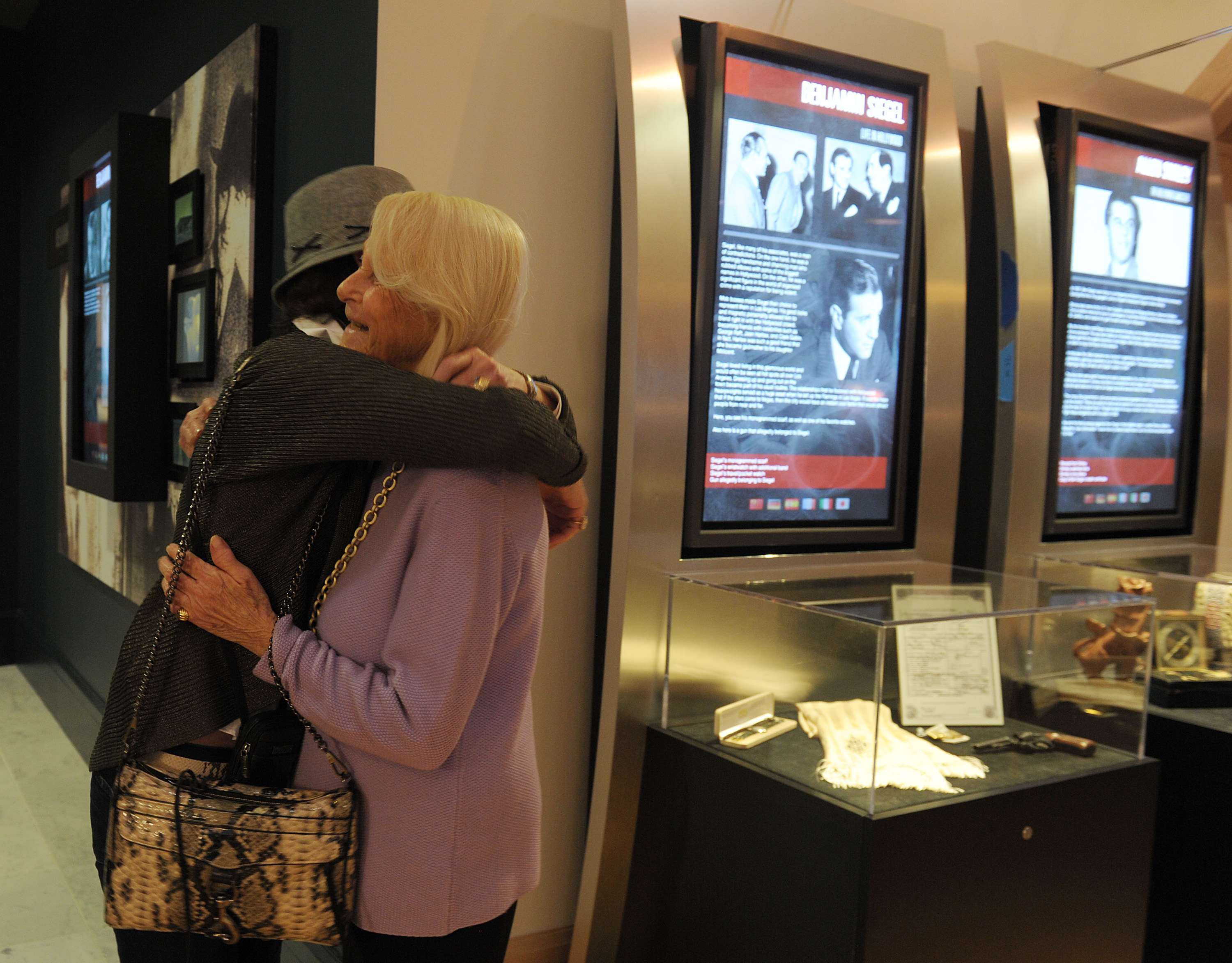
A month later, I was waiting for Millicent in the Mob Experience offices in Las Vegas. When she walked in, I stood to embrace her, and this time the tears were in my eyes.Millicent’s voice and regal posture was unchanged, “Our fathers were best friends, practically attached at the hip. Your Dad was at the house all the time. I’ll never forget when he met me at the train station to tell us about my father’s… death. Smiley was very good to us. My mother adored him, too.”
Mob Experience
March 27 2011
Photos By Denise Truscello
The Mob Experience Preview Center was like a family room to me, because some of the men featured had been my father’s lifelong friends and protectors. I stopped in front of the Ben Siegel display case and saw an object that was very familiar. My father had the identical ivory figurine of an Asian woman. I still have it. So much of their veiled history was exposed. Between these two men was a brotherly bond that transcended their passing, and was even evident in their shared taste in furnishings.
After I returned home, Millicent and I talked on the phone.
“Your father belongs in my Dad’s room. They’ll just have to make Mickey Cohen’s room smaller.”
“My father hated Mickey”, I said.
“So did mine! When are you coming back? I’ll kill you if you don’t become part of this”.
I dropped into random reflections; the adventures of Ben and my father, gleaned from books, newspapers, FBI surveillance files, films, documentaries, and conversations with people who knew them both. I dreamily visualized these two men, striding along the streets of Beverly Hills when it was a two-story brick village, without islands of garish lighted palm trees, paparazzi, and limousines. They might stop at Al Perry’s Beverly Hills Athletic Club for a steam and work-out, and then take a drive in Ben’s convertible to Santa Anita Race Track. At the track, they’d sit in the Turf Club, immersed in the perfume and red lipstick glamour that Lana Turner, Betty Grable, and Rita Hayworth epitomized. They, and my mother, became the characters I had to write about.
On balmy summer nights, Ben, and Al drove along Sunset Boulevard, stopped in for a few rounds at Ciro’s or the Mocambo, and then played cards at Dad’s apartment at the Sunset Plaza. George Raft was there, too, along with a funny little Runyonesque character by the name of Champ Segal, and Swifty Morgan, with a pocket size fortune of tricks and dice. The FBI were parked in a sedan across the street, watching. Maybe they had an informant planted in the building, like they did when I lived with my father at the Doheny Towers. I know Dad watched Ben’s back, not just because Ben moved so quickly, and in so many directions, but because he was studying him, like an actor studies his character, aspiring to absorb Ben’s magnetic mannerism.
Early the next morning, I opened the shutters of our Havana-hip suite at the Tropicana and looked out at the misty peppermint pink sunrise and flashing multimedia billboards. My eyes sank into the stimulation, like being thrown into a food processor of human temptation. If Ben had lived to build his Monaco-chic hotels and casinos, I’m sure he would have done it differently. He’d been to the French Riviera, and experienced European élan. More importantly, Ben was different, but not in the way you’ve been asked to believe by reporters and law enforcement. Ben was noble, and his violent temper, cost him his reputation. His loyalty to his partners, and his family was intact. What the press wrote about Ben was handed to them by Hoover, two-faced columnists, and informants. He was more than handsome, generous, and fearless; he was an icon, with the finesse for embellishing strangers with importance, facilitating dreams, and taking a fighting stand against Anti-Semitism.
Newspaper reporters from that era like Mark Hellinger and Damon Runyon knew how to write about Ben, and they are the sources I used to draw my own Ben Siegel portrait.It’s easier to read books than go out and interview the relatives, rabbis, and community where they lived.
My dad came into the life by way of a friendship with Ben. He wasn’t physically violent: he could holler loud and intimidate guys, but his real asset was that bullet-proof friendship.
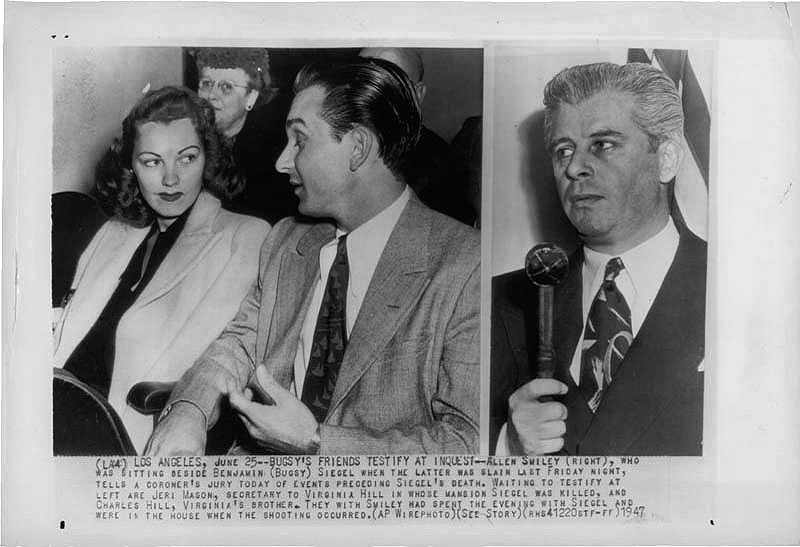
As our jet roared upward, I crunched against a pocket-size window, and studied the paper-thin rows of glass and marble hotels of Las Vegas, the sprawling monopoly of gated communities, each one sandwiched between a slice of palm trees, sprawling to the base of the muddy mountains. Ben, Meyer, and a few others like Billy Wilkerson, Johnny Roselli, Moe Dalitz, and Allen Smiley, peeked beyond the dusty sand dunes, and in the mirage, they saw an oasis. The pioneers of Vegas were not committing any crimes when they financed the building of the first hotels. They were businessman carving out a legitimate future. More importantly, they were demonstrating to the Jewish community that it could be done. You could rattle respect like a Rockefeller or a Kennedy.
When I arrived home, an unfamiliar upright pride and surety about myself surfaced. It is ironic that what my father shielded from me is where I needed to be: among people who understand my family history, and accept it.
It’s been seventy-five years since Ben and Al sat by side, figuring out the next bet. Now, their possessions will share the same room. And from those collections, stories will emerge, and new information, and more questions, and this time their daughters will be there, in the open, to speak in reverence of Siegel and Smiley.
Everything in my path leads me to understanding the men that turned to crime so that they could sit in first class and order Dom Perignon. If my father left a ten-year career in film making with Cecil B DeMille to join Ben Siegel, then Ben’s story has yet to be written.
Today, I look at my father’s collection and see It tells the story of a remarkable life… the precious artifacts of a life onthe edge: photos that document an album from his unnamed sweetheart during his twenties; James Metcalf poems clipped from newspapers; wedding photos; Flamingo party photos; his phone book filled with names like H. L.Hunt, Eddie Cantor, and O.J. Simpson; heartfelt letters to Meyer Lansky and others; and FBI memos that describe my father as a pimp, a murderer, an extortionist and a Russian Jew.
Ironically, the journey to discover my father’s story ends in Las Vegas; for my dad, who was blacklisted from Vegas, that is poetic justice.
THANK YOU FOR READING. IF YOU LIKE THIS PLEASE LET ME KNOW.
I wasn’t allowed in the Copa when the Rat Pack performed; I listened to the uproar
The Sands 1963 (Photo credit: D’oh Boy (Mark Holloway))
from outside the door, and caught a glimpse when Uncle Jack let someone in. It was a wild charade of slapstick, improvisation, and politically incorrect slurs, swearing and insults, all dressed up in comedic song and dance.
That’s how I remembered Las Vegas. When I returned for the grand opening of the Mob Experience Las Vegas, I bounced into the spot lights, press conferences,
introductions, and interviews in a shiny aquamarine pants suit, I hadn’t worn in six years. Congregating with the sons and daughters of my Dad’s associates, who were raised in a similar fashion of privilege and secrecy, was my homecoming to
Las Vegas. There I was, speaking into a microphone about my father, who obsessed over me, as I was now doing in Las Vegas. What was the importance of this seventeen year battle? To re write history that was written about him, by people who never even met him. They couldn’t get the camera off of me, “Luellen, we’ll turn it over to the station now,” while I am still stating the case of Allen Smiley. What would Meyer and Dad and Roselli think of all this. They’d say, “Wish the Brain (Arnold Rothstein) could have seen this racket.
The valet reminded me of the munchens in Wizard of Oz, because of their berets, and tightly fitted double breasted coats. But it wasn’t the valet or room service, or anyone that I recognized.
“Lucille, darling is everything to your satisfaction?”
“Hello Jack. Yes the room, flowers, and fruit basket are so lovely. Thank You.”
by Ronzoni
It was the smiling big faced, former bouncer of the Copacabana New York whose name I knew only as Uncle Jack.
Jack was subtle as a semi-truck; and if the world was coming to an end, I’d follow Jack. He had fingers thick as sticks of dynamite and he squeezed my blubbery cheeks until they turned purple. I knew a cheek squeeze meant the person loved me, so Jack didn’t frighten me. I learned thirty years later it was Jack Entratter; a man of chest heavy bullying, dinosaur New York threats, and answered to Frank Costello. I don’t believe he pulled out the Casino movie style butcher chopping that we always see. I just think Jack did what Frank asked, and Frank didn’t randomly demand nail stripping, ball butchering violence you see in the movies. Remember it is a movie.
My mother dressed up with a fur wrap (they wore furs in Vegas) and dressed me in a Pixie Town ensemble that was so starched I couldn’t bend my arm, and we went to the Copa, for the dinner show. Ella Fitzgerald was the feature entertainer of the night. If I wasn’t in a room at La Posada tonight, listening to Tito Puente and Johnny Pacheco, tipping a glass of Chilean wine, without all my files, and notes, I could reference many things about that night. I rented the house for the twelve days of Christmas and I cannot access anything other than what I brought. I could go googling all night, but it is close to time to eat, and parlay my chances in the lobby, meeting and greeting, as I feel I should do, because hotels are the only socially invasive venues left. I greet everyone who knows how to walk without revealing their miserable or self congratulating lives. I really like people who keep their triumphs and sorrows until the second or third time we meet. I don’t like digesting four courses unless I ordered them.
Ella, came out on stage, and we were seated under her heaving breasts, the first row, the closeness was dressing room intimate. There were others at our table but they were sort of like faded ghosts after Ella started her fireworks. TO BE CONTINUED.
I was marinating chicken breasts and watching the cherry blossom pink sunset splinter into a montage of broken clouds. In that instant, the men whom I now consider close irreplaceable friends — as much as my girlfriends — surfaced all at once. They hung down like a shadow over the men my father brought home, the gangsters that formed my first impressions of men.
How different these groups are. Do children with fathers who are doctors or stockbrokers perpetrate the same associations as adults? It is a lot more complicated to find characters as defiant, vocal and audacious as the men my father brought home to dinner. That is where my love for men started, and today I still delight in characters larger than life.
Doc Stacher was one I loved. He was right-hand bodyguard for Abner Zwillman, aka Longy, meaning the tall one in Yiddish, the head of the New Jersey outfit. Longy managed Newark all through Prohibition and on up until the 1950s. He and Doc were rumrunners and then became associated with Joseph Reinfeld, who allied himself with the Canadian Brofman Brothers’ distillery. They ran the largest bootlegging operation in the United States. For protection, they used Benny Siegel. For tactics, they consulted Meyer Lansky and Frank Costello. Doc was just over 5 feet tall, bald as an egg and so heavy lidded he looked like he was on dope. I remember him in white deck sneakers, without laces and bathing trunks, a Cuban Cigar sprouting from his lower lip and a permanent growl forming in his throat. He saw only one person, delighted in only one person, and that was his daughter, Joanne. She was my childhood buddy, the girl who would walk up to Frank Sinatra and demand that he take notice of her.
Doc was appointed headman at The Sands in Las Vegas. Joanne led me into pranks and casino sprees that drove everyone in the hotel nuts, except Doc. He rarely smiled and was forcibly tolerant of the world when Joanne was in his presence. I loved him for that. Without Joanne, he was gruff, cantankerous and he made me repeat every word, “Louder, I can’t hear a word you’re saying.”
Doc showed no interest in non-threatening surroundings. He had the eyes of a man who’d seen everything. He was always looking down to the ground, lost in some private thoughts, his hands pinned behind his back. He paced the hotel lobbies and pool grounds waiting for Joanne.
The government tracked him all his life. In 1963, they caught up to him with an IRS tax bill. He settled and, instead of prison, Doc had himself deported to the Sheraton Hotel in Tel Aviv.
The next man to make a lifelong impression on me was Johnny Roselli. He came into my life on the day of my mother’s funeral. He was a man who filled the entire room. Everyone else vanished, even conversations stopped when he walked in the door. It wasn’t the fear, like I’d felt with other men, Johnny’s aura was electric, like a wire ran the perimeter of his body, and if you got too close, you’d be shocked. His power was his defense against the world leaders he managed in politics and crime. He got tangled up with the Kennedys, Castro, Hollywood and Hughes. Because of his high-wire act, he landed in the bottom of Biscayne Bay.
I searched for my own Johnny-style man for many years. I didn’t know he was all wrong for me, for any woman with sensitivity to extravagance and danger. He was my father’s protector, against the inevitable death threat of rival gangsters. I wanted someone like him in my corner.
When I think of how these men filled in the open spaces of my impressionable mind and took shape, it makes me laugh. I didn’t know they were gangsters. What I witnessed was the fearlessness, the enormous generosity between them, the loyalty and trust, and the respect for each other’s families. I thought the ones outside our circle were the losers. They didn’t have the privileges, the money, the connections that we did.
When I finally woke up from the long sleep, it was all right. I walked out of the dream with the same bottomless love for men, but now I choose the good guys, as long as they’re not too good.
WHERE TO BEGIN THIS STORY OF A FATHER THAT I ONLY CAME TO UNDERSTAND BY READING HIS FBI FILES, BOOKS ABOUT MOB HISTORY WRITTEN BY LAW ENFORCEMENT AND COLLEGE PROFESSORS, AND DOCUMENTARIES PRODUCED BY FOES OF MY FATHER.
My last year with Dad was 1981. Naïve, and unconcerned with where I was headed, or how I’d get there if I figured it out, I was spinning around in an executive chair; waiting for the big hand on the black and white office clock to set me free. Time didn’t pass; I hauled it over my head, in my bland windowless office, under florescent glare. I was trouble shooting for an ambitious group of USC guys as they gobbled up all of Los Angeles real estate. Without any real sense of survival or independence, my life was in the hands of my father.
“Meyer’s coming to see me; haven’t seen the little guy in twenty-five years.” Dad said during a commercial break.
“Meyer Lansky?” I asked as casually as he’d spoken.
“Who else?”
“Why did you two wait so long?”
“It’s no concern of yours; he’s my friend, not yours.” I was twenty-nine years old and still verbally handcuffed.
The three of us went out to dinner, and while the two of them spoke in clipped short wave syndicate code, I noticed that neither one of them looked at all happy. It was rare to catch my father in public with a friend, without raucous laughter, and storytelling. My attempt to revive the dinner conversation with my own humor,returned two sets of silent eyeball commands to resist speaking.
Several months later I received a call from Dad asking me to come over to his apartment, he had collapsed on the bathroom floor. When I arrived, he pleaded for me to stay close by. “I’ll be all right in a few minutes; I just need to catch my breath. ” I sat outside the bathroom door biting my nails, and waited, like our dog Spice, for my orders. For the first time in my life, he was weaker than I, and my turmoil centered on that unfamiliar reversal of roles.
“Daddy, you should go to the hospital, I’m calling the ambulance.”
“Nope, no ambulance, I’m not going to the hospital, hang up the phone right now.” I pried the bathroom door open, and crouched down on the floor to hold him in my arms. It was the first time I’d held him like that, he felt so heavy and warm. When his eyes closed I called the ambulance and waited. Two attendants arrived, and immediately took his pulse. “Why didn’t you call sooner, within minutes he would have died?”
“ I couldn’t–you don’t understand, he wouldn’t let me. ” They grimaced at me, and removed him from my arms. Over the next few weeks I learned only that he had a failing liver. The mirage of doctors and nurses flowing in and out of his room, assured me that this was just a temporary set back. Soon he would be back at his favorite table at the Bistro Gardens, dining with young aspiring starlets.
When you love someone whose life is draining into illness, even their hollering and gripe is a relief. For the first time in my life, my father did not frighten me. I don’t know if it was because he was vulnerable, and dependent on me for comfort. But the feeling was ecstasy, the feeling of being inside his world, and not excluded.
“Imagine sending nurses in my room at six in the morning. Boy did I give them hell. They won’t soon forget the name Allen Smiley. They’re not treating me like a social service case. “ His voice came back and the salty blue color of his eyes. I took my father home, and sat on the crushed blue velvet sofa while he made his phone calls.
” Say what’s up buddy, what can I do for you? I’m tougher than you think; my daughter and I are going for a walk later. What can I do for you? When are you going to Vegas? Yea, I see all right, don’t worry about a thing, no I’ll handle it, I insist now, don’t argue with a sick man, you rascal. Don’t send flowers yet, send champagne!”
Within a few weeks, my father was back at his favorite table at the Bistro Gardens wearing tinted shades. His passion for the company of females, was reciprocal, they loved him. He sent them flowers, and picked up their checks. He could wave his magic wand of favors at the studios, or for concert tickets, and the chips rolled. He kept up that pace for six months.
All my life he had made things happen for me, now it was my turn. I collected the telephone messages, walked the dog, and cleaned up the house. It was strange, to putter amongst my father’s things. I opened drawers cautiously, thinking he may have alarms on things. He had a pile of papers stacked on his desk, and unopened mail. His personal toiletries were still in immaculate order, his brushes, and collection of colognes. A heavy sadness, presided over the room. I noticed he was reading “Honor Thy Father.”
During his sickness, he presented a man only slightly off balance. He continued to camouflage his liver failure, like he’d masked his identity all his life. I recognized the anguish in his eyes, but I had to pretend it wasn’t there.
My character changed overnight. I did not hesitate over minor decisions, cower if he yelled, or hide inside myself. Something in him was now part of me. We were fighting together. One afternoon we took a walk in Holmby Park.
“What matter’s in life is that you don’t allow people to walk over you, see. No one looks out for your best interest, except your old father. You’ll see, it won’t be so easy without me.”
“Daddy, don’t talk like that, come on.”
“Why not, I’m telling you the way it is, what do you want, for me to lie to you? Everyone else will lie to you! Now, I’ve told you that I’m donating my body to USC Medical center. I already have it arranged.”
“Daddy, I’m not listening. Don’t talk to me about that,” tears welled.
“You must listen little sweetheart. There’s no expense for you to be burdened with. I wish I put more away for you, but I’ve always told you, haven’t I….that I spent everything I made. I only hoped that things would have changed…. be that as it may, you won’t have any expense.”
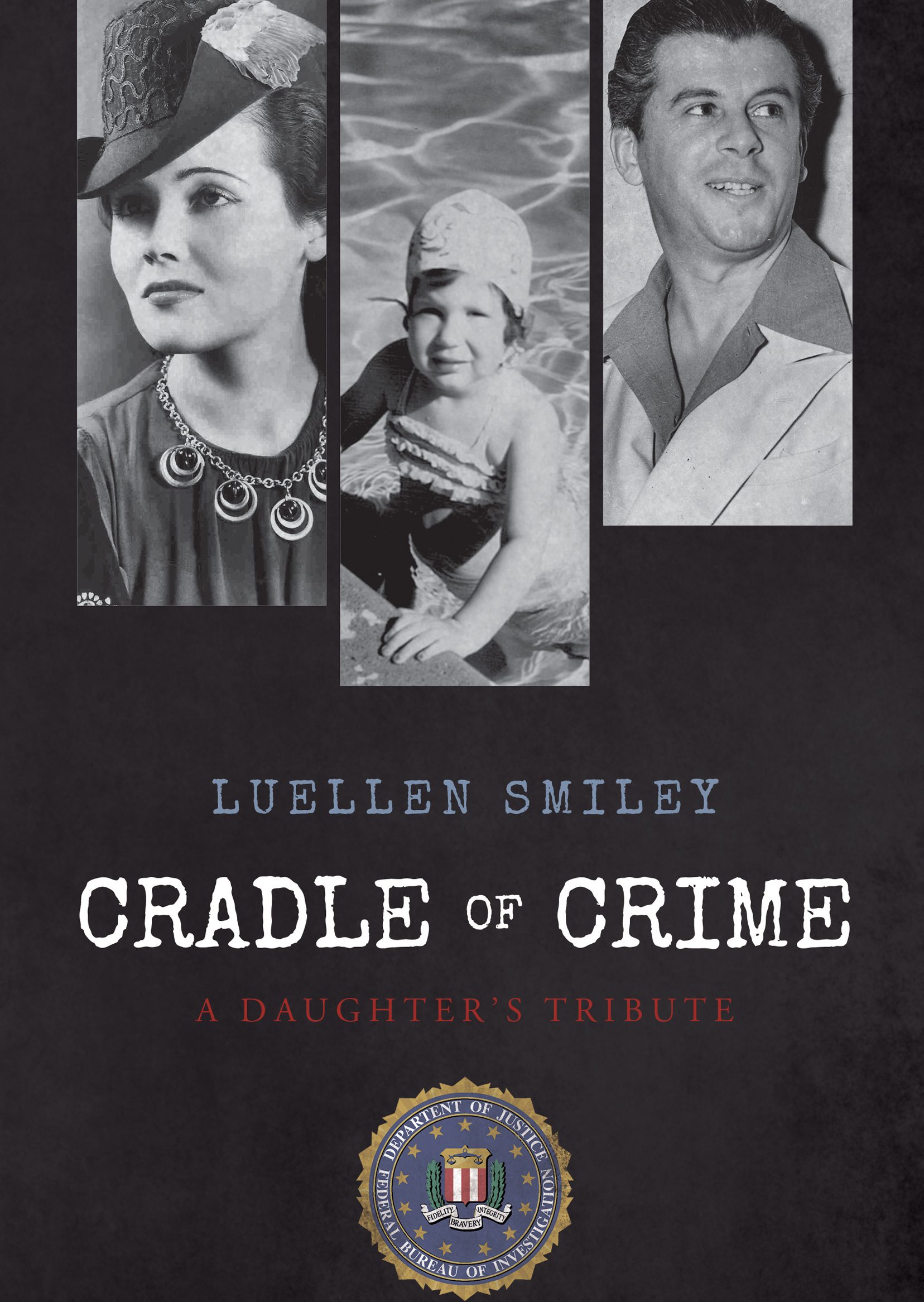
Smiley’s Dice Adventures in livingness
The throw of the dice this week lands on the adventures in the making. How could I have known 15 years ago?
Back then I had but a finger-bowl of resources, a blue chair, a desk, and a typewriter. Everyday I wrote into the flame of discovery looking for my mother. My notebooks were sketches of this woman I never knew. The absence of the most ordinary information, like where she grew up in Newark, what sort of neighborhood, what her father did for a living, what schools, she attended, and later on, what experiences she had modeling in New York. The closest I got was by reading John Robert Powers book about the modeling agency he started in 1923. He assigned unemployed Broadway talent to his agency to be photographed for corporate campaign advertising. According to John he was the innovator of the modeling agency concept- beautiful women and men will sell products to the public, the public never would have thought of buying.
I found her name in the index, Lucille Casey. She joined the agency when she was 16 years old. John groomed the models; and assigned disciplinary perfection in dialect, manners, appearance, character, and intellect. Powers Girls married anyone they wanted. They were invited to all the important society events, they were given card Blanche at the Stork Club, and the Morocco and they were transported to celebratory city functions. They met men of all means, character, and class.
After I read the book, I thought about what my father used to say, “ Your mother could have had any man in the world, but she picked me. Don’t you make the same mistake.”
That is a complex summons for a teenage to understand.
I sat in the blue chair and waited for the flares of information to come down to earth. After two years, I had very little to build a full page. My mother’s history was lost, her friends had vanished, or would not talk to me. She did not leave a diary. Her photo album as a model was all I had. What could I see in those eyes, and smile? Perfection. I gave up the search, and switched over to my father. The government documented his daily activities, and what they didn’t hear or see, was exploited in newspapers, documentaries, and books.
There was one woman who was alive, that knew intimate details of my mother, because I had met her, and she made it known to me she knew. That was Meyer Lansky’s wife, who went by the name Teddy. Women have a distinctive look when they are withholding secrets. Teddy always had that look when she brought up my mother. I told her I was writing about my father and mother and she said, “Let them rest in peace.” I didn’t take her advice.


 d responsibilities. They were partying with the men they’d first met on screen, played by Bogart, Robinson, and Cagney. I remember them now as being childlike. The outsiders may have been living the childhood stolen by WWII and the Depression. Their veiled heroes were gangsters who’d been breaking the rules since being ripped from their mother’s breast.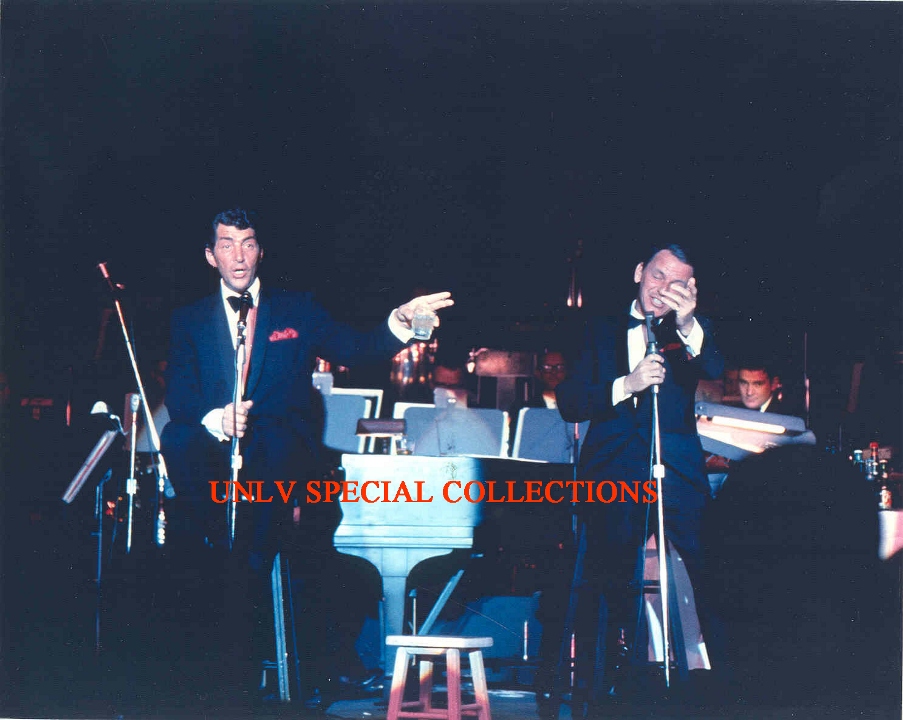


 ADVENTURERS IN LIVINGNESS