


Ella blew out tunes like a smoke stack, and her face drew more sweat with each soulful sound. By the second song, the sweat was pouring down her face and into that gorge like cleavage that heaved with each breath. I was a child and didn’t understand the emotions that distorted her eyes and mouth. Ella, crowned by a sizzling hot spotlight overhead, transmitted every flaw and feeling on her face. I hadn’t seen a singer suffer before. I looked up at my mother and started crying.
“ What’s wrong sweetheart?”
“ I’m afraid she’s going to die.”
My mother whispered assurances that Ella was not going to die. I kept crying. She then excused us from our table and I followed her into the Powder Room. She sat me on a chaise lounge and wiped my tears. The expansiveness of the Powder room, compared to the ones today, was like being in someone’s bedroom. Soft cushioned chairs, a long dressing table speckled with ashtrays, perfumes, and miniature toiletries. We stayed there until Ella finished her show. Mom didn’t show her disappointment, she rarely showed despairing emotions, or caused me to feel ashamed of my behavior. Looking back fifty years later, I’m reminded of my mother’s selflessness and how a legend can drop down your path, and you don’t even know it.
Again, looking back fifty years later, my succession of travel diaries is dim by comparison to the Vegas memories. Swirling amongst the élan of prohibition era abandonment, gangsters were the Rothschilds, the royalty of the scene, and the non-members loved it. That’s why the women behaved Roaring Twenties ZaZu Pitts and Louise Brooks emancipated. Everyone was free of their wrappings an d responsibilities. They were partying with the men they’d first met on screen, played by Bogart, Robinson, and Cagney. I remember them now as being childlike. The outsiders may have been living the childhood stolen by WWII and the Depression. Their veiled heroes were gangsters who’d been breaking the rules since being ripped from their mother’s breast.
Then, one day the in 1963, the Rat Pack landed in Vegas, wearing black Tuxedos and intercepted the public’s fancy imitations of living vicariously. Joey Bishop, Peter Lawford, Sammy Davis, and Frank Sinatra invited Vegas to drink, make love, and gamble. And they did. If you find anyone over seventy in Vegas today, ask them about the Rat Pack, Johnny Roselli, or Jack Entratter, and you’ll know I’m not exaggerating. Vegas was the time of their lives. The drugs were minor, an upper or a downer to sleep, but no one came to Vegas to OD or commit suicide. The deaths were in the desert, between the gangsters’. This was all before Tony Spilotro got wheels on his greed and went speeding into his own death. TO BE CONTINUED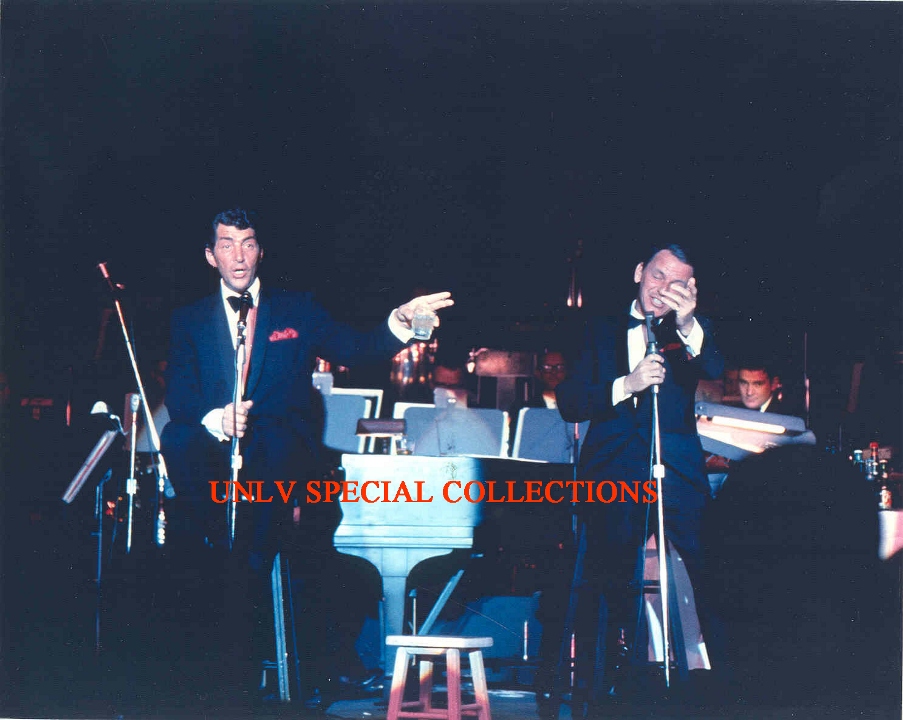
- AT THE COPA ROOM

