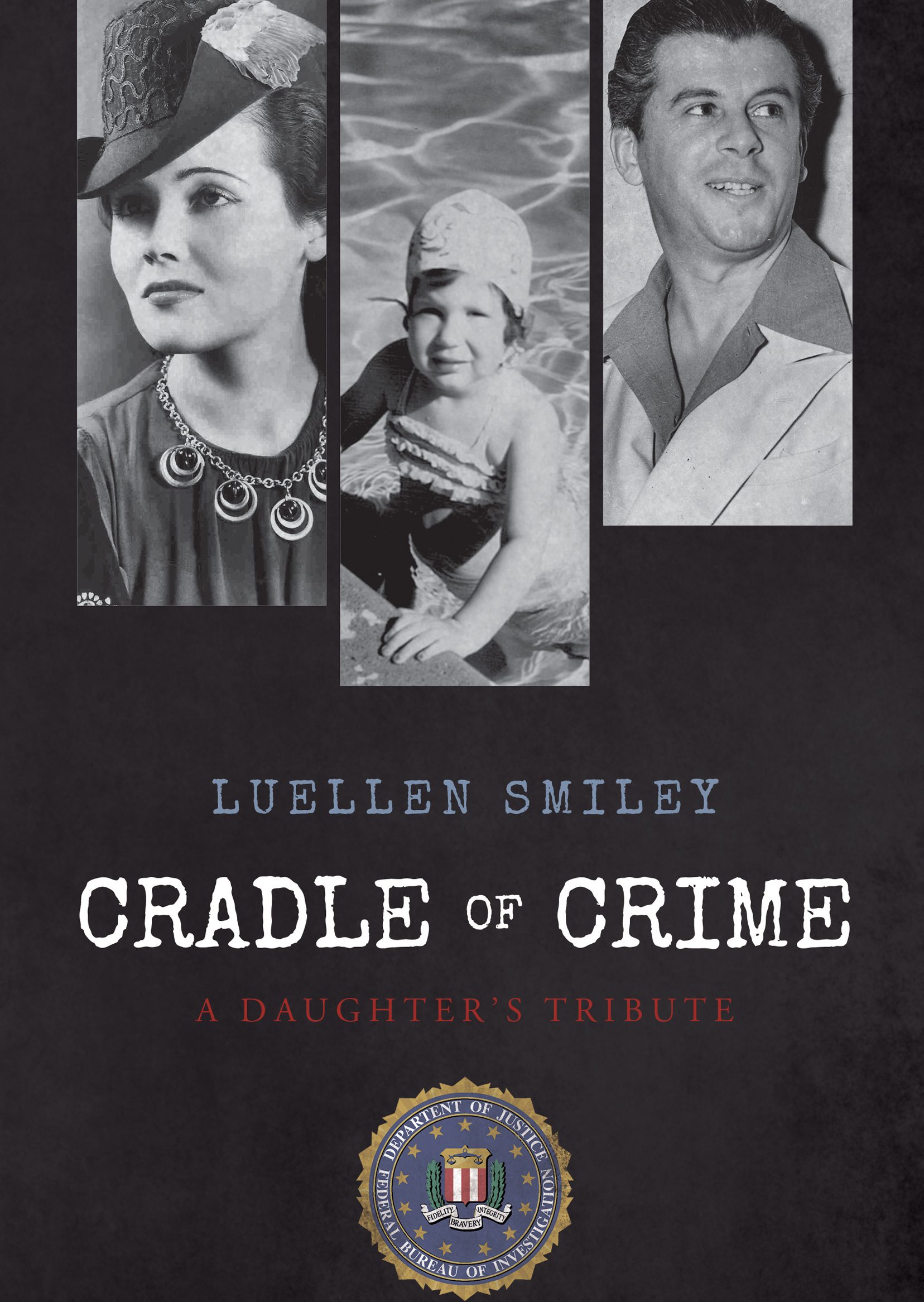

WHO IS BUGSY?


!Bh4GdiwBmk~$(KGrHqYH-C4EsMLP8z9dBLLYjivCm!~~_12

LUCILLE CASEY SMILEY

MGM MotherAll my life people have asked me the same questions:” What’s it like knowing your father is a gangster? How old were you when you found out? Aren’t you afraid of his friends? You know they kill people.”
I live in a temporary tide-pool, a lily
floating against the current, weighted
down by a suit of armor that shields me
from the beauty, love and freedoms stirring in my bud.

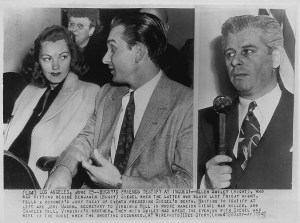
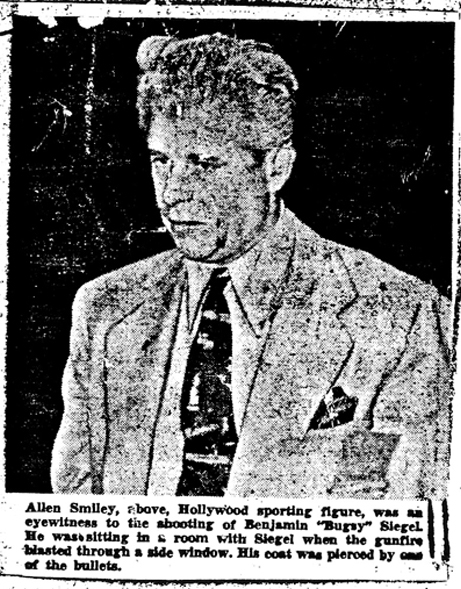
What seemed insignificant at the time was the diving board into my Dad’s history. I was watching a Bugsy Siegel documentary on my television in San Diego during 1993. It was the first one I’d seen. Three historians joined in on the violence Bugsy honored and esteemed. Half-way through the celebratory lynching of Bugsy and his pals, a reporter made the statement that ‘It’s obvious Allen Smiley was there to set Bugsy up for the hit.’ Andy Edmonds stated that Dad conveniently disappeared into the kitchen during the time of the shooting. It wasn’t until a photograph of my dad appeared on the screen; a man with thick graying hair that I noticed an expression I’d never seen, horrifying misery. I moved closer to the television to see his face up close. A kaleidoscope of emotions rose to the surface: anger, shame, curiosity, and disbelief. I was forty years old.
smiley aThe first time I’d seen those photographs of Ben Siegel slumped on that sofa; an eye bleeding down his face was a day back in 1966 at the age of thirteen. My best friend Dena lived in Brentwood with her divorced mother and siblings. We hooked in the unfamiliar and confusing imbalance of a broken home life. Dena was suffering depression after her parents divorced and I was dangling from my father’s fingertips hopelessly conflicted after my mother died. Dena wouldn’t let a day go by without calling me. ‘Are you all right?’ She didn’t like my father and her reasons were mature beyond her years, ‘Your father scares me.’ After school one afternoon we stopped in the Brentwood Pharmacy. Dena was looking at the book rack and I was following along.
“Lily, my mother told me your father is in a book, The
Green Felt Jungle. It’s about gangsters. Wanna see if they have it?” I agreed to look because Dena was interested, but it meant nothing to me. She twirled the book rack around as I stood behind her watching.
“That’s the book! Let me look first and see what it says,” she whispered. I could feel her arm tense up as I grasped it.
“Oh my God! There he is,” she said. We hunched over the book and read the description of my father, “Allen Smiley, one of Ben Siegel’s closest pals in those days, was seated at the other end of the sofa when Siegel was murdered.” Dena covered her mouth with one hand and kept reading silently.
“What does that mean? Who is Siegel?” I asked.
“Shush–not so loud. I’m afraid to tell you this. It’s awful.”
“What’s awful? Tell me.”
“Bugsy Siegel was a gangster in the Mafia. He killed people. Your father was his associate.”
“I don’t think I should see this.” I turned around abruptly to leave the drugstore. Dena followed me out.”
“Lily you can’t tell your father you saw this book. Please don’t tell him I told you.”
“Why not?”
“My mother told me not to tell you. Swear to me you won’t tell your father!”
“I won’t. Don’t you tell anyone either.”
A few days later after Dad left for the evening I opened the door to his guarded bedroom. I walked around the bed to a get a closer look at the photographs on the wall. It was the first time I could read the inscription.

DSC01871 - Copy


BOOM BOOM BOOM I’m DEAD


READING FROM DAD’S FBI FILE SOMETIMES BRINGS LAUGHTER.

TO: DIRECTOR, FBI  STRICTLY CONFIDENTIAL- ALLEN SMILEY:  WHITE SLAVE TRAFFIC, RACKETEERING, CRIME SURVEY LOS ANGELES, FALSELY CLAIMING CITIZENSHIP, PERJURY

TA-1 – (Means FBI agent one- There were twelve of them working the case.)

On February 25, 1948 Mickey Cohen invited Smiley and his girlfriend, Lucille Casey ( Mom) to the Cohen home for dinner. The invitation was accepted, and it is noted that this is one of the few times Smiley has visited the Cohen residence since the killing of Bugsy. During the Christmas holidays, Smiley refused to attend a dinner at Cohen’s stating he could not be seen with Cohen due to his own legal difficulties. On February 26, Smiley contacted ——-and stated he had been betting on Cohen’s stinking horses. Smiley expressed the idea that “it is going to blow up there any day.” Referring to Cohen’s place.”  During the course of the conversation between Smiley and —- it was interesting to note that Smiley did not care to discuss any matters and at one time stated, “ Listen: if this room is miked, boom! boom! boom! And I’m dead. The attitude of Smiley toward the Bureau is reflected on page two of the attached letter. Smiley stated “This country ought to be at war, with the FBI, the Gestapo, that Hoover, who indicted me for picking my nose, with all those other elements here threatening to overthrow the government and this and that.”  With reference to his arrest by three Agents, in a somewhat braggadocio manner Smiley informed one of his guests that “ I would be glad to strip to the waist and take each one of those three guys on, one at a time, even if it killed me.”  He continued that in his opinion the FBI were a bunch of idiots and that he wished someone would drop an atom bomb on this country and he would take his chances on getting out alive just to get rid of the FBI.

That’s my Dad.

EXCERPT FROM BOOK- SMILEY’S DICE


In the summer of 1994, infuriated from a broken affair, another job displacement, and skimpy funds to support me, I found myself in Beverly Hills, walking along with half-hearted interest in seeking employment.

I stopped in the shops Dad frequented; Geary’s, Schwab’s, and Nate ‘n  Al Delicatessen  seeking a root to hang onto.
Beverly Hills has the most powerful effect on me. As soon as I hit Beverly Drive I want to shop, need to shop, must shop! A rise of envy turns into jealously and my attention to wealth fades as Rodney Dangerfield crosses the street, his face contorted by some agitation.  I walked past Jack Taylor’s Men’s Haberdashery and hesitated a moment. I had not seen Jack in ten years. The last time was 1982, at my father’s memorial service. Jack was the only friend Dad trusted outside of the Mob.

JACK TAYLOR SUIT

“Hi Jack, I was in the neighborhood, I wanted to say hello?”
“Jesus Christ! What a surprise,” he said rushing over to kiss me.
“Come in and sit down. My God, where have you been-what have you been doing?” Jack’s attention toward me was exacting and unavoidable.
“I’m in transition right now. I’ve changed careers-well, several times. I was in real estate in San Diego for a long time.”
“I knew you were in real estate, your Dad told me. What are you doing now?” Are you married?”
“No, not married. I’m living here now, and looking for a job.”
“What kind of job?”
“Well, something where I can use my skills in marketing and…”
“Why not come work for me?” he said leaning closer.
“Here, in the store?”
“Yeah, why not? You’ll be great.” he beamed.
“But I’ve never sold men’s clothes before.”
“So what! I’ll teach you. I need someone–my girl just left. I want to get out and play golf. I’ve spent my whole life in this goddamn business. Forty years for Christ’s sake. I’m tired, you know, I’m not a young man anymore,” he said without sentiment.
I hope he’s not doing this because he feels sorry for me, was what I was thinking. I heard my Dad’s voice, and he said, ‘Be grateful he offered you a job! You’ll be in the centerfold of high rollers.’ Dad still managed to interface my life in admonishment and disapproval. He was not just in my head. He was in command of my choices. His disapproval was still the beam I ducked from. Sometimes I felt his presence; like you do when a cat enters a room silent as snow.
The next day I called Jack and told him I could start the following Monday. Jack is a legend in Beverly hills; he cut cloth for the Rat Pack, Jackie Gleason, Tony Martin, Cary Grant President Truman and Allen Smiley.

JACK TAYLOR ADVA custom suit starts at three-thousand dollars. I stood by the front windows folding the finest cotton shirts, cashmere sweaters, and ties. Jack jogged back and forth, from the tailor shop to the retail shop, to the telephone, juggling all their demands with explosive keenness and a lot of cussing. This was a stage I wasn’t prepared for; the illustrious display of wealth on the street. I’d forgotten people still have their own drivers, and valets open the shop doors, and limousines double park in the middle of the street. It just dazzled me into a sort of trance.
“Lily! You’re standing there like a lick of honey in a hive of rich bees. Want me to introduce you to one of them?”
“I’m not ready.”
“For crying out loud! What are you waiting for? Stop looking out the window for Christ’s Sake. Get them to look at you!” Jack escorted me to the women’s collection and yanked out a suit.
“Try this on. You’re a six right?”
“Yes, how’d you know?”
“Whatta’ you think I do in this shop? Weigh turkeys.”

The best time of the day was four o’clock in the afternoon. Jack fixed himself a high ball, turned up the volume on a Frank Sinatra CD, and took off his mask. He poured me a drink, placed a bowl of mixed nuts on the coffee table and stretched out on the leather sofa.

We both wanted to talk about Dad.
“I watched a documentary on Ben Siegel; they alluded that dad had something to do with Ben’s murder.” I said.
“You’re lucky your father will never hear you say that.  Dad spent a lifetime in fear that they’d take him out too. He tried to stay away from the business, he wasn’t even allowed back in Vegas after one incident. You know about the Ryan business?”
“No. What was that?”
“Forget it.” He stood up and filled his glass again.
“Your father had a temper, but he was a rose petal compared to Siegel. Anyway, Dad couldn’t leave this goddamn town; he was afraid they wouldn’t let him come back.”
“But he got his citizenship in 1966. Why couldn’t he leave after that?”
“It was you— he was afraid something might happen. These other guys like Meyer and Costello–they were afraid of nothing.”
“I met Meyer.” I said.
“Yeah, so you know.”
“I don’t know. Meyer was very gentle.”
“You’re Al Smiley’s daughter! That’s different. He wasn’t always so gentle.” Jack shook his head, private thoughts stirred.
“Your Dad tried to stay low, but he couldn’t walk away from the thing,” he said shaking his head.
“What thing?” I persisted.
“For Christ’s sake, what are we talking about? You know, the Mafia.”
“My father wasn’t in the Mafia!”
“Sweetheart I’m just telling you what I know. Maybe I’m wrong.”
“But he couldn’t have been. I mean my mother wouldn’t have married him.” Jack threw his arms up in frustration.
“He was Siegel’s partner, and then Roselli’s right arm! When Johnny was murdered your father changed.” Jack shook his head regrettably and continued.
“How did he change?” I asked.
Just then the door swung open and a distinguished man in a suit and overcoat walked in.

http://www.mcall.com/entertainment/tv/mc-ian-bell-amc-making-mob–easton-2


http://www.mcall.com/entertainment/tv/mc-ian-bell-amc-making-mob–easton-2

Mother-Lucille Casey

Series one; Making of the Mob miniseries.
The founding fathers of organized crime had more honor and morality in their pinky finger than the government then, or the government now. I don’t expect any followers on this post, except those in my mob family. I studied the subject for eighteen years; read the FBI surveillance reports, and informants memos who portrayed themselves as friends of Dad. The FBI claimed, my father was a pimp and my mother a whore. They also referred to me as Shirley!

WRITING MY WAY HOME.


This is a previous post (2011) that I am re posting for new readers.

MY FAMILY  history was brought to life in an unpublished memoir.   The stories lived on during a long arduous journey of research and trying to get published.   Sometimes I read pages to get close to my parents.  I squeeze in between them like a ghost, hear their voices, and see their expressions.  If I remove the outside world, the hum of the hotel air-condoning , the delivery trucks, and speeding motorcycles,  I can remember swimming in the pool with my mother.  I see her bathing cap strap pulled down across her chin, her red lipstick, and her one-piece strapless bathing suit. I can see her freckles, and her long slender arms backstroking as she swam.scan0013

Early in 1960 my father decided to build a swimming pool in the backyard of our house on Thurston Circle.  I had just completed swimming lessons and asked my father for a pool. Years later he told the story: “My little girl asked for a pool, and I built her one.”   I think he built the pool for my mother.   He was under investigation with the FBI and Department of Justice, and spent most days in court defending himself against a deportation order to Russia.   Subpoenas, arrests, and trials were routine events that tied my parents together against a world of misunderstanding.  After eleven years of nail biting suspense, my mother just wore out.  The pool was built with the intention of removing my mother’s anxiety and sadness.   My father designed the shape of the pool around the original pool at the Garden of Allah, a highly scandalous Hollywood hotel apartment that attracted starlets and gangsters in the early 30’s.  I know this tiny detail from photographs I’ve seen of the Garden pool.   More obscure details surrounding the building of our pool were found reading his FBI files.

MWSnap1562

My father accused the pool contractor of being an informant for the government.  One sunny afternoon he marched him out of the house. I was hiding behind a drape when the confrontation broke out.  I recall the big shouldered contractor running from my father’s threats.  Most likely an FBI agent was parked outside and  followed the man after he scampered out.

The pool was finally completed in mid 1961.   There are photographs of my mother and I in the pool; her smile is radiant and naturally composed.  She and I swam everyday.  My father  loved to swim too, but he was busy with court proceedings and meetings.  Before the year ended my mother filed for divorce, the house burnt down, and I was released from childhood. I don’t regret those events any longer.  They were steps that shaped my character, and what brings me back to the topic of growing up with gangsters.

The best memories of my childhood are in swimming pools and restaurants with gangsters and gamblers.  They were part of the family, and when they were around my father was on very good behavior, and my mother defenseless against their irresistible humor, pranks, and generosity.   She just sort of glided in and out of activities, and helped me ride the vibrations.   She didn’t laugh out of herself like I do, and she rarely yelled.   The older I get, the less I seem to be like her.  Maybe the passage of life experiences determines which parent you will take after. Had I married and had children, maybe I’d be more like her. Since I get into all kinds of tricky situations, and throw the dice, I need my father’s strength more.

Over the years, I have forgotten some of the dead reckoning discoveries I made about our family history.  Still nothing compares to reading about my Aunt Gertie.  She was my father’s sister. Until I read about her in the FBI file, I didn’t know she existed. I haven’t figured out why my father left her out of our life. According to the FBI files she was a remarkably loyal sister. Gertie was the one who confronted the federal agents when they arrived at the family home in Winnipeg, Canada.  She pushed my grandmother out of the interview, and spoke for the family.  The agents showed her a recent photograph of my father.   She told them that her brother left home when he was twelve and they had not seen him since.  She could not verify the identity of the photograph because almost twenty years had passed.  The agents left without any evidence and continued to search for the birthplace of my father. Every time he was arrested, he entered a different birthplace.  He named Chicago, New York, Detroit, and Los Angeles.  His origins were discovered through a letter that his mother had written when he was fifteen and confined to a boys reformatory.  The letter was turned over to the FBI, and that is how they discovered his parents lived in Winnipeg.  The government could not deport my father to Russia without verification from his family. Eventually my father won the battle. He was granted citizenship in 1966, two weeks after my mother died.

Gertie died after my father. I don’t know if they corresponded over the years.  I have learned enough about my father to know he was protecting her from further harassment.  Maybe if my father lived longer they would be coming after me.

SMILEY & SIEGEL


THE SIEGEL SMILEY LEGACYReuniting with Millicent at the Mob Experience.
BY: Luellen Smiley
When I was eleven years old  our home burnt to the ground in the Bel Air fire, and everything we owned fell to ash. Shortly after my mother moved us to an apartment in Brentwood, a mammoth carton arrived and was placed in the center of the living room. My mother cut it open and urged me to look inside. I sat cross-legged on the avocado green carpeting and discovered bundles of garments; Bermuda shorts, blouses, sweaters, and shirts.
I quickly shed my worn trousers and stepped into a new outfit, dancing about as I zipped myself in. My mother watched, and echoed my childish yelps of elation.
“Mommy, who are these from?”
“They’re from your Aunt Millicent.”
“Who is she? I don’t remember her.”
“You were a little girl. She loves you very much.”
Years later, my father, Allen Smiley, called and told me to come over to his apartment in Hollywood.
“Why Dad?”
“Millicent is coming by; I told you she moved here, didn’t I?”
I’d learned Millicent was Benjamin Siegel’s daughter, and Ben was my father’s best friend. Dad was sitting on the same chintz covered sofa the night Ben was murdered.
“You mean Ben Siegel’s daughter?”
“Don’t refer to her that way ever again; do you hear me? She is Aunt Millicent to you.”
When my father answered the door, I watched as they embraced. Millicent had tears in her eyes. She walked over to me, and took my hand. I looked into her swimming pool blue eyes and felt as if I was drowning. She sat on the edge of the sofa and lit a long brown Sherman cigarette. I studied her frosted white nails, the way she crossed her legs at the ankles, her platinum blonde hair, and the way her bangs draped over one eye. What impressed me most was her voice; like a child’s whisper, her tone was delicate as a rose petal.
I spent the rest of that afternoon memorizing her behavior. She emanated composure and a reserve that distanced her from uninvited intrusion.
Over the next few years, Millicent and I were joined through my father’s arrangements, but I was never alone with her. When he died in 1982, she was one of only three friends at his memorial service.
As the years passed, and my tattered address books were replaced with new ones, I lost Millicent’s phone number. I had been researching my father’s life in organized crime, and had gained an understanding of my father’s bond with Ben Siegel. My discoveries were adapted into a memoir and recently into a film script about growing up with gangsters. During this time, I had reconnected with several of Dad’s inner-circle, but Millicent was underground, and now I understood why.
Last year I received an email from Cynthia Duncan, Meyer Lansky’s step-granddaughter. She told me about Jay Bloom, the man behind the Las Vegas Mob Experience, a state of the art museum that will take visitors into the personal histories of Las Vegas gangsters. Cynthia contributed her significant collection of Meyer Lansky memorabilia, and assured me Jay was paying tribute to the historical narrative of these men by using relatives rather than government and media sources. She wanted me to be involved.
Despite my apprehensions about the debasing and one-sided publicity that characteristically surrounds gangster history, I contacted Jay. In his return note, he invited me to participate, and added, “Millicent would like to contact you.”
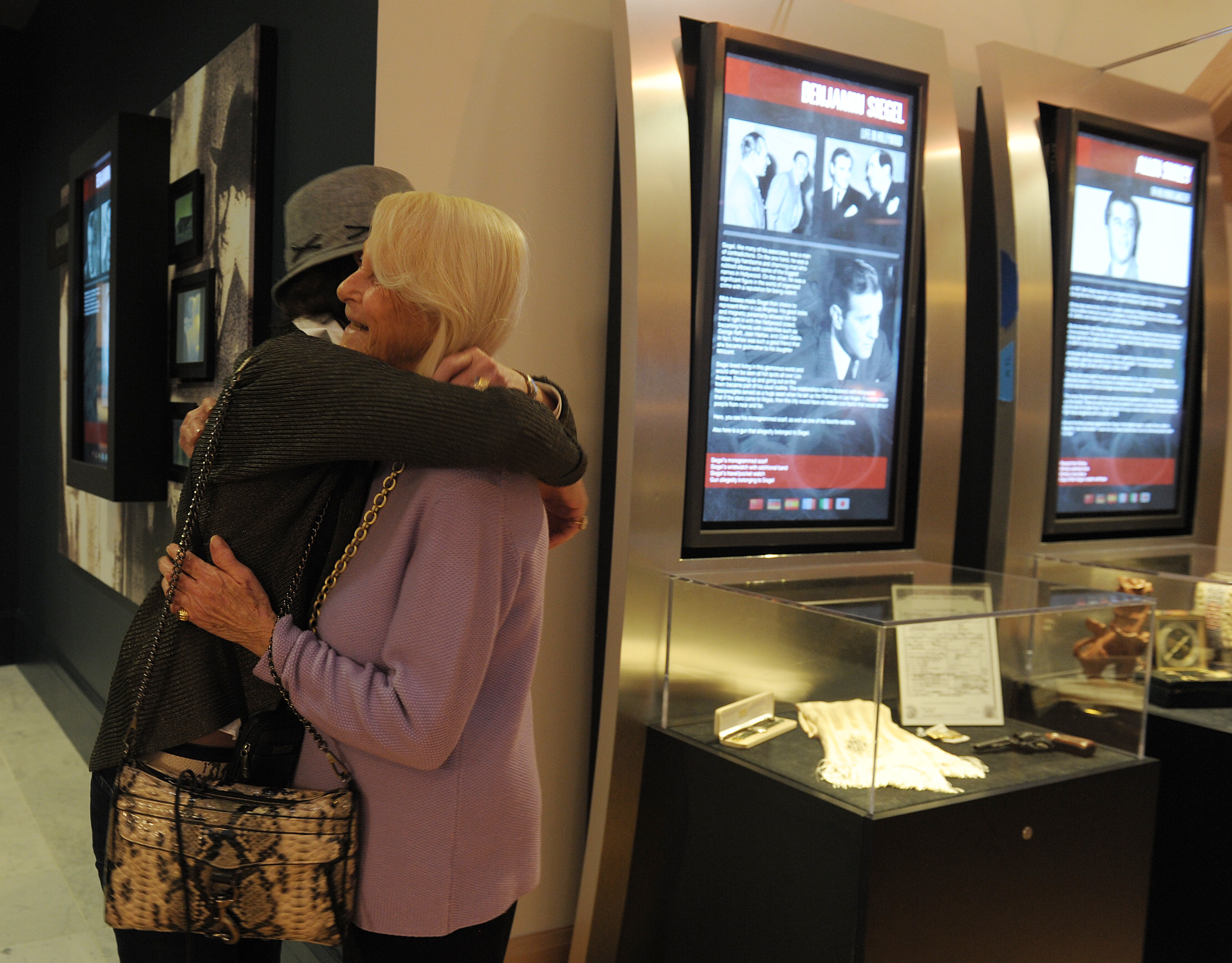
A month later I was seated in Jay’s office waiting for Millicent. When she walked in, I stood to embrace her, and this time the tears were in my eyes.
Millicent’s voice was unchanged and so was her regal posture. “Our fathers were best friends, attached at the hip. Your Dad was at the house all the time. I’ll never forget when he and my mother met me at the train station to tell us about my father’s… death. Smiley was very good to us. My mother adored him too.”
Jay took me on a tour of the collection warehouse, and the history I’d read about unfolded before my eyes. The preview room was like a family room to me, because some of the men had been my father’s lifelong friends and protectors. I stopped in front of the Ben Siegel display case and saw an object that was very familiar.
“My father has the identical ivory figurine of an Asian woman. I still have it.” So much of their veiled history was exposed; between these two men was a brotherly bond that transcended their passing and was even evident in their shared taste in furnishings.
Jay showed me a layout of the Mob Experience in progress. I turned to him and asked, “Is it too late to include my father? All the rooms are assigned.”
“Millicent and I already spoke about it. She wants your Dad in Ben’s room.”
After I returned home, Millicent and I talked on the phone.
“Your father belongs in my Dad’s room. They’ll just have to make Mickey Cohen’s room smaller.”
“My father hated Mickey,” I said.
“So did mine! When are you coming back? I’ll kill you if you don’t become part of this.”

Reuniting with Millicent at the Mob Experience.


WHO WAS MY FATHER?


I began my research WITH WHAT I HAD; one of my father’s books; “The Mark Hellinger Story.” I leafed through the index and there was my father’s name along with Ben Siegel’s. According to the biographer, my father visited Mark at his home the night before he died. Mark had stood up in court for my father and Ben at one of their hearings. He was fond of Ben, like so many people were, that aren’t here to tell their story.
After reading the book I rented, The Roaring Twenties, written by Mark, and from there the connections, relationships, and characters began to leap out from all directions. I
submerged myself in history and photocopied pictures of my father’s movie star friends, George Raft, Eddie Cantor, Clark Gable, and his gangsters friends. I found photographs of the nightclubs he frequented, the Copacabana, El Morocco, and Ciro’s and nightclubs that he referred to in his mysterious conversations. I made a collage of the pictures and posted them above my desk. I played Tommy Dorsey records while I wrote. This microcosm of life that was created, allowed me to listen to the whispers and discover the secrets.
I dug into my father’s history without knowing how deep I had to go, or what shattering evidence would cross my path. In my heart I felt this was crossing a spiritual bridge to my parents. The flip side was a gripping torment, tied to my
prying mind. I needed to break into the files in order to break my silence, and discover my parents, not glamorized stereotypes that fit into the category of Copa dancer and gangster. No matter what I uncovered, I always knew it would be ambiguous, and controversial. I did not expect to find a record of murder, dope peddling, and prostitution. I believed that his crimes were around the race track and in gambling partnerships. Even so, I could never understand the similarities we shared, unless I knew them as people. Though I have not rebelled against authority as my father did, I‘m not a team player, I resist authority, and I don’t like waiting in lines.
I had to reinvent my mother through the subconscious. I skated over thin ice trying to set her truth apart, from what I
had invented, dreamed, or had been told. I listened to Judy Garland’s recordings, and premonitions surfaced, of how my mother loved Judy, how it must have felt to be under the spot lights of MGM, and dancing in ginger bread musicals while her own life was draped with film noir drama.
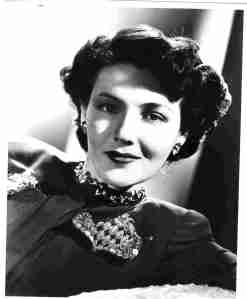
I studied my mother’s face in all her films, rewinding and stopping the tape, as if she might suddenly return my glance. She had dancing and background shots in the musicals produced by Arthur Freed. I remembered dad talking about Arthur, and how prestigious it was to be in his department.
When I discovered the Museum of Motion Pictures Arts and Sciences in Los Angeles, I went down and filled out a slip of paper with my mother’s name on it and waited for my number to be called. I felt something like a mother discovering her child’s first triumph. They handed me a large perfectly stainless manila envelope, and a pair of latex gloves to handle the file. I had to look through it in front of a clerk.
“That’s my mother,” I proclaimed. He blinked and returned his attention to a memo pad. Inside the envelope were black and while glossy studio photographs, press releases, and studio biographies of my mother. The woman who pressed my clothes, washed my hair, and made my tuna sandwiches. There she was in front of the train, for Meet Me in St. Louis, and a promotional photograph in The Secret Life of Walter Mitty, dated 1947. That was the year Ben was shot. I looked further to find more clues. I needed to know where she was the night Ben was murdered. Maybe she was on location when it happened. Maybe she was in New York at the opening of the film. I could not place her on June 20, the day Ben was murdered. I imagined my father called her and told her the news. The marriage plans were postponed, their engagement suspended. My father had to get out of town.
I spent everyday picking through the myths I’d heard and read. I heard a clear chord of scorn, for exposing family secrets, “It’s nobody’s business what goes on in our family, don’t discuss our family with anyone, Do You Hear Me!” I must have heard that a thousand times.
I began to dig with an iron shovel. I asked every question I wasn’t supposed to ask, and preyed into every sector of their life. I wanted to know about his childhood, where he grew up, and why he left home when he was thirteen years old. Who were my grandparents, and why didn’t he talk about them. How did he meet Ben Siegel and Johnny Roselli, and when did he cross over into the rackets?
I contacted historians, archivists, judges, attorneys, Police Chiefs, FBI agents, authors and reporters across the United States. He always said, “Reporters can destroy your life overnight.” And here I was, uncovering what he had sheltered all his life.

I wrote to the INS in WDC and asked for their assistance. Six months later I received a letter from the INS in Los Angeles. They acknowledged his file, it was classified and they could not locate it. The progress was tediously slow, and the waiting oppressive.
While I waited for the files, I read Damon Runyon, and Raymond Chandler stories and attempted to identify which character personified which gangster. The stories were about the people that came to my birthday parties, Swifty Morgan, Nick the Greek, Frank Costello and Abner Zwillman,(the Boss of the New Jersey syndicate.) The dialect of Runyon and Winchell mimicked the same anecdotes my father used over and over! By understanding Runyon’s characters I began to know my father. At night I watched old gangster movies and that opened another door of familiarity.

I read almost every book in print about the Mafia and ordered out of print books from all over the country. They began to topple on my head from the shelf above the desk. Allen Smiley was in dozens of them. Every author portrayed him differently, he was a Russian Jew, a criminal, Bugsy’s right hand man, a dope peddler, a race track tout, and sometimes the words bled on my arm. To me, he was a benevolent father, a wise counselor and a man who worshipedscan0002 me.
The INS claimed my father was one of the most dangerous criminals in the United States. They said he was Benjamin Siegel’s assistant. They said he was taking over now that Ben was gone.
That day I put the file away, and looked into the window of truth. How much could I bear to hear more?

Mom and Dad second from Left. I don’t know the other people.

STILL A MYSTERY WHO MURDERED BENJAMIN ” BUGSY” SIEGEL


July 23, 2004

Still A Mystery…Who Shot Benjamin Siegel.
Several months ago I received an email from a reporter in Las Vegas. George Knapp had read some of my memoir posted on my website, and asked for an exclusive interview. He asked about my father’s relationship with Ben Siegel “Bugsy” and what I knew about their friendship, and why Ben Siegel was shot. I declined the interview, but George persevered. Three weeks later I agreed to the interview, because my father was not there to stop me.
We met in Del Mar at the Inn Auberge. I showed up with a notepad to remind me what not to say, a photograph of my father when he was a producer for Cecil B. De Mille, and a borrowed calmness that comes when I am approaching an extremely anxious situation.
My first interview about Dad was not anything like I imagined. George approached the subject with respect, and I relaxed and began talking, and talking, and talking. The only time I hesitated was when he asked if I knew who killed Ben, and I had to answer swiftly, “I think Bush did it.” He was not too impressed with the answer; but it saved me from theorizing.
At the end of the interview, I walked out of the hotel without regret. I said what I felt should be told; that my father’s best friend was Ben Siegel. If he loved Ben and my mother loved Ben, than there is a lot more to “Bugsy” than what the public has been told.
The interview aired on a Friday night, and my life was no different from before. George got a call from someone who claimed my father once told him, Virginia Hill’s brother was the shooter. It sounds like my father; he enjoyed sending people down the wrong path.
He always said, “You don’t inherit friends,” and so I declined to remain friends with family members of his group, because I respected his orders, even after he died. I don’t know if any of his mob friends are still alive today. Many people claim they knew my father, but in essence, what they mean is they met at Ciro’s, or had a game of cards, or went to the racetrack. My father’s only friends were connected to organized crime. I learned this when he died; three people showed up for the service. He warned me to keep away from reporters, and not to trust anyone. Still, strange incidents followed his death that I was unprepared to handle.
A man I’d never heard of called and informed me, ‘ your Dad and Ben buried a safe deposit box in downtown Los Angeles. ‘You should look for the key, there may be a lot of cash.’ My father was not about to leave this world without telling me he had stashed money in a safe deposit box. I will bet every dollar on that.
Another man, posing as a friend, came to my aid offering help settling the estate. A few weeks later another man I had never heard of, placed a claim on the estate for an old gambling debt of $5,000. The two of them were conspiring. Had I known gambling debts are erased when the bettor dies, I would not have sold his Patek Philippe pocket watch, which I suspect belonged to Ben Siegel at one time. The end of my father’s life was as mysterious as when he was living. That is how he liked it, and that is how he lived it.
I had to wait until my father was in his seventies to go to the racetrack with him. He took me to Santa Anita, we sat in the clubhouse, and he watched the track from behind dark glasses. He was quiet and observant. He watched me eat, and then handed me a C note to bet on the Exacta. He told me how to bet and which horses to bet. I walked away from the cashier thinking I would be a big winner. Instead, I walked away a big loser. ‘Now you know even your Dad loses at the track.’ There wasn’t anything exciting about going to the track, he made sure of that. I suppose he was concerned, that I had inherited a taste for betting. Lucky for me;get-attachment.aspxDAD AFTER MURDER I throw the dice on a different game. Photo: Leaving Beverly Hills Police Department day after the murder.

LAS VEGAS WHEN WE WERE YOUNG


I wasn’t allowed in the Copa when the Rat Pack performed; I listened to the uproar

The Sands 1963
The Sands 1963 (Photo credit: D’oh Boy (Mark Holloway))

from outside the door, and caught a glimpse when Uncle Jack let someone in. It was a wild charade of slapstick, improvisation, and politically incorrect slurs, swearing and insults, all dressed up in comedic song and dance.

That’s how I remembered Las Vegas. When I returned for the grand opening of the Mob Experience Las Vegas,  I bounced into the spot lights, press conferences,

introductions, and interviews in a shiny aquamarine pants suit, I hadn’t worn in six years. Congregating with the sons and daughters of my Dad’s associates, who were raised in a similar fashion of privilege and secrecy, was my homecoming to

Las Vegas. There I was, speaking into a microphone about my father, who obsessed over me, as I was now doing in Las Vegas. What was the importance of this seventeen year battle? To re write history that was written about him, by people who never even met him. They couldn’t get the camera off of me, “Luellen, we’ll turn it over to the station now,” while I am still stating the case of Allen Smiley. What would Meyer and Dad and Roselli think of all this. They’d say, “Wish the Brain (Arnold Rothstein) could have seen this racket.

WHAT DO YOU GUYS KNOW ABOUT THE MOB


Benjamen Siegel
Benjamen Siegel

Dead Don’s, shopkeepers, policeman, government employees, drivers, wives, and sons are slaughtered every week. You won’t know unless you study it, like I do. They are in Calgary, Montreal, Sicily, Rome, the UK, Russia, India, Asia, Macao, …. You have no idea how different organized crime is compared to the founders. Read about Arnold Rothstein, and ask people who knew Benny, what kind of man he was.

PART TWO: SWIMMING WITH GANSTERS


“ Mommy the door knocked.’ I said

“ Okay, let me get it.”

The valet reminded me of the munchens in Wizard of Oz, because of their berets, and tightly fitted double breasted coats. But it wasn’t the valet or room service, or anyone that I recognized.

“Lucille, darling is everything to your satisfaction?”

“Hello Jack. Yes the room, flowers, and fruit basket are so lovely. Thank You.”

by Ronzoni

It was the smiling big faced, former bouncer of the Copacabana New York whose name I knew only as Uncle Jack.

Jack was subtle as a semi-truck; and if the world was coming to an end, I’d follow Jack. He had fingers thick as sticks of dynamite and he squeezed my blubbery cheeks until they turned purple. I knew a cheek squeeze meant the person loved me, so Jack didn’t frighten me. I learned thirty years later it was Jack Entratter; a man of chest heavy bullying, dinosaur New York threats, and answered to Frank Costello. I don’t believe he pulled out the Casino movie style butcher chopping that we always see. I just think Jack did what Frank asked, and Frank didn’t randomly demand nail stripping, ball butchering violence you see in the movies. Remember it is a movie.

My mother dressed up with a fur wrap (they wore furs in Vegas) and dressed me in a Pixie Town ensemble that was so starched I couldn’t bend my arm, and we went to the Copa, for the dinner show. Ella Fitzgerald was the feature entertainer of the night. If I wasn’t in a room at La Posada tonight, listening to Tito Puente and Johnny Pacheco, tipping a glass of Chilean wine, without all my files, and notes, I could reference many things about that night. I rented the house for the twelve days of Christmas and I cannot access anything other than what I brought. I could go googling all night, but it is close to time to eat, and parlay my chances in the lobby, meeting and greeting, as I feel I should do, because hotels are the only socially invasive venues left. I greet everyone who knows how to walk without revealing their miserable or self congratulating lives. I really like people who keep their triumphs and sorrows until the second or third time we meet. I don’t like digesting four courses unless I ordered them.

Ella, came out on stage, and we were seated under her heaving breasts, the first row, the closeness was dressing room intimate. There were others at our table but they were sort of like faded ghosts after Ella started her fireworks. TO BE CONTINUED.

We Knowa Guyradio 10/17 by Inside Lenz Network | Blog Talk Radio


We Knowa Guyradio 10/17 by Inside Lenz Network | Blog Talk Radio.