THINKING?


ADVENTURES IN

LIVINGNESS TODAY,

SEPTEMBER 7, 2024

Silhouette of sounds: a whispering wind, the freight train blowing the sounds of its coming, Neil Young music, and the flutter of thoughts that sometimes feel like sounds.

The sky is building into a rainstorm, and watching its manifestation is dramaticโ€”nature in motion. Although there are tasks to be threaded, Iโ€™ve chosen to retire from pesky vacuuming, wood polishing, laundry, unpacking my winter clothes, and preparing for winter. The clothes are trivial to the transformation of light, outdoor porch lounging, and then the trees. When they turn naked as skinned cucumbers or buds without flowers, I think a visceral adaptation occurs in all of us.

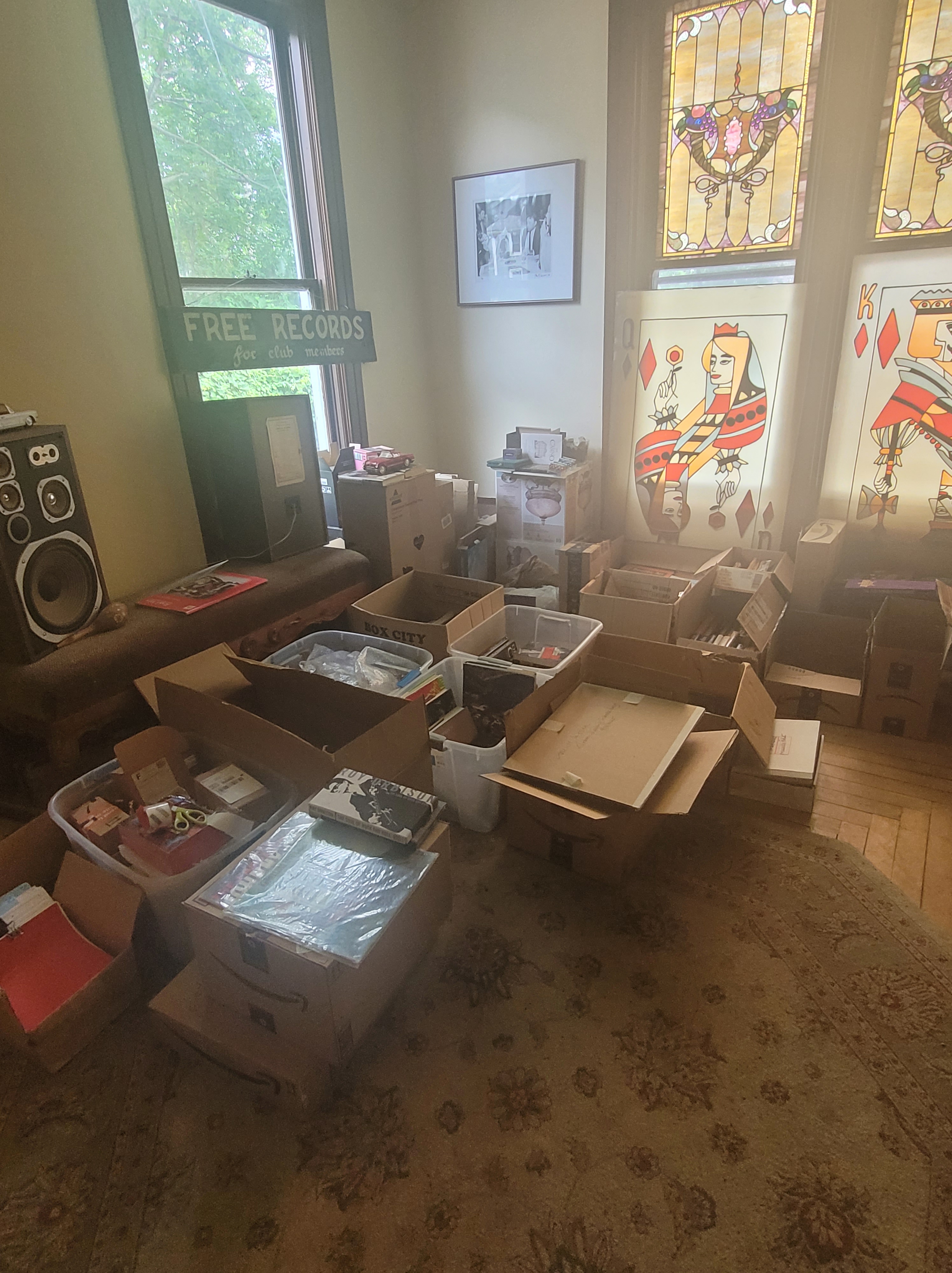
This week unfolded over Dad. The most honorable collector of Mafia artifacts bought some of fatherโ€™s collection. Years ago, I sold them to the Mob Experience for their Museum in Las Vegas (bankrupt), and the owner resold them to Julianโ€™s Estate Sales in Beverly Hills. I viewed the items for sale; imagine your phone book selling for sixteen hundred dollars and an album of photos taken by Dad’s doll in the thirties for, well, I forget the price. Anyway, Avi Bash of the Avi Bash Collection bought what was left. When he wrote to me, I felt immediate relief that he owned these moments Dad had kept all his life. He said,โ€ Let me know if you want to see photos or anything else.โ€ Heโ€™s a prince of a man. That was one slice of the week. When I checked my list today of my crossed-off tasks, it was not too impressive, but sometimes we canโ€™t produce. As I said, Iโ€™m adapting from sunshine and warmth to seasonal change.      

Digitally, I fixed a few troublesome changes Microsoft made to my documents and feeds.

Itโ€™s not me of years agoโ€”driven, disciplined, empowered, and confident. Maybe it is not worth thinking about, not for me. I think more than I act these days. Everything we do in life needs revision. We are never through evolving into more thoughtful, loving, or wise human beings. Every day, there is an opportunity to leap into a saintly hood. It is the same with manuscripts; they get better.

    The next adventure in livingness is one I have lived with all my life, moving. I would love to move, even to another part of town.

The dismantling of things gives me a twisted alignment to my life. The beginning is again: unpacking boxes, meeting new neighbors, sunsets, and cafes. If I am ever to rest in one address, I’m sure it will be a headstone and a plot of dirt. I have chosen to relocate because of an internal destiny.

    These are the ones I know will happen with some certainty. The inner self concerns me and how it jumps from one dream to one nightmare. When I was thirty, I was afraid of getting married; when I was forty, I was scared of not having children. Now that I am seventy-one, I am fighting another fear: the fear of singleness. But Iโ€™ve always been a loner; it just didnโ€™t scare me when I was young.

The Rain came, Dylan is singing, and Iโ€™m planning risotto pasta for the night.  

I just finished another Denzel Washington film, Man on Fire. DW is my actor of the week, so I watch all his films. An alert popped up, another mass shooting, this time in Kentucky. I wanted to delete my last column.. It’s not what is breaking me apart; personal threads seem vacuous. What I’m escaping in writing and films are mass shootings and unbearable violence. It’s not one every few months; it’s every day. Yes, cure Cancer and all other physical diseases, BUT CONCENTRATE ON CRIME, FOR CRYING OUT LOUD. MENTAL ILLNESS.

Thoughtful Reflections and Autumn Leaves: An Upstate New York Story


The leaves, I noticed when I drove out of the driveway a wispy wind and a few leaves blew past my windshield. I don’t think they want to die or hibernate; I don’t want to hibernate; that’s what you do if you are in upstate New York. Even this summer, the porches are empty, and the owners only come out to garden or empty trash. I’m the only one who sits on the wrap-around porch, head perched up to the sky to see what drama she’ll bring.

Where did we go this summer? Where did you go or do? One friend went to Croatia, another to Finland, and another to Sonoma. I prefer to travel in September, with my crowd cowardice and fear of flying; I’m waiting. Of course, I cannot leave because I am showing the house to prospective buyers. They are all very similar, rave and applause for the house, and their offer is two lines above insulting. Or maybe I am still in my delusional dream that Follies House is worth what I priced her. It is a voyage into the Twilight Zone; I see one house, and they see another.

Back to the leaves, the fall’s language, movements, and tasks will turn inside out. Soon, the blowers and street cleaners move all those beautifully colored leaves. I leave mine out until my gardener orders me, sweetly, LouLou, it’s time for fall clean up, or you won’t have grass next summer.” I won’t be here next summer, but I don’t say that because we’ve become pals, and he likes to manicure my lawns; I always greet him and George, his helper, and listen to their grievances.

Beyond the seasonal altercation, like a dress that needs hemming, emotions stop boiling over and seem to simmer. I am still determining where that originates, but I experience it every year as September approaches. Autumn is about awe. I read that somewhere. We slip into the interior chambers of thoughtful reflection, crunching the leaves of our souls for answers to questions.

I called my pal Jerry because it had been a few weeks since I had spoken to him. We have been friends for many years, but we have absolutely nothing in common. He’s famous for his photographs and films, that’s all I can say. I didn’t ask for his approval as I write this.

” Hello,” He sounded drowsy.

” Jerry! Did I wake you?”

” Yes.”

“I’m sorry. I’ll call tomorrow.”

What for I’m awake now. I take naps because I can’t sleep through the night; I close my eyes, think for maybe an hour, fall asleep, and wake again five times in the night. What’s happening with you?”

” You are cerebral, so turning off your head would take a bulldozer or something.

“That’s a little drastic.”What’s happening with the house?”

” Showings, repairs, and a few offers that were insulting. I have a question.”

“Oh no.”

“What do you do when you don’t know what to do>”

“I call my attorney.”

” For life questions?”

” I don’t have any more questions at ninety-six.”

” That sounds peaceful.”

, We sidetracked an upcoming appointment with his doctor about sleep medication.” It’s tomorrow, I don’t feel like going,

” So don’t go. I had an appointment this week for a mammogram. That morning, I woke up trembling, panicked, wobbly, and so I called and canceled. When I told the representative I was having a severe panic attack, she laughed and said, I hear that all the time.

“What’s the mammogram, is that for breast cancer?

” Yes.”

” What do they do?

Oh, it’s weird. The nurse takes hold of your breasts, places them between two clamps, and then tells you not to breathe or move while they take an X-ray.

“What if your breasts are too small?”

“Ah hah, mine used to be, so they’d tug at them, and it was more painful than the clamps. When I turned seventy-one this year, suddenly they inflated, and I can fill my B cup to the rim.” He was laughing, imagining he had some visual, and that was good. We have better dreams when we sleep with pillow joy.

“I’m going to go to sleep now>”

” I hope you do. I’ll think of more breast stories tomorrow.

  1. Unknown's avatar
  2. Unknown's avatar
  3. LouLou's avatar
  4. wildlypurplea1c8f7dc52's avatar
  5. wildlypurplea1c8f7dc52's avatar

Leave a Comment

Leave a Comment

Leave a Comment

FRIENDS of FOLLIES


Saturday, a heavy clog of humidity tries to zap my energy. I slept six hours, so I fight, do laundry, do a bit of weight lifting, go up and down the twenty stairs twelve times, and wander in my mind. I answer the first phone call of the day.

” Hi, how are you? ?” I pause to answer with some amusing honesty.

” I’m cleaning my brain?

” How do you do that? You’re funny.”

” “I sweep away all the repetitive scary thoughts.”

What about you? My friend sighed and then zigzagged into her struggles, taking care of her ninety-six-year-old mother, who does not speak English; my friend is Armenian. She works full-time as a court translator, has two children, a husband, and about fifty friends she continually connects to.

You are four people in one. I don’t know how you do it?” Is your Mom still living with you?”

Yes, she can’t walk. She sleeps in the living room because the bedrooms are upstairs. It’s difficult. I have to feed her as she’s now refusing to eat.”

” Please try and get a nurse’s aide to come in and help you.”

“She won’t let anyone touch her but me.”

“I find that selfish, not to be critical, but you will wear yourself down.”

” She’s always been like that; in my culture, you never abandon a parent, no matter what. Her mind is sharp, so that is good.

” Heaven isn’t good enough for you,” she chuckled. I often improvise to be amusing because her laughter is boisterous, and we all need more injections of humor.

” Have you decided where to move when it sells?” She asked again.

” Yes, I was looking at my book on Italy, all the different regions, and I think Anacapri is a good choice.”

” Oh, Greta… that is so expensive; what are you thinking?”

“I’m not thinking I’m daydreaming.”

” I have an idea for you. There is a new trend, something like Boomermates, a group of people who share a house, and you don’t have to sign a lease. Go look in San Diego and find something.

“Roommates, strangers, you mean?”

“Yes, why not?”

” Would you do that?”

” Probably not. A studio anywhere in San Diego is two thousand at least, and don’t use the proceeds from the house.

“Now you’re daydreaming. I’ll have to use some without the rental income until I find employment. Are you home now?”

“No, I’m driving to San Diego for a court appointment

“It’s what, six in the morning?

“Yes, I wake up at five.”

” Every time I come here, I think of you. You were a great leasing agent. You leased about fifty of my units. You can get a job leasing in a nice project. Oh, you should have bought that unit. I remember G4 when we converted to condominiums.

“Yes, you’ve told me that a hundred times.”

” I made the same mistake. What can you do?”

” Complain and then accept what you can’t accept. Like selling my home.” I went through my steamer trunk and found my marketing portfolio when I opened Follies as an artist retreat. It was nonstop theatrics. One time, I hosted a theater group of six young actors; they were so much fun. Ah, memories.

” You will make it; look what you accomplished, winning a foreclosure, Greta; that is something big.”

” So is my glass of wine.”

“I’d be doing the same in your situation.”

” Another showing, a really nice family. They’ll make an offer. They commented that the exterior paint is their issue, so did I tell you already? I found a marvelous painter from Albania, and he’s given me a very reasonable price to paint the entrance, balisters, and overhang. You know that curb appeal is critical.”

” You shouldn’t spend your money, Greta, how much?”

” Three thousand, and it’s a lot of scraping and ladder work. It’s the right decision if I may disagree with my real estate guru.”

” That is reasonable. Keep me posted. I’m in San Diego now, so I will speak to you soon.”

” Heaven isn’t good enough for you.” And I’m leaving Follies in the best I can because she was so good to me.

63 E High St – Dropbox


My Favorite home must be sold. After twenty-four years, Letting go is going slow, packing, and viewing my possessions and antiques. Today, I found a matchbook in perfect condition from the Stork Club, playbills, and musical sheets. I wish I hadn’t opened my steamer trunk; it’s like looking at another woman.

SATISFYING PRINT ON AL SMILEY AT LAST: IN JEWISH POST & NEWS


April 6, 2015

Former Winnipegger Al Smiley had a close association with โ€œBugsyโ€ Siegel

ย 

ย 

Al Smiley

By MARTIN ZEILIG
On the evening of June 20, 1947, less than six months after he opened the Flamingo Hotel-Casino in Las Vegas, Ben โ€œBugsyโ€ Siegel died in a barrage of bullets through the front windows while sitting on a couch in his Beverly Hills mansion at 810 Linden Drive. Assassinated at the age of 41, Siegel was one of the USAโ€™s most notorious gangsters.
A former Winnipegger, Al Smiley (1907-1984) was with Siegel that evening.
โ€œMy dad was seated inches away from Siegel, on the sofa, and took three bullets through the sleeve of his jacket,โ€ said Luellen Smiley, a creative non-fiction writer, award-winning newspaper columnist, and Mob historian who lives in Sante Fe, New Mexico.
She consented to an interview with The Jewish Post & News earlier this winter.
โ€œHe was brought in as a suspect. His photograph was in all the newspapers,โ€ said Luellen.
โ€œHe was the only nonfamily member who had the guts to go to the funeral.โ€
So who was Al Smiley?
Born in Kiev, Ukraine in 1907 as Aaron Smehoff, Smiley and his family โ€“ father Hyman, mother Anne, sister Gertrude (who became a school teacher and lived in Winnipeg until her death many decades later), brothers Samuel and Benjamin โ€“ immigrated to Winnipeg when he was five, said Luellen Smiley, during a recent telephone interview with this reporter from her home in Sante Fe, New Mexico.
โ€œMy grandfather was a kosher butcher and delicatessen owner,โ€ she continued, noting that the family home and butcher shop was located at 347 Aberdeen Avenue.
โ€œHe maintained an Orthodox household and expected that his eldest son would become a rabbi. But, my father was rebellious and interested in sports, especially hockey.โ€
This caused conflict between the willful youth and his rigid, religious father.
So, the teenager fled Winnipeg for greener pastures in Detroit, Michigan via Windsor, Ontario in 1923.
He got a job travelling with the Ringling Brothers Circus and ended up in California where he was arrested for a drugstore robbery in San Francisco and sent to Preston Reformatory School in Ione, California, Luellen noted.
โ€œIt was there that he met legendary movie director Cecil B. DeMille,โ€ she said.
โ€œHe was doing some sort of research for a movie. My father asked him for a job in the movie industry upon his release, and DeMille agreed. He found my dad work in a wardrobe department.
He later became a property man, then a grip, the person in charge of production on a set, and eventually a producer.โ€
He befriended celebrities like George Raft, Eddie Cantor, Clark Gable, Lauren Bacall, along with such gangster associates as Ben Siegel.
โ€œIโ€™m pretty sure Dad met Ben through George Raft,โ€ Luellen Smiley speculated.
With Siegelโ€™s help he opened a nightclub in L.A. sometime in the late 1930s.
Smiley would later tell his daughter that Siegel was โ€œthe best friend I ever had.โ€
In her soon-to-published memoir, excerpts of which she agreed to let this newspaper print, Luellen Smiley reveals the conflicted feelings she had growing up, and into later life too, about her father:
โ€œSome children are silenced. The pretense is protection against people and events more powerful than them. As the daughter of Allen Smiley, associate and friend to Benjamin โ€˜Bugsyโ€™ Siegel, I was raised in a family of secrets.
โ€œMy father is not a household name like Siegel, partly because he wore a disguise, a veneer of respectability that fooled most. It did not fool the government.
โ€œWhen I was exposed to the truth by way of a book, I kept the secret, too. I was 13. My parents divorced, and five years later, my mother died. In 1966, I went to live with my father in Hollywood. I was forbidden to talk about our life: โ€˜Donโ€™t discuss our family business with anyone, and listen very carefully to what I say from now on!โ€™ But one night, he asked me to come into his room and he told me the story of the night Ben was murdered.
โ€œWhen I was spared death, I made a vow to do everything in my power to reform, so that I could one day marry your mother.
โ€œBen was the best friend I ever had. Youโ€™re going to hear a lot of things about him in your life. Just remember what I am telling you; heโ€™d take a bullet for a friend.
โ€œAfter my father died, I remained silent, to avoid shame, embarrassment and questions. But 10 years later, in 1994, when I turned 40, I cracked the silence. I read every book in print โ€“ and out of print โ€“ about the Mafia. Allen Smiley was in dozens. He was a Russian Jew, a criminal, Bugsyโ€™s right-hand man, a dope peddler, pimp, a racetrack tout. I held close the memory of a benevolent father, wise counselor, and a man who worshipped me.
โ€œI made a Freedom of Information Act request and obtained his government files. The Immigration and Naturalization Service claimed he was one of the most dangerous criminals in the country. They said he was Benjamin Siegelโ€™s assistant. They said he was poised to take over the rackets in Los Angeles. He didnโ€™t; he sold out his interest in the Flamingo, and he went to Houston to strike oil. I put the file away, and looked into the window of truth. How much more could I bear to hear?
โ€œHe stowed away to America at 16, and was eventually doggedly pursued for never having registered as an alien. He had multiple arrests โ€“ including one for bookmaking in 1944, and another for slicing off part of the actor John Hallโ€™s nose in a fracas at Tommy Dorseyโ€™s apartment. He met my mother, Lucille Casey, at the Copacabana nightclub in 1943. She was onstage, dancing for $75 a week, and my father was in the audience, seated with Copa owner and mob boss Frank Costello.
โ€œโ€˜I took one look, and I knew it was her,โ€™ was all he had told me on many occasions.
โ€œOn a trip to the Museum of Motion Pictures Arts and Sciences in Los Angeles, I was handed a large perfectly pristine manila envelope, and a pair of latex gloves with which to handle the file. Inside were black and white glossy MGM studio photographs, press releases, and biographies of my motherโ€™s career in film, including roles in โ€˜The Secret Life of Walter Mitty,โ€™ โ€˜Ziegfeld Follies of 1946,โ€™ โ€˜Meet Me in St. Louisโ€™ and โ€˜Harvey Girls.โ€™ She was written up in the columns, where later my father was identified as a โ€˜sportsman.โ€™ The woman who pressed my clothes, washed my hair, and made my tuna sandwiches was an actress dancing in Judy Garland musicals, while her own life was draped with film noir drama.
โ€œMy father wooed her, and after an MGM producer gave her an audition, he helped arrange for her and her family to move to Beverly Hills, where she had steady film work for five years. He was busy helping Siegel expand the Western Front of the Costello crime family and opening the Flamingo casino in Las Vegas. They were engaged in 1946.
โ€œStill, the blank pages of my motherโ€™s life did not begin to fill in until I met R.J. Gray. He found me through my newspaper column, โ€˜Smileyโ€™s Dice.โ€™
โ€œOne day last year, R.J. sent me a book, โ€˜Images of America: The Copacabana,โ€™ by Kristin Baggelaar. There was my mother, captioned a โ€˜Copa-beauty.โ€™ Kristin organized a Copa reunion in New York last September. I went in place of my mother, but all day I felt as if she was seated next to me. I fell asleep that night staring out the hotel window, feeling a part of Manhattan history.
โ€œNow, the silence is over. I donโ€™t hesitate to answer questions about my family. I have photographs of Ben Siegel in my home in Santa Fe, NM, just as my father did. Every few months I get e-mails from distant friends, or people who knew my dad.
โ€œIt seems there is no end to the stories surrounding Ben and Al. I am not looking for closure. Iโ€™ve become too attached to the story. To me, he was a benevolent father, a wise counselor, and a man who worshipped me.โ€
Luellen Smiley can be contacted via email: folliesls@aol.com

Add comment

Name (required)

E-mail (required, but will not display)

Website

Title (required)

ย 

Notify me of follow-up comments

ย 
ย 
ย 
Category: Features
ย 
ย 

https://wordpress.com/post/odysseyofadventures.com/11523

UNTOLD READS.COM, THANK YOU!


JOCKEYS & SARATOGA SPRINGS NEW YORK RACE TRACK


OLYMPUS DIGITAL CAMERA


     After several summers in Saratoga Springs, I discovered I loved thoroughbred horseracing. All my life Iโ€™ve been a performing arts spectator. I never watched any sports on television and only attended baseball games when my father needed a companion. The art of performance led me to experience the racetrack as live theater.

     The racetrack is a stage, the jockeys are the actors, and the men and women that fill the bleachers, the picnic grounds, the Turf Club, and the private boxes are the audience. The racehorse is the star celebrity.

     The tickets for admission, like any show, are based on your seating. You can walk through the gates for $3.00 or buy a box for $100,000 a year. The collage of human emotions, drama, suspense, and danger are key components to good theater.

     Gambling personifies the Shakespearean twist of the racetrack. High rollers and drugstore cowboys wager to win. Some men walk out with a grocery cart of recycled cans; some walk out with enough money to buy a racehorse. They leave by the same gate, and the next day, they return for more. But why, I ask, is thoroughbred racing not considered an all-around American sport? Why donโ€™t jockeys get athletic respect? These two spheres of lightning truth struck me while I trampled through the mud one rainy August day at Saratoga Racetrack.

I asked around for opinions. The Governorโ€™s bodyguard remarked that it was a good question. He did not think gambling was the reason because people always bet on sports. He thought maybe that it was because, as kids, we donโ€™t learn to race horses, like baseball and football. The public is naรฏve about jockeys because they have never raced. Another answer I heard was that 200,000 fans fill a ballgame on any given day and that those numbers donโ€™t compare with horseracing.

     Iโ€™m not a gambler,  and I donโ€™t ride very well, but I am a drama whore. I took my notebook to the jocksโ€™ room to ask the jockeys what they thought about this irregularity in sports. Jose Santos had a few minutes to spare.

     โ€œJose, do you feel like America thinks of you as an athlete?โ€

     โ€œWe donโ€™t get the respect that we should. I think itโ€™s the gambling. This is the greatest racetrack in America, and there is gambling in every sport, but when you come to the track, you see it right there, and people cannot avoid it. Pound for pound, we are more fit than most athletes.โ€

     I asked Jose what he does aside from riding. He jogs three miles every day and walks for a mile. He reminded me that if he goes down with the horse, his strength is what gets him back up again. Another misconception is that jockeys only ride for 2 minutes. Well, the race is 2 minutes, but they ride every day of the year. They do not take breaks.

     โ€œHow does the public perceive you?โ€ I asked.

     โ€œIn Europe, they are treated like movie stars. Over here the jockey is just another person, and in sports, the jockey is low. I wish we had more respect, but we donโ€™t get the publicity.โ€

     This feels like the guts of the truth; our little minds like to align with other like minds. The leaders of the pack go to football and baseball, and the media follows behind.

     Jose remarked that he only felt real enthusiasm and support when he won the Triple Crown. Otherwise, they get a little column in the paper with the results. โ€œThe Racing Form is 100 pages, and nothing is written about us.โ€

     โ€œWhat if there was a Jockey Magazine?โ€

     โ€œWell, that would be great. Then, the companies would be interested, and weโ€™d get sponsors. When I go out to the park and run, I wear Nikes too.โ€ He chuckled.

    โ€œHave they ever approached you for sponsorship?โ€

    โ€œNo, I donโ€™t expect they will.โ€

 A few days later, I found Jerry Bailey before a race. It was a cinch to get into the jocksโ€™ room in those days. That was before Elliott Spitzer sipped all the fizz out of Saratoga Race Track. These days the Press canโ€™t walk inside the Jocksโ€™ room.  Jerry hopped onto a counter and extended his hand.

โ€œHow are you?โ€

โ€œGreat, Jerry, thank you for meeting me.โ€

โ€œSure.โ€

โ€œJerry, Iโ€™m very interested in the lack of sports sponsorship offered jockeys. Why do you think that is?

โ€œBecause no one is promoting us.  If you donโ€™t do anything to promote us, how does anyone know? They have bobbleheads and gimmicks like that, but there isnโ€™t even a Jockey Calendar. Excuse me now; Iโ€™ve got to ride a race.โ€

 Of all the risk-takers and entrepreneurs in the world, horse racing is the champion in all categories. If I decided to understand the business,  attend every race, meet every owner, jockey, and trainer, thereโ€™s no chance Iโ€™d understand anything more because I do not love the horse the way a jockey does, and you canโ€™t fool the horse!

   During the Hall of Fame Induction presentation at Saratoga a few years back, D. Wayne Lucas made a speech that drew a full house of gregarious applause. This is an excerpt:

 โ€œYou ride a great horse, and the owner wakes up the next day and decides to switch to Bailey. The adversity is gut-wrenching, bringing you to your knees and humbling, whether youโ€™re a rider, trainer, owner, or breeder. Thereโ€™s one thing that will keep you going, and that is simply your attitude. Attitude is the most important decision you make every day. Make it early, and make sure you make the right one. You will have a very full and very peaceful life.โ€

 Maybe itโ€™s time for a Jocks Nike, call it the Two Minute Nike. 

ย ย 

      Leave a Comment

      STEPS AWAY FROM ADVENTURES IN LIVINGNESS


      ADVENTURES IN LIVINGNESS    

      Achievement knocked down the barrier of fear. It feels like lifting off from ground level; I am floating like I used to be in the swimming pool, and I am only at my desk reading the news from my attorney. From one beginning to an ending, five years later, after tedious research, unscrambling legal language, and searching for the meaning behind the case references, this journey is over. I won the lawsuit against the bank that attempted to foreclose on my home and Dodger, my ex-partner of thirty-five years, who, for still unknown reasons, pursued the foreclosure.

      Photo by Nataliya Vaitkevich on Pexels.com

       Agape, eyes widened, nerves settled like snowflakes; the joy of achievement cannot be understated. During this phantasmagoria, life beyond research, consulting with foreclosure agencies, banking laws, and regulations, I detached from my passion for adventure, creativity, parades, parties, and socializing; I sat alone, and resilience shadowed, then enflamed like a log of fire, encapsulated into a daily doctrine. Music by Ennio Morricone, blue note Jazz, the everchanging scenery of seasons, phone conversations with friends who released ambers of comfort, confidence, and advice, and TCM films nuzzled my fatigue.

       Some days, I remained in bed, staring at my Icart Ladies of Leisure prints, or sat by my favorite window seat and studied clouds, birds, and leaves. The blossom of tenacity grew into a tree trunk and taught me the art of persistence and emotional strength, which were missing links in my character.

      Achievement in fine-tuning relationships, setting down the needle gently instead of plummeting riffs and arguments. In the present, as you all know, if you read the news, our culture has replaced argument and debate with assault and violence.  I digress; renewed confidence in my aptitude to fight battles, disputes, and disappointments without Dodger is as solid as concrete.

      The next episodic internal journey is regaining my passion for opening the door to interaction with strangers and discovering newness in that engine of life. I hope this admission reaches others who are experiencing depriving themselves of love within and without.

      AN AFFAIR TO REMEMBER IN TAOS,NM


      museum

      SILHOUETTE of a Taos night out in 2006. It begins with the sunsetโ€”a bubble-gum pink sash that swirls like taffy just above the distant hillside. The transcending forms and colors in the sky distract me; they silence me, keeping me from turning on the television or answering the phone.ย 

      Taos-sangre-de-christo-mountains-sunset

      The sunset has settled into my routine. I watch it from the roof garden over our Adobe Home and Gallery every night. ย In the midst of dressing to attend an art auction at the Millicent Rogers Museum, the sun has vanished. The sky turns Taos blue; a luminous oil pigment canvas blue that appears like an endless tunnel you can walk through. As I descend the staircase and cross over the mรฉnage of piles shoved in a corner to allow SC to paint, I think, โ€œThis is going to be my home. Iโ€™m still hereโ€ Adventures in Livingness

      In the courtyard where new flagstone has been laid, and a mud ditch blocks the exit, Rudy hitches me on his back and carries me out the side entrance through Tony Abeytaโ€™s yard. Tonyโ€™s yard is piled with sand from our flagstone project, and my high-heeled black suede shoes are not at all practical for crossing New Mexican dunes. This is how the evening begins.ย Out in the parking lot, we circle around once and stop in Robertโ€™s gallery. He has offered me his turquoise squash seed necklace to wear at the auction. The necklace is from Turkey, and sells for $1,800. Millicent Rogers events always attract women with extravagant jewelry, and Robert knows I have no such possessions. He hands me the necklace and says, have fun.

      At times like this, I can forget the faces and routines I lived in Solana Beach and feel swept into a labyrinth of unfamiliar vignettes. There are two police cars in the rear of the parking lot, the church looms like a fortress of wet mud, and SC is listening to The Band CD we picked up in Santa Fe. I slide into the car, ensuring my shoes donโ€™t fill with gravel.

      There is very little street light along the desert road, and cars approach you at disarming speeds. For newcomers, the pale yellow line that separates oncoming traffic, roaming animals, hitchhikers, leather-clad bikers, and abandoned pets is of no comfort or value. Boundaries and civilities between people are vague, and sometimes, conversations elope into poetry.ย 

      At the Millicent Rogers Museum, the director, Jill, who is there to welcome each guest, greets us at the carved wooden doors. This museum was once a home, like most museums in Taos.Each room is an envelope of Native American jewelry, ceramics, paintings, weaving, textiles, and metalwork sealed with Millicent Rogers’s ethereal presence. By coming to Taos and bridging her New York chic with southwestern individuality, she set global trends in fashion, art, and living.ย  he museum collection includes some of her designs that evolved from her residency in the desert. She moved here in 1947 and died here in 1953. Although she could have chosen anywhere in the world to live, she settled in the unaltered, surreal lunar beauty of Taos.

      I wandered through the tightly packed rooms, alternately viewing the guestโ€™s attire and jewelry. The woven wraps, belts, and hats worn by men and women form a collage of individual expression.ย Almost everyone seems to attract attention by the texture and color of his or her attire. It is a festive traditional look, with southwestern accessories paired with jeans or silk dresses.ย If you come to Taos, look for a belt buckle, one piece of Native American jewelry, and one piece of art.

      When the auction was announced, I admired the same etching as the woman next to me. She remarked that the artist was also the teacher of one of her children. I learned that Ellen had six children and 11 grandchildren. She was petite with curly blonde hair, and I liked her instantly. I told her I was a writer.

      โ€œSo am I,โ€ she answered.

      Rather than talk about her work, she began talking about her daughter, who is also a writer.

      โ€œIโ€™m so lucky–all my children and grandchildren are creative and artistic.โ€

      It was obvious that her life was a garden of earthly delights and that she had raised many roses. When the auction began, she vanished, and I quickly viewed the art before returning to the two etchings. They were both sold.

      As I was walking out, I bumped into Ellen. She was clutching the etchings.

      โ€œSo, you bought them,โ€ I said.

      โ€œOh, yes, I had to have them.โ€

      She left me with a beaming smile and a closing remark I often hear: โ€œWelcome to Taos.โ€

      I love hearing that so much I donโ€™t want to stop saying, I just moved here. After the auction, we stopped in Marcoโ€™s Downtown Bistro, where we joined an improvisational party. It started when Marco introduced us to his friends, Pablo and Joan, who were visiting from Santa Fe.

      The dim, glowing melon adobe walls of the bistro, Marco hugging everyone, Joanโ€™s melodious, high-pitched laughter, Pablo telling jokes, Rudy laughing, and then Philip arriving to tell stories crossed over from strangers in a bistro to a fast-rolling film. The conversation and laughter surfed breathlessly from one person to another.

      Joan remarked, โ€œMy fifteen minutes. This is the best for me. The first time you meet someone, you’re both talking without effort. Itโ€™s so perfect.โ€

      We closed the bistro past midnight. Marco had gone home. Joan decided to stay at a friendโ€™s house. Philip agreed to drive to Santa Fe the next day, and we took Tylenol before bed.

      Not every night out in Taos is like Joanโ€™s fifteen minutes, but chances are you will have something to write home about. The beginning of Gallery LouLou Taos, NM

      OLYMPUS DIGITAL CAMERA
      OLYMPUS DIGITAL CAMERA
      OLYMPUS DIGITAL CAMERA

      STRANGERS THEN LOVE


      From Anais Nin Diaries 1939-1944. 

      “I respond to intensity, but I also like reflection to follow action, for then understanding is born, and understanding prepares me for the next act.” 

      JANUARY

      SNOW, ARTIC BLAST, ICE, FREEZING. Maelstrom of inconveniences toppling down in every nook and cranny of body, home, and outdoors. I wore a long-sleeved liner, wool sweater dress, rabbit poncho, and over that, a wool wrap, laptop mittens, sherpa leggings, wool socks, and boots. Mornings, eight degrees, afternoons eighteen, and the absence of sunlight grids my spirit. Repetitive lessons in endurance, tolerance, and acceptance. The outer world stenches corruption, propaganda, cruelty, violence, and haranguing reporters. The election year dominates the bunkum reporting.  

      It’s been almost a month since I texted or called Dodger. Somedays, I enter the memories, a reel of episodes on our cross-country road trips, hiking barren, narrow, unclaimed paths in Baja, mountains and canyons in New Mexico, and lakes and forests in upstate New York. They appear to be aberrations of myself; I am unrecognizable as he is, too.ย 

      FEBRUARY

      MATURITY has caught up with me, and I am viscerally aware of this pendulum as replacing the nonacceptance of my lifestyle and future to hardened acceptance, which is a relief. I used to be full of follies, gaiety, and impulse; inner choreography is now critical thinking, studied decisions, and a spoonful of distrust. Instead of unleashing all that I think and feel with strangers, the narrative is split between inching closer to listening rather than personal tete e tet. Once a week, I go outing to the social club, where I find conversant strangers, couples, singles, divorces, and a variety of ages, and yet they all have a commonality that I don’t, they seem genuinely satisfied with their lives, one comment this, after asking the bartender how are you, he smiled, slapped the polished wooden bar with both hands and replied, I couldn’t be happier. Then he opened his phone and showed me a photo of a baby boy. His expression soared through my senses, and I adulated with compliments. Another evening, I opened a conversation with a couple next to me, and for the next hour, I learned of their life; children, travel, cruises, especially, ” Oh, you’ve never been on one? You must go, you’re so perfect for a cruise.

      ” I’m uncomfortable with more than twenty people.”

      I don’t believe that for a minute.” Wendy was really fit to her name; she wiggled in her seat, her hands never at rest, and her thoughts poured like raindrops. Her husband, Christian, nodded a lot, and when he tried to speak, she ran right over him. A few times, he rolled his eyes at me. They’d been married thirty-five years, looked to be in their early fifties, and semi-retired.  I left feeling love, had tipped our kinship, a surprising need to leap from trivialities to more substance.


      FEBRUARY 3RD 2024 EXCERPTโ€‚FROM A NOVEL IN PROGRESS

      ย .

      ย After weeks of metallic gray, the sun broke through, decorating Greta’s room. She is recovering on her bed, floating in Jazz instrumental music, remote in hand and undecided about what to watch. Last night, she socialized at her two taverns’, chatting with Weeds, a man with pockets full, which he offered Greta. For the next thirty minutes, he unplugged a breathless dialogue without inviting Greta, and she knew he was so lit up that he was unflustered when Greta said, ‘ Maybe take a break and eat your food.’ He continued to disentangle his weekly activities, what he thought about the waitress, some local gossip about the bartender who had been fired, where he grew up, and his wife’s battle with lung cancer. โ€˜ I am so sorry for you both.’ He thanked her and then sealed his tรชte-ร -tรชte as he ate. Greta took this moment to bid farewell and crossed to the other tavern for crab fritters. The bar was uncluttered, and she sank into the stillness. Her mood flicked into an irritableness, a discourse with the state of her life. The resurgence of the weekโ€™s disputes, mishaps, and the approaching day she would be moving, and still directionless. It wasn’t until she was home, swathed in five blankets that she overcame the anxiety until she couldn’t find her phone. She searched all the prominent places, the car, kitchen, entry, and bedroom. โ€˜ โ€˜Oh, for the love of God, I left it at the tavern. How humiliating. Maybe Iโ€™ll find it in the morning.โ€™ Over the last few days, she has practiced positivity, rearranging her thoughts like a chess board; instead of choosing fear and remorse, she repeated every morning, I’ve come this far; what could be worse than the last five years.

      REVIEW ON MY MEMOIR CRADLE OF CRIME-A DAUGHTER’S TRIBUTE


      Editorial Reviews.

      This a refreshing, wonderful story in the fact that I got to see the unfolding of Allen Smiley and Ben Siegelโ€™s story through the eyes of Allen Smileyโ€™s daughter. I got to see the point of view of someone who personally knew Allen Smiley, the other side of him: the family man and her reactions to discovering her fatherโ€™s past, secrets, and how people viewed her father and the Mafia. To my delight, the author also included journals and files relating to the criminal speculations of Ben Siegelโ€™s murder which helped shape the bookโ€™s framework. I felt like a detective myself as I read through the story and found out more and more about her fatherโ€™s other life.