
In the mood for pasta tonight, a few hits of green chili to flavor fest the marina, shrimp, garlic, and heaps of asiago cheese, yes sounds good. One step into the kitchen, and there on the electric stove burner is a mouse … I screamed, did you hear me? Then I stomped my feet and it lowered back into the passageway.
” I need emergency treatment, you won’t believe what I just saw,” The receptionist at Pest Control, replied, it sounded like she may be smiling.
” What?”
” A mouse found his way up to the stovetop grill, I mean not all the way, half his body was visible! ” She chuckled, for a full minute.
” I’m more afraid of mice than bears, foxes, or anything. I know it sounds irrational but I didn’t grow up here. “
” Well, let’s get you scheduled… let’s see now, we can get there on Thursday next week.”
” I cannot go in the kitchen..”
” Gee, I am sorry. I noticed that we were there in March of this year.”
“Yes, nine-hundred dollars here! You won’t charge me for this next visit.”
” Well, let me see what I can do.”
Enter, Gary, with a toolbox, and a howdy doody kind of introduction. He appeared as interested in ridding mice as I do shoveling snow. He’s going to retire soon, he says as he pokes around the kitchen, points to the openings, talks some more about retiring, and applies a bit of killer foam behind the stove.
He sets a few traps in the basement as I watch and snap photos.
” Are there any dead ones in the traps from last time?”
” Sure, I see two.”
“Okay, I’ll be upstairs.”
I covered all the stovetop grills with pot tops, ordered disinfectant, and covered every counter with paper towels. I went out to dinner for the next week, feeding on grilled sandwiches and soup. More sightings and drips of mouse visits provoked a second call to Family Pest. They sent out another treatment expert. Gary shuffled in, forty years younger than the previous technician.
My friend JoMarie who is Martha Stewart without a TV show told me to place pine cones dressed with cinnamon. So I listened.
” Mice are difficult, they slip through a fingernail-wide opening.”
“Well, then let’s foam up all those fingernails.”
” I’ll set some traps downstairs. I will move the stove out and see if there is an opening.”
He pulled it out, and alas, a five-by-five opening into the basement.
“ I have to have this blocked off right?”
“Yeah, that’s a good idea, we don’t do that.”
” I figured.”
The next call went to a carpenter, he showed up and hammered in sheetrock as he talked about his six kids. He is twenty-four, I tried to do the math, maybe it’s a sympathy card. He agreed to take care of five more repairs in the house and charged me modestly.
A week later after three canceled appointments I crossed his name off the list and explored more carpenters on the web. This will be the seventh I called. Paul showed up, speaking amicably, obliging, harp-like voice and, ready to work. That was two weeks ago, he said he had a bad cold. I’ve read about Lazy Girl Jobs, but carpenters and handymen? Half the population in my village are in the trades so I’m miffed. Utube is not going to teach me how to drywall ceilings, replace a window, box in a pipe, or bring down heavy antique furniture from the attic down thirty stairs without falling down, and most likely on a mouse.
I’m an elf who spends her days writing, translating legal documents, and fussing over the unfixed. I’d rather be monitoring sunshine, waves, surfers, and seagulls… until then, home away from home are adventures in livingness. DEL MAR, CA.
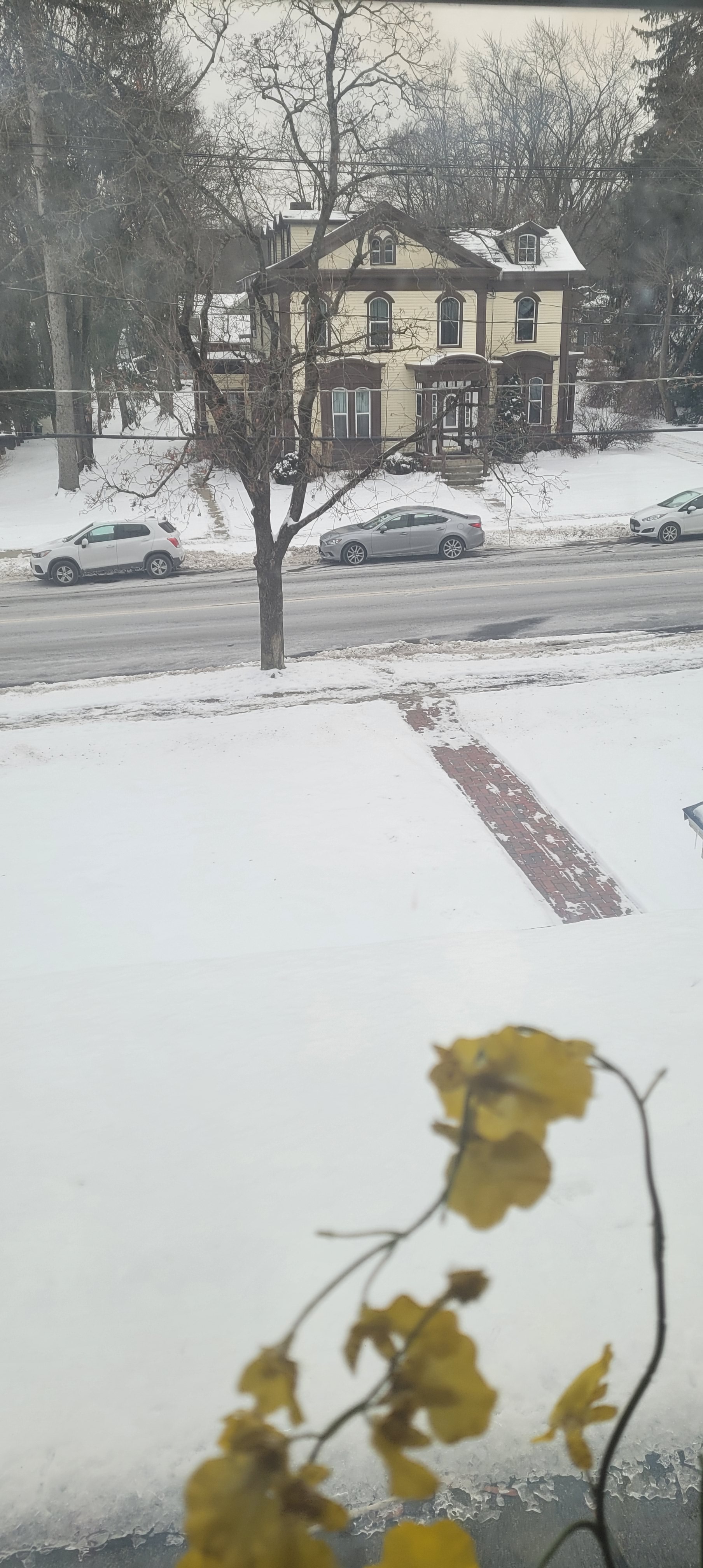
Sunlight seeps through the glass window and tickles the silk flowers, autumn leaves left over from the last street clean-up, lay flat and lifeless.
The street is silent this weekend, the neighbors with three high-pitched voluminous barking dogs are gone, and I notice my shoulders softened from the daily dose of their irritation. The neighbors are tucked indoors, avoiding the freezing atmospheric clutch of winter. In the village, it is Shop Local weekend so I took a walk and stopped at one of the gift shops. A mirage of unrelated items from chocolate bars to errings, tai die dresses, and scented candles crusaded side by side. The owner repeated her lines, ‘ I represent eighty-one New York artists so if you have any questions, no question is refused.’ Feeling brave I asked, What is the meaning of life?’ The result was not what I expected, she did not respond, and the other shoppers, maybe two chuckled. Time to move on.
Rarely do I run into anyone I know, my circle here is a half-circle of acquaintances. The next stop is the Social Club where my curious humor is appreciated.
” Jackie! She just started a few weeks ago. At first interaction, this twenty-something woman avoided conversation, not even a smile. After a few sips of a Manhattan, I pulled out my mini perfume sample.
” Do you like this?” she sniffed, I watched.
” Oh, I love this, What kind?“
” Tom Ford Noir.”
“I Love Tom Ford, he’s so expensive.“
That’s why I buy the body spray, sixteen ounces, forty dollars. I’d rather turn the heat down than go without perfume.”
At that moment, we leaped into gal pals. The Social Club serves up exotic cocktails, irresistible tacos, and an assortment of soups and salads, my kind of table setting. Horace the Bar Manager wears a beret and is always somewhat distracted by his list of duties. He moves behind a narrow back bar pathway as if he is power walking, and always greets me with a genuine ‘How are you LouLou!’.
I meet a cluster of female bar-friendly women, who invite me into their festive fiasco of celebration for one reason or another. We may never see each other again, but the moments count. Sometimes we exchange emails or phone numbers. The adverse effects of alcohol are sometimes diminished for undiluted expression.
I’m learning to understand upstate New Yorkers, their resilience to extreme climate, limited source of funds, pragmatic decisions, family comes first foundation, and quizzical curiosity when they learn I moved from San Diego to purchase a Victorian rental property in Ballston Spa, ‘ Why did you do that?’ I answered, ‘ I fell in love with the quaintness and the house.’ Still visibly unconvinced, I wonder if they think I’m in hiding or avoiding some criminal offense. I’ve not met one person from San Diego, Los Angeles, or Santa Fe, NM in three years. Maybe if I dressed in Pendleton or Northface, I wouldn’t stand out.
On another night, in desperate craving for French Fries, I stopped at Henry’s Pub. The man next to me opened the conversation,
“You’re not from here are you?”
” What gave me away?”
” The way you dress, it’s a nice jacket.”
” I just wear what’s in the closet, urban clothes I suppose.”
” That’s cool. Where are you from?”
” Los Angeles.“
” I’ve never been there, I’m planning a trip to Hawaii, my first time.” He outlined a history of why now, breaking up with his girlfriend, and then he jump-started into a conversation about needing a haircut. This went on for some time, although he was almost shaved. Then he went onto his beard. I listened attentively, imitating interest because he needed to talk, and I knew that feeling so well. Sometimes conversation is not what we need but what the other person needs.
Thanksgiving seeps into a day of light and dark, like a trajectory of blissful silence transitioning to watching the Macyโs Parade, then dancing around my bedroom to old-school hip-hop. ย Internally feeling more adept than last year, the solitude and absence of friends didnโt snake rattle me, ย it was more like a day of moving effortlessly between desires without contemplation or sorrow. As the year ends, the comparison of achievements and digressions seemed to evoke a visceral epiphany. Iโve always preferred less chaos and crowds to intimate gatherings, and being alone. Looking in the internal mirror, the reflection released a liberation of abasement, it is who I am, and if refusal of this characteristic triumphs, I will never feel self-affirmation.
Without that, life is an interior war.
I snapped this off a film, I cannot recall which one.
My first experience with Anti-Semitism was at twenty years old. I was working for a Bank in Beverly Hills in the loan department. One day my supervisor gathered us around and told a joke. I cannot remember it exactly, I do remember that he compared Pizza in the oven to Jews in the Holocaust gas chambers. I told my father. He ordered me to call the President of Gibraltar S & L and repeat the comment. The president was Jewish. I did so. I was assigned a new supervisor.
VULNERABLE…. weakness and emotionally exposed, failure. Otherwise the moment of courage to rise and understand our fragility without self-degrading,. Excerpt from Rabbi at Temple Ebet Emeth.
Living in Del Mar from 1982 – 1996 enriched my spirit, health, and distance running. Even though I’ve heard, you can’t go back, I’m striving to break that fact.
As children, our waiting depends on how long it takes Mom and Dad to finish what theyโre doing and pay attention to our needs. It takes hold of us, like a fever, and we resort to nudging them, whining, even sobbing, If we are made to wait longer than we expected. During the school year, I waited all semester for the summer. In Los Angeles that meant it was hot enough to go swimming in the ocean.
When I lived in Hollywood, I rode two buses, to get to Santa Monica. The second bus dropped me off on Ocean Avenue, above Santa Monica Beach. I ran down the ramp that connects to Pacific Coast Highway and headed north to Sorrento Beach. I jumped into the sand running to find the place where my schoolmates clustered: in a caravan of towels, beach chairs, radios, and brown bag lunches. I couldnโt just run to the ocean, I had to sit and talk and have something cold to drink, and then I made myself wait until I couldnโt stand it any longer. Then I ran down to the shore, and embraced the waves, tumbling inside their grasp until I lost my breath, and floated into abandonment.
After I moved to Santa Fe I stopped thinking about the ocean, I had to remove the memories from my thoughts, so I could continue to experience this spark of New Mexico. The dry sage ocean of pink soil, and radiant blue sky that pinches your eyes when youโre driving, the sunlight, the warmth of a desert night, and the white snow on pink adobe rooftops. It had postcard perfection, even with fallen leaves spread like trash everywhere, the trees almost naked, and the dead plants in the garden. I tried not to think of the ocean, the look of the sea from watery suntanned eyelids, or from the bluff at Del Mar, or the splashing of waves around my shoulders as I tumbled beneath the surface.
I waited, as I did as a teenager, for that time to come in the fall of 2010, so I could return to the sea. I stood at the waterโs edge in Del Mar, it was like summer without all the kids screaming, barking dogs, volleyball and paddle board games, lifeguards thrashing the beach in their jeeps shouting, ‘no dogs off the leashes, no glassware, and no surfing today’. They were missing, and so were the parade of beach runners, and surfers. In fact, I was the only one swimming, on that first day at the beach. Before I went into the water, I reclined on a big black boulder and faced the sea, letting my eyes wander amongst the scenes of the beach on a Tuesday afternoon. In front of me was an older man with graying hair, in a beach chair reading. He must be retired, he looked perfected adapted to his spot about five feet from the shoreline. I thought about retirement, and how I still cannot come to grips with spending my days on park benches or in cafes watching younger men and women live. There was one swimmer, on a bogeyboard, he was far out, and floating along, and I wished Iโd brought mine with me, but it was in Rudy’s van. The last time I used it was when I lived in Solana Beach in 1997. I also wished I had a new bathing suit, because the one I was wearing was too loose, and the neck straps were tied together in a knot so I could swim without losing my top. The sun baked my body, and I let it without abatement, without shading my limbs or wearing a hat, just enough sunscreen to keep the rays from trotting over my lily-white skin. I closed my eyes and when I opened them, the waiting suddenly felt so imperial, so much so that I began to think about waiting as an aphrodisiac or something like a good cocktail that you have to make last for hours, while you wait for that moment that makes you feel immortal, childlike, and emancipated.
I felt the beach flies, and the tang of salt water on my lips, and when the seagulls swarmed above the waterโs surface, like so many beads of a necklace, I thought, that this is about the most beautiful day I could have, and itโs all because I WAITED. I didnโt give up on the ocean, or my place in it, or believing that I would have my day in the sand, under a faded denim blue sky, with cotton ball clouds floating above me. I baked until the sweat drenched my pours, and then I raised myself up and walked slowly to the edge of the water. The surf made tiny breaks not enough to shatter my body warmth and I felt the first sting of the water on my feet, and then my knees., I submerged and found that the best way to celebrate this day was to keep flopping backward on top of each wave as it crashed, and I did this for a dozen rounds, until I felt giddy, submissive, and dented with the surf. That waiting thing again, meant something that I should write about because all of us are waiting for the election, the economy to recover, wars to end, streets to be safe and our real estate to be worth something again. We are all waiting for this big change so we can feel secure and optimistic about the future. There is something useful about waiting, something predisposed, that gives us the support and substance we need, so when the waiting is over, and we are all flush with optimism again, it will feel like the first time. It will overwhelm us with power and joy, like the ocean.
As children, our waiting depends on how long it takes Mom and Dad to finish what theyโre doing and pay attention to our needs. It takes hold of us, like a fever, and we resort to nudging them, whining, even sobbing, If we are made to wait longer than we expected. During the school year, I waited all semester for the summer. In Los Angeles that meant it was hot enough to go swimming in the ocean.
When I lived in Hollywood, I rode two buses, to get to Santa Monica. The second bus dropped me off on Ocean Avenue, above Santa Monica Beach. I ran down the ramp that connects to Pacific Coast Highway and headed north to Sorrento Beach. I jumped into the sand running to find the place where my schoolmates clustered: in a caravan of towels, beach chairs, radios, and brown bag lunches. I couldnโt just run to the ocean, I had to sit and talk and have something cold to drink, and then I made myself wait until I couldnโt stand it any longer. Then I ran down to the shore, and embraced the waves, tumbling inside their grasp until I lost my breath, and floated into abandonment.
After I moved to Santa Fe I stopped thinking about the ocean, I had to remove the memories from my thoughts, so I could continue to experience this spark of New Mexico. The dry sage ocean of pink soil, and radiant blue sky that pinches your eyes when youโre driving, the sunlight, the warmth of a desert night, and the white snow on pink adobe rooftops. It had postcard perfection, even with fallen leaves spread like trash everywhere, the trees almost naked, and the dead plants in the garden. I tried not to think of the ocean, the look of the sea from watery suntanned eyelids, or from the bluff at Del Mar, or the splashing of waves around my shoulders as I tumbled beneath the surface.
I waited, as I did as a teenager, for that time to come in the fall of 2010, so I could return to the sea. I stood at the waterโs edge in Del Mar, it was like summer without all the kids screaming, barking dogs, volleyball and paddle board games, lifeguards thrashing the beach in their jeeps shouting, ‘no dogs off the leashes, no glassware, and no surfing today’. They were missing, and so were the parade of beach runners, and surfers. In fact, I was the only one swimming, on that first day at the beach. Before I went into the water, I reclined on a big black boulder and faced the sea, letting my eyes wander amongst the scenes of the beach on a Tuesday afternoon. In front of me was an older man with graying hair, in a beach chair reading. He must be retired, he looked perfected adapt to his spot about five feet from the shoreline. I thought about retirement, and how I still cannot come to grips with spending my days on park benches or in cafes watching younger men and women live.
There was one swimmer, on a bogey board, he was far out, and floating along, and I wished Iโd brought mine with me, but it was in Rudy’s van. The last time I used it was when I lived in Solana Beach in 1997. I also wished I had a new bathing suit, because the one I was wearing was too loose, and the neck straps were tied together in a knot so I could swim without losing my top. The sun baked my body, and I let it without abatement, without shading my limbs or wearing a hat, just enough sunscreen to keep the rays from trotting over my lily-white skin. I closed my eyes and when I opened them, the waiting suddenly felt so imperial, so much so that I began to think about waiting as an aphrodisiac or something like a good cocktail that you have to make last for hours, while you wait for that moment that makes you feel immortal, childlike, and emancipated.
I felt the beach flies, and the tang of salt water on my lips, and when the seagulls swarmed above the waterโs surface, like so many beads of a necklace, I thought, that this is about the most beautiful day I could have, and itโs all because I WAITED. I didnโt give up on the ocean, or my place in it, or believing that I would have my day in the sand, under a faded denim blue sky, with cotton ball clouds floating above me. I baked until the sweat drenched my pours, and then I raised myself up and walked slowly to the edge of the water. The surf made tiny breaks not enough to shatter my body warmth and I felt the first sting of the water on my feet, and then my knees., I submerged and found that the best way to celebrate this day was to keep flopping backward on top of each wave as it crashed, and I did this for a dozen rounds, until I felt giddy, submissive, and dented with the surf. That waiting thing again, meant something that I should write about because all of us are waiting for the election, the economy to recover, wars to end, streets to be safe and our real estate to be worth something again. We are all waiting for this big change so we can feel secure and optimistic about the future. There is something useful about waiting, something predisposed, that gives us the support and substance we need, so when the waiting is over, and we are all flush with optimism again, it will feel like the first time. It will overwhelm us with power and joy, like the ocean.
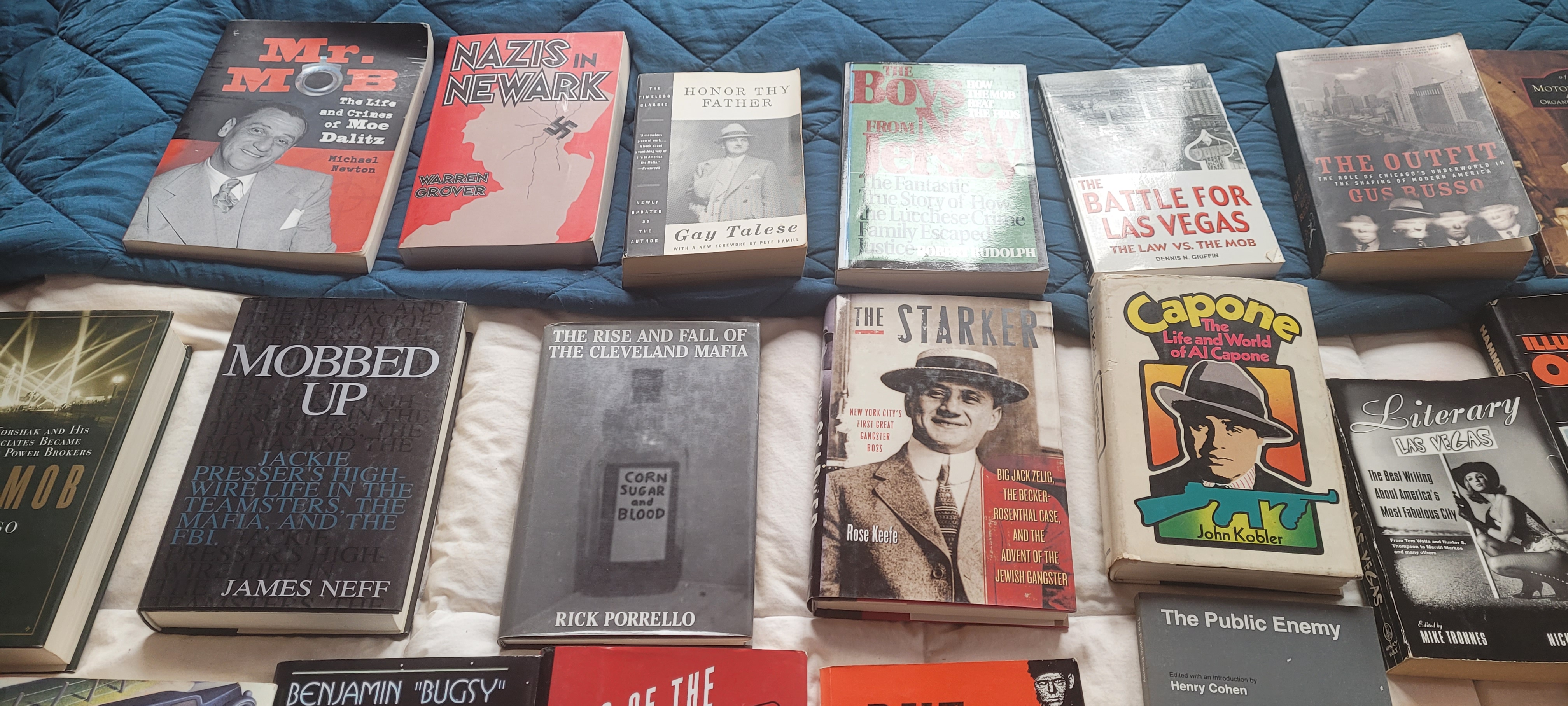
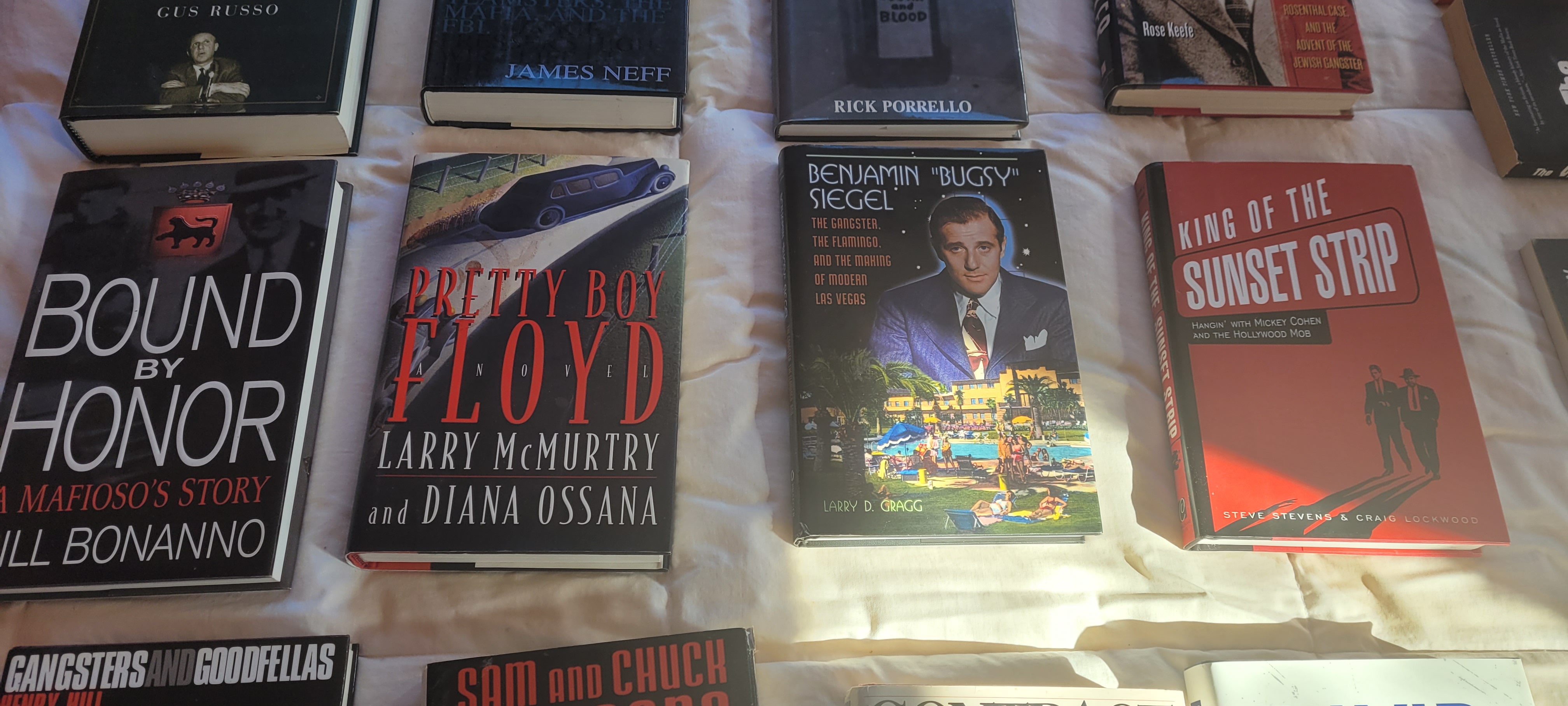
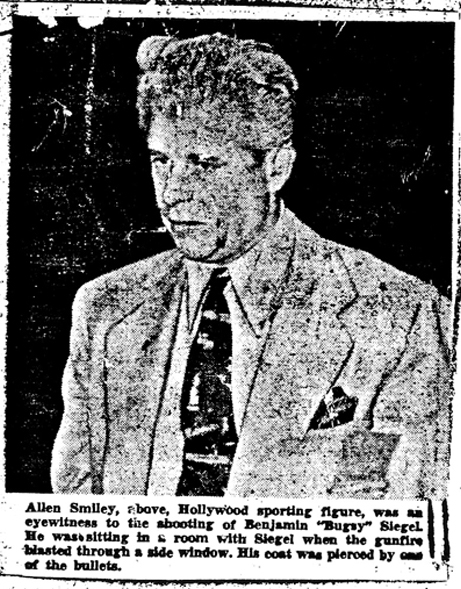
โWhatโs it like knowing your father is a gangster? Did you know when you were a teenager? Did you meet Bugsy Siegel? Did your father kill anyone? You know the Mafia kill people.โย
Childhood 1955-1961
I called him Daddy. His friends called him Al, or Smiley, the Department of Justice tagged him โarmed and dangerousโ and his mother named him Aaron. He was born January 10, 1907, in Kiev Russia, one of three sons born to Ann and Hymen Smehoff
ย ย ย ย ย He had salty sea blue eyes blurred by all the storms heโd seen.ย When I say something funny, his eyes crystallize and flatten like glass. Smoothing out the bad memories.ย Heโs always a different color. Dressed in coordinates matched perfectly as nature.ย My small child’s eyes rest cheerfully on his silk ties, a collage of jewel tones. The silver and blue tie matches the shirt underneath.ย The feel of his fabric is soft like blankets.ย He is very interesting to look at when I am a child and open to all this detail.ย
I cling to his neck in the back seat of his long Cadillac. My mother doesnโt ride with us during the day. She comes along if we are dressed up and going out to dinner. I enjoy the car rides most. He sings songs and his hand flutters about, catching me by surprise behind the ears, and I shriek. Daddyโs laughter echoes inside my ears.
ย ย ย ย We visit friends in Hollywood who own delicatessens, restaurants, and clothing stores. We go to Paramount Studios and I ride around on a pony or get kissed by cowboys in a Western scene.ย We go to Beverly Park almost every day to ride the ponies.ย I am only two years old when Daddy slings me over this big stinky pony, and insists that I go around the ring one more time so he can watch.ย I meet Hoppalong Cassidy and we visit his booth at Pacific Ocean Park.ย When my father was a film producer he worked with Hoppalong on a western film.
Our home in Bel Air was where I lived before I knew how fortunate we were. My room was at the end of a long hallway, and I was afraid to leave the room when it was dark because it seemed such a long distance to my parents. The wallpaper danced around my eyes, a collage of flowers illuminated the black background, and I was wrapped in a blue satin comforter. My room was cluttered with dolls. As a young child, I preferred staying in my room and imagining characters for my dolls.
ย ย ย ย ย My father showed us, and really paraded us around as if we were exceptionally talented.ย ย I never understood why these people fussed over me. I sort of distrusted them, before I understood what that meant. There were exceptions, the ones I knew to be real family people earned my affection.ย I dreaded the routine of being placed in front of a group of men and women who stared at me as I curtsied or mumbled โHello.โย ย George Raft came to all my birthday parties, Nick the Greek showed me card tricks and Swifty Morgan told stories all night.ย Damon Runyon characterized him in his stories as the โLemon Drop Kid.โย I was surrounded by men with FBI files and notorious reputations for being dangerous gangsters. Some of them had been arrested for murder. Others were old-time bootleggers from Cleveland and Detroit.ย I knew them as Uncle Lou,ย Doc, or Uncle Johnny.ย Years later I would discover they were Lou Rhody of the Cleveland Jewish Syndicate in Cleveland, Doc Stacher, the tough New Jersey underboss to Longy Zwillman, (the guy who discovered Jean Harlow in a speakeasyin New Jersey), and Johnny Rosselli, the king of Las Vegas in its heyday.ย I was enchanted by thesemen, they were family friends, and they never followed the rules.
This home was my fatherโs showplace. He bought the house in 1955, and that was a bad year for him. I was two years old.. That was the year that a number of his friends and associates died or were murdered. Like Little Willie Moretti from New Jersey, who was killed by rival gangs, and Tony Canero, who died at the blackjack table of the Stardust Hotel.
Willie had a problem keeping his mouth shut. Frank Costello, the leader of the syndicate group most closely associated withmy father, sent Willie out to California where heโd be safe from harm. Willie was unstable, taking bets on losing horses and talking to people he shouldnโt. Frank asked my father to keep an eye on Willie, to become a confidant. He was told to dress up as a Doctor and pay visits to Willie. My father obliged and Willie took a liking to my father. Willie suggested to Frank that the boys should build this doctor a hospital. Frank told the story to some of the other fellows and they must have had a good laugh. Frank had another idea, giving Allen the job of promoting Willieโs good friend, Frank Sinatra. My father declined the offer. Eventually, Willie returned to New York and was found dead stuffed in the trunk of his car. The second tragedy was the suicide of Louis Rothkopf, โLou Rhodyโ they called him, or โUncle Louie.โ He was one of four bosses of the Jewish Cleveland syndicate, (the Mayfield Road Gang), and one of my fatherโs closest friends. I heard that Louie would cross to the other side of the street if he saw a guy that owed him money. He had a big heart. With his wife Blanche, the Rothkopfโs were respectable business owners in the Chagrin Falls area of Cleveland. When Senator Estes Kefauver launched a federal investigation on organized crime, he exposed and ruthlessly slandered Lou and his partners. Not just as bootleggers, and distillery owners, but murderous syndicate men with ties to the Italian Mafia. By this time, Lou and his partners were operating legitimate business enterprises all over Cleveland. Blanche commit suicide two years before Lou also took his own life. I have been told that my father brought Lou in to save the Desert Inn Hotel in Las Vegas, when the first owner,Wilbur Clark, went busted.
* * * * *
The house in Bel Air brings back the best memories of my childhood, but few visions remain. The front yard was a blanket of pink and white geraniums. They were tended to by our gardener, and though I wished to sit in their path, and smell their fragrance, I was told not to play in the geraniums. The flowers were my first contact with nature. It wasnโt enough to just look at them, I wanted to lay with them and watch their breathing.
Our house was perched at the top center of Thurston Circle, a sort of distant cousin to the discreet upper Bel Air locked behind black iron gates. There was no gate at our entrance, and the neighborhood homes were a mixture of two-story colonial and ranch style. The view of Los Angeles from the living room and my parentโs room was an electric and absorbing scene for a small child who hadnโt known anything beyond her house. At night lights glittered against a black sky, and I could sit by the window and dream of what the lights were all about. Entangled bougainvillea grew wildly behind our house. We picked figs and avocados from trees in the yard. There I learned my first lesson about family values. One day my father showed me a nest of small birds perched on a branch of a spruce tree. He pointed out the mother bird hovering over her babies in the nest, and then he drew my attention to the father bird perched on our television antenna. โYou see, thatโs what the father bird must do, is guard his little family, just like I do.โ I asked a few questions, and he just kept telling me that it was so remarkable how animals take care of their families and I should watch them and learn something.
My parents gave me extravagant toys. I was about four when my father installed a roller coaster in our backyard. He sat me in the cart and I rode up and down the bumpy track, screeching with laughter. My mother was always there, watching from a distance. Daddy was the one that loads me up with surprises and Mommy was the one to feed me, clean me up, and tuck me in at night. I could tell her everything, she listened to me and watched over me. She doesnโt interfere with me when I am playing with my dolls.
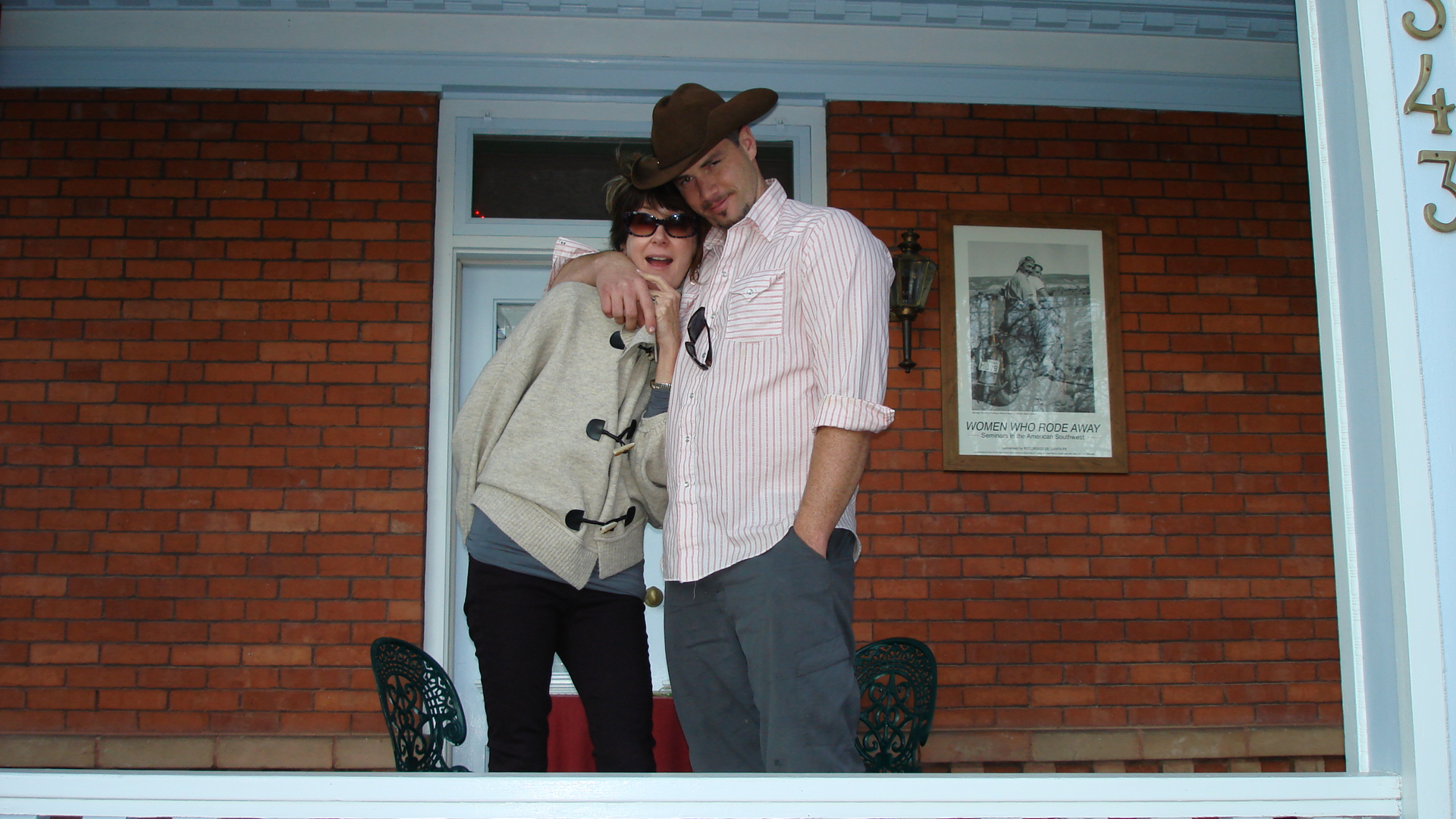
With last names like Smiley and Funk, you know thereโs bound to be something creative going on in the imaginations of this Ballston Spa duo. The couple, both natives of San Diego, Calif., purchased a house at 63 East High St. last May. Luellen Smiley and Rudy Funk have turned a once-ramshackle 1860โs structure, now known as The Follies House, into three furnished apartments oozing with zany charm. Smileyโs brochure touts the place as a โplayful vacation residence designed to inspire.โ On the wide front porch, a sign offers visitors โFree Records,โ paying homage to one apartmentโs main decorative inspiration: classic stage musicals. Called the Broadway suite, its walls are adorned with record covers, programs, ballet slippers and even a dance costume. There are dice on the end tables, a life-sized poster of Humphrey Bogart, colorful paper parasols and peacock feathers. For tenants who bring their own films, thereโs a projector screen and, tucked into an alcove, a working Victrola. Vintage Broadway memorabilia is everywhere. Then thereโs the nearly ceiling-height replica of a bass guitar. โThis was actually a costume someone wore,โ said Smiley, pointing out the head and arm holes. โThese are the kinds of things we like, the really unusual andunheard of.โ Growing up in California, Smiley aspired to be a dancer and maintained an interest in the arts.
THE FOLLIES HOUSE
In recent years, she became keen on the idea of renovating and decorating an older home, although the village of Ballston Spa was not first on her list. โWhen we first came here, I wanted to be in Saratoga, and when I drove through Ballston Spa I said, โIโd never want to live here,โโ Smiley said. โBut then we rented here, and I didnโt want to go back on the road. We loved this street. We think this village is really starting to happen.โ The couple went to work feverishly last spring to ready the apartments in time for the track season. While not a bed and breakfast, the apartments are designed for temporary tenants โ people new to the area or vacationers. Smileyโs off-season rates are $800 a month for the Broadway Suite and $700 for the Boomers Pad. The one-bedroom Boomers Pad is designed with vintage โ50s and โ60s furniture. Smiley said she and Funk combed area antique shops, including those in the village, for many of the offbeat pieces, including the vinyl records and oversized pink sofa. The houseโs history mirrors the eclectic style the couple hasbrought to the home. โIt was built by a man actually named Dr. Doolittle as a wedding present for his daughter,โ Smiley said. โYou can see the little touches everywhere. There are butterflies and sun rays carved into the woodworking and doorknobs. Itโs a love house. It was built with love.โ Smiley said she and Funk have combed files at Brookside History Center looking for old photographs of the house in order to decide what color to repaint the facade. โThe exterior of the house is next on our list, and while we havenโt located any photographs, weโre thinking pastels,โ Smiley said. โInside, we used a lot of pistachio and pink.โ While Funk commutes to and from California for business purposes, the pair weathered their first winter this year, relying on the kindness of neighbors for jobs like snow-blowing. โWeโve never seen winters like this,โ Smiley said. โIโm from the other side of the world. But this is a very supportive community. Thatโs one of the things we love about the village.โ
Smiley has immersed herself in the closely-knit community, joining the Ballston Spa Business & Professional Association, the local chamber of commerce, and helping promote an upcoming Art Walk. The Follies House recently was given a beautification award for significant improvements during the past year. In her brochure for potential tenants, Smiley points out area highlights including the Saratoga Performing Arts Center and destinations within the village, such as the museums, the glassworks studio, Art Ink., and the new gallery and loft spaces on Low Street. Smiley said she also recommends people take a stroll along East High Street, a historic district known for its Victorian homes. โIโve seen little villages, big villages โ but what I see here is the most beautiful village,โ Smiley said. โThe potential is here. Thereโs a sense of magic here and the transformation will happen. Iโm certain of that.โ
I am not afraid to write the truth, to stare and embrace the reflection. It appeared last night; a thought manifested in an abstract way; a torch of light, a rainbow, an open door that symbolized a guide to contentment, and peace of mind, it felt reachable if only I evaporated into the sensibility, allowing change, a complete transformation from this encampment of isolation and fear of making the wrong decision.
The embryo of thought. Sometimes it is negligible, as is life. I am the puzzle maker and every time I try to carve the right size square, I fall off the board and have more material to write about. The puzzle is so vast that it covers our lifetime and the pieces are the choices, and non-choices that fit into themes. My life, is like a melody, a Gershwin tune. As a dancer and prancer at heart, my feet are my hands, and my hands are my heart. Drizzling rain is relative to thoughts on a Saturday; a few thoughts for my book, assembling the bedroom fan, calling friends, a walk with my umbrella to live in rain, answering emails, and those hypnotic Film Noir Classics on Utube. When world news disables self-absorbency, it’s a relief, I hold hands with whatever keeps me alive.
Greta dressed in pink jeans, a pink striped polo shirt, and low-heeled pumps. As she opened the door she thought, and said out loud one step to go. She flipped down the top of her car to ride visible, a sort of rehearsal to adjust to the main street on a Saturday afternoon. Storm clouds churned and after checking the weather channel, rain coming in one hour, Greta closed the convertible and went back indoors. Not truly disappointed as sheโd stayed up till three am watching the Shooter series on Netflix and woke at eight.
(I use the name Greta in my manuscript because of this, my father repeatedly scolded me when I said, I want to be alone, he replied, ‘Who do you think you are Greta Garbo?’)
Journal June 10th.
The street was quiet except for the barking dogs so I sat down to write, and let the paper stare back blankly. I switched over to Facebook and viewed my feed, the Rolling Stones, Italy Travel, Artnews, Creative Non-Fiction, Emily Luxton Travels, and Jazz photography. Voyeurism, the normalcy of our culture, to watch life from a screen, I’m guilty because I’m at heart a loner, a drifter that moves on the outskirts of socialization. When discourse and confrontation knock at my door, I go dormant to the world outside. My mask is not convincing, So, I bear up, like today, and take nature as my friend; a patch of blue, gray skies, the sun tea cup surprise, the birds and chipmunks on my lawn, and the occasional passersby who are living in their world. At seventy only two lines matter: I’m proud of you, and you could have done better. HONESTY.