Luellen Smiley is a creative nonfiction writer, author, columnist, and historian whose writing is deeply rooted in a controversial personal history. She is the daughter of Allen Smiley, a close friend, associate, and business partner of notorious Las Vegas gangster Benjamin “Bugsy” Siegel. Her father was sitting only feet from Siegel when Siegel was murdered in Beverly Hills on June 20, 1947.
That extraordinary childhood history became the foundation for Smiley’s first book, Cradle of Crime: A Daughter’s Tribute, published in 2017. The memoir explores what it was like to grow up as the daughter of a man connected to organized crime while trying to reconcile her love for her father with the secrecy, fear, and criminal world surrounding him.
Smiley’s work has appeared in publications including the New York Post, MORE Magazine, Southern California newspapers, and Authorlink. She wrote the newspaper column Smiley’s Dice—Adventures in Livingness, which earned a Blue-Ribbon Award from the California Newspapers Association for her Growing Up With Gangsters columns.
Her interest in her father’s history also led her to become a researcher and commentator on organized crime history. She has participated in television, radio, and documentary interviews.
Smiley’s next book, Gaslighting Greta, will be published this year. A personal story that reads like fiction. Her own website describes the project as exploring a woman whose life is destabilized by gaslighting and psychological manipulation.
Her writing career reflects a recurring theme: using personal experience and research to uncover the truth behind complicated relationships and extraordinary lives. From the secretive world surrounding her father and Bugsy Siegel to the deeply personal territory of Gaslighting Greta, Smiley’s work transforms difficult experiences into stories of survival, discovery, and ultimately reclaiming one’s voice.
Luellen Smiley is an author whose life has given her an unusual perspective on secrecy, manipulation, family loyalty, betrayal, and survival—and she uses that perspective as the raw material for her nonfiction storytelling.
When do we begin to lie about our lives:, feelings, fears, and mistakes? I ask this because of simple observation, knowing when someone is not telling me their truth. I remain silent; it’s not my way to ask why you lie to me? It’s like a social-cultural mask. I’ve always sought to know the truth. Why should we shield our traumas and hardships more than our triumphs and accomplishments? Do you know who does not lie? ART and SPORTS. That is why we listen to music, read books, go to galleries and museums, watch films, go to the theater, and go to dance performances. I cannot comment on sports because I’m not a spectator, although I love basketball.
We, and I mean this in only a visceral sense, do not believe politicians, news, social media, or advertisements. We want to, but deep in our inner truth, we know it is the manipulation of our individual thoughts and choices. That is why I trust art to deepen my understanding of the human condition. Thank you to all the artists and athletes who share their pain and glory.
I’ve written in the genre of Creative Nonfiction, integrating the events through dialogue, journal entries, and a third-person narrative. Within three locations, Santa Fe, New Mexico, Los Angeles, California, and Saratoga Springs, NY. Greta (me) exposes the mutilation gaslighting abuse inflicts on her emotions, psychology, mental and physical health, and her finances.
He pushed her on a swing, so high she touched the sky, viewed the world through his eyes, lived for a time without lies, then as mystically as he appeared, he let go of the swing, and she fell on her wing, broken but with the will to begin again. A broken heart hasn’t stopped her from loving him.
For ten days, just thinking of her spoken words, how they made their way to his ears and returned the sounds she so wanted to hear. When he stopped contacting her, she wiped her tears as some people find love at the core of their fears.
I’ve written in the genre of Creative Nonfiction, integrating the events through dialogue, journal entries, and a third-person narrative. Within three locations, Santa Fe, New Mexico, Los Angeles, California, and Saratoga Springs, NY. Greta (me) exposes the mutilation gaslighting abuse inflicts on her emotions, psychology, mental and physical health, and her finances.
MONTHS LATER ON THIS DAY, she closed the shutters to him and alchemized from a cocoon to a butterfly beneath a circle of friends in tune. She removed the photos, gifts, and letters and put them in a box to reminisce later. Talking out loud, “She takes just like a woman, but she will not break like a little girl.” No more hours fanning the past; on this day, my view is spanning.” She sat peacefully by the fire into the night and let her broken wing sing as she watched the wood turn to gold.
I’ve written in the genre of Creative Nonfiction, integrating the events through dialogue, journal entries, and a third-person narrative. Within three locations, Santa Fe, New Mexico, Los Angeles, California, and Saratoga Springs, NY. Greta (me) exposes the mutilation gaslighting abuse inflicts on her emotions, psychology, mental and physical health, and her finances.
SUN, a goose-bumpy joy and celebration. That’s what I love about my education here: the first class you must take is weather management. I’ve destroyed dozens of artistic bric a brac by leaving them on the farm table on the porch, forgot to shop for groceries when a storm was approaching, and ran out of salt. I drove through town, taking photos at the red lights; the scenery is like Little Women, dressed differently but still rather swarthy in their determination to survive. Now some men, probably like the fourth or tenth generation, bear the strength by wearing a T-shirt or shorts. The other day, after a snowstorm, I noticed a man crossing the street in shorts, a long white beard, and working boots. That’s an EXACT badass around here.
Beguine the Beguine is on the record player, and I’m swinging around the music room, elated with the energy that forced me to dance, turn off the mind entirely. Total bliss. Dance has been with me since as far back as I can remember, the answer to a mood change, without drugs or alcohol.
I’ve written in the genre of Creative Nonfiction, integrating the events through dialogue, journal entries, and a third-person narrative. Within three locations, Santa Fe, New Mexico, Los Angeles, California, and Saratoga Springs, NY. Greta (me) exposes the mutilation gaslighting abuse inflicts on her emotions, psychology, mental and physical health, and her finances.
In a current of unexpected life moves, I floated towards the Pacific Ocean and landed along the fragile, factious Santa Monica Mountains to Malibu.
The salty seaweed smell of the ocean streams through my car, driving down the Pacific Coast highway on my way to buy groceries.Vintage Marketis new to Malibu, and clerks are giddy about their jobs. They may be aspiring actors or former actors.
I walk in and get a phone call that I’d been waiting for so, I set my cart down on a shelf and took the call. During the half-hour conversation, my eyes were fluttering through the scene: tanned surfers, affluent college students, and diamond-rich men and women of age that don’t check their bank balances. Because of this, expressions are chilled as fine wines, and smiles are sublime or radiating. They are a mostly content population of 13,000. The median home price is $901,000, and the median income household is $127,000. Here in Malibu every thing looks different from Santa Fe: The staging of ‘was in the business, am in the business, or want to be in the business,’ surfaces and dominates the scenery.
They are beautiful-the young teenagers who surf and paddle are true blondes, the blue eyes scintillating pools of water, young women are saddled onto 6” platforms, and then there are the stand-out power people, who will not acknowledge anyone, and expect everyone to acknowledge them. Tucked in the mountains, are extraordinary artists who live off the grid the way most people prefer to live in Santa Fe. I am learning slowly and still hiding out at Chantal’s, where I am living, two miles up from PCH off Malibu Canyon Road, behind a gate. Bohemians, artists, home-office screenwriters, producers, and famous heirs of recognizable movie stars live there.
In the last hour, I walked down the road in the hands of sloping hillsides, horse ranches, and signature homes behind walls as high as the palm trees, built to withstand the typhoons of nature and mankind. In thedaylight a swirl of rain and clouds, it was as if I was in Ireland, walking along a road in Kilkenny. I roped in my imagination and returned to the mountains, which will teach me how far to go, how to duck a racing motorcycle car, or confront a coyote or a snake. A full transcendental moon dipped into the black-out mountain evening, and has cured me of interior turmoil for the time being. This is part of adventures in livingness in what locals call the bu. Chantal’s artistic compound of eight cottages and seventeen acres burned to chips in the Woolsey Fire. One night with Chantal and Neighbors.
Today, as the Bu, Palisades, and five other fires demolish humanity’s lives, I am grateful I was able to return to my childhood memories in Malibu for one summer in 2017.My family home burned in the Bel Air fire in 1961… No WATER.SAVE THEM THIS TIME, LA, AND DON’T LIE TO THEM.
I’ve written in the genre of Creative Nonfiction, integrating the events through dialogue, journal entries, and a third-person narrative. Within three locations, Santa Fe, New Mexico, Los Angeles, California, and Saratoga Springs, NY. Greta (me) exposes the mutilation gaslighting abuse inflicts on her emotions, psychology, mental and physical health, and her finances.
It is the Kentucky Derby and Cinco De Mayo weekend at La Posada. Kristen from the hotel said I should go; it would be fun. She’s a feisty young woman with clear, penetrating blue eyes and silky brown hair. Youth dances in her expressions; other times, it wilts from being locked down to an indoor job. She’s an adventurer who camps out in Belize and South America. Now, she’s talking about Antigua.
I walked out to the courtyard to see what was going on. The tables weren’t set up yet, but the Donkey stood idly and annoyed at the other end of the yard. I don’t know why they bring him, maybe for the kids. In the bar, a few guests were watching the Derby. The elan of race anticipation is shining like a light. I ordered a Mint Julep, and the guys were all watching as Dude whipped it up with finesse.
“ How is it?” Dude asked without needing any approval.
“ Magical. Who are you betting on? Greta asked.
“I want a Titty Tut, something nasty.”
“ Oh, stop that. You do it too much.” She replied.
“ Not nearly enough! Okay, here’s my horse—Promises Fulfilled. Oh yes, that’s mine.”
“ Everything you say is a metaphor for sex.”
“ You bet it is.” Who’s your pick?”
“ My prick is Justify.”
“Hah, see, now you get it.”
I sipped my drink and wandered around the lobby, stopping to greet Jackie, Monserrat, and Danielle. They don’t know what their smiles and caring comments do for me. I must tell them more often.
“ I don’t know what I’d do without all of you.”To be continued.
I’ve written in the genre of Creative Nonfiction, integrating the events through dialogue, journal entries, and a third-person narrative. Within three locations, Santa Fe, New Mexico, Los Angeles, California, and Saratoga Springs, NY. Greta (me) exposes the mutilation gaslighting abuse inflicts on her emotions, psychology, mental and physical health, and her finances.
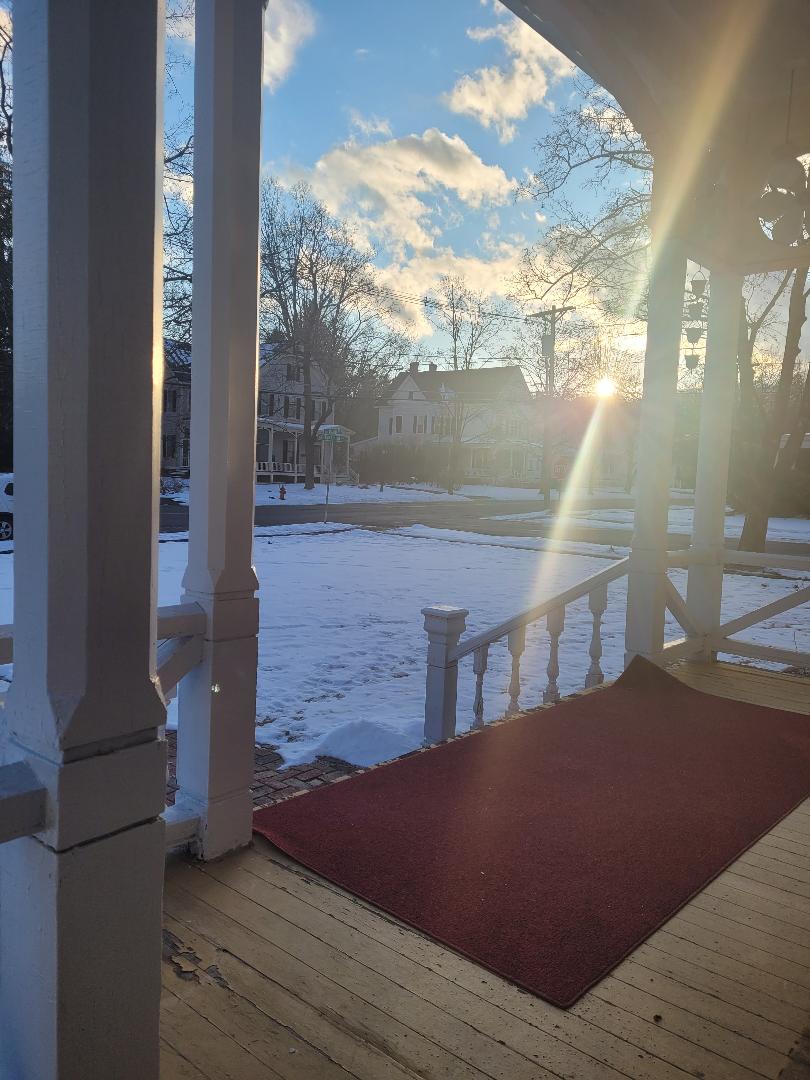
I shot this today with impetuous acceptance of more snow. I swept the stairs, removed branches, listened to music, and smiled. It will be my last winter in this quixotic, charming, historic village that taught me not to complain, instead to make it understandable.
I’ve written in the genre of Creative Nonfiction, integrating the events through dialogue, journal entries, and a third-person narrative. Within three locations, Santa Fe, New Mexico, Los Angeles, California, and Saratoga Springs, NY. Greta (me) exposes the mutilation gaslighting abuse inflicts on her emotions, psychology, mental and physical health, and her finances.
Adventures in livingness aren’t just about extroversion, what we say, how we behave, or how we respond. More importantly, they are about our inner changes when life demands that from us. No one hears what threads are spoken in our heads, the ones that are flawed from indecisiveness, the ones that have been molded from things long past, the new threads that are unfamiliar, and the ones we need to rip out entirely.
I’ve written in the genre of Creative Nonfiction, integrating the events through dialogue, journal entries, and a third-person narrative. Within three locations, Santa Fe, New Mexico, Los Angeles, California, and Saratoga Springs, NY. Greta (me) exposes the mutilation gaslighting abuse inflicts on her emotions, psychology, mental and physical health, and her finances.
Today is the day to stop punishing myself and outlive what has aborted my adventures in livingness.
No longer incubate to avoid disappointment, irritations, chaos, uncertainty, and senseless fear. I’m not alone, and you’re not alone. Friends of marvelous careers and lifestyles admit the same. We remain at home, where comfort, familiarity, control, and sustainability are our foundation.
No longer! Debasing my flaws, failures, and finicky flashes, manage them like I’m preparing dinner. If the pasta isn’t fabulous, I don’t go into a fit of failure.
I no longer will have apprehension and anxiety when buyers arrive to tour my home. The great philosophers advised me on Facebook that anxiety never solves problems.
I’ve written in the genre of Creative Nonfiction, integrating the events through dialogue, journal entries, and a third-person narrative. Within three locations, Santa Fe, New Mexico, Los Angeles, California, and Saratoga Springs, NY. Greta (me) exposes the mutilation gaslighting abuse inflicts on her emotions, psychology, mental and physical health, and her finances.
BEFORE I think about how to respond to a stranger, I feel them; the gestures, expressions, tone of voice, movement, conversation, mannerisms, and eyes. I acknowledge feelings first, then I think.
When I’m driving, I feel sprite or gloom. I feel a twirl of sensory perception from the drivers’ faces and witness the joyous reciprocal ink of friendship between shopkeepers, cops and dining customers, city workers, and service technicians trying to fix satellites and cables in a village with inconsistent infrastructure.
SOME of my principles are unsupported by experience, but more with GROWING UP WITH GANGSTERS training that I cannot erase. My theme is unbalanced; I take the extreme path instead of the path with arrows. It is why writing settles my sea-saw. As I sit in my antique wooden chair looking out, feeling Saturday’s silence beneath a blanket of blue sky and radiant sunshine, a tiny thread of peace realigns a week of political profanity, war, and death, but they got Sinwar! The sedate and quiet surroundings relieve my spinning head, and I just continue to sit and not fidget.
I’VE observed the village people; some appear to drag their bodies rather than hotfoot. I wonder if all the global Google news has weighed us down. Teens signal youth’s fascination with experience, newness, and expectation.The exchange of human voices as pedestrians walk along the street, I’ve noticed that New Yorkers speak in voluminous pitch. I can hear their voices from my bedroom on the third floor with closed windows. Humanity is our background symphony, along with the crows, lawnmowers, power saws, blowers, and racing cars. This street is part of my theme; a juxtaposition of historic homes and modern toys. I am a 21st-century flapper clinging to the roar of independence, self-expression, and breaking the rules. If we feel the chord of festivity, we should not hold back. I am going out now to see if I can feel more.
Sunday October 20,
I walked out to the porch and slouched against a pillar to feel warmed by the sun. My dermatologist advised that I should not stay longer than ten minutes, even with fifty UV protection. Today is family day and a car show in the village. I experienced it two years ago, so I remain at home; listening to the geese go south for the winter and feeling solitude. It’s like a branchless tree, a storm without an umbrella, a garden without flowers, and a home without company. Oh, snap out of it. Go to Henry’s Tavern and watch the game with men losing their cool. They get insanely raucous s over football.
I’ve written in the genre of Creative Nonfiction, integrating the events through dialogue, journal entries, and a third-person narrative. Within three locations, Santa Fe, New Mexico, Los Angeles, California, and Saratoga Springs, NY. Greta (me) exposes the mutilation gaslighting abuse inflicts on her emotions, psychology, mental and physical health, and her finances.
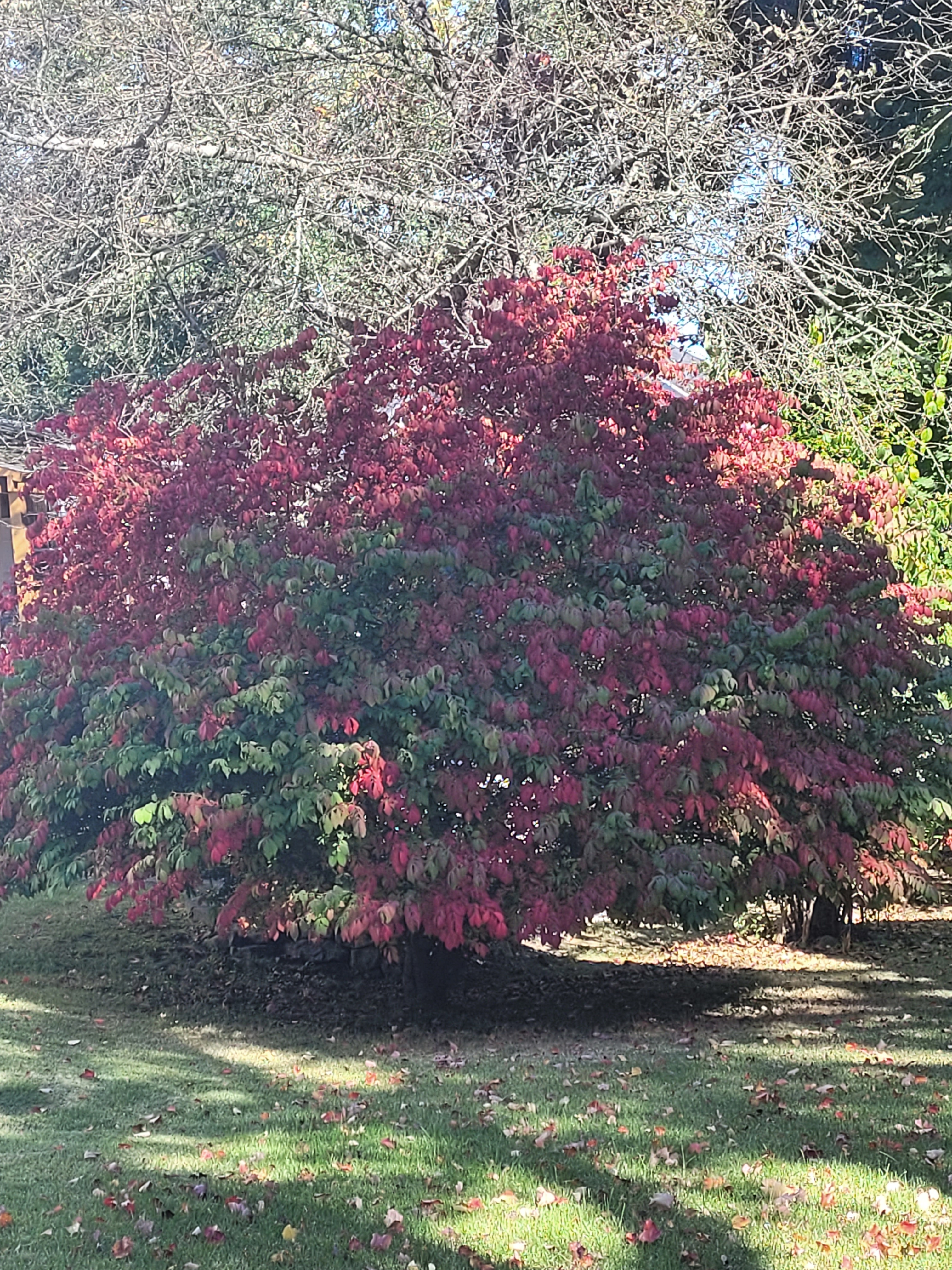
Why can the leaves turn lemon, plum, and tangerine? Why does the sky allow storms to shake up its translucent surface? Why can nature reinvent momentarily with wind, rain, hurricanes, and earthquakes? Why can’t I change the colors of my mood? I get daily messages from an Instagram member named Asad—inspiring, and he circulates around the themes of mood, attitude, loneliness, and inner strength. All of these have toppled my life since I can remember. I’m more taciturn than most people perceive. I can display a mannequin of poise and joy, but if you remove the surface, beneath is a conundrum of self-doubt, second-guessing, punishment, and fear. What’s even more destabilizing is I actually think I’m alone.
Last week, I observed the cashier’s facial expression and gestures at the Stop-& Go, which alerted me to her distress. I was buying a Cadbury chocolate bar after reading that chocolate is mood-changing, not just the hip-hop of energy; it can change your mood.
” I read that chocolate helps with depression, and these dreary dark days don’t help,” I admitted.
” Oh, I know. I used to be a registered nurse,” she said, facing me squarely into my eyes. I noticed a lot of cashiers don’t do that anymore.
” I suffer with anxiety and depression so I had to quit. I can mix up a Cadbury bar with a Snickers but not with medication.”
” I have the same as you, it’s changed my life as well. ” I looked at her name tag, without my glasses.
” You’re name is America? She laughed and her smile emerged.
“No, underneath, Dolores.”
” Thank you for listening to me,” I said
” Thank you, customers rarely acknowledge us.”
We don’t want pity or empathy; we all need recognition, and not in a text!
I’ve written in the genre of Creative Nonfiction, integrating the events through dialogue, journal entries, and a third-person narrative. Within three locations, Santa Fe, New Mexico, Los Angeles, California, and Saratoga Springs, NY. Greta (me) exposes the mutilation gaslighting abuse inflicts on her emotions, psychology, mental and physical health, and her finances.
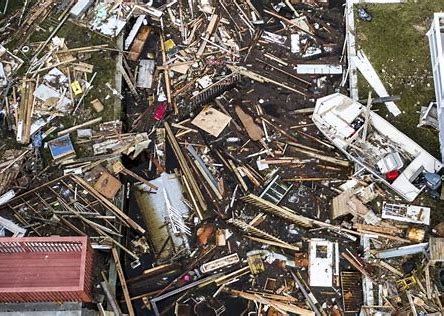
I’m angry. We can go to the moon, build cities, and predict weather, but why are we waiting now to rescue North Carolina, Florida, etc.?
The hurricane was reported days ago. I looked up the exact date but couldn’t find it. All federal resources should have been there before Helene took lives, animals, homes, streets, businesses, and infrastructure.
I’ve written in the genre of Creative Nonfiction, integrating the events through dialogue, journal entries, and a third-person narrative. Within three locations, Santa Fe, New Mexico, Los Angeles, California, and Saratoga Springs, NY. Greta (me) exposes the mutilation gaslighting abuse inflicts on her emotions, psychology, mental and physical health, and her finances.