
My first interview on Dad, when I listen now it reminds me how liberating it was to talk about my family history.
KNPR.ORG
Luellen Smiley
Luellen Smiley is the daughter of reputed mobster, Allen Smiley. Smiley’s dad was a close friend and confidant of famous Las Vegas mobster Benjamin “Bugsy” Siegel and he was sitting on the couch just feet away from Siegel the night he was murdered. While Luellen Smiley hadn’t been born at the time o…
Iโve adopted a savant to facilitate making decisions. I donโt want to use the word hate, itโs useless, but this time I will, I hate making decisions. Whether to go out for dinner, or go to one of villages’ festivals, parades, or events, they rake up events during the winter to keep us off drugs. This weekend was a ย village-wide Friday sale for shopping, the lighted tractor parade, and appetizers at all the shops in town. Sounded pleasurable and Iโm proud of the village to induct us into a community of we care about you.ย I didnโt go, but I did go out for Thanksgiving dinner in a restaurant Iโd never been to, festive crowded, and the tempting buffet twinkled like the first time Iโd seen decorated food. Itโs been five years since Iโve gone out for Thanksgiving so the jubilee of food was a bit musical.ย I ordered a glass of wine at the bar, the only customer as everyone had reserved tables for grandparents and children and the roar was melodious. My order to go would wait, the celebratory ambiance shattered my loneliness. The bartender, Jovida was like a lightbulb, she kept coming over to me maybe three times asking me polite questions, have you been here before, you must come on the weekends we have live music, while youโre having your wine can I bring you something from the buffet. I wondered if Iโd be charged, she noticed my hesitation and said, No charge. So I choose smoked salmon, capers, onion, and horseradish. On m wish list if Iโm allowed to eat in heaven, along with Gruyere cheese, tacos, salad, and croissants. ย The bliss, was a sandwich of bustlingeager activity, laughter, and the children. ย I remember our family Thanksgiving when my parents were divorced and we went to Nanaโs home in San Fernando Valley, through that old tunnel. My motherโs mother is full-flecked Irish so the dinner was grand, and she was a dedicated cooking slave.ย She made mashed potatoes like Iโve never tasted since, and homemade pies, everything spiced with Nanaโs kinship with making the family love her.
ย ย ย ย ย I left the restaurant after an hour later with a jubilant bag of turkey, fixings, and pumpkin pie. I found my seat on the bedroom sofa, and watched, โ The Trainโ with Burt Lancaster.ย My thoughts were rested, abated for the whole evening, and then the next day, turkey revenge. I could not get out of bed, eat, or think. So I said to myself, itโs okay to do nothing and so I watched a romantic comedy, โ Cardboard Husband,โ with Norma Sherer and Robert Taylor, removed three-year-old lipstick and liners, shopped online without buying, saved for later my way of shopping. Then I threw the dice and I got seven. That is where my decisionsare now made. If I donโt get a seven with seven throws, I donโt go out or make a decision. If I get it once- Iโm on!It was a perfect day for thanks. I think we should have a Thanksgiving Holiday three or four times a year.
ย ย ย Still flustering over how to save more money, and which expense she should solve; the dental appointment thatโs six months overdue, the servicing of her car overdue since June, or elevated reasons to book a trip to San Diego. The urgency to decide sent her into a minor mid-afternoon tizzy and she decided she needed potato chips to solve her physical edginess. She does not use salt in her cooking, and from experimentation over the years realized that salt could elevate her dizzy thinking and lackluster posture. The momentary outdoor freshness stilted her, to stop moving, and breathe deeply like she was in the doctorโs office and they say, โ deep breath.โ ย ย The street is absent of walkers, workers, delivery trucks, and residents, itโs almost like a graveyard and this does not irritate Greta, she uses the bliss to engulf her creativity, and so she began to write.
“Young woman sitting on the books and typing, toned image”
PUZZLE OF SOLITUDEwill always be a puzzle because our lives, solo or mated, are puzzled by too much solitude, or not enough.
ย I contest what seems endless solitude with my Irish Russian temper; condemning irritants like street noise, absence of friends, short-tempered customer service reps, world news, and mindless tasks. After the first ice rain and snow, the fever dulled, and mindfulness triumphed. I imagined my basement of survival would sink. It did not. There is an inner exploration happening, unfolding like spreading new sheets on my bed, that solitude has befriended me all my life, in the best of times and the tedious. I have to find the frolic and follies in the world I created. I have to laugh alone so I watch screwball comedies, seek humor in my irregularities; wear a sweater inside out, pour coffee into a wine glass for a cocktail and chuckle up and down the staircase, because I keep forgetting where I left my phone. My head is elsewhere-daydreaming. Iโve learned how to repair house calamities; unscrew windows, seal up cracks, fix clogged drains, replace air vents, read the meters, and rejuvenate every wood board, handle, chair, and table with Old English Oil. As one pal commented on a visit to the house, ‘ It’s a perfect day for Old English! The winter forecast is blizzardy and full of warnings I havenโt experienced here; and how could I complain when half of Upstate New York is buried in SEVENTY INCHES of snow and no way out? At the end of the day, pleasure comes in the kitchen; my heart and spirit melt while stirring my weekly slumguillion stew while listening to Tony Bennett, Nat King Cole, and swing music. Winter has in the past been a funnel that leads to writing.
I made friends with sadness a long time ago. When my senses are faced with tragedy, war, a friend’s hardship, a crying child, or a lost cat, it resonates with emotions I cannot control. I feel that today. The street where I live is lifeless. The residents are not behaving as they have the last three years. Once those leaves turn they all come out in gardening gloves and jackets and place mums on the porch steps. They bring out blowers and try to keep time with a tremendous showering of leaves and begin decorating their homes in flamboyant fashion for Halloween.
Last year, activity flourished as renters and owners placed their hay stacks, witches, pumpkins, and lights in prominence. I think it’s an unofficial traditional contest between neighbors.
Maybe this is our Great Depression and it is more than the economy, inflation, and uncertainty. I think we are all flustered and frustrated with the fall of politics, it feels more like who has the best strategic offense.
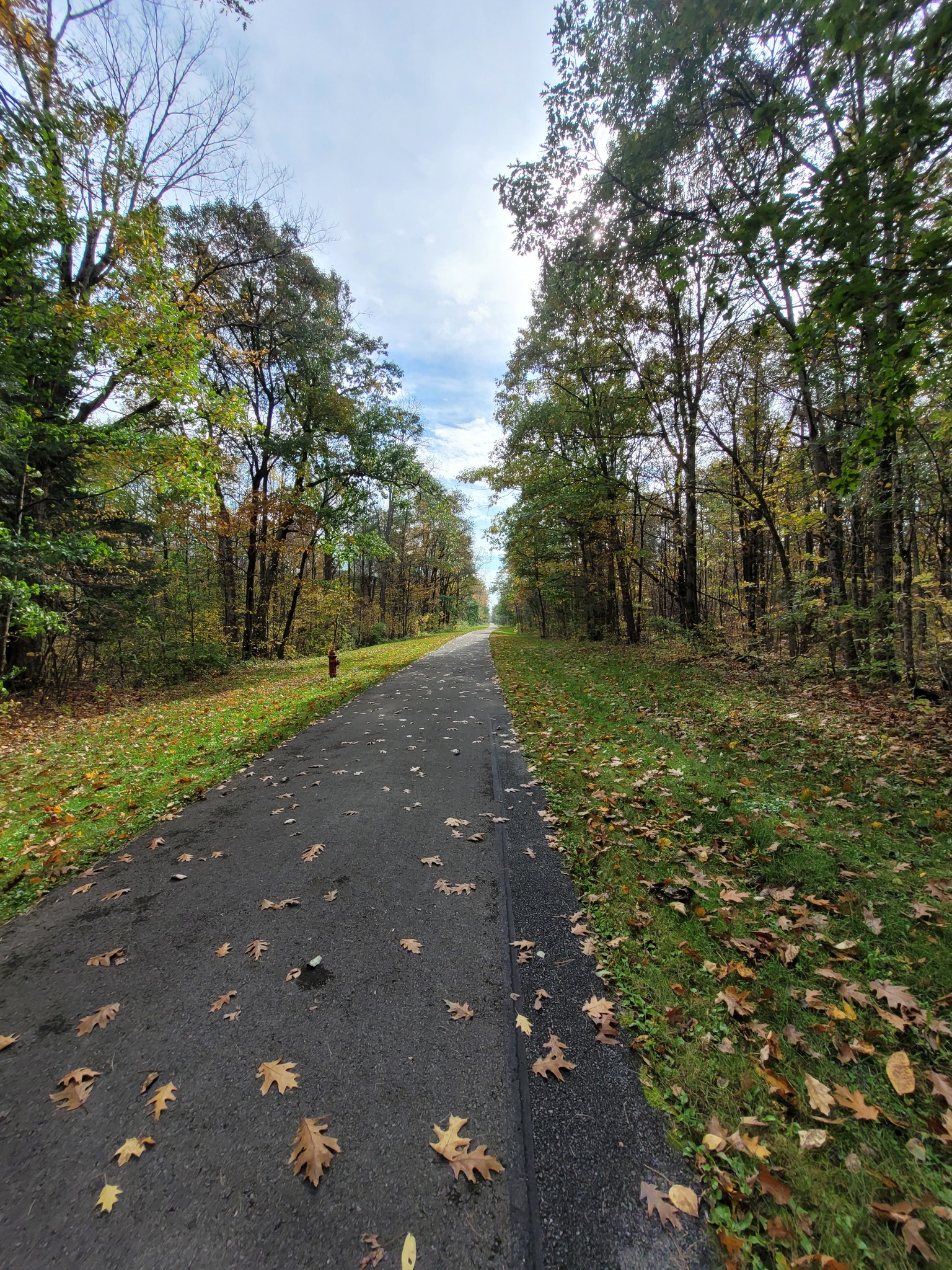
Will-powered out of the house on a glory hallelujah day of ballet winds and buttercup sun. I walked along the bike path and observed the cyclists, and joggers, some still masked. Along the way, I smiled at passing strangers, and sometimes even a hello. How reviving to connect with strangers after two years of physical masks. Emotionally optimistic, a rare trajectory of nature and my life within. If nature can survive, why canโt I? What prevents us from launching new growth, mentally emotionally, and financially?
Let me take this day and bless it with hope, miles, and miles of hope and faith that I will land, plant new roots, and bloom.
The safety pin that allows us to walkabout is gone. Lawlessness has landed, an alien from the dominion of hatred, frustration, anger, revenge, mental illness, and loneliness. Depraved directionless menacing strangers leap upon INNOCENTS and are EDITING THEIR PURSUIT OF LIFE. ย A mounting civil war that no one really calls out, is like lava spreading throughout our cities, suburbs, monuments, schools, hospitals, daycare centers, stores, and restaurants. Everywhere, even on the freeway drivers shoot at drivers.
My gang has stopped watching the news, I have cut down to news flashes, then mute, then maybe the evening news. Not a conversation that I have or overhear is about the crime crisis. Why is that?
When do we begin to lie about our life our feelings, our fears, our everything? I ask this because of simple observation, knowing when someone is not telling me their truth and I remain silent, it’s not my way to ask, why do you lie to me? My friends are not lying, it’s more like a social cultural mask. My wise father once told me ‘Tell them your sister or father just died, and they’ll respond, excellent because they do not want to hear your problems.’ But I do, I’ve always wanted to know the truth. Why should we shield our traumas and hardship, more than our triumphs and accomplishments? Do you know who does not lie? ART and SPORTS. That is why we listen to music, read books, go to galleries and museums, films, the theater, and ballet or other dance performances. I cannot comment on sports because I’m not a spectator although I do love basketball.
We, and I mean this in only a visceral sense, do not believe the politicians, news, social media, or advertisements. We want to, but deep in our inner truth, we know it is the manipulation of our individual thoughts. And that my friends is why I trust art to deepen my understanding of the human condition. Thank you to all the artists and athletes who share their pain and glory.
FOUND ON THE INTERNETTHE PHILADELPHIA PHILHARMONIC MAXFIELD PARRISH ZORBA PHILIP TOWNSEND AUDREY HEPBURN – EDWARD QUINN PHILIP TOWNSEND
I read in one of my books on writing that the middle of the novel is where most writers face the demon. The beginning is a gallop, the end is a relief, but the middle wiggles in and out of your grasp. The middle of our lives reflects this same obscurity.
The middle of a life span reflects all we have accomplished and all we have left incomplete. This is what they call a mid-life crisis. I get it every year. Iโve finally accepted that my constant relocating, reinventing, and being restless is not going to be solved. At the bottom of the restlessness is the fear of finding rest more enjoyable than movement. This flotation of comedy rotated around me last night while I was standing out on the porch observing the peacefulness. The scenery of Ballston Spa is a comforting, historical beauty that comes from the harmony of architecture and nature. The flow of villagers downtown is along two main two-lane streets, all the shops, services and restaurants are a patchwork, and all the business owners know each other.
All I can think of is where I should go next. This is wholly a village of ancestral families, with defensible adaptation to the severe climate, simplicity, and uncomplicated lives. My discomfort comes from trying to assimilate.
ย Many years ago, in the summer of 1987, I was seated in a cafรฉ in Monaco, truly, and a man that I was traveling with told me, โYou have to make a choice.โ He embarked on a long discussion about choices we make in life and how everything depends on these choices: how you live and with whom, and what you do. He pointed out to me over my first really authentic Salad Niรงoise that I was an oblivious example of a woman refusing to choose. I was more interested in the salad, the yachts, the casino around the corner, and the fact that I didnโt have an evening gown to wear to dinner. I listened without argument or insult, but I was disturbed by what he said. I didnโt understand completely, but he was older and had much experience and conviction. That conversation now fits into the mid-life crisis, the comedy of errors in my life, and maybe in yours, and just how much travesty we can ignore. For my fault, as it WAS, I did not want to sign, commit, or make final decisions. I wanted it all to be a temporary placement that allows me the freedom to change.
Ihave lost track of my European friend, but if he met me today, he would say, โYou have not changed at all.โ So that is why I was standing there in the darkness on the porch and laughing like a silly girl because it is true. I have not changed at all.
The choice facing us at mid-life is making a change now, risking losing all we have accomplished, compiled, and attached, or throwing the dice.
Beyond the obvious changes in activity, relationships, and scenery are the internal travels. They are not so easily engaged. You cannot wake up one day and say, โI โm off to become more compassionate, or more practical, or more generous.โ These journeys are taken when other factors play into our lives, such as when we get sick, demoted, or experience a trauma.
It is a very subtle inconsistency. When I unplug all the voices and listen to the one that understands, that is when I write. The middle of the story and the middle of life is the same. We and our characters have to make a choice.
I think of the comforts of exhibiting my life on paper. It is not the act of writing with pen and paper moving along at a steady rhythm; itโs the activation of the heart and mind, collaborating to unravel the relevant from the irrelevant. To reach this state of matrimony a writer needs not a Tuscan Villa, or an English Castle, but experiences that flake off the skin, the mise en scene that shakes its relevance.
I wonโt get out of this unless I have faith in myself. If God does make miracles, Iโve used mine up. My wonderous, rewarding, illuminating, creative adventurous life was a row of blessings from people that erupted into my life at the exact right time like we had an appointment. Strangers one day, pals a week later, years later our rebar, supporting joists of our underpinning in life.
Loners were postured in film, books, and art as mysterious, untouchable, or approachable, they even became romanticized as people of superior cerebral awareness. Iโve met and gained friendships with several over the last few decades. My first high school boyfriend was a loner, he became popular but his soul craved mind expansion and he needed solitary confinement.
How this relates to the intensification of rancorous physical assaults in as many venues, streets, and shops as you can name is my pestering pursuit today. People are exploding with anger, frustration, and hatred. I understand the anger and frustration, but not the hatred. Are all these perpetrators unloved, or do they live amongst compatible comrades? People are shot because their hamburger wasnโt properly served on time, or they have a different opinion. I was living in Los Angeles in 2018, one day driving down Pico Blvd I noticed a sign, โWalk in Anger Management.โ Maybe we need to convert a few drive-thru food diners to Anger Management centers. It sounds amusing, doesnโt it? If I was financially able, Iโd open one in every major city.
What has happened to our culture is unimaginable for a woman who grew up in the Love and Peace generation, or even into the eighties and nineties. We didnโt shoot one another, maybe a fist fight, or a shouting match but not murder in cold blood.
Could this macabre movement be softened by friends who love you more when you are gentle and kind? It cannot be that simple, or could it? When I used to rage about some occurrence that ripped me personally my partner would come to me and say,
โLouLou put your guns down,โ that always made me laugh, and then weโd talk out what triggered my fury.
Humankind is in recession, we need a John Lennon to lead us back to where we belong. ย TO BE CONTINUED
Sometimes an interview with a musician goes deeper than a narrative history of recordings, concert calendar, and early training. That happened when I met Jorge Gรณmez; founder, keyboardist, and musical director of Tiempo Libre, an all-Cuban-born Timba band. We met in a modest hotel room in Santa Fe, New Mexico where he and his six band members were invited to play for the third time at the Lensic Theater. It was steam-bath hot and muggy that Friday afternoon. As I stood in the doorway, Jorge wrapped up a recording session. After introductions, everyone cleared out except Jorge and Raul Rodriguez, the trumpet player. Raul propped up against the headboard of an unmade bed, one leg bent at the knee, the other straight out. He reminded me of Miles; cool in his skin and unflappable.
Jorge and I sat at the kitchenette bar, between us his keyboard on the countertop. Eagerness to begin was dilating from his eyes, so I began with my favorite question to all immigrants; how did it feel when you landed in the United States?
“Oh my God! It was my dream; all through childhood in Havana.” “Do you love America now?”
His arms shot straight up, as he rose from his chair.
“Are you kidding? We love America! How can you not? This is the best country in the world. I’ve been all over: Europe, Asia, Mexico, and the Caribbean. You have all the opportunities; you make your own life here, whatever you want.” He shifts his attention to Raul, agreeably excluded.
“You can’t do this in Cubaโright Raul?” Jorge leans forward and I’m struck by the indisputable untainted smile. Jorge continues to dramatize his arrival in Manhattan, with arms and eyes, “I got out because I had friends in New York. They helped me get gigs in the bars, weddings, and then we got into the clubs.” The room is silent except for Jorge’s satin-smooth transitions from one question to the next. That alone is reason enough to meet Jorge for a conversation. “We were not allowed to listen to Cuban salsa music, or American music; only classical. I trained at the Conservatory all my childhood. I play all of them; Beethoven, Brahms, all of them.” “Where did you learn Salsa?”
“From America! Yes. As teenagers, we climb to the roof and we to wait till state-programmed Cuban music goes off the air at 1:00am. Then we wrap aluminum around the antenna and turn our radio on. We pick up American music; like Gloria Estefan, Michael Jackson, everyone. We listened all night so we’d take the rhythms’ in our heads you know.” “What’s the difference between Cuban Salsa and Latin Salsa?” “Everyone claims this is their Salsa; it’s Latin, Marange, Colombian… it is a blend of many cultures and musical influences. We take from each other. All the instruments I learn come from listening. They teach me everything, and I teach them.”
“Do Americans play Conga different than Cubans?”
“It depends on the person. See if the person is open to learn everything then he push through. For example we have been playing all these places like Michigan, Minnesota, Minneapolis…all those places that are so.” He pauses to express it precisely. “Cold” he says, laughing out loud.
“And I’ve seen American band playing Cuban salsa so so good, my God, so well. Blue eyes and blond hair.” Jorge breaks to howl out his enthusiasm, surprise, and demonstrate the memory.
“Who do you like to listen to do today?”
“I don’t know the names, but I have a lot of friends, and they call me and say, ‘I have a band, you come and hear me.’ So I go to the club and Wow! This is good music! Everyone is dancing. I love to see them dancing! I want to see them happy. If they want to sit and listen, good, if they want to sing along, good, they want to dance good. Everybody has a different reaction. My job is to transfer the energy to the person; that’s the idea. Not to play the music for me; I want them to be happy.”
“How do you do that?”
“Sometimes you are sick, and no matter how many pills you take you are still sick. Right?”
I nod and watch his facial expressions twitch in thought.
“Then let’s say I come and say, Wow! You look so good man, you are looking good, and he claps’ his hands and pantomimes the joy he’s transferring. ‘You wanna coffee cake and coffee, yea, come with me, (clapping again) you want to sit here? Yea sit here and see the sun.’ Suddenly, you feel good.” He nods his head. “Trust me.”
Jorge is toe-tapping in place, his arms positioned in a warm world embrace.
“You forget all about the pills. Trust me, that is the kind of energy I give.”
“I suppose you don’t get sick?”
“Never. For sure. Never. I don’t know what this head pain is… how you say, headache? Like friends say I have so many problems, so many headaches, I can’t go out. I say, ‘What! Come on we go to the beach, to the sand. Bring your conga. What are you crazy! Come on!’ So he comes and we play on the beach in Miami.”
Jorge drums on the countertop. “Have a beer, have another.’ And everyone on the beach comes to us. The whole idea is to forget your problems. So my friend says to me, ‘I had the best day of my life.’ Yea! Be happy! This is youth; this is how you stay young. Life is so big.”
I shake my head, “Not in America; we concentrate on sickness and misery.”
“Yea! You don’t have sickness yet, but you are going to get it.” He ruptures into laughter and takes a sip of beer. My father tell me one time you have to hear your body; your body going to take you in the right direction. Just listen and you are going to feel so good. Sometimes I can’t go to sleep at night. All the songs and ideas are in my head and I can’t sleep. I must write it down, and the next morning I feel so good because I didn’t go to sleep. I drink beer because I am too happy-over happy.”
“Where did you learn this happiness?”
“From all the difficult paths I have in my life. Childhood was very difficult; no food, no water, no electricity, and no plumbing. What are you going to do? Party, go outside, dance, play basketball, and baseball. I get my friends and they say my problems are bigger than yours. Bla bla bla.”
I’m laughing now as Jorge continues to articulate his life philosophy. “At the end of the day you are so happy because you see people less fortunate and some more, and you are in the middle, and you want to help those people, you can’t go it alone.”
He chuckles again. His smile is broad as his cheek line. A streak of sunlight crossed the keyboard, and Jorge’s eyes and brows are in motion, as much as his legs arms and hands.
“What you’re going to hear tonight is a lot of crazy crazy energy, good music, a lot of stories. You’re going to see a lot of soul. When Raul plays his trumpet you’re going to turn inside out.”
“What is Timba music?”
“A mixture of jazz, classical, rock, and Cuban music.”
“Sounds like a musical.”
“Yes, Yes! We are in preparing for that.”
Four hours later I was in the Lensic Theater, twelve rows from the stage. Lead singer Xavier Mill, Jorge, Raul, Louis Betran Castillo on flute and sax, Wilvi Rodriguez Guerra on bass, Israel Morales Figueroa on drums and Leandro Gonzales on Congas opened the set, and five minutes into it I was dancing below the stage. Two and half hours later I was still dancing, along with half the audience.!!