Luellen Smiley is a creative nonfiction writer, author, columnist, and historian whose writing is deeply rooted in a controversial personal history. She is the daughter of Allen Smiley, a close friend, associate, and business partner of notorious Las Vegas gangster Benjamin “Bugsy” Siegel. Her father was sitting only feet from Siegel when Siegel was murdered in Beverly Hills on June 20, 1947.
That extraordinary childhood history became the foundation for Smiley’s first book, Cradle of Crime: A Daughter’s Tribute, published in 2017. The memoir explores what it was like to grow up as the daughter of a man connected to organized crime while trying to reconcile her love for her father with the secrecy, fear, and criminal world surrounding him.
Smiley’s work has appeared in publications including the New York Post, MORE Magazine, Southern California newspapers, and Authorlink. She wrote the newspaper column Smiley’s Dice—Adventures in Livingness, which earned a Blue-Ribbon Award from the California Newspapers Association for her Growing Up With Gangsters columns.
Her interest in her father’s history also led her to become a researcher and commentator on organized crime history. She has participated in television, radio, and documentary interviews.
Smiley’s next book, Gaslighting Greta, will be published this year. A personal story that reads like fiction. Her own website describes the project as exploring a woman whose life is destabilized by gaslighting and psychological manipulation.
Her writing career reflects a recurring theme: using personal experience and research to uncover the truth behind complicated relationships and extraordinary lives. From the secretive world surrounding her father and Bugsy Siegel to the deeply personal territory of Gaslighting Greta, Smiley’s work transforms difficult experiences into stories of survival, discovery, and ultimately reclaiming one’s voice.
Luellen Smiley is an author whose life has given her an unusual perspective on secrecy, manipulation, family loyalty, betrayal, and survival—and she uses that perspective as the raw material for her nonfiction storytelling.
The sea is like rolled oil, and the breaking waves are the size of lake ripples. At this momentary recess of chaotic beach activity, all the heaviness of life rolls out with the waves. Observing the elan of beach life carousing, suntanning bodies already tanned leather, joggers and runners, bicyclists, fishermen, volleyball players, and the surfers.
That’s my garden of grace and glory. They are like ballet dancers, some of them, some seem to think they’re driving a car or motorcycle, but the longboarders, old school aged surfers, skim waves athletically and spiritually, one with the board like a musician with an instrument.
And the fisherman, the other clan, is worth watching because they are interlopers in Del Mar. They come alone, dressed in rubber boots, floppy, stained hats, and pocket vests, like longshoremen or train conductors, an aura antiquated in Del Mar history, when fishermen were in greater numbers than joggers, lifeguards, and beach parties.
I’ve written in the genre of Creative Nonfiction, integrating the events through dialogue, journal entries, and a third-person narrative. Within three locations, Santa Fe, New Mexico, Los Angeles, California, and Saratoga Springs, NY. Greta (me) exposes the mutilation gaslighting abuse inflicts on her emotions, psychology, mental and physical health, and her finances.
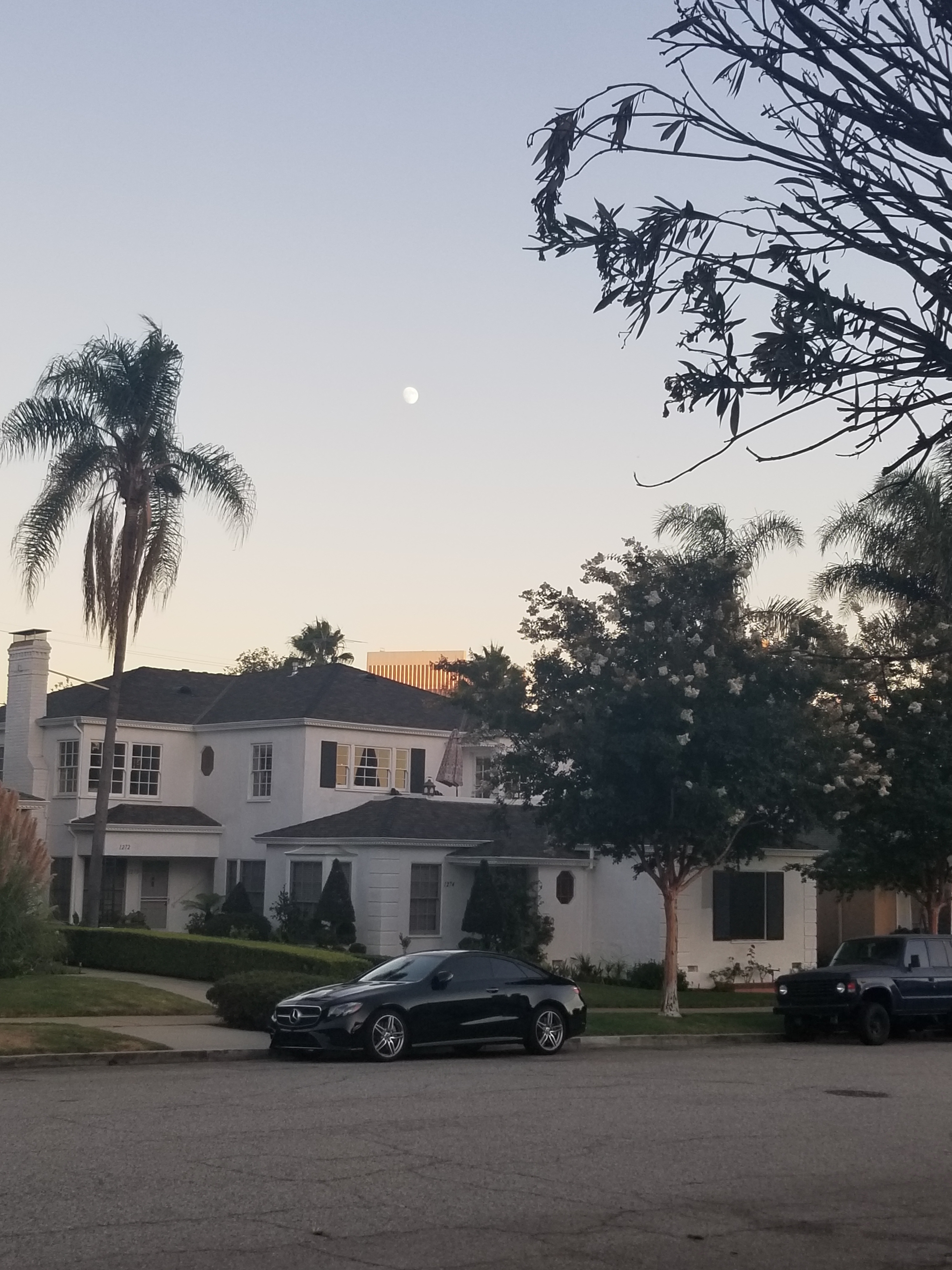
I used to sit on the stoop in front of my Los Angeles studio. The dog walkers, gardeners, and residents formed the stage, with a backdrop of high-rise, two-million-dollar condominiums and vacant concrete terraces. From that, thoughts randomly tapped: I wish I owned that, wish I had that car, wish I had that garden. It is amusing how one’s view can determine one’s thoughts.
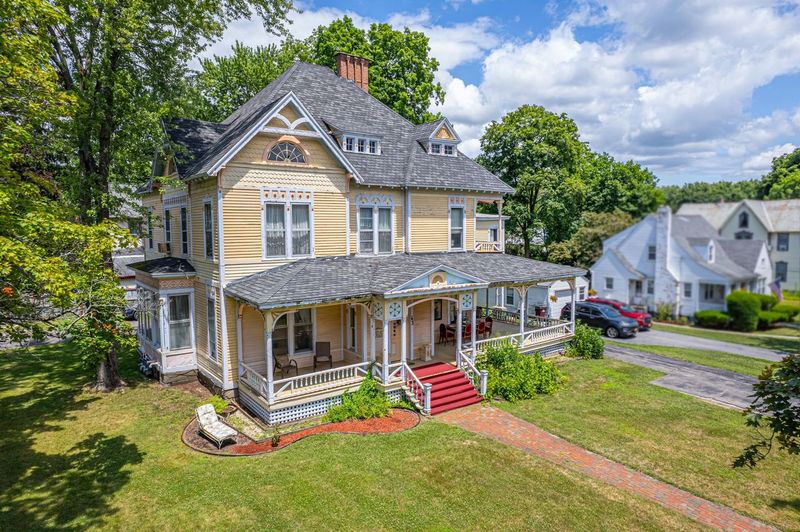
In Ballston Spa,where I lived the last six years, homes are two-hundred years old, or newly built to emulate the Victorian era. The automobile is sturdy, practical, and unwaxed. The way of this wonderment brings simplicity into my life. There’s no need to dress up and fit in; it’s the opposite here, dress down to fit in, or, like me, a combination. I am omitted, observed, and questioned, because, well, I never learned the answer to that, until this moment. Locals love locals, and I have never been one.
I’ve written in the genre of Creative Nonfiction, integrating the events through dialogue, journal entries, and a third-person narrative. Within three locations, Santa Fe, New Mexico, Los Angeles, California, and Saratoga Springs, NY. Greta (me) exposes the mutilation gaslighting abuse inflicts on her emotions, psychology, mental and physical health, and her finances.
When I see a crippled person, a struggling Senior with a walker, or when I read the stories of the hostages, my blessings are embellished, and I remind myself of this. Maybe this entire episodic journey is to teach me to get outside myself. Joy is not power, wealth, or attention; that is plainly human. Genuine joy interrupts someone’s suffering and transforms their mood and sensibilities.
All the success that opened doors in my life paddled in from friends, strangers, and just incidental connections. We can’t do it alone, as much as I foolishly try to carry my wheelbarrow without direction and sound advice, this is where it took me. I identify with the outsiders who peddle the steps of solitude and sometimes don’t reckon with their culture, people, or conformities.
I’ve written in the genre of Creative Nonfiction, integrating the events through dialogue, journal entries, and a third-person narrative. Within three locations, Santa Fe, New Mexico, Los Angeles, California, and Saratoga Springs, NY. Greta (me) exposes the mutilation gaslighting abuse inflicts on her emotions, psychology, mental and physical health, and her finances.
The course we choose to study doesn’t begin in school; it begins the moment we recognize that life is our teacher. I chose the course of love between a man and a woman. Yet all I’ve learned from Anais Nin, Joan Didion, and Lawrence Durrell about love isn’t guiding me. I have to start over and develop wisdom from my own experiences.
I checked into the third hotel, the previous one was tedious and murky. This morning in a larger room, on a crisp as iceberg lettuce, a day of clarity and stillness surrounds me. Outside my hotel room, the light is intermittent, a peak a boo stage window, the light illuminates portions of the crispy autumn leaves just before they drop. On my side of the glass, there are shadows and dissonance. What events take place this week will be instrumental in my future and as piercing as the southwest sun when it shone in my eyes.
This hotel’s staff is exceptionally friendly, conversant, and engaged in their jobs. Every time I pass by the guest check-in, Rose stops what she’s doing.
“ How’s it going?”
“Too early to tell.” I’ve been here a week, and I unzipped my lawsuit story, so she is in the know. She is knowledgeable about the law, and living through times that are more threatening than usual.
“ Okay. What are you doing today?’
“ Researching moving companies. Critical thinking and planning. When I moved from Santa Fe to Los Angeles, I hired a broker, thinking it was the actual company. When the van arrived, half of my things were broken, boxes were opened, and some were stolen. So this time, no mistakes.
“ Mistakes are all about learning.”
“ Yes, and I learned!”
“ What did you do last night?” She said with a curious smile.
“ I was at the bar, Lizzie was there rousing all of us up with puzzles, abrouhahalike the old days, you know, not one of us looked at our phones.”
“ Please, don’t even start. So annoying when you’re talking to someone and they are staring down at their phones.”
“ When I was living in LA, at huge four-way intersections in the middle of traffic, pedestrians crossed without even looking up. It was the same everywhere, restaurants, shops, it struck me as a way of looking very significant.”
“ You’re so right!”
“ That reminds me, I need to go write a column.”
“ Write about your lawsuit.”
“ No! I’m in witness protection writing.”
“ They may read it right?”
“ You New Yorkers are always on the right key.”
“ Gotta be, it’s New York.”
” I’m California”.
” That’s okay, I still love you, and your day is coming, and so is a new man.”
I’ve written in the genre of Creative Nonfiction, integrating the events through dialogue, journal entries, and a third-person narrative. Within three locations, Santa Fe, New Mexico, Los Angeles, California, and Saratoga Springs, NY. Greta (me) exposes the mutilation gaslighting abuse inflicts on her emotions, psychology, mental and physical health, and her finances.
“ You have to be out today by 11 am. ” I gasped and looked at the time, 10 am.
“ Scooter told me he extended it until Sunday the 26th.”
“ He didn’t call us. He has to call us. We need the room for the monster ball. Get a hold of him.
I was shaken. I had one hour to reach Scooter. I called in a panic from the lobby and left a message. Then upstairs, I desperately looked for a hotel to take me in, in case Scooter didn’t call. They were booked tonight, but could take me tomorrow. The hotel was a two-star, no Mortons, no restaurant, no gardens, but it looked clean and was only a mile away.
At 11:00, Scooter texted, “I called, you have until Saturday. Is that okay?”
“ Yes, fantastic, thank you!” Scooter has an arrangement with the hotel that earns him points, and he has gifted me many of them!
I returned to the other conundrum of the day —my lawsuit —with very unexpected news. Tammy, the Top Drawer Housekeeping Manager, stopped me in the hallway.
“ What’s wrong, Loulou. She leaned against the cart and listened attentively.
I updated her on the event, and she tilted her head to one side.
“ Bastard! Take a break today, let the process begin, and tomorrow you’ll regain your strength.”
“ It’ll take a few tomorrows, I’m emotionally fragile.”
“ I know you are, I’m the same!”
She patted me on the shoulder, and just that little gesture, of care, was a band-aid to the wound.
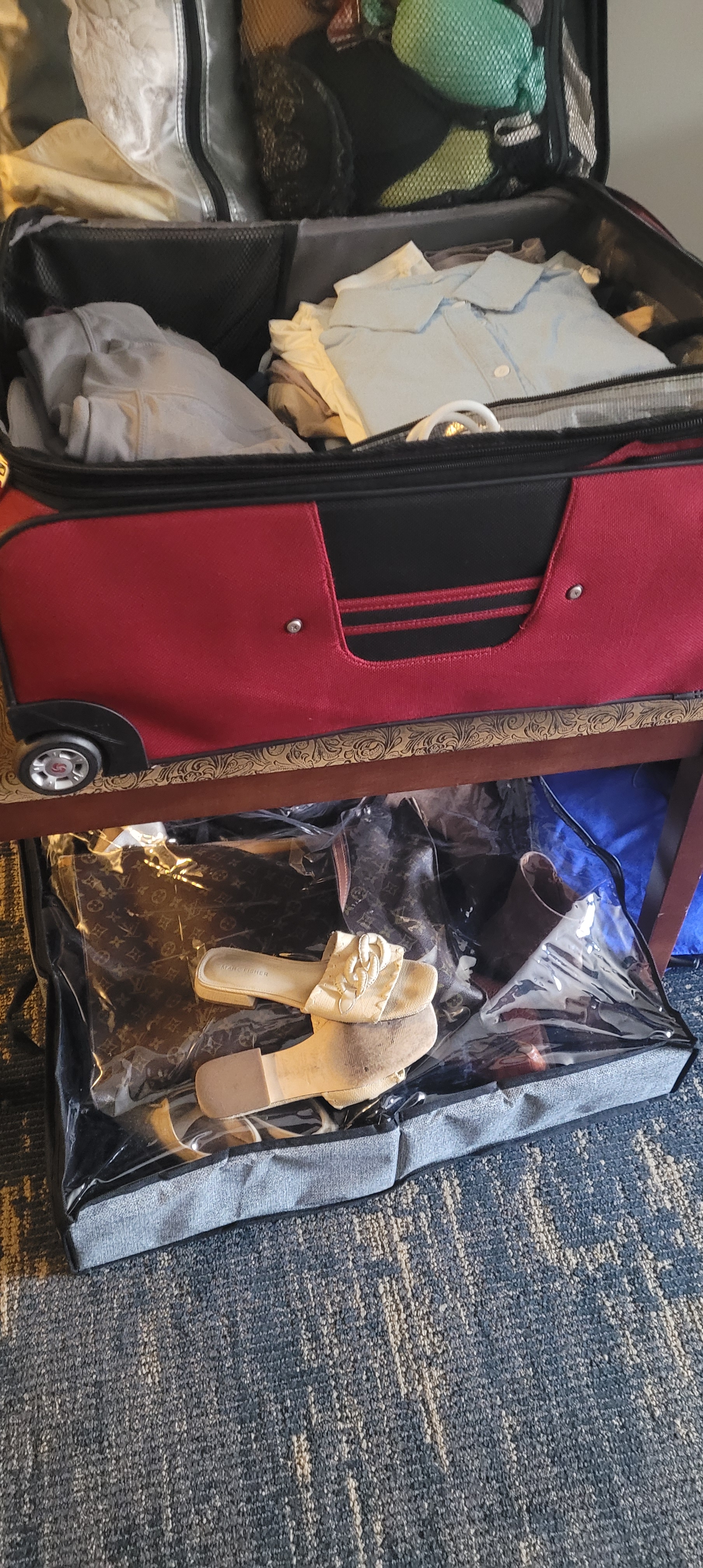
Walking into the next hotel was a pinch of pathos I was not prepared for until the front-desk gent helped me with my five suitcases.
“ You’re from Santa Fe? He said, eyeing my license plate.
“ Was, for eleven years.”
“ I moved recently from Ranchos de Taos.”
“You’re kidding! That’s where I lived for several years. I had a gallery there!”
“ That’s crazy. I’ve never met anyone here who knows Ranchos or even New Mexico.” I laughed, cause a lot of people think it’s in Mexico.
He opened my door, and I feigned disappointment and thanked him.
Okay, here it is, a bland room without the flair or fancy, but the price is right. I opened the suitcases and did not unpack. The sun was out like a neon sign, beckoning me to go outdoors.
No elevator, on the first floor, I passed the laundry room—a lot of conversation and a sort of cheerful vibe. I walked outside, sat in a chair facing the sun, let my arms droop, and closed my eyes. I heard someone walking and then sitting next to me.
“ Hello, did you just check in?”
“ Yes, the sun is marvelous, isn’t it?”
“You bet it is. I’m Loulou.”
“ What! My name is Loulou, a nickname.”
She moved around, crossed her legs, lit a cigarette, and her long white hair was halfway clipped, and the rest fell on her shoulders. I could see she was once beautiful.
“ Isn’t that something else. How long are you here for?”
“ Not sure yet.”
“ I’ve been there. Not knowing.
“ People don’t understand, they feel I’m unstable or something. I can feel it, and see it in their eyes.”
“ Screw that, just ignore those people. I do.”
“ You’re right, too much to handle without that.”
“ Everything is upside down, and no accountability. “
“ So true”, and then she dropped her head, and I could see her emotions rise as if she had been led somewhere else.
“ My grandson was killed in a motorcycle accident, hit, and then died right there. I didn’t get to say goodbye. It was by an illegal immigrant.” Then she cried uncontrollably, and I just about got up and hugged her.
“ Oh, sweetie, I am so very sorry for you.” This was all genuine, and she was sober and all of that, so I listened.
“ I wrote to all of them, Bondi, Patel, Trump, Noem, nothing.” Something like this doesn’t happen in a five-star hotel, only in a two-star. We sat there awhile, and I tried to console her or offer some options, like a news alert to the stations and local media.
She was on the cliff of catastrophe, and my minutiae of disappointment disappeared.
I’ve written in the genre of Creative Nonfiction, integrating the events through dialogue, journal entries, and a third-person narrative. Within three locations, Santa Fe, New Mexico, Los Angeles, California, and Saratoga Springs, NY. Greta (me) exposes the mutilation gaslighting abuse inflicts on her emotions, psychology, mental and physical health, and her finances.
I’ve been staying in a hotel during a short interim while I decide where to move.
While I am in the hotel observing guests, their mannerisms, conversations, and facial expressions, I have come to the conclusion that we are not only on a fiscal cliff, we are on a sinking shore of wet sand. I see guests who’ve come for gambling, visiting relatives, exploring Upstate NY, and lapping up a vacation as if it were their first. They are thirsty for living the essence of comfort, congeniality, and the aspirations of autumn. Shed the withered and welcome the wild. I see giddy faces and sluggish bodies weighted down by heavy tote bags. Some seem to shuffle like the very old or weak, from the pathway to the lobby. I was not excluded; by the time I checked into the hotel, my body was withered from having to move out of my home of twenty-five years. All I wanted to do was sink into a bed and hang the Do Not Disturb notice on the door. Several guests are annoyed by too much information, too many alerts, too many scandals, and too much uncertainty.The adventure of livingness has a trajectory marked by misadventures.
In reading the WordPress posts, I’ve discovered the Travel blogs are the ones that revive my interest in the world I haven’t seen. These are the ones I read because they spark my passion for travel, rather than comfort and complacency. The Mediterranean has been stirring in my imagination ever since I researched the coastal splendor of all those portside villages. Thanks to you, travel bloggers, I made the decision. This is the year for Italy. Now that it’s written, I must follow my word.
I’ve written in the genre of Creative Nonfiction, integrating the events through dialogue, journal entries, and a third-person narrative. Within three locations, Santa Fe, New Mexico, Los Angeles, California, and Saratoga Springs, NY. Greta (me) exposes the mutilation gaslighting abuse inflicts on her emotions, psychology, mental and physical health, and her finances.
THIS ERA OF ADAPTATION is how I feel, think, and react. Tumbling through all the transitory advise forces me to examine more closely who to believe. I’ve never been a leader, nor a follower, I walk in between, trying to pave a pathway to peace of mind. Perhaps that is unattainable, as we live in a culturally, politically, medically, and socially reimagined world. It reminds me of being a teenager when life was questionable, and confusion was like a stinging bee we couldn’t swap away.
This week, my discipline raged and said, ‘Structure your day or go in disarray. As a long-time, rebel of structure, I listened and made a daily plan. Get out of bed by eight, answer correspondence, get dressed, work out on the treadmill, take a shower, eat something, then back to the home office and that’s when the improvisation kicks in. Do I write a column, work on my next book, or look for an attorney for an unsolved tribulation? Mother Nature punctuates my attention as she blooms into spring; the neighbors begin mowing and planting, The adorable little children next door play in their front yard, joggers, walkers, and horse-carrying vans pass in front of my window. The Season in Saratoga is about to open, masked and limited attendance will be at Saratoga Race Track, Saratoga Performing Arts Center, Bistros, Bars, outdoor concerts, Theater and Chamber Music, Lakeside sailing and motor boating, fairs, and wine tasting.
A quintet of small-town celebrations that will inaugurate us to each other once again.
I’ve written in the genre of Creative Nonfiction, integrating the events through dialogue, journal entries, and a third-person narrative. Within three locations, Santa Fe, New Mexico, Los Angeles, California, and Saratoga Springs, NY. Greta (me) exposes the mutilation gaslighting abuse inflicts on her emotions, psychology, mental and physical health, and her finances.
ADVENTURES IN LIVINGNESS this week. I mentioned in a previous column, if there was a relocation therapist?, in jest, but then I was looking at my horoscope and entered relocation, and this came up.: It’s too late as I have my move-out date, August 31st.I have no idea how to use this; my therapy has been chocolate, movies at night, and one day of rest. 62 boxes packed Relocation Chart, Relocation Astrology Online …
By relocating, you can move certain planets into particular house position to improve those parts of your life. Notification: Please, enter Latitude / Longitude …
I’ve written in the genre of Creative Nonfiction, integrating the events through dialogue, journal entries, and a third-person narrative. Within three locations, Santa Fe, New Mexico, Los Angeles, California, and Saratoga Springs, NY. Greta (me) exposes the mutilation gaslighting abuse inflicts on her emotions, psychology, mental and physical health, and her finances.
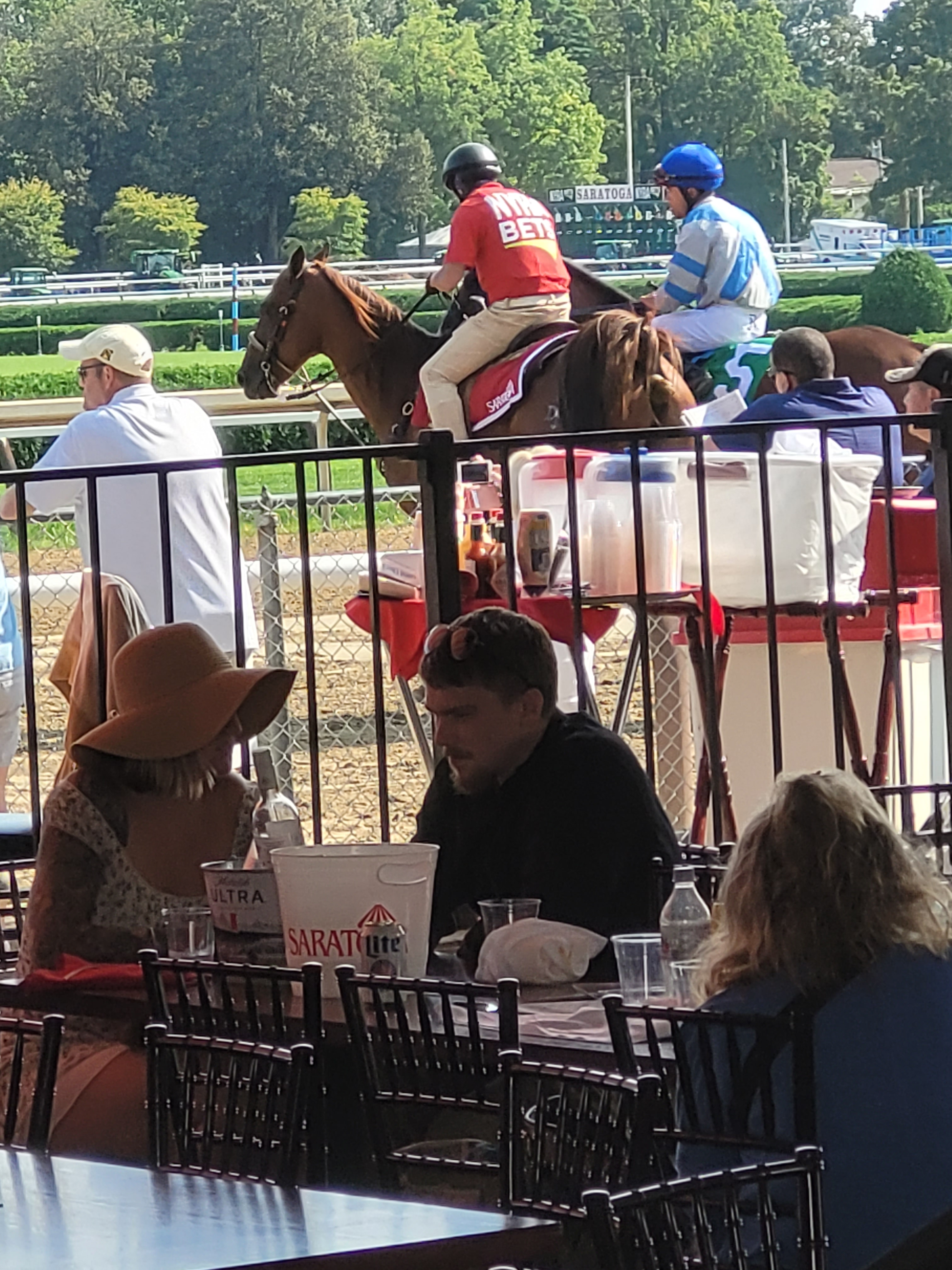
After several summers in Saratoga Springs, I discovered I loved thoroughbred horseracing. All my life I’ve been a performing arts spectator. I never watched any sports on television and only attended baseball games when my father needed a companion. The art of performance led me to experience the racetrack as live theater.
The racetrack is a stage, the jockeys are the actors, and the men and women that fill the bleachers, the picnic grounds, the Turf Club, and the private boxes are the audience. The racehorse is the star celebrity.
The tickets for admission, like any show, are based on your seating. You can walk through the gates for $3.00 or buy a box for $100,000 a year. The collage of human emotions, drama, suspense, and danger are key components to good theater.
Gambling personifies the Shakespearean twist of the racetrack. High rollers and drugstore cowboys wager to win. Some men walk out with a grocery cart of recycled cans; some walk out with enough money to buy a racehorse. They leave by the same gate, and the next day, they return for more. But why, I ask, is thoroughbred racing not considered an all-around American sport? Why don’t jockeys get athletic respect? These two spheres of lightning truth struck me while I trampled through the mud one rainy August day at Saratoga Racetrack.
I asked around for opinions. The Governor’s bodyguard remarked that it was a good question. He did not think gambling was the reason because people always bet on sports. He thought maybe that it was because, as kids, we don’t learn to race horses, like baseball and football. The public is naïve about jockeys because they have never raced. Another answer I heard was that 200,000 fans fill a ballgame on any given day and that those numbers don’t compare with horseracing.
I’m not a gambler, and I don’t ride very well, but I am a drama whore. I took my notebook to the jocks’ room to ask the jockeys what they thought about this irregularity in sports. Jose Santos had a few minutes to spare.
“Jose, do you feel like America thinks of you as an athlete?”
“We don’t get the respect that we should. I think it’s the gambling. This is the greatest racetrack in America, and there is gambling in every sport, but when you come to the track, you see it right there, and people cannot avoid it. Pound for pound, we are more fit than most athletes.”
I asked Jose what he does aside from riding. He jogs three miles every day and walks for a mile. He reminded me that if he goes down with the horse, his strength is what gets him back up again. Another misconception is that jockeys only ride for 2 minutes. Well, the race is 2 minutes, but they ride every day of the year. They do not take breaks.
“How does the public perceive you?” I asked.
“In Europe, they are treated like movie stars. Over here the jockey is just another person, and in sports, the jockey is low. I wish we had more respect, but we don’t get the publicity.”
This feels like the guts of the truth; our little minds like to align with other like minds. The leaders of the pack go to football and baseball, and the media follows behind.
Jose remarked that he only felt real enthusiasm and support when he won the Triple Crown. Otherwise, they get a little column in the paper with the results. “The Racing Form is 100 pages, and nothing is written about us.”
“What if there was a Jockey Magazine?”
“Well, that would be great. Then, the companies would be interested, and we’d get sponsors. When I go out to the park and run, I wear Nikes too.” He chuckled.
“Have they ever approached you for sponsorship?”
“No, I don’t expect they will.”
A few days later, I found Jerry Bailey before a race. It was a cinch to get into the jocks’ room in those days. That was before Elliott Spitzer sipped all the fizz out of Saratoga Race Track. These days the Press can’t walk inside the Jocks’ room. Jerry hopped onto a counter and extended his hand.
“How are you?”
“Great, Jerry, thank you for meeting me.”
“Sure.”
“Jerry, I’m very interested in the lack of sports sponsorship offered jockeys. Why do you think that is?
“Because no one is promoting us. If you don’t do anything to promote us, how does anyone know? They have bobbleheads and gimmicks like that, but there isn’t even a Jockey Calendar. Excuse me now; I’ve got to ride a race.”
Of all the risk-takers and entrepreneurs in the world, horse racing is the champion in all categories. If I decided to understand the business, attend every race, meet every owner, jockey, and trainer, there’s no chance I’d understand anything more because I do not love the horse the way a jockey does, and you can’t fool the horse!
During the Hall of Fame Induction presentation at Saratoga a few years back, D. Wayne Lucas made a speech that drew a full house of gregarious applause. This is an excerpt:
“You ride a great horse, and the owner wakes up the next day and decides to switch to Bailey. The adversity is gut-wrenching, bringing you to your knees and humbling, whether you’re a rider, trainer, owner, or breeder. There’s one thing that will keep you going, and that is simply your attitude. Attitude is the most important decision you make every day. Make it early, and make sure you make the right one. You will have a very full and very peaceful life.”
Maybe it’s time for a Jocks Nike, call it the Two Minute Nike.
I’ve written in the genre of Creative Nonfiction, integrating the events through dialogue, journal entries, and a third-person narrative. Within three locations, Santa Fe, New Mexico, Los Angeles, California, and Saratoga Springs, NY. Greta (me) exposes the mutilation gaslighting abuse inflicts on her emotions, psychology, mental and physical health, and her finances.
SILHOUETTE of a Taos night out in 2006. It begins with the sunset—a bubble-gum pink sash that swirls like taffy just above the distant hillside. The transcending forms and colors in the sky distract me; they silence me, keeping me from turning on the television or answering the phone.
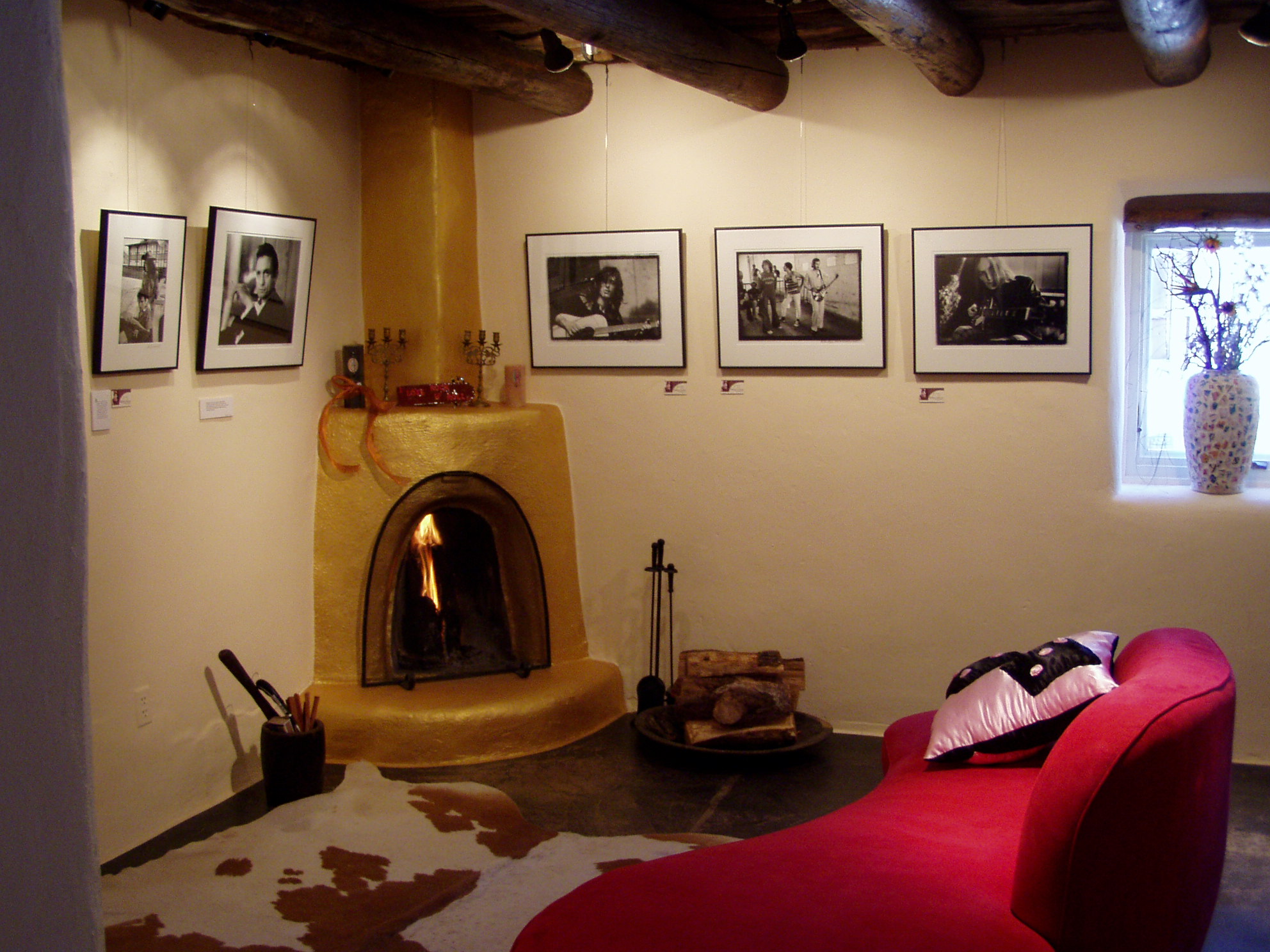
The sunset has settled into my routine. I watch it from the roof garden over our Adobe Home and Gallery every night. In the midst of dressing to attend an art auction at the Millicent Rogers Museum, the sun has vanished. The sky turns Taos blue; a luminous oil pigment canvas blue that appears like an endless tunnel you can walk through. As I descend the staircase and cross over the ménage of piles shoved in a corner to allow SC to paint, I think, “This is going to be my home. I’m still here” Adventures in Livingness
In the courtyard where new flagstone has been laid, and a mud ditch blocks the exit, Rudy hitches me on his back and carries me out the side entrance through Tony Abeyta’s yard. Tony’s yard is piled with sand from our flagstone project, and my high-heeled black suede shoes are not at all practical for crossing New Mexican dunes. This is how the evening begins. Out in the parking lot, we circle around once and stop in Robert’s gallery. He has offered me his turquoise squash seed necklace to wear at the auction. The necklace is from Turkey, and sells for $1,800. Millicent Rogers events always attract women with extravagant jewelry, and Robert knows I have no such possessions. He hands me the necklace and says, have fun.
At times like this, I can forget the faces and routines I lived in Solana Beach and feel swept into a labyrinth of unfamiliar vignettes. There are two police cars in the rear of the parking lot, the church looms like a fortress of wet mud, and SC is listening to The Band CD we picked up in Santa Fe. I slide into the car, ensuring my shoes don’t fill with gravel.
There is very little street light along the desert road, and cars approach you at disarming speeds. For newcomers, the pale yellow line that separates oncoming traffic, roaming animals, hitchhikers, leather-clad bikers, and abandoned pets is of no comfort or value. Boundaries and civilities between people are vague, and sometimes, conversations elope into poetry.
At the Millicent Rogers Museum, the director, Jill, who is there to welcome each guest, greets us at the carved wooden doors. This museum was once a home, like most museums in Taos.Each room is an envelope of Native American jewelry, ceramics, paintings, weaving, textiles, and metalwork sealed with Millicent Rogers’s ethereal presence. By coming to Taos and bridging her New York chic with southwestern individuality, she set global trends in fashion, art, and living. he museum collection includes some of her designs that evolved from her residency in the desert. She moved here in 1947 and died here in 1953. Although she could have chosen anywhere in the world to live, she settled in the unaltered, surreal lunar beauty of Taos.
I wandered through the tightly packed rooms, alternately viewing the guest’s attire and jewelry. The woven wraps, belts, and hats worn by men and women form a collage of individual expression. Almost everyone seems to attract attention by the texture and color of his or her attire. It is a festive traditional look, with southwestern accessories paired with jeans or silk dresses. If you come to Taos, look for a belt buckle, one piece of Native American jewelry, and one piece of art.
When the auction was announced, I admired the same etching as the woman next to me. She remarked that the artist was also the teacher of one of her children. I learned that Ellen had six children and 11 grandchildren. She was petite with curly blonde hair, and I liked her instantly. I told her I was a writer.
“So am I,” she answered.
Rather than talk about her work, she began talking about her daughter, who is also a writer.
“I’m so lucky–all my children and grandchildren are creative and artistic.”
It was obvious that her life was a garden of earthly delights and that she had raised many roses. When the auction began, she vanished, and I quickly viewed the art before returning to the two etchings. They were both sold.
As I was walking out, I bumped into Ellen. She was clutching the etchings.
“So, you bought them,” I said.
“Oh, yes, I had to have them.”
She left me with a beaming smile and a closing remark I often hear: “Welcome to Taos.”
I love hearing that so much I don’t want to stop saying, I just moved here. After the auction, we stopped in Marco’s Downtown Bistro, where we joined an improvisational party. It started when Marco introduced us to his friends, Pablo and Joan, who were visiting from Santa Fe.
The dim, glowing melon adobe walls of the bistro, Marco hugging everyone, Joan’s melodious, high-pitched laughter, Pablo telling jokes, Rudy laughing, and then Philip arriving to tell stories crossed over from strangers in a bistro to a fast-rolling film. The conversation and laughter surfed breathlessly from one person to another.
Joan remarked, “My fifteen minutes. This is the best for me. The first time you meet someone, you’re both talking without effort. It’s so perfect.”
We closed the bistro past midnight. Marco had gone home. Joan decided to stay at a friend’s house. Philip agreed to drive to Santa Fe the next day, and we took Tylenol before bed.
Not every night out in Taos is like Joan’s fifteen minutes, but chances are you will have something to write home about. The beginning of Gallery LouLou Taos, NM
OLYMPUS DIGITAL CAMERA
OLYMPUS DIGITAL CAMERA
OLYMPUS DIGITAL CAMERA
OLYMPUS DIGITAL CAMERAOLYMPUS DIGITAL CAMERAOLYMPUS DIGITAL CAMERA
I’ve written in the genre of Creative Nonfiction, integrating the events through dialogue, journal entries, and a third-person narrative. Within three locations, Santa Fe, New Mexico, Los Angeles, California, and Saratoga Springs, NY. Greta (me) exposes the mutilation gaslighting abuse inflicts on her emotions, psychology, mental and physical health, and her finances.
“I respond to intensity, but I also like reflection to follow action, for then understanding is born, and understanding prepares me for the next act.”
JANUARY
SNOW, ARTIC BLAST, ICE, FREEZING. Maelstrom of inconveniences toppling down in every nook and cranny of body, home, and outdoors. I wore a long-sleeved liner, wool sweater dress, rabbit poncho, and over that, a wool wrap, laptop mittens, sherpa leggings, wool socks, and boots. Mornings, eight degrees, afternoons eighteen, and the absence of sunlight grids my spirit. Repetitive lessons in endurance, tolerance, and acceptance. The outer world stenches corruption, propaganda, cruelty, violence, and haranguing reporters. The election year dominates the bunkum reporting.
It’s been almost a month since I texted or called Dodger. Somedays, I enter the memories, a reel of episodes on our cross-country road trips, hiking barren, narrow, unclaimed paths in Baja, mountains and canyons in New Mexico, and lakes and forests in upstate New York. They appear to be aberrations of myself; I am unrecognizable as he is, too.
FEBRUARY
MATURITY has caught up with me, and I am viscerally aware of this pendulum as replacing the nonacceptance of my lifestyle and future to hardened acceptance, which is a relief. I used to be full of follies, gaiety, and impulse; inner choreography is now critical thinking, studied decisions, and a spoonful of distrust. Instead of unleashing all that I think and feel with strangers, the narrative is split between inching closer to listening rather than personal tete e tet. Once a week, I go outing to the social club, where I find conversant strangers,couples, singles, divorces,and a variety of ages, and yet they all have a commonality that I don’t, they seem genuinely satisfied with their lives, one comment this, after asking the bartender how are you, he smiled, slapped the polished wooden bar with both hands and replied, I couldn’t be happier. Then he opened his phone and showed me a photo of a baby boy. His expression soared through my senses, and I adulated with compliments. Another evening, I opened a conversation with a couple next to me, and for the next hour, I learned of their life; children, travel, cruises, especially, ” Oh, you’ve never been on one? You must go, you’re so perfect for a cruise.
” I’m uncomfortable with more than twenty people.”
“I don’t believe that for a minute.” Wendy was really fit to her name; she wiggled in her seat, her hands never at rest, and her thoughts poured like raindrops. Her husband, Christian, nodded a lot, and when he tried to speak, she ran right over him. A few times, he rolled his eyes at me. They’d been married thirty-five years, looked to be in their early fifties, and semi-retired. I left feeling love, had tipped our kinship, a surprising need to leap from trivialities to more substance.
I’ve written in the genre of Creative Nonfiction, integrating the events through dialogue, journal entries, and a third-person narrative. Within three locations, Santa Fe, New Mexico, Los Angeles, California, and Saratoga Springs, NY. Greta (me) exposes the mutilation gaslighting abuse inflicts on her emotions, psychology, mental and physical health, and her finances.
With last names like Smiley and Funk, you know there’s bound to be something creative going on in the imaginations of this Ballston Spa duo. The couple, both natives of San Diego, Calif., purchased a house at 63 East High St. last May. Luellen Smiley and Rudy Funk have turned a once-ramshackle 1860’s structure, now known as The Follies House, into three furnished apartments oozing with zany charm. Smiley’s brochure touts the place as a “playful vacation residence designed to inspire.” On the wide front porch, a sign offers visitors “Free Records,” paying homage to one apartment’s main decorative inspiration: classic stage musicals. Called the Broadway suite, its walls are adorned with record covers, programs, ballet slippers and even a dance costume. There are dice on the end tables, a life-sized poster of Humphrey Bogart, colorful paper parasols and peacock feathers. For tenants who bring their own films, there’s a projector screen and, tucked into an alcove, a working Victrola. Vintage Broadway memorabilia is everywhere. Then there’s the nearly ceiling-height replica of a bass guitar. “This was actually a costume someone wore,” said Smiley, pointing out the head and arm holes. “These are the kinds of things we like, the really unusual andunheard of.” Growing up in California, Smiley aspired to be a dancer and maintained an interest in the arts.
THE FOLLIES HOUSE
In recent years, she became keen on the idea of renovating and decorating an older home, although the village of Ballston Spa was not first on her list. “When we first came here, I wanted to be in Saratoga, and when I drove through Ballston Spa I said, ‘I’d never want to live here,”‘ Smiley said. “But then we rented here, and I didn’t want to go back on the road. We loved this street. We think this village is really starting to happen.” The couple went to work feverishly last spring to ready the apartments in time for the track season. While not a bed and breakfast, the apartments are designed for temporary tenants — people new to the area or vacationers. Smiley’s off-season rates are $800 a month for the Broadway Suite and $700 for the Boomers Pad. The one-bedroom Boomers Pad is designed with vintage ’50s and ’60s furniture. Smiley said she and Funk combed area antique shops, including those in the village, for many of the offbeat pieces, including the vinyl records and oversized pink sofa. The house’s history mirrors the eclectic style the couple hasbrought to the home. “It was built by a man actually named Dr. Doolittle as a wedding present for his daughter,” Smiley said. “You can see the little touches everywhere. There are butterflies and sun rays carved into the woodworking and doorknobs. It’s a love house. It was built with love.” Smiley said she and Funk have combed files at Brookside History Center looking for old photographs of the house in order to decide what color to repaint the facade. “The exterior of the house is next on our list, and while we haven’t located any photographs, we’re thinking pastels,” Smiley said. “Inside, we used a lot of pistachio and pink.” While Funk commutes to and from California for business purposes, the pair weathered their first winter this year, relying on the kindness of neighbors for jobs like snow-blowing. “We’ve never seen winters like this,” Smiley said. “I’m from the other side of the world. But this is a very supportive community. That’s one of the things we love about the village.”
Smiley has immersed herself in the closely-knit community, joining the Ballston Spa Business & Professional Association, the local chamber of commerce, and helping promote an upcoming Art Walk. The Follies House recently was given a beautification award for significant improvements during the past year. In her brochure for potential tenants, Smiley points out area highlights including the Saratoga Performing Arts Center and destinations within the village, such as the museums, the glassworks studio, Art Ink., and the new gallery and loft spaces on Low Street. Smiley said she also recommends people take a stroll along East High Street, a historic district known for its Victorian homes. “I’ve seen little villages, big villages — but what I see here is the most beautiful village,” Smiley said. “The potential is here. There’s a sense of magic here and the transformation will happen. I’m certain of that.”
I’ve written in the genre of Creative Nonfiction, integrating the events through dialogue, journal entries, and a third-person narrative. Within three locations, Santa Fe, New Mexico, Los Angeles, California, and Saratoga Springs, NY. Greta (me) exposes the mutilation gaslighting abuse inflicts on her emotions, psychology, mental and physical health, and her finances.












Leave a Comment