Luellen Smiley is a creative nonfiction writer, author, columnist, and historian whose writing is deeply rooted in a controversial personal history. She is the daughter of Allen Smiley, a close friend, associate, and business partner of notorious Las Vegas gangster Benjamin “Bugsy” Siegel. Her father was sitting only feet from Siegel when Siegel was murdered in Beverly Hills on June 20, 1947.
That extraordinary childhood history became the foundation for Smiley’s first book, Cradle of Crime: A Daughter’s Tribute, published in 2017. The memoir explores what it was like to grow up as the daughter of a man connected to organized crime while trying to reconcile her love for her father with the secrecy, fear, and criminal world surrounding him.
Smiley’s work has appeared in publications including the New York Post, MORE Magazine, Southern California newspapers, and Authorlink. She wrote the newspaper column Smiley’s Dice—Adventures in Livingness, which earned a Blue-Ribbon Award from the California Newspapers Association for her Growing Up With Gangsters columns.
Her interest in her father’s history also led her to become a researcher and commentator on organized crime history. She has participated in television, radio, and documentary interviews.
Smiley’s next book, Gaslighting Greta, will be published this year. A personal story that reads like fiction. Her own website describes the project as exploring a woman whose life is destabilized by gaslighting and psychological manipulation.
Her writing career reflects a recurring theme: using personal experience and research to uncover the truth behind complicated relationships and extraordinary lives. From the secretive world surrounding her father and Bugsy Siegel to the deeply personal territory of Gaslighting Greta, Smiley’s work transforms difficult experiences into stories of survival, discovery, and ultimately reclaiming one’s voice.
Luellen Smiley is an author whose life has given her an unusual perspective on secrecy, manipulation, family loyalty, betrayal, and survival—and she uses that perspective as the raw material for her nonfiction storytelling.
Writing feels rusty today. I plow deliberately through the blank mental soil to find a blade of substance in a week of tragedy and cultural chaos. In conversations with men and women about our fractured culture.
” It was never like this when I was growing up,” that is from a fifty-year-old,
” I won’t get on a plane, no way?” from a forty-year-old.
” I don’t talk about my views with anyone at work or out of work, except my family and friends.”
I replied, “Yes, we have to talk niceties, bland boring conversation. “
When I was growing up, there was more joking, laughter, and confessional conversation. I was thinking about my high school years; we talked a lot about emotions, our parents, our dreams, and our fears. I don’t recall restraining what was on my mind. Perhaps that is why the majority of the younger generation prefers social media friends, as they can be easily deleted or blocked. On my FB page and feed, not one follower or friend reveals their political views, including myself. Isn’t that so contrary to humanity? And political violence, I keep hearing we won’t tolerate that on the news, but we are tolerating it. Do we all need drones over our homes for security? An optimist would say, We can do better, and we will; a pessimist might say, I think it’s going to get worse, and a nihilist would say, Life isn’t worth fixing; it’s just worthless.
I’m still dusting off the pleasantness of the past with the polemic present.
I’ve written in the genre of Creative Nonfiction, integrating the events through dialogue, journal entries, and a third-person narrative. Within three locations, Santa Fe, New Mexico, Los Angeles, California, and Saratoga Springs, NY. Greta (me) exposes the mutilation gaslighting abuse inflicts on her emotions, psychology, mental and physical health, and her finances.
I’ve written in the genre of Creative Nonfiction, integrating the events through dialogue, journal entries, and a third-person narrative. Within three locations, Santa Fe, New Mexico, Los Angeles, California, and Saratoga Springs, NY. Greta (me) exposes the mutilation gaslighting abuse inflicts on her emotions, psychology, mental and physical health, and her finances.
A year ago, I bought a crate of flowers to plant in Follies House flower bed. After setting the plant to rest, I had a vivid recollection of Nana; my mother’s mother. Nana was a petite woman, with long graying hair she pinned into a perfect French twist, a cute Irish nose, and a giggling smile. When I was growing up she lived with her second husband, we called Poppop, in a spacious California ranch house in Sherman Oaks, also known as San Fernando Valley. We visited her weekly, staying over one or two nights. Nana was always waiting for us to arrive. She greeted us at the door, she had something cooking, fresh candy in crystal dishes, and in the morning, she fried bacon and the aroma woke me and got me running downstairs. She scrambled eggs with lots of butter and served it with Irish soda bread. It never occurred to me that these weekly trips were the cultural mix-up of my Russian Irish heritage. This was Nana’s only opportunity to spoon-feed us our Irish roots. At home with father, bacon and butter were prohibited, and bread came in the form of a bagel. The food was only one part of the adventure. Nana’s home was filled with antiques, family treasures, and her garden was a masterful collection of east and west coast varieties. After Nana had all her errands and household chores finished, she changed into slacks, flat shoes, and a straw hat and went outside to the garden. I would follow Nana while my Mother remained indoors; most likely talking on the phone with some degree of privacy. In the garden, Nana would trim, cut, and arrange her flowers. I kneeled down beside her and watched, while she talked. Nana had the gift of gab, and her thoughts poured out without my interruption. Between sentences, she would insert a self-effacing joke, regarding her silly hat, or her short legs. Her hands were swollen from arthritis, and she rubbed them from time to time, but she did not complain. As I planted my garden, these visions of Nana remained and grew more studied and complete. I had a memory of being assigned a school project to plant something in the garden. By this time, my Mother had moved us to an apartment and we didn’t have our own garden. I went to Nana’s and she helped me plant some variety of flowers I cannot recall. Each week I’d return to see how my plant was doing. Sometime after the assignment ended and we were walking in the yard, I looked to see how my plant was surviving. It had been replaced. I asked Nana what happened. “Oh honey I hope you won’t be mad at me, but the little flower died, so I planted a new one. It’s my fault; I didn’t look after it properly.” Nana taught me the things my mother didn’t have the time to teach; like cooking, cutting flowers and arranging them, making coffee, and setting the table. She made all these chores enjoyable, and I loved to follow her around the house and watch her change the beds, and prop up pillows, and fold the guest towels. It never occurred to me until now, that I adopted her domesticity; the sublime gratification of adorning a home for the comfort of family and friends. The plants did not blossom, the jasmine, roses, and other varieties all wilted and turned brown. I buy silk flowers.
I’ve written in the genre of Creative Nonfiction, integrating the events through dialogue, journal entries, and a third-person narrative. Within three locations, Santa Fe, New Mexico, Los Angeles, California, and Saratoga Springs, NY. Greta (me) exposes the mutilation gaslighting abuse inflicts on her emotions, psychology, mental and physical health, and her finances.
I had it today, unlike other days that the truth is mettled or opaque or I am distracted. It reminds me of one of the wisdoms my father passed on to me: ” You can fool the whole world little sweetheart, but you can’t fool yourself.” I was a teen, when he passed on this mantra of living, now, today on a sunny Solana Beach go to the beach or racetrack day, I sit here and contemplate who I was fooling and why.
At some point in my thirties, I decided to outperform convention: marriage, children, my career, and lead without warnings, without proven methods, I thought experimentation was my path. I changed careers, moved to multiple locations, and threw the dice on finances. I can’t truly say no regrets, adventures in livingness brings growth, but the bank account needs growth too!My gang, assures me I’ll get back on the track, thank God for friends that believe in us, right! I don’t need five million followers, just my five fly over me forever friends.
On the track, earlier this week I had a conversation about the Del Mar Horseraces. The race track at Del Mar is on and my friend goes several days a week,
” It‘s really a lot of fun. Why don’t you come sometime and get away from editing?”
” I’ve told you, haven’t I? My dad gambled on everything: horses, sports, the academy awards, and at lunch, if the fly would go out the open window. If I win, I know, I’ll get addicted.”
” Oh, yes, I forgot you mentioned that.”
So, the dice throwing is in remission, going forward: manage impulse, unconventional living, be sensible, pragmatic and use proven methods.
Solana Beach massesare at the beach or the track, and I’m editing. ( deleted 25 pages today because people don’t read 400 page books) You know why I can do it? Because I spent my glorified years going to the beach, the track, partying, parading, and popping.
I’ve written in the genre of Creative Nonfiction, integrating the events through dialogue, journal entries, and a third-person narrative. Within three locations, Santa Fe, New Mexico, Los Angeles, California, and Saratoga Springs, NY. Greta (me) exposes the mutilation gaslighting abuse inflicts on her emotions, psychology, mental and physical health, and her finances.
If you’ve read my columns about minimalistic living: adapting to Solana Beach health, wealth and wardrobe conformity (female: leggings, workout bra, or at night show it or stow it. Male, bare-chested or T-shirt with their business logo on the back.) I add this confession, if the community residents were any happier than what I’ve observed I’d get therapy.
This week I became LEGITIMATE.
My New Mexico driver’s license expired in Sept 2024. I was living in my home in Saratoga, and attempted to gather the fourteen documents to show proof of residence, and get a NY driver’s license. I loved my turquoise NM license plates, and did not think I’d be there longer than a year, so I didn’t renew. I drove sparingly, as the village was in walking distance and I had Amazon delivery.
In January 2026 I moved into a hotel in Del Mar, CA and my car was transported by an auto moving company. I spent about thirty hours reviewing the documents I needed to get a CA license moving from out of state. I managed to get registration through my CA insurance agent, and CA auto insurance but DMV wanted proof of residence, (hotels not accepted) so I used Uber. I finally found my studio in May, and used all my time furnishing, and avoided the DMV. Friends offered to drive me there, and they or I got sidetracked.
Finally, a friend here said,
“ Loulou you’ve got to get it done. We’ll go Monday, this week.” I bought the cheat sheet, (out of staters have to take the written test) and studied it all weekend. Andrew, my friend, we met at five years old, called and said,
“ Did you get an appointment?”
“There’s a line of twenty-five, and besides the dice didn’t roll to seven.”
“Loulou, forget the dice and the line, they go fast.”
“ I’ll be over at ten o clock.”
I panicked and reviewed my folder of documents the online DMV said I needed: Birth certificate, certificate of sale, insurance, registration, social security card, proof of residence , passport, and DMV security code.
My phone maps app was taken over by google so I couldn’t access directions, I kept getting an error. So, I handwrote them on a page and met Andrew.
“ You have the directions on GPS, I don’t know where San Marcos is exactly, do you?”
“Not to make this more complex, I couldn’t access the app so I wrote them down.”
“ That’s good, you have all your documents?”
“ Everything but height and weight,” He laughed and we took off on the freeway. Andrew is a conversant man and because we grew up in the same class through high school we can speak, uninhibited.Childhood friends shared innocence, and the rarity of calculated devious behavior. Our trust is dependable and accountable.
“Do you know why I wore all pink?”
“Cause you … I have no idea.”
“ Men and women love pink, so if I get a male clerk, he’ll like it and so will a female.”
“ Where’d you get that tidbit?”
“Me, people like pink, and a search, pink evokes love and compassion.” Our conversation leaped from old friends to our parent’s, to tech complaints, going canoeing on a lake we passed, diet, aging, politics, antisemitism (we’re both Jewish) and then…
“ Do we turn here?”
“ Yes, we go east and then turn on San Marcos Boulevard for one mile and then Rancheros for three miles, and then..
“Okay, two directions at a time.”
After five miles of driving through residential neighborhoods, I knew we were lost. Andrew listened when I suggested we turn back, and we finally arrived at the DMV.
“My ex wouldn’t listen to my directions for thirty-five years. Thank you for listening! You know men are famous forrefusing driving directions.”
I’ve written in the genre of Creative Nonfiction, integrating the events through dialogue, journal entries, and a third-person narrative. Within three locations, Santa Fe, New Mexico, Los Angeles, California, and Saratoga Springs, NY. Greta (me) exposes the mutilation gaslighting abuse inflicts on her emotions, psychology, mental and physical health, and her finances.
Overlapping Father’s Day is a mirage of life experiences tucked into memory prescriptions you take on a stormy day. A relic of my history rises and reminds me of the fear I once broke through.
It was 1983, and I was poised on a terrace overlooking the Pacific Ocean in Venice Beach. It was March, the month my father died, and I stared at the horizon at dusk, imagining my freedom taking flight. Where would I go? Without his presence in Los Angeles, and my sister, who had already moved to New York, I was terribly alone. The replacement came in summer flings, with men who had crossed my path; a photographer, a New Jersey computer technician with a brassy voice and Joe Pesci humor, and every few days, Kenny, a former boyfriend, dropped by to smoke his pipe of philosophy and blow long-winded ideas on where I should move.
“I really want to move to Canada,” I said.
“For what? To go ice-skating?” He said between puffs.
“I have family in Vancouver.”
“What family? You’re an orphan now.”
“I am not. I have cousins in Vancouver. My father’s nephews.”
“Oh, yeah. When was the last time you saw them?”
“When I was twelve.”
“Terrific! That’s a solid-ass plan. So what will you do in Canada?”
“Get a job in real estate.”
“Lue! Wake up. You can’t get work in Canada unless you’re a citizen. Forget that idea. You’re better off staying here; look where you are: Santa Monica, the beach at your feet. Are you crazy?”
“I don’t belong here any longer.”
“You don’t belong to anywhere; what you need is to stop trying to be a big shot like your father.”
“I am not!”
“When was the last time you left the country? When you were eighteen? Go to Rio, you’ll have the time of your life, or Italy, or Greece–it doesn’t matter. Just take the chance and see how you land on your feet. You’re a dreamer; it’s about time you made one of your dreams come true.”
In the next few weeks, I met with Larry, my boss, who was liquidating his real estate portfolio to retire at 45. Larry wasn’t just an investment visionary; he was passionate about social, political, medical, scientific, and human interests. He was a genius.
“You can stay here another year–I’ll find something for you to do, but you’ll be bored,” Larry told me.
“Larry, I don’t know where to go.” I wiped a tear. He ignored it.
“You have to get out of LA. You’ll never meet anyone here. You think you’ll be introduced to someone riding up and down the elevator in Century City. I’ve spent a lot of time in Del Mar and Rancho Santa Fe. They’re nice people. You have a chance there; go down, spend a few days, and tell me what you think. I’ll help you. Now, stop crying. “
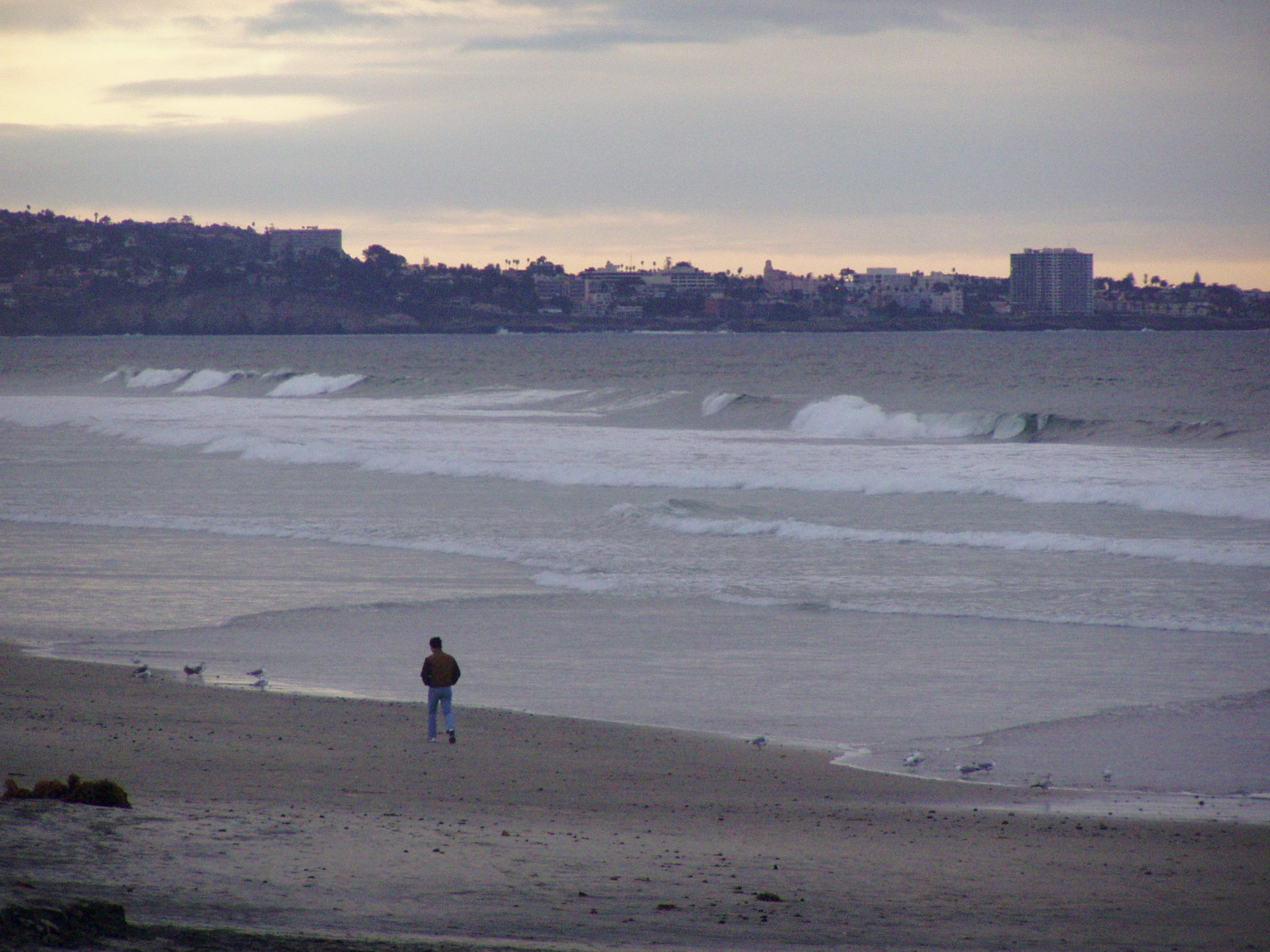
I drove down in Dad’s black El Dorado, and parked at Del Mar Beach right next to the lifeguard station at the Poseidon Restaurant. I opened my suitcase, took out a bathing suit, and went into the beach bathroom. The tile was wet and smelled of seaweed and salt. I walked barefoot down to the beach. It was early spring, and the sand was unmarked. A few surfers jogged past me, blonde and bronzed like the Beach Boys. I followed them down to the seashore. In every direction, there was this untouched canvas of light and color; even the beach houses retained their natural sandy simplicity.
After I swam in the ocean, I went back to the bathroom, changed into dry clothes, and walked into town. A man with a beard rode past me on a horse and waved. I picked up a Reader and read the rental advertisements on the patio of Carlos and Charlie’s, the corner café. A roommate advertisement caught my eye: “Roommate Wanted to Share large two-bedroom overlooking Torrey Pines Reserve.” I called, and a man who went by the name of Smokey answered the phone. He invited me to come by for a look. His voice was predominantly ranch-friendly, so I took a drive over. It did occur to me on the drive that I was taking that chance Ken was blowing in my ear, and I was listening to Larry, who told me that people in San Diego were different.
“Hi, I’m Smokey. Come in—would you like something to drink? Too early for cocktails, unless you want one.”
“No thanks. How long have you lived here?”
OLYMPUS DIGITAL CAMERA
His eyes were animal-alert, his face tanned, and his hair cut short but made to look long. His smile was unfiltered with hidden motives, and he was bull-legged.
”I moved from Pittsburgh; I’ll never go back except to see my folks. This is paradise. Don’t you think? I’ve lived here for two years. I rent out one room, because I hate full-time work. I’m more entrepreneurial. You don’t have to worry about my motives. I have a girlfriend, and I’m in love with her. She doesn’t stay here. I go to her house. You’ll have your space, and if you need a friend, I’m here. Come out on the balcony.”
I followed Smokey, and we stood on the terrace overlooking the lagoon and marshlands of the reserve. To the west, the ocean and the stump of Torrey Pines Mountain.
“Wait till sunset; you’ll never want to leave. Come look at your room. I can help you move if you want.”
The room was downstairs, his upstairs, and a stairway of trust in between.
I’ve written in the genre of Creative Nonfiction, integrating the events through dialogue, journal entries, and a third-person narrative. Within three locations, Santa Fe, New Mexico, Los Angeles, California, and Saratoga Springs, NY. Greta (me) exposes the mutilation gaslighting abuse inflicts on her emotions, psychology, mental and physical health, and her finances.
STILL A MYSTERY WHO SHOT BENJAMIN “BUGSY” SIEGEL .
JUNE 20,1947
Several years ago, I received an email from a reporter in Las Vegas. George Knapp had read some of my memoir posted on my website and asked for an exclusive interview. He asked about my father’s relationship with Ben Siegel “Bugsy” and what I knew about their friendship, and why Ben Siegel was shot. I declined the interview, butGeorge persevered. Three weeks later I agreed to the interview, because my father was not there to stop me.
We met in Del Mar at the Inn Auberge. I showed up with a notepad to remind me what not to say, a photograph of my father when he was a producer for Cecil B. De Mille, and a borrowed calmness that comes when I am approaching an extremely anxious situation.
My first interview about Dad was not anything like I imagined. George approached the subject with respect, and I relaxed and began talking, and talking, and talking. The only time I hesitated was when he asked if I knew who killed Ben, and I had to answer swiftly, “I think Bush did it.” He was not too impressed with the answer; but it saved me from theorizing.
At the end of the interview, I walked out of the hotel without regret. I said what I felt should be told; that my father’s best friend was Ben Siegel. If he loved Ben and my mother loved Ben, than there is a lot more to “Bugsy” than what the public has been told. The interview aired on a Friday night, and my life was no different from before. George got a call from someone who claimed my father once told him, Virginia Hill’s brother was the shooter. It sounds like my father; he enjoyed sending people down the wrong path. He always said, “You don’t inherit friends,” and so I declined to remain friends with family members of his group, because I respected hisorders, even after he died.
I doubt any of his mob friends are still alive today. Many people have claimed they knew my father, but in essence, what they mean is they met at Ciro’s, or had a game of cards, or went to the racetrack. My father’s only friends were connected to organized crime. I learned this when he died; three people showed up for the service. He warned me to keep away from reporters, and not to trust anyone. Still, strange incidents followed his death that I was unprepared to handle.
A man I’d never heard of called and informed me, ‘Your Dad and Ben buried a safe deposit box in downtown Los Angeles. You should look for the key, there may be a lot of cash.’ My father was not about to leave this world without telling me he had stashed money in a safe deposit box. I will bet every dollar on that. Another man, posing as a friend, came to my aid offering help settling the estate. A few weeks later another man I had never heard of, placed a claim on the estate for an old gambling debt of $5,000. The two of them were conspiring. Had I known gambling debts are erased when the bettor dies, I would not have allowed my sister to sell his Patek Philippe diamond and ruby pocket watch, which I suspect belonged to Ben Siegel at one time. The end of my father’s life was as mysterious as when he was living. That is how he liked it, and that is how he lived it.
I had to wait until my father was in his seventies to go to the racetrack with him. He took me to Santa Anita, we sat in the clubhouse, and he watched the track from behind tinted dark sunglasses. He was quiet and observant. He watched me eat and then handed me a twenty-dollar bill to bet on the Exacta. He told me how to bet and which horses to bet. I walked away from the cashier thinking I would be a big winner. Instead, I walked away a big loser. This was a setup, he picked the losing horses, so I’d get the lesson ” Even your old Dad loses at the track, remember that.’ There wasn’t anything exciting about going to the track, he made sure of that. I suppose he was concerned, that I had inherited a taste for betting.Lucky for me; I discovered Dad’s gambling didn’t pay off. When he was with Siegel in the forties, controlling the wire service he’d bet up to $50,000 in one day. And lose it on the next gamble. I don’t bet on sports, or gamble in casinos. I do gamble on life, and aim for the outlandish, improbable questionable odds.
Photo: Leaving Beverly Hills Police Department day after the murder.
I’ve written in the genre of Creative Nonfiction, integrating the events through dialogue, journal entries, and a third-person narrative. Within three locations, Santa Fe, New Mexico, Los Angeles, California, and Saratoga Springs, NY. Greta (me) exposes the mutilation gaslighting abuse inflicts on her emotions, psychology, mental and physical health, and her finances.
A momentary connection occurred to me last night after watching, “There Will Be Blood” about drilling for oil. The oil derrick is the outline, or the notes scribbled in a journal. Then the pipes are set in place, like words in a sentence, then paragraphs. Our characters come into view some muscular and brazen like the drillers, welders, rig workers and mud loggers. Once those elements are configured in the oil field or in sensory perception the story begins. The paragraphs build into pages and the pages build a story.
The writer digs for substance for soulful spiritual contemplation and he builds on it. Sometimes it comes like a gush of oil. Other times it bubbles at the surface and goes nowhere. When the bubbles recede, we move on to another location internally and externally and we begin to dig for a new well story.
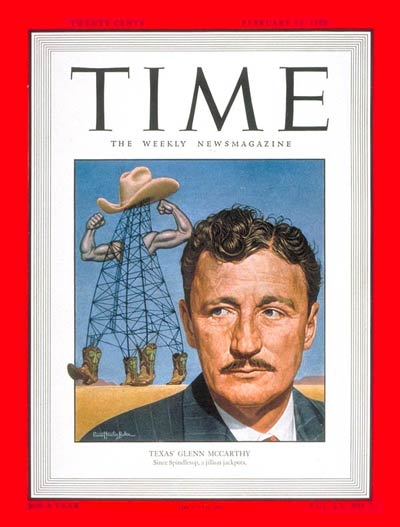
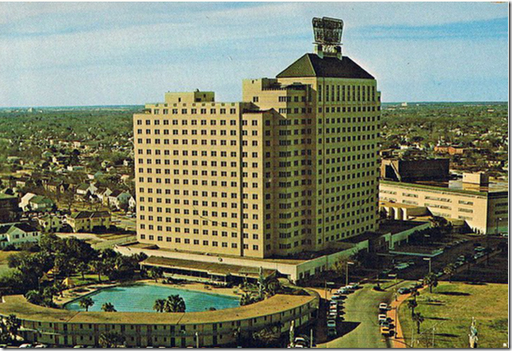
These ruminations came to me after watching the film, especially poignant to me as my father at the age of fifty left a life of gambling and mafia assorted activities and learned to be an oil producer. He was introduced to Howard Hughes through Meyer Lansky and Frank Costello and Howard introduced Dad to a wildcatter in Houston named Lenoir Josey. My mother and father moved to Houston from Los Angeles in 1949 and into the Shamrock Hotel, that being the hotel used in the film Giant, and Edna Ferber’s book, about Glenn McCarthy, played brilliantly by James Dean. He built the Shamrock, and it opened on St Patrick’s Day 1949 (the pool was so large you could water ski across) Glenn became close friends with my father. I met him once in Los Angeles at a lunch with Dad. He was broken, by his loss of fortune. and friends. I recall a face withered by disappointments.
Josey as my father referred to him took my father under his wing and tutored him in the business of oil engineering and oil production It was a gamble and my father a life long gambler on everything loved being in the oil business. I didn’t intend to wave my father’s story into this but intentions in writing as many things in life surprise us.
If J. Edgar Hoover hadn’t refused my father’s request to reside in Houston to continue the oil business I would have been born in Texas. My father was forced to move back to Los Angeles and as Hoover predicted he went back to gambling. During his time with Josey, he amassed twelve oil leases in states across the Southwest and Midwest and when he died that part of his life was handed down to his children in royalty leasehold interests. That was when oil was $17 a barrel. But Josey had passed and his son no longer honored the handshake agreement between his father and mine and forced us to sell our leasehold interests for a shameful amount.
I’ve written in the genre of Creative Nonfiction, integrating the events through dialogue, journal entries, and a third-person narrative. Within three locations, Santa Fe, New Mexico, Los Angeles, California, and Saratoga Springs, NY. Greta (me) exposes the mutilation gaslighting abuse inflicts on her emotions, psychology, mental and physical health, and her finances.
I’ve written in the genre of Creative Nonfiction, integrating the events through dialogue, journal entries, and a third-person narrative. Within three locations, Santa Fe, New Mexico, Los Angeles, California, and Saratoga Springs, NY. Greta (me) exposes the mutilation gaslighting abuse inflicts on her emotions, psychology, mental and physical health, and her finances.
Weaving together events witnessed personally and those gleaned from friends, associates, historians, FOIPA, INS and archives of the Department of Justice, author Luellen Smiley’s memoir is a brief, heartfelt genuine reconstruction of family’s relationships of the past that neither dwells on nor dramatizes the true image of her father Allen Smiley, his allegiance to Benjamin ‘Bugsy’ Siegel and the criminal world.
Author Luellen Smiley details her childhood and growing up days as a gangsters daughter- elusive as it may be by immersing her readers through intriguing happenings of everyday and events of the bygone years that justify her fathers masked behavior and restrictions for his adored daughter.
Definitely ‘Cradle of Crime: A Daughter’s Tribute’ is a straight forward homage to a father and a triumphant tale of a daughter who broke barriers of secrets to reach the hardcore reality through her hardship and research. A not-to-be missed 5 star read ‘Cradle of Crime: A Daughter’s Tribute’ is a book for those who care for family morals and values and are willing to accept poignant twists in one setting. Highly recommended.
I’ve written in the genre of Creative Nonfiction, integrating the events through dialogue, journal entries, and a third-person narrative. Within three locations, Santa Fe, New Mexico, Los Angeles, California, and Saratoga Springs, NY. Greta (me) exposes the mutilation gaslighting abuse inflicts on her emotions, psychology, mental and physical health, and her finances.
When I see a crippled person, a struggling Senior with a walker, or when I read the stories of the hostages, my blessings are embellished, and I remind myself of this. Maybe this entire episodic journey is to teach me to get outside myself. Joy is not power, wealth, or attention; that is plainly human. Genuine joy interrupts someone’s suffering and transforms their mood and sensibilities.
All the success that opened doors in my life paddled in from friends, strangers, and just incidental connections. We can’t do it alone, as much as I foolishly try to carry my wheelbarrow without direction and sound advice, this is where it took me. I identify with the outsiders who peddle the steps of solitude and sometimes don’t reckon with their culture, people, or conformities.
I’ve written in the genre of Creative Nonfiction, integrating the events through dialogue, journal entries, and a third-person narrative. Within three locations, Santa Fe, New Mexico, Los Angeles, California, and Saratoga Springs, NY. Greta (me) exposes the mutilation gaslighting abuse inflicts on her emotions, psychology, mental and physical health, and her finances.
The order of this week is disorder. Not the trivial disorder of a closet, or a work in progress; this week is the unraveling of the self, which comes with separating from someone or something you love dearly. It is the subject of: poetry, theater, film, literature, dance, visual arts, and music — all forms of music from opera to rap. For all of you who have mothers and fathers close to death, and you don’t want them to leave.
Adults protect you from the brutality of death when you’re very young. They keep it behind locked phrases like ‘she had to go away to a better place; you’ll understand when you grow up.’The camouflage of death may go on indefinitely until one day, you are hit over the head with a block of ice, and it splits you right down the middle. You can see your guts spilling out, and everything is all out of order. Walking is an effort. Thinking clogs with the big question: Why? Why can’t we all stay here together and live forever?
Flashback to 1966 — I was very young, not so much in years, but when I was 13, my mental and emotional age was more like that of an 8-year-old. I don’t know if I was ADD or DDT because those acronyms were not in vogue yet.
My development was arrested because I was raised on a fantasia of false identities, fiction, and privilege. I thought we were prosperous, happy, and would live together forever. The fantasia of falseness was abruptly taken away on June 19, 1966. On that day, I saw for the first time my father weep uncontrollably. I was told my mother was in heaven. My father was seated on my mother’s avocado green sofa in our tidy mid-century apartment in Westwood. Nana — mother’s mother — was sitting on the sofa next to my father. Nana and Dad had reconciled for the period my mother was sick with cancer. They both were sobbing. I was not, I was in shock. There was nothing inside of me but resistance, a blockage of emotion that remained there for so many years.
I was left in my father’s care. He was busy avoiding government subpoenas and running the Fontainebleau Hotel in Florida. He kept a command post on my emotions. He would not tolerate my grief, because he could not tolerate his own. So, I had to chin-up, chest out, walk up and down Doheny Drive in Hollywood where he lived and pretend I was going to be fine.
When I turned eighteen and left my father’s apartment, I was free to unravel my feelings for the first time. The emptiness was filled with confusion, anger, and drugs. If college was supposed to be my best years, then I missed that chapter. Looking back, the real leap to personal growth came at that time when I was left unattended to wander through life with my own eyes as guardian, and my heart as my compass. That is when I missed my mother the most. It was my fortune to have my father back in Los Angeles, throwing his weight around from a distance. He kept me under radar by having a friend’s son working in the admittance office of Sonoma State College.
I remember days when my mental attitude needed electric shock therapy. Miraculously, I did find my way home, and to the matter of my mother, and growing up with gangsters. From a wafer of stability, very slowly, I’ve built a nice lifeboat to keep me afloat. My screaming, cantankerous, and intimidating father who loved me beyond measure is in this imaginary boat, and my mother who loved with a silent gentle hand she gave to me whenever I needed assurance.
All I have to do is look at her photograph placed in every corner of my house, and I regain momentum in my lifeboat. When I am particularly insolvent with life’s measures, I recall the years she spent fighting cancer so she could continue to hold my hand. How can I disappoint such a woman? I cannot, and I know that with more certainty than I know anything.We all have a basement strength that rises up and balances us when we need it. Each time we cross that unpleasant road and say goodbye to our friends, our pets, our parents, or our siblings, we have to find our basement strength.
You can read poetry and essays, listen to opera or rap and find five-thousand ways of expressing the same painful stab of separation. If the comfort comes in just knowing — we all have that in common — then all you have to do is tap the shoulder of the person in front of you, and ask, “How did you handle it?”
Or as Henry Miller said, “All growth is a leap in the dark, a spontaneous unpremeditated act without the benefit of experience.”
I’ve written in the genre of Creative Nonfiction, integrating the events through dialogue, journal entries, and a third-person narrative. Within three locations, Santa Fe, New Mexico, Los Angeles, California, and Saratoga Springs, NY. Greta (me) exposes the mutilation gaslighting abuse inflicts on her emotions, psychology, mental and physical health, and her finances.













Leave a Comment