
MY NEIGHBORHOOD-MY LIFE


As a child I understood in a subliminal fashion that my father was unlike other neighborhood fathers who left each day to go to the office.   My father worked from our home in Bel Air, California, and hotels: The Beverly Wilshire Hotel, the Bel Air Hotel, The old Beverly Glen Terrace, and restaurants:  La Dolca Vita, Matteos, Copa de Ora, Scandia, La Scala, Purinos, Chasens, and building lobbies,  parking lots, telephone booths, and race tracks.   Sometimes he talked about a really big deal he was working on, and other times he said he was returning favors.  The exchange of favors between mafia associates was written about way before I came along, by Damon Runyon and Mark Hellinger.

Deals and favors are what I understood as my father’s business. This kind of business made him available to me during the day, while other father’s had left their homes to go to an office. From the outside looking in, we were a stylish Westside family, with colorful friends, members of Sinai Temple, and frequently seen in the company of established doctors, Oilmen, and attorneys.  My mother went door-to-door as a Red Cross Volunteer, and my father’s charity supported the United Jewish Federation Fund.

Our next-door neighbors were movie actors: John Forsythe, Burt Lancaster, James Garner, and Peter Morton, the legendary founder of the Hard Rock Café.   Peter was a few years older than I, and I loved his mess of tousled curly brown hair, and his gentle birch brown eyes, slanted into the curve of sadness. I waited for him on some mornings to walk me to the bus stop.  I remember he looked after his little sister, and maybe I needed looking after too.  The memory of his kindness is sealed.   Most of the families in the circle had children, and it was only natural that we played together. When Dad’s name was inked in the Los Angeles Times for Mafia activities, all the kids quit meeting at my house, and many friends at Bellagio Elementary quit coming to our house.

In the foyer of our home, there was a wall mirror and a wall-mounted table. That is where my father kept his grey fedora and trench coat. I remember the times he dashed out of the house with the coat and hat.

“Daddy, why are you wearing your coat and hat today; it’s not raining?”

“I have to be ready for anything, little sweetheart.  Daddy never knows what the weather will be like out there.” The answer was a riddle, like almost everything my father taught me. A  simplistic statement on the surface, and a double-down meaning hidden inside.  That is how he communicated with me, and it had a purpose like everything else.

When I was five years old, my father took me out driving in his powder blue Cadillac. He made regular stops to meet a guy about something, had the car serviced and washed, visited a friend, stopped in telephone booths, and Schwab’s to see if there was any action.   He loved to sing in the car, with all the windows rolled down, and his arm wrapped around the back of the leather seat. He was as relaxed driving his car as he was lounging at home on the sofa. He drove with one hand while he sang,

“Que sera sera.” When I asked him what it meant, he said,

“Whatever will be will be, the future is not ours to see, Oue sera sera–that’s the song of life, sweetheart.”  He didn’t pay attention to stop signs, signals, or fellow drivers; he perceived them as second in line.   Once a policeman stopped us as we were driving out of Thurston Circle, and my father opened the car door, got out, and moaned, “Oh my God, Oh God, I’m having a heart attack!”  I watched him and yelled out, “Daddy, Daddy–what’s wrong?” but he kept howling.  The policeman didn’t take notice at all.   “I’m having a heart attack, let me go officer, I can’t breathe you SOB. You’re going to kill me!”  By this time, I was crying and making a lot of noise in the front seat.  The policeman then approached my father and handed him a ticket while my father continued to wail, “HEART ATTACK.”  After the policeman drove away, my father got in the car, steely-eyed and swearing. “Stop crying. Stop that right now!  Can’t you see I’m all right? Daddy just pretended to have an attack. That stinking cop is always hanging around here. He should be ashamed of himself.  Policemen have better things to do than give tickets.”  

“ You’re not sick?” I mumbled.

“ No, of course not.  Don’t tell your mother about this, sweetheart; she doesn’t understand these things.  Remember now what I told you, when I say something, you listen, and don’t question it.  I have reasons for the way I do things. ”

Adults try to deceive children with whispers, false identities, and lies, but a child has a superior emotional vision.  From that day on, I was always watching my father closely to see if he was acting or playing it straight. The memory is like a sealed stamp; even the narrative is almost exactly as I’ve written.  

The outings gave me a chance to meet dozens of men and women who exaggerated their feelings for me with overt gestures that I sometimes recognized as acts. Picking out genuine friends developed into a sense I couldn’t necessarily ignore.  It got in the way of my comfort around many of my father’s associates later on in life.  Nothing seemed to please him more than to present me to his friends, and wait for their praise, “You’re lucky to have such a beautiful little girl, and so well behaved.”  I remember this line because it is the same line I heard throughout adolescence.  My behavior was conditional on my father’s mood.  If I misbehaved, spoiled my dress, or broke something, it would ruin everything. My father would blame my mother, she would retreat from the living room, and I would be left alone.  This was the second of the lessons, I learned very young, not to make any mistakes.   ‘One error can ruin your whole life’, he told me on all the occasions that I erred.

Today, it’s not too surprising that I am ready to sit in the front seat with a man of choice, while he drives around and shows off his driving and leadership skills.  It’s not that I just don’t get excited about driving myself,  it is one of those childhood activities that evolved into a life long course of pleasure.   

When now, I have finished this personal essay I began two years ago, I went looking for images.   A photo of the house I grew up in at 11508 Thurston Circle popped up.   Our home burned in the Bel Air fire in 1961, so I viewed the photos of the house built on the lot after Dad sold it.  All postmodern, nothing like ours, except this photograph I chose, the swimming pool he built, another childhood activity that evolved into a life pleasure.  The house is listed for sale at $2,075,000. Dad bought our home for $50,000 in 1955. Not one place I’ve lived compares to the idyllic life in Bel Air, and that is why I keep moving from city to city, and home to home, like a rolling stone.  

 

EXCERPT FROM CRADLE OF CRIME BOOK


An unexpected phone call came one day from Ms. Green, a woman I’d contacted with the INS about Dad’s files. She’d located them and agreed to give me copies of the five thousand pages! There was no going back now. Ed Becker told me that the INS most likely had copies of the FBI investigation, ‘Take it slow and remember the contents was written by your father’s enemies, the government! I had an appointment with Ms. Green the following week.

The split green metal door was closed so I knocked. A woman opened the door; she appeared the perfect clerk for a windowless metal room of paper. Long uncombed oily hair and a complexion untouched by sunlight.

“We’re closed,” she mumbled.

“How can that be? I have an appointment with Ms. Green.” The clerk looked at my despairing agony unwillingly.

“She’s not here.”

“My name is Lily Smiley and I’m here to pick up copies of the files on Allen Smiley. Would you take a look on the shelves in front of you? Maybe she left them on the front desk here.

“They’re not here.”

“Will you call her and ask where she left them?”

The clerk shut the door while I gripped the other side in case she tried to lock it.

“Ms. Green said they’re classified. We can’t release them.”

“Really? They’ve been classified in the last week?”

The door closed. I pounded on it and a tantrum sprouting from suspicion unleashed. I sensed the government stepped in and classified the files for a reason. As I descended the steps of the Department of Justice I saw my father standing with legs apart, arms crossed over his chest, seething with disapproval. I heard something like this, “You’re going to dig a little too far and sink in if you don’t stop this investigation.”

Westwood village where I lived with my mother sedated my defiance against the day’s disappointment. If I was in Los Angeles I’d stop and walk the streets where my puberty slowly blossomed in a college town with bookstores, two movie theaters, record shops, and the old Mario’s Restaurant where we used to order baskets of garlic bread and coca cola. Wandering through a kaleidoscope of the past, I walked into Walton’s Bookstore. I was intercepted by a prominent display of a newly released book; Contract on America, The Mafia Murder of President of John F. Kennedy. I opened the index and one of the first names I recognized was Gus Alex; my Uncle Gussie. He was a booming personality befitting his height, with jet black hair and bulky features. Uncle Gussie was married to my mother’s confidante Marianne; a statuesque blonde model and dancer. She held Grace Kelly poise. Even as a young girl I sensed she didn’t like me around. Marianne and Mom talked for hours in her bedroom.

Relief thickened with the absence of my father’s name in the index. Uncle Johnny ( Johnny Roselli) was written about extensively. I could only glance through the book; every page blurred into the murder of the most loved President in my lifetime. The allegation that  Johnny was involved in the JFK murder strapped me to that book for hours; an unforgivable juxtaposition between inquisitiveness  and apprehension. It was like playing scrabble with real names, photos, fiction or non-fiction I didn’t know.

EXCERPT: “West Coast Mobster Johnny Roselli was one of several underworld figures, chiefly associate of Carlos Marcello, Santo Trafficante and Jimmy Hoffa, whom Jack Ruby contacted in the months before the assassination of JFK. In the mid-1970s, an aging Roselli began telling associates, journalists, and Senate Investigators that Ruby was “one of our boys” and had been delegated to silence Oswald.”    JOHNNY ROSELLIJohn Roselli

I could not believe what I was reading; anymore than I would believe my father was associated or informed of these events.

I’ve been subjected to scorn, disgrace, and dismissal during  conversations about Johnny. Those of us kids who knew him as Uncle Johnny  have our own stories.


THE BEST WAY TO FIND YOUR PATH.. ROAMING

ADVENTURESS IN LIVINGNESS this week ends with new directions in living. Before that happens, you have to get lost, detached, and miserable. It messes up your social life, your routines, your comfort, and your partner.  I don’t have one, so it’s all up to me.

Men wonder why women change so often, why we are spirited unicorns one day, and mules the next. It comes from the universal need to roam, to feel new sensations and passions, and to find more things to love. Even our closets are overflowing with love: “I love those shoes, I love that coat.” We replace our wardrobes because we need more garments to love.

At the crossroads of some moment in time, I stopped loving material things, my reflection, and went looking for a deeper direction of sensation.

It started last year, when my life was tangled up in two projects that were not progressing. As long as someone didn’t raise the curtain on my imaginary life, I stayed right there, like a gearshift left in neutral. When failure and rejection continued to knock me on the shoulder, I welcomed the familiar knock and remained stationary.

The exact moment I decided to shift gears was a painful one. I let go of both projects that were obstructing my motion. I have extracted the nature of the projects because it really is irrelevant. After I let go, and watched those long-term efforts just dangle from boxes, notebooks, and letters of correspondence, the straight of my back curved. Where is my direction? Where are any of us going anyway, except away from that moment we have no control?

 If I asked why this happened, and that happened, I was then distracted by some woman in the car next to me who was having more fun in her convertible talking on her cell phone. Routines were becoming burdens, and my favorite places of comfort were boring. Encouragement came from writing columns, reading letters, and those long, solitary road trips in the night.  I felt like I was sleeping, but even in that state of detachment people were finding me, and shaking me up.

 I remembered one of the faintest memories of my childhood. I cannot even recall the place I was, or who was there; most certainly, it was not my father and mother. We were camping out and I was in a sleeping bag on the hard gravel ground. It was so unfamiliar to me, the simplicity of the natural surroundings, the heavy black balm of tranquility, and the brightness of each star. I lied awake most of the night talking to my fellow campers, and at some point they said to go to sleep. I could not close my eyes. The adventure had swept me into a state of alertness, the kind that makes you feel extraterrestrial. That night must have taught me to welcome new adventures. Sometimes they have ruined months of my life, but most definitely, at the end, I sprung up with a new line of faith.

 Again, I am leaving out particulars because it is not the direction I took or what I’ve chosen. After all, it could be anything. We all want to roam, and love, and find some nugget of truth at the end of the road. I think women need to roam more now than men.


Bookviral


Our review……

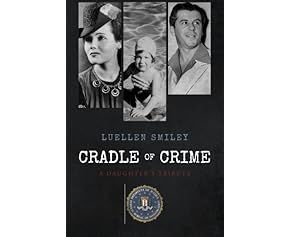
A candid and enthralling memoir, CRADLE OF CRIME – A Daughter’s Tribute is the debut release from Luellen Smiley and it proves one of the most gripping and powerful books in its genre. Certainly no mean feat, given the swelling number of similarly themed offerings but Smiley does well to distinguish hers with painstaking research, a broad narrative sweep and intellectual grip to deliver a fascinating and revealing read, for the events it covers.

The storytelling isn’t redemptive with much of the most compelling material in this book being intensely personal but it is a very human story that dispels hype and myth and gives us a telling glimpse of a remarkable life. Weaving together several stories it makes a vivid and notable contribution to the mafia debate which invariably swings between the codes of honor and family values so often portrayed on the silver screen to a brutal criminal organization focused only on the accumulation of wealth. In contrast, Luellen finds a far more equitable balance in her reflections, and it makes for a genuine page-turner.

Extremely well written, fans of this ever popular genre will find CRADLE OF CRIME – A Daughter’s Tribute a fascinating read and it is recommended without reservation.

http://www.bookviral.com/cradle-of-crime-a…/4594052167

A BookViral review of CRADLE OF CRIME-A Daughter’s Tribute by Luellen Smiley

MOTHER’S


It is my mother’s birthday, so I am thinking of her. If she had been here today, we would have had this conversation.

Mom, I can’t hold up, I’m so beat down.”

” You have to. I know your situation is degrading and frightening, but you don’t have a choice. You have to use all your strength.”

” I wish I was more like you.”

” You are like me, and I know you will overcome.

After our home burned down in the Bel Air fire, my parent’s divorce was in motion. Dad moved to Hollywood, and Mom moved me to Westwood to a studio until she found work. Mom returned to modeling to support us.

    Leave a Comment

    Leave a Comment

    COVID-CHANGED US


    IN THESE TIMES OF DISTANCE, DEATH, DISCOURSE, AND ISOLATION what can I write of value? All month this puzzle chased my thoughts; nudged me like a pesky fly. At different intervals during the solemnness, my journal returned parched sketchy paragraphs, and books did not deliver the inspiration I craved. Listening to Beethoven as I gaze out the window at the blowing branches on a spring gray and white day, I feel a singleness I’ve never known. Maybe you feel the same, and it is you I am writing to because I know you are there. Singleness in quarantine is more incarcerating than it is for married, partnered, family people. Though they have to acclimatize to spacial hardship as everyone at home is at the same intersection without privacy, and that slogan I remember from college, ‘I need my space man,” resonates. One friend said to me on the phone, “I yelled at my kids today, I’ve never done that before. We’re bumping into each other. I think I’m losing my mind.”

    US SINGLES  are accustomed to solitude, especially if you are an artist. How we howl for isolation to create, and now we have it. The time is here, to skip down the most bizarre roads and create COVID-Art. A few weeks ago, Governor Cuomo delivered his press conference and said, “I have something to show you.” A sliding door opened and a collage that appeared twelve feet in height displayed a tapestry of masks. He told us they came from all over the world. He was so touched by the gesture. Imagine a new solo dance performing an abstraction of the virus, or a poem, a song, and for sure a dozen or more writers and screenwriters are tapping at the speed of light to capture the pandemic in art form.

    https://www.theartnewspaper.com/analysis/art-pandemic

    I’M GOING DOWNTOWN now to pick up a cobb salad from Sunset Grill, my stable for drinks and great food. The sky is in turmoil, as the clouds interchange across the sun, and she appears to be breaking through at one moment and the next she has revealed her radiance. I dress for the weather with a hat and coat and begin my three-block walk to downtown. When it begins to rain, I am smiling as I’ve always loved walking in the rain. As masked villagers pass, I’m struck by the absence of smiles, or good afternoon which you get a lot in a village of five-thousand. Some younger couples cross the street when they see me, and heads are mostly lowered to the ground. A new silence emerges as cell phones are tucked into pockets and passing voices are inaudible.
    I HAVEN’T HAD FACE TO FACE  conversation for several days and I feel a sprinting joy in anticipation of a conversation with Eric or Brian who own the café. They’ve installed a take out window, and as I approach I see Brian, and he ducks down to greet me.
    Hey Loulou, how are you?
    “ At this moment I am so happy to see you!
    He swings down a bit lower to pop his head through the window
    “ So am I. We miss you.”
    “ I feel the same. How are you doing with all this.” He is smiling, and he’s always a bit jumpy like he needs to go for a jog or a bike ride.
    “We had to let the staff go,” now his smile turns to a gripping inner pain. My kid is washing dishes and we’re still here, but you’re the first customer today.”
    “Will you reopen when we’re off the pause button?
    “ With twenty-five percent capacity, I don’t know. The numbers don’t work out so well. I mean we’ll still do curbside.”
    Suddenly he turns about-face and joins me on the sidewalk touting my cobb salad. Brian must need a conversation as much I do. We chatted about the virus, our change of behavior, and this pent-up craving for closeness.
    “ I can’t even go on a date anymore with someone! How can you meet anyone today?” He gestures with his arms to emphasize his frustration.
    “Yeah, you’ll have to take their temperature before you sit six feet away.” We laughed, maybe for the first time in days.

    AS I WALK BACK HOME  my thoughts are traveling along the pathway of restaurants, I frequented in San Diego, Los Angeles, Taos, Santa Fe, and now here. I see the owners and waiters’ faces, remember the food and a visual kaleidoscope of the festive times we shared. You know that saying, the good ol’ days, now I am on the other side of that at least for the foreseeable future.
    For me the adaptation is more than frustration. Last year I did not take advantage of the racetrack, or the concerts at SPAC, or the exhilarating nightlife along Broadway on a Saturday night in Saratoga Springs. I trembled in silence abashed by the consequences of my mistakes. If we un-pause this summer I promise you I will not be clasping the remote waiting for the next film.

    AS I APPROACH  my house, I notice the neighbor in her driveway. We clashed in the most vicious ways the summer Rudy and I moved into the house. One time I think the police were brought in to settle the argument. It was because she placed a close circuit camera on her roof to track our renovation. She was retired and her husband was always fiddling in the shed. We gave her a purpose. She looked my way timidly. I smiled at her. This is the first time we’ve been this close since I moved here two years ago. She smiled back.
    “Are you happy to be back?” she said in a quiet sort of empathetic tone.
    “It’s taking time to adjust. I haven’t lived here in so long.”
    “I know. Well, not much has changed except for a few new restaurants. Do you plan on staying?”
    “I don’t know the answer yet. We had the house up for sale…”
    “ I noticed the sign.” She said expectant of more information
    “ I can’t maintain a hundred and twenty-seven-year-old house on my own. You know, Rudy’s gone.” She nodded her head.
    “Well, I don’t know how much longer I’ll be here either. I’m eighty years old now.” She dropped her head to the ground.
    “Lorraine you don’t look like it at all.”
    We continued on about my new tenants, her dog, and how much work it takes to maintain a painted lady historic home. I couldn’t believe how sweet her voice was, I’d actually never heard her speak except one time shouting at me. Give up grievances and trivia because the person you once disliked may be very different now.


    SELF PORTRAIT

    VOTING HAS BEGUN ON TALEFLICK.


    IT’S HERE. “CRADLE OF CRIME-A Daughter’s Tribute” is LIVE in the TaleFlick Discovery contest.


    Hi Readers:

    Voting has begun on Taleflick for this week’s winner. It ends on Friday at 4:pm. CRADLE OF CRIME- A Daughter’s Tribute is on

    Page 8. There you will see a voting button. Let’s win!

    Head over to the TaleFlick Discovery page, where https://taleflick.com/pages/discovery all visitors to the site will be allowed to vote (once) ON CRADLE OF CRIME- A Daughter’s Tribute

      https://taleflick.com/pages/discovery


    LOOKING FOR VOTES


    Dear Luellen,

    Thank you very much for allowing “CRADLE OF CRIME-A Daughter’s Tribute” to participate in a TaleFlick Discovery contest. Your date has been set!

    It will be a special week on TaleFlick Discovery: an all-women’s week, to commemorate International Women’s Day.

    “CRADLE OF CRIME-A Daughter’s Tribute” will be part of next week’s contest that starts:

    Wednesday 03/11/2020 at 10:00am Pacific.   https://taleflick.com/pages/discovery. The contest will accept votes for three consecutive days, starting at the above time, and ending the following Friday at 4pm PT.

    Participation is 100% free.

    CRADLE OF CRIME- A Daughter’s Tribute.


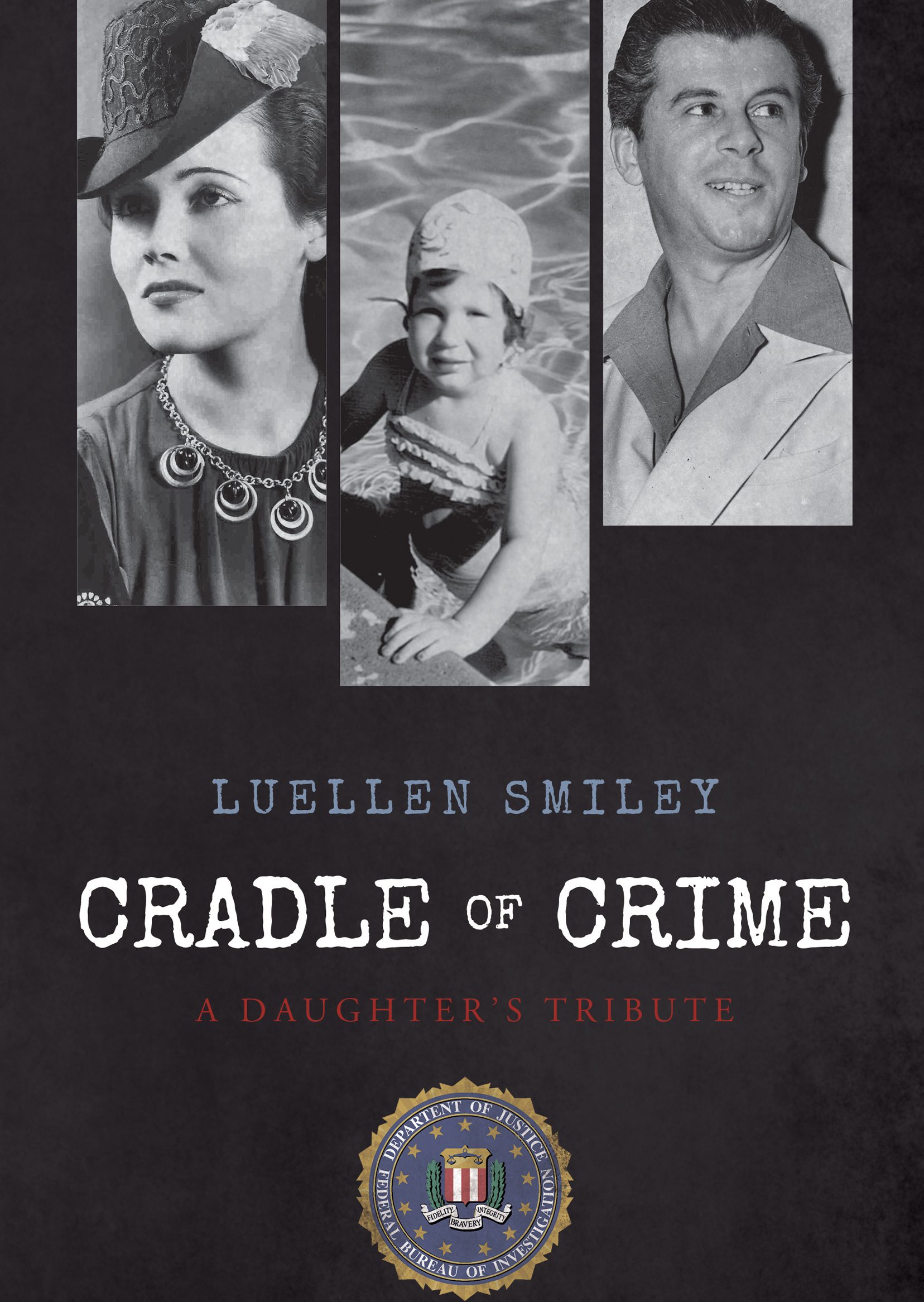
    Cradle of Crime: A Daughter's TributeHere’s the link on Amazon.www.amazon.com/dp/1537456032

    Luellen Smiley (folliesls@aol.com) sent you this via Amazon
    I thought you might be interested in this page from Amazon.
    Cradle of Crime: A Daughter’s Tribute
    by Luellen Smiley
      Learn more  

    HONK IF YOU WANT TO READ MORE


    SMILEY’S DICE
    Growing Up with Gangsters
    By: Luellen Smiley

    Synopsis
    The memoir is written in the Creative Nonfiction genre and is ninety-two thousand words.
    Writing my way home began as a compass to my secretive and dishonorable family history. This is the story of a woman whose survival was wedged between shameless love and immobilizing fear of her father.
    After my almost perfect mother, Lucille Casey, an MGM musical actress died, Dad gained custody of me. I was thirteen years old. What followed was a nail-biting tumultuous father daughter relationship between Allen Smiley, a Hollywood gangster, and his teenage daughter, that I’ve named Lily.
    As Benjamin “Bugsy” Siegel’s best friend and business partner from 1937 until his death in 1947, Dad acclaimed Ben Siegel. He was seated next to him the night Ben was murdered. The fatal outcome was speculation of his involvement fed by the FBI to the media, death threats from Mob associates, and vicious harassment from the Immigration and Naturalization Service.
    I’ve learned by this time Dad had amassed a weighty criminal record, was under indictment for false claim of citizenship, perjury, and an order of deportation. After demonstrating to the Mob he wasn’t going to seek immunity offered by the government; they honored and protected his life. Their methods are described in transcripts from the FBI files; amusing, violent,and illegal. Dad served the organization until his death in 1982.
    Faced with an identity meltdown ten years after Dad died I implored his friends, associates, attorney, historians, FOIPA, Immigration and Naturalization Agency, and Archives of the Department of Justice, to build the branches of my family tree. Along this irreversible journey I suffered disgrace, rage, and Dad’s ghostly disapproval as I delved into the files and discovered the family secrets.
    Simultaneous with the reading is a dissection of my reactions to his criminal activities, gambling addiction, attempt at reformation, and hatred for the government. The vendetta the government placed on him for not informing earned my mother’s silent devotion. In the end they won. She divorced him.
    I could be mute about the subject, or expose what I know because I’ve made the family history mine.
    Incorporated within stories of discovery are government surveillance records, newspaper articles, court testimony, and criminal activities that defamed his reputation and our family.

    As the discoveries occur the reader is taken inside the transformation of my identity. Once liberated from Dad’s paranormal disapproval of my investigation, I break my silence and begin writing columns about growing up with gangsters. This opened the doors to unknown relatives, mob friends, and an identity that suits me well.
    A startling yet an inspirational look inside the struggle of a gangster’s daughter to understand her father’s allegiance to the Mob.

    Excerpt from Smiley’s Dice.
    I don’t know how much more of this I can process. I don’t feel Dad’s disapproval as strongly; this expository involving my mother is deepening my resentment for the government. This is just one binder of two-hundred pages, and I have fifty binders. I’ll rearrange my dresser drawers or hand-wash sweaters for awhile. It’s too early to have a glass of wine! Two days have passed, as my resistance to more reading of these FBI files was due to a suspended state of melancholia.
    April 13th- FBI file

    “Smiley received a call from —— and told Smiley that he was thinking of going into business with —–who is making twelve thousand a month putting on stag shows. Smiley told him not to get into the business. —told Smiley that he had attended a ball game and noticed that George Raft was there. Raft is now sporting a mustache and his cheeks are all sunken in, making him look like a drowned rat. Smiley did not like this comment.”
    “____ asked Smiley how his case was coming along, and Smiley replied,” They are going to ship me to Singapore”
    After the forgoing call was made, the conversation continued concerning _______ between Smiley, paramour of Jack Dragna, and Lucille Casey. While Casey was getting ready to go out to dinner, this unidentified woman, became very cozy with Smiley, according to the informant, and stated,
    “ Take my advice and don’t talk on the telephone. You can sit right here and they can listen to you from over that hill. I know this because we have been on the other side all the time.” Smiley replied he had an idea of that and she remarked that Smiley was a good guy, and she thought she should warn him.”
    Signed R.B. Hood
    Special Agent in Charge.


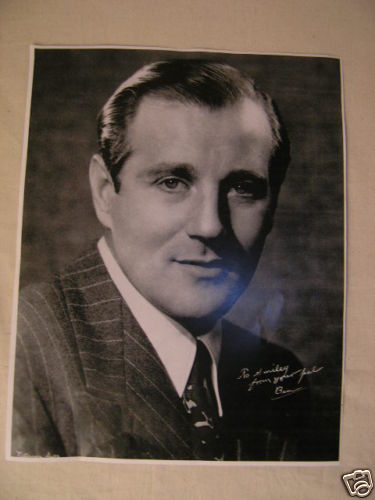
    WHO IS BUGSY?


    !Bh4GdiwBmk~$(KGrHqYH-C4EsMLP8z9dBLLYjivCm!~~_12

    LUCILLE CASEY SMILEY

    MGM MotherAll my life people have asked me the same questions:” What’s it like knowing your father is a gangster? How old were you when you found out? Aren’t you afraid of his friends? You know they kill people.”
    I live in a temporary tide-pool, a lily
    floating against the current, weighted
    down by a suit of armor that shields me
    from the beauty, love and freedoms stirring in my bud.

    What seemed insignificant at the time was the diving board into my Dad’s history. I was watching a Bugsy Siegel documentary on my television in San Diego during 1993. It was the first one I’d seen. Three historians joined in on the violence Bugsy honored and esteemed. Half-way through the celebratory lynching of Bugsy and his pals, a reporter made the statement that ‘It’s obvious Allen Smiley was there to set Bugsy up for the hit.’ Andy Edmonds stated that Dad conveniently disappeared into the kitchen during the time of the shooting. It wasn’t until a photograph of my dad appeared on the screen; a man with thick graying hair that I noticed an expression I’d never seen, horrifying misery. I moved closer to the television to see his face up close. A kaleidoscope of emotions rose to the surface: anger, shame, curiosity, and disbelief. I was forty years old.
    smiley aThe first time I’d seen those photographs of Ben Siegel slumped on that sofa; an eye bleeding down his face was a day back in 1966 at the age of thirteen. My best friend Dena lived in Brentwood with her divorced mother and siblings. We hooked in the unfamiliar and confusing imbalance of a broken home life. Dena was suffering depression after her parents divorced and I was dangling from my father’s fingertips hopelessly conflicted after my mother died. Dena wouldn’t let a day go by without calling me. ‘Are you all right?’ She didn’t like my father and her reasons were mature beyond her years, ‘Your father scares me.’ After school one afternoon we stopped in the Brentwood Pharmacy. Dena was looking at the book rack and I was following along.
    “Lily, my mother told me your father is in a book, The
    Green Felt Jungle. It’s about gangsters. Wanna see if they have it?” I agreed to look because Dena was interested, but it meant nothing to me. She twirled the book rack around as I stood behind her watching.
    “That’s the book! Let me look first and see what it says,” she whispered. I could feel her arm tense up as I grasped it.
    “Oh my God! There he is,” she said. We hunched over the book and read the description of my father, “Allen Smiley, one of Ben Siegel’s closest pals in those days, was seated at the other end of the sofa when Siegel was murdered.” Dena covered her mouth with one hand and kept reading silently.
    “What does that mean? Who is Siegel?” I asked.
    “Shush–not so loud. I’m afraid to tell you this. It’s awful.”
    “What’s awful? Tell me.”
    “Bugsy Siegel was a gangster in the Mafia. He killed people. Your father was his associate.”
    “I don’t think I should see this.” I turned around abruptly to leave the drugstore. Dena followed me out.”
    “Lily you can’t tell your father you saw this book. Please don’t tell him I told you.”
    “Why not?”
    “My mother told me not to tell you. Swear to me you won’t tell your father!”
    “I won’t. Don’t you tell anyone either.”
    A few days later after Dad left for the evening I opened the door to his guarded bedroom. I walked around the bed to a get a closer look at the photographs on the wall. It was the first time I could read the inscription.

    DSC01871 - Copy


    A PITCH FOR PUBLICATION


    IN NOVEMBER OF 2005 I reserved a space at the San Francisco Writers Conference. I was nervous and edgy when I boarded the plane. My pitch proposal, pitch suit, and pitch necklace, were tucked inside my suitcase. The pitch convinces an agent or publisher, that you know your subject well enough to feel one hundred percent confident.  It may sound irrational that a writer could work five years on a book and not know what it is about. As an emerging writer I view my work through a kaleidoscope lens. I see multiple themes, subplots, and messages, and they change with each reading. Then there are loose knots of personal misery, lost versions and rejections ringing in my ears. My pitch has to convince an agent, that at least 5,000 people will buy my book. The pitch suit is the outfit you wear for an interview; only for writers, the guidelines are very loose. Some writers wear their narrative. I brought my tailored, looking successful, pants suit. My pitch necklace is a gold Buddha medallion that my father had designed for my mother. I wear it for good luck and because I know the necklace has survived all the family tragedies. The conference is at the St. Francis Hotel at Union Square. From experience, I have learned that choosing a conference because of its alluring location is meaningless; I never pay attention to past experience.

    OLYMPUS DIGITAL CAMERA
    OLYMPUS DIGITAL CAMERA

    It was pouring when I arrived. The staff at the front desk greeted me with musical familiarity. Every time I swished by they called out, “Hello, Ms. Smiley.” I imagined them as a chorus singing my name. I arrived one day early to pace the galleries, cafes, museums and Saks. After the first night, I had to switch rooms. I was directly above the street dumpsters, where for hours the chugging of trash kept me awake. I moved frantically, to scoop everything up and not miss a moment of San Francisco. After switching rooms, I dashed over to the Espresso Bar. It faces the corner of Powell and Sutter. Outside, the streetcars clanged by, passengers dangling from the bars like vines on a tree. In between the tracks, workers both blue and white-collar, and some without any collar at all, jammed the sidewalks on foot, bicycle, moped and skateboard. With phones and iPods attached, eyes alert, they buzzed on the vibe of Saturday, moving like musical notes in a symphony.

    OLYMPUS DIGITAL CAMERA
    OLYMPUS DIGITAL CAMERA

    In the café an elderly woman wearing a SFWC name tag was seated next to me. I noticed she positioned her book on the corner of her table. She looked overwhelmed and frightened. As I introduced myself she smiled courteously, and said she was a neurotic housewife all her life and didn’t have much to write about, so she wrote about her husband’s war stories. I told her she should write about the neurotic housewife. Just as I was leaving, she stopped me and thanked me for speaking to her. “There’s always a guardian angel around.” Her voice lingered in my thoughts all weekend.
    At six o’clock that evening, I was gliding around my room dressing for the gala. I reached for my jewelry bag. It was gone. The weekend was ruined! I would never get published, I’m too wired, too reckless, too distracted. I called the front desk. Heather said she would call me back. Bang, bang, bang, went my shoe against the bed frame. Then the phone rang.
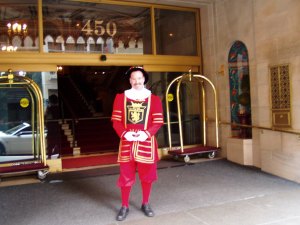
    “Hello, Ms. Smiley. I’m sending the bellman up with your jewelry.”
    I answered the door recoiling with pained joy. The bellman listened attentively. I rushed upstairs to Harry Denton’s Starlight Room. There I began wine tasting with Maggie, Peg and George; three new comrades in a room of hundreds.
    I spent the next day among more comrades, writers with unpublished stories, books, and works-in-progress. I listened to panels of writers; agents and editors discussed the fateful downward spin of publishing and upward battle towards reward.  We sat in our chairs looking overly anxious, taking copious notes, and waiting for answers to our questions. At the end of the panel discussion we all lined up to meet the agents and editors. While we stood in line we met each other.
    “What’s your story about?” the woman behind me asked.
    “Growing up with gangsters,” I replied.
    “ Oh well! That will get you an agent.”
    “ I hope so.”

    During the conference, I experienced a lucky throw of the dice. I met one of my mentors; Joyce Maynard. Her book, “At Home in the World,” is on my beside table. Joyce was published in the New York Times when she was sixteen years old. JD Salinger read the piece and invited her to live with him. Joyce’s story will send you back to reading Nine Stories.
    As I progressed through the circle holding my pitch stick, the fear and apprehension subsided just a tiny bit. Three agents responded; ‘send me your manuscript.’ Naturally when I returned home, my hands were tied to editing. I rushed through, did not employ someone to copy-edit, and then ran about announcing my almost to be signed contract. Three months later I recovered from the rejections and began another rewrite and another until today, when I am on my fifth manuscript. This one feels right because I am not rushing through it expectant of publication; this time I know it will be published.

    OLYMPUS DIGITAL CAMERA
    OLYMPUS DIGITAL CAMERA