Adventures in livingness aren’t just about extroversion, what we say, how we behave, or how we respond. More importantly, they are about our inner changes when life demands that from us. No one hears what threads are spoken in our heads, the ones that are flawed from indecisiveness, the ones that have been molded from things long past, the new threads that are unfamiliar, and the ones we need to rip out entirely.
Today is the day to stop punishing myself and outlive what has aborted my adventures in livingness.
No longer incubate to avoid disappointment, irritations, chaos, uncertainty, and senseless fear. I’m not alone, and you’re not alone. Friends of marvelous careers and lifestyles admit the same. We remain at home, where comfort, familiarity, control, and sustainability are our foundation.
No longer! Debasing my flaws, failures, and finicky flashes, manage them like I’m preparing dinner. If the pasta isn’t fabulous, I don’t go into a fit of failure.
I no longer will have apprehension and anxiety when buyers arrive to tour my home. The great philosophers advised me on Facebook that anxiety never solves problems.
I feel artists and their works are not featured in the media, or maybe it’s because my scrolling is stuck on the essentials of living. In times of war, people must have known, see it now or never. According to Google, over two and a half million working artists live in the country. When was the last time you discussed it at dinner with anyone? I haven’t, and I don’t know why. Pop-up thoughts on life.
Why can the leaves turn lemon, plum, and tangerine? Why does the sky allow storms to shake up its translucent surface? Why can nature reinvent momentarily with wind, rain, hurricanes, and earthquakes? Why can’t I change the colors of my mood? I get daily messages from an Instagram member named Asad—inspiring, and he circulates around the themes of mood, attitude, loneliness, and inner strength. All of these have toppled my life since I can remember. I’m more taciturn than most people perceive. I can display a mannequin of poise and joy, but if you remove the surface, beneath is a conundrum of self-doubt, second-guessing, punishment, and fear. What’s even more destabilizing is I actually think I’m alone.
Last week, I observed the cashier’s facial expression and gestures at the Stop-& Go, which alerted me to her distress. I was buying a Cadbury chocolate bar after reading that chocolate is mood-changing, not just the hip-hop of energy; it can change your mood.
” I read that chocolate helps with depression, and these dreary dark days don’t help,” I admitted.
” Oh, I know. I used to be a registered nurse,” she said, facing me squarely into my eyes. I noticed a lot of cashiers don’t do that anymore.
” I suffer with anxiety and depression so I had to quit. I can mix up a Cadbury bar with a Snickers but not with medication.”
” I have the same as you, it’s changed my life as well. ” I looked at her name tag, without my glasses.
” You’re name is America? She laughed and her smile emerged.
“No, underneath, Dolores.”
” Thank you for listening to me,” I said
” Thank you, customers rarely acknowledge us.”
We don’t want pity or empathy; we all need recognition, and not in a text!
My emotional tail is wagging. Curled up in my desk chair, I feel almost as if I was born in this chair. It’s cushioned me through a cyclone of adventures in livingness. This piece of writing was handwritten on a tablet back in late January. I’ve made some minor additions and deletions. Before submitting to a publisher, the editor I used asked me, “Why do you keep switching between past and present tense?” I told her I don’t control that until I’m in final editing. My control over my writing is identical to how I live. Acting on impulse, expanding the mundane into a musical, feasting on all the emotions, and fabricating thorny Walter Mitty encounters. I don’t even think of applying proven methods; I make up new ones. Back to this plateau of solitude. Love what you have, and especially yourself, with all your flaws. Integrity is more critical; be proud not just for yourself, but because someone out there needs you.
PART TWO: After reading this and while emptying the trash, I was struck by this: the big payback to living as I described is an adaptation to proven methods. I’m learning pragmatic over poetic.
Saturday, a heavy clog of humidity tries to zap my energy. I slept six hours, so I fight, do laundry, do a bit of weight lifting, go up and down the twenty stairs twelve times, and wander in my mind. I answer the first phone call of the day.
” Hi, how are you? ?”I pause to answerwith some amusing honesty.
” I’m cleaning my brain?
” How do you do that? You’re funny.”
” “I sweep away all the repetitive scary thoughts.”
” What about you? My friend sighed and then zigzagged into her struggles, taking care of her ninety-six-year-old mother, who does not speak English; my friend is Armenian. She works full-time as a court translator, has two children, a husband, and about fifty friends she continually connects to.
“You are four people in one. I don’t know how you do it?” Is your Mom still living with you?”
“ Yes, she can’t walk. She sleeps in the living room because the bedrooms are upstairs. It’s difficult. I have to feed her as she’s now refusing to eat.”
” Please try and get a nurse’s aide to come in and help you.”
“She won’t let anyone touch her but me.”
“I find that selfish, not to be critical, but you will wear yourself down.”
” She’s always been like that; in my culture, you never abandon a parent, no matter what. Her mind is sharp, so that is good.“
” Heaven isn’t good enough for you,” she chuckled. I often improvise to be amusing because her laughter is boisterous, and we all need more injections of humor.
” Have you decided where to move when it sells?”She asked again.
” Yes, I was looking at my book on Italy, all the different regions, and I think Anacapri is a good choice.”
” Oh, Greta… that is so expensive; what are you thinking?”
“I’m not thinking I’m daydreaming.”
” I have an idea for you. There is a new trend, something like Boomermates, a group of people who share a house, and you don’t have to sign a lease. Go look in San Diego and find something.
“Roommates, strangers, you mean?”
“Yes, why not?”
” Would you do that?”
” Probably not. A studio anywhere in San Diego is two thousand at least, and don’t use the proceeds from the house.
“Now you’re daydreaming. I’ll have to use some without the rental income until I find employment. Are you home now?”
“No, I’m driving to San Diego for a court appointment
“It’s what, six in the morning?“
“Yes, I wake up at five.”
” Every time I come here, I think of you. You were a great leasing agent. You leased about fifty of my units. You can get a job leasing in a nice project. Oh, you should have bought that unit. I remember G4 when we converted to condominiums.“
“Yes, you’ve told me that a hundred times.”
” I made the same mistake. What can you do?”
” Complain and then accept what you can’t accept. Like selling my home.”I went through my steamer trunk and found my marketing portfolio when I opened Follies as an artist retreat. It was nonstop theatrics. One time, I hosted a theater group of six young actors; they were so much fun. Ah, memories.
” You will make it; look what you accomplished, winning a foreclosure, Greta; that is something big.”
” So is my glass of wine.”
“I’d be doing the same in your situation.”
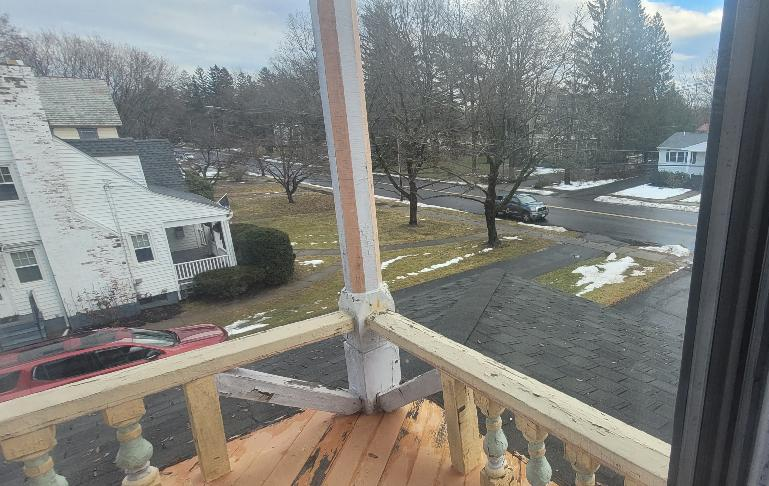
” Another showing, a really nice family. They’ll make an offer. They commented that the exterior paint is their issue, so did I tell you already? I found a marvelous painter from Albania, and he’s given me a very reasonable price to paint the entrance, balisters, and overhang. You know that curb appeal is critical.”
” You shouldn’t spend your money, Greta, how much?”
” Three thousand, and it’s a lot of scraping and ladder work. It’s the right decision if I may disagree with my real estate guru.”
” That is reasonable. Keep me posted. I’m in San Diego now, so I will speak to you soon.”
” Heaven isn’t good enough for you.”And I’m leaving Follies in the best I can because she was so good to me.
By MARTIN ZEILIG On the evening of June 20, 1947, less than six months after he opened the Flamingo Hotel-Casino in Las Vegas, Ben “Bugsy” Siegel died in a barrage of bullets through the front windows while sitting on a couch in his Beverly Hills mansion at 810 Linden Drive. Assassinated at the age of 41, Siegel was one of the USA’s most notorious gangsters. A former Winnipegger, Al Smiley (1907-1984) was with Siegel that evening. “My dad was seated inches away from Siegel, on the sofa, and took three bullets through the sleeve of his jacket,” said Luellen Smiley, a creative non-fiction writer, award-winning newspaper columnist, and Mob historian who lives in Sante Fe, New Mexico. She consented to an interview with The Jewish Post & News earlier this winter. “He was brought in as a suspect. His photograph was in all the newspapers,” said Luellen. “He was the only nonfamily member who had the guts to go to the funeral.” So who was Al Smiley? Born in Kiev, Ukraine in 1907 as Aaron Smehoff, Smiley and his family – father Hyman, mother Anne, sister Gertrude (who became a school teacher and lived in Winnipeg until her death many decades later), brothers Samuel and Benjamin – immigrated to Winnipeg when he was five, said Luellen Smiley, during a recent telephone interview with this reporter from her home in Sante Fe, New Mexico. “My grandfather was a kosher butcher and delicatessen owner,” she continued, noting that the family home and butcher shop was located at 347 Aberdeen Avenue. “He maintained an Orthodox household and expected that his eldest son would become a rabbi. But, my father was rebellious and interested in sports, especially hockey.” This caused conflict between the willful youth and his rigid, religious father. So, the teenager fled Winnipeg for greener pastures in Detroit, Michigan via Windsor, Ontario in 1923. He got a job travelling with the Ringling Brothers Circus and ended up in California where he was arrested for a drugstore robbery in San Francisco and sent to Preston Reformatory School in Ione, California, Luellen noted. “It was there that he met legendary movie director Cecil B. DeMille,” she said. “He was doing some sort of research for a movie. My father asked him for a job in the movie industry upon his release, and DeMille agreed. He found my dad work in a wardrobe department. He later became a property man, then a grip, the person in charge of production on a set, and eventually a producer.” He befriended celebrities like George Raft, Eddie Cantor, Clark Gable, Lauren Bacall, along with such gangster associates as Ben Siegel. “I’m pretty sure Dad met Ben through George Raft,” Luellen Smiley speculated. With Siegel’s help he opened a nightclub in L.A. sometime in the late 1930s. Smiley would later tell his daughter that Siegel was “the best friend I ever had.” In her soon-to-published memoir, excerpts of which she agreed to let this newspaper print, Luellen Smiley reveals the conflicted feelings she had growing up, and into later life too, about her father: “Some children are silenced. The pretense is protection against people and events more powerful than them. As the daughter of Allen Smiley, associate and friend to Benjamin ‘Bugsy’ Siegel, I was raised in a family of secrets. “My father is not a household name like Siegel, partly because he wore a disguise, a veneer of respectability that fooled most. It did not fool the government. “When I was exposed to the truth by way of a book, I kept the secret, too. I was 13. My parents divorced, and five years later, my mother died. In 1966, I went to live with my father in Hollywood. I was forbidden to talk about our life: ‘Don’t discuss our family business with anyone, and listen very carefully to what I say from now on!’ But one night, he asked me to come into his room and he told me the story of the night Ben was murdered. “When I was spared death, I made a vow to do everything in my power to reform, so that I could one day marry your mother. “Ben was the best friend I ever had. You’re going to hear a lot of things about him in your life. Just remember what I am telling you; he’d take a bullet for a friend. “After my father died, I remained silent, to avoid shame, embarrassment and questions. But 10 years later, in 1994, when I turned 40, I cracked the silence. I read every book in print – and out of print – about the Mafia. Allen Smiley was in dozens. He was a Russian Jew, a criminal, Bugsy’s right-hand man, a dope peddler, pimp, a racetrack tout. I held close the memory of a benevolent father, wise counselor, and a man who worshipped me. “I made a Freedom of Information Act request and obtained his government files. The Immigration and Naturalization Service claimed he was one of the most dangerous criminals in the country. They said he was Benjamin Siegel’s assistant. They said he was poised to take over the rackets in Los Angeles. He didn’t; he sold out his interest in the Flamingo, and he went to Houston to strike oil. I put the file away, and looked into the window of truth. How much more could I bear to hear? “He stowed away to America at 16, and was eventually doggedly pursued for never having registered as an alien. He had multiple arrests – including one for bookmaking in 1944, and another for slicing off part of the actor John Hall’s nose in a fracas at Tommy Dorsey’s apartment. He met my mother, Lucille Casey, at the Copacabana nightclub in 1943. She was onstage, dancing for $75 a week, and my father was in the audience, seated with Copa owner and mob boss Frank Costello. “‘I took one look, and I knew it was her,’ was all he had told me on many occasions. “On a trip to the Museum of Motion Pictures Arts and Sciences in Los Angeles, I was handed a large perfectly pristine manila envelope, and a pair of latex gloves with which to handle the file. Inside were black and white glossy MGM studio photographs, press releases, and biographies of my mother’s career in film, including roles in ‘The Secret Life of Walter Mitty,’ ‘Ziegfeld Follies of 1946,’ ‘Meet Me in St. Louis’ and ‘Harvey Girls.’ She was written up in the columns, where later my father was identified as a ‘sportsman.’ The woman who pressed my clothes, washed my hair, and made my tuna sandwiches was an actress dancing in Judy Garland musicals, while her own life was draped with film noir drama. “My father wooed her, and after an MGM producer gave her an audition, he helped arrange for her and her family to move to Beverly Hills, where she had steady film work for five years. He was busy helping Siegel expand the Western Front of the Costello crime family and opening the Flamingo casino in Las Vegas. They were engaged in 1946. “Still, the blank pages of my mother’s life did not begin to fill in until I met R.J. Gray. He found me through my newspaper column, ‘Smiley’s Dice.’ “One day last year, R.J. sent me a book, ‘Images of America: The Copacabana,’ by Kristin Baggelaar. There was my mother, captioned a ‘Copa-beauty.’ Kristin organized a Copa reunion in New York last September. I went in place of my mother, but all day I felt as if she was seated next to me. I fell asleep that night staring out the hotel window, feeling a part of Manhattan history. “Now, the silence is over. I don’t hesitate to answer questions about my family. I have photographs of Ben Siegel in my home in Santa Fe, NM, just as my father did. Every few months I get e-mails from distant friends, or people who knew my dad. “It seems there is no end to the stories surrounding Ben and Al. I am not looking for closure. I’ve become too attached to the story. To me, he was a benevolent father, a wise counselor, and a man who worshipped me.” Luellen Smiley can be contacted via email: folliesls@aol.com
Ella blew out tunes like a smoke stack, and her face drew more sweat with each soulful sound. By the second song, the sweat was pouring down her face and into that gorge like cleavage that heaved with each breath. I was a child and didn’t understand the emotions that distorted her eyes and mouth. Ella, crowned by a sizzling hot spotlight overhead, transmitted every flaw and feeling on her face. I hadn’t seen a singer suffer before. I looked up at my mother and started crying.
“ What’s wrong sweetheart?”
“ I’m afraid she’s going to die.”
My mother whispered assurances that Ella was not going to die. I kept crying. She then excused us from our table and I followed her into the Powder Room. She sat me on a chaise lounge and wiped my tears. The expansiveness of the Powder room, compared to the ones today, was like being in someone’s bedroom. Soft cushioned chairs, a long dressing table speckled with ashtrays, perfumes, and miniature toiletries. We stayed there until Ella finished her show. Mom didn’t show her disappointment, she rarely showed despairing emotions, or caused me to feel ashamed of my behavior. Looking back fifty years later, I’m reminded of my mother’s selflessness and how a legend can drop down your path, and you don’t even know it.
Again, looking back fifty years later, my succession of travel diaries is dim by comparison to the Vegas memories. Swirling amongst the élan of prohibition era abandonment, gangsters were the Rothschilds, the royalty of the scene, and the non-members loved it. That’s why the women behaved Roaring Twenties ZaZu Pitts and Louise Brooks emancipated. Everyone was free of their wrappings and responsibilities. They were partying with the men they’d first met on screen, played by Bogart, Robinson, and Cagney. I remember them now as being childlike. The outsiders may have been living the childhood stolen by WWII and the Depression. Their veiled heroes were gangsters who’d been breaking the rules since being ripped from their mother’s breast.
Then, one day the in 1963, the Rat Pack landed in Vegas, wearing black Tuxedos and intercepted the public’s fancy imitations of living vicariously. Joey Bishop, Peter Lawford, Sammy Davis, and Frank Sinatra invited Vegas to drink, make love, and gamble. And they did. If you find anyone over seventy in Vegas today, ask them about the Rat Pack, Johnny Roselli, or Jack Entratter, and you’ll know I’m not exaggerating. Vegas was the time of their lives. The drugs were minor, an upper or a downer to sleep, but no one came to Vegas to OD or commit suicide. The deaths were in the desert, between the gangsters’. This was all before Tony Spilotro got wheels on his greed and went speeding into his own death. TO BE CONTINUED
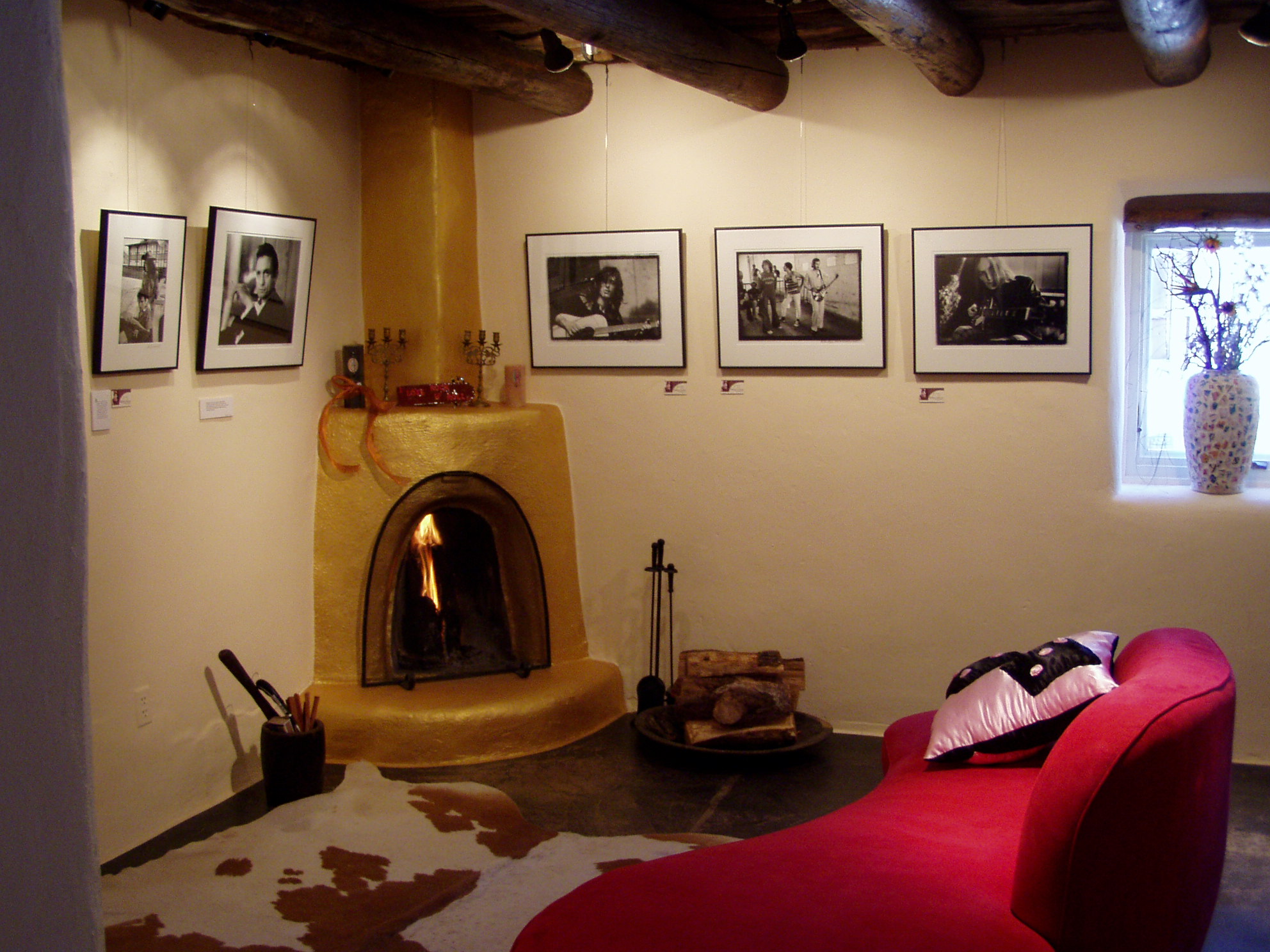
JAGGER PHOTOGRAPH FOR SALE. It is black-and-white and has Mick’s authenticated signature in perfect condition. It is matted and framed and measures 10 in x 11 1/2. For more information, leave a comment.
SILHOUETTE of a Taos night out in 2006. It begins with the sunset—a bubble-gum pink sash that swirls like taffy just above the distant hillside. The transcending forms and colors in the sky distract me; they silence me, keeping me from turning on the television or answering the phone.
The sunset has settled into my routine. I watch it from the roof garden over our Adobe Home and Gallery every night. In the midst of dressing to attend an art auction at the Millicent Rogers Museum, the sun has vanished. The sky turns Taos blue; a luminous oil pigment canvas blue that appears like an endless tunnel you can walk through. As I descend the staircase and cross over the ménage of piles shoved in a corner to allow SC to paint, I think, “This is going to be my home. I’m still here” Adventures in Livingness
In the courtyard where new flagstone has been laid, and a mud ditch blocks the exit, Rudy hitches me on his back and carries me out the side entrance through Tony Abeyta’s yard. Tony’s yard is piled with sand from our flagstone project, and my high-heeled black suede shoes are not at all practical for crossing New Mexican dunes. This is how the evening begins. Out in the parking lot, we circle around once and stop in Robert’s gallery. He has offered me his turquoise squash seed necklace to wear at the auction. The necklace is from Turkey, and sells for $1,800. Millicent Rogers events always attract women with extravagant jewelry, and Robert knows I have no such possessions. He hands me the necklace and says, have fun.
At times like this, I can forget the faces and routines I lived in Solana Beach and feel swept into a labyrinth of unfamiliar vignettes. There are two police cars in the rear of the parking lot, the church looms like a fortress of wet mud, and SC is listening to The Band CD we picked up in Santa Fe. I slide into the car, ensuring my shoes don’t fill with gravel.
There is very little street light along the desert road, and cars approach you at disarming speeds. For newcomers, the pale yellow line that separates oncoming traffic, roaming animals, hitchhikers, leather-clad bikers, and abandoned pets is of no comfort or value. Boundaries and civilities between people are vague, and sometimes, conversations elope into poetry.
At the Millicent Rogers Museum, the director, Jill, who is there to welcome each guest, greets us at the carved wooden doors. This museum was once a home, like most museums in Taos.Each room is an envelope of Native American jewelry, ceramics, paintings, weaving, textiles, and metalwork sealed with Millicent Rogers’s ethereal presence. By coming to Taos and bridging her New York chic with southwestern individuality, she set global trends in fashion, art, and living. he museum collection includes some of her designs that evolved from her residency in the desert. She moved here in 1947 and died here in 1953. Although she could have chosen anywhere in the world to live, she settled in the unaltered, surreal lunar beauty of Taos.
I wandered through the tightly packed rooms, alternately viewing the guest’s attire and jewelry. The woven wraps, belts, and hats worn by men and women form a collage of individual expression. Almost everyone seems to attract attention by the texture and color of his or her attire. It is a festive traditional look, with southwestern accessories paired with jeans or silk dresses. If you come to Taos, look for a belt buckle, one piece of Native American jewelry, and one piece of art.
When the auction was announced, I admired the same etching as the woman next to me. She remarked that the artist was also the teacher of one of her children. I learned that Ellen had six children and 11 grandchildren. She was petite with curly blonde hair, and I liked her instantly. I told her I was a writer.
“So am I,” she answered.
Rather than talk about her work, she began talking about her daughter, who is also a writer.
“I’m so lucky–all my children and grandchildren are creative and artistic.”
It was obvious that her life was a garden of earthly delights and that she had raised many roses. When the auction began, she vanished, and I quickly viewed the art before returning to the two etchings. They were both sold.
As I was walking out, I bumped into Ellen. She was clutching the etchings.
“So, you bought them,” I said.
“Oh, yes, I had to have them.”
She left me with a beaming smile and a closing remark I often hear: “Welcome to Taos.”
I love hearing that so much I don’t want to stop saying, I just moved here. After the auction, we stopped in Marco’s Downtown Bistro, where we joined an improvisational party. It started when Marco introduced us to his friends, Pablo and Joan, who were visiting from Santa Fe.
The dim, glowing melon adobe walls of the bistro, Marco hugging everyone, Joan’s melodious, high-pitched laughter, Pablo telling jokes, Rudy laughing, and then Philip arriving to tell stories crossed over from strangers in a bistro to a fast-rolling film. The conversation and laughter surfed breathlessly from one person to another.
Joan remarked, “My fifteen minutes. This is the best for me. The first time you meet someone, you’re both talking without effort. It’s so perfect.”
We closed the bistro past midnight. Marco had gone home. Joan decided to stay at a friend’s house. Philip agreed to drive to Santa Fe the next day, and we took Tylenol before bed.
Not every night out in Taos is like Joan’s fifteen minutes, but chances are you will have something to write home about. The beginning of Gallery LouLou Taos, NM
OLYMPUS DIGITAL CAMERA
OLYMPUS DIGITAL CAMERA
OLYMPUS DIGITAL CAMERA
OLYMPUS DIGITAL CAMERAOLYMPUS DIGITAL CAMERAOLYMPUS DIGITAL CAMERA
My memoir, published in 2017, Cradle of Crime-A Daughter’s Tribute is old news to me. Not to Charlie. I met him as he was renovating a house across the street. I didn’t introduce myself as Luellen Smiley, just Luellen. I asked if he would take a look at myhouse for an estimate on painting. He was sweet, a mountain man with a long white beard and hunting boots. Last week, he texted me,” I read your book, my friend and I exchanged Goodreads suggestions, and I told him to read your book.” How did he connect me to my book? I didn’t ask, and now it piques my interest. I’d walk across the street and ask him, his truck is there, so is the ice, and I don’t feel like skating and falling on my butt.
Winter in upstate New York to a gal from Los Angeles is likened to living in the North Pole. Going on five years, my last, I’m not resentful and scouring, but I am not acclimated. Indoors I dress in sherpa from head to toe and wear those finger mittens. Today it is full-throttle rain showers. The street is vacated of traffic and the public, it’s a good day to work on my next book. On my desk area few writing books, the favorites: Henry Miller on Writing, The Diaries of Anais Nin, and Albert Camus’s The Stranger. I haven’t bought a current book in years, the last one was Sam Shepard, The One Inside. I like Miller’s passage: ” The writer lives between the upper and lower worlds.: he takes the path in order eventually to become that path himself.”
Aging in my seventies delivered opening windows to restoring, rearranging, and repairing my persona, personally and in public. If you’ve read any of my essays, then you know explicit is the vortex that moves my thread. Restoring the brick-and-mortar of truth is at the forefront; the next layer is a confession of what I cannot speak in person to anyone, even my closest pals. The third is abstaining from too swift a pen; I’m always in a hurry: I prepare food quickly, walk as if I’m late for an engagement, and wash dishes with perfunctory interest. Everything when I think about it. I know why that is, my father. His shadow was always behind me as I went about myteenage activities at home, so I rushed to get out.
Last week, I stopped taking the powerful Lorzapam medication for neurotic anxiety. My heart raced when I opened an email from my attorney, when a stranger knocked at the door, or when I entered a public place alone. A new sideways rain shower just filled the window pane above my desk. Here is the fourth restorative: get outdoors! I don’t walk in snow or ice, but good old water rain, which I call God’s tears, is one of my favorite nature adventures.
Admittedly, my writing has granulated since moving here. It is tiny in thought and not always tied up neatly. My persona in public needs to be side by side with wine in a dining setting. What I contribute must be joyous and humorous because one of my favorite human activities is to evoke laughter and smiles. I broke away from my taverns and abstained from alcohol for a week. In the second week, visceral and bodily alarms have gone off. I’m lucid, motivated, andeven decisive.
From Anais Nin Diaries 1939-1944.
“I respond to intensity, but I also like reflection to follow action, for then understanding is born, and understanding prepares me for the next act.”
In the mood for pasta tonight, a few hits of green chili to flavor fest the marina, shrimp, garlic, and heaps of asiago cheese, yes sounds good. One step into the kitchen, and there on the electric stove burner is a mouse … I screamed, did you hear me? Then I stomped my feet and it lowered back into the passageway.
” I need emergency treatment, you won’t believe what I just saw,” The receptionist at Pest Control, replied, it sounded like she may be smiling.
” What?”
” A mouse found his way up to the stovetop grill, I mean not all the way, half his body was visible! ” She chuckled, for a full minute.
” I’m more afraid of mice than bears, foxes, or anything. I know it sounds irrational but I didn’t grow up here. “
” Well, let’s get you scheduled… let’s see now, we can get there on Thursday next week.”
” I cannot go in the kitchen..”
” Gee, I am sorry. I noticed that we were there in March of this year.”
“Yes, nine-hundred dollars here! You won’t charge me for this next visit.”
” Well, let me see what I can do.”
Enter, Gary, with a toolbox, and a howdy doody kind of introduction. He appeared as interested in ridding mice as I do shoveling snow. He’s going to retire soon, he says as he pokes around the kitchen, points to the openings, talks some more about retiring, and applies a bit of killer foam behind the stove.
He sets a few traps in the basement as I watch and snap photos.
” Are there any dead ones in the traps from last time?”
” Sure, I see two.”
“Okay, I’ll be upstairs.”
I covered all the stovetop grills with pot tops, ordered disinfectant, and covered every counter with paper towels. I went out to dinner for the next week, feeding on grilled sandwiches and soup. More sightings and drips of mouse visits provoked a second call to Family Pest. They sent out another treatment expert. Gary shuffled in, forty years younger than the previous technician.
My friend JoMarie who is Martha Stewart without a TV show told me to place pine cones dressed with cinnamon. So I listened.
” Mice are difficult, they slip through a fingernail-wide opening.”
“Well, then let’s foam up all those fingernails.”
” I’ll set some traps downstairs. I will move the stove out and see if there is an opening.”
He pulled it out, and alas, a five-by-five opening into the basement.
“ I have to have this blocked off right?”
“Yeah, that’s a good idea, we don’t do that.”
” I figured.”
The next call went to a carpenter, he showed up and hammered in sheetrock as he talked about his six kids. He is twenty-four, I tried to do the math, maybe it’s a sympathy card. He agreed to take care of five more repairs in the house and charged me modestly.
A week later after three canceled appointments I crossed his name off the list and explored more carpenters on the web. This will be the seventh I called. Paul showed up, speaking amicably, obliging, harp-like voice and, ready to work. That was two weeks ago, he said he had a bad cold. I’ve read about Lazy Girl Jobs, but carpenters and handymen? Half the population in my village are in the trades so I’m miffed. Utube is not going to teach me how to drywall ceilings, replace a window, box in a pipe, or bring down heavy antique furniture from the attic down thirty stairs without falling down, and most likely on a mouse.
I’m an elf who spends her days writing, translating legal documents, and fussing over the unfixed. I’d rather be monitoring sunshine, waves, surfers, and seagulls… until then, home away from home are adventures in livingness. DEL MAR, CA.




















 ADVENTURERS IN LIVINGNESS
Leave a Comment