
I’M JUST A REGULAR GUY


          Maurice did things for us that no one had. It started with small gestures, like inviting us inside every time we passed by his house. Even if he was on his way to deliver furniture he’d scuttle to the kitchen and give us homegrown tomatoes, and oranges, or hand me a bouquet from his flower garden.  These were the early years of my story submission rejections.  I was so consumed with rejection that the only person in the world that made me feel human was Maurice. He didn’t understand what my torment was about, but he knew how to make it go away.  Sometimes all it took was a big hug and a kiss. Maurice always met me with a hug and kiss, though I didn’t realize at the time how much he knew what I needed.

           That Christmas I felt the spirit because of Maurice. I went to Sav-On and collected a basket of decorations, and though we had no room for a tree, I did what I could. Instead of wishing I could dash into Nordstroms and shop like a madwoman, I dug a little deeper and searched for appreciation gifts for friends.

          By the time the season had ended, I was fixated on Maurice. It is strange to write about him now.  The story I wanted to write was about Del Mar, and Solana Beach, California during the thirties and forties.  I searched the indexes of the Del Mar Library and the local bookstores and shared the antiquities with Maurice.

          We were sitting on his cushy pillowed sofa one evening in 1994, sipping chilled southern comfort, and snacking on saltine crackers and cheese. There is always a subject of interest with Maurice. He is seventy-five years old, lean and tough as a stalk of corn, with blue eyes that twinkle even if he’s not in the light. His wealth came from the uniqueness of how he lived.

          “Tell me what you remember about Del Mar.”
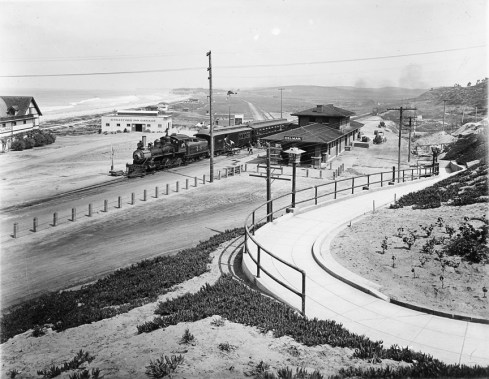
PhotoSanDiego006Old Del Mar.

          “Oh so many good times, not like it is today. I knew just about everybody, we were like a family.”  Sometimes Maurice shared memories while driving around Del Mar and Solana Beach.  Suddenly he would start talking,  and I’d would listen with childlike curiosity. I recall one evening at the old Cilantro Restaurant while having dinner with Maurice.  We sat at a table facing the Rancho Santa Fe Polo field.  Maurice began to tell me how it used to be.  Rancho_Santa_FeRancho Santa Fe

          “I used to plow those fields there, all the way up to where the hills begin.  I worked out there all day, and I loved it. That land belonged to the Conleys’. I remember that the whole field was underwater for one year. Hard to believe–but it was.” 

          “You plowed?”

          “Sure I did! I was a farmer, a dairy farmer, and I delivered milk to Bing Crosby and Dixie Lee.  I remember  Christmas she comes out and gives me some extra money.–I always loved going there at Christmas. They was always so nice to me, you know. The Conley’s had a hog ranch, they were the ones I worked for. The year it flooded from El Camino Real to the racetrack we lost a bunch of pigs and a cow under the bridge.  It only happened twice that I know of.”   

          “ What was Rancho Santa Fe like back then, when you were a farmer?”  

         “Well, it was different than today, then it was rich people, I mean really rich.  I don’t know where they got their money but they had everything–you know expensive cars, cooks, and maids.” Maurice chuckled, “ I couldn’t understand what the cook did all day. The man my wife worked for, Ronald McDonald, he had a butler, maid, cook, and a big house, a really nice house. But today, anyone can live there, people who just inherited a lot of money.  There was just a few families back then– everyone knew who they was. One time a young girl who lived up there was stuck on the road–her car broke down, so I drove her home. You did things like that. There were two really well-known families there, the Clotfelters were one, they had a son, Tom. He stopped by my house at Christmas and brought me a fish, he liked to fish.   The other big family was Avery, he had everything. He used to get jobs for the Mexicans in the Ranch. Everyone knew him, he kind of ran the whole town, was really active in the community.  Another fellow, Joe White, went around to the homes and put in the meters for the water district. We used to play cards with him and his wife, Marilyn– have a few drinks and have a such a good time. ”  Maurice stopped and shaking his head remarked that there were so many wonderful people in his life, and how lucky he was to live in Solana Beach.

RSF VILLAGE

Downtown Rancho Santa Fe. 

          The Rancho Santa Fe I knew began when I  moved there in nineteen-eighty-three. It was a place you heard of right away, and so I drove up to take a look around. Like thousands of others before me, I dreamt of living in the Ranch under a canopy of Eucalyptus trees with a horse stable and a grove of oranges. It was a blissful place to drive on a Sunday afternoon, very few cars on the road and the homes bathed in sunlight. But when I walked down Paseo Delicias, the main road in the village,  I felt like an outsider. I did not feel that detachment in Del Mar, or Solana Beach, or even La Jolla. But the Ranch has eyes, it seemed to single you out and therefore no one on the inside made contact with you. You could dine at the charming Mille Fleurs and drop a few hundred dollars but you would not be invited to mingle. I asked Maurice if he wanted to live in the Ranch. His expression was curious as if I was pulling his leg.

 “No, I never wanted to live there.”

“Why not?” 

” I’m just a regular guy.”  To be continued.
MEMORIAL DAY AND OUR TROOPS


6/1998-Solana Beach, CA. 

                ONE EVENING, Rudy and I were sitting on the porch, it was in summer and we would sit out till after eight o’clock at night talking about different parts of Maurice’s life.  He is really busy in the summer, he works one day a week gardening for a man in Fairbanks ranch, and he spends a lot of time delivering furniture for the shops in Cedros Design District, and helping his friends with their gardens. He never seems tired; he likes to sit on the porch at dusk, watch the sunset, have a jigger and tell stories.  I had not met a man that could tell me things like Maurice.  There didn’t seem to be anything he couldn’t talk about. I will tell you in the next series how I met, ‘the happiest man in the world.’

OLYMPUS DIGITAL CAMERA


          “ Maurice, how old were you when you were drafted?” I asked.

          “ Well,  I was thirty-one years old, that was in 1941, you know when the war broke out. I had to leave my wife, and that bothered me, but I wanted to go overseas, there were so many nice real young boys, there were two boys from Chicago that were only eighteen years old, they lied to get in, and they were the best soldiers you ever saw, they weren’t afraid of anything.”

          “ Where did they send you, I mean after you left San Diego?”

          “ Well first I went to Camp Roberts for training, thirteen weeks, but I got out in nine weeks, then they send me to Fort Ord to get my gear and rifles and clothes to go to New Guinea to fight the Japanese. We left San Francisco on April 21, 1942, I remember going under the Golden Gate Bridge, cause we hit a bad storm there. We was on a luxury liner and then we were sideswiped by another ship.  I was in the bed at the time, and water started coming in through the porthole so I run for the door, to get on deck but I couldn’t get it open. I thought we were hit by a torpedo, then I got sick, I was real sick. Well anyway, then we finally settled down, and I think we hit coral sea  without any escort or anything and finally got into Adelaide, Australia after twenty-one days at sea.”  Maurice paused like he had to catch a breath. I watched his face, thinking he may want to stop.

          “ You remember so much, do you mind talking about it?” I asked.

          “ No, I don’t mind, it changed my life, everything about it.”

           “ Where did they send you after that?”

          “ Well we trained for awhile in Adelaide, the people in Australia were so happy to see us.  I remember they met us at the beach with tea and cookies cause the enemy were getting real close. Then we went up the coast to New Guinea to Port Moresby, we got there on Thanksgiving day 1942. As soon as we got off the ship the bombs hit us, it was the hundredth raid that night. Then the next morning we were supposed to get to Stanley Range, but we were in such a hurry because the enemy had built cement pillboxes. So we got in this plane, a hull, and they flew us, twenty-one at a time. When I got to the island of Buna, there were dead soldiers all over and so much jungle. At night the tide came in, so I found a mound to lay my head on, but my whole body was underwater. We were losing men so fast, so on Christmas 1942 General McArthur ordered us to advance, regardless of the cost of lives.  My division was one of the first divisions to stop the them, the Thirty-Second division. After we were immobilized, and a lot of our men were killed, they sent in the Forty-First division to take over. I got pictures, you want to see them?”

          “YES, RUDY,” SHOUTED. Maurice went inside and Rudy and I sat there just talking about how soft our lives had been, never having been in a war.  Maurice came back with a Life Magazine, from 1942, the headlines were Attack at Buna.  We sat next to Maurice on the couch and he sifted through the magazine showing us the photographs of his division. He picked out one photo in another stack in his lap and told us his wife kept this one, she was sure it was Maurice. It looked like him to.  The soldiers were young, but they didn’t look young, they looked like men. The things he told us that night were hard to believe. They didn’t get supplies at first, they had to wait till everything was shipped to Europe, and then they got what was leftover which wasn’t much.

       “I ate cocoanut bark for two weeks and had to drink my own piss to stay alive, there was no water. I can remember so well the first enemy I saw, sneaking through the jungle, he was only thirty feet off, and I don’t know if I shot him, but he dropped, and I don’t like to think I killed anyone, and it bothers me to this day that I had to kill, but that’s what we did.  The Japanese were good soldiers, they had better ammunition than us, their guns were always real shiny. We fought all day, and we always ran out of ammunition before they did. Christmas day of forty-two we went into a trench to get ahead, the fellow ahead of me was cut wide open, and the guy behind was shot, and I just laid there on the ground. If you moved you’d be shot. It was so bad, I laid there all day and night. “

          “ Did you think you were going to die?”

          “ I didn’t let myself think that,  I made a promise to God, that if I ever got out alive I’d never complain about anything in my life again because nothing could be worse than that day.” 

          “ You kept the promise didn’t you,” I asked. 

          “  Yes, I have.”

          “ And that’s why the war changed your life?”  

          “ That’s right, every day is a beautiful day after you’ve lived through a war, at least for me.”  

         BUNA  came into our conversations many times over the years. The things they did to survive is what he remembered; like brushing his teeth with black charcoal because it polished the teeth even though they made them black. They bathed in dirty streams, or in the puddles in the street made by the tires of the trucks. They had to relieve themselves in their pants because moving was dangerous.  They didn’t have modern medical supplies. When Maurice had cavities he was sent to the infirmary and the dentist told him to just grit his teeth, there was no Novocain. He got gum disease, leg rot, malaria, and he lost his sense of smell. 

      “But it was much worse for some of the men, so bad you can’t imagine.” He talked about the kinship amongst the troops, it was unlike anything he’d ever seen or experienced, all the guys looking out for each other. Buna was a strange place to be, I’d never heard of it before Maurice told us. After they took over Buna, one of the beaches, was named Maggot Beach, because so many dead  Japanese and American soldiers laid there, in the hundred-degree heat, and the flies got to them, and it was a terrible sight, it smelled so bad he remembered.  Maurice was sent to the hospital for two weeks, then he started working in the kitchen and got to be the first cook.

          2001. OUR CONTRY IS AT WAR AGAINST TERRORISM. Rudy and I wanted to know Maurice’s thoughts on the way it is now, and how he felt.  We sat in his living room watching the news and talking in those first few weeks after the attack on America. It seemed like Maurice couldn’t believe what had happened, I’d never seen him speechless. He didn’t know what to say for a long time.    

          “The ground troops are the only way to get this enemy. Now with these terrorists– we have a different war. I don’t know what our government will do but  they should give our troops overseas that die big funerals, news on the television and newspaper, that’s the right thing to do.  In WW11 they didn’t do that for any of us, they just wrapped the dead in a tarp, and dug a little hole in the ground. Hundreds and hundreds of thousands of boys, all they got was a stick where you was. I think they got some of the dog tags mixed up, you didn’t know who was who. When you think about what we went through, and how close you were to each other, everybody was so close, and if someone was shot, you couldn’t stop and help them, you had to keep going.  The natives were so nice to us, so good to us, they picked up the wounded guys and carried them to the hospital, they wouldn’t do that for the Japanese. Now everything is on the television so you’re part of it.”  Maurice began to weep silently. I hugged him. Rudy interjected. 

            “What were the natives like?”

          ” Back then we called them headhunters. They didn’t wear any clothes at all, but after we got there some of them started wearing our clothes. They lived in bamboo huts, pretty neat to live in, Rudy, you would have liked those tents. Anyway, they had these powwows, they’d catch a monkey, and hang him up, build a fire under him, and cinch the hair, then sit down and eat the monkey raw, I saw a lot of that. You didn’t dare look at the women, they’d shoot you with an arrow, they had poisonous arrows, the women were so terribly dirty, but they seemed to be happy.  After we took Buna, they liked to shoot up the trees and show us how they got the coconuts, they were so fast. I guess some of them are still alive today, the jungle was so thick and full of mosquitos, a lot of them had malaria, they had no medicine, they ate herbs and things, to make them better. I’ll never forget them, they were so good to us, when they took me to the hospital they put me on a  stretcher one time, they were so careful, didn’t move me at all.

          “ You couldn’t speak at all to them?”

          “ No, they had their own language, I couldn’t understand it, no one did.”     

 Maurice went into the house and came back with a photograph of a female headhunter. It was strange to think of this person as a woman, she was so primitive. Rudy loved the photograph. Maurice gave it to him. t.  Rudy knew he would never see anything like it with his own eyes, so he cherished that picture and the story Maurice told us as if it was his own experience.    

           THEN THE LIGHT OF DAY TURNED FOGGY.  Maurice said it was time to go in because it was getting cold.  He told us how much he loved us that night, and what good friends we were. When Maurice talked of his experience in the war, it was like a chiropractic adjustment on my struggle, and I had renewed strength to just keep writing.

          It was the first time for Rudy to hear first hand about WW11 because his father had been stationed here making torpedoes. My father enlisted but they wouldn’t take him because he didn’t have citizenship. It bothered him too, he was the kind of man that would die for this country in a heartbeat.

           A year or so later, some woman came to know Maurice and asked about his experience in the war. She said she would write a book about it, and so he gave her the photographs and Life Magazine and waited to hear from her. She never came back, and Maurice was really shocked because she had seemed so sincere.

         I wanted to know more about his life after the war, but the time didn’t come until one night when Rudy and I got into a nasty fight. To be continued.


COVID-CHANGED US


IN THESE TIMES OF DISTANCE, DEATH, DISCOURSE, AND ISOLATION what can I write of value? All month this puzzle chased my thoughts; nudged me like a pesky fly. At different intervals during the solemnness, my journal returned parched sketchy paragraphs, and books did not deliver the inspiration I craved. Listening to Beethoven as I gaze out the window at the blowing branches on a spring gray and white day, I feel a singleness I’ve never known. Maybe you feel the same, and it is you I am writing to because I know you are there. Singleness in quarantine is more incarcerating than it is for married, partnered, family people. Though they have to acclimatize to spacial hardship as everyone at home is at the same intersection without privacy, and that slogan I remember from college, ‘I need my space man,” resonates. One friend said to me on the phone, “I yelled at my kids today, I’ve never done that before. We’re bumping into each other. I think I’m losing my mind.”

US SINGLES  are accustomed to solitude, especially if you are an artist. How we howl for isolation to create, and now we have it. The time is here, to skip down the most bizarre roads and create COVID-Art. A few weeks ago, Governor Cuomo delivered his press conference and said, “I have something to show you.” A sliding door opened and a collage that appeared twelve feet in height displayed a tapestry of masks. He told us they came from all over the world. He was so touched by the gesture. Imagine a new solo dance performing an abstraction of the virus, or a poem, a song, and for sure a dozen or more writers and screenwriters are tapping at the speed of light to capture the pandemic in art form.

https://www.theartnewspaper.com/analysis/art-pandemic

I’M GOING DOWNTOWN now to pick up a cobb salad from Sunset Grill, my stable for drinks and great food. The sky is in turmoil, as the clouds interchange across the sun, and she appears to be breaking through at one moment and the next she has revealed her radiance. I dress for the weather with a hat and coat and begin my three-block walk to downtown. When it begins to rain, I am smiling as I’ve always loved walking in the rain. As masked villagers pass, I’m struck by the absence of smiles, or good afternoon which you get a lot in a village of five-thousand. Some younger couples cross the street when they see me, and heads are mostly lowered to the ground. A new silence emerges as cell phones are tucked into pockets and passing voices are inaudible.
I HAVEN’T HAD FACE TO FACE  conversation for several days and I feel a sprinting joy in anticipation of a conversation with Eric or Brian who own the café. They’ve installed a take out window, and as I approach I see Brian, and he ducks down to greet me.
Hey Loulou, how are you?
“ At this moment I am so happy to see you!
He swings down a bit lower to pop his head through the window
“ So am I. We miss you.”
“ I feel the same. How are you doing with all this.” He is smiling, and he’s always a bit jumpy like he needs to go for a jog or a bike ride.
“We had to let the staff go,” now his smile turns to a gripping inner pain. My kid is washing dishes and we’re still here, but you’re the first customer today.”
“Will you reopen when we’re off the pause button?
“ With twenty-five percent capacity, I don’t know. The numbers don’t work out so well. I mean we’ll still do curbside.”
Suddenly he turns about-face and joins me on the sidewalk touting my cobb salad. Brian must need a conversation as much I do. We chatted about the virus, our change of behavior, and this pent-up craving for closeness.
“ I can’t even go on a date anymore with someone! How can you meet anyone today?” He gestures with his arms to emphasize his frustration.
“Yeah, you’ll have to take their temperature before you sit six feet away.” We laughed, maybe for the first time in days.

AS I WALK BACK HOME  my thoughts are traveling along the pathway of restaurants, I frequented in San Diego, Los Angeles, Taos, Santa Fe, and now here. I see the owners and waiters’ faces, remember the food and a visual kaleidoscope of the festive times we shared. You know that saying, the good ol’ days, now I am on the other side of that at least for the foreseeable future.
For me the adaptation is more than frustration. Last year I did not take advantage of the racetrack, or the concerts at SPAC, or the exhilarating nightlife along Broadway on a Saturday night in Saratoga Springs. I trembled in silence abashed by the consequences of my mistakes. If we un-pause this summer I promise you I will not be clasping the remote waiting for the next film.

AS I APPROACH  my house, I notice the neighbor in her driveway. We clashed in the most vicious ways the summer Rudy and I moved into the house. One time I think the police were brought in to settle the argument. It was because she placed a close circuit camera on her roof to track our renovation. She was retired and her husband was always fiddling in the shed. We gave her a purpose. She looked my way timidly. I smiled at her. This is the first time we’ve been this close since I moved here two years ago. She smiled back.
“Are you happy to be back?” she said in a quiet sort of empathetic tone.
“It’s taking time to adjust. I haven’t lived here in so long.”
“I know. Well, not much has changed except for a few new restaurants. Do you plan on staying?”
“I don’t know the answer yet. We had the house up for sale…”
“ I noticed the sign.” She said expectant of more information
“ I can’t maintain a hundred and twenty-seven-year-old house on my own. You know, Rudy’s gone.” She nodded her head.
“Well, I don’t know how much longer I’ll be here either. I’m eighty years old now.” She dropped her head to the ground.
“Lorraine you don’t look like it at all.”
We continued on about my new tenants, her dog, and how much work it takes to maintain a painted lady historic home. I couldn’t believe how sweet her voice was, I’d actually never heard her speak except one time shouting at me. Give up grievances and trivia because the person you once disliked may be very different now.


SELF PORTRAIT

VOTING HAS BEGUN ON TALEFLICK.


IT’S HERE. “CRADLE OF CRIME-A Daughter’s Tribute” is LIVE in the TaleFlick Discovery contest.


Hi Readers:

Voting has begun on Taleflick for this week’s winner. It ends on Friday at 4:pm. CRADLE OF CRIME- A Daughter’s Tribute is on

Page 8. There you will see a voting button. Let’s win!

Head over to the TaleFlick Discovery page, where https://taleflick.com/pages/discovery all visitors to the site will be allowed to vote (once) ON CRADLE OF CRIME- A Daughter’s Tribute

  https://taleflick.com/pages/discovery


LOOKING FOR VOTES


Dear Luellen,

Thank you very much for allowing “CRADLE OF CRIME-A Daughter’s Tribute” to participate in a TaleFlick Discovery contest. Your date has been set!

It will be a special week on TaleFlick Discovery: an all-women’s week, to commemorate International Women’s Day.

“CRADLE OF CRIME-A Daughter’s Tribute” will be part of next week’s contest that starts:

Wednesday 03/11/2020 at 10:00am Pacific.   https://taleflick.com/pages/discovery. The contest will accept votes for three consecutive days, starting at the above time, and ending the following Friday at 4pm PT.

Participation is 100% free.

DYLAN’S TOUCH


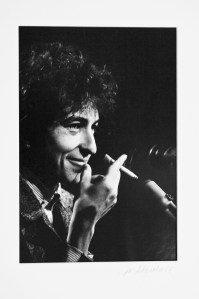
The irony.  When I first heard “Like A Rolling Stone” as a teenager, the lyrics saddened me every time I played it or it came on the radio. Then this song became my destiny.

“Once upon a time you dressed so fine
Threw the bums a dime in your prime, didn’t you?
People call say ‘beware doll, you’re bound to fall’
You thought they were all kidding you
You used to laugh about
Everybody that was hanging out
Now you don’t talk so loud
Now you don’t seem so proud
About having to be scrounging your next meal
How does it feel, how does it feel?
To be without a home
Like a complete unknown, like a rolling stone
Ahh you’ve gone to the finest schools, alright Miss Lonely
But you know you only used to get juiced in it
Nobody’s ever taught you how to live out on the street
And now you’re gonna have to get used to it
You say you never compromise
With the mystery tramp, but now you realize
He’s not selling any alibis
As you stare into the vacuum of his eyes
And say do you want to make a deal?
How does it feel, how does it feel?
To be on your own, with no direction home
A complete unknown, like a rolling stone
Ah you never turned around to see the frowns
On the jugglers and the clowns when they all did tricks for you
You never understood that it ain’t no good
You shouldn’t let other people get your kicks for you
You used to ride on a chrome horse with your diplomat
Who carried on his shoulder a Siamese cat
Ain’t it hard when you discovered that
He really wasn’t where it’s at
After he took from you everything he could steal
How does it feel, how does it feel?
To have on your own, with no direction home
Like a complete unknown, like a rolling stone
Ahh princess on a steeple and all the pretty people
They’re all drinking, thinking that they’ve got it made
Exchanging all precious gifts
But you better take your diamond ring, you better pawn it babe
You used to be so amused
At Napoleon in rags and the language that he used
Go to him he calls you, you can’t refuse
When you ain’t got nothing, you got nothing to lose
You’re invisible now, you’ve got no secrets to conceal
How does it feel, ah how does it feel?
To be on your own, with no direction home
Like a complete unknown, like a rolling stone.”
Songwriters: Bob Dylan
© Downtown Music Publishing, AUDIAM, INC
Photograph credit Jim Marshall

FATHER GANGSTERS


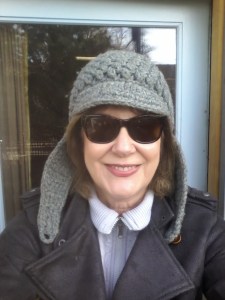
I am thinking about some of Dad’s answers to questions. You learn more by listening than telling. I remember if a friend or associate made some business proposition, Dad would answer, ‘I’ve been thinking along those same lines myself, and have a few ideas.’ Now, sometimes, he didn’t know but that gave him a shot into the game. The opponent would then tell Dad everything. The reason I say this is he said that to me. Not in those words, but the same move. Gangster’s do as much strategizing as politicians, maybe more. Coming out of court LA Times Photo. He loved sunglasses, and so do I.

HOPSCOTCHING THE TRUTH TWO


Three days later: The door is locked now, it will pop open now and then, in my interior rearview mirror. My secret can only be revealed after mounds of trust have been sifted and sealed. The former LouLou trusted, effortlessly, so the truth is I cannot behave that way anymore. Or can I?
It is the most destabilizing force of emotion to accept I trusted someone who betrayed our thirty-five year “Huckleberry Friend” song. I don’t know how anyone else adapts to this. I’m kinda staring out the window, like a cat staring at an unreachable mouse. When I’m in this mood I listen to Bobby Darin and Tony Bennett, I’m a bleeding nostalgic.  Photo Credit Philip Townsend. ” London in the Swinging Sixties.”

HOPSCOTCHING THE TRUTH


WHEN YOU TOUCH THE TRUTH: by thought, word of mouth, friend, or by a dream, however, it comes, and completely unexpectedly it is, the blessing is it came.  hopscotch-bristol-1050x700   When it is closure, to events and persons in those events, and if you examine your part, what you played, was it original or falsified, was it genuine, and was it worth it. Asking myself these questions, as  I bounced over to the Social Club to test my sociability.  I do resist introductions, loners are like that, tonight I was in a celebratory mood, and I wanted to be  like an octopus, my arms hanging out, ready to catch. t.     

Three days later:  The door is locked now, it will pop open now and then, in my interior rearview mirror. My secret can only be revealed after mounds of trust have been sifted and sealed. The former LouLou trusted, effortlessly, so the truth is I cannot behave that way anymore. Or can I? 

It is the most destabilizing force of emotion to accept I trusted someone who betrayed our thirty-five year Huckleberry Friend trust.  I don’t know how anyone else adapts to this.  I’m kinda staring out the window, like a cat staring at an unreachable mouse.  When I’m in this mood I listen to Bobby Darin and Tony Bennett, I’m a bleeding nostalgic.

AN EMOTIONAL ATTITUDE


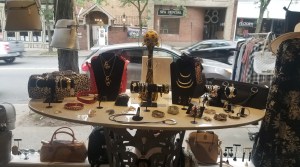
Earlier today, I stopped into bring Blossom a gift, recently renamed from Christine as she reminds me of a flower. Her curly braided brown hair, pink lipstick, birch brown eyes, and flowing printed dress, just formed that image of a bouquet. She was leaning on the glass display of her boutique, (Amazing Finds, in the village of Ballston Spa) eyes wide and bonded to the glass
window.


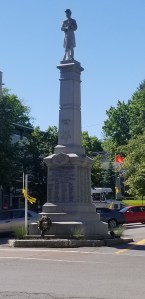
( Downtown Ballston Spa, settled in 1771)
An instant greeting of, “How’d it go? You look happy. Was it painful?’
My bandaged nose, from surgery last week to remove cancer concerned her, as her flowery eyes turned into studied binoculars. Our conversation drifted into a dialogue about attitude. In the eight months, I’ve lived here and stopped to chat, like four times a week, Blossom has not once displayed melancholy or agitation. Instead, she draws me out of my moody anxiousness (I’m that way. Too emotional) and into laughter and joviality.
” You’re always so positive. How do you do it?” I asked.
” Here’s what I do, I will tell you. Every morning I wake up and write down whatever comes to mind– don’t even think about it, just listen to your thoughts. Write down five thoughts, then go back and cross off the negative ones.”
” Interesting. I journal.”
” That’s different– this works. I wake up grateful, no matter what shit is going on in my life.”
” I’m not that way. I’m too emotional about what happens in my life.”
” Why?”
” Wish I knew, I guess I’m a reactionary. I wish you knew me when I was really happy, content with my life.”
” Forget the past, you gotta let that go. You have it inside you now. I see it, even though you have a lot of obstacles, I know you’re a good person, and you got legs!
” Wish I had your breasts!
“Hah-hah! Listen I want you to do what I said, wake up with what you have and not what you don’t have. Love the purse too by the way.” We hugged and I trotted off, a bit of a dance to my step and a smile on my face. She touched my emotional gear, gave it a push, and into the night. Instead of arguing with myself that I should go out and meet people, mingle, laugh, my evening was music and film, emotions like floating musical notes until midnight.
Three days later, Dorian strikes and my head turned outward, the images on television seemed staged, the aerial footage presented an island of trash floating in dump water. How do they rebuild those miles of destruction? The emotions we have monitored from the comfort of our homes or wherever you happen to be are as one. News anchors drop bashing in the tidepool of politics, and sordid revolting details about Jeffrey Epstein, or the latest protest. I imagine every one of you is horrified, maybe slightly in shock to grasp the velocity of Mother Nature. Floridians are locked up like school children. My friends in Miami cling to one another, as the warnings are now so intensified, the fear detonated functioning life. I’ve never lived through a hurricane; a few tornadoes and my nerves were wiggling from those events. Life, when we come together in emotions is the hope that we can do it when we are not threatened.
Sitting on the porch of Follies House in the wooded hillsides of Saratoga County, NY sealed in verdant shades, tickled by a tap of breeze, only enough to cause the slightest of tones, much like what I am listening to Little Girl Blue by Oscar Petersen. Anais wrote extensively about jazz writing when she lived in New York and frequented all the jazz clubs. So, with my emotions, the music, the serenity of East High Street on a Saturday, white butterflies and cotton ball clouds granulate into daydreaming, and neutrality.

OLYMPUS DIGITAL CAMERA

I tried Blossom’s idea and surprised to find that the negatives are not life-threatening, painful, or disastrous in any way. The positives are it is September in New York, my windows are newly cleaned, so I can see the leaves sprout into golden shades, nothing broke in the house this week, and my refrigerator is full. The essentials of livingness, a partner to warn me from misadventures, a working laptop and printer,  friends phone call and texts, oh, and money for perfume and lipstick.

Yesterday I stopped in to see Blossom.  ” Pick something out, I love your present.  … here try this shawl. It looks like you.”


WEST TO EAST-PART TWO


THE LAWN MOWERS.

I READ THAT GRASS GROWS AN INCH A WEEK IN THE NORTHEAST  and so the neighbors mow once a week. Then they edge, weed wack, then they blow. Some are more finicky than others,  I can see them from my bedroom window.  Some wear expressions of an artist, intensely serious and meticulous, others mow in business suits on motorized stand-up mowers, and some mow with a visible resentment, an overly redundant but necessary chore in the Northeast.

I don’t mow, I hired a couple, Matt and Jessica.  Matt mows with his legs wide apart, no gloves or sunglasses, no earplugs, and Jessica blows. She wears the blower mechanism on her back, her long tanned naturally sculpted arms maneuvering as if she was vacuuming the living room rug. I wait until they have almost finished to greet them on the porch.

” Life sucks,” Matt calls out to me with the motor still running.

” Yes, it does. What’s happened?”

” My daughter got into a car accident on prom night, seven thousand dollars later. He wipes his forehead of sweat.”

” Is she alright?”

“Another driver crashed into them. How’s it look, nice right?”

” Excellent.”

I invited them into the house, for a look at the furnishings I’m selling.”

” Wow, you love music and vinyl!  I do too. Is that Mick Jagger in the photograph?”

I took that on to ruminate about my former Santa Fe Gallery of the music photography of the sixties, the Rolling Stones, Hendrix, Beatles, and as soon as my boasting sounded halfway boring, I shut up. I really don’t think my past is important to anyone but me unless they are photographers. I used to sneer at people who only talked about what they used to do. How life revisits you at sixty-something when the bragging projects have ceased.

” You own the house?”

” Half owner?”

” Where’s your other half?”

” Missing in action. It’s all up to me now.”

” That sucks. Listen, if you ever need advice about the Northeast, call me– I know everyone.  You lived in Santa Fe right?”

” Yes, eleven years.”

” I hear it’s beautiful.”

” Well, it is, and it was, but I’m here now.”

” You going back? I mean why the hell stay here?”

” Maybe? I just don’t know.”  Jessica tilted her head as women do when they see a falling sister.

” Okay, I like you, you’re a nice lady. We’re friends now.”

” Are we good enough friends that I postdate the check for three days?”

” Hell yes! I don’t need the money. Don’t even worry.”  I walked into the music room and picked up a double album of Janis, still in the cover.

” You like Janis?”

They both said oh my God I love her.  I gave them the album.  That’s what friends do, reciprocate.

Matt and Jessica come every two or three weeks because I love grass. The wind blows it, the curve of it when it bends, just like I love long hair.  One time I greeted them in my interview outfit, you know, buttons and high heels. Matt said something like, “Lose the scarf and fit in, or they will charge you double.”

If I knew how to manage the Northeast weather, sensibility and had a big family, I’d adopt a cat and get a New York drivers license.


OLYMPUS DIGITAL CAMERA
2003 The Village Adopted my Slogan.


WEST LOS ANGELES TO EAST SARATOGA SPRINGS NY


A metallic sky is blowing the cotton ball clouds with the force of a lawn blower, a collage of sunflower leaves brush beauty in the windows of my home, and the act of observation becomes my pastime, here in the Northeast.


The Village of Ballston Spa.

When I used to sit on the stoop in front of my Westwood studio, it was the dogwalkers and gardeners, visitors and residents that my eyes laid on, with a backdrop of high rise two million dollar condominiums, with concrete terraces, usually vacant, that formed the view and from that, thoughts randomly trapped, wish I owned that, wish I had that car, wish I had that man. It is amusing, how one’s view can determine one’s thoughts.
West Los Angeles.

On the street where I live now, homes are two hundred years old, or newly built to imitate the Victorian era. The automobile is sturdy, practical, and unwaxed. The way of this wonderment brings simplicity into my life. No need to dress up and fit in, it’s the opposite here, dress down to fit in, or like me, a combination. You are not watched, observed, questioned or complimented, because, well I don’t know the answer, not yet. This is the day after a storm. Half of a tree collapsed in my front yard.


The Polar Freeze had to arrive with me, and the test was not so much about the snow outdoors, it was how to stay warm indoors without running up my gas bill to five hundred a month. Luckily, I found my Irish wool sweater in the basement, that is so large I can wear three sweaters under it, then the leggings, knee-high woolen socks, hats, and gloves even indoors. My activity was limited to bringing the furniture from the attic, basement and unloading the UBox from Los Angeles. Boxes of books and china, photographs, records, and bric a brack from so much antiquing. Three months later the house was staged. I was left with a fractured elbow, but the scenery indoors plays a critical part in your emotional health, because it is too cold to play outdoors.

_MG_6266.jpg


Most of my conversations came in Nomads, where I’d have a Cortado and some eggs, and talk with the owners who were also my tenants. I begged myself to interview them properly with a recorder, but I never did. They astounded my fictional idea of a millennial, not being general but based on what I observed in Los Angeles. In LA they don’t talk to adults unless you have a common bond; a tattoo or a protest sign. Nick and Alex have the play stations, all the tech knowledge of a Microsoft department, but, instead, they talked about literature, foreign films, and psychology. These are my subjects so if we began the conversation at eleven am, we finished at noon, minus the interruption of a customer. Many times, I’d ask for an explanation, and they’d answer without snickering or amusement. I recall one time I asked, ” Don’t you get tired of hearing adults say, you’ll understand when you get older (they are both nineteen years old) and Nick answered within a second, ‘No, because I know a lot they don’t. ‘Don’t forget I used the internet when I was five years old.’

The customers, mostly local residents, come solo or in large groups, families with toddlers, mothers and daughters, uncles, and nephews, everyone here that I met has a huge amount of family, which caused me some hesitation when asked, ‘you have family here, don’t you?’ After that question dozens of times, I thought maybe I should make one up. I’m not and never have been a believable liar.

The volume of their voices is another adjustment, not in a bad way, just a curiosity, they do not contain their vocal strength. Maybe it is a part of the heritage, just the New York way of conversing, but it is self-effacing genuine. I never detected a play on pretense or arrogance. Imagine how refreshing, like a gulp of spring water from a waterfall, after the playacting that overrides conversation in Los Angeles. To be continued.

Saratoga Spa Park.