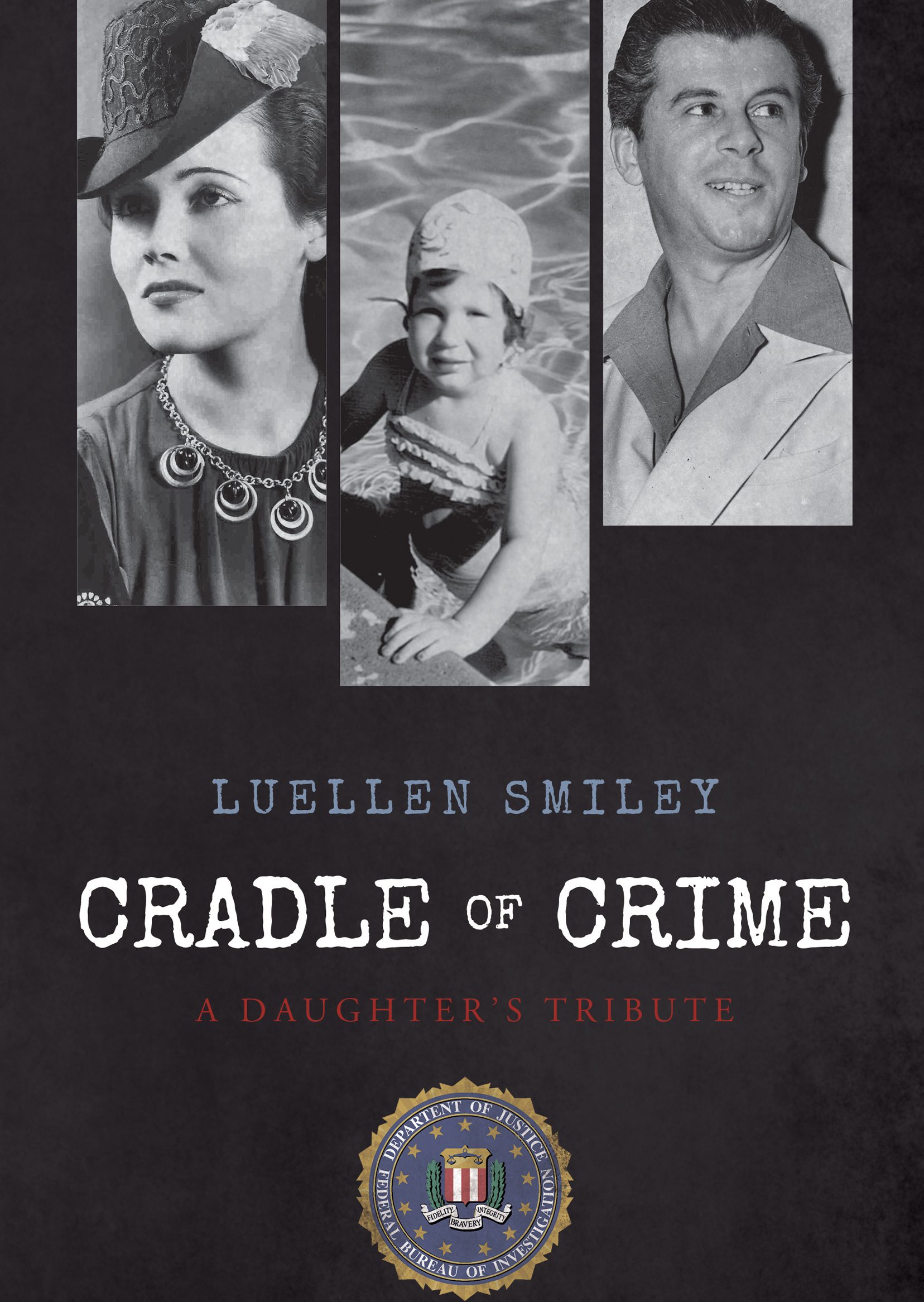

BY: Luellen Smiley
When I was eight years old, our home burnt to the ground in the Bel Air, CA fire, and everything we owned fell to ash. Shortly after my mother moved us to an apartment in Brentwood, a mammoth carton arrived and was placed in the center of the living room. My mother cut it open and urged me to look inside. I sat cross-legged on the avocado green carpeting and discovered a heap of brand-new Bermuda shorts, matching tops, and dresses.
I quickly shed my worn trousers and stepped into a new outfit, dancing about as I zipped myself in. My mother watched, and echoed my childish yelps of elation. I learned they were from my Aunt Millicent and that she lived in New York, and I’d met her when I was a child.
Close to ten years later, my father called and ordered me to his apartment. He said that Millicent was coming over. I knew by now that Millicent was Benjamin Siegel’s daughter, and Ben was my father’s best friend. He was sitting on the same chintz covered sofa the night Ben was murdered and witnessed Ben’s eyes bleeding down his face.
When my father answered the door, I watched as they embraced. Millicent had tears in her eyes. She walked over to me, and took my hand. I looked into her swimming pool blue eyes and felt as if I was drowning. She sat on the edge of the sofa and lit a brown Sherman cigarette. I studied her frosted white nails, the way she crossed her legs at the ankles, her platinum blonde hair, and the way her bangs draped over one eye. What impressed me most was her voice; like a child’s whisper, her tone was delicate as a rose petal.
I spent the rest of that afternoon memorizing her behavior. She emanated composure and a reserve that distanced her from uninvited intrusion. Over the next few years, Millicent and I were joined through my father’s arrangements, but I was never alone with her. When he died in 1982, she was one of three friends at his memorial service, just as my dad was the only friend at Ben Siegel’s funeral.
As the years passed, and my tattered address books were replaced with new ones, I lost Millicent’s phone number. When I began researching my father’s life in organized crime in 1996, I gained an understanding of my father’s bond with Ben Siegel. I reconnected with several of Dad’s inner-circle, but Millicent was underground, and now I understood why.
Last year I received an email from Cynthia Duncan, Meyer Lansky’s step-granddaughter. She told me about the Las Vegas Mob Experience, a state-of-the-art museum in the Tropicana Hotel, that will take visitors into the personal histories of Las Vegas gangsters. Despite my apprehensions about the debasing and one-sided publicity that characteristically surrounds gangster history, I called the museum and was told, “Millicent would like to contact you.”
A month later, I was waiting for Millicent in the Mob Experience offices in Las Vegas. When she walked in, I stood to embrace her, and this time the tears were in my eyes. Millicent’s voice and regal posture was unchanged, “Our fathers were best friends, practically attached at the hip. Your Dad was at the house all the time. I’ll never forget when he met me at the train station to tell us about my father’s… death. Smiley was very good to us. My mother adored him, too.”
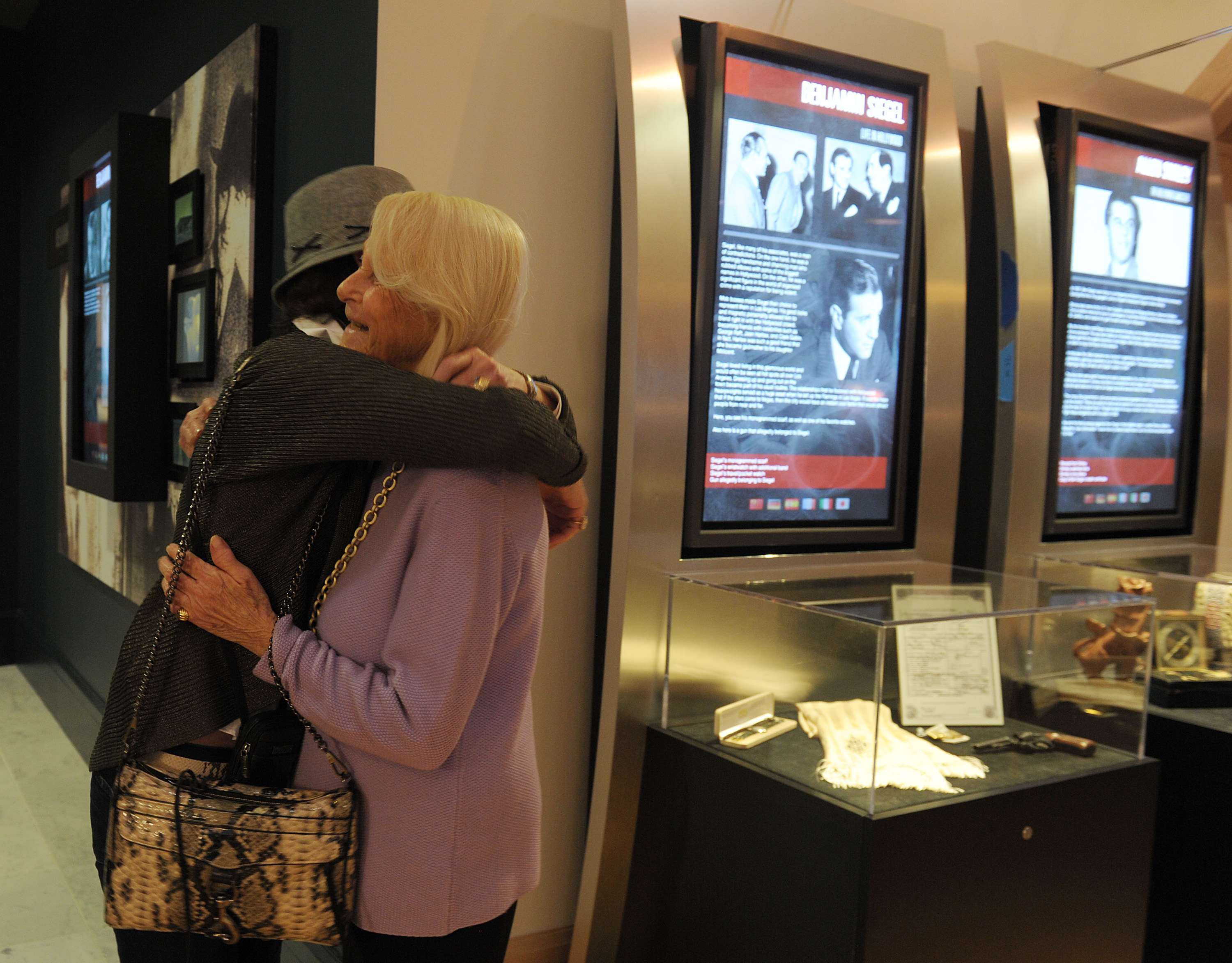
The Mob Experience Preview Center was like a family room to me, because some of the men featured had been my father’s lifelong friends and protectors. I stopped in front of the Ben Siegel display case and saw an object that was very familiar. My father had the identical ivory figurine of an Asian woman. I still have it. So much of their veiled history was exposed. Between these two men was a brotherly bond that transcended their passing, and was even evident in their shared taste in furnishings.
After I returned home, Millicent and I talked on the phone.
“Your father belongs in my Dad’s room. They’ll just have to make Mickey Cohen’s room smaller.”
“My father hated Mickey”, I said.
“So did mine! When are you coming back? I’ll kill you if you don’t become part of this”.
I dropped into random reflections; the adventures of Ben and my father, gleaned from books, newspapers, FBI surveillance files, films, documentaries, and conversations with people who knew them both. I dreamily visualized these two men, striding along the streets of Beverly Hills when it was a two-story brick village, without islands of garish lighted palm trees, paparazzi, and limousines. They might stop at Al Perry’s Beverly Hills Athletic Club for a steam and work-out, and then take a drive in Ben’s convertible to Santa Anita Race Track. At the track, they’d sit in the Turf Club, immersed in the perfume and red lipstick glamour that Lana Turner, Betty Grable, and Rita Hayworth epitomized. They, and my mother, became the characters I had to write about.
On balmy summer nights, Ben, and Al drove along Sunset Boulevard, stopped in for a few rounds at Ciro’s or the Mocambo, and then played cards at Dad’s apartment at the Sunset Plaza. George Raft was there, too, along with a funny little Runyonesque character by the name of Champ Segal, and Swifty Morgan, with a pocket size fortune of tricks and dice. The FBI were parked in a sedan across the street, watching. Maybe they had an informant planted in the building, like they did when I lived with my father at the Doheny Towers. I know Dad watched Ben’s back, not just because Ben moved so quickly, and in so many directions, but because he was studying him, like an actor studies his character, aspiring to absorb Ben’s magnetic mannerism.
Early the next morning, I opened the shutters of our Havana-hip suite at the Tropicana and looked out at the misty peppermint pink sunrise and flashing multimedia billboards. My eyes sank into the stimulation, like being thrown into a food processor of human temptation. If Ben had lived to build his Monaco-chic hotels and casinos, I’m sure he would have done it differently. He’d been to the French Riviera, and experienced European élan. More importantly, Ben was different, but not in the way you’ve been asked to believe by reporters and law enforcement. Ben was noble, and his violent temper, cost him his reputation. His loyalty to his partners, and his family was intact. What the press wrote about Ben was handed to them by Hoover, two-faced columnists, and informants. He was more than handsome, generous, and fearless; he was an icon, with the finesse for embellishing strangers with importance, facilitating dreams, and taking a fighting stand against Anti-Semitism.
Newspaper reporters from that era like Mark Hellinger and Damon Runyon knew how to write about Ben, and they are the sources I used to draw my own Ben Siegel portrait.It’s easier to read books than go out and interview the relatives, rabbis, and community where they lived.
My dad came into the life by way of a friendship with Ben. He wasn’t physically violent: he could holler loud and intimidate guys, but his real asset was that bullet-proof friendship.
As our jet roared upward, I crunched against a pocket-size window, and studied the paper-thin rows of glass and marble hotels of Las Vegas, the sprawling monopoly of gated communities, each one sandwiched between a slice of palm trees, sprawling to the base of the muddy mountains. Ben, Meyer, and a few others like Billy Wilkerson, Johnny Roselli, Moe Dalitz, and Allen Smiley, peeked beyond the dusty sand dunes, and in the mirage, they saw an oasis. The pioneers of Vegas were not committing any crimes when they financed the building of the first hotels. They were businessman carving out a legitimate future. More importantly, they were demonstrating to the Jewish community that it could be done. You could rattle respect like a Rockefeller or a Kennedy.
When I arrived home, an unfamiliar upright pride and surety about myself surfaced. It is ironic that what my father shielded from me is where I needed to be: among people who understand my family history, and accept it.
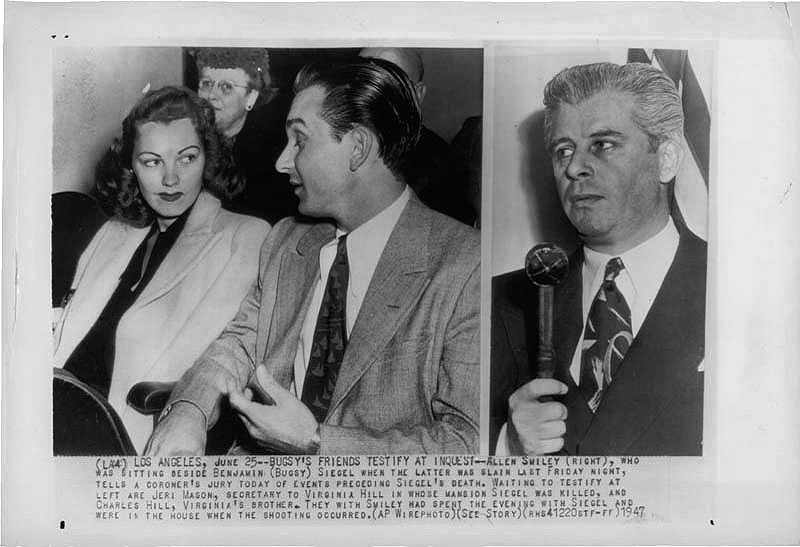
It’s been seventy-five years since Ben and Al sat by side, figuring out the next bet. Now, their possessions will share the same room. And from those collections, stories will emerge, and new information, and more questions, and this time their daughters will be there, in the open, to speak in reverence of Siegel and Smiley.
Everything in my path leads me to understanding the men that turned to crime so that they could sit in first class and order Dom Perignon. If my father left a ten-year career in film making with Cecil B DeMille to join Ben Siegel, then Ben’s story has yet to be written.
Today, I look at my father’s collection and see It tells the story of a remarkable life… the precious artifacts of a life onthe edge: photos that document an album from his unnamed sweetheart during his twenties; James Metcalf poems clipped from newspapers; wedding photos; Flamingo party photos; his phone book filled with names like H. L.Hunt, Eddie Cantor, and O.J. Simpson; heartfelt letters to Meyer Lansky and others; and FBI memos that describe my father as a pimp, a murderer, an extortionist and a Russian Jew.
Ironically, the journey to discover my father’s story ends in Las Vegas; for my dad, who was blacklisted from Vegas, that is poetic justice.
THANK YOU FOR READING. IF YOU LIKE THIS PLEASE LET ME KNOW.
 ADVENTURERS IN LIVINGNESS