

LOVE isn’t about holding on, it’s about letting go. That kind of love, the physical need, physic release, it cannot last.
Tag: LOVE
ADVENTURES IN LOVINGNESS.
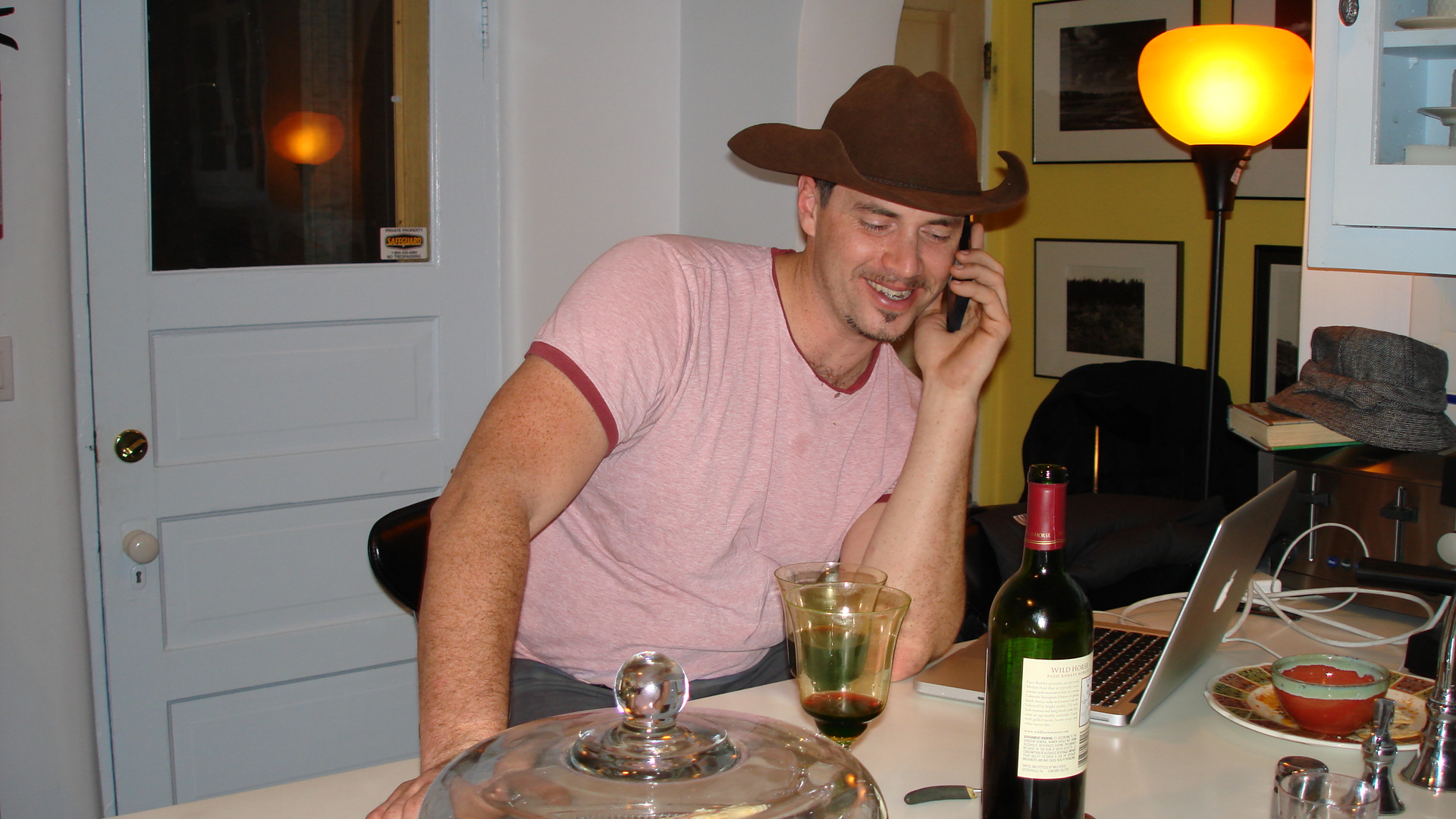
The course we choose to study doesn’t begin in school; it begins the moment we recognize that life is our teacher. I chose the course of love between a man and a woman. Yet all I’ve learned from Anais Nin, Joan Didion, and Lawrence Durrell, about love isn’t guiding me. I have to start over, and develop wisdom based on my own experiences.
The morning is crisp as iceberg lettuce, a day of clarity and stillness. Outside my bedroom window, the light illuminates portions of the pine tree, and the walls of our neighbor’s home. On my side of the glass, there are shadows and dissonance. It feels like months since the last column, and unwinding what events took place since, is going to be as piercing as the southwest sun when it shines in my eyes.
A few days before Christmas, I was in the kitchen with two friends, visiting from Boulder. Aaron, whom I’ve not seen in four years, and Lilith, whom I’ve just met. Aaron was the subject of one of my columns, the lone man standing on a mountain top, climbing the rocks of life and nature, as he ascends to the distant and dangerous vistas of life. Lilith, an angelic petite woman, with eyes wide as moons, and uncontrollable affection for what is reachable. I am preparing dinner, and our discussion is about love, about me and John, and about Rudy, whom Aaron has rendered a mentor since we all met in Saratoga Springs, 2000. We celebrated Aaron’s twenty-first birthday with him. He was ignited by individual far from conventional thinking even back then.
“Remember the time you and Rudy moved the farm table outside the window, over the second story roof, and down to the porch. How did you do that?” I said.
“Ropes. I couldn’t believe this guy– half my size and he’s carrying this eight foot wooden farm table over one shoulder. “
“ Yea, and now he’s carrying a Dragon. Oh Aaron, those were innocent days weren’t they? ”
“ Yea. Was that really eleven years ago; it feels more like a century.”
“ That’s because you live without any boundaries.”
Lilith picked up the camera and started shooting a video. I put on a hat and sunglasses for the camera, and began using the pots as instruments. They frivolity reached a high note, just as the phone rang.
“ Hi, it’s me. I’m coming back. It’s over.”
“ I’ve heard that before Rudy. “
“ I’m almost in Flagstaff, I’ll be there tomorrow.”
I sat down on the stool, and looked to Aaron for something wise and assuring to settle my spoon-stirring anxiety.
He was expressionless. The intervention of Rudy, who moments ago I was raking with hopelessness was on his way here, arriving the first night of Chanukah, which had a similar mystical tune to it.
“ John’s coming in on Friday — Oh God! I don’t know, this sounds too much like a Hallmark movie. I don’t believe this. When is it going to end?”
“ Lue, you amaze me. “
“ I wish I’d stop amazing people.”
Lilith and Aaron took off the next day and I busied myself with brooms and sponges; the activity most relied upon when life is messy. I did not want to shell-shock John with the news, because he was in the final stages of his script, and Rudy was on the road, where at any point, the Dragon might reappear, and whisk his tail back to her nest. Until he drove up, there was still a screen of fuzzy details.
I’d just come from Luminara Lounge where I’d met Jewels, my confidante and baby-sitter through the last four months of Dragonfaire.
“ Is he here?” She said breathless from rushing.
“ I saw him pull in the driveway. I left earlier and drove around until I could reach you. I don’t want to be in the house when he arrives.”
“How are you going to handle things with Rudy?”
“ Beats me. I know I have to suppress my anger; that’s like suppressing my appetite after a week of starvation.”
“ Which reminds me, are you eating?”
“ More or less?”
” LouLou. You have to eat! How do you think he’ll feel?”
“ Like a turkey on Thanksgiving.”
“What do you think John will say?
“ He’ll be speechless.”
Jewels lifted her thirty pound life jacket that a mother of two children, wife, business owner, and adventurer swings with the ease of a dancer and wrapped her arms around me.
I returned to the garden path at La Posada and in the moonlight, paced the icy walkway waiting for John to answer the phone. “ Hi baby.”
“ Hi sweetheart–how are you?”
“ I’m still working.. but it’s going really good. I got the latest storm report, and it looks like I’ll have to drive out Christmas Eve day.”
“ I made reservations for five, is that too early?”
“ I’ll be there way before that. Got to get up early and load up the car with presents.”
“ I’ll be there way before that. Got to get up early and load up the car with presents.”
I grinned, and kicked the stones in the pathway.
“ John… Rudy’s here. I didn’t want to tell you until he actually arrived.”
” John. Are you there?”
How do I word his laughter, a long winded guttural explosion without pause, that struck my humor and I joined him, and our laughter sort collapsed into one, like making love or something, and it felt so good, I didn’t want to stop.
“ Never a dull moment at Gallery LouLou.”
“ I haven’t seen him yet, he’s in the house. “
“ Call me later, I need a drink.”
You couldn’t cut the tension with a semi-truck head on, as Rudy and I stood feet away in the Staab House at La Posada. I was leaning against the bar, observing his new leather Puma’s.
“ Well, I’m here.” His crooked smile faded when I didn’t step forward or greet him with a smile.
“ Yes, you are.”
Then the staff engulfed him in warmth and greetings and I just about threw my head back and howled from the absurdity, and the bedazzlement I felt lifted me out of myself, because I couldn’t really stand there and be a part of the abstraction of life.
“ Can we have dinner together?” He uttered.
“ I’ll be here.”
I got through half the dinner, and then suddenly felt the drum beating in my rage cage and dashed out. The next few days were like waiting for a frozen chicken to thaw out. I poked at him, and he was solid, I poked a day later, asking questions, and he released a mumble of words, “ I can’t open up yet. I will in a few days. Just tell me what we need to do.”
“ John’s not coming out. He changed his mind.”
“ Why?”
I glared at him with blade sharp eyes.
“ Because of me. That’s not what I want to hear. I’ll call him.”
“ NO. Do not call him. You have no idea what your … dragon episode did to us. Are you sorry Rudy? Are you truly sorry or are you still pining for the Bird. And I would like to know the chances of you going back before I get any ideas about smiling or laughing. ”
“Yes, of course I’m sorry. I don’t think I’ll go back.. but I have to be honest.”
I turned my back and kept walking. The next turn came from John, “I’m coming out; I just pray that we’ll have a chance to be together, and have a peaceful Christmas.”
To be continued.
LIFE TEACHES
On adventures in lovingness. The course we choose to study doesn’t begin in school; it begins the moment we recognize that life is our teacher. I chose the course of love between a man and a woman. .
LOVING
A woman’s heart is fluid in her body, and a man’s heart is In his sexuality. That is why there is a headache, and a mood, and an exhaustion of feeling. We have to express this to our man so he understands.
DON’T GIVE UP

“Ordinary life does not interest me. I seek only the high moments. I am in accord with the surrealists, searching for the marvelous.”
Anais Nin. 1931
Expecting snow, expecting pleasure… we are all in some range of expectation. Where you may be hunched under an umbrella waiting for the light to turn green, so you can find shelter inside a café, a shop, where someone else waits for the arrival of a friend, the death of a loved one, the offer in writing, the publication, the house to sell, the decision to resonate, the pain and suffering to subside.
I think of something my father used to say, “You made your bed, now you lie in it.” And another one, “It’s your lot in life.” I began writing Smiley’s Dice in 2002 from a desk in a Solana beach rental. Maybe in two years I’ll have a column in a newspaper or magazine, and maybe I won’t. It’s my lot: to not give up.
Santa Fe is blistery cold, the street dry and the sidewalks baking sheets of white snow. Out my window is a metallic sky that hints of more snow. This sky slows the rhythms of the body and mind; it invades the hurried motions of pedestrians, vendors and hotel staff. There is an absence of light that intercepts outward vision, so we turn inwards. I do anyway. And because I gorge myself on the emotionalism, and interior life, I have not slid into home base.
That is why it has taken me longer to launch my writing for worldly consumption. Some of us are not in a rush to wave the “I made it” flag. Some favor holding back, until the other elements of our character life are lived; our destructiveness, fear, pettiness, falsity, greed, so many steps to climb.
You and I have to trust in the pattern of our lives, the invisible thread that taunts us, teases us, and even torments us. My lot, postponed progress, maturity, development.
I was an A cup until college, without direction, a major in English, Art, and Psychology, before dropping out. My major interest was the countryside beyond Sonoma State campus walls, the roaming cows, and flock of geese over the swamps, the crooked paths winding through eucalyptus woods, the poetry pasted on bulletin boards in the coffee house, the farmers in the pasture.
“When are you going to start taking your life seriously?” My father asked this question every few years, and every few years, I lied.
I was adulterated when I was first employed at the old Gibraltar Savings & Loan on Wilshire Boulevard. I was serious about how they measured my performance, and was vicariously unconcerned with personal gratification. How excited could I be about trust deeds? I cannot even recall what I was doing; just the name of the department, the Beneficiary Demand department.
All that restrictive training, in punctuality, production, and prudence, exploded late in life. I did not discover my passionate interest in writing until I was forty.I didn’t own a home until I was forty-seven, did not stop biting my nails until I was fifty-four, did not learn to love and trust until last year.
I developed friendships late in life, now I honor a treasure chest of sterling gems that glitter from near and far. Friends that abandon tasks to listen to me talk about moving the furniture again, and consent to my absence because the victor of writing has kidnapped me.
It is a day later, the sky is unchanged; still the cloud cover is nailed to the sky. In random conversations I have heard of people’s hardships, of sacrifice and compromise during this holiday season. No more travel talk about Paris, and the Orient. No more extended vacations or extravagances. We have to give ourselves a holiday from lament, from error, and from exasperation. I tell myself not to be combative, not this year, and don’t polish the guilt and remorse, just let it fade away. Don’t open those links to real estate values, retirement funds and investments; open the link to History. Remember what the greatest generation was handed; remember soup lines, suicides, and World War II.
Mostly don’t reprimand your partner for unrealized expectations; They are most fragile to your voice and touch. The adventure in livingness is to look at your lot; and ride it with amusement and wonder.
PART TWO, MY LOVE, MY GANGSTER
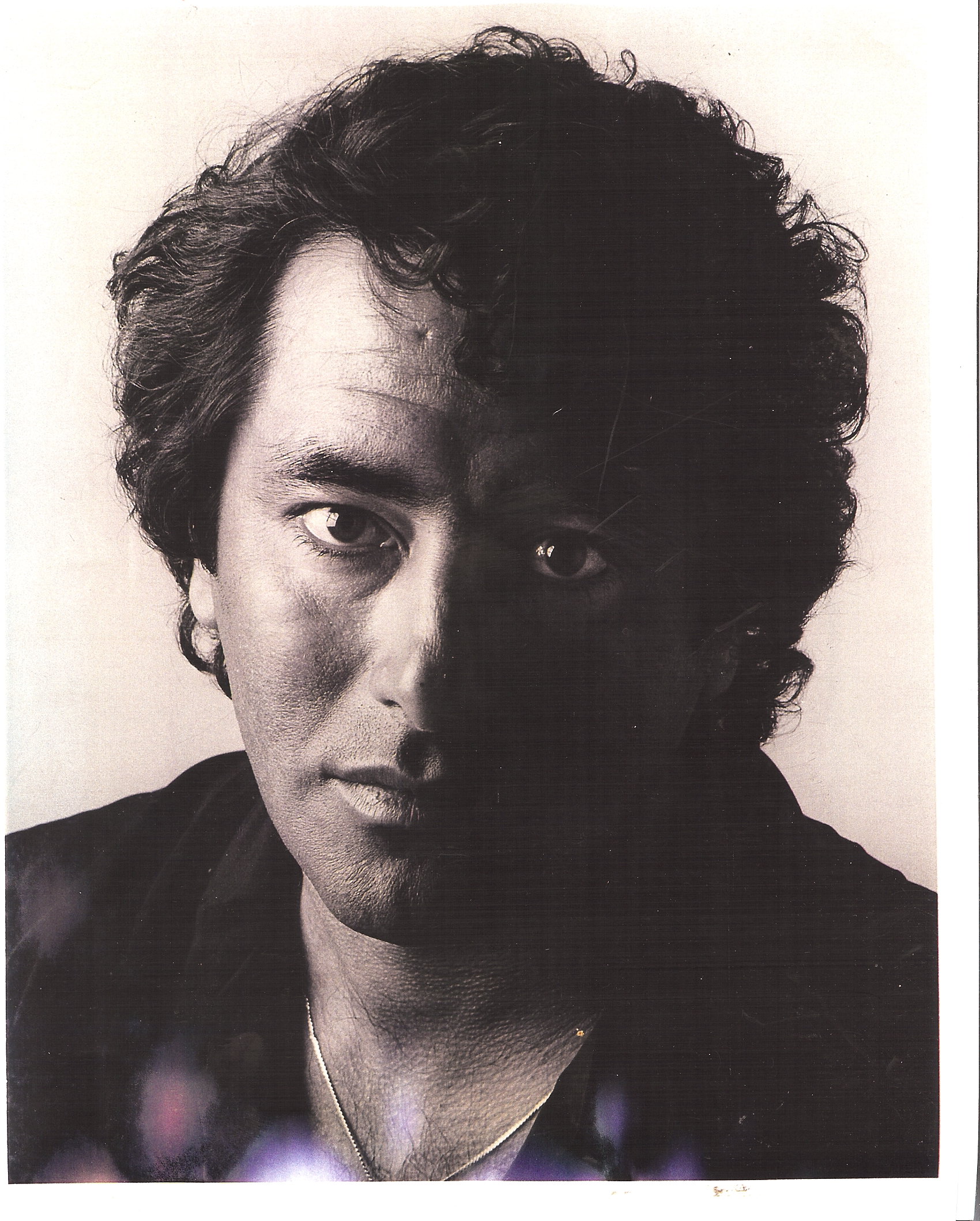
Mace and I returned to San Rafael and rented a little cottage of our own. Mace painted the rooms lemon yellow, and I glided around in dreamy domestic ecstasy. In the sensuous seventies, the preamble to the essentials of living was not a prospering career, and getting ahead. It was with a minimal amount of work, improvise, meditate, and stay high. Some Indian guru coined it, “going with the flow.”
I learned to cook fettuccine, entertain Mace ’s guests, and polish tennis shoes. Above all, I learned how to read adults, in a way I had never considered before. Mace explained the concealed messages in spoken language, and how to recognize the signals of deception, arrogance, racism, and affectation. He was continually pointing out, people’s affectations, while he drove me around in our vintage MBZ 250 SEL.
For money, resources fluctuated between teaching tennis, calling his agent in San Francisco, (he did commercials for Gallo Wine) and working on various deals. There was never one steady job, he was the Rocket Man, and people gravitated towards us. After meeting someone one day, they would be at our dinner table that night.
Amidst all the activity, I was suffering the guilt of watching my college funds vanish. That was the tragedy, but there is always sacrifice in this kind of passion. Just as my father had warned me, Mace did not refrain from spending my money. I withdrew from the College of Marin, and for a while worked part time in a small bohemian cafe in Mill Valley.
One very early morning, while we were still sleeping, the doorbell rang. Mace rushed to the door prepared to admonish whomever was knocking. When I came striding over in my silk Rita Hayworth negligee, I was astounded.
“Luellen, who is this guy, he says you know him?”
“Dale, it’s all right Mace, I know him, he’s a friend of my father’s.
“What kind of friend?” Mace demanded. Dale stood there in the archway, dressed in a wrinkled suit, his sandy hair heavily slicked to appear arranged, and eyes shaded behind rose tinted sunglasses.
“Mace , I’m just here to make sure Luellen is all right.” Dale shifted his weight between both legs. He looked taller than I remembered.
“She’s fine, you can see that.” Mace replied.
“Mace , let Dale in the door.” I embraced Dale momentarily, as I always had in the past. His edginess did not alarm me; he was always burdened by some desperate measures. My father was continually counseling him about his tribulations.
Mace hustled Dale into the living. I went into the bedroom to get dressed. My mind raced between images of my father and Dale, the run-around guy that obeyed orders. He did not resemble a tough guy; he was the Sterling Hayden type, the guy always on the run. Mace appeared in the doorway, and rushed over to me.
“Who is that guy?”
“He’s just a friend of my Dad, don’t worry he’s not dangerous…. I don’t think. ”
“He came to get you, your father sent him Lue,” he looked at me apprehensively.
“Is that what he said?”
“He doesn’t have to. We’ll take him out to breakfast; I want to be in public, just in case.”
“In case of what?”
“Just get dressed quickly.”
“You won’t let him take me will you?” I said panicking.
“NO! I can handle it.” Mace assured.
We drove into Larkspur to our favorite café. Mace led us to a table outside in the garden, in the warmth of sunlight. Mace orchestrated the meeting, so it was relaxed and enjoyable for Dale, and slowly Dale began to unwind. He removed his suit jacket and ate heartily after the long drive. They talked, and I confirmed what Mace offered.
“We live modestly now, but not for long, I’m going to manage the Tennis club, and Lue’s going to get her real estate license. Isn’t that right honey?”
“Yes, that’s right.” I acknowledged. Mace had been advising me to get a license.
“Dale, you should hang out with us a while, I’ll take you around. You can see for yourself what our life is about. I’m not hiding anything Dale, I love Luellen, and her father knows it.”
“How is my father Dale?” I interrupted.
“Luellen, your father isn’t angry with you. He just wants to make sure you’re all right.”
“Why didn’t he come with you?” Dale hunched over the table and looking directly at Mace . “He was afraid of what he might do.” Mace stood up suddenly.
“ Dale, I’m not a stupid man. I know about him too.”
Things deteriorated from there. Mace and Dale argued, I pleaded to leave the restaurant. In the car, I managed to dissuade the arguing with a hysterical outburst, and tears. Then I mediated Mace and Dale, whose conflicting assignments were bordering on a hit in an alley.
“I need you both to calm down. Dale has to return without me, and my father is going to be angry. Mace , Dale needs our help.” Mace responded by retiring his grudge and substituting some personal stories along with several rounds of backgammon. When Dale was ready to leave, I took him aside.
“ See Dale, I’m happy here, I can’t go back with you.”
“Are you sure? I can still take care of Mace ! I will not hurt him, just stall him so you can get in the car. I’m not coming back again Luellen.” He said.
“Dale, he won’t let me go. He really loves me.”
“If that’s so, let him prove it. Come with me now, he’ll follow after you when he can handle things.”
“Dale, I just can’t go with you.”
“Luellen, your father’s gonna blame me.”
“I’m sorry Dale, please understand.”
“ He’s going to be furious.”
“Well, you’ve seen him that way before right? He’ll calm down.” I spoke with feigned confidence. I had no idea how he would respond, but I knew he would blame Dale. He passed me his telephone number on a piece of paper, shook hands with Mace and told him to take care of me. Then he took of in his Cadillac.
Mace returned to the living room boasting of his conquest.
“Dale was supposed to threaten me with a gun, but he liked me too much to go through with it.”
“Did he show you the gun?”
“Yea. Lue, I told you-I am not easily intimidated.”
In the next six months, I passed my real estate exam and Mace was setting up a business. Mace had a friend who owned a Mortgage Banking Company in San Francisco. I was going to sell new residential developments and Mace was going to secure clients. We moved into a charming little house in Ross and commuted to the city to have meetings. We dined with successful men and their wives and I tried to read all the signals. Soon my father would see me on the sophisticated side of the street, leaving the hippie hibernating spell for good.
Then one day the meetings stopped. Mace retreated to the tennis court and played the rocket man. He ignored my questions and concern for our future. The car was sold, the guests stopped coming over, and Mace lived in stubborn silence. The day came I had to make the phone call.
“Hi Daddy, it’s me.”
“Yea, what is it you want?”
“I want to come home and start over.” I replied.
“On one condition.”
“What?”
“You never go back to him; you have to be absolutely sure.”
“I’m sure; I want to leave right away.” I said.
Within a week, I was back in my father’s apartment sitting on the blue and green crushed velvet sofa.
“Look now sweetheart, stop your crying, at least you didn’t come back pregnant. There is nothing to cry about now, you made a mistake and it’s over, you got your whole life ahead of you. Don’t bury yourself in the sand, nothing to be ashamed of; you ought to know the mistakes I’ve made. You couldn’t come close.”
Mace continued to pursue me. He was met by my father’s warning, ”If you come within ten feet of her, I’ll scratch your eyes out and stuff them down your throat.” Any dice to throw Email:folliesls@aol.com
MY LOVE, MY GANGSTER
I was 20 years old in 1973 and living in Marin County. I was an Au Pair for a family of five, living in a hillside suburban neighborhood, overlooking Tiburon. I lived downstairs in the converted wood paneled library.
I drove a faded yellow VW Bug and dressed in a long wooly vintage coat. I attended classes in Women’s studies at The College of Marin, and my father was a good two thousand miles away.
During the hours I was not in class or tending to Inge’s three children, I sat in the coffee house across the street from the college, reading, smoking and drinking coffee. Each of these was an enormous, individual adventure, but to have all three together, was a star spangled banner sort of freedom. There in the café, at the varnished wood tables, I could read, write, study, and practice solitary delight. These were the activities my father tried to beat out of me, with all good intentions.
One day in April, while sitting at my table, I was approached by a man in a tennis outfit. He was dark skinned, with birch brown eyes, thick defined lips, and wavy, blue black hair that draped one eye. He could have been Hawaiian, Italian or Spanish, all those ethnic features melted in his face.
“What are you reading?” he asked.
“Play It As It Lays,” do you know of Joan Didion?”
“I think so. Why do you like it?”
“What, the book you mean?”
“Yea.”
“Her character, the woman in the story takes risks, she’s not afraid.”
“Are you?”
“I … sometimes.”
“What for? You can have anything you want.”
“What about you?” I replied, blushing.
. “I’m a man that lives by my own rules. I have a lot of fun, and that’s how I live my life.”
“That’s nice.”
“Why the sarcasm. Don’t you believe me?”
“Why should I? I don’t know you.”
“Yes you do.” Then I lost his attention, and his eyes scouted the room. I stood up to leave.
“Why are you leaving?” he asked.
“I see you are looking for someone else.”
“I’m not interested in anyone except you.” He said twirling his tennis racket.
“I’d like to see you again. Do you want to give me your number?”
I stalled him, glancing at his muscular legs.
“I have nice legs don’t I?” he teased.
“You have okay legs, what’s your name?”
“Macedonio Batzani Obledo.”
“What?”
“Oh don’t be so American, it doesn’t suit you. Are you a student?”
“Yes, are you?”
Laughter ruptured out of him. I didn’t think it was so funny. He quickly regained his composure and added that he was a student of life, and he studied all the time. He added something clever that diffused the next question, which was, “how old are you?” He continued to pinball my mixed up emotions, until I handed him my phone number on a piece of paper. He walked me to my car, twirling the tennis racket,and I could not take my eyes off him.
Mace called several days later, and we made a date. Inge greeted him with bubbly European warmth, followed by Espresso in the living room. The children emerged from their playrooms to meet the stranger. Inge engaged in conversation for several hours, without ever sacrificing her smile or sparkle. She found out Max’s age, that he was recently divorced, had lived in Brentwood and played tennis at the Riviera Country Club. I was on the verge of a rebellion jackpot. Not only did I find a man 17 years older with a mysterious past, who was divorced and his ancestry unknown, but he embodied a brand of sensuality, that either enraged or imprisoned women.
Mace unhooked the lid that had caged my spirit, and opened the door. He was the wild card, the impostor, poet, musician, and artist of life. He embraced my insecurities, questions and doubts, and then gave them back to me with a seal of approval. My flat chest became sexy, my lanky frame elegant, and my restraint classy. I was 20 years old and in a hurry to understand what love was all about. We rode around San Francisco in my VW singing, “Midnight at the Oasis”. I dressed up like Rita Hayworth and he bought me a vintage silk negligee. He was 37 and worldly, my sexuality burst threw the ceiling.
We moved into a stately mansion in San Rafael, befitting of his grandiose dreams and my romantic vision. We lived with ten other outcasts, sharing the same traditional vintage Victorian furnishings. All of the characters were acting out parts; Jimmy wore a white tunic and spoke in clipped passages from books. Gail was her hometown Queen, a single mother and skilled husband hunter. Terence was the pensive astrologer, living crossed legged on the floor of the den amongst a pile of books and charts. Katie was a sharpened New Yorker recently stripped of conventions and migrated to California. Invisible Doobie lived in the attic and spent all day sucking laughing gas. Ann, an alternating fragile and fierce aging hippie with utopiaian ideas, managed the house.
Mace decorated our room and I posed on the canopy bed. At dinner sometimes all twelve of us sat in the formal dining room and conversation scintillated around crystal chandeliers. It was a bohemian Great Gatsby commune, complete with volleyball matches on summer evenings, piano concerts in the parlor, and unconventional seventies living. Mace played and taught tennis, and I lounged around Country Clubs looking for jobs. Just the environment my father had ordained for meeting the right fellow.
Six months later, I made the immutable decision to introduce Mace and my father. Mace was not disturbed when I confided my father and his alleged Mafia connections. He alluded that he had known wise guys in Chicago, and was not intimidated in the least. Nothing I told him was shocking. He had heard all about my father’s closest friend, Johnny Roselli.
“ Lue, Johnny is the Mafia boss in Los Angeles, I know- I’ve lived there and read about him.”
“You shouldn’t believe the newspapers. Johnny and my father go to the barber shop, and out to dinner.” I contested his allegation and insisted Johnny was a harmless retired Italian businessman and I adored him.
“Your father is Johnny’s right hand man.” He persisted.
“Can you prove that?”
“Lue, I’m not judging him, and neither should you.” I was years away from understanding anything about my father.
We arrived at my father’s Hollywood apartment doorstep with mutual anticipation and excitement. Mace thrust his hand out to my father.
“How do you do Mr. Smiley?” I recognized my father’s feigned approval. How could he be indignant so quickly? He put on his best social manners, but I felt the examination beginning.
“ Macedonion, is that what you go by?”
“No, Mace is easier.”
“And your last name, how is that pronounced?” My father sharpened his blade on Max’s elusive identity.
“ Spanish Italian, I am a mixture, Batzani Obledo.”
My father’s expressions are recognizable, and the one he uses when he suspects a fraud is equally deceiving. His lips purse together and he nods his head very slightly, imitating approval, but his eyes are unforgiving stainless steel blue.
I tried to ignore the signals; it was such a special day for me. While I was preparing dinner, my father invited Mace to go for a walk. There I was in my dream world, cooking stuffed zucchini for my father and the man I loved, unprepared to accept the distortion of my father’s repellent reaction and Max’s eagerness for approval.
When they returned, my father went into the living room to watch television and Mace came into the kitchen.
“How’d it go? Did he ask you lots of questions?” I said. Mace pranced nervously.
“Your father’s a heavyweight, but we got along. I know how to talk his language. He’s a powerful man Lue, more so that I thought. ”
“What did he ask?”
“What I plan on doing, he could help us you know.”
“That won’t happen, I’m sure of it.”
The evening was weighted, with long heavy silences, and jokes my father ignored. I made nervous table conversation, and my father ate quickly. He most likely used more restraint that night with Mace than I will ever realize. My father sent Mace to the motel and asked me to stay for a while. Some moments later my father began pacing the living room, and then all at once he exploded.
“He’s a filthy punk! A small time con! He gave me a lot of mumbo jumbo about his tennis, and some deal with a country club. Luellen, this is a gigolo, he will take you for everything you’ve got. Drop him now before it’s too late. He’s not qualified for anything, he has no business, and he’s a street wise nothing.” His voice was threatening, face reddened in anger, and his entire body trembled. I sat limply on the couch caught between his truth, and my illusions.
“You’re wrong. He does have contacts with the Tennis Club in Marin and he knows a lot of people.” I argued.
“So what! He can tell you anything. You don’t have any common sense when it comes to him. I’m telling you what you’re dealing with, he’s a fake.”
“I think you’re wrong. You never liked anyone I’ve introduced.”
“You never brought a man I could look in the eye. You make a choice right now, if you want him after what I’ve told you, then walk out that door and don’t ever come back. I mean it now, you decide!” I looked into his narrowed eyes. I went into the kitchen, picked up my purse and opened the front door. He rushed over and slammed the door as I crossed the threshold. It was the first time I did not back down. After the door shut, the world looked different.
On the drive back to Marin, we stopped one night in Santa Barbara. We had breakfast early that morning. Mace was reading the newspaper, he pushed the paper to my side, “Read this,” he said. I read the article, and was ejected out my dream all at once. My father along with twelve other Mafia members were under investigation for their part in an alleged plot to extort money from various legal and illegal business enterprises. Smiley, it said, was indicted a year ago in an investigation of alleged Mafia activities in the Los Angeles area. The other names were Frankie Carbo, Frank Milano, Samuel Sciortino and De La Rosa.
“See, I told you your father is a powerful man Lue.” Something shifted in both of us after that. I couldn’t put the covers over my eyes any longer. I sat in the ray of sunshine rising above the mountains, and studied that newspaper article. I realized then why the newspapers were hidden, why my father behaved as he did, why he distrusted everyone. I felt betrayed, I felt shattered, but I said nothing. I was tangled in my own family history, and it would take years to find a way out.
“Are you afraid of him?” I asked.
“He wouldn’t do anything to me, not with the government on his back,” Mace assured me.
MY MOTHER MY HEROINE
The throw of the dice this week lands on redefining one kind of relationship for another. It’s also called the breakup. The words are familiar to most of us. How we get there is unfamiliar. The exact path each of us takes towards intimacy, and then away from it, is custom-made.
What brings two strangers together at 25 years old is attic material at 55. The physical appearance and satisfaction meanders over the dips and dives. All the quarrels, hardships, and difficult compromises are either dropped, or repeated without sustained anger and outrage. The arguments begin and end within 24 hours. There is a journey between a couple and neither one knows the final destination. For some it is an 8 week affair, others an eternal matrimony, and then there are couples who must battle the journey all the way. For some unknown reason, two people love unevenly. With every other aspect of life in perfect order, the scenery, replenishment of necessities, even absence of tragic disorder, this couple will never find peace. They are unmatched where it counts the most. They are staring at opposite corners, refreshed by different tastes, and feel almost nothing that the other person feels, with the exception of the feeling they have of comfort and trust. After 25 years, you know where the rumbles and ridges are, and you know how to handle them.
You even get accustomed to the battles, and what defenses you can use. The drama though draining has a certain appeal, in that it is familiar. When the truth rises above the camouflage, you cannot mop it off. It interferes with the loveliness of a yellowed summer moon, or a morning so beautiful that you want to hold it in your hand. It is like walking with lead in your shoes, and you freeze the lightness in your heart. With this burden, you cannot balance all the other misadventures in life.
When I was 29, my wings had just been released. I was alone, without any family around me, and I took the least familiar flight, and moved from my home in Los Angeles to Del Mar. It is beyond the mist of golden memories, it truly was the most unforgettable 6 months of my life. I had to rebuild everything from scratch, and in the process, I was building myself, step by step. That kind of work is irreplaceable, even the most adventurous of travel does not compare to rebuilding your life.
Now, is not much different from back in 1983, only I am not alone. I feel the same yearning for self-discovery. A breakup does not erode the love, companionship and trust of a 25-year friendship. With all those foundations in mint condition, you should be able to take on the new journey you have missed.
But! It is delayed for the reason that attachment is beyond emotional; it affects financial, social, and business survival. One by one solutions can be created. Sometime circumstances of life create them for you. Whenever I am stagnate, and unable to make a move, I have to think of my mother’s life.
THE MYSTERY OF HOME

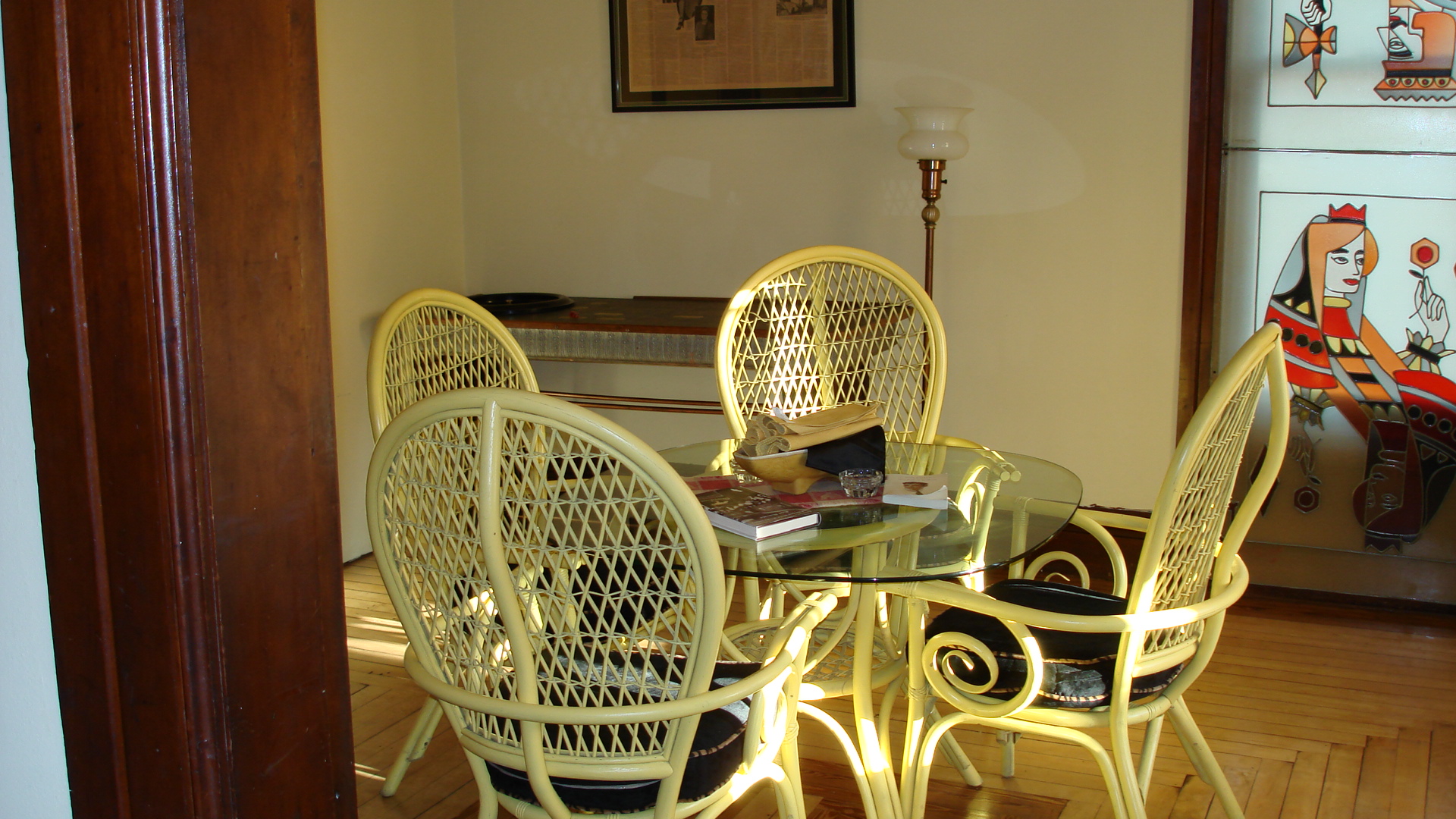
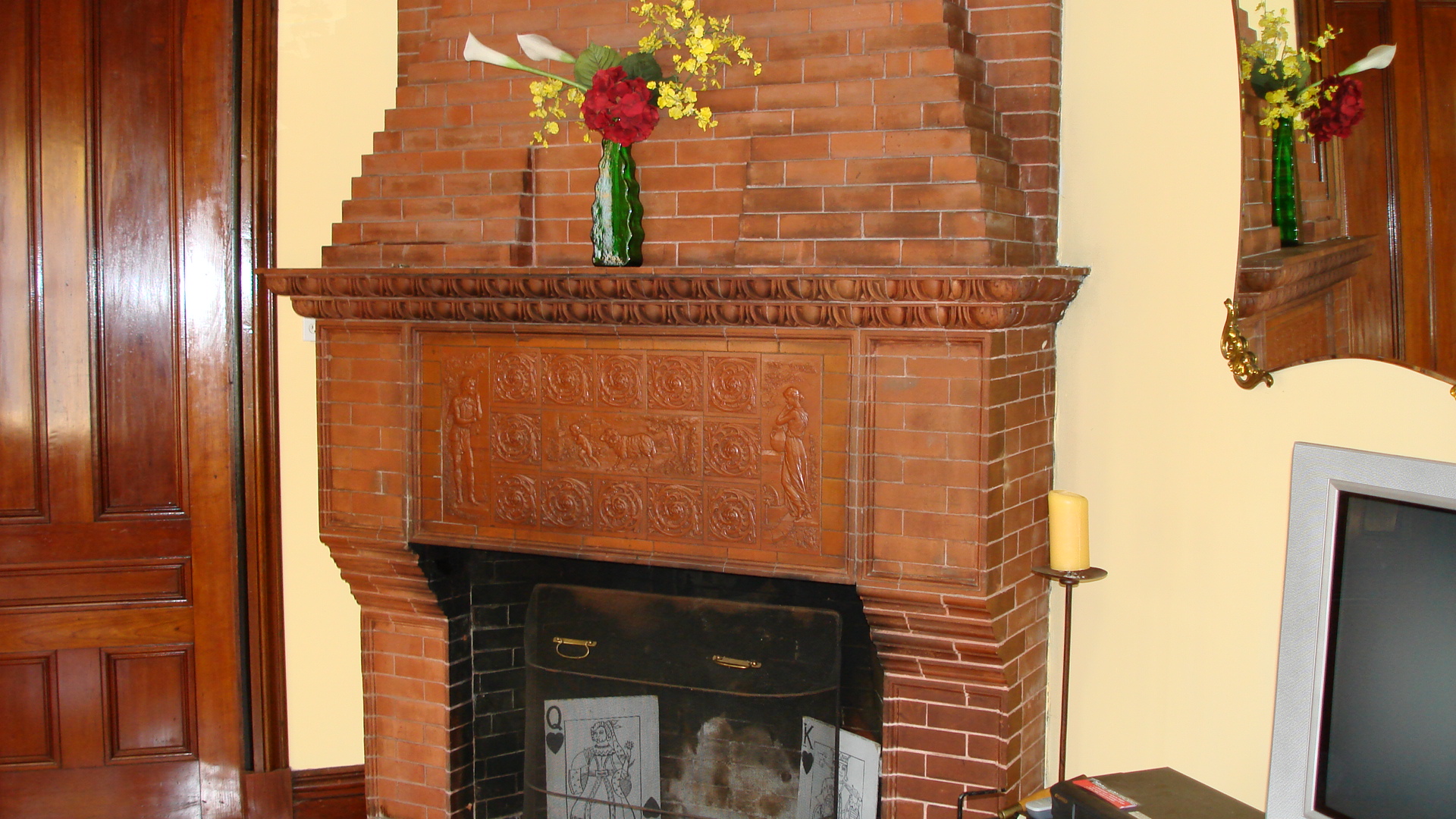
 Every morning I rise at dawn to sit in the parlor. Here I watch the sunlight illuminate the, “Cat on a Hot Tin Roof” movie board in the hearth, and drink a cup of coffee in silence. I feel at home. These are the most precious moments of the day, the moment of peace before throwing the dice.
I can see out the window to the street, and this morning a handful of eggplant leaves on the tree next door have been autumnized to a transparent sheen of bronzed gold. The silence following summer has descended down over the rooftops of the people that live on East High Avenue. The sky is seared with streaks of white, and bubblegum pink clouds drift just above the rising of the sun. The moment is a peaceful stroke to a summer that has been indeterminate, chancy and without design. We came here with the intention to sell the house, and we leave without any such idea.
In the moments SC awakes, I hear his footsteps on the creaking wood floor. I close the journal and go in the kitchen to make buttermilk pancakes. When we are in Solana Beach, we eat bran muffins, usually in short order, between telephone calls, and conversations about things that it is too early to discuss. These mornings he lingers on the porch and reads the paper, because he has the time. If my body is willing, I will run down to the stream by Kelly Park, and look for the blue heron. Along the way, I pass by the quiet man with the three beagles, and a mother walking with her children to the bus stop. I will pass the funeral parlor and look the other way, and when I see the Federal Express Truck, he will wave because he knows I am the woman that receives mail addressed to Soaring Crow.
The front porches I pass are the opening pages to the home stories of people inside. If there are children, the remains of their toys will be scattered about. If they are elderly, they will leave their gardening shoes by the back door, and if they are a young couple, they will be in the midst of home repairs, a roof that needs fixing or a new coat of paint. I have observed just one campaign poster board in the neighborhood. It seems to have gone out of style to post your politics on your car or in front of your house. In the front yard of one home, a banner is pitched in the ground that reads, “Remember our Troops.” I have not asked, but it is probable they have a son serving in Iraq. The hanging flower planters have been replaced with mums and corn stalks. Some scatter straw on the lawn. I used to giggle at this September tradition, now I am almost giddy about arranging my seasonal display in the yard.
The run back through town takes me by the high school, a brawny brick building that looks like the setting for a chapter from “Catcher in the Rye.” A teacher passes by, dressed in a conservative suit and pumps, and smiles. She looks wholesome as apple pie, and I wonder if I ever looked like that. On chilly mornings, the fireplaces may be smoking, a scent as perfect as my favorite perfume. Our own fireplace is inoperable until we reline the chimney, which explains why the movie poster is in the fireplace.
By 8:00 a.m. the yellow school buses are chugging up the street and the children, gathered at our corner; bob up and down in innocent bursts of energy celebrating the beginning of a new day. I arrive home about this time, and stop to watch the quaintness of the moment. The habitat of these surroundings strips me bare of my Hollywood entertainment, Southern California roots. I am nourished by quaint tradition and scenery, and that is one answer to this mystery I call home.
I eat cider donuts when I want and instead of working out three or four times a week, I take long walks, past the Sunny Side farms to see the young foals and mothers in the corral. I dress in style-less shoes and pants, whenever I feel like it, without fashion consciousness. I do not watch the television and prefer to go to bed early and read Carson McCullers novels. If I wake up in the middle of the night, I can sit on the porch and look at the hands of a storm forming in the sky.
People come to my house without notice, and sometimes just walk in and yell my name. My favorite Broadway hangout knows who I am, what kind of wine I like and that we like to sit on the patio. Sometimes I meet strangers who have heard of the Follies House, and I feel a twinge of acknowledgment.
It does not matter what everyone else calls home, it is simply the feeling of peace, security, and acceptance. That is how you know you are home.
THE HAPPIEST MAN ALIVE
The throw of the dice this week is a continuation from last months column, which is too long a time for a continuation.
I left off, where I was about to stop by Maurice’s home. I’ve written about him several times over the years. Maurice was raised on a small modest farm in Iowa, where he used to race his horse across the open fields, when he wasn’t milking cows and picking corn. When he turned seventeen he left home, and hitchhiked to Solana Beach, where his girlfriend was working in a home in Rancho Santa Fe. Maurice worked on the ranches of Rancho Santa Fe, until he was drafted into the army. It was Christmas day, and the day after his wedding. When he returned to his wife three years later, they began a life in Solana Beach. He began living as the happiest man alive.
I had to wait a year or more before I could drive by his house in Solana Beach, knowing he wouldn’t be out in the garden, or fixing miniature furniture, or baking cinnamon rolls for all his girlfriends.
I had to wait, because the little white house with the white picket fence without Maurice was like a flower without petals, or a child without a mother.
Maurice came into my life, in an almost fictional way. I can see him now; standing amongst the hundreds of Christmas lights he strung up every year across his lawn, over the roof, winding around the trees and over the garage all the way to the street. He even had one of those talking toys that sang, ‘Ho Ho Ho Merry Christmas’ when you rang the door-bell. Inside the tiny living room, he filled every shelf and empty corner with ceramic glass or tin ornaments, a dedication to his wife who passed away ten years earlier, and their wedding anniversary.
When Maurice opened his front door, he laughed out loud, when the mechanical voice, shrieked, Merry Christmas. Before he even said anything, his smile beamed as he waited for me to laugh with him. Then he led me to the sofa, in front of a coffee table covered with homemade powered sugar cookies and chocolate covered almonds and cashews, and said, “Go on, sit down and I’ll make some drinks.” But that wasn’t the first time I met Maurice. The first time I met him; I was walking down the street at dusk, just taking a walk with a moon shadow following me.
“How are you tonight?” We talked only a moment or so before he asked me inside for a drink.
“Thank You. I’m going to take a rain check; I live right down the street.” It was such an innocent invitation; I felt absolutely no fear other than that ground in nuisance fear that precedes any invitation from a man.
“I know where you live.”
“Oh? I’m going to come back–really I am.”
“I sure hope so. I love to have company.”
That was Christmas 1994.
The next night, I dragged Rudy with me to look at Maurice’s flickering Christmas lights. We didn’t get a chance to knock on the door, he must have seen us through the window, and he opened it.
“Are you coming in this time?”
“Yes, I mean if it’s not a bad time.”
“It’s never a bad time for friends.”
I clutched Rudy’s hand and we crossed over the reindeers seated in the flying red sleigh and magical little toys that glittered beside Santa Claus, and went inside. I was already sure that this was going to save me from a mediocre Christmas, while Rudy was still quizzically observing Maurice’s easy behavior. Maurice was seventy-nine years old, cut lean and taught like a racehorse. His long white hair was combed straight back without a part, and he was dressed in faded Levi’s, Nikes, and a pressed bottom-up shirt.
“Are you hungry?” He asked.
“Hell yes,” Rudy shouted. Maurice jetted out to the kitchen leaving us to sink into the worn cushions of his sofa, and listen to country western Christmas Carols. We stayed and laughed through an assortment of snacks, music, and Maurice dancing about as we hooted and howled like Iowan farmers.
When I stopped by a day or two later to thank him, he said.
I’m the happiest man alive.”
“Why?” I asked.
“Because I have so much to be thankful for, and I have such good good friends.”
“Maurice, are you happy all the time?”
“Oh yes-all the time. I get angry like everyone else, but I’m so lucky.”
“Why?”
Then he told me the story of the three days he squatted along the beachhead at Buna, Australia within the confines of tropical diseases, rain, mud, and without water or food. By the time the last Japanese positions had fallen, one thousand or more Americans lay dead, with thousands more wounded or sick.
“They was much stronger and more equipped than us. I made a vow with God, if he got me out alive, I would never ask for anything again and never complain about anything again. “
“You kept your word.”
“ I sure have. I watched my whole squadron die, almost all of them. They was such young boys, you just couldn’t believe it was happening.”
I went back to Maurice’s house almost every day, and asked him how he was. “I feel so good; I’ve never felt better in my life.” Sometimes he’d alternate and say, “I’m the luckiest man alive.” I never caught him complaining, or tilting forward with regret. He didn’t waste his time judging, avoiding, or renouncing change. He kept his old fashioned machinery, furnishings and style and let everyone else go crazy trying to be modern and chic. Every knick knack had some special meaning or story to go along with it. Like the corn husker he hung out in the garage, the same one he used when he was a kid. But what he loved most about that house was his orange tree. He always loaded me up with a grocery bag filled with oranges. “They make the best orange juice you ever had.”
Over the next four years, I was at Maurice’s home, at least twice a week. I watched Rodeo with him, watched him plant tomatoes and cucumbers, cut sweet peas and roses for his friends, fry chicken, fix furniture, feed Bugsy the cat when he was only a day old, and dance in the front room while singing some country tune. I recorded his whole story on tape, and then wrote a book about his life. “I don’t think I’m that interesting, but if you think so, I’ll tell you anything you want to know.” I learned what it was like to grow up on a farm during the depression in middle America. His family lost the farm, and that’s when young Maurice put out his thumb on Highway 80, and hitchhiked to San Diego.
“I was so lucky! I was picked up by a woman in a Cadillac who needed someone to drive her car.”
Then, when I wasn’t paying attention, Maurice grew distant, he turned down invitations to dinner, and he stopped inviting me. I didn’t ask him why, I just accepted it, which was where I went wrong.
I even passed him in the drugstore one day, and instead of confronting him, I darted out the front door. About six months later I got a phone call from his niece.
“I’m calling because Maurice passed away.”
“NO.”
“Yes, he did. But he didn’t suffer, he went very quick.”
“Was he at home?”
“ Yes. Lynn found him under the orange tree.”
I drove past his house, and had to keep on going. There was nothing left of the garden, and the new owners had placed those skinny tall poles signifying, a demolition for a new two-story house. Maurice is still a part of my life. I realize I was lucky, to have met him and known his story. Any dice to throw email: folliesls@aol.com
 ADVENTURERS IN LIVINGNESS