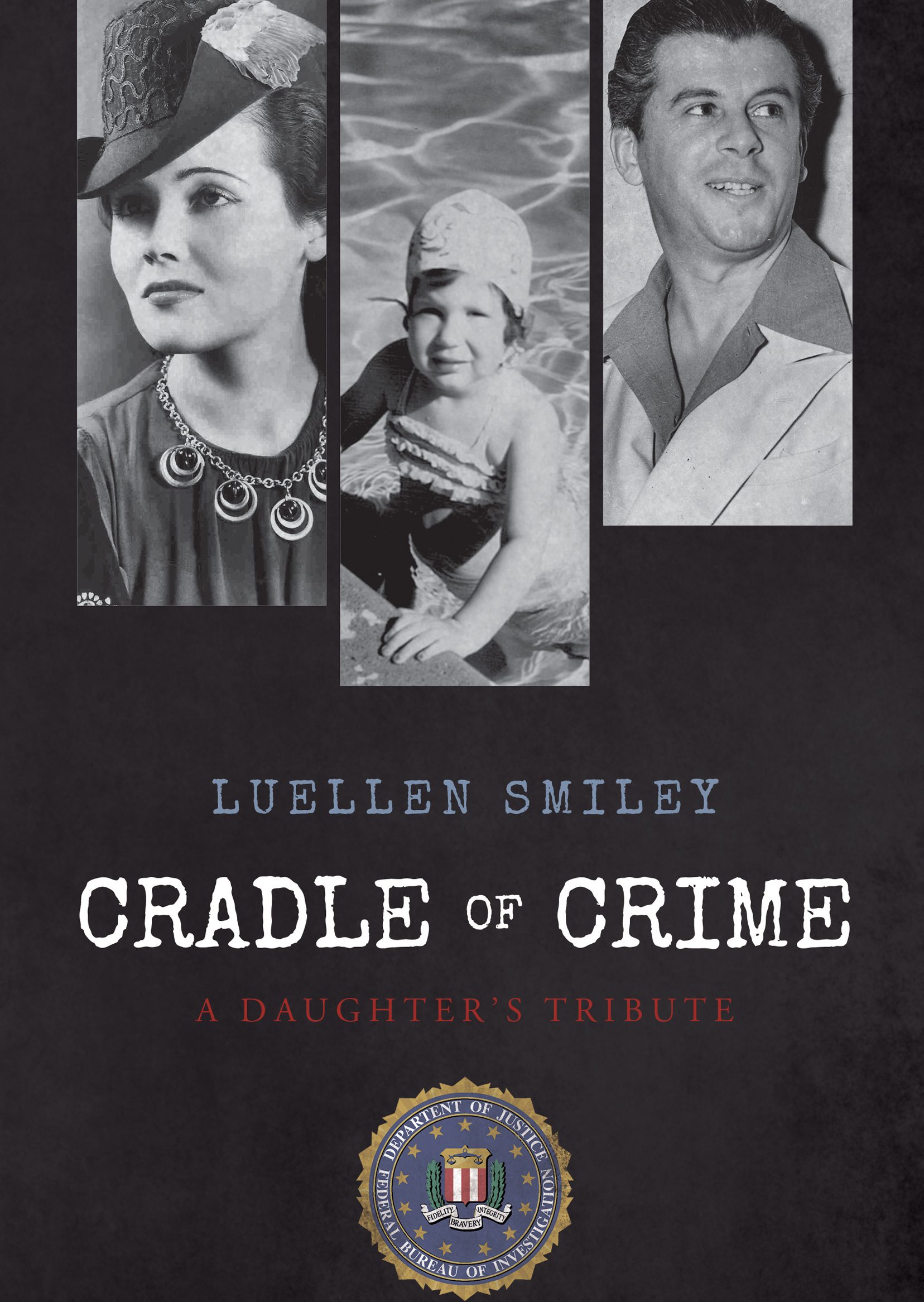
MY MOTHER MY HEROINE


The throw of the dice this week lands on redefining one kind of relationship for another. It’s also called the breakup.  The words are familiar to most of us.  How we get there is unfamiliar. The exact path each of us takes towards intimacy, and then away from it, is custom-made. 

What brings two strangers together at 25 years old is attic material at 55.  The physical appearance and satisfaction meanders over the dips and dives.  All the quarrels, hardships, and difficult compromises are either dropped, or repeated without sustained anger and outrage. The arguments begin and end within 24 hours. There is a journey between a couple and neither one knows the final destination. For some it is an 8 week affair, others an eternal matrimony, and then there are couples who must battle the journey all the way.  For some unknown reason, two people love unevenly. With every other aspect of life in perfect order, the scenery, replenishment of necessities, even absence of tragic disorder, this couple will never find peace. They are unmatched where it counts the most. They are staring at opposite corners, refreshed by different tastes, and feel almost nothing that the other person feels, with the exception of the feeling they have of comfort and trust. After 25 years, you know where the rumbles and ridges are, and you know how to handle them.

You even get accustomed to the battles, and what defenses you can use. The drama though draining has a certain appeal, in that it is familiar. When the truth rises above the camouflage, you cannot mop it off.  It interferes with the loveliness of a yellowed summer moon, or a morning so beautiful that you want to hold it in your hand.  It is like walking with lead in your shoes, and you freeze the lightness in your heart. With this burden, you cannot balance all the other misadventures in life.

When I was 29, my wings had just been released.  I was alone, without any family around me, and I took the least familiar flight, and moved from my home in Los Angeles to Del Mar.  It is beyond the mist of golden memories, it truly was the most unforgettable 6 months of my life.  I had to rebuild everything from scratch, and in the process, I was building myself, step by step. That kind of work is irreplaceable, even the most adventurous of travel does not compare to rebuilding your life.

Now, is not much different from back in 1983, only I am not alone.  I feel the same yearning for self-discovery. A breakup does not erode the love, companionship and trust of a 25-year friendship.  With all those foundations in mint condition, you should be able to take on the new journey you have missed.

But! It is delayed for the reason that attachment is beyond emotional; it affects financial, social, and business survival. One by one solutions can be created.  Sometime circumstances of life create them for you.  Whenever I am stagnate, and unable to make a move, I have to think of my mother’s life.


IN THE GARDEN


Two months ago I bought a crate of flowers to plant. After setting the plant to rest, I had a vivid recollection of Nana; my Mother’s mother.
Nana was a petite woman, with long graying hair she pinned into a perfect French twist, a cute Irish nose, and a giggling smile. When I was growing up she lived with her second husband, we called Poppop, in a spacious California ranch house in Sherman Oaks, also known as San Fernando Valley. We visited her weekly, staying over one or two nights. Nana was always waiting for us to arrive. She greeted us at the door, she had something cooking, fresh candy in crystal dishes, and in the morning, she fried bacon and the aroma woke me and got me running downstairs. She scrambled eggs with lots of butter, and served it with Irish soda bread. It never occurred to me that these weekly trips were the cultural mix-up of my Russian Irish heritage. This was Nana’s only opportunity to spoon-feed us our Irish roots. At home with father, bacon and butter were prohibited, and bread came in the form of a bagel. The food was only one part of the adventure. Nana’s home was filled with antiques, family treasures, and her garden was a masterful collection of east and west coast varieties.
After Nana had all her errands and household chores finished, she changed into slacks, flat shoes, and a straw hat and went outside to the garden. I would follow Nana while my Mother remained indoors; most likely talking on the phone with some degree of privacy. In the garden, Nana would trim, cut, and arrange her flowers. I kneeled down beside her and watched, while she talked. Nana had the gift of gab, and her thoughts poured out without my interruption. Between sentences, she would insert a self-effacing joke, regarding her silly hat, or her short legs. Her hands were swollen from arthritis, and she rubbed them from time to time, but she did not complain. As I planted my garden, these visions of Nana remained and grew more studied and complete. I had a memory of being assigned a school project to plant something in the garden. By this time, my Mother had moved us to an apartment and we didn’t have our own garden. I went to Nana’s and she helped me plant some variety of flowers I cannot recall. Each week I’d return to see how my plant was doing. Some time after the assignment ended and we were walking in the yard, I looked to see how my plant was surviving. It had been replaced. I asked Nana what happened.
“Oh honey I hope you won’t be mad at me, but the little flower died, so I planted a new one. It’s my fault; I didn’t look after it properly.”
Nana taught me the things my mother didn’t have the time to teach; like cooking, cutting flowers and arranging them, making coffee, and setting the table. She made all these chores enjoyable, and I loved to follow her around the house and watch her change the beds, and prop up pillows, and fold the guest towels. It never occurred to me until now, that I adopted her domesticity; the sublime gratification of adorning a home for the comfort of family and friends.
The plants did not blossom, the jasmine, roses, and other varieties all wilted and turned brown, but the parties, soirees, dinners and moments of solitude are bloosoming.

JAMMERS PART TWO


ME AND MASTER JAM, AND RUDY IN LA

San Diego was still into rage and rock and roll. The people I was calling for gigs didn’t know Hip-Hop yet.   That was too bad, because we were  having the greatest experience of our  life.  When I ran out of money I took a job managing a condominium project, where I lived rent free and had weekends and evenings for Jammers.  After a time of observing their self expression, I asked myself, where is mine?  I still refused to get on stage, Vince used to bawl me out because I made Piper introduce the group. We were good for each other, the three of us. After two years Piper moved to Los Angeles to launch his career, he had showmanship in the way he held his hands.  Vince took over the troupe and added twelve more dancers.  These two young men, they were the sparklers in my life, like that star you think you’ll never hold.  When I left the Jammers I was a different woman. They put the rhythm back in my spirit, and faith into my soul. I mean there are things a business career will never offer, you have to go into the arts for this kind of stuff.

THE SUN RISES ON HARDSHIP


 The throw of the dice this week falls on the sunrise of hardship, for all of us.

     In my home there is one staircase window that faces east. Each morning before I descend the stairs I stop at the landing, to watch the day begin. The sun must rise above an assortment of tree limbs and trunks, and up over the mountains. By the time I’ve had my coffee, the sun has risen above these obstructions. I am now jerked awake, like a slight nudge a parent might give you, ‘Come on–wake up! You have school.”  

I begin writing, but that shameless sunlight in my eyes and the dance of the birds are tempting me to step outdoors.  When you live in seasonal climate, summer days and nights lure you out of your wits; why stay inside when there’s moonlight, a sage brush breeze, and merriment across the street.

The gradual awakening unfolds layers of thoughts, beginning with the anxiety of the times. The impending hardship of thousands, my friends, and neighbors, oozes out like a bad smell. Everyone seems to be slanting in new directions; some are going home where they came from, others take on another job, or moving out and leasing their homes.    


Some mornings I can’t even look at the newspaper. The headlines read like Sunday’s promotional movie advertisements: BANKRUPT, FORECLOSURE, and SUICIDE. The shocking prick of national disaster is a surgical awakening of a disease untreated.  There’s no time to waste, no money to squander, it is a time of reduction and refusal.

     As minor calamities knock on my door, and creditors calling from India, I turn my head to the sunlight and resume what I have to do, and that is write. If you know me, then you know I’ve vanished. It’s the only way I can work, and I’m standing on my head happy that I have the solitude to do it. 

 Last week while I was upstairs, prone on the sofa figuring out a transition between two scenes, someone knocked at the door. Then they fiercely rang the bell. Oh what it is now I thought.   

     “Yes,” I asked the man standing outside. He stared at me while twirling a toothpick in his mouth.

“Are you all right? I’m from Safeguard Security we haven’t had any signal on your alarm.  We came to check on you.”

I stood there expressionless. I assured him I wasn’t held captive or about to throw myself out the window, but he didn’t seem convinced, he lingered and kept looking over my shoulder.  I hastily sent him on his way, and returned to the desk.  I’d been rude; I didn’t even thank the guy.  This is some kind of message, next time he’ll slam the door in my face.      

Later in the day, if I haven’t ventured outdoors yet, I take a walk around the Plaza, and muse over the herds of tourists. I look for revealing expressions and conversations.  I didn’t see panic and anxiety, I observed relief. Couples shuffled together, maybe holding hands, dragging shopping bags, and aiming directionless for a new snapshot. They stand gaping at the churches and shoot photographs while standing in the middle of the street. Vacation is bliss in the middle of discontent. 

When I return to my desk, it is time to print the days work. This is always a ritual of great expectation, filled with disappointments, surprise, and sometimes a whiff of elation.

 By now the sun has made its journey to the other side of the house. The back porch is like starched light, it burns the eyes and flesh, the immediate effect is callous. Now is the time to slouch in the chair, close my eyes, and rewind a few scenes back.

Hardship is like the sun, unmerciful when it is met face to face, and transforming when we are protected. The sunlight is absorbed into our bodies; the effect is invigorating when taken in increments. The light changes the color of the world, we see things differently, and so it is with hardship, we feel intensely, our senses are sharpened, and we appreciate the treats more so than in times of prosperity.

It all translates into less spending and more creating. 

While I lounge in this old house, one track of time keeps re-appearing. It was when my living space was limited to one tiny room, finances on a string as long as my finger and uncertainty a nightmare that turned into a lullaby. It is that time again; and what we all must do is keep the adventures above the circumstances. Any dice to throw:

Folliesls@aol.com 

ZIGZAGGIN WITH D.H. LAWRENCE


The throw of the dice this week lands on an adventure with D.H. Lawrence. 

Our affair began in the winter of 1970, when the film “Women in Love” was released. 

            “ Let’s go see this movie, Alan Bates is in it.” Lizzie,  and I were madly in love with Alan Bates. Neither one of us had read the book, or had much knowledge of D.H. It was a film that explored sexual relations that interested us, and it was filmed in England.  Back in Junior High Lizzie sang musical songs while I taped her on a recorder.  Now in High School, she was singing Hey Jude, and I was reading the words from the record album.     

I remember sitting in the balcony of the Beverly Wilshire Theater, leaning forward in my seat  as I longed, with adolescent fixation, to be inside the story. I wanted to live in a studio like Gudren’s( the part played by Glenda Jackson) and toast my bread in front of fireplace and paint all day.  Gudren was the artist terrified of being tamed.  Her sister Ursula, who personified Lawrence’s wife Frieda, wished to make her life within a man’s.    

 “Your Gudren, and I’m Ursula,”  Lizzie claimed with clairvoyant assurance.  

 ”  No, I’m not all Gudren.” I protested.

 ” You are– you’ll see.”   Within  a year, Lizzie would be in-love in London, creating a life around a man, and I would be an art student at Sonoma State College.  


But on that lazy matinee afternoon,  we gasped, and squeezed each other’s hands, during particular erotic scenes that shocked our sensibility. It was an  awakening, of the abstraction of relationships. We’d discovered that friendships  were not as they seemed, and that love did not always have a happy ending.   It woke me to what possibilities lay ahead, and turned a defining fold in my growth.  Would I end up like Gudren?  At times the thought haunted me.

Over the last thirty years, I’ve  watched the film every time it screened on television.  It was the benchmark of my youth,   just before I wandered off into relationships with artists and bohemian living.  Several years ago I purchased a copy.  I was convinced there  was something I’d missed.   


Summer 2006 Taos, NM

 I move to Taos and Rudy gives me “Birds, Beast’s & Flowers” a collection of poems written by D.H. during his stay in Taos.   I journey out to Del Monte Ranch where D.H. and Frieda lived on and off for several years.  The ranch keepers took us on a private tour; oral and on foot.  I yearned to learn more.  Several days later I walked down the portal of Ranchos Plaza to see what new treasure books Robert had in his shop. 

   “What do you have by D.H. Robert?” 

   “Kangaroo, and Lorenzo in Search of The Sun,” it’s a biography about DH.

   “I’ll take them.” 

They were placed on the bookshelf in the bedroom and remained there unread.  By now,  I’d seen the famous stained glass window D.H.  painted in Mabel Dodge’s bathroom in Taos, and the sketchings on display at the La Fonda Hotel.  Still, I had not read any of his novels.  

Winter  2008. Santa Fe.

The down blanket is wrapped tightly around my shoulders on a snowy night.   I take “Lorenzo in Search of the Sun”  off the shelf and begin to read.  The book begins with his adventure in Taormina.     

    “I am so thankful to be back in the South, beyond the Straits of Messina, in the shadow of Etna, and with Ionian Sea in front: the lovely, lovely dawn-sea where the sun does nothing but rise toward Greece.”

 This first excerpt  leads me to chisel the cobwebs of memory to the  summer of 1972.  I left my sister in Barcelona, with a Spanish- lover, and took  a solo journey to Sicily. I don’t recall what precipitated my quest;  but the warnings and discouragement from my sister, and fellow travelers didn’t obstruct my vision. I had to go to Sicily. It turned out to be the bittersweet part of my European summer.  An  Italian hotelier rescued me, and put me up for a few weeks in his Taormina hotel; like he did with all the lost American hippie girls

Every night this winter, I huddled inside and read a few pages of the book, savoring them as I would a chocolate souffle. These descriptions of Italy, Mexico, and Taos infiltrated that clamping cold.   D.H mentions the Model T Lizzie in his chapters on the El Monte Ranch in  Taos.  I am reminded of my trip to the ranch.

This is an excerpt of the column I wrote about my visit to ranch in 2006.        

D.H and his wife Frieda moved to the Ranch in 1924.   Imagine that journey–there was no road to the Ranch, that came much later. They must have hiked up the hill or gone on horseback.  The ranch includes a small barn, and two cabins; they chose the larger Homesteader’s Cabin. It is so organic, as if spun together by weeds and timber chips, but actually is a mixture of pine logs, mud, straw and water.  The Homesteader was a man named John Craig. He claimed this property in the 1880’s, and built the cabins with the surrounding Ponderosa pine.  The pueblo Indians helped D.H restore the cabin and he moved in during the summer of 1924. 

I thought about this man sitting under the majestic beauty of the pines, and writing all day long.  The plateau of silence that envelopes this ranch is every writer’s dream.  Here he wrote some of his Taos poetry, “Birds, Beast’s & Flowers” he finished “St. Mawr,” a short novel, the novel “David,” and parts of  “The Plumed Serpent.”    D.H didn’t know how to type;   he left that task to Dorothy Brett, the artist that accompanied D.H and Frieda.  D.H invited Dorothy and several other friends to join him in Taos after his first visit in early 1924.  He was creating a Utopian society, he named Rananim.  Brett was the only artist to accept the offer.

I took a few photographs and then we trotted back to the entrance. Just as we were getting into the Van, a car pulled up. A woman got out, and called out a hello from across the way.   I yelled back that we were just leaving, and she yelled even louder, “I can’t hear you – I’m almost deaf.”  I got out of the car and went to meet her halfway. Immediately taken with her pioneering eyes, and up at dawn spirit, I yelled to Rudy to get out of the car.  

            “ I’m Mary and that’s Al over there, we’re the caretakers.  Al’s been here 50 years.”   I nodded to Al, standing a few feet behind her, watching us with a tinge of curiosity. I noticed his eyes, the color of faded denim, squirming with stories.  I tried not to ask too many questions too quickly;  Al was tired from a long journey so he took a seat on the porch.   

            “ Open up the cabin for them Mary.” He called out.

            Mary nodded and led us up the path to the D.H. cabin. 

Along the way, she talked about the ranch. There is a society named the Friend’s of D.H. Lawrence in Taos, and they want to build a big commercial visitor center on the ranch. Mary and Al think this is a bad idea, because the pines and silence are so happy, why mess up a beautiful memorial.  If you saw the ranch, you’d agree that a visitor center will look like a spaceship in this territory of natural beauty.  Mary opened the door to the cabin and showed us around. The first thing I noticed was the typewriter. 

            “ Is that where he typed? ” (She gave me printed literature that fills in the information I know now.)

            “ Nope,– but that’s the typewriter Dorothy typed on.”  The cabin is well maintained, simple and authentic.  After we examined everything Mary led us back to Al. We gathered around the porch and Al talked about the road that he cleared to the ranch, the typewriter he dug out of the dump, and the time he drove out from Chicago in his Tin Lizzie.  Rudy turned to the Model T in the parking lot.

      ” You drove that out here?”  He asked. 

      ”  Naw, that’s my brother’s. We‘re going to get it workin’ soon.  Go on in and take a look.”    Rudy jogged over and got inside.  I took photographs of him, and Al watched. 

    ” That’s how D.H. and Frieda got around Taos, they’s was great cars.”  


 Mary took me aside and told me that she was throwing a party for Al in a few weeks, and that we’d be welcome. It would be Al’s  90th birthday. I glanced over at him, petting his dog and looking very content.  I didn’t think he heard us, but he did.  “ I’ll be here until I’m 100.”  We exchanged good wishes, and many waves before leaving that afternoon.  

Was Al’s brother Gotzsche, who D.H. writes about and who toured them around in his Lizzie?   Further in my reading,  I discovered that Gudren, personified the author Katherine Mansfield.   I became more keenly acquainted with Katherine  in Saratoga Springs, when I attended a reading of her short stories at Yaddo Arts Colony. 

D.H.  is a puzzle that continues to zigzag around my  “adventures in livingness.”  He is also the author of that slogan.  I found the saying in Anais Nin writings, but in fact I think its origin is with Lawrence. 

Any dice to throw Email: folliesls@aol.com