With every turn, right, left, or center, I observe novelty, unfamiliar faces, facades, and finery. The conversations that linger over the opulent surround sound lobby release a fusion of shouting and laughter. New Yorkers are not whisperers, and my annoying sensitivity to sound, forces me to go in and outside a dozen times a day. That is when I meet the guests, perched on benches and rocking chairs. In the six days I’ve been, here I’ve accumulated dozens of conversations, not just niceties but life stories expressed in thirty-minutes.
The first day of arrival began with a dining hallabaloo organized by the best broker, Scott Varley, who sold my home. At the table, Scott and his friends, who knew the bartender’s, waitress, restaurant manager, and a few guests at the bar, so our table became a Musso Frank sort of mise en scene. I, as usual, was punctuated with awe, as this is a new kind of adventure in livingness after Ballston Spa. Drinks arrived with the speed of a remote, and as we all filed in for the liberated moment, when we exhumed our true selves. Lynn, the woman next to me, was a beautiful, statuesque, stylish woman whose poised and confident aura emanated from her.
“ I hear Scott sold your home. Is that a good thing for you? It’s not always.”
“ Yes, a few days ago. Well, a paradox, I loved the home, a Victorian, but it was also most of my income.
“ What will you do now?”
“ About what?” She laughed and tilted her head back.
“ Where are you moving?”
“ I don’t know yet.” Her eyes widened, and she responded flatly.
“ You don’t know? You have to have some idea.”
“ It depends on the proceeds, an ex is involved, it’s too complicated over a martini, and all this talk. I can barely hear you. “
“ An ex is always involved. How long are you staying at the hotel?”
“ You’ll love this..
“ Don’t tell me, you don’t know. You’re adorable.”
“ Thank you, and I sense you are very strong.”
“ You bet I am.! She punctuated that with a fist to the table. “
The night zigzagged, with Lynn and Scott scurrying into the casino, while I remained, as casinos mean, the genes of my father may flare up. The bar was baritone loud and after what seemed four hours, I returned to my room, quite comfort, marvelous pillows unlike I’ve ever felt, “ I can’t fucking believe this.” To be continued
The order of this week is disorder. Not the trivial disorder of a closet, or a work in progress; this week is the unraveling of the self, which comes with separating from someone or something you love dearly. It is the subject of: poetry, theater, film, literature, dance, visual arts, and music — all forms of music from opera to rap. For all of you who have mothers and fathers close to death, and you don’t want them to leave.
Adults protect you from the brutality of death when you’re very young. They keep it behind locked phrases like ‘she had to go away to a better place; you’ll understand when you grow up.’The camouflage of death may go on indefinitely until one day, you are hit over the head with a block of ice, and it splits you right down the middle. You can see your guts spilling out, and everything is all out of order. Walking is an effort. Thinking clogs with the big question: Why? Why can’t we all stay here together and live forever?
Flashback to 1966 — I was very young, not so much in years, but when I was 13, my mental and emotional age was more like that of an 8-year-old. I don’t know if I was ADD or DDT because those acronyms were not in vogue yet.
My development was arrested because I was raised on a fantasia of false identities, fiction, and privilege. I thought we were prosperous, happy, and would live together forever. The fantasia of falseness was abruptly taken away on June 19, 1966. On that day, I saw for the first time my father weep uncontrollably. I was told my mother was in heaven. My father was seated on my mother’s avocado green sofa in our tidy mid-century apartment in Westwood. Nana — mother’s mother — was sitting on the sofa next to my father. Nana and Dad had reconciled for the period my mother was sick with cancer. They both were sobbing. I was not, I was in shock. There was nothing inside of me but resistance, a blockage of emotion that remained there for so many years.
I was left in my father’s care. He was busy avoiding government subpoenas and running the Fontainebleau Hotel in Florida. He kept a command post on my emotions. He would not tolerate my grief, because he could not tolerate his own. So, I had to chin-up, chest out, walk up and down Doheny Drive in Hollywood where he lived and pretend I was going to be fine.
When I turned eighteen and left my father’s apartment, I was free to unravel my feelings for the first time. The emptiness was filled with confusion, anger, and drugs. If college was supposed to be my best years, then I missed that chapter. Looking back, the real leap to personal growth came at that time when I was left unattended to wander through life with my own eyes as guardian, and my heart as my compass. That is when I missed my mother the most. It was my fortune to have my father back in Los Angeles, throwing his weight around from a distance. He kept me under radar by having a friend’s son working in the admittance office of Sonoma State College.
I remember days when my mental attitude needed electric shock therapy. Miraculously, I did find my way home, and to the matter of my mother, and growing up with gangsters. From a wafer of stability, very slowly, I’ve built a nice lifeboat to keep me afloat. My screaming, cantankerous, and intimidating father who loved me beyond measure is in this imaginary boat, and my mother who loved with a silent gentle hand she gave to me whenever I needed assurance.
All I have to do is look at her photograph placed in every corner of my house, and I regain momentum in my lifeboat. When I am particularly insolvent with life’s measures, I recall the years she spent fighting cancer so she could continue to hold my hand. How can I disappoint such a woman? I cannot, and I know that with more certainty than I know anything.We all have a basement strength that rises up and balances us when we need it. Each time we cross that unpleasant road and say goodbye to our friends, our pets, our parents, or our siblings, we have to find our basement strength.
You can read poetry and essays, listen to opera or rap and find five-thousand ways of expressing the same painful stab of separation. If the comfort comes in just knowing — we all have that in common — then all you have to do is tap the shoulder of the person in front of you, and ask, “How did you handle it?”
Or as Henry Miller said, “All growth is a leap in the dark, a spontaneous unpremeditated act without the benefit of experience.”
ADVENTURESS IN LIVINGNESS this week ends with new directions in living. Before that happens, you have to get lost, detached, and miserable. It messes up your social life, your routines, your comfort, and your partner. I don’t have one, so it’s all up to me.
Men wonder why women change so often, why we are spirited unicorns one day, and mules the next. It comes from the universal need to roam, to feel new sensations and passions, and to find more things to love. Even our closets are overflowing with love: “I love those shoes, I love that coat.” We replace our wardrobes because we need more garments to love.
At the crossroads of some moment in time, I stopped loving material things, my reflection, and went looking for a deeper direction of sensation.
It started last year, when my life was tangled up in two projects that were not progressing. As long as someone didn’t raise the curtain on my imaginary life, I stayed right there, like a gearshift left in neutral. When failure and rejection continued to knock me on the shoulder, I welcomed the familiar knock and remained stationary.
The exact moment I decided to shift gears was a painful one. I let go of both projects that were obstructing my motion. I have extracted the nature of the projects because it really is irrelevant. After I let go, and watched those long-term efforts just dangle from boxes, notebooks, and letters of correspondence, the straight of my back curved. Where is my direction? Where are any of us going anyway, except away from that moment we have no control?
If I asked why this happened, and that happened, I was then distracted by some woman in the car next to me who was having more fun in her convertible talking on her cell phone. Routines were becoming burdens, and my favorite places of comfort were boring. Encouragement came from writing columns, reading letters, and those long, solitary road trips in the night. I felt like I was sleeping, but even in that state of detachment people were finding me, and shaking me up.
I remembered one of the faintest memories of my childhood. I cannot even recall the place I was, or who was there; most certainly, it was not my father and mother. We were camping out and I was in a sleeping bag on the hard gravel ground. It was so unfamiliar to me, the simplicity of the natural surroundings, the heavy black balm of tranquility, and the brightness of each star. I lied awake most of the night talking to my fellow campers, and at some point they said to go to sleep. I could not close my eyes. The adventure had swept me into a state of alertness, the kind that makes you feel extraterrestrial. That night must have taught me to welcome new adventures. Sometimes they have ruined months of my life, but most definitely, at the end, I sprung up with a new line of faith.
Again, I am leaving out particulars because it is not the direction I took or what I’ve chosen. After all, it could be anything. We all want to roam, and love, and find some nugget of truth at the end of the road. I think women need to roam more now than men.
In one of my books on writing, I read that most writers face the demon in the middle of the novel. The beginning is a gallop, and the end is a relief, but the middle wiggles in and out of your grasp. The middle of our lives reflects this same obscurity.
The middle of a life span reflects all we have accomplished and all we have left incomplete. This is what they call a mid-life crisis. I get it every year. I’ve finally accepted that my constant relocation, reinventing, and restlessness will not be solved. At the bottom of the restlessness is the fear of finding rest more enjoyable than movement. This flotation of comedy rotated around me last night while I stoodout on the porch observing the peacefulness. The scenery of this street is a comforting, historical beauty that comes from the harmony of architecture and nature. The flow of villagers downtown is along two main two-lane streets; all the shops, services, and restaurants are a patchwork, and all the business owners know each other.
I chose Sunday to shut down all communication with the mainland, take the longest bath I can stand, and write. I need a rest, like a chaise lounge on a spacious veranda with honeysuckle, wisteria, and lavender. If you are an artist, the limit is not the sky; it’s everywhere. Nature’s artistry is a full-time exhibition in the Northeast. The view now is of tumbling clouds rolling over; they move slowly, like dough, across the road, while squirrels dart about. Outdoors is where we see the best of life.
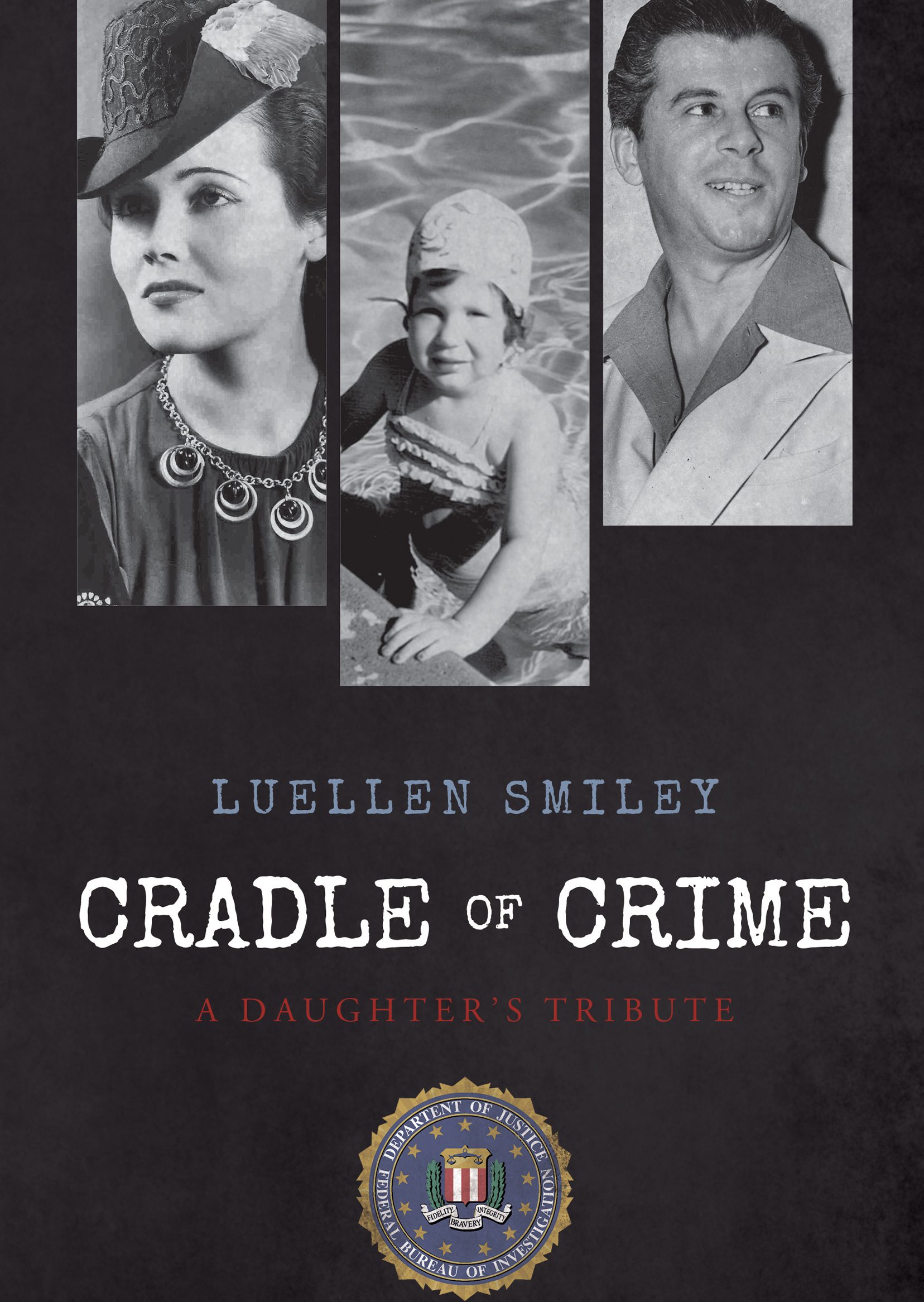
A candid and enthralling memoir, CRADLE OF CRIME – A Daughter’s Tribute is the debut release from Luellen Smiley and it proves one of the most gripping and powerful books in its genre. Certainly no mean feat, given the swelling number of similarly themed offerings but Smiley does well to distinguish hers with painstaking research, a broad narrative sweep and intellectual grip to deliver a fascinating and revealing read, for the events it covers.
The storytelling isn’t redemptive with much of the most compelling material in this book being intensely personal but it is a very human story that dispels hype and myth and gives us a telling glimpse of a remarkable life. Weaving together several stories it makes a vivid and notable contribution to the mafia debate which invariably swings between the codes of honor and family values so often portrayed on the silver screen to a brutal criminal organization focused only on the accumulation of wealth. In contrast, Luellen finds a far more equitable balance in her reflections, and it makes for a genuinepage-turner.
Extremely well written, fans of this ever popular genre will find CRADLE OF CRIME – A Daughter’s Tribute a fascinating read and it is recommended without reservation.
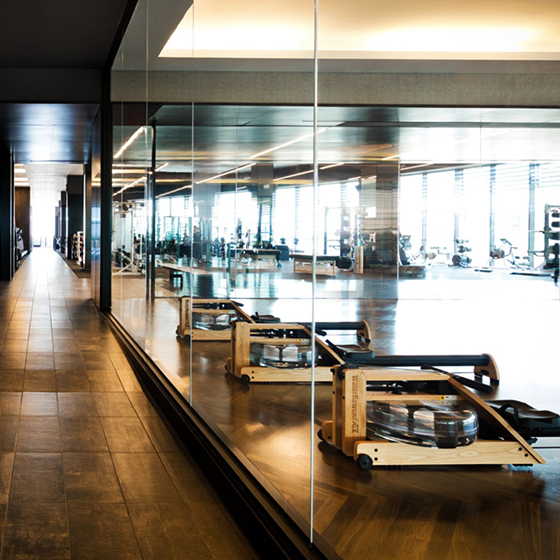
I walked into Century City Club Equinox, almost inserting myself into the spotless transparent glass door. Three young women at the counter, beaming youth in front of black walls that seem to suck me in.
“I’m here for the tour.” A suited man in a large, rather luxurious office greets me with so much reserve and robotic gestures that I feel like running out. I was led through a scintillating voluminous space, enveloped in floor-to-ceiling glass, streamed with sunlight and views of Westwood. The members, women attired in matching voluptuous outfits and personal trainers, lean as lions tossing funny equipment to the client, fastidious housekeepers, sterilizing and vacuuming in trendy uniforms. It was as if I were watching a film production.
The treadmill cycle area was a bit crowded, and not one person didn’t have a headset on, staring at the screen of choice. The bathrooms were hotel accessorized, and even pumps were filled with Kiehl products. There was a steam room, make-up area, showers, all the necessities, and a few women were blowing their hair, all beautiful.
More rooms, a snack bar, shopping, pulsating music, and a closer look at the guests.
“ This is as upscale as you can get; you’ll love it, and you’ll meet important people, I’m sure.”
I listened to his closing argument and watched the bodies bend like pretzels as personal trainers raised and stretched their heads, arms, and legs. Bodies bounced, climbed ropes, did flips, and hung upside down, like a circus act. After the close, a condescending smirk, that I read as, join, or go hang out with the losers at 24-hour fitness.
He handed me the contract, and I read it over. The cost was more than I’ve ever spent. The way I looked at it was a place to work out and meet new people, although my instinct was that these were not my people. I signed and walked out feeling dizzy again. I stopped in a shoe store to look at what women were wearing. The salesgirl kept complimenting me, and showing me shoes that she loved, and before I knew it, she sold me what I didn’t come in to buy, high-top lace-up pink workout sneakers. Leaving the Century City Satellite, beyond the construction and traffic, I raced home to recuperate. What’s happened to me after living in a village in New Mexico, is that too much stimulation is now exasperating.
I walked to Equinox for my first workout, hopped on the treadmill with weights, and tried to look perfectly comfortable, but I wasn’t. The vibe and everything about this ballroom of a gym seemed rehearsed. Maybe I’m too observant, trying too hard to fit in. I noticed so much in that hour. The workout is also a sort of performance, just a shade of competition between men and their weights, women straddling rubber balls, yoga mats, bench presses, and only a handful look like they need it. Men and women occupy the treadmill room; without expressions, they seem to live inside themselves. There is no conversation; it feels more like a convent. There is no hi, hey, or smile. I asked a trainer, “It’s not very social here. Why is that?” “ These are the highest paid executives, lawyers, agents, actors, and they don’t come in to socialize–they are only here to do the work-out.” Great move, Greta. I’m paying three hundred a month to be invisible.
It is my mother’s birthday, so I am thinking of her. If she had been here today, we would have had this conversation.
Mom, I can’t hold up, I’m so beat down.”
” You have to. I know your situation is degrading and frightening, but you don’t have a choice. You have to use all your strength.”
” I wish I was more like you.”
” You are like me, and I know you will overcome.
After our home burned down in the Bel Air fire, my parent’s divorce was in motion. Dad moved to Hollywood, and Mom moved me to Westwood to a studio until she found work. Mom returned to modeling to support us.
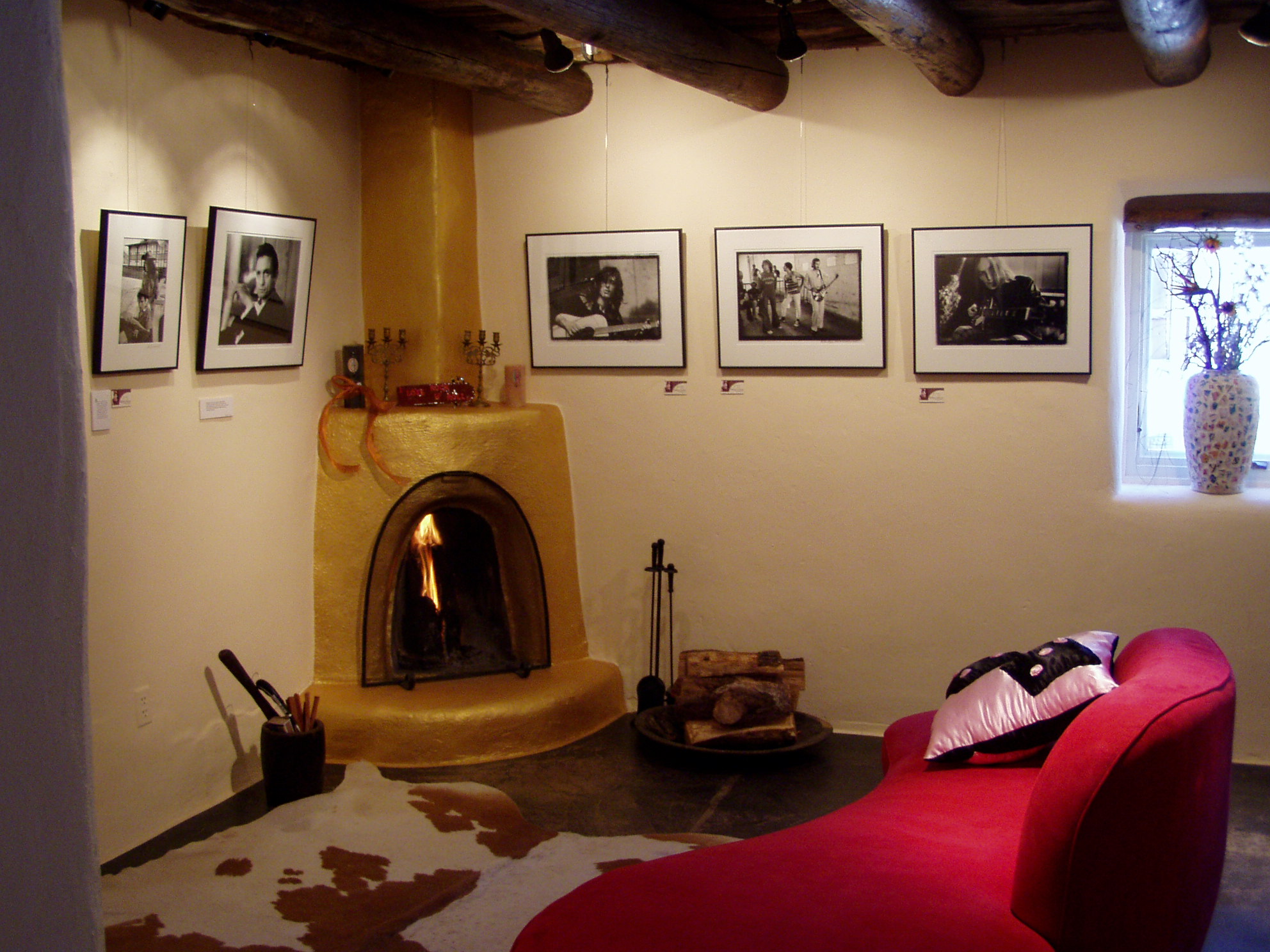
SILHOUETTE of a Taos night out in 2006. It begins with the sunset—a bubble-gum pink sash that swirls like taffy just above the distant hillside. The transcending forms and colors in the sky distract me; they silence me, keeping me from turning on the television or answering the phone.
The sunset has settled into my routine. I watch it from the roof garden over our Adobe Home and Gallery every night. In the midst of dressing to attend an art auction at the Millicent Rogers Museum, the sun has vanished. The sky turns Taos blue; a luminous oil pigment canvas blue that appears like an endless tunnel you can walk through. As I descend the staircase and cross over the ménage of piles shoved in a corner to allow SC to paint, I think, “This is going to be my home. I’m still here” Adventures in Livingness
In the courtyard where new flagstone has been laid, and a mud ditch blocks the exit, Rudy hitches me on his back and carries me out the side entrance through Tony Abeyta’s yard. Tony’s yard is piled with sand from our flagstone project, and my high-heeled black suede shoes are not at all practical for crossing New Mexican dunes. This is how the evening begins. Out in the parking lot, we circle around once and stop in Robert’s gallery. He has offered me his turquoise squash seed necklace to wear at the auction. The necklace is from Turkey, and sells for $1,800. Millicent Rogers events always attract women with extravagant jewelry, and Robert knows I have no such possessions. He hands me the necklace and says, have fun.
At times like this, I can forget the faces and routines I lived in Solana Beach and feel swept into a labyrinth of unfamiliar vignettes. There are two police cars in the rear of the parking lot, the church looms like a fortress of wet mud, and SC is listening to The Band CD we picked up in Santa Fe. I slide into the car, ensuring my shoes don’t fill with gravel.
There is very little street light along the desert road, and cars approach you at disarming speeds. For newcomers, the pale yellow line that separates oncoming traffic, roaming animals, hitchhikers, leather-clad bikers, and abandoned pets is of no comfort or value. Boundaries and civilities between people are vague, and sometimes, conversations elope into poetry.
At the Millicent Rogers Museum, the director, Jill, who is there to welcome each guest, greets us at the carved wooden doors. This museum was once a home, like most museums in Taos.Each room is an envelope of Native American jewelry, ceramics, paintings, weaving, textiles, and metalwork sealed with Millicent Rogers’s ethereal presence. By coming to Taos and bridging her New York chic with southwestern individuality, she set global trends in fashion, art, and living. he museum collection includes some of her designs that evolved from her residency in the desert. She moved here in 1947 and died here in 1953. Although she could have chosen anywhere in the world to live, she settled in the unaltered, surreal lunar beauty of Taos.
I wandered through the tightly packed rooms, alternately viewing the guest’s attire and jewelry. The woven wraps, belts, and hats worn by men and women form a collage of individual expression. Almost everyone seems to attract attention by the texture and color of his or her attire. It is a festive traditional look, with southwestern accessories paired with jeans or silk dresses. If you come to Taos, look for a belt buckle, one piece of Native American jewelry, and one piece of art.
When the auction was announced, I admired the same etching as the woman next to me. She remarked that the artist was also the teacher of one of her children. I learned that Ellen had six children and 11 grandchildren. She was petite with curly blonde hair, and I liked her instantly. I told her I was a writer.
“So am I,” she answered.
Rather than talk about her work, she began talking about her daughter, who is also a writer.
“I’m so lucky–all my children and grandchildren are creative and artistic.”
It was obvious that her life was a garden of earthly delights and that she had raised many roses. When the auction began, she vanished, and I quickly viewed the art before returning to the two etchings. They were both sold.
As I was walking out, I bumped into Ellen. She was clutching the etchings.
“So, you bought them,” I said.
“Oh, yes, I had to have them.”
She left me with a beaming smile and a closing remark I often hear: “Welcome to Taos.”
I love hearing that so much I don’t want to stop saying, I just moved here. After the auction, we stopped in Marco’s Downtown Bistro, where we joined an improvisational party. It started when Marco introduced us to his friends, Pablo and Joan, who were visiting from Santa Fe.
The dim, glowing melon adobe walls of the bistro, Marco hugging everyone, Joan’s melodious, high-pitched laughter, Pablo telling jokes, Rudy laughing, and then Philip arriving to tell stories crossed over from strangers in a bistro to a fast-rolling film. The conversation and laughter surfed breathlessly from one person to another.
Joan remarked, “My fifteen minutes. This is the best for me. The first time you meet someone, you’re both talking without effort. It’s so perfect.”
We closed the bistro past midnight. Marco had gone home. Joan decided to stay at a friend’s house. Philip agreed to drive to Santa Fe the next day, and we took Tylenol before bed.
Not every night out in Taos is like Joan’s fifteen minutes, but chances are you will have something to write home about. The beginning of Gallery LouLou Taos, NM
OLYMPUS DIGITAL CAMERA
OLYMPUS DIGITAL CAMERA
OLYMPUS DIGITAL CAMERA
OLYMPUS DIGITAL CAMERAOLYMPUS DIGITAL CAMERAOLYMPUS DIGITAL CAMERA
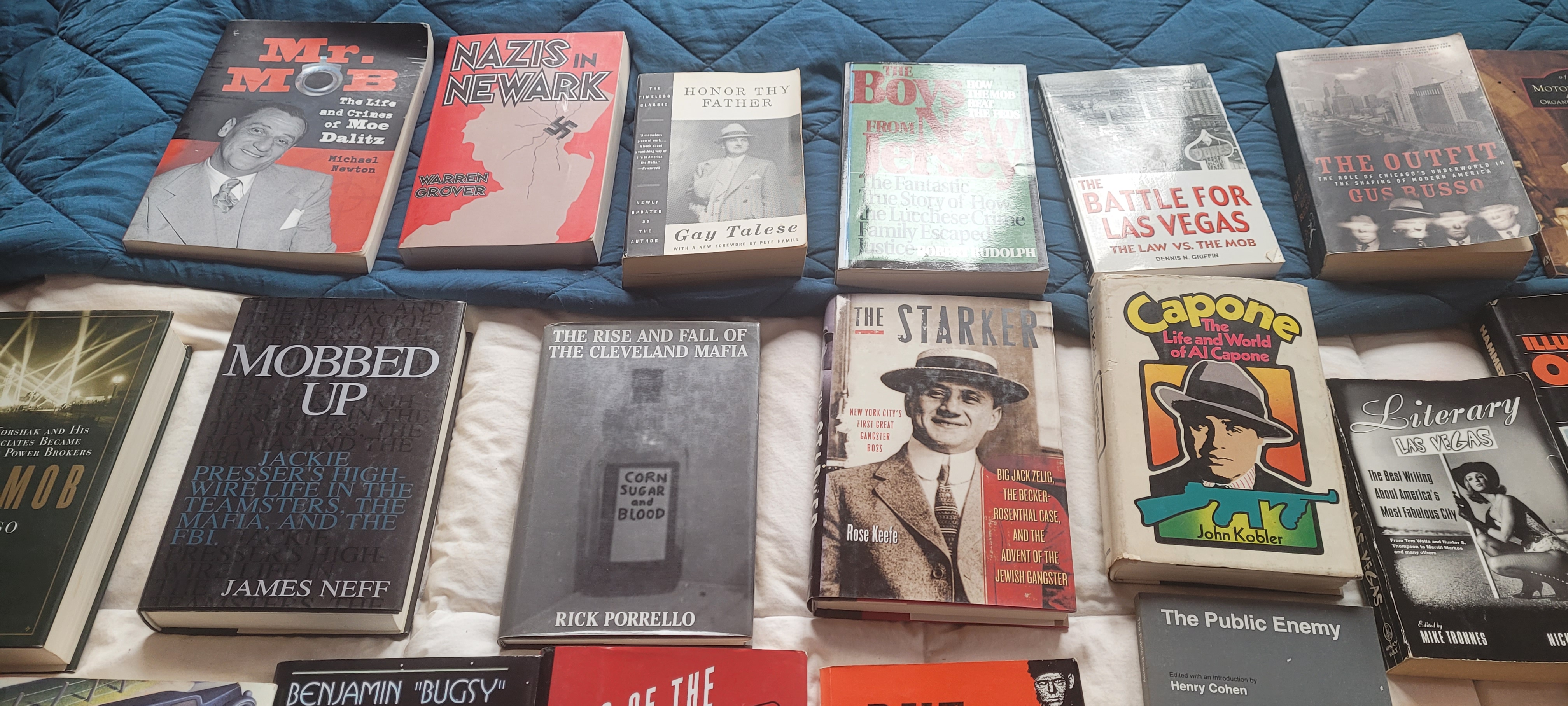
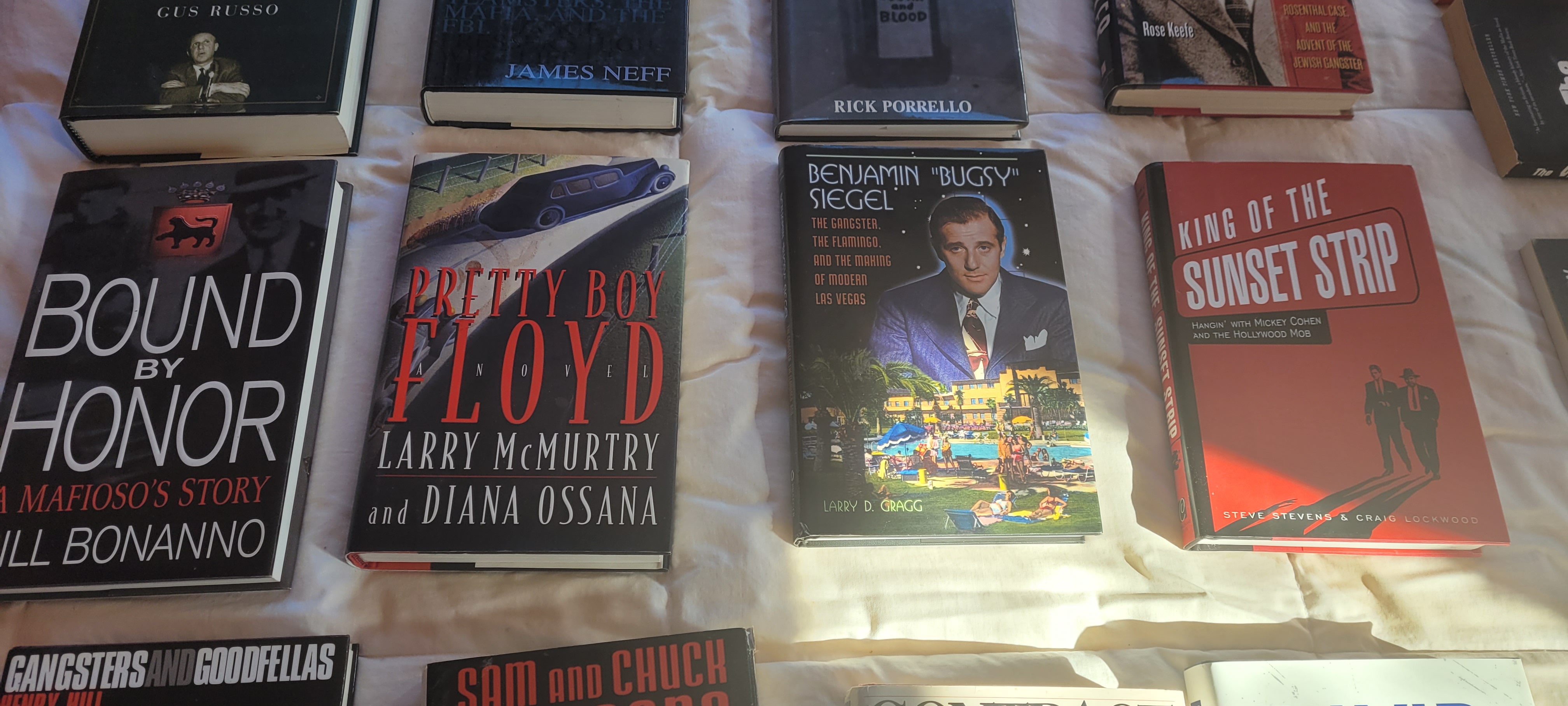
BOOKS FOR SALE FROM MY RESEARCH COLLECTION.BASED IN NEW YORK. PREFERRED SALE OF FIVE OR MORE. HARDBACK $14.00 SB $6.00 + MEDIA MAIL. INDIVIDUAL PHOTOS ON REQUEST.
Luellen Smiley – Some book sections are highlighted but otherwise in good condition.Bugsy Siegel’s book, Mr. Mob & King of the Sunset Strip, sold.
THE BATTLE FOR LAS VEGAS SB – DENNIS GRIFFIN
BUT HE WAS GOOD TO HIS MOTHER – SB R. ROCKAWAY
MOTOR CITY MAFIA SB – SCOTT M. BURSTEIN
THE BOYS FROM NEW JERSEY SB – ROBERT RUDOLPH
CHICAGO HB- DAVID MAMET
DOUBLE CROSS- HB SAM & CHUCK GIANCANA
GANGSTERS AND GOODFELLAS HB AS TOLD BY GUSS RUSSO
THE STARKER HB – JACK ZELIG ROSE KEEFE
MOBBED UP HB – JAMES NEFF
BOUND BY HONOR HB – BILL BONNANO
THE PUBLIC ENEMY SB – HENRY COHEN SCRIPT
NAZIS IN NEWARK SB- WARREN GROVER
THE VALACHI PAPERS PETER MAAS
BLOOD RELATION SB – ERIC KONICSBERG
THE OUTFIT SB – GUSS RUSSO
TOUGH JEWS – SB RICH COHEN
THE MAFIA MURDER OF JFK CONTRACT ON AMERICA-HB DAVID SCHEIM
ORGANIZED CRIME HB – PAUL LINDE
CAPONE HB- JOHN KOLER
LITERARY LAS VEGAS SB -The best writing about America’s Finest City MIKE TRONNES
HONOR THY FATHER SB – ( MY DAD’S) GAY TELESE
MURDER INC SB BURTON TURKAS – SID FEDER
THE LAST MAFIAOSO HB – OVID DEMARIS
ALL AMERICAN MAFIOSO SB- THE JOHNNY ROSELLI STORY CHARLES RAPPLEYE & ED BECKER. SIGNED.
PICTORIAL BOOKS
FABULOUS LAS VEGAS HB – MICHELE FERRARI STEVEN IVES
ORGANIZED CRIME- PLAYBOYS PICTORIAL HISTORY HB RICHARD HANNER







 ADVENTURERS IN LIVINGNESS
Leave a Comment