My Favorite home must be sold. After twenty-four years, Letting go is going slow, packing, and viewing my possessions and antiques. Today, I found a matchbook in perfect condition from the Stork Club, playbills, and musical sheets. I wish I hadn’t opened my steamer trunk; it’s like looking at another woman.
By MARTIN ZEILIG On the evening of June 20, 1947, less than six months after he opened the Flamingo Hotel-Casino in Las Vegas, Ben “Bugsy” Siegel died in a barrage of bullets through the front windows while sitting on a couch in his Beverly Hills mansion at 810 Linden Drive. Assassinated at the age of 41, Siegel was one of the USA’s most notorious gangsters. A former Winnipegger, Al Smiley (1907-1984) was with Siegel that evening. “My dad was seated inches away from Siegel, on the sofa, and took three bullets through the sleeve of his jacket,” said Luellen Smiley, a creative non-fiction writer, award-winning newspaper columnist, and Mob historian who lives in Sante Fe, New Mexico. She consented to an interview with The Jewish Post & News earlier this winter. “He was brought in as a suspect. His photograph was in all the newspapers,” said Luellen. “He was the only nonfamily member who had the guts to go to the funeral.” So who was Al Smiley? Born in Kiev, Ukraine in 1907 as Aaron Smehoff, Smiley and his family – father Hyman, mother Anne, sister Gertrude (who became a school teacher and lived in Winnipeg until her death many decades later), brothers Samuel and Benjamin – immigrated to Winnipeg when he was five, said Luellen Smiley, during a recent telephone interview with this reporter from her home in Sante Fe, New Mexico. “My grandfather was a kosher butcher and delicatessen owner,” she continued, noting that the family home and butcher shop was located at 347 Aberdeen Avenue. “He maintained an Orthodox household and expected that his eldest son would become a rabbi. But, my father was rebellious and interested in sports, especially hockey.” This caused conflict between the willful youth and his rigid, religious father. So, the teenager fled Winnipeg for greener pastures in Detroit, Michigan via Windsor, Ontario in 1923. He got a job travelling with the Ringling Brothers Circus and ended up in California where he was arrested for a drugstore robbery in San Francisco and sent to Preston Reformatory School in Ione, California, Luellen noted. “It was there that he met legendary movie director Cecil B. DeMille,” she said. “He was doing some sort of research for a movie. My father asked him for a job in the movie industry upon his release, and DeMille agreed. He found my dad work in a wardrobe department. He later became a property man, then a grip, the person in charge of production on a set, and eventually a producer.” He befriended celebrities like George Raft, Eddie Cantor, Clark Gable, Lauren Bacall, along with such gangster associates as Ben Siegel. “I’m pretty sure Dad met Ben through George Raft,” Luellen Smiley speculated. With Siegel’s help he opened a nightclub in L.A. sometime in the late 1930s. Smiley would later tell his daughter that Siegel was “the best friend I ever had.” In her soon-to-published memoir, excerpts of which she agreed to let this newspaper print, Luellen Smiley reveals the conflicted feelings she had growing up, and into later life too, about her father: “Some children are silenced. The pretense is protection against people and events more powerful than them. As the daughter of Allen Smiley, associate and friend to Benjamin ‘Bugsy’ Siegel, I was raised in a family of secrets. “My father is not a household name like Siegel, partly because he wore a disguise, a veneer of respectability that fooled most. It did not fool the government. “When I was exposed to the truth by way of a book, I kept the secret, too. I was 13. My parents divorced, and five years later, my mother died. In 1966, I went to live with my father in Hollywood. I was forbidden to talk about our life: ‘Don’t discuss our family business with anyone, and listen very carefully to what I say from now on!’ But one night, he asked me to come into his room and he told me the story of the night Ben was murdered. “When I was spared death, I made a vow to do everything in my power to reform, so that I could one day marry your mother. “Ben was the best friend I ever had. You’re going to hear a lot of things about him in your life. Just remember what I am telling you; he’d take a bullet for a friend. “After my father died, I remained silent, to avoid shame, embarrassment and questions. But 10 years later, in 1994, when I turned 40, I cracked the silence. I read every book in print – and out of print – about the Mafia. Allen Smiley was in dozens. He was a Russian Jew, a criminal, Bugsy’s right-hand man, a dope peddler, pimp, a racetrack tout. I held close the memory of a benevolent father, wise counselor, and a man who worshipped me. “I made a Freedom of Information Act request and obtained his government files. The Immigration and Naturalization Service claimed he was one of the most dangerous criminals in the country. They said he was Benjamin Siegel’s assistant. They said he was poised to take over the rackets in Los Angeles. He didn’t; he sold out his interest in the Flamingo, and he went to Houston to strike oil. I put the file away, and looked into the window of truth. How much more could I bear to hear? “He stowed away to America at 16, and was eventually doggedly pursued for never having registered as an alien. He had multiple arrests – including one for bookmaking in 1944, and another for slicing off part of the actor John Hall’s nose in a fracas at Tommy Dorsey’s apartment. He met my mother, Lucille Casey, at the Copacabana nightclub in 1943. She was onstage, dancing for $75 a week, and my father was in the audience, seated with Copa owner and mob boss Frank Costello. “‘I took one look, and I knew it was her,’ was all he had told me on many occasions. “On a trip to the Museum of Motion Pictures Arts and Sciences in Los Angeles, I was handed a large perfectly pristine manila envelope, and a pair of latex gloves with which to handle the file. Inside were black and white glossy MGM studio photographs, press releases, and biographies of my mother’s career in film, including roles in ‘The Secret Life of Walter Mitty,’ ‘Ziegfeld Follies of 1946,’ ‘Meet Me in St. Louis’ and ‘Harvey Girls.’ She was written up in the columns, where later my father was identified as a ‘sportsman.’ The woman who pressed my clothes, washed my hair, and made my tuna sandwiches was an actress dancing in Judy Garland musicals, while her own life was draped with film noir drama. “My father wooed her, and after an MGM producer gave her an audition, he helped arrange for her and her family to move to Beverly Hills, where she had steady film work for five years. He was busy helping Siegel expand the Western Front of the Costello crime family and opening the Flamingo casino in Las Vegas. They were engaged in 1946. “Still, the blank pages of my mother’s life did not begin to fill in until I met R.J. Gray. He found me through my newspaper column, ‘Smiley’s Dice.’ “One day last year, R.J. sent me a book, ‘Images of America: The Copacabana,’ by Kristin Baggelaar. There was my mother, captioned a ‘Copa-beauty.’ Kristin organized a Copa reunion in New York last September. I went in place of my mother, but all day I felt as if she was seated next to me. I fell asleep that night staring out the hotel window, feeling a part of Manhattan history. “Now, the silence is over. I don’t hesitate to answer questions about my family. I have photographs of Ben Siegel in my home in Santa Fe, NM, just as my father did. Every few months I get e-mails from distant friends, or people who knew my dad. “It seems there is no end to the stories surrounding Ben and Al. I am not looking for closure. I’ve become too attached to the story. To me, he was a benevolent father, a wise counselor, and a man who worshipped me.” Luellen Smiley can be contacted via email: folliesls@aol.com
After several summers in Saratoga Springs, I discovered I loved thoroughbred horseracing. All my life I’ve been a performing arts spectator. I never watched any sports on television and only attended baseball games when my father needed a companion. The art of performance led me to experience the racetrack as live theater.
The racetrack is a stage, the jockeys are the actors, and the men and women that fill the bleachers, the picnic grounds, the Turf Club, and the private boxes are the audience. The racehorse is the star celebrity.
The tickets for admission, like any show, are based on your seating. You can walk through the gates for $3.00 or buy a box for $100,000 a year. The collage of human emotions, drama, suspense, and danger are key components to good theater.
Gambling personifies the Shakespearean twist of the racetrack. High rollers and drugstore cowboys wager to win. Some men walk out with a grocery cart of recycled cans; some walk out with enough money to buy a racehorse. They leave by the same gate, and the next day, they return for more. But why, I ask, is thoroughbred racing not considered an all-around American sport? Why don’t jockeys get athletic respect? These two spheres of lightning truth struck me while I trampled through the mud one rainy August day at Saratoga Racetrack.
I asked around for opinions. The Governor’s bodyguard remarked that it was a good question. He did not think gambling was the reason because people always bet on sports. He thought maybe that it was because, as kids, we don’t learn to race horses, like baseball and football. The public is naïve about jockeys because they have never raced. Another answer I heard was that 200,000 fans fill a ballgame on any given day and that those numbers don’t compare with horseracing.
I’m not a gambler, and I don’t ride very well, but I am a drama whore. I took my notebook to the jocks’ room to ask the jockeys what they thought about this irregularity in sports. Jose Santos had a few minutes to spare.
“Jose, do you feel like America thinks of you as an athlete?”
“We don’t get the respect that we should. I think it’s the gambling. This is the greatest racetrack in America, and there is gambling in every sport, but when you come to the track, you see it right there, and people cannot avoid it. Pound for pound, we are more fit than most athletes.”
I asked Jose what he does aside from riding. He jogs three miles every day and walks for a mile. He reminded me that if he goes down with the horse, his strength is what gets him back up again. Another misconception is that jockeys only ride for 2 minutes. Well, the race is 2 minutes, but they ride every day of the year. They do not take breaks.
“How does the public perceive you?” I asked.
“In Europe, they are treated like movie stars. Over here the jockey is just another person, and in sports, the jockey is low. I wish we had more respect, but we don’t get the publicity.”
This feels like the guts of the truth; our little minds like to align with other like minds. The leaders of the pack go to football and baseball, and the media follows behind.
Jose remarked that he only felt real enthusiasm and support when he won the Triple Crown. Otherwise, they get a little column in the paper with the results. “The Racing Form is 100 pages, and nothing is written about us.”
“What if there was a Jockey Magazine?”
“Well, that would be great. Then, the companies would be interested, and we’d get sponsors. When I go out to the park and run, I wear Nikes too.” He chuckled.
“Have they ever approached you for sponsorship?”
“No, I don’t expect they will.”
A few days later, I found Jerry Bailey before a race. It was a cinch to get into the jocks’ room in those days. That was before Elliott Spitzer sipped all the fizz out of Saratoga Race Track. These days the Press can’t walk inside the Jocks’ room. Jerry hopped onto a counter and extended his hand.
“How are you?”
“Great, Jerry, thank you for meeting me.”
“Sure.”
“Jerry, I’m very interested in the lack of sports sponsorship offered jockeys. Why do you think that is?
“Because no one is promoting us. If you don’t do anything to promote us, how does anyone know? They have bobbleheads and gimmicks like that, but there isn’t even a Jockey Calendar. Excuse me now; I’ve got to ride a race.”
Of all the risk-takers and entrepreneurs in the world, horse racing is the champion in all categories. If I decided to understand the business, attend every race, meet every owner, jockey, and trainer, there’s no chance I’d understand anything more because I do not love the horse the way a jockey does, and you can’t fool the horse!
During the Hall of Fame Induction presentation at Saratoga a few years back, D. Wayne Lucas made a speech that drew a full house of gregarious applause. This is an excerpt:
“You ride a great horse, and the owner wakes up the next day and decides to switch to Bailey. The adversity is gut-wrenching, bringing you to your knees and humbling, whether you’re a rider, trainer, owner, or breeder. There’s one thing that will keep you going, and that is simply your attitude. Attitude is the most important decision you make every day. Make it early, and make sure you make the right one. You will have a very full and very peaceful life.”
Maybe it’s time for a Jocks Nike, call it the Two Minute Nike.
Ella blew out tunes like a smoke stack, and her face drew more sweat with each soulful sound. By the second song, the sweat was pouring down her face and into that gorge like cleavage that heaved with each breath. I was a child and didn’t understand the emotions that distorted her eyes and mouth. Ella, crowned by a sizzling hot spotlight overhead, transmitted every flaw and feeling on her face. I hadn’t seen a singer suffer before. I looked up at my mother and started crying.
“ What’s wrong sweetheart?”
“ I’m afraid she’s going to die.”
My mother whispered assurances that Ella was not going to die. I kept crying. She then excused us from our table and I followed her into the Powder Room. She sat me on a chaise lounge and wiped my tears. The expansiveness of the Powder room, compared to the ones today, was like being in someone’s bedroom. Soft cushioned chairs, a long dressing table speckled with ashtrays, perfumes, and miniature toiletries. We stayed there until Ella finished her show. Mom didn’t show her disappointment, she rarely showed despairing emotions, or caused me to feel ashamed of my behavior. Looking back fifty years later, I’m reminded of my mother’s selflessness and how a legend can drop down your path, and you don’t even know it.
Again, looking back fifty years later, my succession of travel diaries is dim by comparison to the Vegas memories. Swirling amongst the élan of prohibition era abandonment, gangsters were the Rothschilds, the royalty of the scene, and the non-members loved it. That’s why the women behaved Roaring Twenties ZaZu Pitts and Louise Brooks emancipated. Everyone was free of their wrappings and responsibilities. They were partying with the men they’d first met on screen, played by Bogart, Robinson, and Cagney. I remember them now as being childlike. The outsiders may have been living the childhood stolen by WWII and the Depression. Their veiled heroes were gangsters who’d been breaking the rules since being ripped from their mother’s breast.
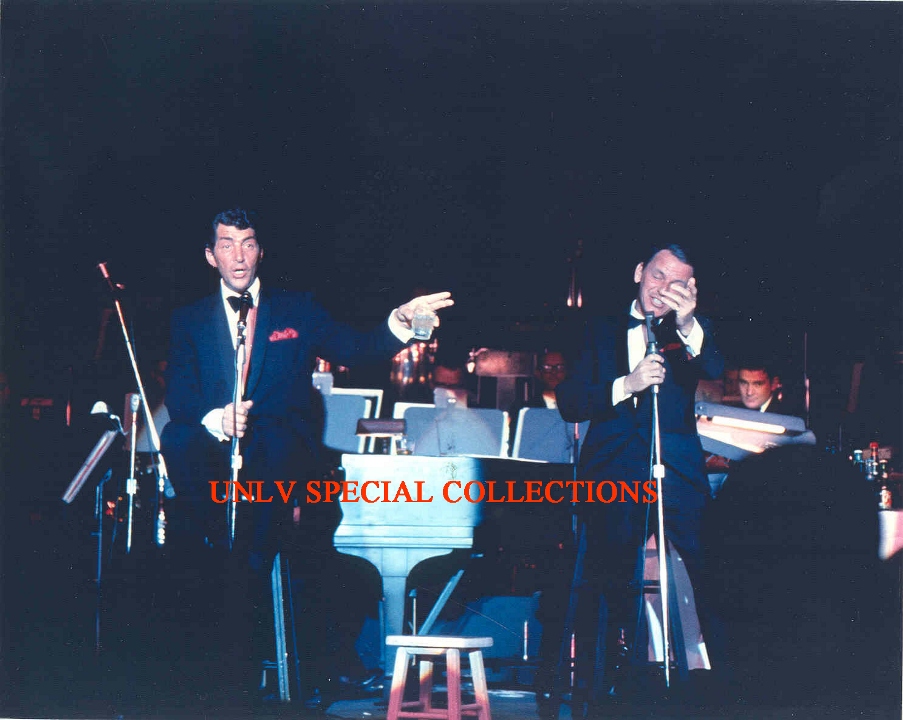
Then, one day the in 1963, the Rat Pack landed in Vegas, wearing black Tuxedos and intercepted the public’s fancy imitations of living vicariously. Joey Bishop, Peter Lawford, Sammy Davis, and Frank Sinatra invited Vegas to drink, make love, and gamble. And they did. If you find anyone over seventy in Vegas today, ask them about the Rat Pack, Johnny Roselli, or Jack Entratter, and you’ll know I’m not exaggerating. Vegas was the time of their lives. The drugs were minor, an upper or a downer to sleep, but no one came to Vegas to OD or commit suicide. The deaths were in the desert, between the gangsters’. This was all before Tony Spilotro got wheels on his greed and went speeding into his own death. TO BE CONTINUED
Part Two. Solana Beach Morrocan Bungalow 2003.Maurice was 84
Maurice married the love of his life on December 25, 1941. They married in December because Maurice had saved one thousand dollars and made one hundred dollars a month. Agnes, his girlfriend in Grant, Iowa, is the woman who led Maurice out to Rancho Santa Fe, California, from his home in Grant. She and her father worked for Ronald McDonald, a prestigious resident in the ranch. She was responsible for housekeeping and cooking, and her father was the chauffeur.
Agnes and Maurice went to the US Grant Hotel for dinner and stayed at the Paris Inn on Kettner Avenue in San Diego. The following day Agnes went off to work. Maurice stayed in the little guest house she occupied on the McDonald property. Two days later Maurice received his draft notice. On December 31, he left his new bride and reported for duty in Escondido. He had one short visit before he left for overseas. Then, the next time he would see her, he would be changed.
Buna
One summer evening, I was sitting on Maurice’s front porch. Sometimes, we would sit out till after eight o’clock at night talking about different parts of Maurice’s life. Maurice is really busy in the summer; he tends to his garden of fruits and vegetables, he delivers furniture for all the Cedros merchants, and he helps his friends. He never seems tired, he likes to sit on the porch, have a beer, and tell stories. I used to like it when my father told me stories, but they were unlike Maurice’s. There didn’t seem to be anything he
couldn’t talk about. Once he said, ” You can ask me anything you want.”
“Maurice, how old were you when you were drafted?”
“Well, I was thirty-one years old in 1941 when the war broke out. I had to leave my wife, which bothered me, but I wanted to go overseas and fight for my country. There were so many nice soldiers, the best people in the world. I recall two boys from Chicago that were only eighteen years old, they lied to get in the service, and they were the best soldiers you ever saw- they weren’t afraid of anything.”
“Where did they send you after you left San Diego?”
“Well, first, I went to Camp Roberts for thirteen weeks of training, but I got out in nine weeks. Then they sent me to Fort Ord to get my gear, rifles, and clothes. We left San Francisco on April 21, 1942. We got into Adelaide, Australia, after twenty-one days at sea.” Maurice paused like he had to catch his breath. I watched his face, thinking he may want to stop.
“You remember so much… Do you mind talking about it?” I asked.
“No, I don’t mind; it changed my life, everything about it.”
“Where did they send you after that?”
“We trained for a while in Adelaide; the people in Australia were so happy to see us. I remember they met us at the beach with tea and cookies. The enemy soldiers were getting close. We went up the coast to New Guinea and into Port Moresby; we got there on Thanksgiving Day 1942. As soon as we got off the ship, the bombs hit us; it was the hundredth raid that night. The next morning we were supposed to get to the Stanley
Mountain range, we were in such a hurry. The Japanese soldiers built cement pillboxes and the army wanted us there. So we got in this plane, and they flew us there. Twenty-one at a time. When I got to the island of Buna, there were dead soldiers scattered all over the beach. We lost men so fast. Then, on Christmas Day of 1942, General McArthur ordered us to advance, regardless of the cost of lives. My division was one of the first to stop the Japanese army, the 32nd Division. After we were immobilized and a lot of our men killed, they sent in the 41st Division to take over.”
Maurice’s memory was like listening to a documentary, and this was the first time a Veteran confided in me. They didn’t get supplies at first; they had to wait till everything was shipped to Europe. They got what was left over, which wasn’t much. He ate cocoanut bark for two weeks and had no water.
“I can remember so well the first Japanese soldier I saw. He was sneaking through the jungle, only thirty feet off. I don’t know if I shot him, but he dropped. I don’t like to think I killed anyone, and it bothers me to this day that I had to kill. The Japanese were good soldiers; they had better ammunition than us. We fought all day, and we always ran out of ammunition before they did. I’ll never forget Christmas Day of 1942. We went into a trench to get ahead; the fellow ahead of me was cut wide open, and the guy behind was shot. I just lay there on the ground. If you moved you’d be shot. It was so bad; I lay there all day and night. ”
“Did you think you were going to die?”
“I didn’t let myself think that. I promised God that if I ever got out alive I’d never complain about anything in my life again. Nothing… nothing could be worse than that day.”
“You kept the promise, didn’t you?” I asked.
“Yes, I have.”
“And that’s why the war changed your life?” I said.
“That’s right. Every day is a beautiful day after you’ve lived through war, at least for me,” he said.
Excerpt from manuscript. All rights reserved. No part of this work covered by the copyright herein may be reproduced without the author’s prior written permission.
HOW ONE SOLDIER CHANGED THE COMMUNITY OF SOLANA BEACH, CA
For many of us, the idea of aging is frightening. We have been led to believe it brings pain, loneliness, and idle time for regressing mentally. Remedies, products, prescriptions, and escapes offer youthful looks, energy, and vitality. The thought of aging is brutal; we pretend we can buy youth. What if you met a man who told you he could do everything today, at eighty-four, that he did all his life without injections, medicine, special diet, or specific training?
What if I told you all his family, including his brothers, mother, and father, is gone? His wife died twenty years ago. That he lives alone and is not lonely. He claims he is the happiest man in the world. Would you want to meet him? He wants to meet you. He would like to be everyone’s neighbor. He has much to teach in a country of strangers about meeting neighbors and making friends. We who know proclaim him an inspiration, a legend, an angel. And to that, he always replies, “I‘m just a regular guy.”
Maurice Roberts has lived in Solana Beach since 1936, and his recollections of the area are intact. I recorded his history and began writing everything down. Next week, I will startthe first in a series of historical perspectives.
Sometimes, a blank piece of paper is the only way to begin, as it is today. I look out the window at blooming trees and a cupful of flowers rising from the ground. The sky is pale grey, and it is just fifty degrees. May, mybirthday month, reminds me of Casey, who threw the dice all her life. She gambled on her dreams.
Casey never told me much about herself. She lived in the present moment and considered her past a private matter. Once I learned of her struggles as a young woman and her chosen life, she became more real than when I’d known her. During the years we were friends, she handed out selected stories, abruptly, with final endings. Being the inquisitive character, the shallowness of her stories bated me. I had to pry the truth out from other people who had known her, and from government documents.
Casey’s first gamble was at sixteen years old. She sent in a photograph of herself for the Redbook Magazine modeling contest. If she’d won, the Powers Modeling Agency in New York City would grant her an audition as a model. Casey lived with her mother and sister in East Orange, New Jersey. Her father had died suddenly, leaving the family without a financier. Her mother was lost without her husband and unsuited to join the workplace. Casey didn’t tell her mother about the contest until she received the letter of congratulations.
John Robert Powers met Casey in his office on East 56th Street and signed her as a Powers Girl. She was stunning to look at, she was photographed like a movie star, and she was modest. John Powers did not look for aggressive, pouty-lipped fearlessness. The Powers Girls were captioned Long Stemmed American Beauties because they were wholesome, beautiful, tasteful, courteous, and virtuous. They were so far from today’s runway models that it is almost a reversal of style. The models of the thirties were ordained to set the highest example of classic good breeding and education. John not only schooled them in fashion, and individual taste, he instructed them in moral integrity, independence, and patriotism for their country. So Casey went to school at John Robert Powers and became one of the top ten models in the country.
She was a blue-black-haired Irish beauty with emerald green eyes and perfect teeth. She stood only 5’ 7”, but that was fairly standard in those days. When I knew her, she was still thin and beautiful, but she did not fuss about herself or spend much time at her vanity. As a Powers model, Casey had a long line of gentlemen callers. Powers Girls were invited to all the nightclub and dinner show openings, sporting events, community galas, and fund-raisers. Social engagements were part of her job. Casey was not a woman of idle chat, in fact a lot of people thought of her as restrained and unfriendly, maybe even snobbish. I think it was more secrecy. People were always prying into her life because it looked glamorous. But there was another side to that glamour she didn’t want to put a mirror to.
One evening, Casey had a dancing engagement at the Copacabana nightclub in New York City. She was on stage with other dancers when a gentleman noticed her. The next chapter of Casey’s life began that night. At twenty-two years old, she fell in love with a man thirteen years older, of the Jewish faith, and who lived in Hollywood. Casey never told me that she fell in love with a gangster. I do know once she felt love for this man, it could not be reversed. The consequences of her love forced her to change and adapt to a new kind of life and different people.
She did not bury or give back her love after she learned what he did for a living. She asked him to reform his criminal activities, and he agreed if only she would marry him. We all know at twenty-two, a woman believes she can change a man, and a man lets her think she can. Without that dream, many lovers would not have found their mates.
Casey married her love and spent her life trying to keep her husband on track with honesty. I met her husband just after he tried to reform and was beaten down by his past mistakes. I called him Daddy.
Achievement knocked down the barrier of fear. It feels like lifting off from ground level; I am floating like I used to be in the swimming pool, and I am only at my desk reading the news from my attorney. From one beginning to an ending, five years later, after tedious research, unscrambling legal language, and searching for the meaning behind the case references, this journey is over. I won the lawsuit against the bank that attempted toforeclose on my home and Dodger, my ex-partner of thirty-five years, who, for still unknown reasons, pursued the foreclosure.
Agape, eyes widened, nerves settled like snowflakes; the joy of achievement cannot be understated. During this phantasmagoria, life beyond research, consulting with foreclosure agencies, banking laws, and regulations, I detached from my passion for adventure, creativity, parades, parties, and socializing; I sat alone, and resilience shadowed, then enflamed like a log of fire, encapsulated into a daily doctrine. Music by Ennio Morricone, blue note Jazz, the everchanging scenery of seasons, phone conversations with friends who released ambers of comfort, confidence, and advice, and TCM films nuzzled my fatigue.
Some days, I remained in bed, staring at my Icart Ladies of Leisure prints, or sat by my favorite window seat and studied clouds, birds, and leaves. The blossom of tenacity grew into a tree trunk and taught me the art of persistence and emotional strength, which were missing links in my character.
Achievement in fine-tuning relationships, setting down the needle gently instead of plummeting riffs and arguments. In the present, as you all know, if you read the news, our culture has replaced argument and debate with assault and violence. I digress; renewed confidence in my aptitude to fight battles, disputes, and disappointments without Dodger is as solid as concrete.
The next episodic internal journey is regaining my passion for opening the door to interaction with strangers and discovering newness in that engine of life.I hope this admission reaches others who are experiencing depriving themselves of love within and without.
I won the 4.5-year lawsuit against the bank’s foreclosure of my Follies House. She will sell at market value. I toast with my FB friends, who hung in as I wedged against impossible odds with your patience and comfort. !!!!!!. The photo is from 2000 when we bought her. An enormous hug to my real estate broker, Scott Varley (aka Superman), and my attorney, who had educated and believed in me when I did not!









 ADVENTURERS IN LIVINGNESS
Leave a Comment