
BENJAMIN “BUGSY” SIEGEL AND ME.


BY: Luellen Smiley

When I was eight years old, our home burnt to the ground in the Bel Air, CA fire, and everything we owned fell to ash. Shortly after my mother moved us to an apartment in Brentwood, a mammoth carton arrived and was placed in the center of the living room. My mother cut it open and urged me to look inside. I sat cross-legged on the avocado green carpeting and discovered a heap of brand-new Bermuda shorts, matching tops, and dresses.

I quickly shed my worn trousers and stepped into a new outfit, dancing about as I zipped myself in. My mother watched, and echoed my childish yelps of elation. I learned they were from my Aunt Millicent and that she lived in New York, and Iโ€™d met her when I was a child.

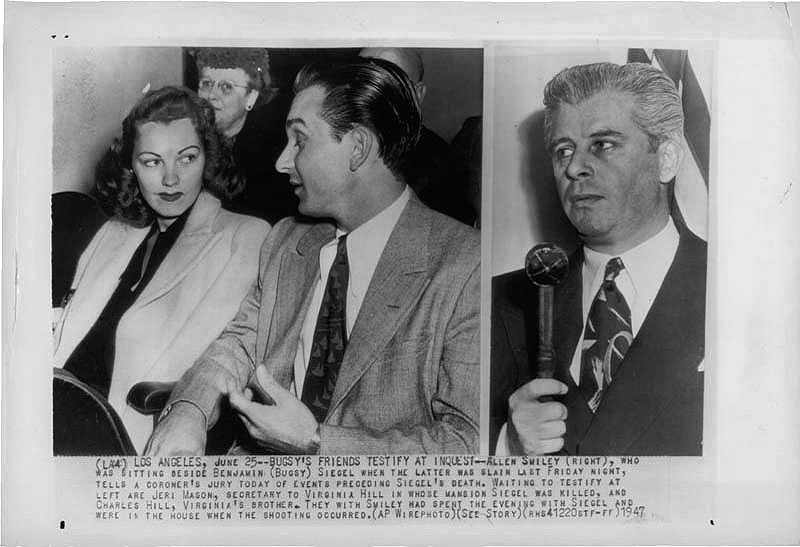
Close to ten years later, my father called and ordered me to his apartment. He said that Millicent was coming over. I knew by now that Millicent was Benjamin Siegelโ€™s daughter, and Ben was my fatherโ€™s best friend. He was sitting on the same chintz covered sofa the night Ben was murdered and witnessed Benโ€™s eyes bleeding down his face.

When my father answered the door, I watched as they embraced. Millicent had tears in her eyes. She walked over to me, and took my hand. I looked into her swimming pool blue eyes and felt as if I was drowning. She sat on the edge of the sofa and lit a  brown Sherman cigarette. I studied her frosted white nails, the way she crossed her legs at the ankles, her platinum blonde hair, and the way her bangs draped over one eye. What impressed me most was her voice; like a childโ€™s whisper, her tone was delicate as a rose petal.

I spent the rest of that afternoon memorizing her behavior. She emanated composure and a reserve that distanced her from uninvited intrusion. Over the next few years, Millicent and I were joined through my fatherโ€™s arrangements, but I was never alone with her. When he died in 1982, she was one of three friends at his memorial service, just as my dad was the only friend at Ben Siegelโ€™s funeral.  

As the years passed, and my tattered address books were replaced with new ones, I lost Millicentโ€™s phone number. When I began researching my fatherโ€™s life in organized crime in 1996, I gained an understanding of my fatherโ€™s bond with Ben Siegel. I reconnected with several of Dadโ€™s inner-circle, but Millicent was underground, and now I understood why.  

Last year I received an email from Cynthia Duncan, Meyer Lanskyโ€™s step-granddaughter. She told me about the Las Vegas Mob Experience, a state-of-the-art museum in the Tropicana Hotel, that will take visitors into the personal histories of Las Vegas gangsters. Despite my apprehensions about the debasing and one-sided publicity that characteristically surrounds gangster history, I called the museum and was told, โ€œMillicent would like to contact you.โ€   

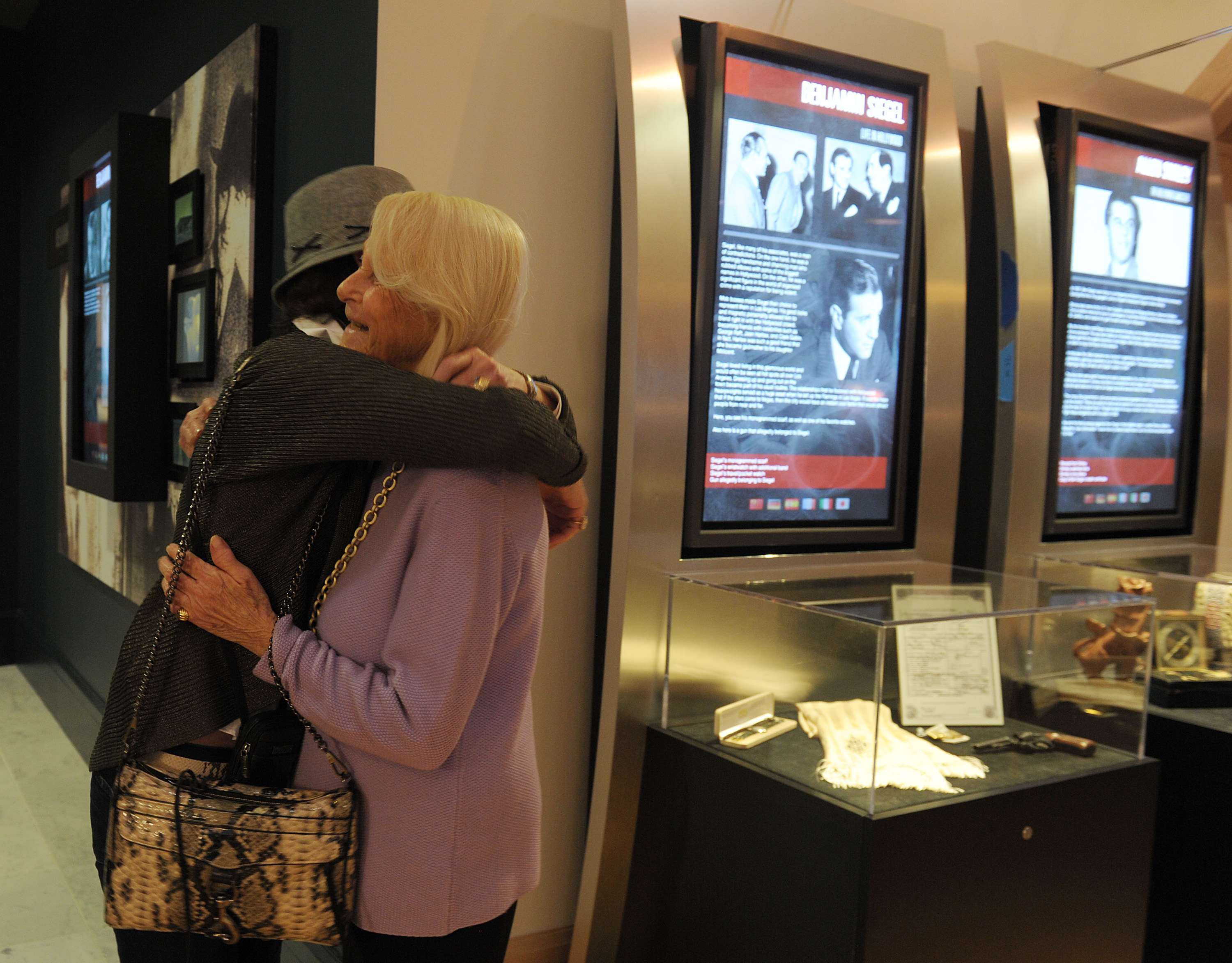
A month later, I was waiting for Millicent in the Mob Experience offices in Las Vegas. When she walked in, I stood to embrace her, and this time the tears were in my eyes. Millicentโ€™s voice and regal posture was unchanged, โ€œOur fathers were best friends, practically attached at the hip. Your Dad was at the house all the time. Iโ€™ll never forget when he met me at the train station to tell us about my fatherโ€™sโ€ฆ death. Smiley was very good to us. My mother adored him, too.โ€

Mob Experience March 27 2011 Photos By Denise Truscello

The Mob Experience Preview Center was like a family room to me, because some of the men featured had been my fatherโ€™s lifelong friends and protectors. I stopped in front of the Ben Siegel display case and saw an object that was very familiar. My father had the identical ivory figurine of an Asian woman. I still have it. So much of their veiled history was exposed. Between these two men was a brotherly bond that transcended their passing, and was even evident in their shared taste in furnishings.

After I returned home, Millicent and I talked on the phone.

โ€œYour father belongs in my Dadโ€™s room. Theyโ€™ll just have to make Mickey Cohenโ€™s room smaller.โ€

โ€œMy father hated Mickeyโ€, I said.

โ€œSo did mine! When are you coming back? Iโ€™ll kill you if you donโ€™t become part of thisโ€. 

I dropped into random reflections; the adventures of Ben and my father, gleaned from books, newspapers, FBI surveillance files, films, documentaries, and conversations with people who knew them both. I dreamily visualized these two men, striding along the streets of Beverly Hills when it was a two-story brick village, without islands of garish lighted palm trees, paparazzi, and limousines.  They might stop at Al Perryโ€™s Beverly Hills Athletic Club for a steam and work-out, and then take a drive in Benโ€™s convertible to Santa Anita Race Track. At the track, theyโ€™d sit in the Turf Club, immersed in the perfume and red lipstick glamour that Lana Turner, Betty Grable, and Rita Hayworth epitomized. They, and my mother, became the characters I had to write about. 

On balmy summer nights, Ben, and Al drove along Sunset Boulevard, stopped in for a few rounds at Ciroโ€™s or the Mocambo, and then played cards at Dadโ€™s apartment at the Sunset Plaza. George Raft was there, too, along with a funny little Runyonesque character by the name of Champ Segal, and Swifty Morgan, with a pocket size fortune of tricks and dice. The FBI were parked in a sedan across the street, watching. Maybe they had an informant planted in the building, like they did when I lived with my father at the Doheny Towers. I know Dad watched Benโ€™s back, not just because Ben moved so quickly, and in so many directions, but because he was studying him, like an actor studies his character, aspiring to absorb Benโ€™s magnetic mannerism.      

Early the next morning, I opened the shutters of our Havana-hip suite at the Tropicana and looked out at the misty peppermint pink sunrise and flashing multimedia billboards. My eyes sank into the stimulation, like being thrown into a food processor of human temptation. If Ben had lived to build his Monaco-chic hotels and casinos, Iโ€™m sure he would have done it differently. Heโ€™d been to the French Riviera, and experienced European รฉlan. More importantly, Ben was different, but not in the way youโ€™ve been asked to believe by reporters and law enforcement. Ben was noble, and his violent temper, cost him his reputation. His loyalty to his partners, and his family was intact. What the press wrote about Ben was handed to them by Hoover, two-faced columnists, and informants. He was more than handsome, generous, and fearless; he was an icon, with the finesse for embellishing strangers with importance, facilitating dreams, and taking a fighting stand against Anti-Semitism. 

 Newspaper reporters from that era like Mark Hellinger and Damon Runyon knew how to write about Ben, and they are the sources I used to draw my own Ben Siegel portrait.Itโ€™s easier to read books than go out and interview the relatives, rabbis, and community where they lived.

My dad came into the life by way of a friendship with Ben. He wasnโ€™t physically violent: he could holler loud and intimidate guys, but his real asset was that bullet-proof friendship.

As our jet roared upward, I crunched against a pocket-size window, and studied the paper-thin rows of glass and marble hotels of Las Vegas, the sprawling monopoly of gated communities, each one sandwiched between a slice of palm trees, sprawling to the base of the muddy mountains. Ben, Meyer, and a few others like Billy Wilkerson, Johnny Roselli, Moe Dalitz, and Allen Smiley, peeked beyond the dusty sand dunes, and in the mirage, they saw an oasis. The pioneers of Vegas were not committing any crimes when they financed the building of the first hotels. They were businessman carving out a legitimate future. More importantly, they were demonstrating to the Jewish community that it could be done. You could rattle respect like a Rockefeller or a Kennedy.

When I arrived home, an unfamiliar upright pride and surety about myself surfaced. It is ironic that what my father shielded from me is where I needed to be: among people who understand my family history, and accept it.

Itโ€™s been seventy-five years since Ben and Al sat by side, figuring out the next bet. Now, their possessions will share the same room. And from those collections, stories will emerge, and new information, and more questions, and this time their daughters will be there, in the open, to speak in reverence of Siegel and Smiley.  

Everything in my path leads me to understanding the men that turned to crime so that they could sit in first class and order Dom Perignon. If my father left a ten-year career in film making with Cecil B DeMille to join Ben Siegel, then Benโ€™s story has yet to be written.

Today, I look at my fatherโ€™s collection and see  It tells the story of a remarkable lifeโ€ฆ the precious artifacts of a life onthe edge: photos that document an album from his unnamed sweetheart during his twenties; James Metcalf poems clipped from newspapers; wedding photos; Flamingo party photos; his phone book filled with names like H. L.Hunt, Eddie Cantor, and O.J. Simpson; heartfelt letters to Meyer Lansky and others; and FBI memos that describe my father as a pimp, a murderer, an extortionist and a Russian Jew.

Ironically, the journey to discover my fatherโ€™s story ends in Las Vegas; for my dad, who wasย blacklisted from Vegas, that is poetic justice.

THANK YOU FOR READING. IF YOU LIKE THIS PLEASE LET ME KNOW.
KNPR INTERVIEW


https://knpr.org/knpr/2011-05/luellen-smiley

My first interview on Dad, when I listen now it reminds me how liberating it was to talk about my family history.

Luellen Smiley

KNPR.ORG

Luellen Smiley

Luellen Smiley is the daughter of reputed mobster, Allen Smiley. Smiley’s dad was a close friend and confidant of famous Las Vegas mobster Benjamin “Bugsy” Siegel and he was sitting on the couch just feet away from Siegel the night he was murdered. While Luellen Smiley hadn’t been born at the time o…

https://knpr.org/knpr/2011-05/luellen-smiley?fbclid=IwAR2YLsL-1RUSFQdjTtbrLmoVZXC29SF9ek8goQH95onmH3h1guo8Q8dv8fw

LOVE IS A THROW OF THE DICE


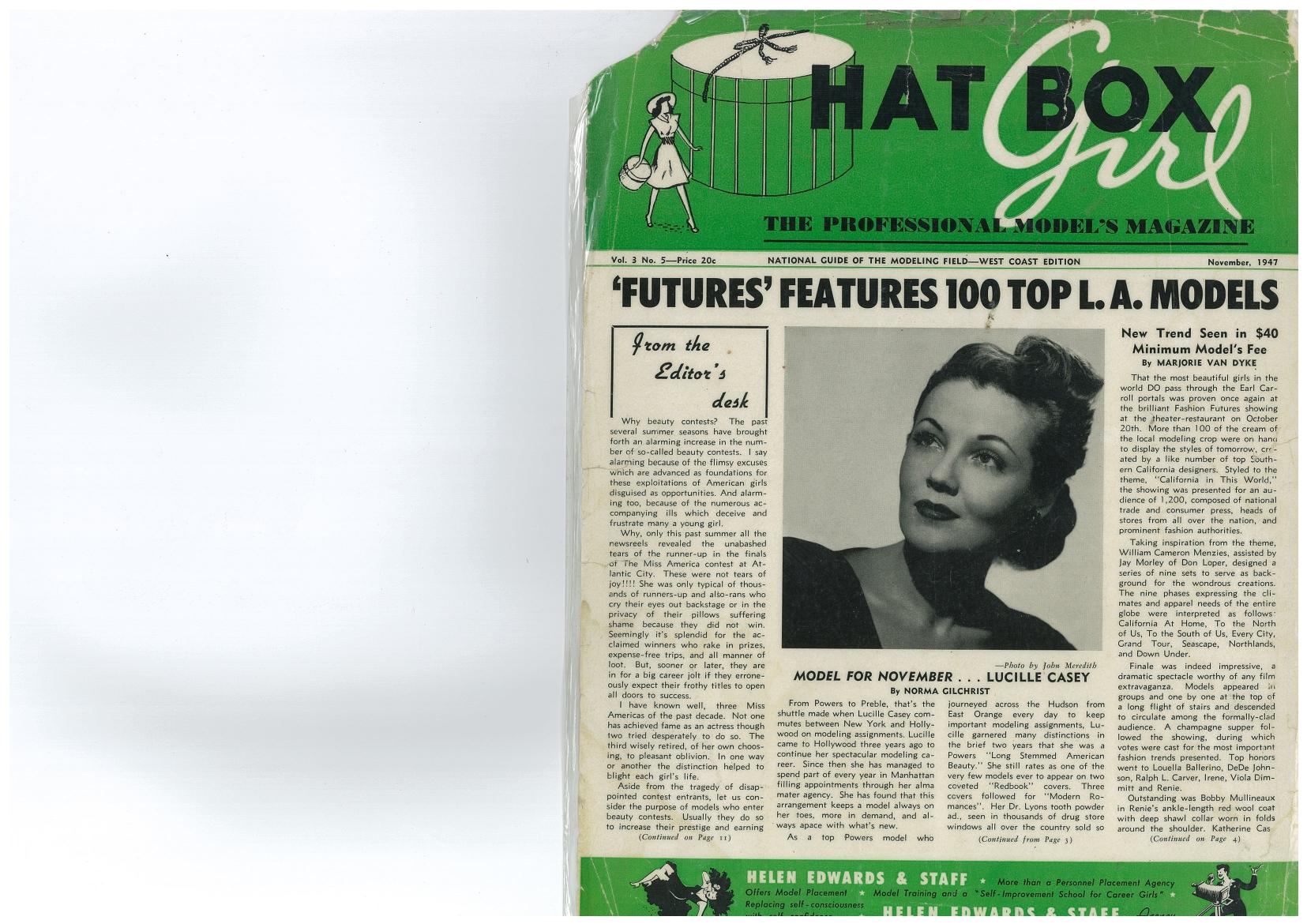
ย ย ย ย ย ย ย ย ย ย ย  AS I LOOK OUT THE WINDOW, the stark undressed trees and branches droop with the weight of snow. Footprints form a hopscotch pattern on the snowy driveway and sidewalks. January is the month that reminds me most of Casey. That’s when she wore a mink coat, hat, and gloves. Her appearance was consistently Vogue print material.ย ย ย ย 

     Casey was a woman that threw the dice all her life. She gambled on her instincts as if they were already tested and approved. She never told me much about herself. Casey lived in the present moment and considered her past a private matter. Once I learned of her struggles as a young woman and the life sheโ€™d chosen, she became more real than when Iโ€™d known her. During the years we were friends, she handed out selected stories, abbreviated and censored.  Being the inquisitive character I am, the shallowness of her stories bated me.  I had to pry the truth out from other people who had known her.  

            Caseyโ€™s first gamble was at sixteen years old. She sent in a photograph of herself for the Redbook Magazine modeling contest. If sheโ€™d won, the Powers Modeling Agency in New York City would grant her an audition as a model.  Casey was living in East Orange, New Jersey with her mother and sister. Her father had died suddenly, leaving the family without a financier. Casey’s mother was lost without her husband and unsuited to join the workplace. Casey didn’t tell her mother about the contest until she received the letter of congratulations.

            John Robert Powers met Casey in his office on East 56th Street and signed her on as a Powers Girl. She was stunning to look at, she photographed like a movie star, and she was modest. John Powers did not look for aggressive, pouty-lipped, fearlessness. The Powers Girls were captioned, “Long Stemmed American Beauties” because they were wholesome, beautiful, tasteful, courteous, and virtuous. They were so far from the runway models of today,  it is almost a reversal of the industry.  

The models of the thirties were ordained to set the highest example of classic good breeding and education. John not only schooled them in fashion, and individual taste, he instructed them in moral integrity, independence, and community service. Casey went to school at John Robert Powers and became one of the top ten models in New York.  

            She was a blue-black-haired Irish beauty, with emerald green eyes and perfect teeth. She stood only 5โ€™ 7″  in those days that was fairly standard. When I knew her, she was still thin and beautiful but she did not fuss about herself or spend a lot of time at her vanity. As a Powers model, Casey had a long line of gentlemen callers. Powers Girls were invited to all the nightclub and dinner show openings, sporting events, community galas, and fund-raisers.  Social engagements were part of her job. Casey was not a woman of idle chat, in fact, a lot of people thought of her as restrained and unfriendly, maybe even snobbish. I think it was more secrecy. People were always prying into her life because it looked glamorous. There was another side to that glamour she didn’t want to put in the mirror.  

            One evening Casey had a dancing engagement at the Copacabana nightclub in New York City. She was on stage with some other dancers when a certain gentleman noticed her. The next chapter of Caseyโ€™s life began that night. At twenty-two years old, she fell in love with a man thirteen years older, of the Jewish faith, who lived in Hollywood. The consequences of her love forced her to change and adapt to a new lifestyle and different people.

            She did not bury or rescind her love after she learned his business. She asked him to reform his criminal activities. He agreed if only she would marry him. We all know at twenty-two a woman believes she can change a man, and a man lets her think she can.  Without that dream, many lovers would not have found their mates.

            Casey did marry her love and spent her life trying to keep her husband and children from pointlessness, and harm. I met her husband just after he tried to reform, and was beaten down by the FBI. I called him Daddy.  


VOTING HAS BEGUN ON TALEFLICK.


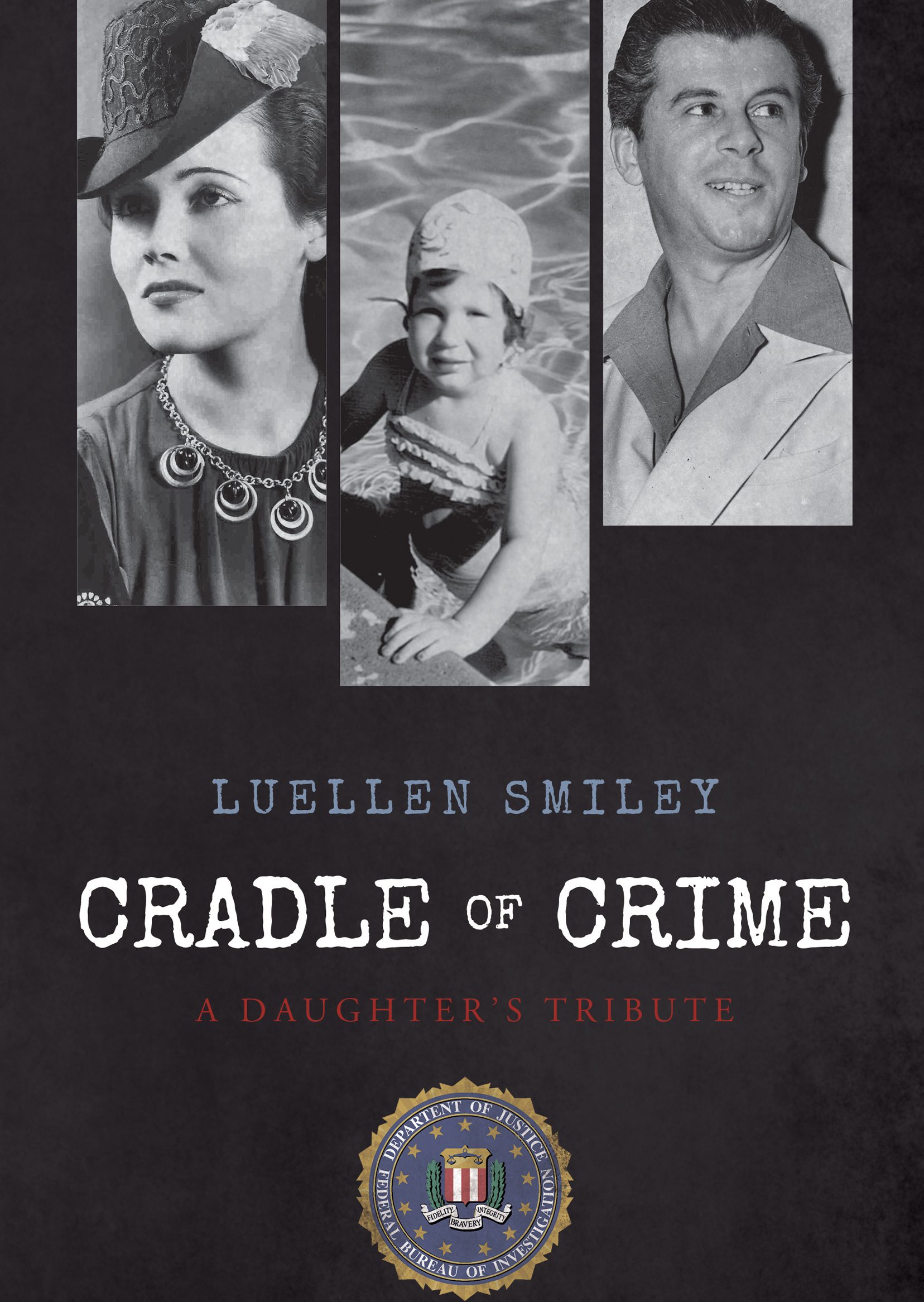
IT’S HERE. “CRADLE OF CRIME-A Daughter’s Tribute” is LIVE in the TaleFlick Discovery contest.


Hi Readers:

Voting has begun on Taleflick for this week’s winner. It ends on Friday at 4:pm. CRADLE OF CRIME- A Daughter’s Tribute is on

Page 8. There you will see a voting button. Let’s win!

Head over to the TaleFlick Discovery page, where https://taleflick.com/pages/discovery all visitors to the site will be allowed to vote (once) ON CRADLE OF CRIME- A Daughter’s Tribute

ย  https://taleflick.com/pages/discovery


LOOKING FOR VOTES


Dear Luellen,

Thank you very much for allowing “CRADLE OF CRIME-A Daughter’s Tribute” to participate in a TaleFlick Discovery contest. Your date has been set!

It will be a special week on TaleFlick Discovery: an all-women’s week, to commemorate International Women’s Day.

“CRADLE OF CRIME-A Daughter’s Tribute” will be part of next week’s contest that starts:

Wednesday 03/11/2020 at 10:00am Pacific. ย  https://taleflick.com/pages/discovery. The contest will accept votes for three consecutive days, starting at the above time, and ending the following Friday at 4pm PT.

Participation is 100% free.

FATHER GANGSTERS


I am thinking about some of Dad’s answers to questions. You learn more by listening than telling. I remember if a friend or associate made some business proposition, Dad would answer, ‘I’ve been thinking along those same lines myself, and have a few ideas.’ Now, sometimes, he didn’t know but that gave him a shot into the game. The opponent would then tell Dad everything. The reason I say this is he said that to me. Not in those words, but the same move. Gangster’s do as much strategizing as politicians, maybe more. Coming out of court LA Times Photo. He loved sunglasses, and so do I.

STORIES TO SCREEN-AUTHORS AND PRODUCERS CONNECT


Pitch Page by TaleFlickย  http://www.taleflick.com

MOVING STORIES TO SCREEN The world’s finest library of original storiescropped-54795916_high-resolution-front-cover_6490467-11-19-1.jpg

CRADLE OF CRIME-A Daughter’s Tribute
Luellen Smiley

GENRE
MEMOIR CRIME DRAMA BIOGRAPHICAL FAMILY
Drama

Mature Audience

Politics

Suspense

Romance

Core Theme
A MAFIA STORY THROUGH THE EYES OF A DAUGHTER.
TIME PERIOD
1960s & ’70s
COMPARABLE TITLES
THE SOPRANOS, THE GODFATHER, CASINO, GOODFELLAS
CHARACTER LIST
โ€ข LUELLEN “LILY” SMILEY: TEENAGER/50S. NEEDY, LOOKING FOR LOVE/ADMIRATION FROM HER FATHER; DILIGENT, STRONG MORAL CODE, CAN READ A ROOM.
โ€ข ALLEN SMILEY: 65. LILLYโ€™S FATHER, (IN)FAMOUS GANGSTER. CRIMINAL, AGGRESSIVE, CHARMING, BADASS, ENGAGING.
Register for Full Story
Pitch Page by TaleFlick Info by Author

Brief
Luellen โ€œLillyโ€ Smiley is the daughter of Allen Smiley, Benjamin “Bugsy” Siegel’s best friend, and
business partner. She rips herself from innocence and confronts her fatherโ€™s nefarious criminal life, as
she breaks the mafia code of silence ten years after her fatherโ€™s death.
What We Liked
– True story;
– A period piece inside a period piece (โ€˜40s and โ€˜70s);
– 1940’s Hollywood, with actual โ€œappearancesโ€ by stars of that era;
– The mafia and its members through another perspective;
– The father/daughter relationship;
– Episodic narrative, making it perfect for series;
– Possibility of both a fiction piece and a very rich documentary.
Synopsis

940s Hollywood may seem like the Golden Era of Cinema; Clark Gable, Judy Garland, Lauren Bacall
graced the screen, but behind the camera, there was a seedy underbelly ran by Bugsy Siegel and Allen
Smiley.
In the 1970s, Allenโ€™s daughter Lilly Smiley gets a job at her uncle Jack’s book store. There, she is
constantly reminded and asked about her father from customers and other “uncles” who would come
in. After answering with pleasantries, she realizes that people have a completely different view and
opinion of her father than she does. Through research and help from her therapist, Lilly decides to
unearth the real Allen Smiley.
Each story is an episode; a look into the relationship Allen had with Lilly, Lilly had with Allen, Allen had
with the Mafia, and Lilly had with the Mafia. All three of these dynamics weave a tapestry of an
unstable, yet loving relationship. Some of the stories consist of:
โ— The day her dad died of Hepatitis C was an apparent hit on the Mafia;
โ— Meeting celebrities of the day and how they respected her father;
โ— The day her loving Uncle Bugsy died from a drive-by that sent her dad into hiding;
โ— One incident where her father wouldn’t let her into the apartment because she forgot the safe
word. He forced her to go to another home to get the key, and wouldn’t let her in;
โ— The day her parents got a divorce, yet her father came home for dinner every night;
โ— The relationship between Uncle Bugsy and her dad;
โ— The time her mother was diagnosed with cancer and spent the rest of her life in the Hospital.
How her dad, even though divorced, never left her side;
โ— Dad coming from an immigrant family, and how that shaped how he approaches problems;
โ— Allen, disappearing for weeks or months at a time, and how hard it was on her and her
mother. Once her mother died, it was even tougher on her.
โ— All the different “Uncles” that would stop by and look after the family.
By the end of the series she has a journey of denial, curiosity, and disbelief. She eventually manages
to find people who understand her history and accept her.
About The Author
Luellen’s “Smiley’s Dice-Growing Up with Gangsters columns appeared in San Diego newspapers and earned a Blue Ribbon award from the CA Newspaper Association. Her research led to TV, radio, and print interviews about her father and Bugsy Siegel.

BOOK VIRAL REVIEW PAGE


THIS WAS PUBLISHED TWO YEARS AGO AND I JUST READ IT NOW!

http://www.bookviral.com/cradle-of-crime-a-daughters-t/4594052167BOOK VIRAL REVIEW

MY BOOK DEBUE IS COMING TO THE CITY OF LAS VEGAS-THE MOB MUSEUM


http://themobmuseum.org/events-posts/growing-up-with-mobsters-daughter-of-siegels-best-friend/


BARNES & NOBLE


BOOK NEWS!

You can order online or by special order in any Barnes & Noble Store.

http://www.barnesandnoble.com/w/cradle-of-crime-luellen-smiley/1125198798?ean=9781537456034

Cradle of Crime: A Daughter's Tribute

http://www.artistfirst2.com/ArtistFirst_Crime_Beat_2017-04-13.mp3