Without a partner, lover,or relative nearby during our feared and festive flights of life, our ribs cave. You just cannot eat cake alone on your birthday, attend a funeral without a shoulder next to you, or celebrate a finished project without your best friend. During these times of divisiveness, a pandemic, our favorite restaurants and shops out of business, and vigilanteviolence, it takes courage to be alone. It is you I am thinking of and I know you are out there, isolated. I listen to a lot of music, from Opera to Salsa, shout myself out of bed, attend to mediocre mindless tasks and think about all of us singles, without children, or family and friends out of my reach in Los Angeles, Santa Fe, Scottsdale, Sedona, and Florida. Each one holds a podium on the telephone, as I listen to their feelings, they are variations of a Chopin or Bach recording. The sadness and fear each one is holding at bay, reveal their authentic character. Isn’t it an extreme tragedy that holds a spotlight on our soul and spirit? One friend reminds me to refrain from judging myself too harshly, another advises how fortunate I am to be in a safe small village, with very few deaths, and another says simply, I’m falling apart.
We are now forced to learn our supreme strength, our survival methods, and how to structure a new lifestyle. When was the last time you were tested? Remember that and you will forge ahead.
THE CLASSMATE THAT wrote is named Andrew. I imagine he’s married; a man with his looks and gregarious personality living in Los Angeles all these years. Maybe he married one of our high school classmates. We exchanged a few emails in two thousand eight, he’d just returned from a trip to Poland and I was managing the gallery. Then the crash came and I think my correspondence dropped. Why was he thinking of me? I don’t have any photographs from high school, I suppose I could look him up in the yearbook. I’ll wait till he writes again.
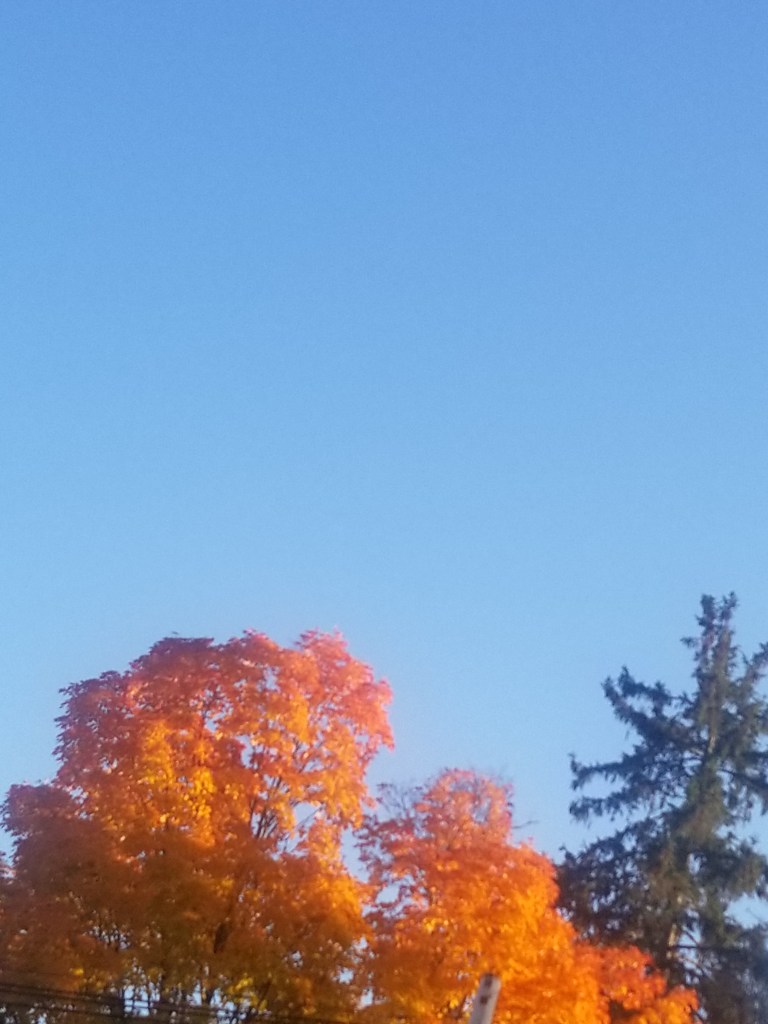
The sky is crystal blue, and the temperature a mild fifty degrees. From my window, the leaves dropping makes me think the trauma and suffering the last four years has dropped from my life. What the trauma was about is irrelevant and too lengthy to write. We all get sent to the chopping block of heartache and this was mine. This is as liberating as taking off a tight bra after a long day!
Maxfield Parrish
September has traditionally been my month of transition. It’s a sort of pattern that began years ago and so making decisions is as if I’m on a time clock. What is most essential now is finding a new place to call home. I began looking at Santa Barbara. I loved visiting the city by the sea, those beautiful mountains, and quaint craftsman architecture. So what if I don’t know anyone, I’ll be alone regardless of where I move. Easily accomplished in my fifties, not so improvisational at sixty-seven.
Rapturous Autumn day; this year the transformation of nature, outdoor activities, cider doughnuts, smoking fireplaces, and a crispness that reminds me of breaking open a head of lettuce. What really happens to us in the East is fall descends like a new stage and the props from summer are removed. The mums come out on the porches, and the bright yellow and gold plants dot every porch. The conventional lifestyle and customary activities placate our sense of belonging. Christmas, wow, it’s only a short time till winter. In the dressing room unpacking more sweaters, socks, warm-ups, I get an alert, another email. Andrew added another compliment so my response was crush-worthy. Why not? Maybe fantasy is what is needed. Remerging silhouettes, all of us on the front lawn at lunch time, and boys are pairing up with girls and Andrew is laughing, making clownish faces and gestures, yes he was crush-worthy. He walked in long strides, visible energy and every step seemed to have a purpose. The boy I was in love with graduated, and I did not have a boyfriend. My shyness and restrained conversational skills excluded me from invitations to date. Maybe that’s why he didn’t take notice of me observing him, a lot of classmates had crushes on him.
The reality of COVID-19 is now the centerfold story because it is affecting everyone; the excruciating financial loss, death, sickness, and loneliness. It’s more like acceptance that this is our job now to tolerate COVID-19. Restrictions, circumstances of failed businesses we all loved, fear, and more fear call for an imaginary friend who I haven’t seen in fifty years. He replied with a formal note of response that he was on Facebook and could we be friends. I wrote back, yes. I am listening to the soundtrack from the film A Man and A Woman while chopping vegetables for soup. This music has formed a flame of optimism for the day I’m in love and let go of singleness.
On Facebook Andrew’s feature photos reveal the teenager I remember. He is a photographer, a Neuro Technician, and in his twenties an actor and model … hum, sounds like my resume, professional career changer. His photos sent a quiver through my veins, a call to read everything on his page, and view videos of his European travels: beautifully crafted images of architecture, monuments, art, culture, and locals. It deepened my understanding of his life just by his photos and posts. The other side, his appearance; the facial features, keen brown eyes, uncensored or rehearsed self-photos, group photos with our high school mates at the reunions, his long wavy hair, and his defined lips and cheekbones tingled curiosity.
The photos of Andrew at the class reunions next to my best friend and other classmates I remembered brought a snowstorm of memories. How I loved my friends back then. About six of us went everywhere together; bought our first bras, learned to drive, went to Westwood Village to look for cute boys, sat in the booths at Mario’s Pizza, Hamburger Hamlet, and The Apple Pan and all of it on ten or twenty dollars a week allowance. I have not been to a reunion since the tenth. Andrew posted photos from several. He stayed connected. Fifty years have passed, and he’s on my mind. To be continued.
What I think of at three in the morning is never the same at ten o’clock in the morning. The labyrinth of safety and comfort, colliding with the unknown darkness, seems to be the most revealing of emotions. It is also a time that spirals into visual realizations, recognitions, and a time when our mirrors move toward us. Tonight, is about friends.
Friends are bookends that bind our stories; some novellas, some poems, some cinematic, each friend s serves as a bookend to our personal history. When I’ve lost my way and need direction my friends motorize me like a little engine, and when I fly without wings, they ring the bell to come down to earth. At times, arguments arise and my friendships stray, but true-life friends never leave you behind. Sometimes years may pass, and then one day you get a call or an email or send one yourself, and the flushing of that particular squabble in history vanishes. You can start anew; at the same time, it is not.
The essence of friendship never burns out, it is our galaxy, a kind of celestial agility.
Are you experiencing a startling outpouring from friends who’ve left your life only to suddenly show up on your social media or a personal email? Are your friends calling and writing more often than pre-Covid? I’m always examining some unfamiliar events in life, a new trend, a cultural change. We have that now, and conversation, as it has leaped from let’s just talk to all the, don’t go there subjects of 2020. Seems like every topic can be mixed with politics, sometimes the mixture is explosive. I’ve halted the political discussions and so have my friends as they are more important to my livingness than politics.
These new threads of friendship began with a young man I dated when we were in our mid-twenties. He was developing into a businessman, the world was not far from his scope, I on the other hand was cradled by my father’s demands, my freedom limited. Our short story ended; the bookends shelved until one day he sent a message on Facebook with his phone number. The last time I’d seen him was around nineteen-seventy-three. I paddled through the well of memories; his image materialized, he was smiling, joking, driving me around, going places. I could be passive with him; he was a trailblazer. I was content to be in the company of a man who was fearless, exploratory, and a gentleman. Our first phone call lasted a long while because youthful history is crystallized and reigns over the years missed. I find it problematic especially during this pandemic to form new friendships, so the friendship of the past rises like warm muffins in the oven.
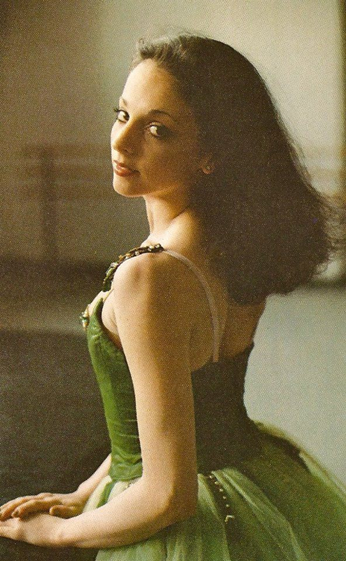
In May as the spring yearned to rise from the winter, I received an email that flowered my childhood. Bonny, my playmate, throughout elementary school, as Brownies and Girl Scouts, as synagogue attending students and mischievous little girls who wanted to be dancers, me in Jazz and Bonny in Ballet. She lived just across the street from Bellagio Road school and our escapades often took place in her home. I remember the black and white tile floor, streams of sunlight over the grand piano where her father played and Bonny practiced ballet technique. Even at the age, her discipline and dedication were remarkably striking.
Bonny Bourne Singer
After exchanging emails we had a phone call. The last time I’d seen Bonny was in the 7th grade, bookends that yielded to fifty-four years. Our conversation began in yelps of laughter, astonishment, excitement and the pages of our story flipped from her career with the New York City Ballet, and the San Francisco Ballet, to her marriage and children, and then to her Mother.
“Luellen, hold on my mother is nudging me to give her the phone.”
As soon as I heard her say, “Sweetheart,” her name came back to me.
“Rose! oh my, this is unbelievable. I am so happy Bonny contacted me after reading my book.
“I just finished it. I loved it.”
“Thank you, Rose, I have a question–do you remember much about my Mother?” You’re the only one still alive that knew her.
“Darling, a day didn’t go by that we didn’t talk on the phone. She was such a beautiful person.”
Tears blurred my sight as we walked through some memories. The fifty-four-year absence seemed like five. Since that first conversation, we now speak every few weeks, send emails, photos and our friendship is as sustainable as if we were ten years old.
Sometimes friends get into disputes, not verbal arguments, just an interruption caused by events or circumstances that override the friendship. My closest friend in Santa Fe, I’ve coined Pandora and I relinquished our friendship because of our raucousness when we were serenading downtown Santa Fe. Pandora and I recently liberated from dower circumstances clicked our heels, held hands and skipped through town endowed with our personal feminist characteristics. Then, at some point, we divided as our playtime interred with our work time and five years passed. As it happens during Covid- we recall the best times of our lives. Pandora heard the calling and left me a voice message. Oh, how I rehearsed what I would say, and how much I missed her, in between visual images of us, at the La Fonda Hotel, La Posada, and Santa Café. For one of my birthdays, she arrived with balloons, flowers, champagne, and a bag of presents, that reminded me of my childhood indulgences. I called her back within the hour. Our bookends opened to our shared memories and we both admitted we regretted we let responsibilities divide us. Now, Pandora is within my life and mine in hers. I told her, “I don’t care what happens between us, I’m not going anywhere. “
Photo Pandora with her therapy poodle, Pumpkin visiting patients a at a Santa Fe Hospital. Her blazing compassion for anyone suffering.
When September arrived, the leaves dropped like tears from the trees. I watched from my window, this shedding of a season, and began packing up the summer clothes. As I pulled out the sweater’s boots, hats, gloves, and warm-ups with regret and stubbornness, I am not prepared for a third winter alone. Maybe it will be like this for the rest of my life. These invective fears permeate throughout my days and nights. What I asked for as a writer was time alone, now I have it.
Hours passed like waiting in line in my own mind, how to shift from this sentiment to something promising. I switched from news to emails to social media and then I noticed a comment from a student on Classmates. Com. I am a member as a graduate of University High School in Los Angeles.
We were the graduating class of 1971, one thousand students from the Westside. Some classmates lived so close I walked there after school, some from wealthy influential parents, some in the film business, and some from blue-collar families, We did not judge by color, income, or politics, we just accepted one another. I don’t recall any arguments, attacks, insults, or violence, high school was our second home. I remember the beautiful botanical gardens, the dance studio, the football field, and the front lawn where my gang hung out during lunch or after school.
The comments were touching and so I responded back. I remembered this secret admirer from Junior High and High School. He had a distinctive style, part trendy part individual, he wore hats and paisley shirts, his stride was fast-paced, his hair brown, long and thick that framed a beautiful masculine jawline. He laughed with gusto, his voice was theatrical in tone as it was at one moment pensive and the next comical. He was not part of one particular gang of friends but moved like a party host between many of the circles. To be continued.
What I think of at three in the morning is never the same at ten o’clock in the morning. The labyrinth of safety and comfort, colliding with the unknown darkness, seems to be the most revealing of emotions. It is also a time that spirals into visual realizations, recognitions, and a time when our mirrors move toward us. Tonight, is about friends.
Friends are bookends that bind our stories; some novellas, some poems, some cinematic, each friend s serves as a bookend to our personal history. When I’ve lost my way and need direction my friends motorize me like a little engine, and when I fly without wings, they ring the bell to come down to earth. At times, arguments arise and my friendships stray, but true-life friends never leave you behind. Sometimes years may pass, and then one day you get a call or an email or send one yourself, and the flushing of that particular squabble in history vanishes. You can start anew; at the same time, it is not.
The essence of friendship never burns out, it is our galaxy, a kind of celestial agility.
Are you experiencing a startling outpouring from friends who’ve left your life only to suddenly show up on your social media or a personal email? Are your friends calling and writing more often than pre-Covid? I’m always examining some unfamiliar events in life, a new trend, a cultural change. We have that now, and conversation, as it has leaped from let’s just talk to all the, don’t go there subjects of 2020. Seems like every topic can be mixed with politics, sometimes the mixture is explosive. I’ve halted the political discussions and so have my friends as they are more important to my livingness than politics.
These new threads of friendship began with a young man I dated when we were in our mid-twenties. He was developing into a businessman, the world was not far from his scope, I on the other hand was cradled by my father’s demands, my freedom limited. Our short story ended; the bookends shelved until one day he sent a message on Facebook with his phone number. The last time I’d seen him was around nineteen-seventy-three. I paddled through the well of memories; his image materialized, he was smiling, joking, driving me around, going places. I could be passive with him; he was a trailblazer. I was content to be in the company of a man who was fearless, exploratory, and a gentleman. Our first phone call lasted a long while because youthful history is crystallized and reigns over the years missed. I find it problematic especially during this pandemic to form new friendships, so the friendship of the past rises like warm muffins in the oven.
In May as the spring yearned to rise from the winter, I received an email that flowered my childhood. Bonny, my playmate, throughout elementary school, as Brownies and Girl Scouts, as synagogue attending students and mischievous little girls who wanted to be dancers, me in Jazz and Bonny in Ballet. She lived just across the street from Bellagio Road school and our escapades often took place in her home. I remember the black and white tile floor, streams of sunlight over the grand piano where her father played and Bonny practiced ballet technique. Even at the age, her discipline and dedication were remarkably striking.
Bonny Bourne Singer
After exchanging emails we had a phone call. The last time I’d seen Bonny was in the 7th grade, bookends that yielded to fifty-four years. Our conversation began in yelps of laughter, astonishment, excitement and the pages of our story flipped from her career with the New York City Ballet, and the San Francisco Ballet, to her marriage and children, and then to her Mother.
“Luellen, hold on my mother is nudging me to give her the phone.”
As soon as I heard her say, “Sweetheart,” her name came back to me.
“Rose! oh my, this is unbelievable. I am so happy Bonny contacted me after reading my book.
“I just finished it. I loved it.”
“Thank you, Rose, I have a question–do you remember much about my Mother?” You’re the only one still alive that knew her.
“Darling, a day didn’t go by that we didn’t talk on the phone. She was such a beautiful person.”
Tears blurred my sight as we walked through some memories. The fifty-four-year absence seemed like five. Since that first conversation, we now speak every few weeks, send emails, photos and our friendship is as sustainable as if we were ten years old.
Sometimes friends get into disputes, not verbal arguments, just an interruption caused by events or circumstances that override the friendship. My closest friend in Santa Fe, I’ve coined Pandora and I relinquished our friendship because of our raucousness when we were serenading downtown Santa Fe. Pandora and I recently liberated from dower circumstances clicked our heels, held hands and skipped through town endowed with our personal feminist characteristics. Then, at some point, we divided as our playtime interred with our work time and five years passed. As it happens during Covid- we recall the best times of our lives. Pandora heard the calling and left me a voice message. Oh, how I rehearsed what I would say, and how much I missed her, in between visual images of us, at the La Fonda Hotel, La Posada, and Santa Café. For one of my birthdays, she arrived with balloons, flowers, champagne, and a bag of presents, that reminded me of my childhood indulgences. I called her back within the hour. Our bookends opened to our shared memories and we both admitted we regretted we let responsibilities divide us. Now, Pandora is within my life and mine in hers. I told her, “I don’t care what happens between us, I’m not going anywhere. “
Photo Pandora with her therapy poodle, Pumpkin visiting patients a at a Santa Fe Hospital. Her blazing compassion for anyone suffering.
When September arrived, the leaves dropped like tears from the trees. I watched from my window, this shedding of a season, and began packing up the summer clothes. As I pulled out the sweater’s boots, hats, gloves, and warm-ups with regret and stubbornness, I am not prepared for a third winter alone. Maybe it will be like this for the rest of my life. These invective fears permeate throughout my days and nights. What I asked for as a writer was time alone, now I have it.
Hours passed like waiting in line in my own mind, how to shift from this sentiment to something promising. I switched from news to emails to social media and then I noticed a comment from a student on Classmates. Com. I am a member as a graduate of University High School in Los Angeles.
We were the graduating class of 1971, one thousand students from the Westside. Some classmates lived so close I walked there after school, some from wealthy influential parents, some in the film business, and some from blue-collar families, We did not judge by color, income, or politics, we just accepted one another. I don’t recall any arguments, attacks, insults, or violence, high school was our second home. I remember the beautiful botanical gardens, the dance studio, the football field, and the front lawn where my gang hung out during lunch or after school.
The comments were touching and so I responded back. I remembered this secret admirer from Junior High and High School. He had a distinctive style, part trendy part individual, he wore hats and paisley shirts, his stride was fast-paced, his hair brown, long and thick that framed a beautiful masculine jawline. He laughed with gusto, his voice was theatrical in tone as it was at one moment pensive and the next comical. He was not part of one particular gang of friends but moved like a party host between many of the circles. To be continued.
What I think of at three in the morning is never the same at ten o’clock in the morning. The labyrinth of safety and comfort, colliding with the unknown darkness, seems to be the most revealing of emotions. It is also a time that spirals into visual realizations, recognitions, and a time when our mirrors move toward us. Tonight, is about friends.
Friends are bookends that bind our stories; some novellas, some poems, some cinematic, each friend s serves as a bookend to our personal history. When I’ve lost my way and need direction my friends motorize me like a little engine, and when I fly without wings, they ring the bell to come down to earth. At times, arguments arise and my friendships stray, but true-life friends never leave you behind. Sometimes years may pass, and then one day you get a call or an email or send one yourself, and the flushing of that particular squabble in history vanishes. You can start anew; at the same time, it is not.
The essence of friendship never burns out, it is our galaxy, a kind of celestial agility.
Are you experiencing a startling outpouring from friends who’ve left your life only to suddenly show up on your social media or a personal email? Are your friends calling and writing more often than pre-Covid? I’m always examining some unfamiliar events in life, a new trend, a cultural change. We have that now, and conversation, as it has leaped from let’s just talk to all the, don’t go there subjects of 2020. Seems like every topic can be mixed with politics, sometimes the mixture is explosive. I’ve halted the political discussions and so have my friends as they are more important to my livingness than politics.
These new threads of friendship began with a young man I dated when we were in our mid-twenties. He was developing into a businessman, the world was not far from his scope, I on the other hand was cradled by my father’s demands, my freedom limited. Our short story ended; the bookends shelved until one day he sent a message on Facebook with his phone number. The last time I’d seen him was around nineteen-seventy-three. I paddled through the well of memories; his image materialized, he was smiling, joking, driving me around, going places. I could be passive with him; he was a trailblazer. I was content to be in the company of a man who was fearless, exploratory, and a gentleman. Our first phone call lasted a long while because youthful history is crystallized and reigns over the years missed. I find it problematic especially during this pandemic to form new friendships, so the friendship of the past rises like warm muffins in the oven.
In May as the spring yearned to rise from the winter, I received an email that flowered my childhood. Bonny, my playmate, throughout elementary school, as Brownies and Girl Scouts, as synagogue attending students and mischievous little girls who wanted to be dancers, me in Jazz and Bonny in Ballet. She lived just across the street from Bellagio Road school and our escapades often took place in her home. I remember the black and white tile floor, streams of sunlight over the grand piano where her father played and Bonny practiced ballet technique. Even at the age, her discipline and dedication were remarkably striking.
Bonny Bourne Singer
After exchanging emails we had a phone call. The last time I’d seen Bonny was in the 7th grade, bookends that yielded to fifty-four years. Our conversation began in yelps of laughter, astonishment, excitement and the pages of our story flipped from her career with the New York City Ballet, and the San Francisco Ballet, to her marriage and children, and then to her Mother.
“Luellen, hold on my mother is nudging me to give her the phone.”
As soon as I heard her say, “Sweetheart,” her name came back to me.
“Rose! oh my, this is unbelievable. I am so happy Bonny contacted me after reading my book.
“I just finished it. I loved it.”
“Thank you, Rose, I have a question–do you remember much about my Mother?” You’re the only one still alive that knew her.
“Darling, a day didn’t go by that we didn’t talk on the phone. She was such a beautiful person.”
Tears blurred my sight as we walked through some memories. The fifty-four-year absence seemed like five. Since that first conversation, we now speak every few weeks, send emails, photos and our friendship is as sustainable as if we were ten years old.
Sometimes friends get into disputes, not verbal arguments, just an interruption caused by events or circumstances that override the friendship. My closest friend in Santa Fe, I’ve coined Pandora and I relinquished our friendship because of our raucousness when we were serenading downtown Santa Fe. Pandora and I recently liberated from dower circumstances clicked our heels, held hands and skipped through town endowed with our personal feminist characteristics. Then, at some point, we divided as our playtime interred with our work time and five years passed. As it happens during Covid- we recall the best times of our lives. Pandora heard the calling and left me a voice message. Oh, how I rehearsed what I would say, and how much I missed her, in between visual images of us, at the La Fonda Hotel, La Posada, and Santa Café. For one of my birthdays, she arrived with balloons, flowers, champagne, and a bag of presents, that reminded me of my childhood indulgences. I called her back within the hour. Our bookends opened to our shared memories and we both admitted we regretted we let responsibilities divide us. Now, Pandora is within my life and mine in hers. I told her, “I don’t care what happens between us, I’m not going anywhere. “
Photo Pandora with her therapy poodle, Pumpkin visiting patients a at a Santa Fe Hospital. Her blazing compassion for anyone suffering.
When September arrived, the leaves dropped like tears from the trees. I watched from my window, this shedding of a season, and began packing up the summer clothes. As I pulled out the sweater’s boots, hats, gloves, and warm-ups with regret and stubbornness, I am not prepared for a third winter alone. Maybe it will be like this for the rest of my life. These invective fears permeate throughout my days and nights. What I asked for as a writer was time alone, now I have it.
Hours passed like waiting in line in my own mind, how to shift from this sentiment to something promising. I switched from news to emails to social media and then I noticed a comment from a student on Classmates. Com. I am a member as a graduate of University High School in Los Angeles.
We were the graduating class of 1971, one thousand students from the Westside. Some classmates lived so close I walked there after school, some from wealthy influential parents, some in the film business, and some from blue-collar families, We did not judge by color, income, or politics, we just accepted one another. I don’t recall any arguments, attacks, insults, or violence, high school was our second home. I remember the beautiful botanical gardens, the dance studio, the football field, and the front lawn where my gang hung out during lunch or after school.
The comments were touching and so I responded back. I remembered this secret admirer from Junior High and High School. He had a distinctive style, part trendy part individual, he wore hats and paisley shirts, his stride was fast-paced, his hair brown, long and thick that framed a beautiful masculine jawline. He laughed with gusto, his voice was theatrical in tone as it was at one moment pensive and the next comical. He was not part of one particular gang of friends but moved like a party host between many of the circles. To be continued.
“Did you want to be like the people in Rancho Santa Fe?”
He laughed out loud and said, “I don’t want to be what I’m not. I am the happiest man alive.”
“Tell me again why you are so happy?”
“I told you about when I was stuck in Buna– I made a vow to God that if I got out of there alive, I’d never complain about life again
“You kept your promise.”
“ Yes, and I have the most wonderful friends in the world—and you’re one of them.” I gave him a hug and a kiss and asked him to tell me more about his life in Solana Beach.
“ Was your wife happy too?”
“ Oh yes.”
“ How long were you married?” I asked.
“ My wife and I were married fifty years, nineteen forty-one until she passed away.
She was so good to me when I come back from the war. I used to get up in the middle of the night and wander around, didn’t know where I was and she always got up with me. I had bad dreams and got lost, didn’t know where I was, and would hide in the closet. She was so careful with me. I just didn’t know what I was doing like spilling things at the table, and not remembering things she told me. It went on for a long while, but she never got angry or lost her temper. She was so good, and after I got better, we started having fun again, and we were doing good. I was at the dairy and they bought me the house on Barbara Street.”
“ The dairy bought it for you?” I interrupted.
“Yeah, 208 Barbara, that was it. We lived in that little house while I worked at the dairy– I worked seven days a week, from midnight until noon, then I’d have my lunch and rest awhile. Then we might go out and we’d party. “
“ Before you went to work?”
“ Oh yeah, it was the only time we had together.”
“ I feel like a wimp,” I mumbled.
“ Well, you work hard, and I don’t know it just seems people need more sleep today or something, I don’t know what it is.”
“ We haven’t been in a war.”
” Maybe so. I think people seem to marry for different reasons these days. Janet and I had the same background, we both knew what hard work was about. She didn’t complain, she was very good with money, she wrote down everything we spent. I guess we were lucky.”
“ I think it’s more than luck, you appreciate life every day,” I said.
“ I do, like you too, I am so glad you are my friends, and we can sit here and talk and have such good times.”
Then Rudy took my hand, and apologized for shouting at me earlier about not turning the hose off all the way. He said he wanted to take me out for dinner because he felt so bad. Maurice grinned, and I gave him a hug and a kiss. He went into the back and came back with a little bouquet of sweet peas for me.
“ These are for you,” he said.
“ Oh Maurice, you’re making me feel terrible,” Rudy said in jest.
“ I don’t mean to, it’s just that I love women so much. I told my wife every day, every morning she woke up I told her I loved her. We never went to bed angry.”
The house Maurice lives in and has lived in since 1950, is a tidy two-bedroom farmhouse. The house is painted white, with black shutters framing the front windows.
Tucked in the front entrance on one side are a twisted juniper and the other side a bush of poinsettia. He planted roses and hollyhocks and a few more varieties that were always postcard perfect. The porch out front changes with the season. The first year we met Maurice placed a sofa on the porch and two chairs. When Rudy and I stopped at the end of the day, Maurice would be outside sitting in the rocking chair, his hair still wet from his shower, and in his hand a jigger of Jack Daniel’s. In the front room, Maurice covered the walls with mementos and pictures of his friends. He didn’t hang any paintings of any kind, so when you sat on the couch and looked around you were looking at his life. He has a television and watches the news, old westerns, and the country music station. He especially likes the rodeo shows. He has remarked on occasion that he thinks television is very bad for you. His old sofa so worn from visitors when I sit down next to Maurice I sort of fall into his lap. We sit so close, unlike we do now in these large stiff hi-tech furnishings. In front of the sofa is a long glass coffee table, one of Rudy’s favorite stops as he walks in the door. He dives for the peanuts and the chocolates. There are always treats on the table, and you will not wait long before Maurice goes into the kitchen and brings back a plate of home-made pickles.
The first time Rudy ate his pickles, he yelled out, “ Damn Maurice, these are incredible I could eat a whole jar!” So Maurice went in the back and brought out a jar of his homegrown pickles. The kitchen is small and in the corner is a antique table where he keeps his baking utensils and one chair. He has a collection of antique jars and cooking tools on a shelf that whines around the kitchen ceiling. His refrigerator is an adventure in itself, shelves are packed with wrapped leftovers, sauces, meats, cheeses, and vegetables, so packed that on several occasions when I tried to put something back in I couldn’t find an empty place for it. Naturally, he uses a gas stove but growing up in Iowa all they had was a wood-burning stove. In the hallway, the walls are framed with more friends and family. There is one beautiful girl, that seems to be in every room. When I asked who she was Maurice replied, “ That’s Linda. She’s my sweetheart.”
From the photographs we learned all about Maurice’s life; his mother and father, brother and sister, his wife, Janet, his grandpa and grandma, and the hundreds of people in between. His home is a storybook, all you need to know about Maurice is revealed unaltered.
His bedroom is at the end of the hallway by the back door. His bed is covered with a handmade quilt and about twenty decorative pillows. The bathroom is very colorful with green and red towels, and more photographs of Linda. Then he opens the screen door to the backyard.
ONE EVENING, Rudy and I were sitting on the porch, it was in summer and we would sit out till after eight o’clock at night talking about different parts of Maurice’s life. He is really busy in the summer, he works one day a week gardening for a man in Fairbanks ranch, and he spends a lot of time delivering furniture for the shops in Cedros Design District, and helping his friends with their gardens. He never seems tired; he likes to sit on the porch at dusk, watch the sunset, have a jigger and tell stories. I had not met a man that could tell me things like Maurice. There didn’t seem to be anything he couldn’t talk about. I will tell you in the next series how I met, ‘the happiest man in the world.’
OLYMPUS DIGITAL CAMERA
“ Maurice, how old were you when you were drafted?” I asked.
“ Well, I was thirty-one years old, that was in 1941, you know when the war broke out. I had to leave my wife, and that bothered me, but I wanted to go overseas, there were so many nice real young boys, there were two boys from Chicago that were only eighteen years old, they lied to get in, and they were the best soldiers you ever saw, they weren’t afraid of anything.”
“ Where did they send you, I mean after you left San Diego?”
“ Well first I went to Camp Roberts for training, thirteen weeks, but I got out in nine weeks, then they send me to Fort Ord to get my gear and rifles and clothes to go to New Guinea to fight the Japanese. We left San Francisco on April 21, 1942, I remember going under the Golden Gate Bridge, cause we hit a bad storm there. We was on a luxury liner and then we were sideswiped by another ship. I was in the bed at the time, and water started coming in through the porthole so I run for the door, to get on deck but I couldn’t get it open. I thought we were hit by a torpedo, then I got sick, I was real sick. Well anyway, then we finally settled down, and I think we hit coral sea without any escort or anything and finally got into Adelaide, Australia after twenty-one days at sea.” Maurice paused like he had to catch a breath. I watched his face, thinking he may want to stop.
“ You remember so much, do you mind talking about it?” I asked.
“ No, I don’t mind, it changed my life, everything about it.”
“ Where did they send you after that?”
“ Well we trained for awhile in Adelaide, the people in Australia were so happy to see us. I remember they met us at the beach with tea and cookies cause the enemy were getting real close. Then we went up the coast to New Guinea to Port Moresby, we got there on Thanksgiving day 1942. As soon as we got off the ship the bombs hit us, it was the hundredth raid that night. Then the next morning we were supposed to get to Stanley Range, but we were in such a hurry because the enemy had built cement pillboxes. So we got in this plane, a hull, and they flew us, twenty-one at a time. When I got to the island of Buna, there were dead soldiers all over and so much jungle. At night the tide came in, so I found a mound to lay my head on, but my whole body was underwater. We were losing men so fast, so on Christmas 1942 General McArthur ordered us to advance, regardless of the cost of lives. My division was one of the first divisions to stop the them, the Thirty-Second division. After we were immobilized, and a lot of our men were killed, they sent in the Forty-First division to take over. I got pictures, you want to see them?”
“YES, RUDY,” SHOUTED. Maurice went inside and Rudy and I sat there just talking about how soft our lives had been, never having been in a war. Maurice came back with a Life Magazine, from 1942, the headlines were Attack at Buna. We sat next to Maurice on the couch and he sifted through the magazine showing us the photographs of his division. He picked out one photo in another stack in his lap and told us his wife kept this one, she was sure it was Maurice. It looked like him to. The soldiers were young, but they didn’t look young, they looked like men. The things he told us that night were hard to believe. They didn’t get supplies at first, they had to wait till everything was shipped to Europe, and then they got what was leftover which wasn’t much.
“I ate cocoanut bark for two weeks and had to drink my own piss to stay alive, there was no water. I can remember so well the first enemy I saw, sneaking through the jungle, he was only thirty feet off, and I don’t know if I shot him, but he dropped, and I don’t like to think I killed anyone, and it bothers me to this day that I had to kill, but that’s what we did. The Japanese were good soldiers, they had better ammunition than us, their guns were always real shiny. We fought all day, and we always ran out of ammunition before they did. Christmas day of forty-two we went into a trench to get ahead, the fellow ahead of me was cut wide open, and the guy behind was shot, and I just laid there on the ground. If you moved you’d be shot. It was so bad, I laid there all day and night. “
“ Did you think you were going to die?”
“ I didn’t let myself think that, I made a promise to God, that if I ever got out alive I’d never complain about anything in my life again because nothing could be worse than that day.”
“ You kept the promise didn’t you,” I asked.
“ Yes, I have.”
“ And that’s why the war changed your life?”
“ That’s right, every day is a beautiful day after you’ve lived through a war, at least for me.”
BUNA came into our conversations many times over the years. The things they did to survive is what he remembered; like brushing his teeth with black charcoal because it polished the teeth even though they made them black. They bathed in dirty streams, or in the puddles in the street made by the tires of the trucks. They had to relieve themselves in their pants because moving was dangerous. They didn’t have modern medical supplies. When Maurice had cavities he was sent to the infirmary and the dentist told him to just grit his teeth, there was no Novocain. He got gum disease, leg rot, malaria, and he lost his sense of smell.
“But it was much worse for some of the men, so bad you can’t imagine.” He talked about the kinship amongst the troops, it was unlike anything he’d ever seen or experienced, all the guys looking out for each other. Buna was a strange place to be, I’d never heard of it before Maurice told us. After they took over Buna, one of the beaches, was named Maggot Beach, because so many dead Japanese and American soldiers laid there, in the hundred-degree heat, and the flies got to them, and it was a terrible sight, it smelled so bad he remembered. Maurice was sent to the hospital for two weeks, then he started working in the kitchen and got to be the first cook.
2001. OUR CONTRY IS AT WAR AGAINST TERRORISM. Rudy and I wanted to know Maurice’s thoughts on the way it is now, and how he felt. We sat in his living room watching the news and talking in those first few weeks after the attack on America. It seemed like Maurice couldn’t believe what had happened, I’d never seen him speechless. He didn’t know what to say for a long time.
“The ground troops are the only way to get this enemy. Now with these terrorists– we have a different war. I don’t know what our government will do but they should give our troops overseas that die big funerals, news on the television and newspaper, that’s the right thing to do. In WW11 they didn’t do that for any of us, they just wrapped the dead in a tarp, and dug a little hole in the ground. Hundreds and hundreds of thousands of boys, all they got was a stick where you was. I think they got some of the dog tags mixed up, you didn’t know who was who. When you think about what we went through, and how close you were to each other, everybody was so close, and if someone was shot, you couldn’t stop and help them, you had to keep going. The natives were so nice to us, so good to us, they picked up the wounded guys and carried them to the hospital, they wouldn’t do that for the Japanese. Now everything is on the television so you’re part of it.” Maurice began to weep silently. I hugged him. Rudy interjected.
“What were the natives like?”
” Back then we called them headhunters. They didn’t wear any clothes at all, but after we got there some of them started wearing our clothes. They lived in bamboo huts, pretty neat to live in, Rudy, you would have liked those tents. Anyway, they had these powwows, they’d catch a monkey, and hang him up, build a fire under him, and cinch the hair, then sit down and eat the monkey raw, I saw a lot of that. You didn’t dare look at the women, they’d shoot you with an arrow, they had poisonous arrows, the women were so terribly dirty, but they seemed to be happy. After we took Buna, they liked to shoot up the trees and show us how they got the coconuts, they were so fast. I guess some of them are still alive today, the jungle was so thick and full of mosquitos, a lot of them had malaria, they had no medicine, they ate herbs and things, to make them better. I’ll never forget them, they were so good to us, when they took me to the hospital they put me on a stretcher one time, they were so careful, didn’t move me at all.
“ You couldn’t speak at all to them?”
“ No, they had their own language, I couldn’t understand it, no one did.”
Maurice went into the house and came back with a photograph of a female headhunter. It was strange to think of this person as a woman, she was so primitive. Rudy loved the photograph. Maurice gave it to him. t. Rudy knew he would never see anything like it with his own eyes, so he cherished that picture and the story Maurice told us as if it was his own experience.
THEN THE LIGHT OF DAY TURNED FOGGY. Maurice said it was time to go in because it was getting cold. He told us how much he loved us that night, and what good friends we were. When Maurice talked of his experience in the war, it was like a chiropractic adjustment on my struggle, and I had renewed strength to just keep writing.
It was the first time for Rudy to hear first hand about WW11 because his father had been stationed here making torpedoes. My father enlisted but they wouldn’t take him because he didn’t have citizenship. It bothered him too, he was the kind of man that would die for this country in a heartbeat.
A year or so later, some woman came to know Maurice and asked about his experience in the war. She said she would write a book about it, and so he gave her the photographs and Life Magazine and waited to hear from her. She never came back, and Maurice was really shocked because she had seemed so sincere.
I wanted to know more about his life after the war, but the time didn’t come until one night when Rudy and I got into a nasty fight. To be continued.
IN THESE TIMES OF DISTANCE, DEATH, DISCOURSE, AND ISOLATION what can I write of value? All month this puzzle chased my thoughts; nudged me like a pesky fly. At different intervals during the solemnness, my journal returned parched sketchy paragraphs, and books did not deliver the inspiration I craved. Listening to Beethoven as I gaze out the window at the blowing branches on a spring gray and white day, I feel a singleness I’ve never known. Maybe you feel the same, and it is you I am writing to because I know you are there. Singleness in quarantine is more incarcerating than it is for married, partnered, family people. Though they have to acclimatize to spacial hardship as everyone at home is at the same intersection without privacy, and that slogan I remember from college, ‘I need my space man,” resonates. One friend said to me on the phone, “I yelled at my kids today, I’ve never done that before. We’re bumping into each other. I think I’m losing my mind.”
US SINGLES are accustomed to solitude, especially if you are an artist. How we howl for isolation to create, and now we have it. The time is here, to skip down the most bizarre roads and create COVID-Art. A few weeks ago, Governor Cuomo delivered his press conference and said, “I have something to show you.” A sliding door opened and a collage that appeared twelve feet in height displayed a tapestry of masks. He told us they came from all over the world. He was so touched by the gesture. Imagine a new solo dance performing an abstraction of the virus, or a poem, a song, and for sure a dozen or more writers and screenwriters are tapping at the speed of light to capture the pandemic in art form.
I’M GOING DOWNTOWN now to pick up a cobb salad from Sunset Grill, my stable for drinks and great food. The sky is in turmoil, as the clouds interchange across the sun, and she appears to be breaking through at one moment and the next she has revealed her radiance. I dress for the weather with a hat and coat and begin my three-block walk to downtown. When it begins to rain, I am smiling as I’ve always loved walking in the rain. As masked villagers pass, I’m struck by the absence of smiles, or good afternoon which you get a lot in a village of five-thousand. Some younger couples cross the street when they see me, and heads are mostly lowered to the ground. A new silence emerges as cell phones are tucked into pockets and passing voices are inaudible.
I HAVEN’T HAD FACE TO FACE conversation for several days and I feel a sprinting joy in anticipation of a conversation with Eric or Brian who own the café. They’ve installed a take out window, and as I approach I see Brian, and he ducks down to greet me.
Hey Loulou, how are you?
“ At this moment I am so happy to see you!
He swings down a bit lower to pop his head through the window
“ So am I. We miss you.”
“ I feel the same. How are you doing with all this.” He is smiling, and he’s always a bit jumpy like he needs to go for a jog or a bike ride.
“We had to let the staff go,” now his smile turns to a gripping inner pain. My kid is washing dishes and we’re still here, but you’re the first customer today.”
“Will you reopen when we’re off the pause button?
“ With twenty-five percent capacity, I don’t know. The numbers don’t work out so well. I mean we’ll still do curbside.”
Suddenly he turns about-face and joins me on the sidewalk touting my cobb salad. Brian must need a conversation as much I do. We chatted about the virus, our change of behavior, and this pent-up craving for closeness.
“ I can’t even go on a date anymore with someone! How can you meet anyone today?” He gestures with his arms to emphasize his frustration.
“Yeah, you’ll have to take their temperature before you sit six feet away.” We laughed, maybe for the first time in days.
AS I WALK BACK HOME my thoughts are traveling along the pathway of restaurants, I frequented in San Diego, Los Angeles, Taos, Santa Fe, and now here. I see the owners and waiters’ faces, remember the food and a visual kaleidoscope of the festive times we shared. You know that saying, the good ol’ days, now I am on the other side of that at least for the foreseeable future.
For me the adaptation is more than frustration. Last year I did not take advantage of the racetrack, or the concerts at SPAC, or the exhilarating nightlife along Broadway on a Saturday night in Saratoga Springs. I trembled in silence abashed by the consequences of my mistakes. If we un-pause this summer I promise you I will not be clasping the remote waiting for the next film.
AS I APPROACH my house, I notice the neighbor in her driveway. We clashed in the most vicious ways the summer Rudy and I moved into the house. One time I think the police were brought in to settle the argument. It was because she placed a close circuit camera on her roof to track our renovation. She was retired and her husband was always fiddling in the shed. We gave her a purpose. She looked my way timidly. I smiled at her. This is the first time we’ve been this close since I moved here two years ago. She smiled back.
“Are you happy to be back?” she said in a quiet sort of empathetic tone.
“It’s taking time to adjust. I haven’t lived here in so long.”
“I know. Well, not much has changed except for a few new restaurants. Do you plan on staying?”
“I don’t know the answer yet. We had the house up for sale…”
“ I noticed the sign.” She said expectant of more information
“ I can’t maintain a hundred and twenty-seven-year-old house on my own. You know, Rudy’s gone.” She nodded her head.
“Well, I don’t know how much longer I’ll be here either. I’m eighty years old now.” She dropped her head to the ground.
“Lorraine you don’t look like it at all.”
We continued on about my new tenants, her dog, and how much work it takes to maintain a painted lady historic home. I couldn’t believe how sweet her voice was, I’d actually never heard her speak except one time shouting at me. Give up grievances and trivia because the person you once disliked may be very different now.
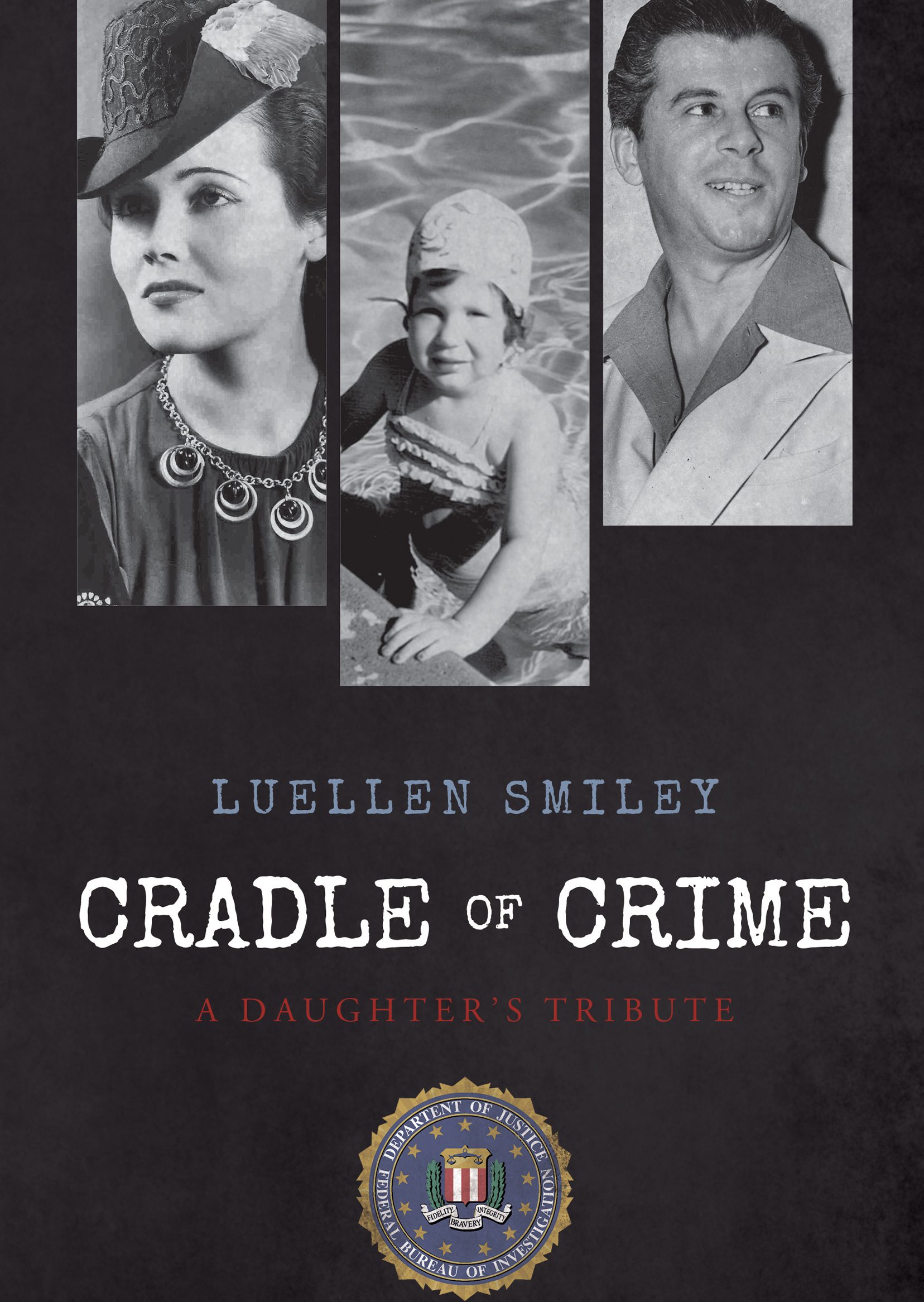
IT’S HERE. “CRADLE OF CRIME-A Daughter’s Tribute” is LIVE in the TaleFlick Discovery contest.
Hi Readers:
Voting has begun on Taleflick for this week’s winner. It ends on Friday at 4:pm. CRADLE OF CRIME- A Daughter’s Tribute is on
Page 8. There you will see a voting button. Let’s win!
Head over to the TaleFlick Discovery page, where https://taleflick.com/pages/discovery all visitors to the site will be allowed to vote (once) ON CRADLE OF CRIME- A Daughter’s Tribute
Thank you very much for allowing “CRADLE OF CRIME-A Daughter’s Tribute” to participate in a TaleFlick Discovery contest. Your date has been set!
It will be a special week on TaleFlick Discovery: an all-women’s week, to commemorate International Women’s Day.
“CRADLE OF CRIME-A Daughter’s Tribute” will be part of next week’s contest that starts:
Wednesday 03/11/2020 at 10:00am Pacific. https://taleflick.com/pages/discovery. The contest will accept votes for three consecutive days, starting at the above time, and ending the following Friday at 4pm PT.
The irony. When I first heard “Like A Rolling Stone” as a teenager, the lyrics saddened me every time I played it or it came on the radio. Then this song became my destiny.
I am thinking about some of Dad’s answers to questions. You learn more by listening than telling. I remember if a friend or associate made some business proposition, Dad would answer, ‘I’ve been thinking along those same lines myself, and have a few ideas.’ Now, sometimes, he didn’t know but that gave him a shot into the game. The opponent would then tell Dad everything. The reason I say this is he said that to me. Not in those words, but the same move. Gangster’s do as much strategizing as politicians, maybe more. Coming out of court LA Times Photo. He loved sunglasses, and so do I.





 ADVENTURERS IN LIVINGNESS