I read some older columns on singleness from times when I was alone and still friends with Dodger. Now, the pattern is unthreaded. There is no intertwinement of intimate conversations with a man, guidance, indulgences, or frolicking like children. When I see couples dining or walking hand in hand in the village, the vision snaps me into memories. The past lurks like a shadow, an overture to the present. Stream of consciousness, that translucence of mind that can drift like a leaf in the wind, is out of reach, so I don’t even attempt to reach for it. Acceptance of this interlude is permitted, as my mind is impregnated with a new canvas: relocation, standing in lines, driving the freeways, a city life that was once as natural to me as breathing feels like a complete revival. Employment, straightening my team playing skill set, working on deadlines, and finding excuses to get out of my chair away from the computer. Working in an art gallery is the only option besides being a remote writer.
Today, as I attempt to make strategic, methodical decisions and edit my resume, the yellow line appears that separates the present from the future. Can I navigate a city confidentially, decisively, and with discipline? In the village, those skills sleepwalk effortlessly.I have a punishing skill for avoiding reality.
I have packed most of my books, vacillated on their importance several times to eliminate the load. I chose ten to give away, Last night on the phone with Jerry, I mentioned parting with my books.
“ Why are you keeping them? I assume you’ve read them.”
” No, I have a lot of photography books I’ haven’t opened once. “
“ So, keep those.“
” I want all my favorite authors, some read, some not. I can’t let them go.– Don’t laugh, but they are my friends, in an abstract way, of course,” Jerry chuckled.
This morning, I kneeled and took another serious examination; no remains the answer. I’ve sold some of my favorite furnishings and artwork, so I made the strategic decision that my books are for keeps.
My Favorite home must be sold. After twenty-four years, Letting go is going slow, packing, and viewing my possessions and antiques. Today, I found a matchbook in perfect condition from the Stork Club, playbills, and musical sheets. I wish I hadn’t opened my steamer trunk; it’s like looking at another woman.
Part Two. Solana Beach Morrocan Bungalow 2003.Maurice was 84
Maurice married the love of his life on December 25, 1941. They married in December because Maurice had saved one thousand dollars and made one hundred dollars a month. Agnes, his girlfriend in Grant, Iowa, is the woman who led Maurice out to Rancho Santa Fe, California, from his home in Grant. She and her father worked for Ronald McDonald, a prestigious resident in the ranch. She was responsible for housekeeping and cooking, and her father was the chauffeur.
Agnes and Maurice went to the US Grant Hotel for dinner and stayed at the Paris Inn on Kettner Avenue in San Diego. The following day Agnes went off to work. Maurice stayed in the little guest house she occupied on the McDonald property. Two days later Maurice received his draft notice. On December 31, he left his new bride and reported for duty in Escondido. He had one short visit before he left for overseas. Then, the next time he would see her, he would be changed.
Buna
One summer evening, I was sitting on Maurice’s front porch. Sometimes, we would sit out till after eight o’clock at night talking about different parts of Maurice’s life. Maurice is really busy in the summer; he tends to his garden of fruits and vegetables, he delivers furniture for all the Cedros merchants, and he helps his friends. He never seems tired, he likes to sit on the porch, have a beer, and tell stories. I used to like it when my father told me stories, but they were unlike Maurice’s. There didn’t seem to be anything he
couldn’t talk about. Once he said, ” You can ask me anything you want.”
“Maurice, how old were you when you were drafted?”
“Well, I was thirty-one years old in 1941 when the war broke out. I had to leave my wife, which bothered me, but I wanted to go overseas and fight for my country. There were so many nice soldiers, the best people in the world. I recall two boys from Chicago that were only eighteen years old, they lied to get in the service, and they were the best soldiers you ever saw- they weren’t afraid of anything.”
“Where did they send you after you left San Diego?”
“Well, first, I went to Camp Roberts for thirteen weeks of training, but I got out in nine weeks. Then they sent me to Fort Ord to get my gear, rifles, and clothes. We left San Francisco on April 21, 1942. We got into Adelaide, Australia, after twenty-one days at sea.” Maurice paused like he had to catch his breath. I watched his face, thinking he may want to stop.
“You remember so much… Do you mind talking about it?” I asked.
“No, I don’t mind; it changed my life, everything about it.”
“Where did they send you after that?”
“We trained for a while in Adelaide; the people in Australia were so happy to see us. I remember they met us at the beach with tea and cookies. The enemy soldiers were getting close. We went up the coast to New Guinea and into Port Moresby; we got there on Thanksgiving Day 1942. As soon as we got off the ship, the bombs hit us; it was the hundredth raid that night. The next morning we were supposed to get to the Stanley
Mountain range, we were in such a hurry. The Japanese soldiers built cement pillboxes and the army wanted us there. So we got in this plane, and they flew us there. Twenty-one at a time. When I got to the island of Buna, there were dead soldiers scattered all over the beach. We lost men so fast. Then, on Christmas Day of 1942, General McArthur ordered us to advance, regardless of the cost of lives. My division was one of the first to stop the Japanese army, the 32nd Division. After we were immobilized and a lot of our men killed, they sent in the 41st Division to take over.”
Maurice’s memory was like listening to a documentary, and this was the first time a Veteran confided in me. They didn’t get supplies at first; they had to wait till everything was shipped to Europe. They got what was left over, which wasn’t much. He ate cocoanut bark for two weeks and had no water.
“I can remember so well the first Japanese soldier I saw. He was sneaking through the jungle, only thirty feet off. I don’t know if I shot him, but he dropped. I don’t like to think I killed anyone, and it bothers me to this day that I had to kill. The Japanese were good soldiers; they had better ammunition than us. We fought all day, and we always ran out of ammunition before they did. I’ll never forget Christmas Day of 1942. We went into a trench to get ahead; the fellow ahead of me was cut wide open, and the guy behind was shot. I just lay there on the ground. If you moved you’d be shot. It was so bad; I lay there all day and night. ”
“Did you think you were going to die?”
“I didn’t let myself think that. I promised God that if I ever got out alive I’d never complain about anything in my life again. Nothing… nothing could be worse than that day.”
“You kept the promise, didn’t you?” I asked.
“Yes, I have.”
“And that’s why the war changed your life?” I said.
“That’s right. Every day is a beautiful day after you’ve lived through war, at least for me,” he said.
Excerpt from manuscript. All rights reserved. No part of this work covered by the copyright herein may be reproduced without the author’s prior written permission.
HOW ONE SOLDIER CHANGED THE COMMUNITY OF SOLANA BEACH, CA
For many of us, the idea of aging is frightening. We have been led to believe it brings pain, loneliness, and idle time for regressing mentally. Remedies, products, prescriptions, and escapes offer youthful looks, energy, and vitality. The thought of aging is brutal; we pretend we can buy youth. What if you met a man who told you he could do everything today, at eighty-four, that he did all his life without injections, medicine, special diet, or specific training?
What if I told you all his family, including his brothers, mother, and father, is gone? His wife died twenty years ago. That he lives alone and is not lonely. He claims he is the happiest man in the world. Would you want to meet him? He wants to meet you. He would like to be everyone’s neighbor. He has much to teach in a country of strangers about meeting neighbors and making friends. We who know proclaim him an inspiration, a legend, an angel. And to that, he always replies, “I‘m just a regular guy.”
Maurice Roberts has lived in Solana Beach since 1936, and his recollections of the area are intact. I recorded his history and began writing everything down. Next week, I will startthe first in a series of historical perspectives.
Achievement knocked down the barrier of fear. It feels like lifting off from ground level; I am floating like I used to be in the swimming pool, and I am only at my desk reading the news from my attorney. From one beginning to an ending, five years later, after tedious research, unscrambling legal language, and searching for the meaning behind the case references, this journey is over. I won the lawsuit against the bank that attempted toforeclose on my home and Dodger, my ex-partner of thirty-five years, who, for still unknown reasons, pursued the foreclosure.
Agape, eyes widened, nerves settled like snowflakes; the joy of achievement cannot be understated. During this phantasmagoria, life beyond research, consulting with foreclosure agencies, banking laws, and regulations, I detached from my passion for adventure, creativity, parades, parties, and socializing; I sat alone, and resilience shadowed, then enflamed like a log of fire, encapsulated into a daily doctrine. Music by Ennio Morricone, blue note Jazz, the everchanging scenery of seasons, phone conversations with friends who released ambers of comfort, confidence, and advice, and TCM films nuzzled my fatigue.
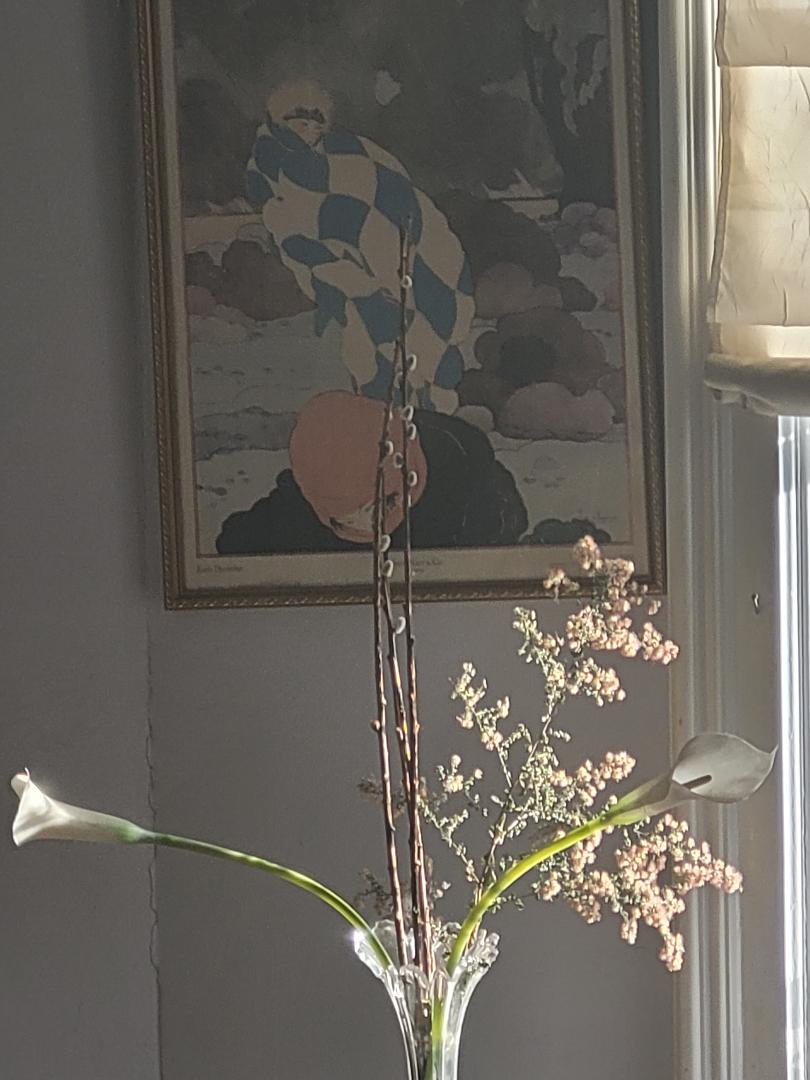
Some days, I remained in bed, staring at my Icart Ladies of Leisure prints, or sat by my favorite window seat and studied clouds, birds, and leaves. The blossom of tenacity grew into a tree trunk and taught me the art of persistence and emotional strength, which were missing links in my character.
Achievement in fine-tuning relationships, setting down the needle gently instead of plummeting riffs and arguments. In the present, as you all know, if you read the news, our culture has replaced argument and debate with assault and violence. I digress; renewed confidence in my aptitude to fight battles, disputes, and disappointments without Dodger is as solid as concrete.
The next episodic internal journey is regaining my passion for opening the door to interaction with strangers and discovering newness in that engine of life.I hope this admission reaches others who are experiencing depriving themselves of love within and without.
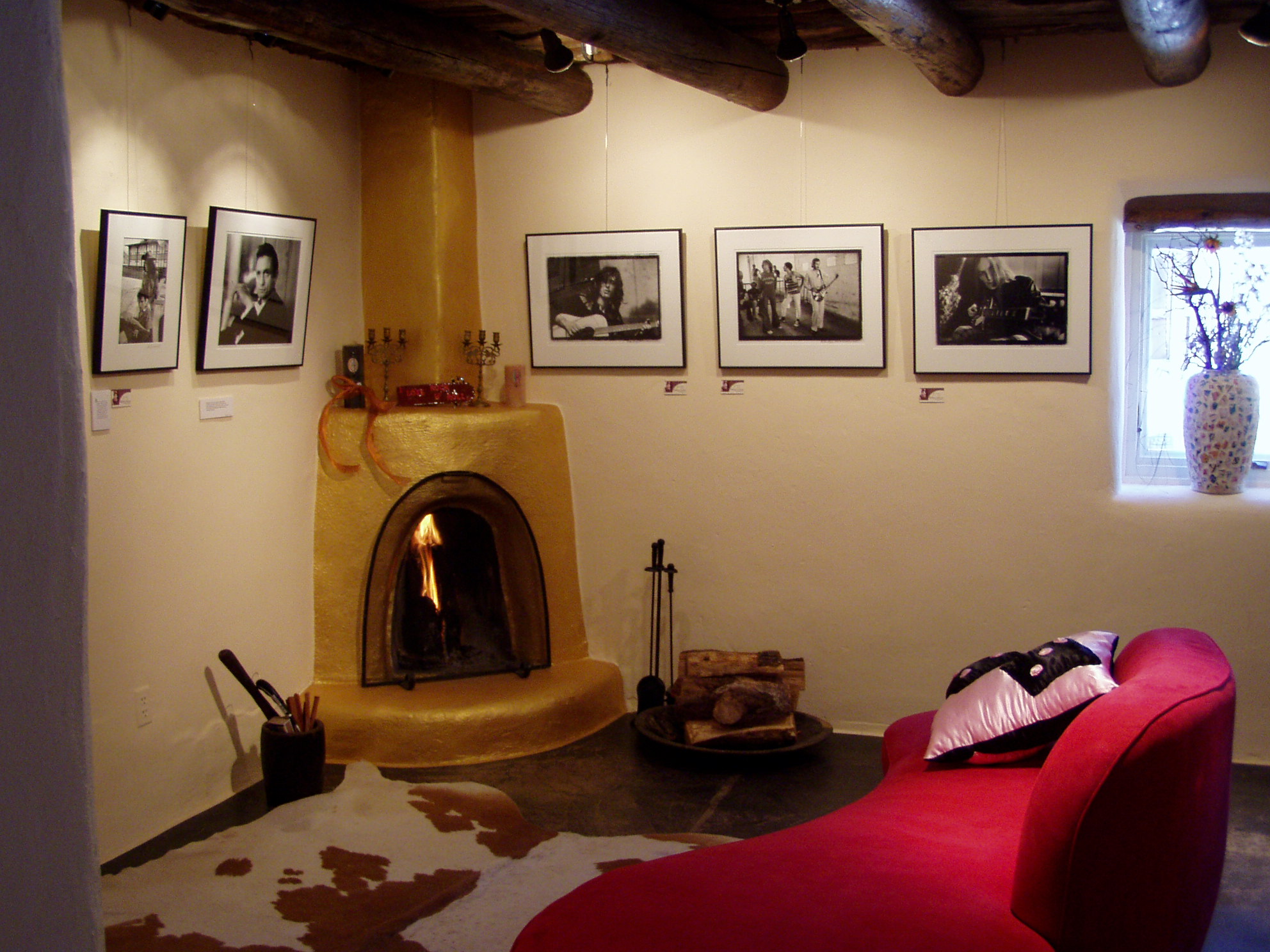
JAGGER PHOTOGRAPH FOR SALE. It is black-and-white and has Mick’s authenticated signature in perfect condition. It is matted and framed and measures 10 in x 11 1/2. For more information, leave a comment.
SILHOUETTE of a Taos night out in 2006. It begins with the sunset—a bubble-gum pink sash that swirls like taffy just above the distant hillside. The transcending forms and colors in the sky distract me; they silence me, keeping me from turning on the television or answering the phone.
The sunset has settled into my routine. I watch it from the roof garden over our Adobe Home and Gallery every night. In the midst of dressing to attend an art auction at the Millicent Rogers Museum, the sun has vanished. The sky turns Taos blue; a luminous oil pigment canvas blue that appears like an endless tunnel you can walk through. As I descend the staircase and cross over the ménage of piles shoved in a corner to allow SC to paint, I think, “This is going to be my home. I’m still here” Adventures in Livingness
In the courtyard where new flagstone has been laid, and a mud ditch blocks the exit, Rudy hitches me on his back and carries me out the side entrance through Tony Abeyta’s yard. Tony’s yard is piled with sand from our flagstone project, and my high-heeled black suede shoes are not at all practical for crossing New Mexican dunes. This is how the evening begins. Out in the parking lot, we circle around once and stop in Robert’s gallery. He has offered me his turquoise squash seed necklace to wear at the auction. The necklace is from Turkey, and sells for $1,800. Millicent Rogers events always attract women with extravagant jewelry, and Robert knows I have no such possessions. He hands me the necklace and says, have fun.
At times like this, I can forget the faces and routines I lived in Solana Beach and feel swept into a labyrinth of unfamiliar vignettes. There are two police cars in the rear of the parking lot, the church looms like a fortress of wet mud, and SC is listening to The Band CD we picked up in Santa Fe. I slide into the car, ensuring my shoes don’t fill with gravel.
There is very little street light along the desert road, and cars approach you at disarming speeds. For newcomers, the pale yellow line that separates oncoming traffic, roaming animals, hitchhikers, leather-clad bikers, and abandoned pets is of no comfort or value. Boundaries and civilities between people are vague, and sometimes, conversations elope into poetry.
At the Millicent Rogers Museum, the director, Jill, who is there to welcome each guest, greets us at the carved wooden doors. This museum was once a home, like most museums in Taos.Each room is an envelope of Native American jewelry, ceramics, paintings, weaving, textiles, and metalwork sealed with Millicent Rogers’s ethereal presence. By coming to Taos and bridging her New York chic with southwestern individuality, she set global trends in fashion, art, and living. he museum collection includes some of her designs that evolved from her residency in the desert. She moved here in 1947 and died here in 1953. Although she could have chosen anywhere in the world to live, she settled in the unaltered, surreal lunar beauty of Taos.
I wandered through the tightly packed rooms, alternately viewing the guest’s attire and jewelry. The woven wraps, belts, and hats worn by men and women form a collage of individual expression. Almost everyone seems to attract attention by the texture and color of his or her attire. It is a festive traditional look, with southwestern accessories paired with jeans or silk dresses. If you come to Taos, look for a belt buckle, one piece of Native American jewelry, and one piece of art.
When the auction was announced, I admired the same etching as the woman next to me. She remarked that the artist was also the teacher of one of her children. I learned that Ellen had six children and 11 grandchildren. She was petite with curly blonde hair, and I liked her instantly. I told her I was a writer.
“So am I,” she answered.
Rather than talk about her work, she began talking about her daughter, who is also a writer.
“I’m so lucky–all my children and grandchildren are creative and artistic.”
It was obvious that her life was a garden of earthly delights and that she had raised many roses. When the auction began, she vanished, and I quickly viewed the art before returning to the two etchings. They were both sold.
As I was walking out, I bumped into Ellen. She was clutching the etchings.
“So, you bought them,” I said.
“Oh, yes, I had to have them.”
She left me with a beaming smile and a closing remark I often hear: “Welcome to Taos.”
I love hearing that so much I don’t want to stop saying, I just moved here. After the auction, we stopped in Marco’s Downtown Bistro, where we joined an improvisational party. It started when Marco introduced us to his friends, Pablo and Joan, who were visiting from Santa Fe.
The dim, glowing melon adobe walls of the bistro, Marco hugging everyone, Joan’s melodious, high-pitched laughter, Pablo telling jokes, Rudy laughing, and then Philip arriving to tell stories crossed over from strangers in a bistro to a fast-rolling film. The conversation and laughter surfed breathlessly from one person to another.
Joan remarked, “My fifteen minutes. This is the best for me. The first time you meet someone, you’re both talking without effort. It’s so perfect.”
We closed the bistro past midnight. Marco had gone home. Joan decided to stay at a friend’s house. Philip agreed to drive to Santa Fe the next day, and we took Tylenol before bed.
Not every night out in Taos is like Joan’s fifteen minutes, but chances are you will have something to write home about. The beginning of Gallery LouLou Taos, NM
OLYMPUS DIGITAL CAMERA
OLYMPUS DIGITAL CAMERA
OLYMPUS DIGITAL CAMERA
OLYMPUS DIGITAL CAMERAOLYMPUS DIGITAL CAMERAOLYMPUS DIGITAL CAMERA
In the mood for pasta tonight, a few hits of green chili to flavor fest the marina, shrimp, garlic, and heaps of asiago cheese, yes sounds good. One step into the kitchen, and there on the electric stove burner is a mouse … I screamed, did you hear me? Then I stomped my feet and it lowered back into the passageway.
” I need emergency treatment, you won’t believe what I just saw,” The receptionist at Pest Control, replied, it sounded like she may be smiling.
” What?”
” A mouse found his way up to the stovetop grill, I mean not all the way, half his body was visible! ” She chuckled, for a full minute.
” I’m more afraid of mice than bears, foxes, or anything. I know it sounds irrational but I didn’t grow up here. “
” Well, let’s get you scheduled… let’s see now, we can get there on Thursday next week.”
” I cannot go in the kitchen..”
” Gee, I am sorry. I noticed that we were there in March of this year.”
“Yes, nine-hundred dollars here! You won’t charge me for this next visit.”
” Well, let me see what I can do.”
Enter, Gary, with a toolbox, and a howdy doody kind of introduction. He appeared as interested in ridding mice as I do shoveling snow. He’s going to retire soon, he says as he pokes around the kitchen, points to the openings, talks some more about retiring, and applies a bit of killer foam behind the stove.
He sets a few traps in the basement as I watch and snap photos.
” Are there any dead ones in the traps from last time?”
” Sure, I see two.”
“Okay, I’ll be upstairs.”
I covered all the stovetop grills with pot tops, ordered disinfectant, and covered every counter with paper towels. I went out to dinner for the next week, feeding on grilled sandwiches and soup. More sightings and drips of mouse visits provoked a second call to Family Pest. They sent out another treatment expert. Gary shuffled in, forty years younger than the previous technician.
My friend JoMarie who is Martha Stewart without a TV show told me to place pine cones dressed with cinnamon. So I listened.
” Mice are difficult, they slip through a fingernail-wide opening.”
“Well, then let’s foam up all those fingernails.”
” I’ll set some traps downstairs. I will move the stove out and see if there is an opening.”
He pulled it out, and alas, a five-by-five opening into the basement.
“ I have to have this blocked off right?”
“Yeah, that’s a good idea, we don’t do that.”
” I figured.”
The next call went to a carpenter, he showed up and hammered in sheetrock as he talked about his six kids. He is twenty-four, I tried to do the math, maybe it’s a sympathy card. He agreed to take care of five more repairs in the house and charged me modestly.
A week later after three canceled appointments I crossed his name off the list and explored more carpenters on the web. This will be the seventh I called. Paul showed up, speaking amicably, obliging, harp-like voice and, ready to work. That was two weeks ago, he said he had a bad cold. I’ve read about Lazy Girl Jobs, but carpenters and handymen? Half the population in my village are in the trades so I’m miffed. Utube is not going to teach me how to drywall ceilings, replace a window, box in a pipe, or bring down heavy antique furniture from the attic down thirty stairs without falling down, and most likely on a mouse.
I’m an elf who spends her days writing, translating legal documents, and fussing over the unfixed. I’d rather be monitoring sunshine, waves, surfers, and seagulls… until then, home away from home are adventures in livingness. DEL MAR, CA.
Sunlight seeps through the glass window and tickles the silk flowers, autumn leaves left over from the last street clean-up, lay flat and lifeless.
The street is silent this weekend, the neighbors with three high-pitched voluminous barking dogs are gone, and I notice my shoulders softened from the daily dose of their irritation. The neighbors are tucked indoors, avoiding the freezing atmospheric clutch of winter. In the village, it is Shop Local weekend so I took a walk and stopped at one of the gift shops. A mirage of unrelated items from chocolate bars to errings, tai die dresses, and scented candles crusaded side by side. The owner repeated her lines, ‘ I represent eighty-one New York artists so if you have any questions, no question is refused.’ Feeling brave I asked, What is the meaning of life?’ The result was not what I expected, she did not respond, and the other shoppers, maybe two chuckled. Time to move on.
Rarely do I run into anyone I know, my circle here is a half-circle of acquaintances. The next stop is the Social Club where my curious humor is appreciated.
” Jackie! She just started a few weeks ago. At first interaction, this twenty-something woman avoided conversation, not even a smile. After a few sips of a Manhattan, I pulled out my mini perfume sample.
” Do you like this?” she sniffed, I watched.
” Oh, I love this, What kind?“
” Tom Ford Noir.”
“I Love Tom Ford, he’s so expensive.“
That’s why I buy the body spray, sixteen ounces, forty dollars. I’d rather turn the heat down than go without perfume.”
At that moment, we leaped into gal pals. The Social Club serves up exotic cocktails, irresistible tacos, and an assortment of soups and salads, my kind of table setting. Horace the Bar Manager wears a beret and is always somewhat distracted by his list of duties. He moves behind a narrow back bar pathway as if he is power walking, and always greets me with a genuine ‘How are you LouLou!’.
I meet a cluster of female bar-friendly women, who invite me into their festive fiasco of celebration for one reason or another. We may never see each other again, but the moments count. Sometimes we exchange emails or phone numbers. The adverse effects of alcohol are sometimes diminished for undiluted expression.
I’m learning to understand upstate New Yorkers, their resilience to extreme climate, limited source of funds, pragmatic decisions, family comes first foundation, and quizzical curiosity when they learn I moved from San Diego to purchase a Victorian rental property in Ballston Spa, ‘ Why did you do that?’ I answered, ‘ I fell in love with the quaintness and the house.’ Still visibly unconvinced, I wonder if they think I’m in hiding or avoiding some criminal offense. I’ve not met one person from San Diego, Los Angeles, or Santa Fe, NM in three years. Maybe if I dressed in Pendleton or Northface, I wouldn’t stand out.
On another night, in desperate craving for French Fries, I stopped at Henry’s Pub. The man next to me opened the conversation,
“You’re not from here are you?”
” What gave me away?”
” The way you dress, it’s a nice jacket.”
” I just wear what’s in the closet, urban clothes I suppose.”
” That’s cool. Where are you from?”
” Los Angeles.“
” I’ve never been there, I’m planning a trip to Hawaii, my first time.” He outlined a history of why now, breaking up with his girlfriend, and then he jump-started into a conversation about needing a haircut. This went on for some time, although he was almost shaved. Then he went onto his beard. I listened attentively, imitating interest because he needed to talk, and I knew that feeling so well. Sometimes conversation is not what we need but what the other person needs.
Living in Del Mar from 1982 – 1996 enriched my spirit, health, and distance running. Even though I’ve heard, you can’t go back, I’m striving to break that fact.
As children, our waiting depends on how long it takes Mom and Dad to finish what they’re doing and pay attention to our needs. It takes hold of us, like a fever, and we resort to nudging them, whining, even sobbing, If we are made to wait longer than we expected. During the school year, I waited all semester for the summer. In Los Angeles that meant it was hot enough to go swimming in the ocean.
When I lived in Hollywood, I rode two buses, to get to Santa Monica. The second bus dropped me off on Ocean Avenue, above Santa Monica Beach. I ran down the ramp that connects to Pacific Coast Highway and headed north to Sorrento Beach. I jumped into the sand running to find the place where my schoolmates clustered: in a caravan of towels, beach chairs, radios, and brown bag lunches. I couldn’t just run to the ocean, I had to sit and talk and have something cold to drink, and then I made myself wait until I couldn’t stand it any longer. Then I ran down to the shore, and embraced the waves, tumbling inside their grasp until I lost my breath, and floated into abandonment.
After I moved to Santa Fe I stopped thinking about the ocean, I had to remove the memories from my thoughts, so I could continue to experience this spark of New Mexico. The dry sage ocean of pink soil, and radiant blue sky that pinches your eyes when you’re driving, the sunlight, the warmth of a desert night, and the white snow on pink adobe rooftops. It had postcard perfection, even with fallen leaves spread like trash everywhere, the trees almost naked, and the dead plants in the garden. I tried not to think of the ocean, the look of the sea from watery suntanned eyelids, or from the bluff at Del Mar, or the splashing of waves around my shoulders as I tumbled beneath the surface.
I waited, as I did as a teenager, for that time to come in the fall of 2010, so I could return to the sea. I stood at the water’s edge in Del Mar, it was like summer without all the kids screaming, barking dogs, volleyball and paddle board games, lifeguards thrashing the beach in their jeeps shouting, ‘no dogs off the leashes, no glassware, and no surfing today’. They were missing, and so were the parade of beach runners, and surfers. In fact, I was the only one swimming, on that first day at the beach. Before I went into the water, I reclined on a big black boulder and faced the sea, letting my eyes wander amongst the scenes of the beach on a Tuesday afternoon. In front of me was an older man with graying hair, in a beach chair reading. He must be retired, he looked perfected adapted to his spot about five feet from the shoreline. I thought about retirement, and how I still cannot come to grips with spending my days on park benches or in cafes watching younger men and women live. There was one swimmer, on a bogeyboard, he was far out, and floating along, and I wished I’d brought mine with me, but it was in Rudy’s van. The last time I used it was when I lived in Solana Beach in 1997. I also wished I had a new bathing suit, because the one I was wearing was too loose, and the neck straps were tied together in a knot so I could swim without losing my top. The sun baked my body, and I let it without abatement, without shading my limbs or wearing a hat, just enough sunscreen to keep the rays from trotting over my lily-white skin. I closed my eyes and when I opened them, the waiting suddenly felt so imperial, so much so that I began to think about waiting as an aphrodisiac or something like a good cocktail that you have to make last for hours, while you wait for that moment that makes you feel immortal, childlike, and emancipated.
I felt the beach flies, and the tang of salt water on my lips, and when the seagulls swarmed above the water’s surface, like so many beads of a necklace, I thought, that this is about the most beautiful day I could have, and it’s all because I WAITED. I didn’t give up on the ocean, or my place in it, or believing that I would have my day in the sand, under a faded denim blue sky, with cotton ball clouds floating above me. I baked until the sweat drenched my pours, and then I raised myself up and walked slowly to the edge of the water. The surf made tiny breaks not enough to shatter my body warmth and I felt the first sting of the water on my feet, and then my knees., I submerged and found that the best way to celebrate this day was to keep flopping backward on top of each wave as it crashed, and I did this for a dozen rounds, until I felt giddy, submissive, and dented with the surf. That waiting thing again, meant something that I should write about because all of us are waiting for the election, the economy to recover, wars to end, streets to be safe and our real estate to be worth something again. We are all waiting for this big change so we can feel secure and optimistic about the future. There is something useful about waiting, something predisposed, that gives us the support and substance we need, so when the waiting is over, and we are all flush with optimism again, it will feel like the first time. It will overwhelm us with power and joy, like the ocean.
As children, our waiting depends on how long it takes Mom and Dad to finish what they’re doing and pay attention to our needs. It takes hold of us, like a fever, and we resort to nudging them, whining, even sobbing, If we are made to wait longer than we expected. During the school year, I waited all semester for the summer. In Los Angeles that meant it was hot enough to go swimming in the ocean.
When I lived in Hollywood, I rode two buses, to get to Santa Monica. The second bus dropped me off on Ocean Avenue, above Santa Monica Beach. I ran down the ramp that connects to Pacific Coast Highway and headed north to Sorrento Beach. I jumped into the sand running to find the place where my schoolmates clustered: in a caravan of towels, beach chairs, radios, and brown bag lunches. I couldn’t just run to the ocean, I had to sit and talk and have something cold to drink, and then I made myself wait until I couldn’t stand it any longer. Then I ran down to the shore, and embraced the waves, tumbling inside their grasp until I lost my breath, and floated into abandonment.
After I moved to Santa Fe I stopped thinking about the ocean, I had to remove the memories from my thoughts, so I could continue to experience this spark of New Mexico. The dry sage ocean of pink soil, and radiant blue sky that pinches your eyes when you’re driving, the sunlight, the warmth of a desert night, and the white snow on pink adobe rooftops. It had postcard perfection, even with fallen leaves spread like trash everywhere, the trees almost naked, and the dead plants in the garden. I tried not to think of the ocean, the look of the sea from watery suntanned eyelids, or from the bluff at Del Mar, or the splashing of waves around my shoulders as I tumbled beneath the surface.
I waited, as I did as a teenager, for that time to come in the fall of 2010, so I could return to the sea. I stood at the water’s edge in Del Mar, it was like summer without all the kids screaming, barking dogs, volleyball and paddle board games, lifeguards thrashing the beach in their jeeps shouting, ‘no dogs off the leashes, no glassware, and no surfing today’. They were missing, and so were the parade of beach runners, and surfers. In fact, I was the only one swimming, on that first day at the beach. Before I went into the water, I reclined on a big black boulder and faced the sea, letting my eyes wander amongst the scenes of the beach on a Tuesday afternoon. In front of me was an older man with graying hair, in a beach chair reading. He must be retired, he looked perfected adapt to his spot about five feet from the shoreline. I thought about retirement, and how I still cannot come to grips with spending my days on park benches or in cafes watching younger men and women live.
There was one swimmer, on a bogey board, he was far out, and floating along, and I wished I’d brought mine with me, but it was in Rudy’s van. The last time I used it was when I lived in Solana Beach in 1997. I also wished I had a new bathing suit, because the one I was wearing was too loose, and the neck straps were tied together in a knot so I could swim without losing my top. The sun baked my body, and I let it without abatement, without shading my limbs or wearing a hat, just enough sunscreen to keep the rays from trotting over my lily-white skin. I closed my eyes and when I opened them, the waiting suddenly felt so imperial, so much so that I began to think about waiting as an aphrodisiac or something like a good cocktail that you have to make last for hours, while you wait for that moment that makes you feel immortal, childlike, and emancipated.
I felt the beach flies, and the tang of salt water on my lips, and when the seagulls swarmed above the water’s surface, like so many beads of a necklace, I thought, that this is about the most beautiful day I could have, and it’s all because I WAITED. I didn’t give up on the ocean, or my place in it, or believing that I would have my day in the sand, under a faded denim blue sky, with cotton ball clouds floating above me. I baked until the sweat drenched my pours, and then I raised myself up and walked slowly to the edge of the water. The surf made tiny breaks not enough to shatter my body warmth and I felt the first sting of the water on my feet, and then my knees., I submerged and found that the best way to celebrate this day was to keep flopping backward on top of each wave as it crashed, and I did this for a dozen rounds, until I felt giddy, submissive, and dented with the surf. That waiting thing again, meant something that I should write about because all of us are waiting for the election, the economy to recover, wars to end, streets to be safe and our real estate to be worth something again. We are all waiting for this big change so we can feel secure and optimistic about the future. There is something useful about waiting, something predisposed, that gives us the support and substance we need, so when the waiting is over, and we are all flush with optimism again, it will feel like the first time. It will overwhelm us with power and joy, like the ocean.
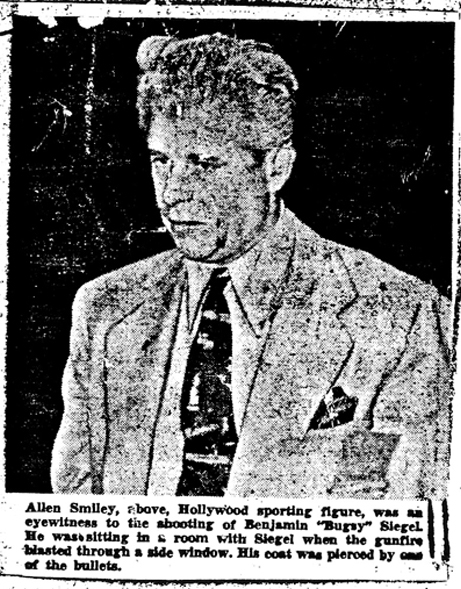
“What’s it like knowing your father is a gangster? Did you know when you were a teenager? Did you meet Bugsy Siegel? Did your father kill anyone? You know the Mafia kill people.”
Childhood 1955-1961
I called him Daddy. His friends called him Al, or Smiley, the Department of Justice tagged him “armed and dangerous” and his mother named him Aaron. He was born January 10, 1907, in Kiev Russia, one of three sons born to Ann and Hymen Smehoff
He had salty sea blue eyes blurred by all the storms he’d seen. When I say something funny, his eyes crystallize and flatten like glass. Smoothing out the bad memories. He’s always a different color. Dressed in coordinates matched perfectly as nature. My small child’s eyes rest cheerfully on his silk ties, a collage of jewel tones. The silver and blue tie matches the shirt underneath. The feel of his fabric is soft like blankets. He is very interesting to look at when I am a child and open to all this detail.
I cling to his neck in the back seat of his long Cadillac. My mother doesn’t ride with us during the day. She comes along if we are dressed up and going out to dinner. I enjoy the car rides most. He sings songs and his hand flutters about, catching me by surprise behind the ears, and I shriek. Daddy’s laughter echoes inside my ears.
We visit friends in Hollywood who own delicatessens, restaurants, and clothing stores. We go to Paramount Studios and I ride around on a pony or get kissed by cowboys in a Western scene. We go to Beverly Park almost every day to ride the ponies. I am only two years old when Daddy slings me over this big stinky pony, and insists that I go around the ring one more time so he can watch. I meet Hoppalong Cassidy and we visit his booth at Pacific Ocean Park. When my father was a film producer he worked with Hoppalong on a western film.
Our home in Bel Air was where I lived before I knew how fortunate we were. My room was at the end of a long hallway, and I was afraid to leave the room when it was dark because it seemed such a long distance to my parents. The wallpaper danced around my eyes, a collage of flowers illuminated the black background, and I was wrapped in a blue satin comforter. My room was cluttered with dolls. As a young child, I preferred staying in my room and imagining characters for my dolls.
My father showed us, and really paraded us around as if we were exceptionally talented. I never understood why these people fussed over me. I sort of distrusted them, before I understood what that meant. There were exceptions, the ones I knew to be real family people earned my affection. I dreaded the routine of being placed in front of a group of men and women who stared at me as I curtsied or mumbled “Hello.” George Raft came to all my birthday parties, Nick the Greek showed me card tricks and Swifty Morgan told stories all night. Damon Runyon characterized him in his stories as the “Lemon Drop Kid.” I was surrounded by men with FBI files and notorious reputations for being dangerous gangsters. Some of them had been arrested for murder. Others were old-time bootleggers from Cleveland and Detroit. I knew them as Uncle Lou, Doc, or Uncle Johnny. Years later I would discover they were Lou Rhody of the Cleveland Jewish Syndicate in Cleveland, Doc Stacher, the tough New Jersey underboss to Longy Zwillman, (the guy who discovered Jean Harlow in a speakeasyin New Jersey), and Johnny Rosselli, the king of Las Vegas in its heyday. I was enchanted by thesemen, they were family friends, and they never followed the rules.
This home was my father’s showplace. He bought the house in 1955, and that was a bad year for him. I was two years old.. That was the year that a number of his friends and associates died or were murdered. Like Little Willie Moretti from New Jersey, who was killed by rival gangs, and Tony Canero, who died at the blackjack table of the Stardust Hotel.
Willie had a problem keeping his mouth shut. Frank Costello, the leader of the syndicate group most closely associated withmy father, sent Willie out to California where he’d be safe from harm. Willie was unstable, taking bets on losing horses and talking to people he shouldn’t. Frank asked my father to keep an eye on Willie, to become a confidant. He was told to dress up as a Doctor and pay visits to Willie. My father obliged and Willie took a liking to my father. Willie suggested to Frank that the boys should build this doctor a hospital. Frank told the story to some of the other fellows and they must have had a good laugh. Frank had another idea, giving Allen the job of promoting Willie’s good friend, Frank Sinatra. My father declined the offer. Eventually, Willie returned to New York and was found dead stuffed in the trunk of his car. The second tragedy was the suicide of Louis Rothkopf, “Lou Rhody” they called him, or “Uncle Louie.” He was one of four bosses of the Jewish Cleveland syndicate, (the Mayfield Road Gang), and one of my father’s closest friends. I heard that Louie would cross to the other side of the street if he saw a guy that owed him money. He had a big heart. With his wife Blanche, the Rothkopf’s were respectable business owners in the Chagrin Falls area of Cleveland. When Senator Estes Kefauver launched a federal investigation on organized crime, he exposed and ruthlessly slandered Lou and his partners. Not just as bootleggers, and distillery owners, but murderous syndicate men with ties to the Italian Mafia. By this time, Lou and his partners were operating legitimate business enterprises all over Cleveland. Blanche commit suicide two years before Lou also took his own life. I have been told that my father brought Lou in to save the Desert Inn Hotel in Las Vegas, when the first owner,Wilbur Clark, went busted.
* * * * *
The house in Bel Air brings back the best memories of my childhood, but few visions remain. The front yard was a blanket of pink and white geraniums. They were tended to by our gardener, and though I wished to sit in their path, and smell their fragrance, I was told not to play in the geraniums. The flowers were my first contact with nature. It wasn’t enough to just look at them, I wanted to lay with them and watch their breathing.
Our house was perched at the top center of Thurston Circle, a sort of distant cousin to the discreet upper Bel Air locked behind black iron gates. There was no gate at our entrance, and the neighborhood homes were a mixture of two-story colonial and ranch style. The view of Los Angeles from the living room and my parent’s room was an electric and absorbing scene for a small child who hadn’t known anything beyond her house. At night lights glittered against a black sky, and I could sit by the window and dream of what the lights were all about. Entangled bougainvillea grew wildly behind our house. We picked figs and avocados from trees in the yard. There I learned my first lesson about family values. One day my father showed me a nest of small birds perched on a branch of a spruce tree. He pointed out the mother bird hovering over her babies in the nest, and then he drew my attention to the father bird perched on our television antenna. “You see, that’s what the father bird must do, is guard his little family, just like I do.” I asked a few questions, and he just kept telling me that it was so remarkable how animals take care of their families and I should watch them and learn something.
My parents gave me extravagant toys. I was about four when my father installed a roller coaster in our backyard. He sat me in the cart and I rode up and down the bumpy track, screeching with laughter. My mother was always there, watching from a distance. Daddy was the one that loads me up with surprises and Mommy was the one to feed me, clean me up, and tuck me in at night. I could tell her everything, she listened to me and watched over me. She doesn’t interfere with me when I am playing with my dolls.











 ADVENTURERS IN LIVINGNESS