WHO IS BUGSY?


!Bh4GdiwBmk~$(KGrHqYH-C4EsMLP8z9dBLLYjivCm!~~_12

LUCILLE CASEY SMILEY

MGM MotherAll my life people have asked me the same questions:” What’s it like knowing your father is a gangster? How old were you when you found out? Aren’t you afraid of his friends? You know they kill people.”
I live in a temporary tide-pool, a lily
floating against the current, weighted
down by a suit of armor that shields me
from the beauty, love and freedoms stirring in my bud.

What seemed insignificant at the time was the diving board into my Dad’s history. I was watching a Bugsy Siegel documentary on my television in San Diego during 1993. It was the first one I’d seen. Three historians joined in on the violence Bugsy honored and esteemed. Half-way through the celebratory lynching of Bugsy and his pals, a reporter made the statement that ‘It’s obvious Allen Smiley was there to set Bugsy up for the hit.’ Andy Edmonds stated that Dad conveniently disappeared into the kitchen during the time of the shooting. It wasn’t until a photograph of my dad appeared on the screen; a man with thick graying hair that I noticed an expression I’d never seen, horrifying misery. I moved closer to the television to see his face up close. A kaleidoscope of emotions rose to the surface: anger, shame, curiosity, and disbelief. I was forty years old.
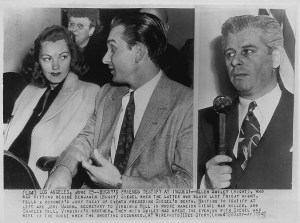
smiley aThe first time I’d seen those photographs of Ben Siegel slumped on that sofa; an eye bleeding down his face was a day back in 1966 at the age of thirteen. My best friend Dena lived in Brentwood with her divorced mother and siblings. We hooked in the unfamiliar and confusing imbalance of a broken home life. Dena was suffering depression after her parents divorced and I was dangling from my father’s fingertips hopelessly conflicted after my mother died. Dena wouldn’t let a day go by without calling me. ‘Are you all right?’ She didn’t like my father and her reasons were mature beyond her years, ‘Your father scares me.’ After school one afternoon we stopped in the Brentwood Pharmacy. Dena was looking at the book rack and I was following along.
“Lily, my mother told me your father is in a book, The
Green Felt Jungle. It’s about gangsters. Wanna see if they have it?” I agreed to look because Dena was interested, but it meant nothing to me. She twirled the book rack around as I stood behind her watching.
“That’s the book! Let me look first and see what it says,” she whispered. I could feel her arm tense up as I grasped it.
“Oh my God! There he is,” she said. We hunched over the book and read the description of my father, “Allen Smiley, one of Ben Siegel’s closest pals in those days, was seated at the other end of the sofa when Siegel was murdered.” Dena covered her mouth with one hand and kept reading silently.
“What does that mean? Who is Siegel?” I asked.
“Shush–not so loud. I’m afraid to tell you this. It’s awful.”
“What’s awful? Tell me.”
“Bugsy Siegel was a gangster in the Mafia. He killed people. Your father was his associate.”
“I don’t think I should see this.” I turned around abruptly to leave the drugstore. Dena followed me out.”
“Lily you can’t tell your father you saw this book. Please don’t tell him I told you.”
“Why not?”
“My mother told me not to tell you. Swear to me you won’t tell your father!”
“I won’t. Don’t you tell anyone either.”
A few days later after Dad left for the evening I opened the door to his guarded bedroom. I walked around the bed to a get a closer look at the photographs on the wall. It was the first time I could read the inscription.

DSC01871 - Copy


LIGHTS ON SANTA FE


A NATIVE AMERICAN  LIGHT SHOW.

YOU CAN BECOME WHO YOU DREAMED OF, DO WHAT YOU DREAMED OF IN SANTA FE , because Santa  Feans do not care.

I heard this slogan a lot when I first moved here seven years ago.  My understanding was vague, unrealized, and I didn’t think much about it until  this winter.   I began to  approach strangers,  walk across the street to the spa in a robe,  or  leave my pajama top under my sweater because I like the texture of it.
I’ve  given  up the diving board of scrutiny and plunge into the dreamy, stony,  outdated, simplistic extravagance, and unrealistic vibe of Santa Fe.

I keep dreaming, and preparing,  with a face blotched red by cold, that THE LIGHTS, SHADOWS,  MOON AND CHARACTERS ARE MY BROADWAY FOR NOW.   NOT FOREVER. EVERYTHING CAN BE TEMPORARY IF WE TAKE ADVENTURES IN LIVINGNESS.

WHAT WE CAN DO


Fans of England and France united to sing a defiant rendition of the French national anthem at Wembley four days after the Paris attacks.

Prince William and David Cameron were among 71,223 people in the stadium as La Marseillaise rang out ahead of a minute’s silence to remember the 129 people who died.

England fans held aloft a mosaic of the French flag during the anthem.

Armed police stood guard at the stadium throughout the day after three suicide bombers attacked areas outside the Stade de France during the French national team’s last game on Friday.

It is the first time armed police have patrolled an English football match.

Wembley

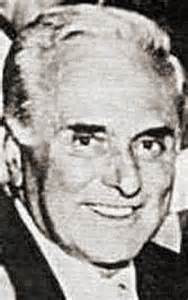
JOHNNY ROSELLI – MURDERED?


I met Johnny for the first time at my mother’s funeral. He told she was a saint.
JOHNNY ROSELLI.jpg2
A blue Ford sedan with tinted windows pulled up in front of a bar in Biscayne Bay. The driver Tony, stared out the windshield looking beyond the boundaries made by man. Two of his men, sat in silence in the back seat. They were staring ahead, in the same mental latitude as the driver, with unblinking surgeon eyes. Tony turned off the ignition and leaned back. The only sound came from the flapping of the bar screen door.
“Move,” Tony ordered closing his eyes. Abe and Chuck exited the sedan in one long continuous motion as if they tied together. Tony waited, without changing the position of his right hand on the leather coated steering wheel. He heard the bar door squeak as it opened. He could see Abe and Chuck entering the bar. He did not need to see them physically. This was stored in his memory. The single file procession into the bar, the attachment to the target, and the guarded exit. Tony checked the time on his pocket watch. The minutes went slowly. He lost his concentration, and was tumbling in memories; he filed them in two categories, the ones that belonged to the outfit, and the ones that belonged to him. He slipped back to the sixties, in Las Vegas, when the boys sat poolside at the Desert Inn and bit into olives handed to them by freshly polished show girls in bikinis. Then he saw Johnny, lounging at the pool, his crown of white hair perfectly combed. He was surrounded by showgirls. The dames loved Johnny. He was better than any Hollywood movie star.
Then the door to the passenger side opened. Tony glanced at the blue gabardine slacks, and Gucci loafers. He could smell Johnny, even before he got in the car. His scent was recognizable, as if he’d been born wearing Boucheron.
“For crying out loud boys–I was just getting
an erection. ”
Johnny turned to Tony, the man he met twenty years ago when he was a driver for Santos Trafficante, the Mafia Don in Florida. Johnny slapped his knee and wheezed through his laugher. Tony couldn’t return the glance, or the laughter
“Tony! What’s the long face for, are we going to a funeral?” Tony shook his head from left to right. He gripped the steering wheel, afraid he might put his fist right through the windshield. Johnny nudged his rib.
“Loosen up, you’ll miss the target.” Tony reached into his breast pocket.
“Have a cigar Johnny, fresh from Castro. The same brand you tried to poison him with remember?” Tony’s forced laughter sounded hollow.
“Hell, that wasn’t my idear; you guys are still screwing up the story. That’s your problem, if you’re gonna squeal at least tell it the way it happened.”
“You shouldn’t talk bout squealing Johnny,” Chuck interrupted.
“Shut your trap,” Tony snapped. Johnny did not appear to hear the comments, or if he did chose not to recognize the remarks of the backseat thug.
Johnny took the cigar and fingered it. He twirled it around with two fingers, and then placed it under his nostrils and inhaled deeply.
“Doc says no more–not if I’m gonna live without an oxygen tank tucked into my pocket. How ‘bout that? I even gave up the cigars when I moved down here. I can’t afford them anymore.” His laughter came easy, the way it always did.
“Johnny……I,” Tony stuttered.
“Did you hear the joke about the Italian and the Jew?” Tony nodded yes, but Johnny began telling the joke anyway. Tony turned the ignition on and drove away from town, slowly like they do in a funeral procession. They left the parts of the city ruled by law and order. The white villas shaded by palms, and guarded security gates. They descended into the pit of the buried past, the old rail yards, the site of hollow industrial buildings and warehouses. From there Tony entered an abandoned parking lot inside a junkyard, piled high with tin and steel parts. At one time they were valuable, like Johnny. Those days were gone, the junk piled up, just like dead Mafia Dons.
The sky dimmed in these parts of town, the shadows from the freeway overpass blocked the late crimson sunlight. Johnny was quiet now, sitting calmly with his hands folded together in his lap. His facial muscles relaxed, the jokes were over now. His mind was elsewhere.
“The son of a bitch gave me no choice John! I’m sure dead too if I ….” Tony stammered.
“Stop your babbling, I’m not your priest. I got a few orders for you. I want you to get word to Smiley, before anyone, you hear me. Don’t call his home; he’s got a private service. I’ll give you the number when I’m finished. He’ll know what to tell my sister. He’s a born messenger of bad news. Had to do it too many times.”
“How long you known we was coming?” Tony asked solemnly.
“Just as long as I’ve been taking orders. Tony my boy, I didn’t think I’d go out like Brando in the movie. How long has it been now? …forty-five years. That’s a long life in these shoes. The whole mess is running through my head Tony, as we sit here, it’s like a movie .You want to know the best of it; I mean the one moment worth remembering. The first night I walked into the Mayflower Hotel as a guest of Capone. My first big shindig was a coming out party for Joey Lewis’s big fight. I was so impressed with Ricca back then, I tried to mimic him. Must have looked like a soiled fool. I thought I had a smart suit on until I got to the party, and took a look around. Suddenly I felt like a Pisano clown. I said to myself, I’ll never know this again; never will I feel less than the people around me. Capone treated me good in the beginning, all that money he threw around….. It impressed Rockefeller.”
“Johnny it’s getting late,” Tony interrupted.
“Capone was puffed up that night, shaking hands with Walker and the boys at Tammany Hall. We were all one then, the politicians and the boys. I don’t know how the thing got so screwed up.”
The car came to an abrupt stop, and the back door opened. Chuck got out and stretched his legs. Johnny glanced at him, “See, no respect anymore. I would have diced his fingers off in the old days. Get out of the car Abe; go polish your piece or something,” Johnny ordered, and then continued his story.
“That was the night Tony, the best of everything all night and I didn’t sleep for a day afterward because I was so swollen with myself. It sounds silly now.” Just as Tony tipped his head in memory’s path, Johnny clapped his hands loudly. Tony shuddered as Johnny knew he would.
“Lemme see the equipment,” He ordered tossing the sentiment out of his voice. He turned his steely blue eyes on Tony and waited.
“They loaded me up, like I was going to a massacre. They’re still afraid of you John. Even now I have to say.” Tony rattled; he’d lost the last bit of dry eyed machismo.
“That’s a relief.” Johnny answered.
Tony got out of the car and hopped around the front to open the door for Johnny. He felt queasy in his stomach like the first time he had a hit. He watched Johnny now, knowing it would be some story to tell. First Johnny scanned his surroundings, like the eye of a camera. He could take in distant angles without moving a muscle. He could estimate the distance of things, the entrances, and exits of buildings without appearing to even look in that direction. He closed his eyes for a minute. They all watched, and waited.
“You fellas been here earlier?” Johnny shouted. The three men exchanged a mutual questioning glance. Johnny shook his head in disgust.
“How can you show up at a location without knowing every rock and puddle? Christ! Am I gonna have to shoot myself? Show me the equipment before I scare you off.”
Tony reluctantly unlocked the trunk of the car. Johnny stepped forward, pushing Abe and Chuck out of the way.
“Looks like a lot of machinery for a seventy year old veteran. Whatta they think, someone’s gonna drop down here with back up and take you boys on. What the hell are the knives for?” Abe and Chuck rocked nervously on their heels. Tony hunched over, as if drawing breath from the ground.
“Tony!” Johnny yelled.
“I‘m sick Johnny …. lemme catch my breath.”
“Yea, you do that, while Abe and Chuck sharpen the knives. Go on fellas get your pieces.”
“Johnny, we have orders,” Tony whispered
“From who? I don’t care if you skin me! I want to know who gave the order!”
“It’s not who you think Johnny, I could hardly believe it myself.” Johnny moved closer to Tony, he stroked his back, and whispered, “I promise I won’t tell pal,” he said squeezing Tony’s balls.
“The order came from the White House; they called Santos, and told him to take care of it. Johnny I can’t go through it, I can’t do it.” Then he fell to his knees and clutched Johnny’s leg, sobbing.
“It’s all right Tony, get up and give it to me the way they asked.”
“We’ll clean you out first shot,” Abe interjected. Again Johnny did not acknowledge the comment. He reached out and put his hands on Tony’s shoulders, and looked him in the eye.
“It’s bad, they got cement don’t they?”
“Oh Christ! let me take this all back. I can’t do what they ask. They want us to chop the legs, get you inside a steel drum, and in the water.” Tony suddenly heaved up, and vomited, sobbing at the same time.
“Jesus Christ Tony, you’re disgusting,” Abe shouted. He took a cigarette from his pocket. Johnny turned slowly around and glared at the bridge of his nose. He locked in on the spot, and gradually walked toward him. He reached for Abe’s pistol, a 357 magnum and holding it in Abe’s hand guided the pistol until it was pointing directly into his eyes.
“If you’re in a hurry, go ahead and shoot me now.” Abe turned sideways, regained hold of his pistol and walked away. Johnny leaned against the car, and wiped his brow.
“Let me alone for awhile; take a walk, all of you.” He ordered.
Tony pulled himself up and wiped his mouth. That was the least he could do, give the boss one last moment. He signaled for Abe and Chuck to follow and they headed towards one of the abandoned warehouses. Johnny waited until they were exactly thirty-five feet off. Then he slid into the car, and turned on the ignition. In a whirl of smoky dirt, he spun the car around three times, and flew past the boys, laughing his head off. He didn’t stop laughing until he reached the airport. He left the car, and ran all the way to the reservation desk of Air Italia. Perspiring and short of breath, he said to the pretty young clerk. “One way ticket please;to Palermo,Sicily.” Johnny was going home.
THE END.

Reference: All American Mafioso, the Johnny Roselli Story. By: Ed Becker.
http://www.mcall.com/entertainment/tv/mc-ian-bell-amc-making-mob–easton-2


http://www.mcall.com/entertainment/tv/mc-ian-bell-amc-making-mob–easton-2

Mother-Lucille Casey

Series one; Making of the Mob miniseries.
The founding fathers of organized crime had more honor and morality in their pinky finger than the government then, or the government now. I don’t expect any followers on this post, except those in my mob family. I studied the subject for eighteen years; read the FBI surveillance reports, and informants memos who portrayed themselves as friends of Dad. The FBI claimed, my father was a pimp and my mother a whore. They also referred to me as Shirley!

ADVENTURES IN LIVINGNESS -THE BU


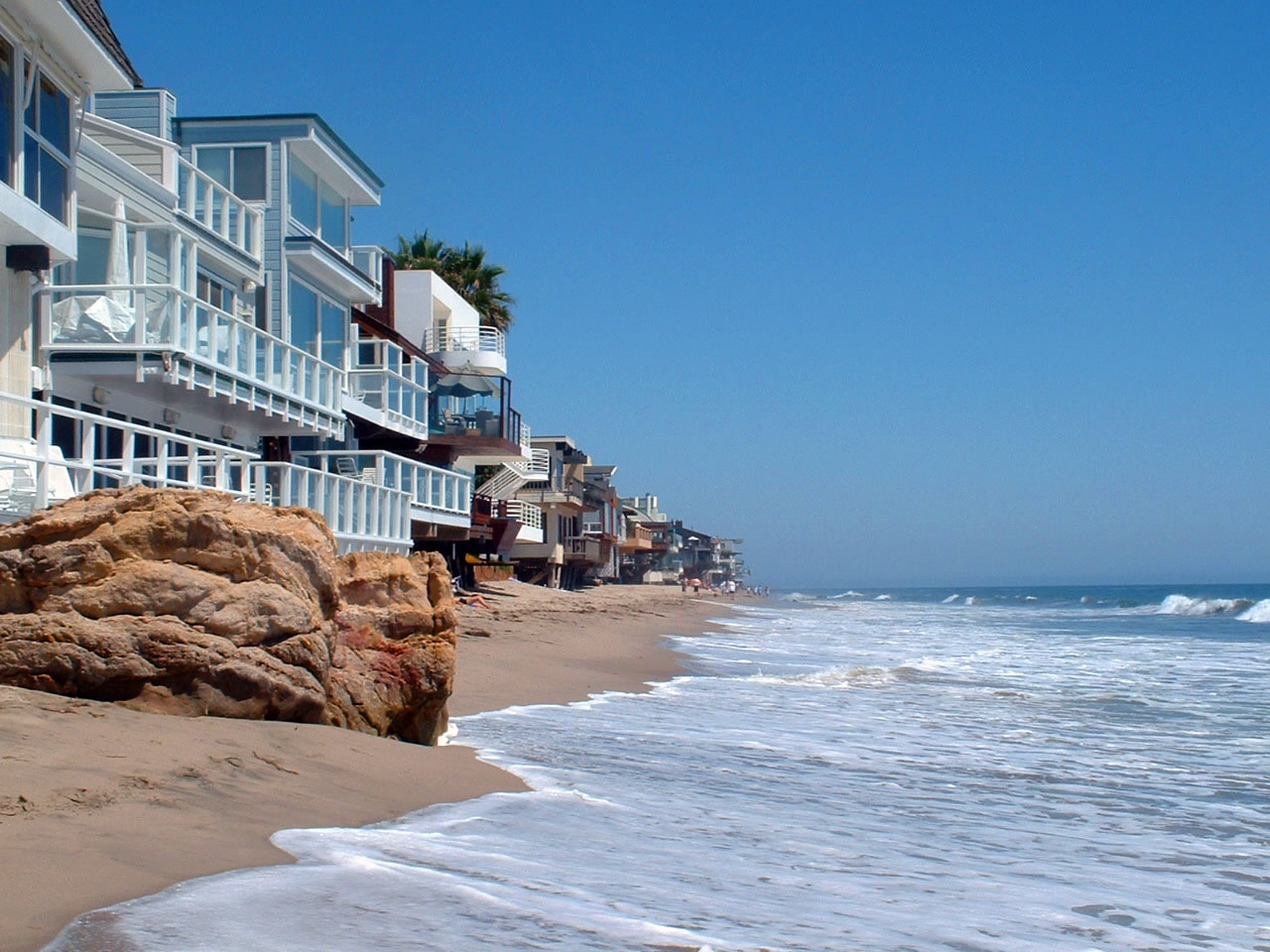
In a current of unexpected waves I floated towards the Pacific Ocean, and landed along the anfractuous Santa Monica Mountains. Malibu where exotic fish are silhouettes behind glass aquariums perched on  sand dunes or in swank foreign carriers has bitten my interest to understand how an exotic lives.  malibu-colony1

The salty seaweed smell of the ocean streams through my car, driving down Pacific coast highway on my way to buy groceries. Vintage Market  is new to Malibu, and clerks are giddy about their jobs. They may be aspiring actors or were aspiring actors. I walk in and get a phone call that I’d been waiting for so, I set my cart down on a shelf and took the call. During the half hour call, my eyes were fluttering through the scene: tanned surfers, affluent college students, and diamond rich men and women of age, that don’t check their bank balance. Because of this, expressions are chilled as fine wines, and smiles are polite or radiating. They are a content population of 13,000, median home price is $901,000, and the median income household is $127,000. Here in Malibu every thing looks different from Santa Fe: The staging of ‘was in the business, am in the business, or want to be in the business,’ surfaces and dominates the scenery.

malibu_forbes-11528TThey are beautiful-the young teenagers who surf and paddle are true blondes, the blue eyes scintillating pools of water, young women are saddled onto 6” platforms, and then there are the stand-out power people, who will not acknowledge anyone, and expect everyone to acknowledge them. Tucked in the mountains, are extraordinary artists who live off the grid the way most people prefer to live in Santa Fe.
I am learning slowly and still hiding out at Chantal’s. Where I am living, two miles up from PCH off a dirt road, behind a gate, there are Bohemians, artists, home-office screenwriters, producers, and famous heirs of recognizable movie stars.
In the last two weeks my head feels lighter, and my heart is not aching for the Thinker, or my sunken red room where I dreamt of moving to Malibu. What I began twenty years ago is my primary act of indulgence; completion of my book, “Growing Up with Gangsters.”

In the last hour I walked down the road in the hands of sloping hillsides, horse ranches, and signature homes behind walls as high as the palm trees, built to withstand the typhoons of mankind. In  daylight  swirl of rain and clouds, it was as if I was in Ireland, walking along a road in Kilkenny, and then I roped in my imagination and returned to the mountains here, that will teach me how far to go, how to duck a car, or confront a coyote or a snake.
A full transcendental moon dipped into the black-out mountain evening, and has cured me of interior turmoil for the time being. This is part of adventures in livingness in what locals call the bu. TO BE CONTINUED

SMILEY & SIEGEL


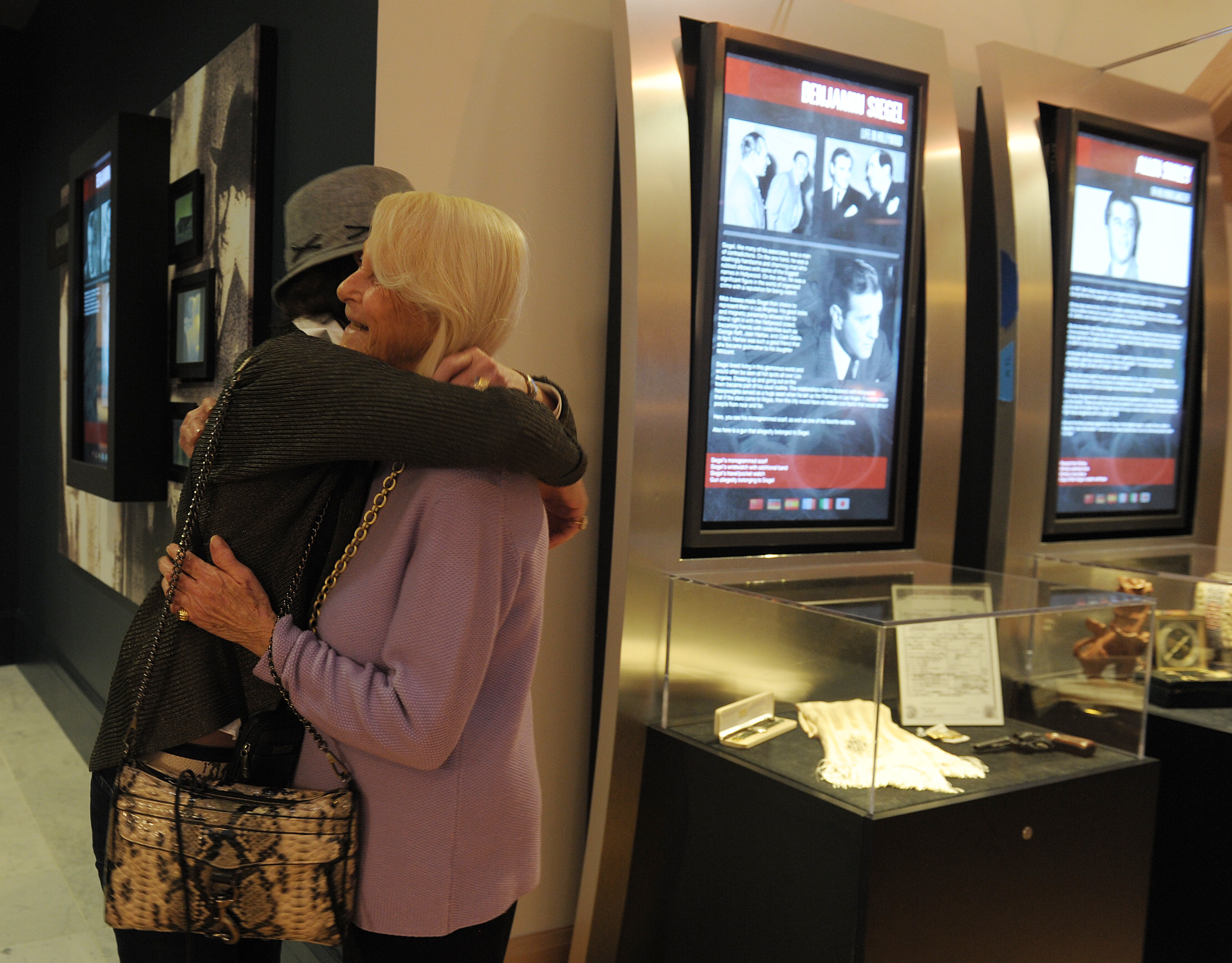
THE SIEGEL SMILEY LEGACYReuniting with Millicent at the Mob Experience.
BY: Luellen Smiley
When I was eleven years old  our home burnt to the ground in the Bel Air fire, and everything we owned fell to ash. Shortly after my mother moved us to an apartment in Brentwood, a mammoth carton arrived and was placed in the center of the living room. My mother cut it open and urged me to look inside. I sat cross-legged on the avocado green carpeting and discovered bundles of garments; Bermuda shorts, blouses, sweaters, and shirts.
I quickly shed my worn trousers and stepped into a new outfit, dancing about as I zipped myself in. My mother watched, and echoed my childish yelps of elation.
“Mommy, who are these from?”
“They’re from your Aunt Millicent.”
“Who is she? I don’t remember her.”
“You were a little girl. She loves you very much.”
Years later, my father, Allen Smiley, called and told me to come over to his apartment in Hollywood.
“Why Dad?”
“Millicent is coming by; I told you she moved here, didn’t I?”
I’d learned Millicent was Benjamin Siegel’s daughter, and Ben was my father’s best friend. Dad was sitting on the same chintz covered sofa the night Ben was murdered.
“You mean Ben Siegel’s daughter?”
“Don’t refer to her that way ever again; do you hear me? She is Aunt Millicent to you.”
When my father answered the door, I watched as they embraced. Millicent had tears in her eyes. She walked over to me, and took my hand. I looked into her swimming pool blue eyes and felt as if I was drowning. She sat on the edge of the sofa and lit a long brown Sherman cigarette. I studied her frosted white nails, the way she crossed her legs at the ankles, her platinum blonde hair, and the way her bangs draped over one eye. What impressed me most was her voice; like a child’s whisper, her tone was delicate as a rose petal.
I spent the rest of that afternoon memorizing her behavior. She emanated composure and a reserve that distanced her from uninvited intrusion.
Over the next few years, Millicent and I were joined through my father’s arrangements, but I was never alone with her. When he died in 1982, she was one of only three friends at his memorial service.
As the years passed, and my tattered address books were replaced with new ones, I lost Millicent’s phone number. I had been researching my father’s life in organized crime, and had gained an understanding of my father’s bond with Ben Siegel. My discoveries were adapted into a memoir and recently into a film script about growing up with gangsters. During this time, I had reconnected with several of Dad’s inner-circle, but Millicent was underground, and now I understood why.
Last year I received an email from Cynthia Duncan, Meyer Lansky’s step-granddaughter. She told me about Jay Bloom, the man behind the Las Vegas Mob Experience, a state of the art museum that will take visitors into the personal histories of Las Vegas gangsters. Cynthia contributed her significant collection of Meyer Lansky memorabilia, and assured me Jay was paying tribute to the historical narrative of these men by using relatives rather than government and media sources. She wanted me to be involved.
Despite my apprehensions about the debasing and one-sided publicity that characteristically surrounds gangster history, I contacted Jay. In his return note, he invited me to participate, and added, “Millicent would like to contact you.”
A month later I was seated in Jay’s office waiting for Millicent. When she walked in, I stood to embrace her, and this time the tears were in my eyes.
Millicent’s voice was unchanged and so was her regal posture. “Our fathers were best friends, attached at the hip. Your Dad was at the house all the time. I’ll never forget when he and my mother met me at the train station to tell us about my father’s… death. Smiley was very good to us. My mother adored him too.”
Jay took me on a tour of the collection warehouse, and the history I’d read about unfolded before my eyes. The preview room was like a family room to me, because some of the men had been my father’s lifelong friends and protectors. I stopped in front of the Ben Siegel display case and saw an object that was very familiar.
“My father has the identical ivory figurine of an Asian woman. I still have it.” So much of their veiled history was exposed; between these two men was a brotherly bond that transcended their passing and was even evident in their shared taste in furnishings.
Jay showed me a layout of the Mob Experience in progress. I turned to him and asked, “Is it too late to include my father? All the rooms are assigned.”
“Millicent and I already spoke about it. She wants your Dad in Ben’s room.”
After I returned home, Millicent and I talked on the phone.
“Your father belongs in my Dad’s room. They’ll just have to make Mickey Cohen’s room smaller.”
“My father hated Mickey,” I said.
“So did mine! When are you coming back? I’ll kill you if you don’t become part of this.”

Reuniting with Millicent at the Mob Experience.


WHO WAS MY FATHER?


I began my research WITH WHAT I HAD; one of my father’s books; “The Mark Hellinger Story.” I leafed through the index and there was my father’s name along with Ben Siegel’s. According to the biographer, my father visited Mark at his home the night before he died. Mark had stood up in court for my father and Ben at one of their hearings. He was fond of Ben, like so many people were, that aren’t here to tell their story.
After reading the book I rented, The Roaring Twenties, written by Mark, and from there the connections, relationships, and characters began to leap out from all directions. I
submerged myself in history and photocopied pictures of my father’s movie star friends, George Raft, Eddie Cantor, Clark Gable, and his gangsters friends. I found photographs of the nightclubs he frequented, the Copacabana, El Morocco, and Ciro’s and nightclubs that he referred to in his mysterious conversations. I made a collage of the pictures and posted them above my desk. I played Tommy Dorsey records while I wrote. This microcosm of life that was created, allowed me to listen to the whispers and discover the secrets.
I dug into my father’s history without knowing how deep I had to go, or what shattering evidence would cross my path. In my heart I felt this was crossing a spiritual bridge to my parents. The flip side was a gripping torment, tied to my
prying mind. I needed to break into the files in order to break my silence, and discover my parents, not glamorized stereotypes that fit into the category of Copa dancer and gangster. No matter what I uncovered, I always knew it would be ambiguous, and controversial. I did not expect to find a record of murder, dope peddling, and prostitution. I believed that his crimes were around the race track and in gambling partnerships. Even so, I could never understand the similarities we shared, unless I knew them as people. Though I have not rebelled against authority as my father did, I‘m not a team player, I resist authority, and I don’t like waiting in lines.
I had to reinvent my mother through the subconscious. I skated over thin ice trying to set her truth apart, from what I
had invented, dreamed, or had been told. I listened to Judy Garland’s recordings, and premonitions surfaced, of how my mother loved Judy, how it must have felt to be under the spot lights of MGM, and dancing in ginger bread musicals while her own life was draped with film noir drama.
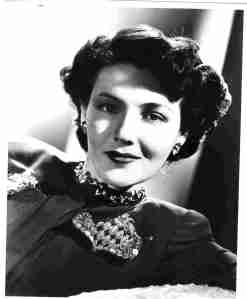
I studied my mother’s face in all her films, rewinding and stopping the tape, as if she might suddenly return my glance. She had dancing and background shots in the musicals produced by Arthur Freed. I remembered dad talking about Arthur, and how prestigious it was to be in his department.
When I discovered the Museum of Motion Pictures Arts and Sciences in Los Angeles, I went down and filled out a slip of paper with my mother’s name on it and waited for my number to be called. I felt something like a mother discovering her child’s first triumph. They handed me a large perfectly stainless manila envelope, and a pair of latex gloves to handle the file. I had to look through it in front of a clerk.
“That’s my mother,” I proclaimed. He blinked and returned his attention to a memo pad. Inside the envelope were black and while glossy studio photographs, press releases, and studio biographies of my mother. The woman who pressed my clothes, washed my hair, and made my tuna sandwiches. There she was in front of the train, for Meet Me in St. Louis, and a promotional photograph in The Secret Life of Walter Mitty, dated 1947. That was the year Ben was shot. I looked further to find more clues. I needed to know where she was the night Ben was murdered. Maybe she was on location when it happened. Maybe she was in New York at the opening of the film. I could not place her on June 20, the day Ben was murdered. I imagined my father called her and told her the news. The marriage plans were postponed, their engagement suspended. My father had to get out of town.
I spent everyday picking through the myths I’d heard and read. I heard a clear chord of scorn, for exposing family secrets, “It’s nobody’s business what goes on in our family, don’t discuss our family with anyone, Do You Hear Me!” I must have heard that a thousand times.
I began to dig with an iron shovel. I asked every question I wasn’t supposed to ask, and preyed into every sector of their life. I wanted to know about his childhood, where he grew up, and why he left home when he was thirteen years old. Who were my grandparents, and why didn’t he talk about them. How did he meet Ben Siegel and Johnny Roselli, and when did he cross over into the rackets?
I contacted historians, archivists, judges, attorneys, Police Chiefs, FBI agents, authors and reporters across the United States. He always said, “Reporters can destroy your life overnight.” And here I was, uncovering what he had sheltered all his life.

I wrote to the INS in WDC and asked for their assistance. Six months later I received a letter from the INS in Los Angeles. They acknowledged his file, it was classified and they could not locate it. The progress was tediously slow, and the waiting oppressive.
While I waited for the files, I read Damon Runyon, and Raymond Chandler stories and attempted to identify which character personified which gangster. The stories were about the people that came to my birthday parties, Swifty Morgan, Nick the Greek, Frank Costello and Abner Zwillman,(the Boss of the New Jersey syndicate.) The dialect of Runyon and Winchell mimicked the same anecdotes my father used over and over! By understanding Runyon’s characters I began to know my father. At night I watched old gangster movies and that opened another door of familiarity.

I read almost every book in print about the Mafia and ordered out of print books from all over the country. They began to topple on my head from the shelf above the desk. Allen Smiley was in dozens of them. Every author portrayed him differently, he was a Russian Jew, a criminal, Bugsy’s right hand man, a dope peddler, a race track tout, and sometimes the words bled on my arm. To me, he was a benevolent father, a wise counselor and a man who worshipedscan0002 me.
The INS claimed my father was one of the most dangerous criminals in the United States. They said he was Benjamin Siegel’s assistant. They said he was taking over now that Ben was gone.
That day I put the file away, and looked into the window of truth. How much could I bear to hear more?

Mom and Dad second from Left. I don’t know the other people.

ADVENTURES WITH THE TIDE OF THE THINKER


Audrey. Photograph By Edward Quinn

I asked the sky to send the Thinker.  Then it  rained in southwest furry,  small 22A65Ca5ndFhXTcktfb98jnckTJl4rZP0060[1]white knots of hail and dark feuding winds. The thinker heard and whistled to me. It was a sweet flutist tone, and he appeared in black and grey, the silver lining of his head like a crown of light. Flashing the boyish grin, he opened his wrestling toned-warm fins to my goose bumpy arms, and I swam along side tentatively. Even though it was my chime, I was unsteady, unwilling to climb on his back, so we swam on our toes, around my house, and the Plaza. We battled sharks from Beverly Hills, whose fins were frozen from love and kindness; we faced one of our own school, who would not lend a dollar on good faith and loyalty for their Merlot Cabernet fish oil, and we strung pearls around each other necks, with a clasp that is easily unhooked. The current drove us through three more days of rowing backward, sleeping quietly without intertwinement, and meeting as friends instead of lovers.
The absence of touch, struck like a lightning storm. I didn’t see it coming, and I may be wrong. To read the Thinker is to understand his language; a circumcision of predictability, logic, or reasoning. Like a tsunami, uncharitable waves of enlightenment he doesn’t even understand drown his soul.
I understood that he airbrushed my appearance, and dropped deep into my eyes as they widened for him. I blushed before he engulfed me, and pressed my undertow.
If tonight was the last swim because of a storm I didn’t see coming, or understand. It is because my eyes blurred by his presence.
The tide goes out, but it always come back. Sometimes it touches where we left off.

SEASONAL BEHAVIOR & ROSH HASHANAH


The throw of the dice this week lands on adventures in contemplation. Before the day begins to intersect with my solitude, I sit at my desk in a pre-dawn crystal of clarity. Only the light from a candle shines on a journal of hand written notes. I walked outside to asses the damage of a devilish storm that ravished the night. Leaves dropped from trees and the street is slick with the residue of the storm. Autumn is rising from dormancy; she is painting the leaves pumpkin and cranberry, while impregnating the atmosphere with the perfume of seasonal change. The inversion seeps into my pores.
While shopping at Whole Foods last week, for my first stockpile of chicken tortilla soup, I noticed expressions of 20131003_160015[1]contemplation on faces. Not in the choice of their groceries, but a characteristic of preparation for winter. Pumpkins, firewood and potted mums have replaced the outdoor display of flower baskets and lavender.  The silence will blanket time beyond the hours of sleep. This is when contemplation is given the freedom to spread over my thoughts and feelings. September marks the disrobing of summer; as if the float of festivities,  parties, and outdoor markets were moved into storage.
Last week was the beginning of the new Year on the Jewish Calendar, Rosh Hashanah. Unlike New Years for the traditional American, is a time of contemplation and reckoning of ones faults. We are asked to examine our behavior and plant new seeds of integrity from within.
“Another popular practice of the holiday is Tashlikh (“casting off”). We walk to flowing water, such as a creek or river, on the afternoon of the first day and empty our pockets into the river, symbolically casting off our sins. Small pieces of bread are commonly put in the pocket to cast off. This practice is not discussed in the Bible, but is a long-standing custom.” Excerpt from Wikipedia.
What I do is to take my emotional and physical wardrobe, and move it from the closet in my casita, to the upstairs storage closet. The skimpy and sexy finery are replaced with turtlenecks, leggings and wool. The emotional wardrobe, is pressed down to the fibers, so it can be studied. In this examination, the reflection of myself is not as important as it has been, the stubble of age has bitten me but not in a bitter way. It has burned down my childish selfishness, insistence of acknowledgment, intolerance of behavior unfamiliar to me, and detached me from the wayward choices made by our government. I used to work with the news turned on and the volume down.

This summer, beginning just after my adventure in Malibu with my friend Chantel, my grip on aloofness towards Santa Fe,  frustrations associated with publication, and narcissism dissipated. It is possible that one month in the company of Chantal, her vibrancy and generosity softened my reserve. In the last four months, I’ve at last given up tightening against the unmanageable forces that intersect with me, and meet the pleasures of humanity in nakedness. I stood in my doorway, shaded by trees and shrubbery, naked – simply to feel the sensation. In return for this placation of behavior, I was invited by my vacation rental guests into their gatherings and parties; a wedding couple and their twenty-five guests included me in their after party. We cajoled, roused, sang and danced until my neighbor, JD, shamed our festivity and ordered me to shut the party down. It was one-thirty in the morning. I wrapped my arm around his neck, and whispered, ‘Oh, you are so right; I will take care of it. Don’t worry.’ JD, a man with twenty- three civil complaints for noise ordinance disruption against the La Posada Resort across the street, replied ‘Well LouLou, if you don’t, I’ll have to call the police.’ I hugged him tighter, and said. “Of course you will, and you have every right.’ This is not the behavior that guided me last year. I returned to the party and made the announcement to the guests, who were by now leaning against the walls, drinking shots of whisky in bowls, and I said:
‘ Party to dawn kids, but keep your voices down.’ The lights went out at four-thirty in the morning. When I left the house, empty bottles, uneaten meals, flowers, shoes, and scarfs scattered everywhere. This disruption of my polished tidy home would have erupted me into a silent rage a year ago. After they checked-out, my new pal and assistant Marc, entered the house. Stepping over pillows, popcorn, sticky wood floors, and into a kitchen of stained counters and food crumbs; a counterfeit of my dear old hollering father shouted;  ‘ This is outrageous. They’ll pay for this!’
“ Stop. We were part of it. It was a wedding party. What did you expect?”

“What the heck is that? Marc said pointing to a clump of food stuck to the wall.
“ Looks like salsa and chips.” I said with a sponge in my hand. By the time we reached the rooms upstairs, I too was chuckling. Two days later the house  converted from slipshod to spotless.
The spell of silence has now been broken. The sidewalk blowers stir the leaves, doors open, the clatter of buffet trays wheeling down the street from the kitchen at La Posada pushed by employees in white jackets, swipe greetings, and converse in Spanish. My birds are screeching for more seeds, and the candle is just about burned out. The unknown outcome of our state of affairs in government and society has padded me with extra elasticity, tolerance, and love. Maybe our collective kindness will intercede with the poisonous bitterness and vengeance that titillates through the news.

← Back

Thank you for your response. ✨

COMPASSION RELIEVES THE SUFFERING


Woody Allen commented on depression in all his films; the one I remember most went something like this; ‘I get depressed if one person is suffering in Africa.’

Remember those days; when all we had to concern ourselves with was:  Africa, a bit of Russia, and powerfully silent Cuba and China.  The Europeans loved us back then; we gave them something to laugh about.

I turn on the news intermittently during the day; and whatever activity had occupied me suddenly dissipated into bothersome dust.  Murder, beheadings, shootings, corruption, deception, fear and helplessness swept away the dust, and my consciousness wept.

Whether it is the unfathomable death of a woman who seemed immortal, the young  journalist beheaded on television,  the left and right parties swinging obscenities at  each other,  all soliciting a reality show of our government. My choice of sorrows is mounting.

Today is a cabaret of: weather, activity, and excitement as Fiesta Week begins in Santa Fe.
The city will converge on the Plaza for the performing arts, parades, musical improvisations, dance and Northern New Mexico  chow. Policeman will be stationed alongside the booths to protect us.  They look grouchy and irritable; but in my experience, the friendliest cops I’ve ever met. Try talking to a cop in Los Angeles.20140823_134608

The butter on the tortilla of  Santa Fe, is that our community events, processions, and traditional religious enactments are safe havens for  Spaniards,  Native Americans, the mixed,  the foreign and us Anglos. I can ask to be invited into any assemblage and chances are they will accept my presence.

The safety and care  of people depends on all of us. If I recognize a stoned drunk stumbling; I should take his hand to shelter. If an old woman needs help crossing the street: I should lead her. If  insults and arguments draw my attention; I should keep my eye on the situation. This is where my consciousness rises from dust and sorrow; to a strong wind of humanity.

← Back

Thank you for your response. ✨

LADY JOAN RIVERS


My prayers are with you Joan. Since I was a teenager  I watched your show with my Dad who laughed so hard he had

choking attacks. You brought global understanding to the humor of the Jewish faith. Everything you said rang the

Synagogue bells, and blew out the candles of the Menorah. In moments of family tension the conversation turned to you; and everyone would

recite a joke and gather in laughter. Your unique talent to sabotage prejudice with humor, sliced silent moments of awkwardness.

You have me in your prayers to raise up in your bed and shout? Where’s my goddamn shoes?

Love to you Melissa, the daughter any one of us looks up to as the eternal light in her mother’s life.