An unexpected phone call came one day from Ms. Green, a woman I’d contacted with the INS about Dad’s files. She’d located them and agreed to give me copies of the five thousand pages! There was no going back now. Ed Becker told me that the INS most likely had copies of the FBI investigation, ‘Take it slow and remember the contents was written by your father’s enemies, the government! I had an appointment with Ms. Green the following week.
The split green metal door was closed so I knocked. A woman opened the door; she appeared the perfect clerk for a windowless metal room of paper. Long uncombed oily hair and a complexion untouched by sunlight.
“We’re closed,” she mumbled.
“How can that be? I have an appointment with Ms. Green.” The clerk looked at my despairing agony unwillingly.
“She’s not here.”
“My name is Lily Smiley and I’m here to pick up copies of the files on Allen Smiley. Would you take a look on the shelves in front of you? Maybe she left them on the front desk here.
“They’re not here.”
“Will you call her and ask where she left them?”
The clerk shut the door while I gripped the other side in case she tried to lock it.
“Ms. Green said they’re classified. We can’t release them.”
“Really? They’ve been classified in the last week?”
The door closed. I pounded on it and a tantrum sprouting from suspicion unleashed. I sensed the government stepped in and classified the files for a reason. As I descended the steps of the Department of Justice I saw my father standing with legs apart, arms crossed over his chest, seething with disapproval. I heard something like this, “You’re going to dig a little too far and sink in if you don’t stop this investigation.”
Westwood village where I lived with my mother sedated my defiance against the day’s disappointment. If I was in Los Angeles I’d stop and walk the streets where my puberty slowly blossomed in a college town with bookstores, two movie theaters, record shops, and the old Mario’s Restaurant where we used to order baskets of garlic bread and coca cola. Wandering through a kaleidoscope of the past, I walked into Walton’s Bookstore. I was intercepted by a prominent display of a newly released book; Contract on America, The Mafia Murder of President of John F. Kennedy. I opened the index and one of the first names I recognized was Gus Alex; my Uncle Gussie. He was a booming personality befitting his height, with jet black hair and bulky features. Uncle Gussie was married to my mother’s confidante Marianne; a statuesque blonde model and dancer. She held Grace Kelly poise. Even as a young girl I sensed she didn’t like me around. Marianne and Mom talked for hours in her bedroom.
Relief thickened with the absence of my father’s name in the index. Uncle Johnny ( Johnny Roselli) was written about extensively. I could only glance through the book; every page blurred into the murder of the most loved President in my lifetime. The allegation that Johnny was involved in the JFK murder strapped me to that book for hours; an unforgivable juxtaposition between inquisitiveness and apprehension. It was like playing scrabble with real names, photos, fiction or non-fiction I didn’t know.
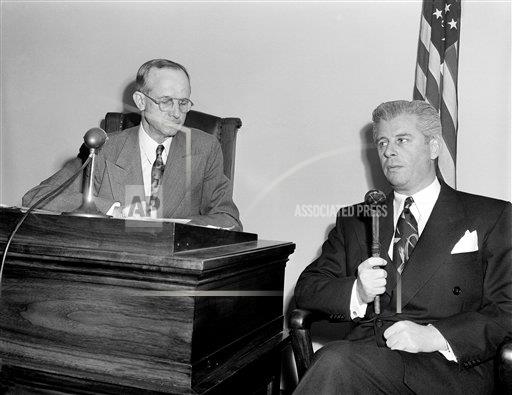
EXCERPT: “West Coast Mobster Johnny Roselli was one of several underworld figures, chiefly associate of Carlos Marcello, Santo Trafficante and Jimmy Hoffa, whom Jack Ruby contacted in the months before the assassination of JFK. In the mid-1970s, an aging Roselli began telling associates, journalists, and Senate Investigators that Ruby was “one of our boys” and had been delegated to silence Oswald.” John Roselli
I could not believe what I was reading; anymore than I would believe my father was associated or informed of these events.
I’ve been subjected to scorn, disgrace, and dismissal during conversations about Johnny. Those of us kids who knew him as Uncle Johnny have our own stories.
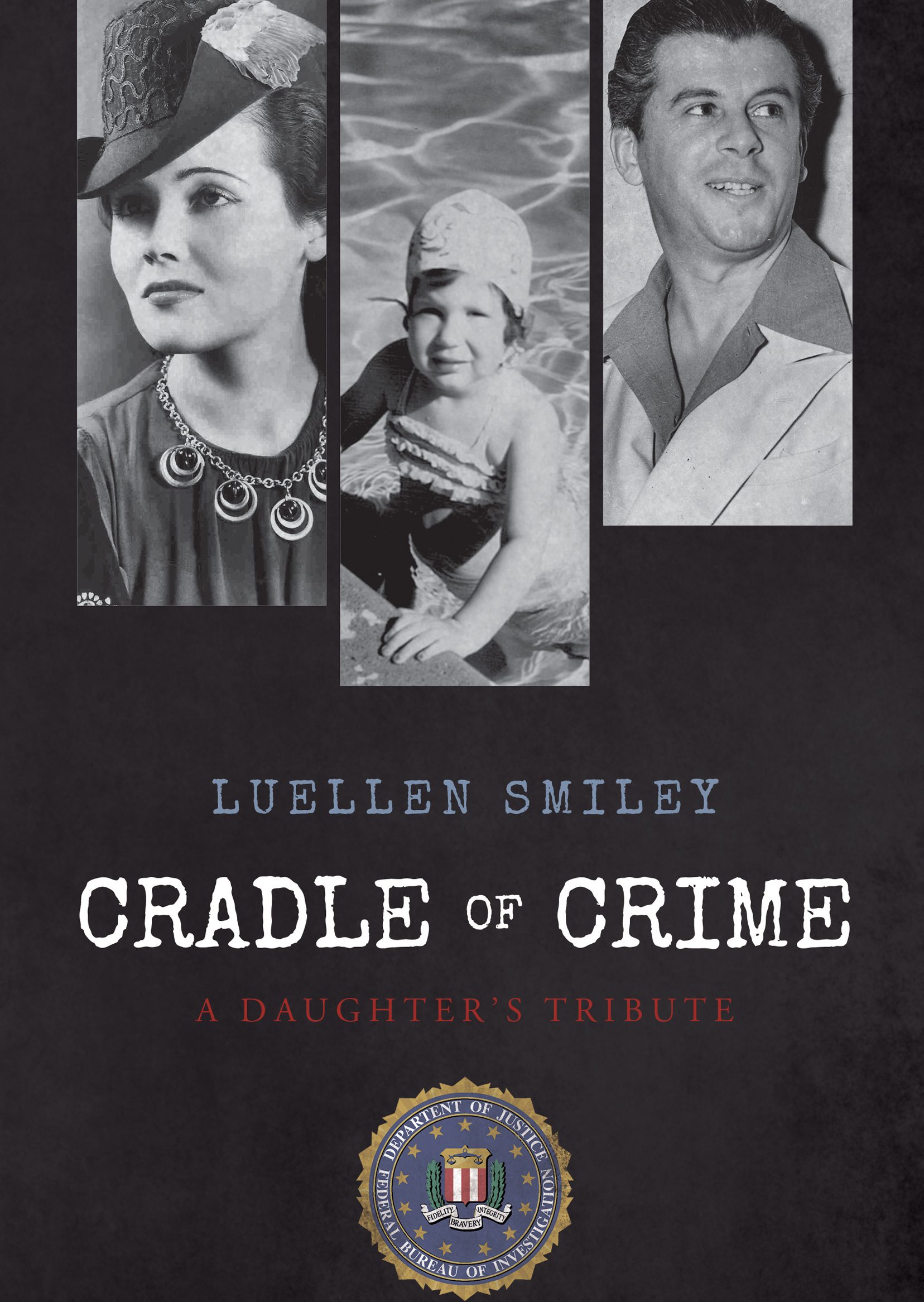
Weaving together events witnessed personally and those gleaned from friends, associates, historians, FOIPA, INS and archives of the Department of Justice, author Luellen Smiley’s memoir is a brief, heartfelt genuine reconstruction of family’s relationships of the past that neither dwells on nor dramatizes the true image of her father Allen Smiley, his allegiance to Benjamin ‘Bugsy’ Siegel and the criminal world.
Author Luellen Smiley details her childhood and growing up days as a gangsters daughter- elusive as it may be by immersing her readers through intriguing happenings of everyday and events of the bygone years that justify her fathers masked behavior and restrictions for his adored daughter.
Definitely ‘Cradle of Crime: A Daughter’s Tribute’ is a straight forward homage to a father and a triumphant tale of a daughter who broke barriers of secrets to reach the hardcore reality through her hardship and research. A not-to-be missed 5 star read ‘Cradle of Crime: A Daughter’s Tribute’ is a book for those who care for family morals and values and are willing to accept poignant twists in one setting. Highly recommended.
A candid and enthralling memoir, CRADLE OF CRIME – A Daughter’s Tribute is the debut release from Luellen Smiley and it proves one of the most gripping and powerful books in its genre. Certainly no mean feat, given the swelling number of similarly themed offerings but Smiley does well to distinguish hers with painstaking research, a broad narrative sweep and intellectual grip to deliver a fascinating and revealing read, for the events it covers.
The storytelling isn’t redemptive with much of the most compelling material in this book being intensely personal but it is a very human story that dispels hype and myth and gives us a telling glimpse of a remarkable life. Weaving together several stories it makes a vivid and notable contribution to the mafia debate which invariably swings between the codes of honor and family values so often portrayed on the silver screen to a brutal criminal organization focused only on the accumulation of wealth. In contrast, Luellen finds a far more equitable balance in her reflections, and it makes for a genuinepage-turner.
Extremely well written, fans of this ever popular genre will find CRADLE OF CRIME – A Daughter’s Tribute a fascinating read and it is recommended without reservation.
This a refreshing, wonderful story in the fact that I got to see the unfolding of Allen Smiley and Ben Siegel’s story through the eyes of Allen Smiley’s daughter. I got to see the point of view of someone who personally knew Allen Smiley, the other side of him: the family man and her reactions to discovering her father’s past, secrets, and how people viewed her father and the Mafia. To my delight, the author also included journals and files relating to the criminal speculations of Ben Siegel’s murder which helped shape the book’s framework. I felt like a detective myself as I read through the story and found out more and more about her father’s other life.
My memoir, published in 2017, Cradle of Crime-A Daughter’s Tribute is old news to me. Not to Charlie. I met him as he was renovating a house across the street. I didn’t introduce myself as Luellen Smiley, just Luellen. I asked if he would take a look at myhouse for an estimate on painting. He was sweet, a mountain man with a long white beard and hunting boots. Last week, he texted me,” I read your book, my friend and I exchanged Goodreads suggestions, and I told him to read your book.” How did he connect me to my book? I didn’t ask, and now it piques my interest. I’d walk across the street and ask him, his truck is there, so is the ice, and I don’t feel like skating and falling on my butt.
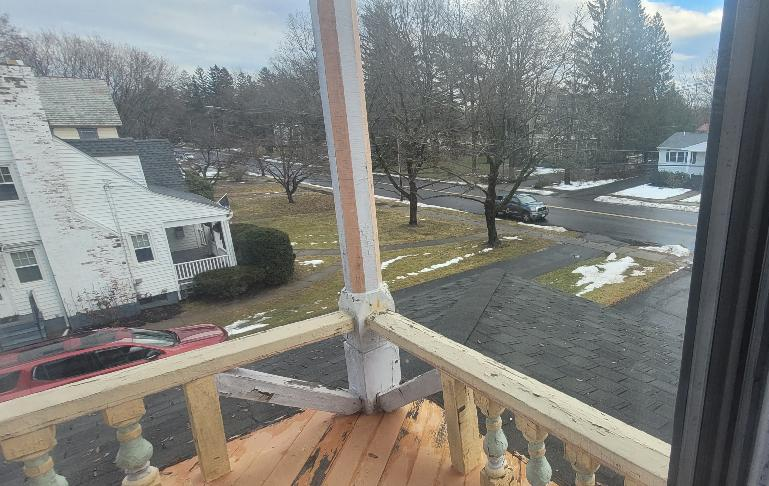
Winter in upstate New York to a gal from Los Angeles is likened to living in the North Pole. Going on five years, my last, I’m not resentful and scouring, but I am not acclimated. Indoors I dress in sherpa from head to toe and wear those finger mittens. Today it is full-throttle rain showers. The street is vacated of traffic and the public, it’s a good day to work on my next book. On my desk area few writing books, the favorites: Henry Miller on Writing, The Diaries of Anais Nin, and Albert Camus’s The Stranger. I haven’t bought a current book in years, the last one was Sam Shepard, The One Inside. I like Miller’s passage: ” The writer lives between the upper and lower worlds.: he takes the path in order eventually to become that path himself.”
Aging in my seventies delivered opening windows to restoring, rearranging, and repairing my persona, personally and in public. If you’ve read any of my essays, then you know explicit is the vortex that moves my thread. Restoring the brick-and-mortar of truth is at the forefront; the next layer is a confession of what I cannot speak in person to anyone, even my closest pals. The third is abstaining from too swift a pen; I’m always in a hurry: I prepare food quickly, walk as if I’m late for an engagement, and wash dishes with perfunctory interest. Everything when I think about it. I know why that is, my father. His shadow was always behind me as I went about myteenage activities at home, so I rushed to get out.
Last week, I stopped taking the powerful Lorzapam medication for neurotic anxiety. My heart raced when I opened an email from my attorney, when a stranger knocked at the door, or when I entered a public place alone. A new sideways rain shower just filled the window pane above my desk. Here is the fourth restorative: get outdoors! I don’t walk in snow or ice, but good old water rain, which I call God’s tears, is one of my favorite nature adventures.
Admittedly, my writing has granulated since moving here. It is tiny in thought and not always tied up neatly. My persona in public needs to be side by side with wine in a dining setting. What I contribute must be joyous and humorous because one of my favorite human activities is to evoke laughter and smiles. I broke away from my taverns and abstained from alcohol for a week. In the second week, visceral and bodily alarms have gone off. I’m lucid, motivated, andeven decisive.
From Anais Nin Diaries 1939-1944.
“I respond to intensity, but I also like reflection to follow action, for then understanding is born, and understanding prepares me for the next act.”
“What’s it like knowing your father is a gangster? Did you know when you were a teenager? Did you meet Bugsy Siegel? Did your father kill anyone? You know the Mafia kill people.”
Childhood 1955-1961
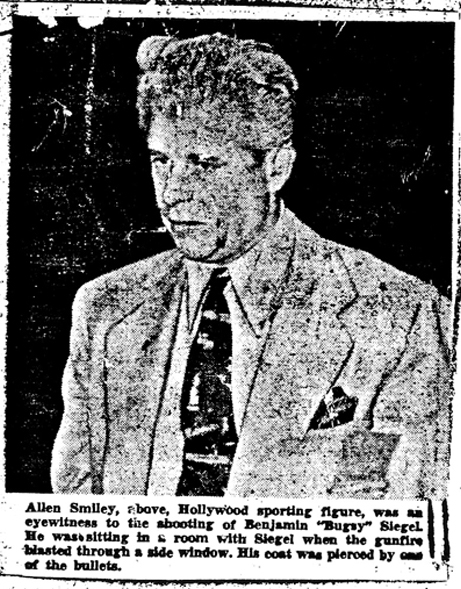
I called him Daddy. His friends called him Al, or Smiley, the Department of Justice tagged him “armed and dangerous” and his mother named him Aaron. He was born January 10, 1907, in Kiev Russia, one of three sons born to Ann and Hymen Smehoff
He had salty sea blue eyes blurred by all the storms he’d seen. When I say something funny, his eyes crystallize and flatten like glass. Smoothing out the bad memories. He’s always a different color. Dressed in coordinates matched perfectly as nature. My small child’s eyes rest cheerfully on his silk ties, a collage of jewel tones. The silver and blue tie matches the shirt underneath. The feel of his fabric is soft like blankets. He is very interesting to look at when I am a child and open to all this detail.
I cling to his neck in the back seat of his long Cadillac. My mother doesn’t ride with us during the day. She comes along if we are dressed up and going out to dinner. I enjoy the car rides most. He sings songs and his hand flutters about, catching me by surprise behind the ears, and I shriek. Daddy’s laughter echoes inside my ears.
We visit friends in Hollywood who own delicatessens, restaurants, and clothing stores. We go to Paramount Studios and I ride around on a pony or get kissed by cowboys in a Western scene. We go to Beverly Park almost every day to ride the ponies. I am only two years old when Daddy slings me over this big stinky pony, and insists that I go around the ring one more time so he can watch. I meet Hoppalong Cassidy and we visit his booth at Pacific Ocean Park. When my father was a film producer he worked with Hoppalong on a western film.
Our home in Bel Air was where I lived before I knew how fortunate we were. My room was at the end of a long hallway, and I was afraid to leave the room when it was dark because it seemed such a long distance to my parents. The wallpaper danced around my eyes, a collage of flowers illuminated the black background, and I was wrapped in a blue satin comforter. My room was cluttered with dolls. As a young child, I preferred staying in my room and imagining characters for my dolls.
My father showed us, and really paraded us around as if we were exceptionally talented. I never understood why these people fussed over me. I sort of distrusted them, before I understood what that meant. There were exceptions, the ones I knew to be real family people earned my affection. I dreaded the routine of being placed in front of a group of men and women who stared at me as I curtsied or mumbled “Hello.” George Raft came to all my birthday parties, Nick the Greek showed me card tricks and Swifty Morgan told stories all night. Damon Runyon characterized him in his stories as the “Lemon Drop Kid.” I was surrounded by men with FBI files and notorious reputations for being dangerous gangsters. Some of them had been arrested for murder. Others were old-time bootleggers from Cleveland and Detroit. I knew them as Uncle Lou, Doc, or Uncle Johnny. Years later I would discover they were Lou Rhody of the Cleveland Jewish Syndicate in Cleveland, Doc Stacher, the tough New Jersey underboss to Longy Zwillman, (the guy who discovered Jean Harlow in a speakeasyin New Jersey), and Johnny Rosselli, the king of Las Vegas in its heyday. I was enchanted by thesemen, they were family friends, and they never followed the rules.
This home was my father’s showplace. He bought the house in 1955, and that was a bad year for him. I was two years old.. That was the year that a number of his friends and associates died or were murdered. Like Little Willie Moretti from New Jersey, who was killed by rival gangs, and Tony Canero, who died at the blackjack table of the Stardust Hotel.
Willie had a problem keeping his mouth shut. Frank Costello, the leader of the syndicate group most closely associated withmy father, sent Willie out to California where he’d be safe from harm. Willie was unstable, taking bets on losing horses and talking to people he shouldn’t. Frank asked my father to keep an eye on Willie, to become a confidant. He was told to dress up as a Doctor and pay visits to Willie. My father obliged and Willie took a liking to my father. Willie suggested to Frank that the boys should build this doctor a hospital. Frank told the story to some of the other fellows and they must have had a good laugh. Frank had another idea, giving Allen the job of promoting Willie’s good friend, Frank Sinatra. My father declined the offer. Eventually, Willie returned to New York and was found dead stuffed in the trunk of his car. The second tragedy was the suicide of Louis Rothkopf, “Lou Rhody” they called him, or “Uncle Louie.” He was one of four bosses of the Jewish Cleveland syndicate, (the Mayfield Road Gang), and one of my father’s closest friends. I heard that Louie would cross to the other side of the street if he saw a guy that owed him money. He had a big heart. With his wife Blanche, the Rothkopf’s were respectable business owners in the Chagrin Falls area of Cleveland. When Senator Estes Kefauver launched a federal investigation on organized crime, he exposed and ruthlessly slandered Lou and his partners. Not just as bootleggers, and distillery owners, but murderous syndicate men with ties to the Italian Mafia. By this time, Lou and his partners were operating legitimate business enterprises all over Cleveland. Blanche commit suicide two years before Lou also took his own life. I have been told that my father brought Lou in to save the Desert Inn Hotel in Las Vegas, when the first owner,Wilbur Clark, went busted.
* * * * *
The house in Bel Air brings back the best memories of my childhood, but few visions remain. The front yard was a blanket of pink and white geraniums. They were tended to by our gardener, and though I wished to sit in their path, and smell their fragrance, I was told not to play in the geraniums. The flowers were my first contact with nature. It wasn’t enough to just look at them, I wanted to lay with them and watch their breathing.
Our house was perched at the top center of Thurston Circle, a sort of distant cousin to the discreet upper Bel Air locked behind black iron gates. There was no gate at our entrance, and the neighborhood homes were a mixture of two-story colonial and ranch style. The view of Los Angeles from the living room and my parent’s room was an electric and absorbing scene for a small child who hadn’t known anything beyond her house. At night lights glittered against a black sky, and I could sit by the window and dream of what the lights were all about. Entangled bougainvillea grew wildly behind our house. We picked figs and avocados from trees in the yard. There I learned my first lesson about family values. One day my father showed me a nest of small birds perched on a branch of a spruce tree. He pointed out the mother bird hovering over her babies in the nest, and then he drew my attention to the father bird perched on our television antenna. “You see, that’s what the father bird must do, is guard his little family, just like I do.” I asked a few questions, and he just kept telling me that it was so remarkable how animals take care of their families and I should watch them and learn something.
My parents gave me extravagant toys. I was about four when my father installed a roller coaster in our backyard. He sat me in the cart and I rode up and down the bumpy track, screeching with laughter. My mother was always there, watching from a distance. Daddy was the one that loads me up with surprises and Mommy was the one to feed me, clean me up, and tuck me in at night. I could tell her everything, she listened to me and watched over me. She doesn’t interfere with me when I am playing with my dolls.
My first interview on Dad, when I listen now it reminds me how liberating it was to talk about my family history.
KNPR.ORG
Luellen Smiley
Luellen Smiley is the daughter of reputed mobster, Allen Smiley. Smiley’s dad was a close friend and confidant of famous Las Vegas mobster Benjamin “Bugsy” Siegel and he was sitting on the couch just feet away from Siegel the night he was murdered. While Luellen Smiley hadn’t been born at the time o…
IT’S HERE. “CRADLE OF CRIME-A Daughter’s Tribute” is LIVE in the TaleFlick Discovery contest.
Hi Readers:
Voting has begun on Taleflick for this week’s winner. It ends on Friday at 4:pm. CRADLE OF CRIME- A Daughter’s Tribute is on
Page 8. There you will see a voting button. Let’s win!
Head over to the TaleFlick Discovery page, where https://taleflick.com/pages/discovery all visitors to the site will be allowed to vote (once) ON CRADLE OF CRIME- A Daughter’s Tribute
Thank you very much for allowing “CRADLE OF CRIME-A Daughter’s Tribute” to participate in a TaleFlick Discovery contest. Your date has been set!
It will be a special week on TaleFlick Discovery: an all-women’s week, to commemorate International Women’s Day.
“CRADLE OF CRIME-A Daughter’s Tribute” will be part of next week’s contest that starts:
Wednesday 03/11/2020 at 10:00am Pacific. https://taleflick.com/pages/discovery. The contest will accept votes for three consecutive days, starting at the above time, and ending the following Friday at 4pm PT.
CRADLE OF CRIME-A Daughter’s Tribute
Luellen Smiley
GENRE
MEMOIR CRIME DRAMA BIOGRAPHICAL FAMILY
Drama
Mature Audience
Politics
Suspense
Romance
Core Theme
A MAFIA STORY THROUGH THE EYES OF A DAUGHTER. TIME PERIOD
1960s & ’70s COMPARABLE TITLES
THE SOPRANOS, THE GODFATHER, CASINO, GOODFELLAS CHARACTER LIST
• LUELLEN “LILY” SMILEY: TEENAGER/50S. NEEDY, LOOKING FOR LOVE/ADMIRATION FROM HER FATHER; DILIGENT, STRONG MORAL CODE, CAN READ A ROOM.
• ALLEN SMILEY: 65. LILLY’S FATHER, (IN)FAMOUS GANGSTER. CRIMINAL, AGGRESSIVE, CHARMING, BADASS, ENGAGING.
Register for Full Story
Pitch Page by TaleFlick Info by Author
Brief
Luellen “Lilly” Smiley is the daughter of Allen Smiley, Benjamin “Bugsy” Siegel’s best friend, and
business partner. She rips herself from innocence and confronts her father’s nefarious criminal life, as
she breaks the mafia code of silence ten years after her father’s death.
What We Liked
– True story;
– A period piece inside a period piece (‘40s and ‘70s);
– 1940’s Hollywood, with actual “appearances” by stars of that era;
– The mafia and its members through another perspective;
– The father/daughter relationship;
– Episodic narrative, making it perfect for series;
– Possibility of both a fiction piece and a very rich documentary. Synopsis
940s Hollywood may seem like the Golden Era of Cinema; Clark Gable, Judy Garland, Lauren Bacall
graced the screen, but behind the camera, there was a seedy underbelly ran by Bugsy Siegel and Allen
Smiley.
In the 1970s, Allen’s daughter Lilly Smiley gets a job at her uncle Jack’s book store. There, she is
constantly reminded and asked about her father from customers and other “uncles” who would come
in. After answering with pleasantries, she realizes that people have a completely different view and
opinion of her father than she does. Through research and help from her therapist, Lilly decides to
unearth the real Allen Smiley.
Each story is an episode; a look into the relationship Allen had with Lilly, Lilly had with Allen, Allen had
with the Mafia, and Lilly had with the Mafia. All three of these dynamics weave a tapestry of an
unstable, yet loving relationship. Some of the stories consist of:
● The day her dad died of Hepatitis C was an apparent hit on the Mafia;
● Meeting celebrities of the day and how they respected her father;
● The day her loving Uncle Bugsy died from a drive-by that sent her dad into hiding;
● One incident where her father wouldn’t let her into the apartment because she forgot the safe
word. He forced her to go to another home to get the key, and wouldn’t let her in;
● The day her parents got a divorce, yet her father came home for dinner every night;
● The relationship between Uncle Bugsy and her dad;
● The time her mother was diagnosed with cancer and spent the rest of her life in the Hospital.
How her dad, even though divorced, never left her side;
● Dad coming from an immigrant family, and how that shaped how he approaches problems;
● Allen, disappearing for weeks or months at a time, and how hard it was on her and her
mother. Once her mother died, it was even tougher on her.
● All the different “Uncles” that would stop by and look after the family.
By the end of the series she has a journey of denial, curiosity, and disbelief. She eventually manages
to find people who understand her history and accept her. About The Author
Luellen’s “Smiley’s Dice-Growing Up with Gangsters columns appeared in San Diego newspapers and earned a Blue Ribbon award from the CA Newspaper Association. Her research led to TV, radio, and print interviews about her father and Bugsy Siegel.
 John Roselli







 ADVENTURERS IN LIVINGNESS