THE SNOW SEDATED the choppy feeling in my stomach, the conjecture of discovering why my father was wired with anxiety. His whole life was a chase scene: arrest him, convict him, send him to Russia, and never pull the tap from his apartment, or the FBI guys from his tail.
Me, Diane Friedman and Cindy Frisch.
Now there is a wash over my interpretation of his obsessive, protective, paranoia, distrust, and interrogation of my friends. I wonder if those gals I grew up with knew about Dad from their parents’. I relied heavily on the open arms of my friend’s families. They’re remembered more than my teachers: The Blair’s, Bourne’s, Both Friedman’s, Frisch’s, Hoffman’s, Pindler’s, Saunders, Schwadel’s, Taubman’s, and the Tefkin’s. Hope I didn’t leave anyone out. I left out the Berman’s andthe Crosby’s.
THE SIEGEL SMILEY LEGACY
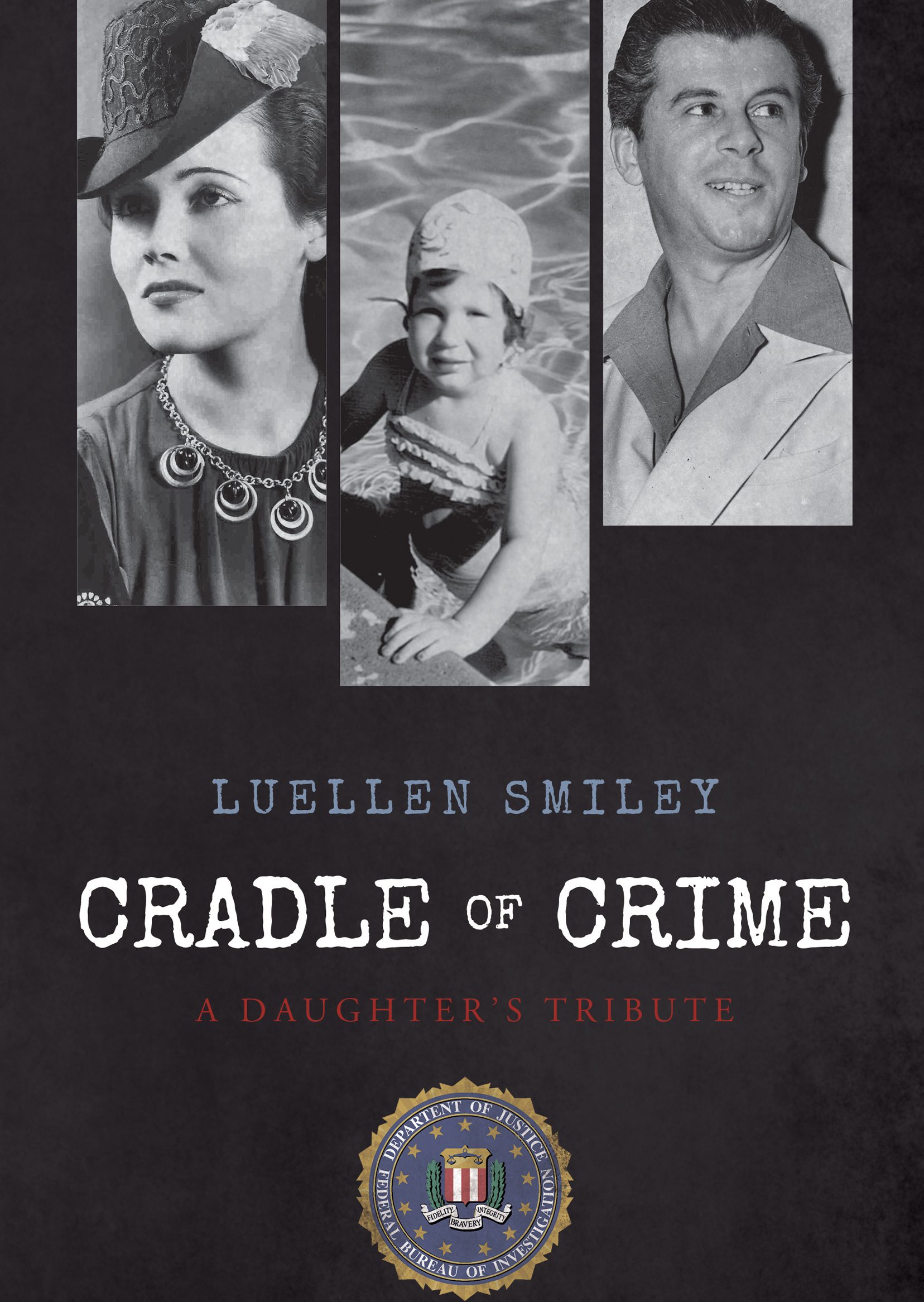
BY: Luellen Smiley
When I was eleven years old our home burnt to the ground in the Bel Air fire, and everything we owned fell to ash. Shortly after my mother moved us to an apartment in Brentwood, a mammoth carton arrived and was placed in the center of the living room. My mother cut it open and urged me to look inside. I sat cross-legged on the avocado green carpeting and discovered bundles of garments; Bermuda shorts, blouses, sweaters, and shirts.
I quickly shed my worn trousers and stepped into a new outfit, dancing about as I zipped myself in. My mother watched, and echoed my childish yelps of elation.
“Mommy, who are these from?”
“They’re from your Aunt Millicent.”
“Who is she? I don’t remember her.”
“You were a little girl. She loves you very much.”
Years later, my father, Allen Smiley, called and told me to come over to his apartment in Hollywood.
“Why Dad?”
“Millicent is coming by; I told you she moved here, didn’t I?”
I’d learned Millicent was Benjamin Siegel’s daughter, and Ben was my father’s best friend. Dad was sitting on the same chintz covered sofa the night Ben was murdered.
“You mean Ben Siegel’s daughter?”
“Don’t refer to her that way ever again; do you hear me? She is Aunt Millicent to you.”
When my father answered the door, I watched as they embraced. Millicent had tears in her eyes. She walked over to me, and took my hand. I looked into her swimming pool blue eyes and felt as if I was drowning. She sat on the edge of the sofa and lit a long brown Sherman cigarette. I studied her frosted white nails, the way she crossed her legs at the ankles, her platinum blonde hair, and the way her bangs draped over one eye. What impressed me most was her voice; like a child’s whisper, her tone was delicate as a rose petal.
I spent the rest of that afternoon memorizing her behavior. She emanated composure and a reserve that distanced her from uninvited intrusion.
Over the next few years, Millicent and I were joined through my father’s arrangements, but I was never alone with her. When he died in 1982, she was one of only three friends at his memorial service.
As the years passed, and my tattered address books were replaced with new ones, I lost Millicent’s phone number. I had been researching my father’s life in organized crime, and had gained an understanding of my father’s bond with Ben Siegel. My discoveries were adapted into a memoir and recently into a film script about growing up with gangsters. During this time, I had reconnected with several of Dad’s inner-circle, but Millicent was underground, and now I understood why.
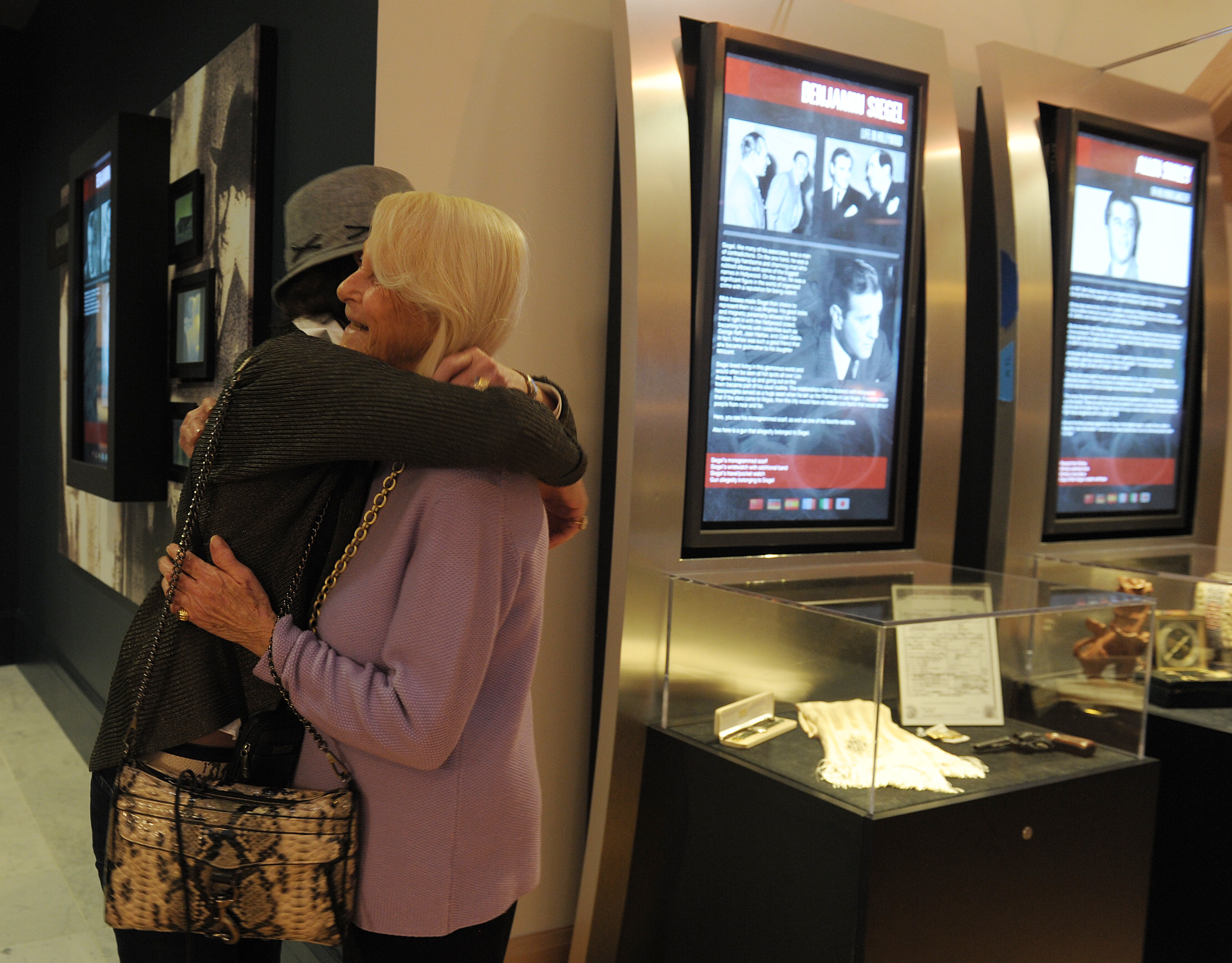
Last year I received an email from Cynthia Duncan, Meyer Lansky’s step-granddaughter. She told me about Jay Bloom, the man behind the Las Vegas Mob Experience, a state of the art museum that will take visitors into the personal histories of Las Vegas gangsters. Cynthia contributed her significant collection of Meyer Lansky memorabilia, and assured me Jay was paying tribute to the historical narrative of these men by using relatives rather than government and media sources. She wanted me to be involved.
Despite my apprehensions about the debasing and one-sided publicity that characteristically surrounds gangster history, I contacted Jay. In his return note, he invited me to participate, and added, “Millicent would like to contact you.”
A month later I was seated in Jay’s office waiting for Millicent. When she walked in, I stood to embrace her, and this time the tears were in my eyes.
Millicent’s voice was unchanged and so was her regal posture. “Our fathers were best friends, attached at the hip. Your Dad was at the house all the time. I’ll never forget when he and my mother met me at the train station to tell us about my father’s… death. Smiley was very good to us. My mother adored him too.”
Jay took me on a tour of the collection warehouse, and the history I’d read about unfolded before my eyes. The preview room was like a family room to me, because some of the men had been my father’s lifelong friends and protectors. I stopped in front of the Ben Siegel display case and saw an object that was very familiar.
“My father has the identical ivory figurine of an Asian woman. I still have it.” So much of their veiled history was exposed; between these two men was a brotherly bond that transcended their passing and was even evident in their shared taste in furnishings.
Jay showed me a layout of the Mob Experience in progress. I turned to him and asked, “Is it too late to include my father? All the rooms are assigned.”
“Millicent and I already spoke about it. She wants your Dad in Ben’s room.”
After I returned home, Millicent and I talked on the phone.
“Your father belongs in my Dad’s room. They’ll just have to make Mickey Cohen’s room smaller.”
“My father hated Mickey,” I said.
“So did mine! When are you coming back? I’ll kill you if you don’t become part of this.”
I began my research WITH WHAT I HAD; one of my father’s books; “The Mark Hellinger Story.” I leafed through the index and there was my father’s name along with Ben Siegel’s. According to the biographer, my father visited Mark at his home the night before he died. Mark had stood up in court for my father and Ben at one of their hearings. He was fond of Ben, like so many people were, that aren’t here to tell their story.
After reading the book I rented, The Roaring Twenties, written by Mark, and from there the connections, relationships, and characters began to leap out from all directions. I
submerged myself in history and photocopied pictures of my father’s movie star friends, George Raft, Eddie Cantor, Clark Gable, and his gangsters friends. I found photographs of the nightclubs he frequented, the Copacabana, El Morocco, and Ciro’s and nightclubs that he referred to in his mysterious conversations. I made a collage of the pictures and posted them above my desk. I played Tommy Dorsey records while I wrote. This microcosm of life that was created, allowed me to listen to the whispers and discover the secrets.
I dug into my father’s history without knowing how deep I had to go, or what shattering evidence would cross my path. In my heart I felt this was crossing a spiritual bridge to my parents. The flip side was a gripping torment, tied to my
prying mind. I needed to break into the files in order to break my silence, and discover my parents, not glamorized stereotypes that fit into the category of Copa dancer and gangster. No matter what I uncovered, I always knew it would be ambiguous, and controversial. I did not expect to find a record of murder, dope peddling, and prostitution. I believed that his crimes were around the race track and in gambling partnerships. Even so, I could never understand the similarities we shared, unless I knew them as people. Though I have not rebelled against authority as my father did, I‘m not a team player, I resist authority, and I don’t like waiting in lines.
I had to reinvent my mother through the subconscious. I skated over thin ice trying to set her truth apart, from what I
had invented, dreamed, or had been told. I listened to Judy Garland’s recordings, and premonitions surfaced, of how my mother loved Judy, how it must have felt to be under the spot lights of MGM, and dancing in ginger bread musicals while her own life was draped with film noir drama.
I studied my mother’s face in all her films, rewinding and stopping the tape, as if she might suddenly return my glance. She had dancing and background shots in the musicals produced by Arthur Freed. I remembered dad talking about Arthur, and how prestigious it was to be in his department.
When I discovered the Museum of Motion Pictures Arts and Sciences in Los Angeles, I went down and filled out a slip of paper with my mother’s name on it and waited for my number to be called. I felt something like a mother discovering her child’s first triumph. They handed me a large perfectly stainless manila envelope, and a pair of latex gloves to handle the file. I had to look through it in front of a clerk.
“That’s my mother,” I proclaimed. He blinked and returned his attention to a memo pad. Inside the envelope were black and while glossy studio photographs, press releases, and studio biographies of my mother. The woman who pressed my clothes, washed my hair, and made my tuna sandwiches. There she was in front of the train, for Meet Me in St. Louis, and a promotional photograph in The Secret Life of Walter Mitty, dated 1947. That was the year Ben was shot. I looked further to find more clues. I needed to know where she was the night Ben was murdered. Maybe she was on location when it happened. Maybe she was in New York at the opening of the film. I could not place her on June 20, the day Ben was murdered. I imagined my father called her and told her the news. The marriage plans were postponed, their engagement suspended. My father had to get out of town.
I spent everyday picking through the myths I’d heard and read. I heard a clear chord of scorn, for exposing family secrets, “It’s nobody’s business what goes on in our family, don’t discuss our family with anyone, Do You Hear Me!” I must have heard that a thousand times.
I began to dig with an iron shovel. I asked every question I wasn’t supposed to ask, and preyed into every sector of their life. I wanted to know about his childhood, where he grew up, and why he left home when he was thirteen years old. Who were my grandparents, and why didn’t he talk about them. How did he meet Ben Siegel and Johnny Roselli, and when did he cross over into the rackets?
I contacted historians, archivists, judges, attorneys, Police Chiefs, FBI agents, authors and reporters across the United States. He always said, “Reporters can destroy your life overnight.” And here I was, uncovering what he had sheltered all his life.
I wrote to the INS in WDC and asked for their assistance. Six months later I received a letter from the INS in Los Angeles. They acknowledged his file, it was classified and they could not locate it. The progress was tediously slow, and the waiting oppressive.
While I waited for the files, I read Damon Runyon, and Raymond Chandler stories and attempted to identify which character personified which gangster. The stories were about the people that came to my birthday parties, Swifty Morgan, Nick the Greek, Frank Costello and Abner Zwillman,(the Boss of the New Jersey syndicate.) The dialect of Runyon and Winchell mimicked the same anecdotes my father used over and over! By understanding Runyon’s characters I began to know my father. At night I watched old gangster movies and that opened another door of familiarity.
I read almost every book in print about the Mafia and ordered out of print books from all over the country. They began to topple on my head from the shelf above the desk. Allen Smiley was in dozens of them. Every author portrayed him differently, he was a Russian Jew, a criminal, Bugsy’s right hand man, a dope peddler, a race track tout, and sometimes the words bled on my arm. To me, he was a benevolent father, a wise counselor and a man who worshiped me.
The INS claimed my father was one of the most dangerous criminals in the United States. They said he was Benjamin Siegel’s assistant. They said he was taking over now that Ben was gone.
That day I put the file away, and looked into the window of truth. How much could I bear to hear more?
Mom and Dad second from Left. I don’t know the other people.
Still A Mystery…Who Shot Benjamin Siegel.
Several months ago I received an email from a reporter in Las Vegas. George Knapp had read some of my memoir posted on my website, and asked for an exclusive interview. He asked about my father’s relationship with Ben Siegel “Bugsy” and what I knew about their friendship, and why Ben Siegel was shot. I declined the interview, but George persevered. Three weeks later I agreed to the interview, because my father was not there to stop me.
We met in Del Mar at the Inn Auberge. I showed up with a notepad to remind me what not to say, a photograph of my father when he was a producer for Cecil B. De Mille, and a borrowed calmness that comes when I am approaching an extremely anxious situation.
My first interview about Dad was not anything like I imagined. George approached the subject with respect, and I relaxed and began talking, and talking, and talking. The only time I hesitated was when he asked if I knew who killed Ben, and I had to answer swiftly, “I think Bush did it.” He was not too impressed with the answer; but it saved me from theorizing.
At the end of the interview, I walked out of the hotel without regret. I said what I felt should be told; that my father’s best friend was Ben Siegel. If he loved Ben and my mother loved Ben, than there is a lot more to “Bugsy” than what the public has been told.
The interview aired on a Friday night, and my life was no different from before. George got a call from someone who claimed my father once told him, Virginia Hill’s brother was the shooter. It sounds like my father; he enjoyed sending people down the wrong path.
He always said, “You don’t inherit friends,” and so I declined to remain friends with family members of his group, because I respected his orders, even after he died. I don’t know if any of his mob friends are still alive today. Many people claim they knew my father, but in essence, what they mean is they met at Ciro’s, or had a game of cards, or went to the racetrack. My father’s only friends were connected to organized crime. I learned this when he died; three people showed up for the service. He warned me to keep away from reporters, and not to trust anyone. Still, strange incidents followed his death that I was unprepared to handle.
A man I’d never heard of called and informed me, ‘ your Dad and Ben buried a safe deposit box in downtown Los Angeles. ‘You should look for the key, there may be a lot of cash.’ My father was not about to leave this world without telling me he had stashed money in a safe deposit box. I will bet every dollar on that.
Another man, posing as a friend, came to my aid offering help settling the estate. A few weeks later another man I had never heard of, placed a claim on the estate for an old gambling debt of $5,000. The two of them were conspiring. Had I known gambling debts are erased when the bettor dies, I would not have sold his Patek Philippe pocket watch, which I suspect belonged to Ben Siegel at one time. The end of my father’s life was as mysterious as when he was living. That is how he liked it, and that is how he lived it.
I had to wait until my father was in his seventies to go to the racetrack with him. He took me to Santa Anita, we sat in the clubhouse, and he watched the track from behind dark glasses. He was quiet and observant. He watched me eat, and then handed me a C note to bet on the Exacta. He told me how to bet and which horses to bet. I walked away from the cashier thinking I would be a big winner. Instead, I walked away a big loser. ‘Now you know even your Dad loses at the track.’ There wasn’t anything exciting about going to the track, he made sure of that. I suppose he was concerned, that I had inherited a taste for betting. Lucky for me; I throw the dice on a different game. Photo: Leaving Beverly Hills Police Department day after the murder.
Ralphie I served 1966–78 (Photo credit: Wikipedia)
THE SCREEN IN SANTA FE scheduled three showings of this Docudrama.
Huh? Sam ol boy lives in Santa Fe. I’ve had bar chats with him, everyone has, and he’s our mascot for independence, accessibility, and still a flush hand of rugged classic looks. Like he should be Ralph Lauren‘s model, not Ralphie.
I figured the theater would be packed so I brought earplugs. I take my films too seriously, and refuse to be interrupted with slurping and munching. Into the first scene; my concentration was so acute I would have protested if anyone said a word. Beginning with the footage; unbelievable home-made movies and photographs. You will see Sam as a youngster on the ranch where he grew up in Central California, Sam leaving home and working his way through puberty. Then we see that chiseled frame of masculine sensitivity as a young playwright in Greenwich Village where you meet Johnny Dark. The dialog between the two men and the dramatization of their feelings about the collected letters they exchanged over a forty-year period is something beyond a reality show.
It is as honest and genuine a continuum of conversation between two men that you’ve ever witnessed. The subjects: their father’s, destiny, fate, women, writing, dogs, tragedy, and loss. Just to name a few. So if you wrap the cinematography around the humor, philosophy and ending that left me in tears, you have a masterpiece of film for the audience.
Yes, there is a dusting of emotions on Jessica Lange.
I walked away feeling as if my life had not even begun. So much life squeezed into one man lead me to question my limits on adventuring. Several lines I recall in particular, to paraphrase Sam;
We can change our lives, our work, our wardrobes, our women, but we never really change. Our essence remains constant. I’ve always felt outside the whole thing, sometimes more than others. As a writer you have to be selfish with your time. I’m always moving, going on the road, I didn’t know that was how my life was going to turn out, but it did.
That kind of admission for a floundering but dedicated writer will last me a while. On documentaries; they don’t get enough attention. I hope this film tears that fence down and let’s the HONEST-REAL-BULLS come through.
The order of this week is disorder. Not the trivial disorder of a closet, or a work in progress; this week is the unraveling of the self which comes with separating from someone you love dearly. It is the subject of: poetry, theater, film, literature, dance, visual arts and music — all forms of music from opera to rap. For all of you who have mothers’ and fathers’ close to death, and you don’t want them to leave.
Adults protect you from the brutality of death when you’re very young. They keep it behind locked phrases like ‘she had to go away to a better place; you’ll understand when you grow up.’
The camouflage of death may go on indefinitely until one day, you are hit over the head with a block of ice, and it splits you right down the middle. You can see your guts spilling out, and everything is all out of order. Walking is an effort. Thinking clogs with the big question: Why? Why can’t we all stay here together and live forever?
Flashback to 1966 — I was very young, not so much in years, but when I was 13 my mental and emotional age were more of an 8-year-old. I don’t know if I was ADD or DDT because those acronyms were not in vogue yet.
My development was arrested because I was raised on a fantasia of false identities, fiction, and privledge. I thought we were rich, happy, and would live together forever. The fantasia of falseness was abruptly taken away on June 19, 1966. On that day, I saw for the first time, my father weep uncontrollably. I was told my mother was in heaven. My father was seated on my mother’s avocado green sofa in our tidy mid-century apartment in Westwood. Nana — mother’s mother — was seated on the sofa next to my father. Nana and Dad had reconciled for the period of time my mother was sick with cancer. They both were sobbing. I was not. There was nothing inside of me but resistance; a blockage of emotion that remained there for so many years.
I was left in my father’s care. He was busy out chasing government subpoenas’ and running the Fontainebleau Hotel in Florida. He kept a command post on my emotions. He would not tolerate my grief, because he could not tolerate his own. So, I had to chin-up, chest out, walk up and down Doheny Drive in Hollywood where he lived and pretend I was going to be fine.
When I turned eighteen and left my father’s apartment was the first time I was free to unravel my feelings. The emptiness filled with confusion, anger and drugs. If college was supposed to be my best years, then I missed that chapter. Looking back, the real leap to personal growth came at that time when I was left unattended to wander through life with my own eyes as guardian, and my heart as my compass. That is when I missed my mother the most. It was my fortune to have my father back in Los Angeles, throwing his weight around from a distance. He kept me under radar by having a friend’s son working in the admittance office of Sonoma State College.
I remember days when my mental attitude needed electric shock therapy. Miraculously, I did find my way home, and to the matter of my mother, and growing up with gangsters. From a wafer of stability, very slowly, I’ve built a nice lifeboat to keep me afloat. My screaming, cantankerous, and intimidating father who loved me beyond measure is in this imaginary boat, and my mother who loved with a silent gentle hand she gave to me whenever I needed assurance.
All I have to do is look at her photograph placed in every corner of my house, and I regain momentum in my lifeboat. When I am particularly insolvent with life’s measures, I recall the years she spent fighting cancer so she could continue to hold my hand. How can I disappoint such a woman? I cannot, and I know that with more certainty than I know anything.
We all have a basement strength that rises up and balances us when we need it. Each time we cross that unpleasant road, and say good-bye to our friends, our pets, our parents, or our siblings, we have to find our basement strength.
You can read poetry and essays, listen to opera or rap and find five-thousand ways of expressing the same painful stab of separation. If the comfort comes in just knowing — we all have that in common — then all you have to do is tap the shoulder of the man in front of you, and ask, “How did you handle it?”
Or as Henry Miller said, “All growth is a leap in the dark, a spontaneous unpremeditated act without the benefit of experience.”
The valet reminded me of the munchens in Wizard of Oz, because of their berets, and tightly fitted double breasted coats. But it wasn’t the valet or room service, or anyone that I recognized.
“Lucille, darling is everything to your satisfaction?”
“Hello Jack. Yes the room, flowers, and fruit basket are so lovely. Thank You.”
by Ronzoni
It was the smiling big faced, former bouncer of the Copacabana New York whose name I knew only as Uncle Jack.
Jack was subtle as a semi-truck; and if the world was coming to an end, I’d follow Jack. He had fingers thick as sticks of dynamite and he squeezed my blubbery cheeks until they turned purple. I knew a cheek squeeze meant the person loved me, so Jack didn’t frighten me. I learned thirty years later it was Jack Entratter; a man of chest heavy bullying, dinosaur New York threats, and answered to Frank Costello. I don’t believe he pulled out the Casino movie style butcher chopping that we always see. I just think Jack did what Frank asked, and Frank didn’t randomly demand nail stripping, ball butchering violence you see in the movies. Remember it is a movie.
My mother dressed up with a fur wrap (they wore furs in Vegas) and dressed me in a Pixie Town ensemble that was so starched I couldn’t bend my arm, and we went to the Copa, for the dinner show. Ella Fitzgerald was the feature entertainer of the night. If I wasn’t in a room at La Posada tonight, listening to Tito Puente and Johnny Pacheco, tipping a glass of Chilean wine, without all my files, and notes, I could reference many things about that night. I rented the house for the twelve days of Christmas and I cannot access anything other than what I brought. I could go googling all night, but it is close to time to eat, and parlay my chances in the lobby, meeting and greeting, as I feel I should do, because hotels are the only socially invasive venues left. I greet everyone who knows how to walk without revealing their miserable or self congratulating lives. I really like people who keep their triumphs and sorrows until the second or third time we meet. I don’t like digesting four courses unless I ordered them.
Ella, came out on stage, and we were seated under her heaving breasts, the first row, the closeness was dressing room intimate. There were others at our table but they were sort of like faded ghosts after Ella started her fireworks. TO BE CONTINUED.
Comfort….
From writing by hand at my tiny Eurasian desk facing the window to the west; framed by time and familiarity into the branches of JD’s pine tree, the black silky toned crows basking like prowesses on the branches, and waiting for La Posada to empty the day’s leftovers in the garbage cans. The silky drape of the winter sky sometimes adorned with lacy clouds, like today, softening the southwest blue to a faded jeans shade. From my desk, I write, without thoughts predefined, just a drain of emotional threads from my heart…
This year isn’t like last year, the absentee man, fussing with the fireplace, making me afternoon espresso, or drying dishes. It is not at all like last year, with Rudy and John intercepting my division of attention, laughing at the kitchen table, eating my blueberry pancakes.
I had the song of Judy Garland’s rainbow in my heart. It was a time I will never forget, or regret, because I was a very lucky lady for several years. Unabridged ecstasy poured out of body, and spread over my attitude, abundant spirit, mood, facial expressions, and my dreams were filled with amusement instead of nightmares.
That’s why now, is so different. The camp has closed, and I wander into these new woods unsteady, and steadier, juxtaposed between, acceptance and anger.
In the last few months, I’ve written my heart out, read Shepard, Colette, Durrell and my Creative nonfiction magazines. I’ve studied, and prepared for radio programs, and collected a bundle of columns to adapt into short stories. I started buying chocolates and jelly beans, so I treat myself, on breaks, when it’s too cold for my frail body to walk around town or up Palace Avenue to see the new for sale listings.
My steps inward resulted in accomplishments, break-troughs’ and a comedic sideshow trying to open boxes, make repairs, until Rudy shows up again, and rake the leaves, stuff that is mundane. More distant relations, and mafia threaded strangers knocked on my door, bolstering my faith in breaking the silence that ruled me, I let rule me. Stepping inside the truth I must face isn’t nearly as harmful as pretending.
Mob on television, in the news, (gross sales global figure of $850 billion) websites, and bloggers, movies and books. They’re all coming out of the closet to inform, turn themselves in, give advice, consult on their own films, sign on for pubic speaking at Library’s, documentaries, and advertisements-the world is all mobbed up and it’s time for some horrific homogenization of the gangsters who wouldn’t break the silence.
I moved in with my Dad when I was thirteen years old. My mother had just passed away, and I arrived with innocence and untrained cooking skills. Mom was an Irish Catholic meatloaf and corn-beef cook. Dad was a Russian Orthodox raised moderate vegetarian, and decided to hire a chef to teach me how to cook.
I came home from school one day, and found Caesar in the kitchen. He was a stand-in for Paulie in the Godfather, only he had curly black hair, and apple red cheeks. Caesar was dressed in a black suit, white shirt, and an apron that fell short of fitting him. Dad instructed Cesar to teach me how to make salads, baked fish, and spaghetti with oil and garlic. Everyday after school, Caesar was in the kitchen preparing dinner for us, and I stood beside him, observing his chubby knuckled fingers, slice and chop vegetables. We started with what Dad ordered; a meal in a salad, and later coined it Farmer’s Chop Suey. The salad was not just prepared, it was a decorated masterpiece when he finished. During the preparation, I noticed beads of sweat on Caesar’s face, and a jittery nervousness, surfaced just before my father arrived home, “What do you think? Will Dad approve?” He asked. I assured him Dad would love the salad. Cesar and I became pals, and waited anxiously for Dad’s arrival. He wasn’t all that agreeable. Fastidiousness and perfection are common traits amongst gangsters. Usually, Dad remarked there wasn’t enough garlic, or there were too many croutons, and Caesar would swiftly correct the complaint.
After Cesar went home, Dad would talk to me about food, and how everything starts in the stomach, and how the vegetables have to be scrubbed, and the seeds removed. Three or four times a week Dad dined out, and he didn’t order salads. He frequented Italian restaurants, and his favorite was Bouillabaisse, with a side of pasta. I never saw him enjoy any food as much as Borsch with sour cream, and smoked white fish. That was his favorite childhood meal. His father was a Orthodox Butcher, a very scared skill that requires a thorough understanding of Kosher preparation.
About six months had passed, and I came home one day and Cesar wasn’t there. Instead I found my father in a rage. I asked about Cesar and he told me it was none of my business, and to start preparing dinner. After my first salad preparation, Dad applauded my presentation, and assured me everything he was teaching me would serve me later on in life. He explained he had to be harsh and demanding, because he wanted me to be able to take care of myself properly.
I developed into a moderate vegetarian and have used that salad as a blueprint for most of my meals. Now I create a variety of salads, and a lot more ingredients: like white beans, garbanzos, walnuts, tuna, or shrimp, artichokes, sun-dried tomatoes etc. My friends call me a free-style cook because I only use recipes when I’m making soups or stews.
I was very fortunate to grow up with a father who spent hours teaching me what I would need to know in life. This is something you won’t read or see in a film about growing up with gangsters.
WHERE TO BEGIN THIS STORY OF A FATHER THAT I ONLY CAME TO UNDERSTAND BY READING HIS FBI FILES, BOOKS ABOUT MOB HISTORY WRITTEN BY LAW ENFORCEMENT AND COLLEGE PROFESSORS, AND DOCUMENTARIES PRODUCED BY FOES OF MY FATHER.
My last year with Dad was 1981. Naive, and unconcerned with where I was headed, or how I’d get there if I figured it out, I was spinning around in an executive chair; waiting for the big hand on the black and white office clock to set me free. Time didn’t pass; I hauled it over my head, in my bland windowless office, under florescent glare. I was trouble shooting for an ambitious group of USC guys as they gobbled up all of Los Angeles real estate. Without any real sense of survival or independence, my life was in the hands of my father.
“Meyer’s coming to see me; haven’t seen the little guy in twenty-five years.” Dad said during a commercial break.
“Meyer Lansky?” I asked as casually as he’d spoken.
“Who else?”
“Why did you two wait so long?”
“It’s no concern of yours; he’s my friend, not yours.” I was twenty-nine years old and still verbally handcuffed.
The three of us went out to dinner, and while the two of them spoke in clipped short wave syndicate code, I
noticed that neither one of them looked at all happy. It was rare to catch my father in public with a friend, without raucous laughter, and storytelling. My attempt to revive the dinner conversation with my own humor,returned two sets of silent eyeball commands to resist speaking.
Several months later I received a call from Dad asking me to come over to his apartment, he had collapsed on the bathroom floor. When I arrived, he pleaded for me to stay close by. “I’ll be all right in a few minutes; I just need to catch my breath. ” I sat outside the bathroom door biting my nails, and waited, like our dog Spice, for my orders. For the first time in my life, he was weaker than I, and my turmoil centered on that unfamiliar reversal of roles.









 ADVENTURERS IN LIVINGNESS