A candid and enthralling memoir, CRADLE OF CRIME – A Daughter’s Tribute is the debut release from Luellen Smiley and it proves one of the most gripping and powerful books in its genre. Certainly no mean feat, given the swelling number of similarly themed offerings but Smiley does well to distinguish hers with painstaking research, a broad narrative sweep and intellectual grip to deliver a fascinating and revealing read, for the events it covers.
The storytelling isn’t redemptive with much of the most compelling material in this book being intensely personal but it is a very human story that dispels hype and myth and gives us a telling glimpse of a remarkable life. Weaving together several stories it makes a vivid and notable contribution to the mafia debate which invariably swings between the codes of honor and family values so often portrayed on the silver screen to a brutal criminal organization focused only on the accumulation of wealth. In contrast, Luellen finds a far more equitable balance in her reflections, and it makes for a genuinepage-turner.
Extremely well written, fans of this ever popular genre will find CRADLE OF CRIME – A Daughter’s Tribute a fascinating read and it is recommended without reservation.
I walked into Century City Club Equinox, almost inserting myself into the spotless transparent glass door. Three young women at the counter, beaming youth in front of black walls that seem to suck me in.
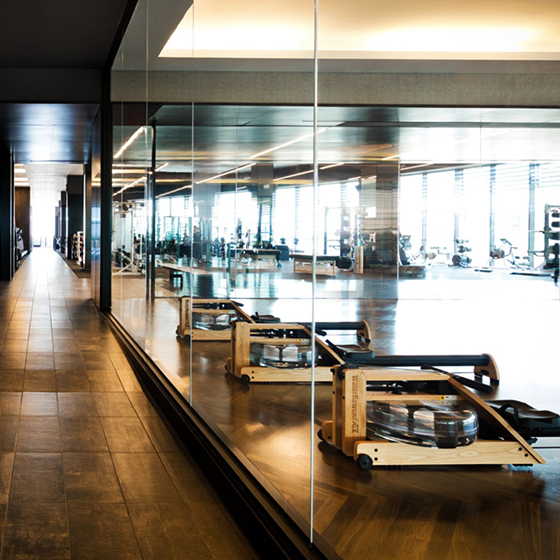
“I’m here for the tour.” A suited man in a large, rather luxurious office greets me with so much reserve and robotic gestures that I feel like running out. I was led through a scintillating voluminous space, enveloped in floor-to-ceiling glass, streamed with sunlight and views of Westwood. The members, women attired in matching voluptuous outfits and personal trainers, lean as lions tossing funny equipment to the client, fastidious housekeepers, sterilizing and vacuuming in trendy uniforms. It was as if I were watching a film production.
The treadmill cycle area was a bit crowded, and not one person didn’t have a headset on, staring at the screen of choice. The bathrooms were hotel accessorized, and even pumps were filled with Kiehl products. There was a steam room, make-up area, showers, all the necessities, and a few women were blowing their hair, all beautiful.
More rooms, a snack bar, shopping, pulsating music, and a closer look at the guests.
“ This is as upscale as you can get; you’ll love it, and you’ll meet important people, I’m sure.”
I listened to his closing argument and watched the bodies bend like pretzels as personal trainers raised and stretched their heads, arms, and legs. Bodies bounced, climbed ropes, did flips, and hung upside down, like a circus act. After the close, a condescending smirk, that I read as, join, or go hang out with the losers at 24-hour fitness.
He handed me the contract, and I read it over. The cost was more than I’ve ever spent. The way I looked at it was a place to work out and meet new people, although my instinct was that these were not my people. I signed and walked out feeling dizzy again. I stopped in a shoe store to look at what women were wearing. The salesgirl kept complimenting me, and showing me shoes that she loved, and before I knew it, she sold me what I didn’t come in to buy, high-top lace-up pink workout sneakers. Leaving the Century City Satellite, beyond the construction and traffic, I raced home to recuperate. What’s happened to me after living in a village in New Mexico, is that too much stimulation is now exasperating.
I walked to Equinox for my first workout, hopped on the treadmill with weights, and tried to look perfectly comfortable, but I wasn’t. The vibe and everything about this ballroom of a gym seemed rehearsed. Maybe I’m too observant, trying too hard to fit in. I noticed so much in that hour. The workout is also a sort of performance, just a shade of competition between men and their weights, women straddling rubber balls, yoga mats, bench presses, and only a handful look like they need it. Men and women occupy the treadmill room; without expressions, they seem to live inside themselves. There is no conversation; it feels more like a convent. There is no hi, hey, or smile. I asked a trainer, “It’s not very social here. Why is that?” “ These are the highest paid executives, lawyers, agents, actors, and they don’t come in to socialize–they are only here to do the work-out.” Great move, Greta. I’m paying three hundred a month to be invisible.
Some of us are not rushing to wave the I made it flag.Some favor holding back until the other elements of our character life are solid; our fear, pettiness, falsity, greed, so many steps to climb. I have to trust in the pattern of our lives; the invisible thread that taunts us, teases us, and even torments us. I am discovering the shame and greed, the absolute indifference to my security, and finances.
Gravity has dropped, and so has my sense of structure, health, and self-discipline. Making a bed was too tedious, and grocery shopping was needless because I didn’t care about food; I like tuna sandwiches with avocado and bananas for breakfast. The comfort comes from writing, cloud watching, and phone calls with friends.
The loss of direction and ambiguity lurking in the future is a place any person can find themselves in, especially those sensitive and artistic, without a map, familiar signs, and a plan. You have to ride it all the way to a new horizon.
It is a day later; the sky is unchanged, and the cloud cover is still nailed to the sky. In random conversations, I have heard of people’s hardships, sacrifices, and compromises. I tell myself not to be too sentimental , but it’s a useless force, I am sentiment. Don’t open those links to real estate values, how much money you need to retire. Open the link to redesign my interior life using new colors, textures, and backgrounds.
I ‘m thinking about Loren, one of the most original characters in my life. He developed a vernacular unlike anyone I’ve met. It came from growing up in the hood of Santa Fe, New Mexico. Later exclusive Wilshire Boulevard in Westwood, and then returning to Santa Fe. Joined the upper class clientele as a chauffeur. His vernacular was impressive as it collated honesty, and a wit sharp as a razors edge. Loren visits three times a week at least. Snow means silence and hermitizing. I can’t wait to open the door to Luxury Limo Loren and make him brunch. We harmonize for hours; on tones of fretful fear, wicked secrets, confessions and laughter. The delicious crust of survival and our similarities.
If I write down the pleasantries surrounding my life, the blessings rise up and give me a softened comfort. The sweet peace may vanish the next day, or be intercepted by the news, a wreck in the street, an unexpected phone call. The crossroads of everyday life comes and goes. Between all of these uncontrollable incidents we are writing stories that some day will be told in conversation, or written in journals and books. The essence of our changing lives is universal.
The long list is what you started as a youth or maybe later. It represents one of those adventures you must do before you die. The list you started without even knowing you were making plans for your future. This list does not have to be in writing, keyed in a smartphone, or posted in Outlook. The long list is about shocking the sensibilities: habits, norms, routines, and coming back unharmed. It is an exceptional journey, and we visualize it while waiting for a flight at the airport, waiting in line for a new driver’s license, or the light turning green. All of the things that we monitor in our lives, like the need to have a cavity filled, updating your platform, passwords, or checking the coolant level, are multiplying, and that short list is so long that we rarely have time to consider the long list. If at random I selected ten long list entries they’d read like this: Safari, Lombardi Italy, Greece, a cruise on the Cunard, a gallery of my own, a husband, a dog and cat, and a place that is quiet, like a ranch. The short list, fix the broken window in my bedroom, fix the roof and ceiling in the guest room, get the three non-working electrcial outlets fixed, the dishwasher, garbage disposal, stage the attic and basement cleaned out, and relocating to a place I’ve not named. The short list is a big obstacle in the way of the long list.
By the time we get to the long list, we may be crippled by fear, turned into a sofa shouting grumpy cynic, or worse than all the above, we may have forgotten what we desired.
Waiting too long to start an adventure on the long list is what happened to me two weeks ago. I waited twenty years. The journal entry was written in 1986 after visiting Santa Fe, New Mexico, for the first time. It was the weekend of the Burning of Zozobra. I read about it in the visitor guide and saw pictures of the paper Mache statue standing thirty feet tall. The mystical ritual of the burning of Zozobra is intended to wash away all our grief and sorrow that builds up each year, and so they call him Old Man Gloom. I missed the event that first time, and I made the following dozen visits for business and pleasure. Some years, I was within days of seeing Zozobra, but I left because someone was expecting me, or I ran out of money. After twenty years, Zozobra became a symbolic representation of what I must control.
This September of 2006, nothing would stop me from seeing Zozobra. Dodger and I drove down from Taos to Santa Fe late on the afternoon of September 8, and checked into the La Fonda Hotel. This is where I stayed on my first visit to Santa Fe. The anchor of the Plaza and all that happens outside eventually flows inside and settles beneath the cathedral viega ceilings of the hotel lobby. As we arrived on Fiesta weekend, the traditional celebration culminated in a juxtaposition of historical events, cultural exhibitions, parades, handshaking, hugging and margarita’s tipping from arms air born. La Fonda opened its doors to the entire population of New Mexico. .
You can sit on an old Spanish colonial leather chair , sip a tangy margarita and watch the fiesta kick off right in the lobby. The procession of costumed soldiers replicating the Spanish conquistadors marched through the lobby while Dodger and I were checking in. From here, I wandered over to the Concierge Desk and shouted, over the roaring and singing, about dinner reservations. Nancy, the concierge, made reservations, handed me maps and numbers, and turned us loose. That first night we stood under an umbrella in a downpour and watched the Opening Ceremonies in the Plaza, and later hopped in a Pedi cab to Ristra, where we dined on appetizers at the bar and I watched the activity with my notebook stare. I love being inside a strange room full of people, to me it is like starting a new book. I make up stories about the people, or if I am feeling brave, invade someone’s privacy to find what they are about. The diners were too removed, so we left and returned to the Plaza. In a few hours, I would be descending the far side of town to meet Zozobra. Twenty years had passed, and the moment was finally here. I was wearing my new cowboy boots and seated on the Palace Patio, looking into the sheets of rain that soaked all the out-door booths.
“ Are you ready to trek in the rain little mama?”
“ Yes, finally, trust me this time, you will love it. Do you have your earplugs?” Dodger has tinnitus and is implacable about loud noise.
“ Yep. Hope it’s better than trekking in the rain to see Funny Cide race.”
“ You hated it didn’t you?
“ I hated carrying that thirty-pound tote with all your junk.”
We walked about a half-mile in the rain, Dodger moved in stern choreographed steps to avoid the mud. “Damn, these are brand new boots. I’m going back to the hotel and change”
“ Cowboy boots are supposed to be worn looking. You can go to Lucchese tomorrow and have them polished.”
“ No, I just paid five hundred dollars woman, f I’ll bring you another pair in your closet.”
“ We won’t get the same place and you’ll never find me, I wander. So, just suck it up tough rugged warrior of earth, land and sea?”
“ Oh, all right, but I’m not happy.”
“ Look, there’s Zozobra!” Dodger stood in stillness, eyes wide as marbles.
My head was soaked cause I’d forgotten the umbrella and Dodger harmonized a lot of cuss words as we reached the front gates. Gangs and families, children, old timers in costume, scurried to reach the event’s standing front row. As we trudged through the rain, I noticed a crescent of anticipation that united everyone on the path. When we reached the arena, we looked down at the muddy slope as teenagers, mothers and strollers, slid down the hill to the front gates. I envied their loyalty to Zozobra. I was within a hundred feet of the stage, I could not remove myself from the unified adulation for Zozobra. As a ritual to burning the curses of life, people bring letters, photos, rejected elements of a personal tragedy and place them in the circle before the fire light. The crowd had expanded into a gyrating crush of participants, swaying back and forth, cheering the appearance of Zozobra, as he rocked back and forth in flames of fire. A convergence of strange mystical wailing, and an encore of audience howls ignite the lighting of firecrackers that set Zozobra in flames.
What I saw was the burning to the ground and the howls from the musicians that accompanied his death. That happens if you let the long list precede the short one. Dodger stopped grumbling when we returned to the hotel and exclaimed to guests, “We saw Zozobra!”
The subject pierced me yesterday morning and came from Anais Nin, a passage in her diary. “Each friend represents a world in us, a world possibly not born until they arrive, and it is only by this meeting that a new world is born.” ― Anaïs Nin, The Diary of Anaïs Nin, Vol. 1: 1931-1934.
Today, the first in several months that the atmosphere is ripe with thought, and has brought me back to the writing of the moment. The delivery trucks have not opened their doors, and dropped their ramps, the garbage trucks have already passed, and the traffic is so slight as it is Sunday.
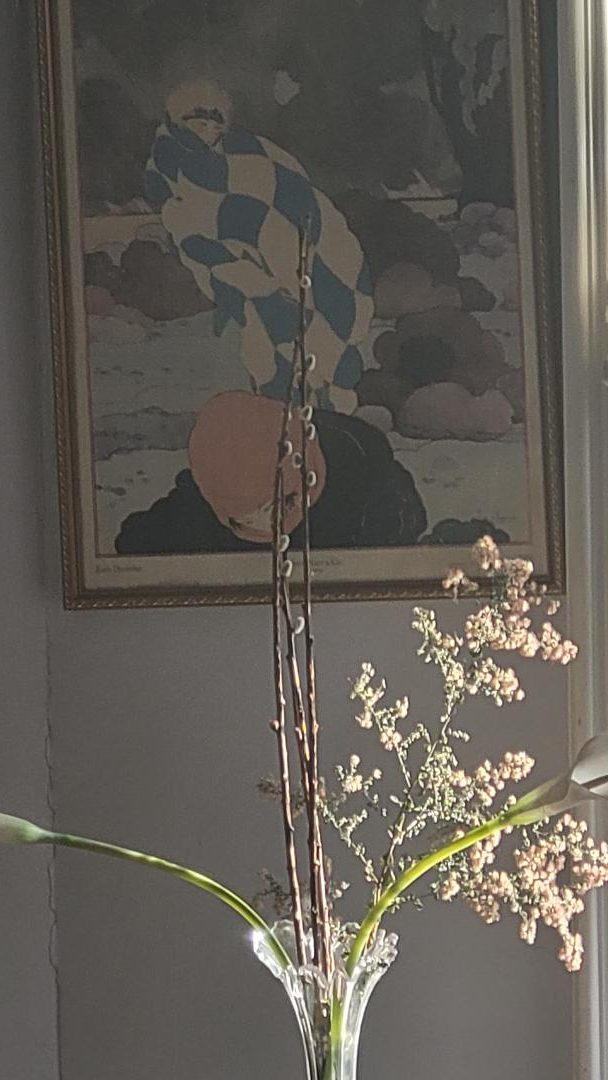
Spring is brushing nature with a varnish of subdued sunshine. I sit at my desk and listen. I hear some cheerful shouting on the sidewalk, a horn breaks the sanctuary, and then a sparrow lands on the terrace, and we watch each other. I breathe deep, close my eyes, and feel my oatmeal breakfast thumping in my belly.
The stream of consciousness is threaded into the deeper blanket of anxiousness. I am in the circle of chaos that seeps into everyday activities. Tempers are flaring, rousing combative street encounters. Business owners and employees are jumping ship everywhere. People are relocating, selling possessions, or using succulent lips and breasts to lure men for financial support. We are all edgy.
ICE, SNOW, AND RAIN… MIX THOROUGHLY AND SERVE CHILLED
WINTER 2025 … BYE BYE
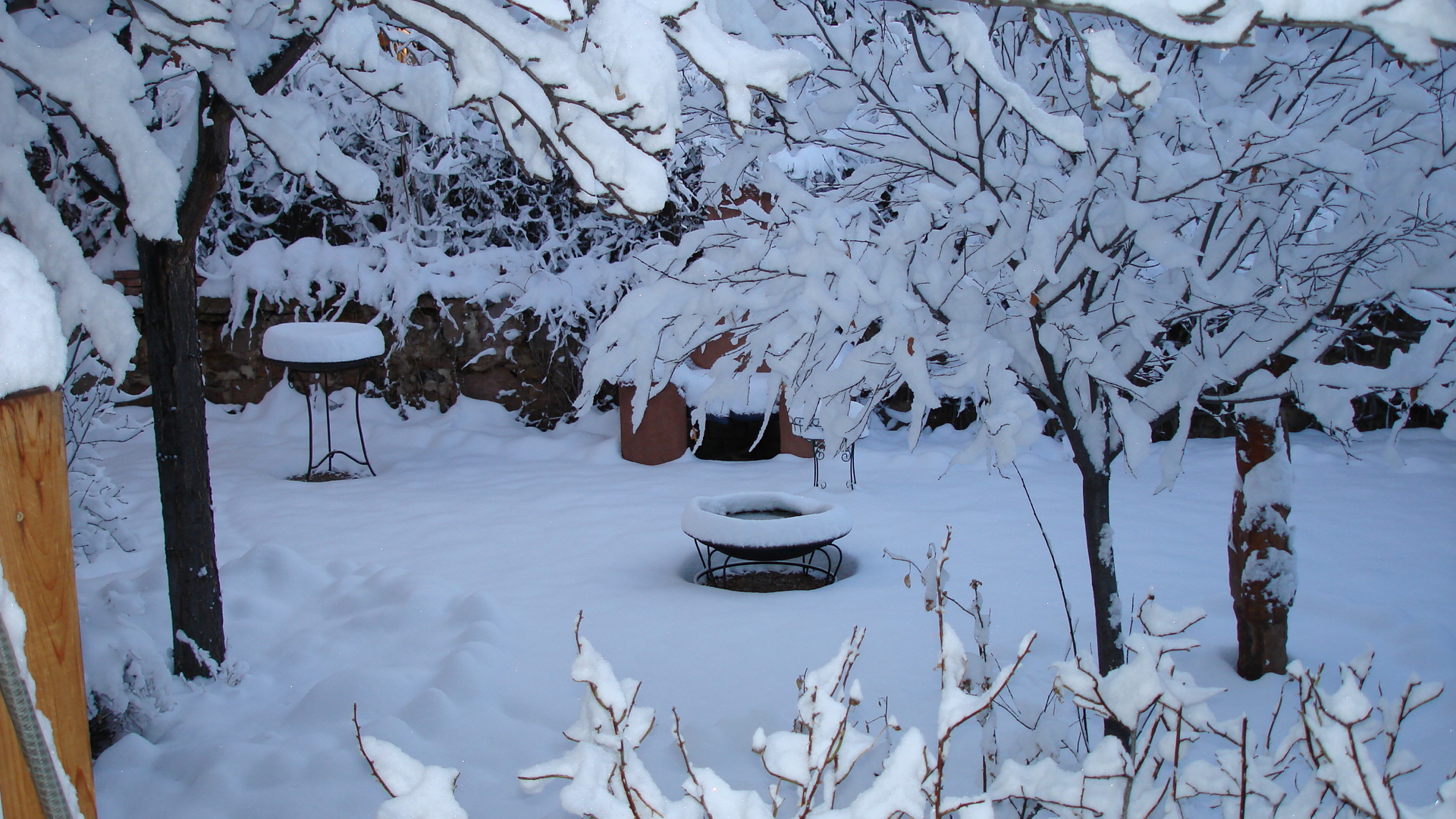
Winter in the Northeast is a door to the interior, not just physically living indoors; it’s a mental withdrawal from outdoor activity. Yes, some have adapted. I’ve seen men in shorts on a snowy day and women runners passing by my window on icy sidewalks. For many of us, I believe the winter is the time to ski in your head. Take a word puzzle section of all your experiences and ski down your mistakes, misjudgments, and behavior in all its rights and wrongs. A sort of sabbatical for the soul.
My car was stuck in the snow, and my eggplant pasta was stuck in cheese.
The insomnia of separation from a man’s shoulder bowed to my head, tweaks like stale bread. A mind that directs me when I am driving directionless and maps my journey, walks beside me, a guardian of my fragility, acutely conscious of our path. The voice that encourages and applauds my success rather than let it drip from jealousy or preoccupation. How the laughter erupts in a moment of spontaneous passion. The gestures of him shaving and the modest vanity after I re-wardrobe him. Feeling his eyes in a crowd, undressing or admiring me, for some folly or expression.
The humor he finds in my misguided attempts to open bottles, and packages with a dull spoon, and figure out electronics.
How he will pardon and pamper my unwarranted fears of stalkers, sickness, rejection nightmares, and falling down the slippery wooden stairs.
SOLITUDE will always be a puzzle because our lives, solo or mated, are mystified by either too much or not enough solitude.
I contest what seems endless solitude with my Irish Russian temper, condemning irritants like: street noise, absence of friends, short-tempered customer service reps, world news, and mindless tasks. The fever dulled after the first ice, rain, and snow, and mindfulness triumphed. I imagined my basement of survival would sink. It did not. There is an inner exploration happening, unfolding like spreading new sheets on my bed, that solitude has befriended me all my life. In the best of times and the tedious. I have to find the frolic and follies in the world that I created. I have to laugh alone so I watch screwball comedies, seek humor of my irregularities; wearing a sweater inside out, pouring coffee into a wine glass for a cocktail, and chuckling up and down the staircase, because I keep forgetting where I left my phone. My head is elsewhere daydreaming. I’ve learned how to repair house calamities; unscrew windows, seal up cracks, fix clogged drains, replace air vents, read the meters, and rejuvenate every wood board, handle, chair, and table with Old English Oil. As one pal commented on a visit to the house, ‘ It’s a perfect day for Old English! The winter forecast is blizzardy and full of warnings I haven’t experienced here; and how can I complain when half of Upstate New York is buried in ten feet of snow. The end of the day pleasure comes in the kitchen; my heart and spirit melt while stirring my weekly gumbo, stew, or casserole while listening to Tony Bennett, Nat King Cole, and swing music. Winter is a funnel that strips the trees and branches and lets us see through the forest and ourselves.
When do we begin to lie about our lives:, feelings, fears, and mistakes? I ask this because of simple observation, knowing when someone is not telling me their truth. I remain silent; it’s not my way to ask why you lie to me? It’s like a social-cultural mask. I’ve always sought to know the truth. Why should we shield our traumas and hardships more than our triumphs and accomplishments? Do you know who does not lie? ART and SPORTS. That is why we listen to music, read books, go to galleries and museums, watch films, go to the theater, and go to dance performances. I cannot comment on sports because I’m not a spectator, although I love basketball.
We, and I mean this in only a visceral sense, do not believe politicians, news, social media, or advertisements. We want to, but deep in our inner truth, we know it is the manipulation of our individual thoughts and choices. That is why I trust art to deepen my understanding of the human condition. Thank you to all the artists and athletes who share their pain and glory.
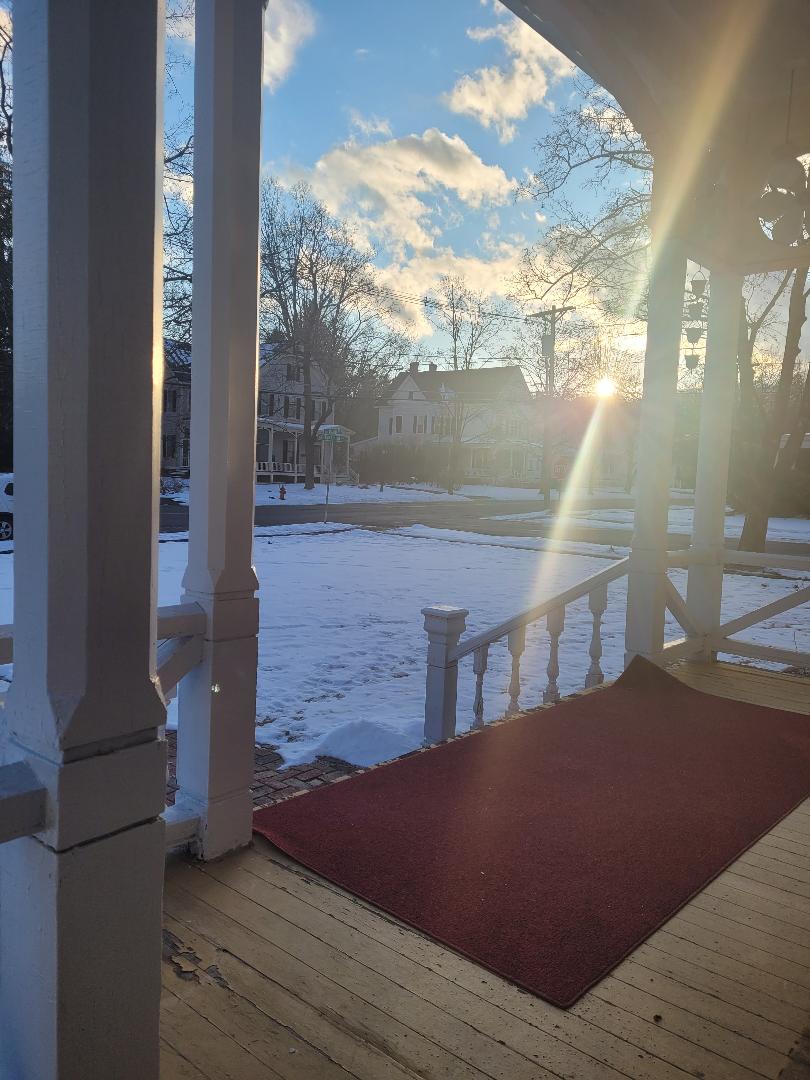
SUN, a goose-bumpy joy and celebration. That’s what I love about my education here: the first class you must take is weather management. I’ve destroyed dozens of artistic bric a brac by leaving them on the farm table on the porch, forgot to shop for groceries when a storm was approaching, and ran out of salt. I drove through town, taking photos at the red lights; the scenery is like Little Women, dressed differently but still rather swarthy in their determination to survive. Now some men, probably like the fourth or tenth generation, bear the strength by wearing a T-shirt or shorts. The other day, after a snowstorm, I noticed a man crossing the street in shorts, a long white beard, and working boots. That’s an EXACT badass around here.
Beguine the Beguine is on the record player, and I’m swinging around the music room, elated with the energy that forced me to dance, turn off the mind entirely. Total bliss. Dance has been with me since as far back as I can remember, the answer to a mood change, without drugs or alcohol.











 ADVENTURERS IN LIVINGNESS