I think of the comforts of exhibiting my life on paper. It is not the act of writing with pen and paper moving along at a steady rhythm; it’s the activation of the heart and mind, collaborating to unravel the relevant from the irrelevant. To reach this state of matrimony a writer needs not a Tuscan Villa, or an English Castle, but experiences that flake off the skin, the mise en scene that shakes its relevance.
Page 525. Terrified to post this but it is Sunday and I’m brave on Sunday. The book is fiction, first-person, and close third person so you’ll need a jogging suit to read. Based on true events.
Greta let the moment of the village rescue stay with her, like a new pet for as long as she could hold on to its beneficial ointment, away from what she calls her immersion into self. She gives me examples that illustrate her obsession with matching outfits in her closet.
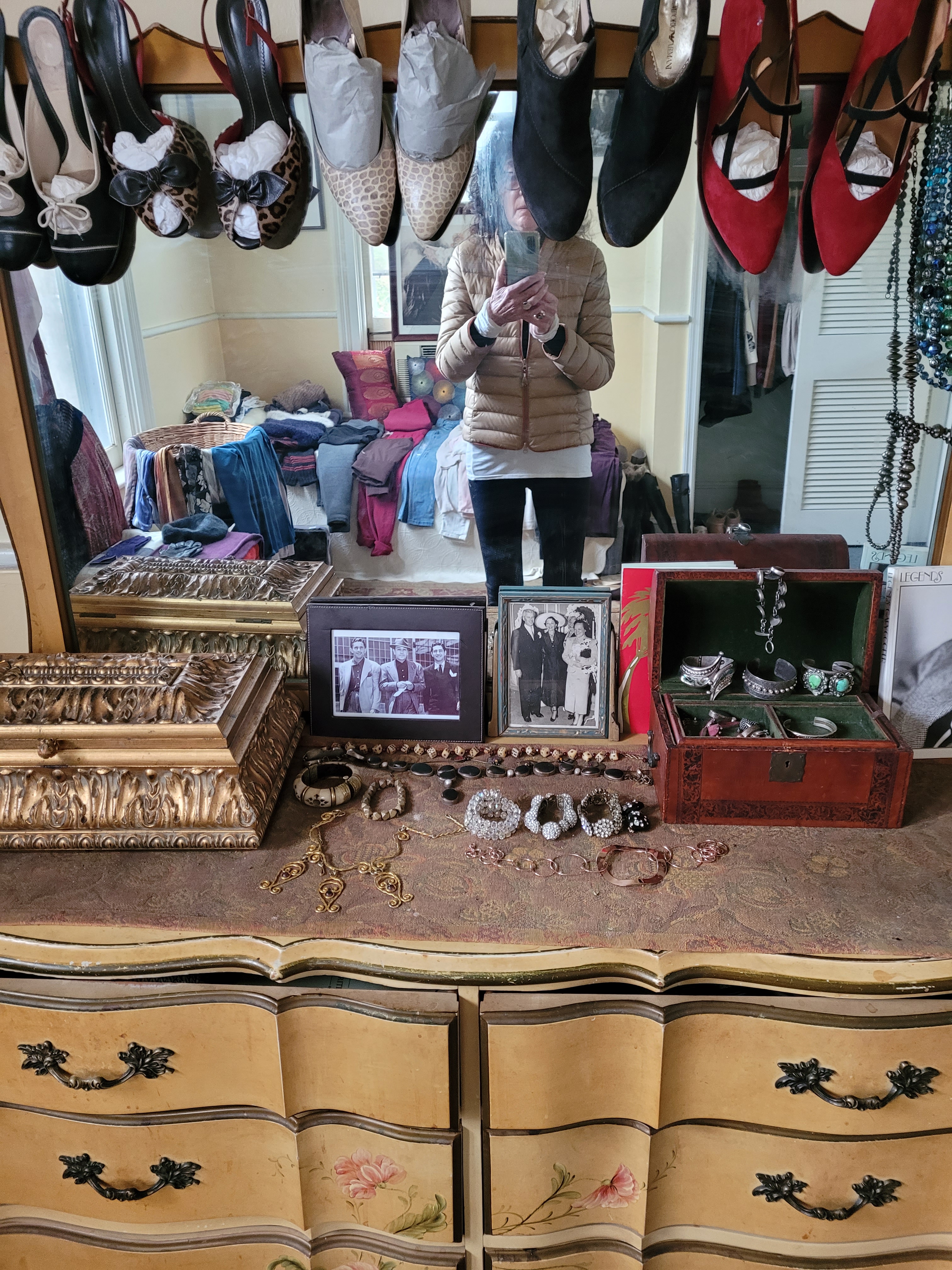
It’s a bedroom she converted into a dressing room. There’s a single bed against one wall, a cabinet where she stores the winter boots, and an eight-drawerFrench nouveau dresser and mirror. She sits on a chair facing the windows so she can watch the trees live through sun, wind, rain, and snow. Across from the chair is the bed. She diligently arranged her summer pastel skinny jeans on the bed, and next to that row she arranged the T-shirts, camisoles, and shorts. It’s quite practical considering Greta as she has admitted to me half a dozen times, that she was born without common sense or practicality. At the base of the bed, she lined up her shoes, the slip-ons, the flats, the pumps stuffed with tissue paper to preserve their shape, and the wedges. After a breach of sanity, she goes into this room and visualizes outfits and color matching like someone might play chess. ‘ It does have a purpose, this way I visualize without wrangling with hangers and you know it just takes too much time when you’re in a closet.
‘”These days I look at them as if they belonged to someone else, I mean the red suede with gold heels that I wore on a New Year’s Eve of gaiety and not since, the black velvet pumps that always make me feel dainty and light. What care I give to all these garments when in the other part of the house, Dodger was descending into a financial coma.”
Greta did not acknowledge the few months before his departure that he was riddled with abject unfulfilling tasks, bills, and construction jobs that no longer fed him purpose and accomplishment. She did not notice that his slacking posture on the front porch, head lowered and staring out without any body movement was a sign, she in fact despised it and walked away. In the last few months, all of this seemed to rise up like a curtain before a play, in a theater and she witnessed his insolence and his silent howl for help.
The irony of her activity is that she doesn’t go to the events that she plans on going to wear the outfits.
The latest poll on our opinion about NUCLEAR WAR revealed that seventy-five percent of us are worried about NUCLEAR WAR.
April 1, 2022 Day 34
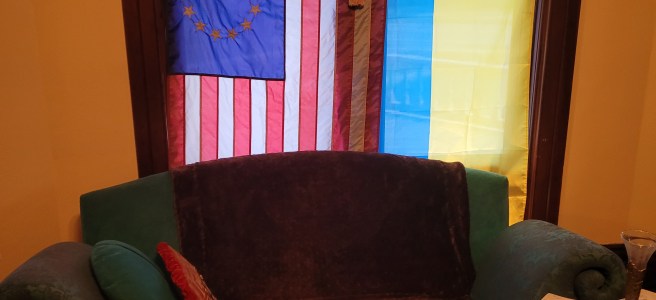
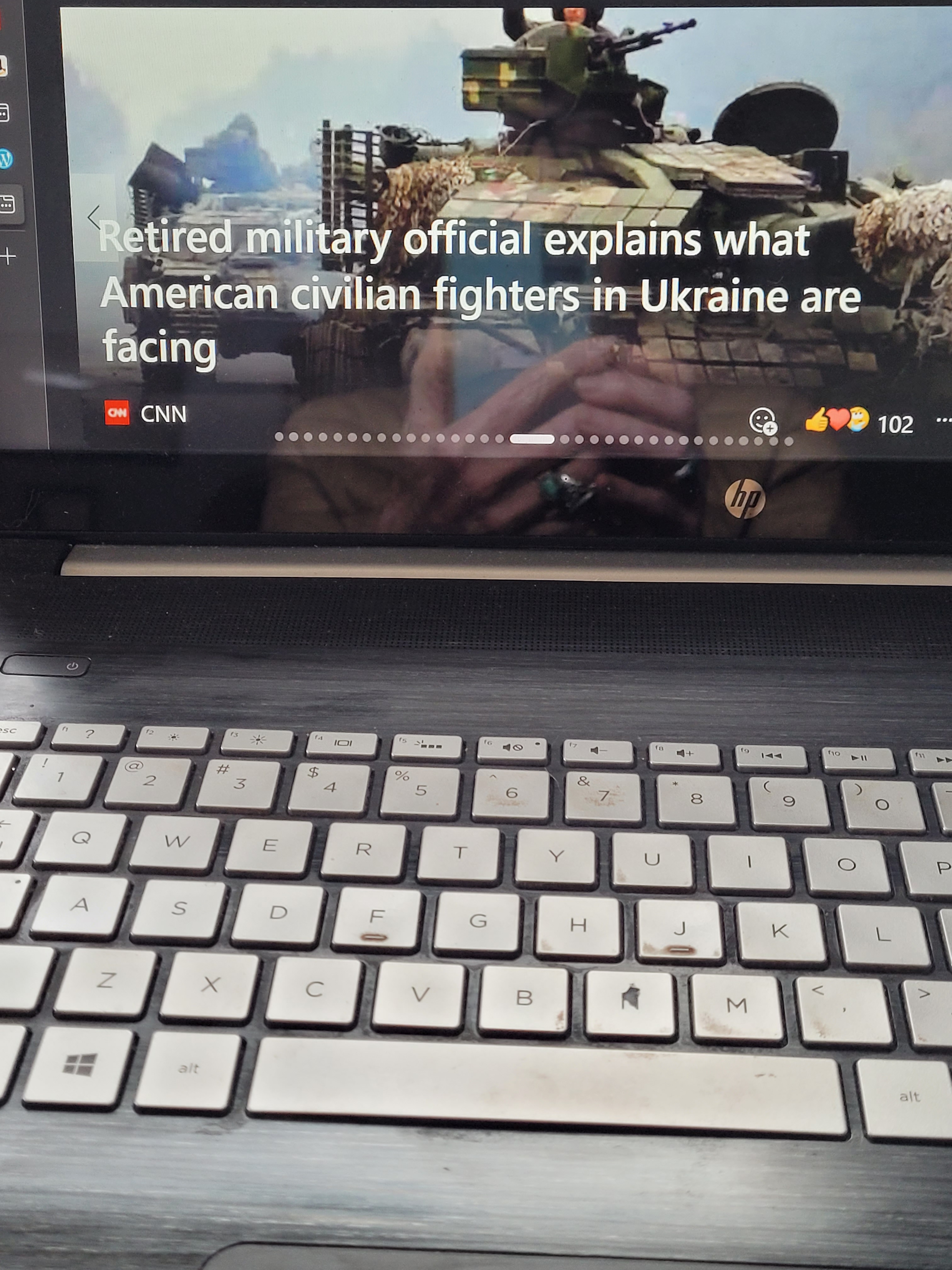
Listening to the news on and off today to collate my life with Ukraine. My tasks and routines are dismissed or performed fecklessly. Just now at four-thirty pm, a splash of the sun touched down to give me a moment to sit on the porch and let the warmth saturate through my gloves and coat.
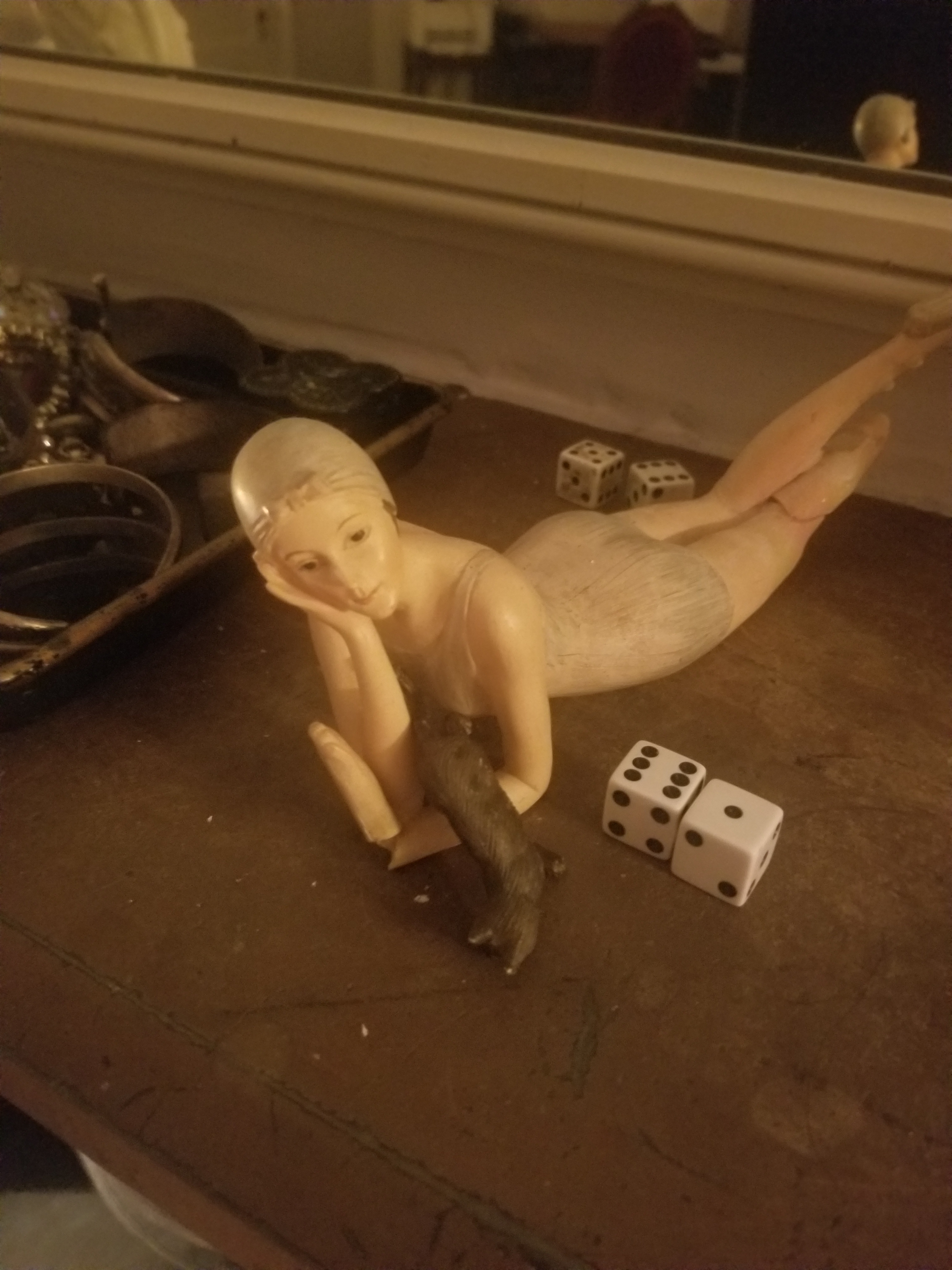
I’m looking at the magnificent great great grandfather spruce tree across the street. A ballet wind fan is blowing the branches as if they are in toe shoes. Nature granulates humanity. We don’t live for thousands of years like rocks, rivers, oceans, mountains, waterfalls, and trees. Then I think of the Ukrainians, they will survive. I watched three hours of news today. The longevity and persistence of nature emulates the Ukrainian heart and spirit. My dice, cards, everything is on their winning this war.
I’ve often wondered what people think about when they are alone; taking a run or walk, dining alone, in the shower or tub, or just being on their own. Artists in all genres spend more time alone in the process of creating art.
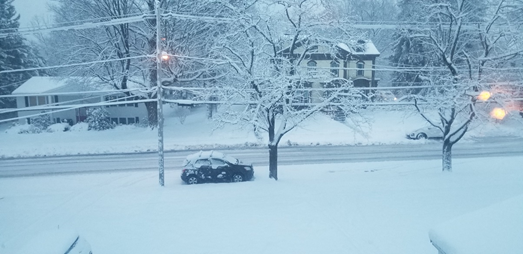
Waking alone, I step out to open the drape to see if it has snowed. If it has then I’m on landlord duty to wait for the snowblower to arrive, so my tenants can get to their cars. If it hasn’t snowed then I am thankful, not that the snow-white lawns and rooftops aren’t magically transforming, it’s that time of year when the power goes out or some other nuisance like scraping snow off my car and porch.
Then thoughts leap like little squirrels, from musing on my friends, who I need to call, do I feel like writing today, can I stomach thirty minutes of news and a bit of punishment for past mistakes. The one thread that rises in nightmares, and the first moment I wake up is unconquerable, fear is a thread I cannot snip and toss away. Fear is really about the unknown, we cannot supersede circumstances that are in the waiting room of our lives. Either they have already occurred or you know they are on their way to your front door.
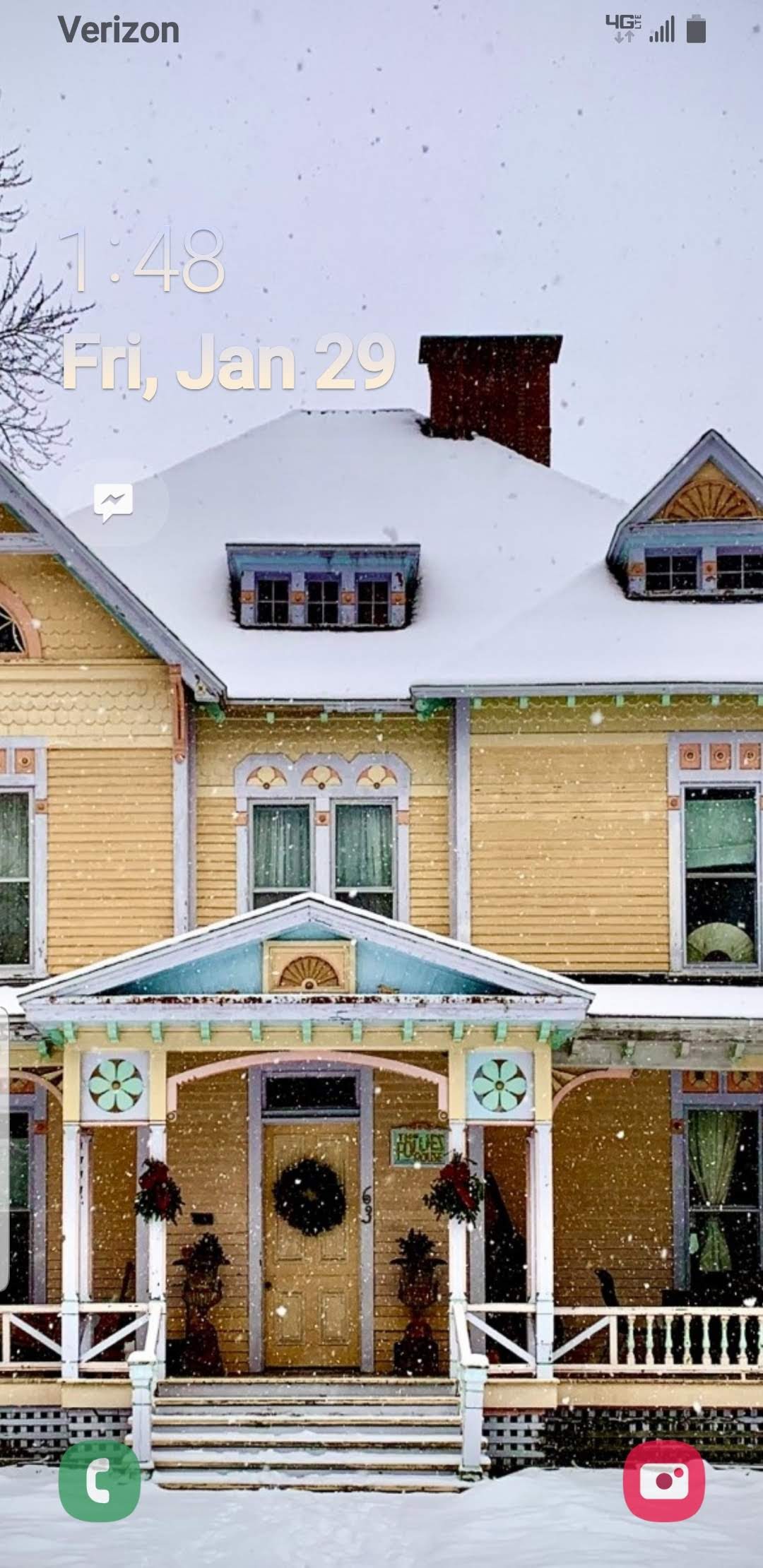
THE FOLLIES HOUSE
Now with the coldness, at six or seven in the morning, I crawl back in bed with coffee and think of the past, then the present, then the future, and then my thoughts drift like snowflakes. You know the saying when you are despondent or troubled you will be told to keep busy. I have not understood that advice until now. My life prior to the last two years was dizzy bizzy. And yes, it eliminated fear and malaise, so now without all the lists, commitments, and responsibilities absent, I am on time with my thoughts.
I wonder what you all are doing this July 4th. The last year had pressed us closer, and friends from years past have knocked on my FB door. Someone switched the light on our lives and I for one will find pages of material as a memoirist to unleash all that happened within and without. What took me all the way down was seeing the number of deaths. NY lost more than thirty-five thousand people, that would be like all of Saratoga County.
I vote for a Memorial somewhere in the US, maybe a wall, inscribed with the names of those lost to Covid-19. Grateful is the word of the times. I wish you all a big, loud, closely adjoined unmasked party.
Unless you’ve lived in a four seasons city, you just can’t understand how transformational and redivivus the vernal expectation of spring. My mind feels like someone has loosened the screws, and a willowy feeling fills the body so when I walk my steps waver, without any alcohol. This spring is like a substance prescription after one of the gloomiest winters of my life.
Maurice did things for us that no one had. It started with small gestures, like inviting us inside every time we passed by his house. Even if he was on his way to deliver furniture he’d scuttle to the kitchen and give us homegrown tomatoes, and oranges, or hand me a bouquet from his flower garden. These were the early years of my story submission rejections. I was so consumed with rejection that the only person in the world that made me feel human was Maurice. He didn’t understand what my torment was about, but he knew how to make it go away. Sometimes all it took was a big hug and a kiss. Maurice always met me with a hug and kiss, though I didn’t realize at the time how much he knew what I needed.
That Christmas I felt the spirit because of Maurice. I went to Sav-On and collected a basket of decorations, and though we had no room for a tree, I did what I could. Instead of wishing I could dash into Nordstroms and shop like a madwoman, I dug a little deeper and searched for appreciation gifts for friends.
By the time the season had ended, I was fixated on Maurice. It is strange to write about him now. The story I wanted to write was about Del Mar, and Solana Beach, California during the thirties and forties. I searched the indexes of the Del Mar Library and the local bookstores and shared the antiquities with Maurice.
We were sitting on his cushy pillowed sofa one evening in 1994, sipping chilled southern comfort, and snacking on saltine crackers and cheese. There is always a subject of interest with Maurice. He is seventy-five years old, lean and tough as a stalk of corn, with blue eyes that twinkle even if he’s not in the light. His wealth came from the uniqueness of how he lived.
“Tell me what you remember about Del Mar.”
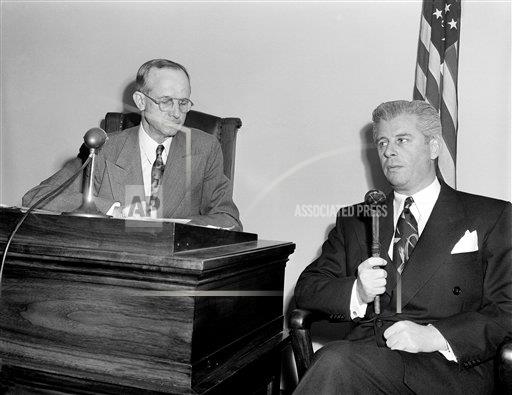
Old Del Mar.
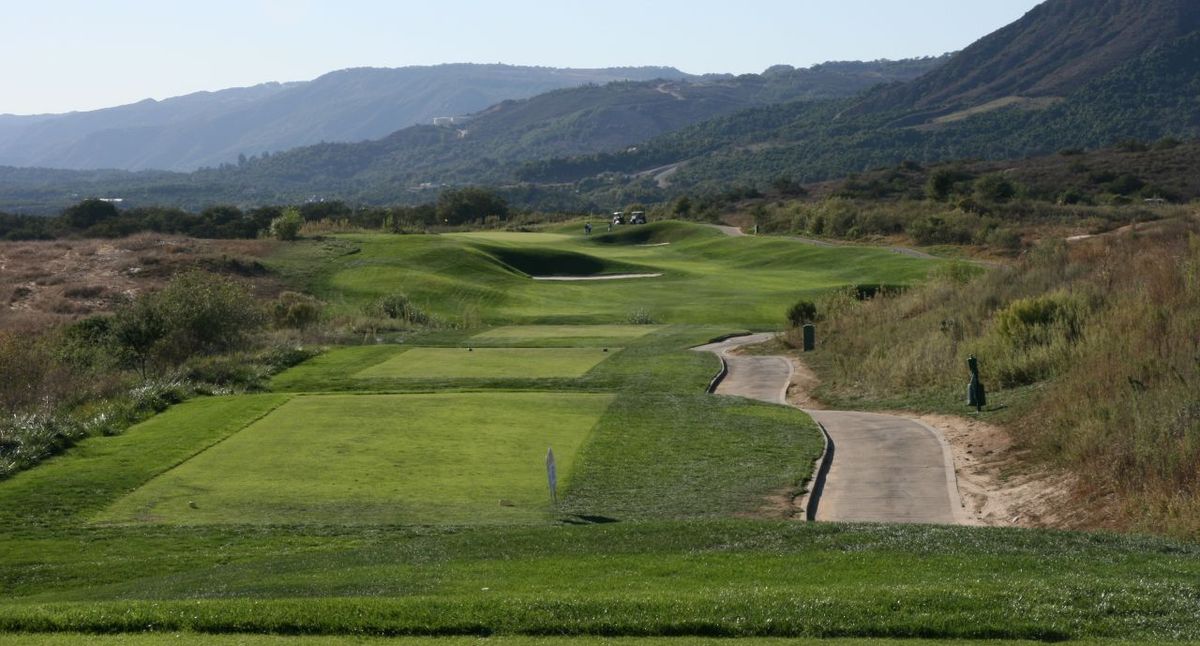
“Oh so many good times, not like it is today. I knew just about everybody, we were like a family.” Sometimes Maurice shared memories while driving around Del Mar and Solana Beach. Suddenly he would start talking, and I’d would listen with childlike curiosity. I recall one evening at the old Cilantro Restaurant while having dinner with Maurice. We sat at a table facing the Rancho Santa Fe Polo field. Maurice began to tell me how it used to be. Rancho Santa Fe
“I used to plow those fields there, all the way up to where the hills begin. I worked out there all day, and I loved it. That land belonged to the Conleys’. I remember that the whole field was underwater for one year. Hard to believe–but it was.”
“You plowed?”
“Sure I did! I was a farmer, a dairy farmer, and I delivered milk to Bing Crosby and Dixie Lee. I remember Christmas she comes out and gives me some extra money.–I always loved going there at Christmas. They was always so nice to me, you know. The Conley’s had a hog ranch, they were the ones I worked for. The year it flooded from El Camino Real to the racetrack we lost a bunch of pigs and a cow under the bridge. It only happened twice that I know of.”
“ What was Rancho Santa Fe like back then, when you were a farmer?”
“Well, it was different than today, then it was rich people, I mean really rich. I don’t know where they got their money but they had everything–you know expensive cars, cooks, and maids.” Maurice chuckled, “ I couldn’t understand what the cook did all day. The man my wife worked for, Ronald McDonald, he had a butler, maid, cook, and a big house, a really nice house. But today, anyone can live there, people who just inherited a lot of money. There was just a few families back then– everyone knew who they was. One time a young girl who lived up there was stuck on the road–her car broke down, so I drove her home. You did things like that. There were two really well-known families there, the Clotfelters were one, they had a son, Tom. He stopped by my house at Christmas and brought me a fish, he liked to fish. The other big family was Avery, he had everything. He used to get jobs for the Mexicans in the Ranch. Everyone knew him, he kind of ran the whole town, was really active in the community. Another fellow, Joe White, went around to the homes and put in the meters for the water district. We used to play cards with him and his wife, Marilyn– have a few drinks and have a such a good time. ” Maurice stopped and shaking his head remarked that there were so many wonderful people in his life, and how lucky he was to live in Solana Beach.
Downtown Rancho Santa Fe.
The Rancho Santa Fe I knew began when I moved there in nineteen-eighty-three. It was a place you heard of right away, and so I drove up to take a look around. Like thousands of others before me, I dreamt of living in the Ranch under a canopy of Eucalyptus trees with a horse stable and a grove of oranges. It was a blissful place to drive on a Sunday afternoon, very few cars on the road and the homes bathed in sunlight. But when I walked down Paseo Delicias, the main road in the village, I felt like an outsider. I did not feel that detachment in Del Mar, or Solana Beach, or even La Jolla. But the Ranch has eyes, it seemed to single you out and therefore no one on the inside made contact with you. You could dine at the charming Mille Fleurs and drop a few hundred dollars but you would not be invited to mingle. I asked Maurice if he wanted to live in the Ranch. His expression was curious as if I was pulling his leg.
ONE EVENING, Rudy and I were sitting on the porch, it was in summer and we would sit out till after eight o’clock at night talking about different parts of Maurice’s life. He is really busy in the summer, he works one day a week gardening for a man in Fairbanks ranch, and he spends a lot of time delivering furniture for the shops in Cedros Design District, and helping his friends with their gardens. He never seems tired; he likes to sit on the porch at dusk, watch the sunset, have a jigger and tell stories. I had not met a man that could tell me things like Maurice. There didn’t seem to be anything he couldn’t talk about. I will tell you in the next series how I met, ‘the happiest man in the world.’
OLYMPUS DIGITAL CAMERA
“ Maurice, how old were you when you were drafted?” I asked.
“ Well, I was thirty-one years old, that was in 1941, you know when the war broke out. I had to leave my wife, and that bothered me, but I wanted to go overseas, there were so many nice real young boys, there were two boys from Chicago that were only eighteen years old, they lied to get in, and they were the best soldiers you ever saw, they weren’t afraid of anything.”
“ Where did they send you, I mean after you left San Diego?”
“ Well first I went to Camp Roberts for training, thirteen weeks, but I got out in nine weeks, then they send me to Fort Ord to get my gear and rifles and clothes to go to New Guinea to fight the Japanese. We left San Francisco on April 21, 1942, I remember going under the Golden Gate Bridge, cause we hit a bad storm there. We was on a luxury liner and then we were sideswiped by another ship. I was in the bed at the time, and water started coming in through the porthole so I run for the door, to get on deck but I couldn’t get it open. I thought we were hit by a torpedo, then I got sick, I was real sick. Well anyway, then we finally settled down, and I think we hit coral sea without any escort or anything and finally got into Adelaide, Australia after twenty-one days at sea.” Maurice paused like he had to catch a breath. I watched his face, thinking he may want to stop.
“ You remember so much, do you mind talking about it?” I asked.
“ No, I don’t mind, it changed my life, everything about it.”
“ Where did they send you after that?”
“ Well we trained for awhile in Adelaide, the people in Australia were so happy to see us. I remember they met us at the beach with tea and cookies cause the enemy were getting real close. Then we went up the coast to New Guinea to Port Moresby, we got there on Thanksgiving day 1942. As soon as we got off the ship the bombs hit us, it was the hundredth raid that night. Then the next morning we were supposed to get to Stanley Range, but we were in such a hurry because the enemy had built cement pillboxes. So we got in this plane, a hull, and they flew us, twenty-one at a time. When I got to the island of Buna, there were dead soldiers all over and so much jungle. At night the tide came in, so I found a mound to lay my head on, but my whole body was underwater. We were losing men so fast, so on Christmas 1942 General McArthur ordered us to advance, regardless of the cost of lives. My division was one of the first divisions to stop the them, the Thirty-Second division. After we were immobilized, and a lot of our men were killed, they sent in the Forty-First division to take over. I got pictures, you want to see them?”
“YES, RUDY,” SHOUTED. Maurice went inside and Rudy and I sat there just talking about how soft our lives had been, never having been in a war. Maurice came back with a Life Magazine, from 1942, the headlines were Attack at Buna. We sat next to Maurice on the couch and he sifted through the magazine showing us the photographs of his division. He picked out one photo in another stack in his lap and told us his wife kept this one, she was sure it was Maurice. It looked like him to. The soldiers were young, but they didn’t look young, they looked like men. The things he told us that night were hard to believe. They didn’t get supplies at first, they had to wait till everything was shipped to Europe, and then they got what was leftover which wasn’t much.
“I ate cocoanut bark for two weeks and had to drink my own piss to stay alive, there was no water. I can remember so well the first enemy I saw, sneaking through the jungle, he was only thirty feet off, and I don’t know if I shot him, but he dropped, and I don’t like to think I killed anyone, and it bothers me to this day that I had to kill, but that’s what we did. The Japanese were good soldiers, they had better ammunition than us, their guns were always real shiny. We fought all day, and we always ran out of ammunition before they did. Christmas day of forty-two we went into a trench to get ahead, the fellow ahead of me was cut wide open, and the guy behind was shot, and I just laid there on the ground. If you moved you’d be shot. It was so bad, I laid there all day and night. “
“ Did you think you were going to die?”
“ I didn’t let myself think that, I made a promise to God, that if I ever got out alive I’d never complain about anything in my life again because nothing could be worse than that day.”
“ You kept the promise didn’t you,” I asked.
“ Yes, I have.”
“ And that’s why the war changed your life?”
“ That’s right, every day is a beautiful day after you’ve lived through a war, at least for me.”
BUNA came into our conversations many times over the years. The things they did to survive is what he remembered; like brushing his teeth with black charcoal because it polished the teeth even though they made them black. They bathed in dirty streams, or in the puddles in the street made by the tires of the trucks. They had to relieve themselves in their pants because moving was dangerous. They didn’t have modern medical supplies. When Maurice had cavities he was sent to the infirmary and the dentist told him to just grit his teeth, there was no Novocain. He got gum disease, leg rot, malaria, and he lost his sense of smell.
“But it was much worse for some of the men, so bad you can’t imagine.” He talked about the kinship amongst the troops, it was unlike anything he’d ever seen or experienced, all the guys looking out for each other. Buna was a strange place to be, I’d never heard of it before Maurice told us. After they took over Buna, one of the beaches, was named Maggot Beach, because so many dead Japanese and American soldiers laid there, in the hundred-degree heat, and the flies got to them, and it was a terrible sight, it smelled so bad he remembered. Maurice was sent to the hospital for two weeks, then he started working in the kitchen and got to be the first cook.
2001. OUR CONTRY IS AT WAR AGAINST TERRORISM. Rudy and I wanted to know Maurice’s thoughts on the way it is now, and how he felt. We sat in his living room watching the news and talking in those first few weeks after the attack on America. It seemed like Maurice couldn’t believe what had happened, I’d never seen him speechless. He didn’t know what to say for a long time.
“The ground troops are the only way to get this enemy. Now with these terrorists– we have a different war. I don’t know what our government will do but they should give our troops overseas that die big funerals, news on the television and newspaper, that’s the right thing to do. In WW11 they didn’t do that for any of us, they just wrapped the dead in a tarp, and dug a little hole in the ground. Hundreds and hundreds of thousands of boys, all they got was a stick where you was. I think they got some of the dog tags mixed up, you didn’t know who was who. When you think about what we went through, and how close you were to each other, everybody was so close, and if someone was shot, you couldn’t stop and help them, you had to keep going. The natives were so nice to us, so good to us, they picked up the wounded guys and carried them to the hospital, they wouldn’t do that for the Japanese. Now everything is on the television so you’re part of it.” Maurice began to weep silently. I hugged him. Rudy interjected.
“What were the natives like?”
” Back then we called them headhunters. They didn’t wear any clothes at all, but after we got there some of them started wearing our clothes. They lived in bamboo huts, pretty neat to live in, Rudy, you would have liked those tents. Anyway, they had these powwows, they’d catch a monkey, and hang him up, build a fire under him, and cinch the hair, then sit down and eat the monkey raw, I saw a lot of that. You didn’t dare look at the women, they’d shoot you with an arrow, they had poisonous arrows, the women were so terribly dirty, but they seemed to be happy. After we took Buna, they liked to shoot up the trees and show us how they got the coconuts, they were so fast. I guess some of them are still alive today, the jungle was so thick and full of mosquitos, a lot of them had malaria, they had no medicine, they ate herbs and things, to make them better. I’ll never forget them, they were so good to us, when they took me to the hospital they put me on a stretcher one time, they were so careful, didn’t move me at all.
“ You couldn’t speak at all to them?”
“ No, they had their own language, I couldn’t understand it, no one did.”
Maurice went into the house and came back with a photograph of a female headhunter. It was strange to think of this person as a woman, she was so primitive. Rudy loved the photograph. Maurice gave it to him. t. Rudy knew he would never see anything like it with his own eyes, so he cherished that picture and the story Maurice told us as if it was his own experience.
THEN THE LIGHT OF DAY TURNED FOGGY. Maurice said it was time to go in because it was getting cold. He told us how much he loved us that night, and what good friends we were. When Maurice talked of his experience in the war, it was like a chiropractic adjustment on my struggle, and I had renewed strength to just keep writing.
It was the first time for Rudy to hear first hand about WW11 because his father had been stationed here making torpedoes. My father enlisted but they wouldn’t take him because he didn’t have citizenship. It bothered him too, he was the kind of man that would die for this country in a heartbeat.
A year or so later, some woman came to know Maurice and asked about his experience in the war. She said she would write a book about it, and so he gave her the photographs and Life Magazine and waited to hear from her. She never came back, and Maurice was really shocked because she had seemed so sincere.
I wanted to know more about his life after the war, but the time didn’t come until one night when Rudy and I got into a nasty fight. To be continued.
IN THESE TIMES OF DISTANCE, DEATH, DISCOURSE, AND ISOLATION what can I write of value? All month this puzzle chased my thoughts; nudged me like a pesky fly. At different intervals during the solemnness, my journal returned parched sketchy paragraphs, and books did not deliver the inspiration I craved. Listening to Beethoven as I gaze out the window at the blowing branches on a spring gray and white day, I feel a singleness I’ve never known. Maybe you feel the same, and it is you I am writing to because I know you are there. Singleness in quarantine is more incarcerating than it is for married, partnered, family people. Though they have to acclimatize to spacial hardship as everyone at home is at the same intersection without privacy, and that slogan I remember from college, ‘I need my space man,” resonates. One friend said to me on the phone, “I yelled at my kids today, I’ve never done that before. We’re bumping into each other. I think I’m losing my mind.”
US SINGLES are accustomed to solitude, especially if you are an artist. How we howl for isolation to create, and now we have it. The time is here, to skip down the most bizarre roads and create COVID-Art. A few weeks ago, Governor Cuomo delivered his press conference and said, “I have something to show you.” A sliding door opened and a collage that appeared twelve feet in height displayed a tapestry of masks. He told us they came from all over the world. He was so touched by the gesture. Imagine a new solo dance performing an abstraction of the virus, or a poem, a song, and for sure a dozen or more writers and screenwriters are tapping at the speed of light to capture the pandemic in art form.
I’M GOING DOWNTOWN now to pick up a cobb salad from Sunset Grill, my stable for drinks and great food. The sky is in turmoil, as the clouds interchange across the sun, and she appears to be breaking through at one moment and the next she has revealed her radiance. I dress for the weather with a hat and coat and begin my three-block walk to downtown. When it begins to rain, I am smiling as I’ve always loved walking in the rain. As masked villagers pass, I’m struck by the absence of smiles, or good afternoon which you get a lot in a village of five-thousand. Some younger couples cross the street when they see me, and heads are mostly lowered to the ground. A new silence emerges as cell phones are tucked into pockets and passing voices are inaudible.
I HAVEN’T HAD FACE TO FACE conversation for several days and I feel a sprinting joy in anticipation of a conversation with Eric or Brian who own the café. They’ve installed a take out window, and as I approach I see Brian, and he ducks down to greet me.
Hey Loulou, how are you?
“ At this moment I am so happy to see you!
He swings down a bit lower to pop his head through the window
“ So am I. We miss you.”
“ I feel the same. How are you doing with all this.” He is smiling, and he’s always a bit jumpy like he needs to go for a jog or a bike ride.
“We had to let the staff go,” now his smile turns to a gripping inner pain. My kid is washing dishes and we’re still here, but you’re the first customer today.”
“Will you reopen when we’re off the pause button?
“ With twenty-five percent capacity, I don’t know. The numbers don’t work out so well. I mean we’ll still do curbside.”
Suddenly he turns about-face and joins me on the sidewalk touting my cobb salad. Brian must need a conversation as much I do. We chatted about the virus, our change of behavior, and this pent-up craving for closeness.
“ I can’t even go on a date anymore with someone! How can you meet anyone today?” He gestures with his arms to emphasize his frustration.
“Yeah, you’ll have to take their temperature before you sit six feet away.” We laughed, maybe for the first time in days.
AS I WALK BACK HOME my thoughts are traveling along the pathway of restaurants, I frequented in San Diego, Los Angeles, Taos, Santa Fe, and now here. I see the owners and waiters’ faces, remember the food and a visual kaleidoscope of the festive times we shared. You know that saying, the good ol’ days, now I am on the other side of that at least for the foreseeable future.
For me the adaptation is more than frustration. Last year I did not take advantage of the racetrack, or the concerts at SPAC, or the exhilarating nightlife along Broadway on a Saturday night in Saratoga Springs. I trembled in silence abashed by the consequences of my mistakes. If we un-pause this summer I promise you I will not be clasping the remote waiting for the next film.
AS I APPROACH my house, I notice the neighbor in her driveway. We clashed in the most vicious ways the summer Rudy and I moved into the house. One time I think the police were brought in to settle the argument. It was because she placed a close circuit camera on her roof to track our renovation. She was retired and her husband was always fiddling in the shed. We gave her a purpose. She looked my way timidly. I smiled at her. This is the first time we’ve been this close since I moved here two years ago. She smiled back.
“Are you happy to be back?” she said in a quiet sort of empathetic tone.
“It’s taking time to adjust. I haven’t lived here in so long.”
“I know. Well, not much has changed except for a few new restaurants. Do you plan on staying?”
“I don’t know the answer yet. We had the house up for sale…”
“ I noticed the sign.” She said expectant of more information
“ I can’t maintain a hundred and twenty-seven-year-old house on my own. You know, Rudy’s gone.” She nodded her head.
“Well, I don’t know how much longer I’ll be here either. I’m eighty years old now.” She dropped her head to the ground.
“Lorraine you don’t look like it at all.”
We continued on about my new tenants, her dog, and how much work it takes to maintain a painted lady historic home. I couldn’t believe how sweet her voice was, I’d actually never heard her speak except one time shouting at me. Give up grievances and trivia because the person you once disliked may be very different now.









 Old Del Mar.
 Rancho Santa Fe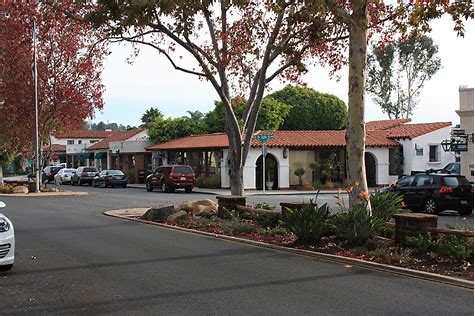


 ADVENTURERS IN LIVINGNESS