
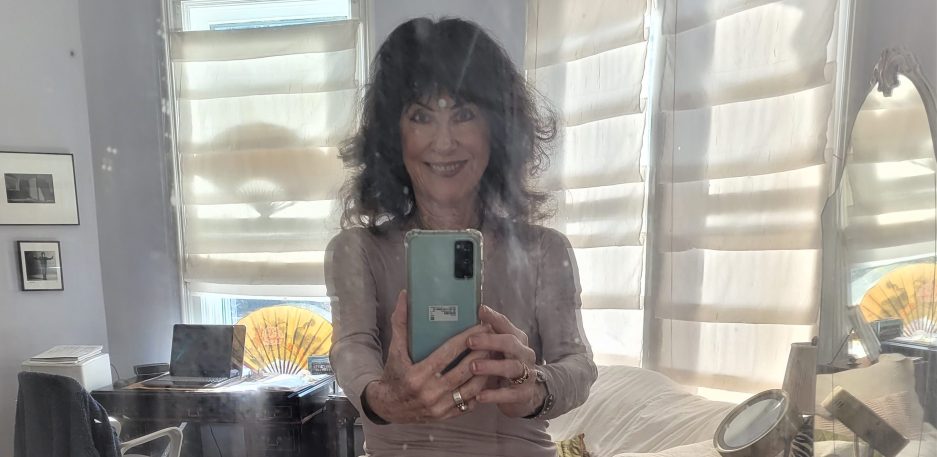
I THINK HE WAS ALWAYS OUTSIDE OF HIS PERIMETER OF FAMILIARITY. I AM NOT A COMMON WOMAN– SOMETIMES LIKE TONIGHT I WISH I KNEW HOW TO BE.
Category: ADVENTURES IN LIVINGNESS
ADVENTURES IN LOVINGNESS

The sky is brush stroked with rivers of grey clouds interceding the passing blue of the day. I feel breathed, my heart exhausted, and my spirit is groping for remission, like an Advil into a hangover.
I remember my childhood, my first kiss, the day I announced to a class of fellow writers that I was a writer too. Our teacher, Emily, instructed all of us to stand up and say it. I resisted internally, and afterward the effect was as she promised, it became second nature.
I don’t know how I will remember the dragon episode, which turn in the labyrinth will remain most vivid; until now, imagining a folder and how I would label it, The We of Me, the phrase borrowed from Carson McCullers short story, “The Member of the Wedding.” I read all of Carson’s books when I lived in Saratoga Springs, NY. Carson spent several seasons as an artist in residence at Yaddo Art Colony in Saratoga, and was known to escape at night down to Congress Street, and sit in a saloon sipping brandy. The story is entwined around Frankie, a young girl in love with her brother, who has just married and is moving to Alaska. Frankie wishes to go with them. “A sweet momentary illumination of adolescence before the disillusion of adulthood,”[4wikipedia “It happened that green and crazy summer when Frankie was twelve years old. This was the summer when for a long time she had not been a member. She belonged to no club and was a member of nothing in the world. Frankie had become an unjoined person who hung around in doorways, and she was afraid.”
Last summer, I was not hanging around looking out at the world, I was on the porch, serving wine and crispy chips, while Rudy loaded Pete Rodriquez in the CD player,” Can I play it one more time?” he shouted, and John basting chicken over the Barbeque, draped in my William Sonoma apron, and I am drifting through the epilogue unaware that these moments will turn into sculpted memories, of a summer in Santa Fe. But for then, we lasted until the sun melted in the horizon and Rudy ran out of Kelly’s Cove stories. We were joined, we had our own club. Sometimes Jewels joined us, or LimoLoren, and there was a ribbon around the house, all of us were tied to the harmony of the we of me.
John won’t be coming back; there is too much brittleness, and astonishment in my life. As before, but not the same, Rudy is here, he just appeared in the doorway, “Come see what I did in the garage.” Our garage was transformed into a movie theater after I mistakenly poked the wrong button on the gate remote, and the automatic doors crashed into Rudy’s van. Yesterday, he strung red lights along the perimeter of the adobe building. He does these things to cheer me.
A lot of people I know are falling out of love, or have been asked to stop loving someone they thought they loved. There’s a group of us at La Posada; Victor the Cuban singer just broke up with Ruth, “ I’m going crazy–I’m Latin, without a woman—I cannot do it.” And Eddie, who just broke up with his girlfriend, “Two years-Oh well, I just move on. What can you do?” and Tobey; who has figured out how to forget his girlfriend’s fatal fall from a hillside where she was hiking, he is now the master of mingling. Then there’s Sam Shepard, whose pain is transparent, without a spoken word, it’s in his vigilant Mustang eyes, and in the angle he looks at the world. There are a lot of us; who have fallen from grace with someone who thought they could love us. Then, comes the reoccurring incident; whether it is about money, lovemaking, or the act of communicating with anger or restraint, that suddenly bloats up to the size of a thunder cloud, and bursts through all the promises and collective dreams.
After my burst with John, I went over to La Posada to escape the chattering in my head. My pal, White Zen, who I’ve named for her constant calm joined me at the bar. Raul was on duty, he’s been there since before all the Anglos discovered Santa Fe. He’s seen the white lightning of movie stars, and the Indian Shamans with feathers and folklore. Raul takes all of us in his stride; which is slow as molasses. Don’t try and rush Raul, because he will ignore you, and your drink will be watery by the time you get it.
I was sitting there, with a glass of wine, when I recognized the man next to White Zen. At the same moment, the juxtaposition of reckoning beckoned us off our stools and we hugged. Dancing Bear, I’ve missed you I said, or something like that. Dancing Bear is a New York Santa Fe success. Unlike so many people I’ve met, he lives here, works globally, and he’s in big demand right now.
Dancing Bear smiles even if his mouth isn’t smiling, you know he is inside. He’s in the tidal wave of dreams coming true, but not without their own claim ticket on your soul. Someone is always disposed if you’re catching big tuna. Now this night, goes like this.
“ Look if I don’t fuck up this dance–if I don’t fuck it up; it’s going to be something I’m really proud of.” He emphasizes this with one hand, raised eyebrows and a slight bend in his neck.
“And you won’t. How long have you lived here?”
“Do you know how I ended up in Santa Fe? I was living in Los Angeles, driving on that freeway all day, and a friend said, ‘ Hey, you otta come to Santa Fe.’ Never even heard of it, so I came, that was 1983(I think it was 83) and bought a house, and moved here permanent a few years ago. I could live in New York–in a minute, I love New York, Los Angeles, no- what for, my daughter’s not growing up in the Palisades.” He looks at Raul, they share another story, because they’ve known each other years, then Dancing Bear slaps the wooden bar with one hand, his face creases into a private memory; “El Farol!” he shouts. “Those are the memories, everyone was there, it was the most amazing time.”
“John and I used to go every Tuesday,” Dancing Bear wasn’t listening; he was swept into the memory. His eyes looked right through the mirror behind Raul’s bar. I wished I had seen it then. I didn’t get to El Farol until 1998.
“ Now—okay–I mean right now, after all these years,
I have my ex-wife-ex-wives, and their children, husbands, whatever, and they are in my life-okay–they are in my life.” I tried to speak, but his bear mouth wiped me out.
“They are in my life.. forever.”
“What does Dancing Dora say about that?”
“I’ll tell you what she says; they all sit down to her table at Thanksgiving. All of them. And it’s cool. Not all the time… this one with that problem, the kid with that, but in the end it works.. it works.”
“ It didn’t work with John and me.”
“ You got nothing to be ashamed of.. okay. A lot of people cannot handle it.. my friends think I’m crazy.”
“So do mine.” I said.
Lula Carson McCullers adapted the book, A Member of the Wedding to stage in 1950, then to film in 1987, and into television in 1997. Lula wrote until her body failed her, and her hands crippled. She dictated her unfinished autobiography “Illumination and Night Glare” (1999) just before she died. She wrote her first book at twenty-three, The Heart is a Lonely Hunter.
Carson’s major theme; the huge importance and nearly insoluble problems of human love.” – Tennessee Williams.
THE CHELSEA AND THE COPA

The first twenty-four hours. I stepped out of the cab and into the froth of a seasonally warm Saturday night Halloween crowd. The Chelsea Hotel Bell Captain trotted over to greet me.
“I’ll get those.” He grabbed the bag.
“You go inside.”
The pathway to the lobby entrance was red carpeted; a very old skeletal one that had been stepped on by plaque famous artists, writers, and bohemian debutantes. The Chelsea was built in 1883 as an apartment house. The neighborhood of 7th and 23rd Street used to be the theatre district. The theatre crowd was replaced by the literati, and more recently by film and television celebrity. The hotel is crumbling with novelettes. Even though it has recently been restored, it has the feel of a craggy lady of the street.
The lobby was crusading with costumed ready to party extras. My traveling ensemble and exhausted expression didn’t fit into the scene. I needed to eat, drink, and take off my coat. The desk clerk was very young,
“Your in Room 624–you’ll like the room, it’s a really nice one. Here’s the key.” When I opened the door, my vision parachuted as if the room was expanding the closer I got. It looked staged rather than decorated: minimal pieces, colors that drew the eye in, and nothing to get in the way of feeling insignificant. The walls were bare and the drapes partially opened. I pulled them back to see the city; a jagged puzzle of gray brick buildings staring back at me. I watched the faint silhouette of people moving behind the glass and suddenly felt very alone and uncertain. In haste I added a smudge of lipstick and left the room. The clerk looked up as I came out of the elevator,
“You like the room?” I nodded a bit falsely, because I wasn’t sure I really liked it. The room had more to say to me.
“Where is the closest Bistro?”
“Next door.”
I stepped across the red carpet and into the restaurant. At that moment I landed in Manhattan; the gravity sucked me down into a red leather cushioned booth. Then I remembered why I was here, the next day was the Copa reunion.
Twenty-four hours later Room 624 was mine. Victor, one of three Chelsea staff doorman who zapped formality with the grace of a king met me at the entrance. He had time to wave to half a dozen people passing by, hail a taxi from the middle of 23rd street, open the door for a guest, and still talk to me.
“Hey! How you doing today?”
” I’m rested and on my way now.” A young girl stepped out of the lobby.
“Hi honey,” Victor said,” Where areyou going? I worry about you.”
“Shopping,” she answered unconvincingly. “I like your outfit,” she said to me.
“Thank you. I’m going to an event I’ve waited for a very long time.”
“Oh yea, where to?” she asked.
“Have you heard of the Copa?”
”Sure, the Copacabana.” Victor started to hum the lyrics from the song and I dug out the book from my purse.
“I’m going to a Copa reunion–my mother danced there in the 40s.”
They looked at the photographs of the original Copa for the first time. New Yorkers will stop anything for New York anecdotes, especially history. Moments later the cab pulled up and I waved good-bye. I sat in the taxi and thought about my mother. She was seated next to me; an imaginary yet distinct vision that kept returning.
The moment I walked into the Copafest reception room a voice called out, “Louellen!” It was Kris, the author of the book. We embraced as our first meeting converged with written correspondence over the last year. The Copa dancers inched closer and I was anointed with their acceptance and love.
“This is them–they met at the Copa,” I said and showed them the photograph I had brought. One woman examined the photo and turned to me, I recognize him,” and she pointed to my father.
“And I recognize the man next to him.” It was someone I’d never been able to identify.
“Yep, I knew them. Your mother was beautiful, she was here before me.” Terri Stevens took my hand in hers and led me to the place where she was seated.
“What did you say your mother’s name was?”
“Lucille Casey.”
“Girls-girls! Come over here and meet Lucille Casey’s daughter.” Engulfed in their presence for the next five hours, I had time to talk with each one. I’d written about these women in fictional detail eighteen years ago. Now it was there turn to talk.
THE SIEGEL SMILEY LEGACY

When I was eleven, our home burnt to the ground in the Bel Air fire, and everything we owned burned to ash. Shortly after my mother moved us to an apartment in Brentwood, a mammoth carton arrived and was placed in the center of the living room. My mother cut it open and urged me to look inside. I sat cross-legged on the avocado green carpeting, and discovered bundles of garments; Bermuda shorts, blouses, sweaters, and shirts.
I quickly shed my worn trousers and stepped into a new outfit, dancing about as I zipped myself in. My mother watched, and echoed my childish yelps of elation.
“Mommy, who are these from?”
“They’re from your Aunt Millicent.”
“Who is she? I don’t remember her.”
“You were a little girl. She loves you very much.”
Years later, my father, Allen Smiley, called and told me to come over to his apartment in Hollywood.
“Why Dad?”
“Millicent is coming by; I told you she moved here, didn’t I?”
I’d learned Millicent was Benjamin Siegel’s daughter, and Ben was my father’s best friend. Dad was sitting on the same chintz covered sofa the night Ben was murdered.
“You mean Ben Siegel’s daughter?”
“Don’t refer to her that way ever again; do you hear me? She is Aunt Millicent to you.”
When my father answered the door, I watched as they embraced. Millicent had tears in her eyes. She walked over to me, and took my hand. I looked into her swimming pool blue eyes and felt as if I was drowning. She sat on the edge of the sofa and lit a long brown Sherman cigarette. I studied her frosted white nails, the way she crossed her legs at the ankles, her platinum blonde hair, and the way her bangs draped over one eye. What impressed me most was her voice; like a child’s whisper, her tone was delicate as a rose petal.
I spent the rest of that afternoon memorizing her behavior. She emanated composure and a reserve that distanced her from uninvited intrusion.
Over the next few years, Millicent and I were joined through my father’s arrangements, but I was never alone with her. When he died in 1982, she was one of only three friends at his memorial service.
As the years passed, and my tattered address books were replaced with new ones, I lost Millicent’s phone number. I had been researching my father’s life in organized crime, and had gained an understanding of my father’s bond with Ben Siegel. My discoveries were adapted into a memoir and recently into a film script about growing up with gangsters. During this time, I had reconnected with several of Dad’s inner-circle, but Millicent was underground, and now I understood why.
Last year I received an email from Cynthia Duncan, Meyer Lansky’s step-granddaughter. She told me about Jay Bloom, the man behind the Las Vegas Mob Experience, a state of the art museum that will take visitors into the personal histories of Las Vegas gangsters. Cynthia contributed her significant collection of Meyer Lansky memorabilia, and assured me Jay was paying tribute to the historical narrative of these men by using relatives rather than government and media sources. She wanted me to be involved.
Despite my apprehensions about the debasing and one-sided publicity that characteristically surrounds gangster history, I contacted Jay. In his return note, he invited me to participate, and added, “Millicent would like to contact you.”
A month later I was seated in Jay’s office waiting for Millicent. When she walked in, I stood to embrace her, and this time the tears were in my eyes.
Millicent’s voice was unchanged and so was her regal posture. “Our fathers were best friends, attached at the hip. Your Dad was at the house all the time. I’ll never forget when he and my mother met me at the train station to tell us about my father’s… death. Smiley was very good to us. My mother adored him too.”
Jay took me on a tour of the collection warehouse, and the history I’d read about unfolded before my eyes. The preview room was like a family room to me, because some of the men had been my father’s lifelong friends and protectors. I stopped in front of the Ben Siegel display case and saw an object that was very familiar.
“My father has the identical ivory figurine of an Asian woman. I still have it.” So much of their veiled history was exposed; between these two men was a brotherly bond that transcended their passing and was even evident in their shared taste in furnishings.
Jay showed me a layout of the Mob Experience in progress. I turned to him and asked, “Is it too late to include my father? All the rooms are assigned.”
“Millicent and I already spoke about it. She wants your Dad in Ben’s room.”
After I returned home, Millicent and I talked on the phone.
“Your father belongs in my Dad’s room. They’ll just have to make Mickey Cohen’s room smaller.”
“My father hated Mickey,” I said.
“So did mine! When are you coming back? I’ll kill you if you don’t become part of this.”
WITHOUT A KISS
Then, all the moments we shared in each other exploded into dust.

BOARDWALK EMPIRE NEEDS TO EMPOWER THE JEWISH GANGSTER

” The History of the Jewish gangster is as ambiguous as a shadow; and this is reflected
in the thinly drawn characters of Benjamin Siegel and Meyer Lansky on Boardwalk Empire.”
If we resort to non-confrontational, impersonal and non-threatening means of correspondence, we face the danger of delusion.

MY FATHER, THE GENTLE GANGSTER
This is an excerpt from the memoir I’ve been working on many years. The first manuscript was 800 pages; about three of them were worth reading. The book mutated about 2000 times.
“What’s it like knowing your father is a gangster? Did you know when you were a teenager? Did your father kill anyone? Did you ever meet Bugsy? Aren’t you afraid of his friends? You know they kill people.”
I was thirteen years old when my best friend told me my father was a gangster. She didn’t mean any harm. We told each other everything. We were standing in the Brentwood Pharmacy one day in 1966, and we turned the book rack around until we found ”The Green Felt Jungle.”
“That’s the book, let me look first and see what it says.” She whispered. I waited while she flipped trough the pages.
“Oh my God, there he is,” she said grasping my shoulders. We hunched over the book and read the description of my father beneath his photograph.
“Allen Smiley was the only witness to the murder of Bugsy Siegel.”
“What does that mean, who is Bugsy Siegel?” I asked.
“Shush, not so loud, I’m afraid to tell you this Luellen, it’s awful. I don’t believe it. “
“What is it? Tell me.”
“Bugsy Siegel was a gangster, he killed people. Your father was his friend.”
I don’t think I should read this, “I said replacing the book on the rack.
“Don’t tell your father I told you,” she warned.
“Why not?”
“My mother told me not to tell you, swear to me you won’t tell your father.”
“I swear, come on let’s go.”
My father called himself Allen Smiley. The FBI tagged him “armed and dangerous.” The Department of Justice referred to him as the “Russian Jew.” I called him Daddy. e had salty sea blue eyes blurred by all the storms he’d seen. When I said something funny, his eyes crystallized and flattened like glass, smoothing out the bad memories. He was always a different color, dressed in perfectly matched shades of pink, silver and blue. My small child eyes rested cheerfully on his silk ties, a collage of jewel tones. The feel of his fabric was soft like blankets. He was very interesting to look at when I was a child and open to all this detail.
LOVE
LOVE isn’t about holding on, it’s about letting go. That kind of love, the physical need, physic release, it cannot last.
ADVENTURES IN LIVINGLESS

Adventures in Livingness
A sunrise of prosperity and a sunset on hardship.
In my home there is one large staircase window that faces east. Each morning before I descend the stairs I stop at the landing, to watch the day begin. The sun must rise past an assortment of tree limbs and trunks, and up over the hillside of the mountains. By the time I’ve had my coffee, the sun has risen above the obstructions. I am now jerked awake, like a slight nudge a parent might give you, ‘Come on–wake up! You have school.” The sunlight guides me through the morning, and argues with my disagreement of the days activity.
The moment the café took effect, I want to begin writing, but shameless sunlight in my eyes and the dance of the birds are tempting me to step outdoors. When you live in seasonal climate, days and nights lure you outside, like old lovers that you must see again. The gradual awakening unfolds layers of thoughts, beginning with the anxiety of the times. The impending hardship oozes out like a bad smell. Some mornings I cannot look at the newspaper, the headlines read like promotional movie advertisements, banks bankrupt, homes foreclosing, woman commits suicide, the shocking prick of national disasters is a surgical awakening.
There is no time to waste, no money to squander, it is a time of reduction and refusal. How can I not spend money today.
This is what brings me to the sunrise of prosperity, I have to keep studying the illumination of light, and I’ll move forward, and diffuse the chaos.
As the interruption of minor mishaps knock on my door, my head turns away from it. I’ve learned to erase the panic, and do what I have to do, and that is write.
Last week, while I was upstairs, prone on the sofa, figuring out a transition between two men, whom I love, someone came to the door, knocking, ringing the bell fiercely, oh what is that. I open the door,
“ Yes,”
“ Are you all right? I’m from the security company, your alarm isn’t connected. We came to check on you.”
I stood there with a dumber than dumb expression, and assured him I wasn’t held captive or about to throw myself out the window. When I returned to the desk, I kept seeing his expression, he really didn’t believe me. I turned the alarm off when Rudy left for San Diego. Real estate agents our showing our house because it’s up for lease. My mind is a closet of mafia memoir notes, and I can’t remember to close the refrigerator door.
Later in the day, if I haven’t ventured outdoors, I take a walk around the plaza, and muse over the herds of tourists, and search their expressions for interior moods. I don’t see panic and anxiety, I see relief; couples are rigid from ice and chill, and they shuffle in boots, directionless, gaping at the churches and adobe arches, they shoot photographs, standing in the middle of the street. Vacation is bliss in the middle of discontent.
When I return to my desk, it is time to print the days work. This is always a ritual of great expectation, filled with disappointments, surprise, and sometimes a whiff of elation. The sun has made it’s journey to the other side of the house, the back porch is like starched light, it burns the eyes and flesh, like hardship, the immediate effect is callous. There I sit and review the pages. The transition worked; the crawl from uncertainty to confidence broke through. Now is the time to slouch in the chair, close my eyes, and rewind a few scenes back.
Hardship is like the sun, unmerciful when it is met face to face, and transforming when we are protected. That translates to less spending and more creating.
While I am lounging in this beautifully historic old home, one track of time keeps appearing in my images. It is a time when space was limited, finances on a string as long as my finger, and uncertainty a nightmare that became a lullaby. It is that time again, nothing at all unfamiliar With the same resources I had then, all is well, the sunset can go down, and I can laugh because the adventure has risen above the circumstances.
AFTER MY FATHER DIED.. I DROVE TO DEL MAR, CA
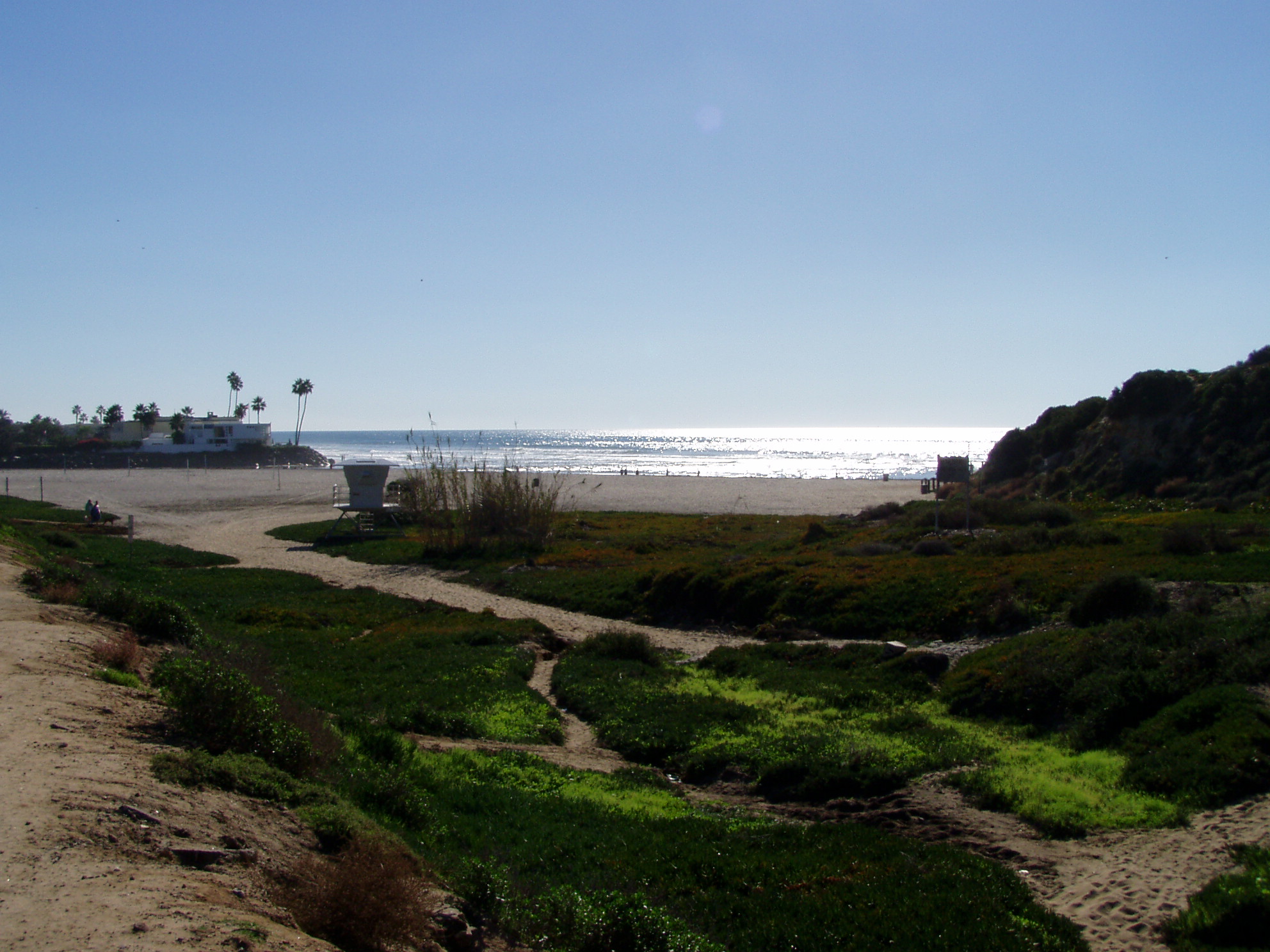

- Image via Wikipedia

Dreams we all have; comfort, love, and health, peak through the brown stalked winter trees, through the blinding white cloud cover pushing through icy winds, and snow storms that settle on the lonely sidewalk, and rise to my drape-less window.
On such a Saturday, I am slacking on the downstairs sofa with a tray of coffee, and all that separates me from my dreams is the rustle of fear. The windows reflect snippets of promising outcomes to developing friendships, travel, a script in progress, and properties on the edge of default. Overlapping these is a mirage of life experiences tucked into memory prescriptions you take on a stormy day. A relic of my history rises, and reminds me of the fear I once broke through.
It was 1982, and I was poised on a terrace overlooking the Pacific Ocean in Venice Beach. It was March, the month my father died, and I stared at the horizon at dusk, and imagined my freedom taking flight. Where would I go? Without his presence in Los Angeles, and my sister who had already moved to New York, I was terribly alone. The replacement came in summer flings, with men who had crossed my path; a photographer, a New Jersey computer technician with a brassy voice and Joe Pesci humor, and every few days, Kenny, a former boyfriend, dropped by to smoke his pipe of philosophy and blow long-winded ideas on where I should move.
“I really want to move to Canada.” I said.
“For what? To go ice-skating?” He said between puffs.
“I have family in Vancouver.”
“What family? You’re an orphan now.”
“I am not. I have cousins in Vancouver. My father’s nephews.”
“Oh Yea. When was the last time you saw them?”
“When I was twelve.”
“Terrific! That’s a solid-ass plan. So what will you do in Canada?”
“Get a job in real estate.”
“Lue! Wake-up. You can’t get work in Canada unless you’re a citizen. Forget that idea. You’re better off staying here; look where you are; Santa Monica, the beach at your feet. Are you crazy?”
“I don’t belong here any longer.”
“You don’t belong to anywhere; what you need is to stop trying to be a big-shot like your father.”
“I am not.”
“When was the last time you left the country; when you were eighteen? Go to Rio, you’ll have the time of your life, or Italy, or Greece–it doesn’t matter. Just take the chance and see how you land on your feet. You’re a dreamer, it’s about time you made one of your dreams come true.”
In the next few weeks, I met with Larry, my boss, who was liquidating his real estate portfolio to retire at forty-five years old. Larry wasn’t just an investment visionary; he was passionate about social, political, medical, scientific and human interests. He was a genius.
“You can stay here another year–I’ll find something for you to do, but you’ll be bored.” Larry told me.
“Larry, I don’t know where to go.” I wiped a tear. He ignored it.
“You have to get out of LA. You’ll never meet anyone here. You think you’ll be introduced to someone riding up and down the elevator in Century City. I’ve spent a lot of time in Del Mar, and Rancho Santa Fe. They’re nice people. You have a chance there, go down and spend a few days and tell me what you think. I’ll help you. Now, stop crying. “
I drove down in Dad’s black El Dorado, and parked at Del Mar Beach right next to the life guard station at the Poseidon Restaurant. I opened my suitcase, took out a bathing suit and went into the beach bathroom. The tile was wet and smelled of seaweed and salt. I walked barefoot down to the beach. It was early spring, the sand was unmarked. A few surfers jogged past me, blonde and bronzed like the Beach Boys. I followed them down to the seashore. In every direction, there was this untouched canvas of light and color; even the beach houses retained their natural sandy simplicity.
After I swam in the ocean, I went back to the bathroom, changed into dry clothes and walked into town. A man with a beard rode past me on a horse and waved. I picked up a Reader and read the rental advertisements on the patio of Carlos n Charlie’s, corner café. A roommate advertisement caught my eye; “Roommate Wanted to Share large two bedroom overlooking Torrey Pines Reserve.” I called and a man who went by the name of Smokey answered the phone. He invited me to come by for a look. His voice was predominantly ranch friendly, so I took a drive over. It did occur to me on the drive that I was taking that chance Ken was blowing in my ear, and I was listening to Larry who told me that people in San Diego were different.
“Hi, I’m Smokey. Come in—would you like something to drink? Too early for cocktails, unless you want one.”
“No thanks. How long have you lived here?”
His eyes were animal alert, his face tanned and his hair cut short but made to look long. His smile was unfiltered with hidden motives, and he was bull-legged.
”I moved from Pittsburgh; I’ll never go back except to see my folks. This is paradise. Don’t you think? I’ve lived her two years. I rent out one room, because I hate full time work. I’m more entrepreneurial. You don’t have to worry about my motives. I have a girl-friend, and I’m in love with her. She doesn’t stay here. I go to her house. You’ll have your space, and if you need a friend I’m here. Come out on the balcony.”
I followed Smokey and we stood on the terrace overlooking the lagoon and marshlands of the reserve. To the west, the ocean and the stump of Torrey Pines Mountain.
“Wait till sunset; you’ll never want to leave. Come look at your room. I can help you move if you want.”
The room was downstairs, his upstairs, and a stairway of trust in between.
“I’ll take it. When can I move-in?”
“Whenever you wish.”
THE ST REGIS, THE WORLD TRADE CENTER, AND BOBBY SHORT

\
I was about twenty-three at the time, living in one of the blandest bachelor apartments in Westwood, working in an office cubicle, and daydreaming about places in Travel & Leisure magazine. My father called one afternoon with a no reply command to come to his apartment.
“I have something to discuss with you.” Growing up with gangsters involves many face-to-face meetings because the telephones are tapped. It is of no consequence what I happen to be doing at 7:00 PM that night– if Dad has something to discuss, we have to meet in person.
“What about?” I ask.
“What did I say? Didn’t I say we have to discuss it here?”
In those years, my head was waxed with false perceptions that Daddy was what Daddy told me – in the oil business. It did not occur to me that all those meetings at his apartment, in restaurants and parks were because he did not want any uninvited listeners from the FBI or other government agency.
After clearing my passage with the receptionist, I rode up the elevator to his Century City Park apartment. After peaking through the peephole, and asking if I was alone, he opened the door. I greeted him with a kiss on the cheek, and he asked, what kind of out fit is that. My attire on any given occasion should be a colorful coordinated double-breasted pants suit.
“I have some zucchini and rice in the refrigerator –will you make your old dad that vegetable dish? My father didn’t cook anything beyond boiled eggs, and broiled fish. I nodded and started for the kitchen.
“Wait a second, I’m not through talking–sit down. Well– I’m finally able to do what I’ve wanted to do for some time. It hasn’t been possible until now; I’m sending you to New York. Can you take a week off work?”
“I will of course-but aren’t you going?
“No. I’ve lived New York in the best years and wouldn’t go back if you paid me a million dollars.
‘Why?”
“Why? Because I did it all, and now it’s your turn.” I moved closer to him on the couch so I could wrap my arms around and kiss his cheek.
“The first thing you have to do is get a new outfit. You won’t go to Manhattan in those jeans-for crying out loud. You’re staying at the St. Regis Hotel… I have it arranged, the guy owes me a favor and I had a bit of a windfall this month. Your mother and I stayed there. ”
“When? Where is the St. Regis?”
“Don’t interrupt-don’t you think I know where to send you? As I was saying, I booked a week for you. Now, I have it all set-up. You’ll have a driver, and do not get into a cab or any other car, you stay with the driver I hired, do you hear me Luellen?”
“Can’t I walk?
“You can walk after he takes you to the places you want to go. Do not argue with me, I know what I’m doing. You’re just a little naïve about New York. Anything can happen; it’s a jungle and you’re little red-riding hood. A fella will walk pass you on the street, clip your purse, and you’ll never know, a guy will carry your bag for you, and you’ll never see it again.”
The year was 1978, but I cannot remember which month. It was still cold enough to wear the mink coat he had given me for this occasion. I wrapped that mink around me everyday for a week. The Hotel Valet was familiar with the name Smiley, as was the hotel manager and the driver he hired was a double agent. He was also a bodyguard. The black Lincoln continental never left my sight.
The St. Regis is on West 55th, a few short blocks from Tiffany’s. That was my destination of choice, not for the diamonds, but a glimmer of where Audrey Hepburn sipped coffee and nibbled on a doughnut. I didn’t really care where the driver led me; I was visually climaxing on the traffic cops, the horses in central park, the side walkers streaming in one band as if all connected, horns blaring, lights flashing and the hi-rise silhouettes against slices of the sky.
My father expected me to have lunch at the World Trade Center, dinner at La Cirque, and in between long drives through Little Italy, Central Park, and Riverside Drive. My breath stopped when we were launched into the sky to have lunch at Windows on the World. While sipping my first Manhattan the city spun me around and for the first time I realized I was a real nobody-that I’d been no where– if I hadn’t been to Manhattan, and the impression cut off my short tail of confidence. The psychological departure that turned me from Daddy’s little girl into Luellen the woman will continue.
a continuation.
Windows on the World for anyone who has not been there supplied even the sourest puss, a great big slice of hope, because you were on the same level as the tallest building.
I wish I would have saved the matches or the napkins from that day. The fact that my father and Bobby Short are both gone, the World Trade Center is gone, and I am still a nobody amplifies the memory.
The night I went to see Bobby Short I was seated at a table, and while I tried to inhale the glitterati of the evenings crowd, I was ineffectually blowing cigarette smoke into the thick stream of smoke lingering above our heads. The room was New York jammed every table a colorful mixture of cocktails, handbags, and beautiful arms adorned with strands of gold. I had been on the town in Hollywood, seen movie stars up close, and dined with them. This crowd generated more mystery. Their body language was fluid; they did not purposely draw attention, because they were not there to be discovered by Lefty Lazar, or Robert Altman.
Bobby Short was a nightclub piano player after everyone went home. You could picture him sitting at the piano, as you would Will Rogers on his horse, long after the image was diluted. His eyes tap-danced with the eyes of the audience; they were all together. I was young, naïve and impressionable, and that is why my father sent me so I would get the impression.
During the day we were driven around by the tight lipped body guard, and we watched New York. It wasn’t until we met Al Davis (not the Raiders Owner) but a man who owned a distillery in Kentucky and liked my father enough to buy him a new Cadillac. Dad told us we were to meet Al at the Carlyle for Sunday Brunch. There is a stage like ambiance walking on 5th Avenue on a Sunday in New York. New Yorkers dress for a walk and I was again impressed at how sophisticated everyone looked so early in the morning.
Al Davis brought along a tall good looking man, that reminded me of a run around guy; he does everything he’s told and is of good temperament until somebody insults his boss. He poured Champagne, made phone calls, and Al Davis was WC Fields liquored by the time the eggs benedict arrived. He was not only a prankster, and a tease, he was bloated with years of drink and laughter, and anything else was just not worth his time. Knowing that my father was not going to walk in and surprise us, allowed us to feel slightly deserving of fanning that freedom. Al’s associate moved closer to me, and taunted my feminine prowess, which until that particular day had not been taunted by any friend of my father’s. It was then that I felt like a woman in New York. I have not felt that particular brand of womanliness since. No offense to any other gentlemen that spoiled me on occasion. It was that Sunday in New York, sitting in a booth, with worldly older men that made the lasting impression my father didn’t anticipate. During the brunch Al kept repeating, “ Don’t tell your father, he’ll have me shot.”
Several weeks later Al and his friend were in town and asked me to join them at a nightclub for dinner. Was I to tell my father, or just go along. I decided to go. We ended up going to Pip’s, an exclusive night club in West Hollywood. That evening, I tossed my adolescence around and swirled on the dance floor with frightening vulnerability. I didn’t get home until very late. The next day, my father called.
“ What time did you get home?”
“ I went out with Al Davis, he kept me there.”
“ I know where you were, and I know who you were with, and everything else you do. Don’t you ever accept an invitation from one of my friends unless I am with you! What kind of idiot are you? Haven’t I taught you anything? I cannot be responsible for a guy like Davis if I’m not there! I’m too upset to look at you; don’t bother coming to see me. ”
I returned to the Carlyle one more time to see Bobby Short, but I have never enjoyed a more outrageously mischievous Sunday in New York like that day with Al Davis.
 ADVENTURERS IN LIVINGNESS