Composition VI (1913) (Photo credit: Wikipedia)They were all lovers before they were artists.
LOVERS travel mentally and physically through life with all the windows open; awaiting a sight, sound, or feeling that draws them to their art. The feelings are what count on our life ledger. I have to thank Billy, my first love at eighteen. He was an artist of music, Gothic charcoal sketches, comic humor, and life. He opened my…
Nicholas Ray (Photo credit: www_ukberri_net)Portrait of Martha Graham and Bertram Ross (1961 June 27) (Photo credit: Wikipedia)
THIS WEEK LANDS ON poets, writers, musicians, photographers, directors, visual artists, composers, choreographers, actors and the untitled and unrecognized that squeeze in between. Kipling, Salinger ( my all-time favorite) The Rolling Stones, Mozart, Chopin, Opera, Salsa, Beatles, Stieglitz, Nicholas Ray, Kandinsky, Johnny Mercer, Martha Graham Balanchine, and James Dean. I left out about seventy-five of my favorites.
Composition VI (1913) (Photo credit: Wikipedia)They were all lovers before they were artists.
OUR ARTISTS IN HEART travel mentally and physically through life with all the windows open; awaiting a sight, sound, or feeling that draws them to their art. The feelings are what count on our life ledger. I have to thank Billy, my first love at fifteen. He was an artist of music, Gothic charcoal sketches, comic humor, and life. He opened my window to the arts.
That life ledger is always in the red because an appetite of feelings, and emotions eventually depreciates the spirit. Some of us rise above, and the flow of printed green paper comforts that spirit, but emotions continue to dominate all the success.
I have to write this in short sequence, as I am moving between a rigid reckoning of a forever ending TO ONE MY LOVES.
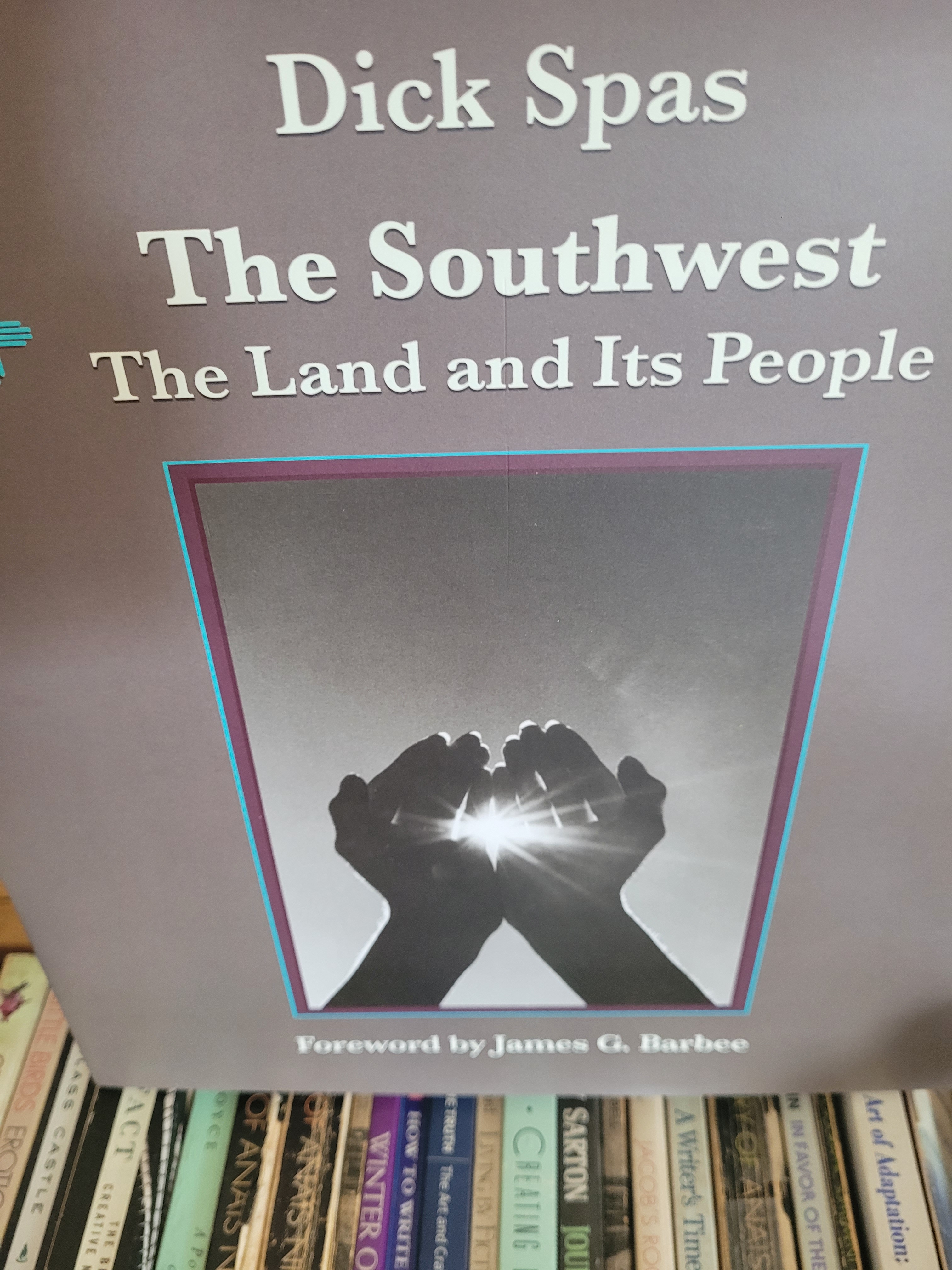
Taos, NM 2006. We opened ( Rudy) our first Photography Gallery, I noticed a postcard at the shop next door, it was Peter Fonda and Dennis Hopper from a clip of Easy Rider. I asked for his phone number, and we met.
Dick was elated when I asked him to show me his works, he was not represented in any gallery. Once I opened his portfolio, it was decided I would exhibit him. He is the essence of humility, gratefulness, and dedication. He also has a harmonious way of speaking and…
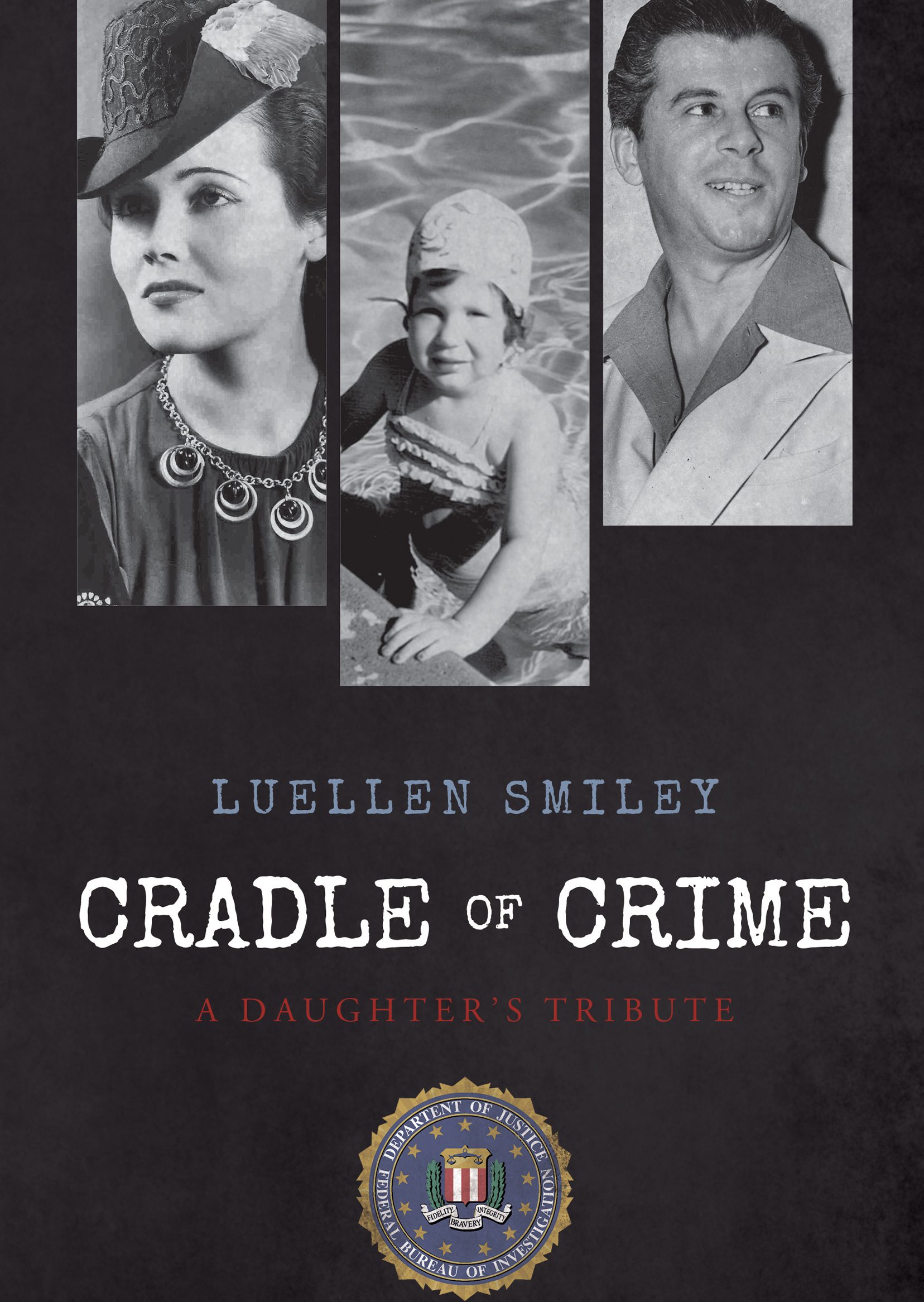
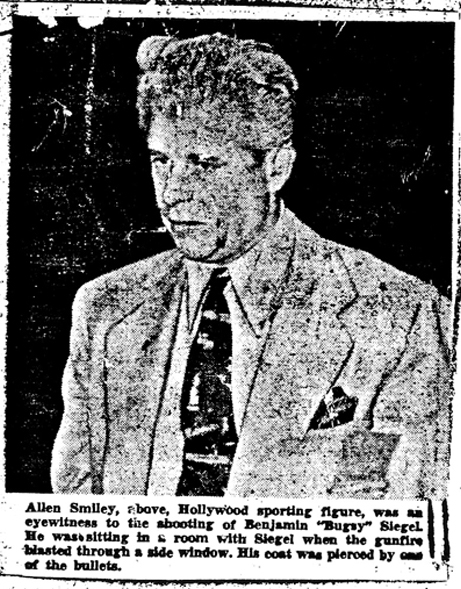
“What’s it like knowing your father is a gangster? Did you know when you were a teenager? Did you meet Bugsy Siegel? Did your father kill anyone? You know the Mafia kill people.”
Childhood 1955-1961
I called him Daddy. His friends called him Al, or Smiley, the Department of Justice tagged him “armed and dangerous” and his mother named him Aaron. He was born January 10, 1907, in Kiev Russia, one of three sons born to Ann and Hymen Smehoff
He had salty sea blue eyes blurred by all the storms he’d seen. When I say something funny, his eyes crystallize and flatten like glass. Smoothing out the bad memories. He’s always a different color. Dressed in coordinates matched perfectly as nature. My small child’s eyes rest cheerfully on his silk ties, a collage of jewel tones. The silver and blue tie matches the shirt underneath. The feel of his fabric is soft like blankets. He is very interesting to look at when I am a child and open to all this detail.
I cling to his neck in the back seat of his long Cadillac. My mother doesn’t ride with us during the day. She comes along if we are dressed up and going out to dinner. I enjoy the car rides most. He sings songs and his hand flutters about, catching me by surprise behind the ears, and I shriek. Daddy’s laughter echoes inside my ears.
We visit friends in Hollywood who own delicatessens, restaurants, and clothing stores. We go to Paramount Studios and I ride around on a pony or get kissed by cowboys in a Western scene. We go to Beverly Park almost every day to ride the ponies. I am only two years old when Daddy slings me over this big stinky pony, and insists that I go around the ring one more time so he can watch. I meet Hoppalong Cassidy and we visit his booth at Pacific Ocean Park. When my father was a film producer he worked with Hoppalong on a western film.
Our home in Bel Air was where I lived before I knew how fortunate we were. My room was at the end of a long hallway, and I was afraid to leave the room when it was dark because it seemed such a long distance to my parents. The wallpaper danced around my eyes, a collage of flowers illuminated the black background, and I was wrapped in a blue satin comforter. My room was cluttered with dolls. As a young child, I preferred staying in my room and imagining characters for my dolls.
My father showed us, and really paraded us around as if we were exceptionally talented. I never understood why these people fussed over me. I sort of distrusted them, before I understood what that meant. There were exceptions, the ones I knew to be real family people earned my affection. I dreaded the routine of being placed in front of a group of men and women who stared at me as I curtsied or mumbled “Hello.” George Raft came to all my birthday parties, Nick the Greek showed me card tricks and Swifty Morgan told stories all night. Damon Runyon characterized him in his stories as the “Lemon Drop Kid.” I was surrounded by men with FBI files and notorious reputations for being dangerous gangsters. Some of them had been arrested for murder. Others were old-time bootleggers from Cleveland and Detroit. I knew them as Uncle Lou, Doc, or Uncle Johnny. Years later I would discover they were Lou Rhody of the Cleveland Jewish Syndicate in Cleveland, Doc Stacher, the tough New Jersey underboss to Longy Zwillman, (the guy who discovered Jean Harlow in a speakeasyin New Jersey), and Johnny Rosselli, the king of Las Vegas in its heyday. I was enchanted by thesemen, they were family friends, and they never followed the rules.
This home was my father’s showplace. He bought the house in 1955, and that was a bad year for him. I was two years old.. That was the year that a number of his friends and associates died or were murdered. Like Little Willie Moretti from New Jersey, who was killed by rival gangs, and Tony Canero, who died at the blackjack table of the Stardust Hotel.
Willie had a problem keeping his mouth shut. Frank Costello, the leader of the syndicate group most closely associated withmy father, sent Willie out to California where he’d be safe from harm. Willie was unstable, taking bets on losing horses and talking to people he shouldn’t. Frank asked my father to keep an eye on Willie, to become a confidant. He was told to dress up as a Doctor and pay visits to Willie. My father obliged and Willie took a liking to my father. Willie suggested to Frank that the boys should build this doctor a hospital. Frank told the story to some of the other fellows and they must have had a good laugh. Frank had another idea, giving Allen the job of promoting Willie’s good friend, Frank Sinatra. My father declined the offer. Eventually, Willie returned to New York and was found dead stuffed in the trunk of his car. The second tragedy was the suicide of Louis Rothkopf, “Lou Rhody” they called him, or “Uncle Louie.” He was one of four bosses of the Jewish Cleveland syndicate, (the Mayfield Road Gang), and one of my father’s closest friends. I heard that Louie would cross to the other side of the street if he saw a guy that owed him money. He had a big heart. With his wife Blanche, the Rothkopf’s were respectable business owners in the Chagrin Falls area of Cleveland. When Senator Estes Kefauver launched a federal investigation on organized crime, he exposed and ruthlessly slandered Lou and his partners. Not just as bootleggers, and distillery owners, but murderous syndicate men with ties to the Italian Mafia. By this time, Lou and his partners were operating legitimate business enterprises all over Cleveland. Blanche commit suicide two years before Lou also took his own life. I have been told that my father brought Lou in to save the Desert Inn Hotel in Las Vegas, when the first owner,Wilbur Clark, went busted.
* * * * *
The house in Bel Air brings back the best memories of my childhood, but few visions remain. The front yard was a blanket of pink and white geraniums. They were tended to by our gardener, and though I wished to sit in their path, and smell their fragrance, I was told not to play in the geraniums. The flowers were my first contact with nature. It wasn’t enough to just look at them, I wanted to lay with them and watch their breathing.
Our house was perched at the top center of Thurston Circle, a sort of distant cousin to the discreet upper Bel Air locked behind black iron gates. There was no gate at our entrance, and the neighborhood homes were a mixture of two-story colonial and ranch style. The view of Los Angeles from the living room and my parent’s room was an electric and absorbing scene for a small child who hadn’t known anything beyond her house. At night lights glittered against a black sky, and I could sit by the window and dream of what the lights were all about. Entangled bougainvillea grew wildly behind our house. We picked figs and avocados from trees in the yard. There I learned my first lesson about family values. One day my father showed me a nest of small birds perched on a branch of a spruce tree. He pointed out the mother bird hovering over her babies in the nest, and then he drew my attention to the father bird perched on our television antenna. “You see, that’s what the father bird must do, is guard his little family, just like I do.” I asked a few questions, and he just kept telling me that it was so remarkable how animals take care of their families and I should watch them and learn something.
My parents gave me extravagant toys. I was about four when my father installed a roller coaster in our backyard. He sat me in the cart and I rode up and down the bumpy track, screeching with laughter. My mother was always there, watching from a distance. Daddy was the one that loads me up with surprises and Mommy was the one to feed me, clean me up, and tuck me in at night. I could tell her everything, she listened to me and watched over me. She doesn’t interfere with me when I am playing with my dolls.
With last names like Smiley and Funk, you know there’s bound to be something creative going on in the imaginations of this Ballston Spa duo. The couple, both natives of San Diego, Calif., purchased a house at 63 East High St. last May. Luellen Smiley and Rudy Funk have turned a once-ramshackle 1860’s structure, now known as The Follies House, into three furnished apartments oozing with zany charm. Smiley’s brochure touts the place as a “playful vacation residence designed to inspire.” On the wide front porch, a sign offers visitors “Free Records,” paying homage to one apartment’s main decorative inspiration: classic stage musicals. Called the Broadway suite, its walls are adorned with record covers, programs, ballet slippers and even a dance costume. There are dice on the end tables, a life-sized poster of Humphrey Bogart, colorful paper parasols and peacock feathers. For tenants who bring their own films, there’s a projector screen and, tucked into an alcove, a working Victrola. Vintage Broadway memorabilia is everywhere. Then there’s the nearly ceiling-height replica of a bass guitar. “This was actually a costume someone wore,” said Smiley, pointing out the head and arm holes. “These are the kinds of things we like, the really unusual andunheard of.” Growing up in California, Smiley aspired to be a dancer and maintained an interest in the arts.
THE FOLLIES HOUSE
In recent years, she became keen on the idea of renovating and decorating an older home, although the village of Ballston Spa was not first on her list. “When we first came here, I wanted to be in Saratoga, and when I drove through Ballston Spa I said, ‘I’d never want to live here,”‘ Smiley said. “But then we rented here, and I didn’t want to go back on the road. We loved this street. We think this village is really starting to happen.” The couple went to work feverishly last spring to ready the apartments in time for the track season. While not a bed and breakfast, the apartments are designed for temporary tenants — people new to the area or vacationers. Smiley’s off-season rates are $800 a month for the Broadway Suite and $700 for the Boomers Pad. The one-bedroom Boomers Pad is designed with vintage ’50s and ’60s furniture. Smiley said she and Funk combed area antique shops, including those in the village, for many of the offbeat pieces, including the vinyl records and oversized pink sofa. The house’s history mirrors the eclectic style the couple hasbrought to the home. “It was built by a man actually named Dr. Doolittle as a wedding present for his daughter,” Smiley said. “You can see the little touches everywhere. There are butterflies and sun rays carved into the woodworking and doorknobs. It’s a love house. It was built with love.” Smiley said she and Funk have combed files at Brookside History Center looking for old photographs of the house in order to decide what color to repaint the facade. “The exterior of the house is next on our list, and while we haven’t located any photographs, we’re thinking pastels,” Smiley said. “Inside, we used a lot of pistachio and pink.” While Funk commutes to and from California for business purposes, the pair weathered their first winter this year, relying on the kindness of neighbors for jobs like snow-blowing. “We’ve never seen winters like this,” Smiley said. “I’m from the other side of the world. But this is a very supportive community. That’s one of the things we love about the village.”
Smiley has immersed herself in the closely-knit community, joining the Ballston Spa Business & Professional Association, the local chamber of commerce, and helping promote an upcoming Art Walk. The Follies House recently was given a beautification award for significant improvements during the past year. In her brochure for potential tenants, Smiley points out area highlights including the Saratoga Performing Arts Center and destinations within the village, such as the museums, the glassworks studio, Art Ink., and the new gallery and loft spaces on Low Street. Smiley said she also recommends people take a stroll along East High Street, a historic district known for its Victorian homes. “I’ve seen little villages, big villages — but what I see here is the most beautiful village,” Smiley said. “The potential is here. There’s a sense of magic here and the transformation will happen. I’m certain of that.”
I am not afraid to write the truth, to stare and embrace the reflection. It appeared last night; a thought manifested in an abstract way; a torch of light, a rainbow, an open door that symbolized a guide to contentment, and peace of mind, it felt reachable if only I evaporated into the sensibility, allowing change, a complete transformation from this encampment of isolation and fear of making the wrong decision.

 Nicholas Ray (Photo credit: www_ukberri_net)
  Portrait of Martha Graham and Bertram Ross (1961 June 27) (Photo credit: Wikipedia)




 ADVENTURERS IN LIVINGNESS