SELF DISCIPLINE – Either you have it, or you don’t. There is no gray, no aperture, no gaps, and I am learning this as I sit here writing instead of what I need to do, is walk.
I’m in the arena of a relentless athletic tribe. Yesterday I walked for an hour and noticed the runners, bikers, and power walkers along the path, muscles skin-tight, tanned, and seemingly detached from the backed-up traffic along the boulevard. The breeze felt like cotton balls, the sky a perennial perfect blue, and seventy-eight degrees.
Today, the same summer-like atmosphere, and with my windows open, and the crowds missing from the pool, I am wandering in between, like a bird that is unsure if the branch is better than taking flight.
Weekends, I take a recess from the tedium of seeking employment with AI leading the way. Am I just entering the 21st Century? It feels so inhuman, so robotic, that I counterattack, enter the sensibility of irritation, shout at no one, grind my jaw, and resort to a stroll around the lobby to converse with humans.
Without music, writing, and conversation, my world would crumble like sand. I’d spend hours staring at the sky, imagining figures in the cloud formations, and listening to the birds.
As the war in the Middle East casts a shadow over contentment, security, and joy, I realize the subject is too hyperbolic to even mention. I haven’t hidden my Star of David necklace, and one person noticed. When my Uber driver pulled up, I struggled to open the door of a Tesla. She immediately stepped out of the car.
“No problem, here, see the button, just press down”.
“I haven’t been in a new Tesla, it’s a beautiful car.”
The dashboard supported a Ipad, with a map, and she navigated with her index finger to my destination.” Her accent was unfamiliar.
“ May I ask where you are from?”
“ Yes, why not? I am from Uruguay. I’ve been here for eleven years, in San Diego, the most beautiful, don’t you think?” I noticed she was viewing me in her mirror. She was in her forties, I think, with short brown hair and an air of total confidence as she maneuvered onto the freeway.
“Yes, it is, a lot more crowded than my last time here, in 2012.”
“Everyone want to be here, so where are we headed?”
“To look at an apartment.”
“It’s difficult, isn’t it? The cost, so expensive. I have a big house in Chula Vista, a very nice neighborhood.”
The conversation soared from why I’m here, to her family, her struggles, her children, my shock at the office developments we passed, and where I once hiked.
“I see you are wearing a Star of David, are you Jewish?”
“Yes, I am.” She turned her head around and gleefully declared, “So am I!”
After a failed attempt to open the lock box at the unit, Judith and I returned.
“ Here is my cell phone number, you call me, I’ll take you, maybe you find more places, we go to each one, okay?”
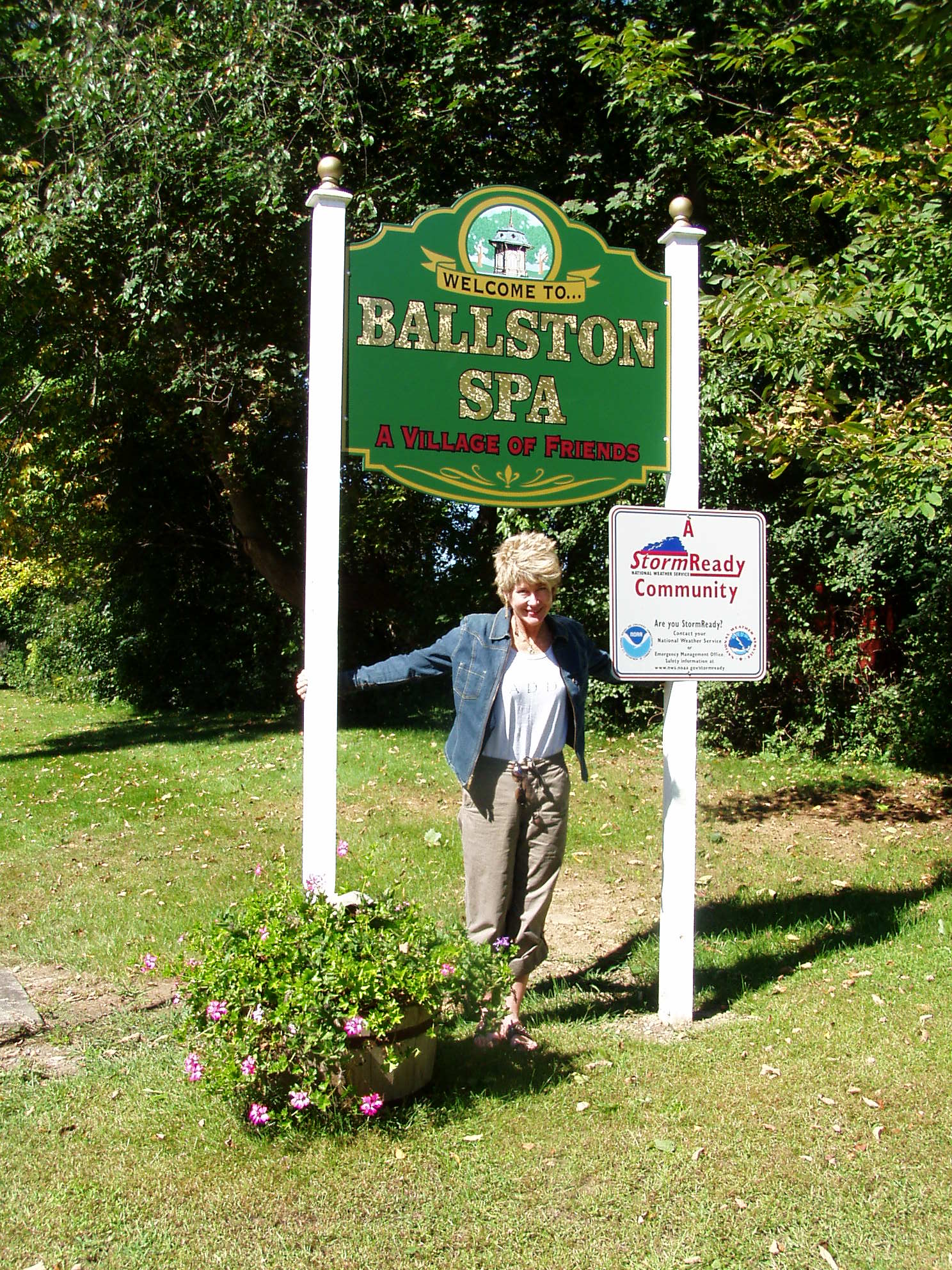
YES, I AM LEAVING. SIX YEARS LATER. I THOUGHT IT WOULD BE 1 YEAR, BUT WHAT WE PLAN GOES INTO THE CIRCUMSTANCE BLENDER, AND I, MAYBE YOU, COME OUT SHREDDED, UNTIL WE LEARN HOW TO REMIX OUR CONDIMENTS FOR THE FUTURE. The year the village adopted my slogan, Village of Friends
OLYMPUS DIGITAL CAMERA
Six years ago, this week, I left my studio on Devon Ave, a shrink-wrapped space that forged me outdoors. I landed in Ballston Spa, NY, to save my home from foreclosure. I felt a contrast within and without. The without were the winters. I’d not lived here since 2003, youthful adaptation overwhelmed the bitterness of winter. The within, my mind, heart, and spirit went through a seasonal transformation. Winters, the snowplowing season when I am on duty to ensure tenants and nieghbors can walk on my sidewalk(owners are reponsible in the village) without breaking a leg and then suing me. Writing is the dominant activity, between, cooking, checking the sump pumps, talking on the phone with friends three thousand miles away, and managing tenants. Once I learned the house was two months behind on the mortgage, turmoil, the servicers bounced me around with false information, misconduct and refused the full balance when I offered. Covid postponed the payments for a year, and so did the New York financial agency. I filed the complaint against PHH, and they pressured PPH to abort the foreclosure for another year. Almost all my income went to restoring the house, replacing mechanical parts, painting, and repairs.
One day in February of 2020, a man knocked on my door and handed me the foreclosure documents. So began six years of legal research, interviewing attorneys, and defending myself against the predator, who sought to destroy my life, every angle of it. I can’t name this person; I’m in writing witness protection. Seriously.
It’s Christmas day, and the lobby of the hotel is empty. I think there are seven guests, and most of the cheerful staff are off. The sun broke through, so I’ll wander around the property. It’s 28 degrees, I adapted physically but not emotionally.
The throw of the dice this week lands on adventures in livingness; one day at a time. People with terminal illness, suffering from a shattered romance, a death of a friend, a natural disaster, always say the same thing; One day at a time.
Walking up Palace Avenue on a day spread with sunlight, and a continuum of power walkers, bikers and runners, passing by in whiffs of urgency, I took my time. I didn’t feel like flexing, just evaporating into the shadows, and the moving clouds. I walked by a little adobe, that once was a dump site for empty bottles, cartons, worn out furniture, and piles of wood. A year later, the yard is almost condominium clean. Just as I was passing the driveway, the little woman whom I’d seen walking up Palace with her bag of groceries, appeared like a gust of history in the driveway of her adobe casita. She wore her heavy blanket like coat and a bandanna on her head. Regardless of weather, she’s bundled up in the same woven Indian coat and long wool skirt. I stood next to her, a foot or so taller, and she unraveled history, without my prompting. She told me about the Martinez family, the Montoyas, and the Abeytas, all families she knew, all with streets named after them. Estelle asked me my name, and then took my hand in her weathered unyielding grip, ‘Oh I had an Aunt named Lucero, and we called her LouLou.’ She didn’t let go of my hand, and then she told me that the families, some names I’ve forgotten, bought homes on Palace in 1988 for $50,000, She shook her finger to demonstrate her point. ‘You know how many houses the Garcias bought? Five! Then they fixed them up and sold them.’
I could have stood there in the gravel driveway listening to Estelle all afternoon. She owns the oral history I love to record; but it is difficult to understand her, she talks with the speed of a southwest wind. We parted and I thought about the times in my life when the smallest of interactions elevates my spirit. In older people, who are not addicted to gadgets and distant intimacy, I’m reminded of how speed socializing has diminished the opportunity for a sidewalk chat.
The four-letter word that we all seek to survive, Love. The four-letter word that debases love. Obvious. Just as there are limitless expressions and levels of love, how do we know if our way of loving is evident? Mine, I questioned, after my partner of thirty-five years erased me. For years, I drew in my mind diagrams of my actions, my words, and my overall behavior, and I discovered what I had missed. Simply said, self-importance came before his needs. It started in 2006. Funny, I don’t remember the argument, what I remember is the thunderous shouting match. We were in Taos, New Mexico, in the winter, and x is a surfer. We agreed in screams that wewere no longer lovers. A few days passed, and we went hiking. We never spoke of it again and remained platonic soulmates until 2016. He chose a woman, and they clicked, except for one non-negotiable demand: I cannot communicate on any device or in person with X. The complication to that arrangement you cannot imagine.
Now, it’s been seven years since I last saw him. Over the first five years, I texted him, first weepy apologies for my part and then brash, harsh rage for abandoning our friendship. We had solid rebellious tendencies, a masterful comedic skit we played out alone or for a group. One time he came out of the bathroom, with mounds of popcorn glued to his face, and he just looked at me, deadpan. Another time, we were sitting at La Posada bar in Santa Fe, New Mexico, and he had his work shirt on. I think it was washed-out linen, and he began shredding and darning the sleeves and neckline, and the bartender and guests stared first, then the laughter. Santa Feans are bohemian, and nothing much shocks them. Outlandish and artistic antics are appreciated.
Many of my friends in those first few years appeased my sorrow, ” He’ll be back, after she spends all his money, that’s when she will stage a breakup.” They are still together, somewhere. He didn’t block my phone; he just never answers. No matter how many times I’m instructed gently and forcefully advised to stop thinking about him. I respond, ” I’m trying, I am, but I’m living in our home with all our possessions, it’s like walking into a theater set of our life, every antique, print, vase, etc, we chose together.
I sold the house, packed up twenty-five years of impulsive collections, the marque of a former nightclub, a handcraftedRoulette table, and a casino chandelier. I can’t go on. Four months later, tonight, I recieved notice that the lawsuit over our home sale has been settled. I am free. If I use what I have learned, how to be totally responsible for my decisions, without x, now I will boogie.
It was her widespread, unrestrained, and contagious smile that I see when I think of her. Her expressive hand gestures seemed like separate limbs from her straight, head-held-high posture. Frankness, unpreparedness, and ebullience made her the embodiment of who I wish I were.
I was on the phone with a friend when the news alert filled the screen, and a photo of her signature smile.
“ Oh my God!”
“What?” he asked.
In a voice trembling with shock, I replied, “Diane Keaton died.”
“ Whoa, how old was she?”
“ Seventy-nine. She was the only contemporary actress I related to. I watched Baby Boom last week, so Keaton. It was like watching me if I had the same experiences. “
“ She was great in The Godfather, not a lot of people would agree with that, but that’s my opinion.”
“ I never thought of that. I watch it once a year. She was in an interview years ago, and the host asked,” Why didn’t you ever get married?”
With her arms opening like a double door, she exclaimed, “ No one ever asked me!”
Her last post on Instagram is worth reading.”
And in the same weekend, I think of this. We can’t feel another person’s sickness, or what it’s like to sing if we don’t sing, or fly like a pilot unless we’ve been one. We cannot imagine what it is like to be a hostage of Hamas.
I wandered about yesterday, in the gym, the veranda, and the lobby, and later, had appetizers in the restaurant. Two flat screens, football, the rest couples except the man next to me. I couldn’t help but notice that he was three inches from me at the bar. A shrimp cocktail showed up, he ate voraciously, then a steak and a large flat potato sort of tortilla, a side of vegetables, and he ate enthusiastically, then a lobster plate, with more vegetables, and he ate, and then dessert. I left before it arrived, so I wouldn’t swipe it from him.
I wanted to say to someone, “The hostages are coming home!” I didn’t. Diane Keaton would have!She lived with squamous cell cancer or many years. That explains the hats and turtlenecks.
The order of this week is disorder. Not the trivial disorder of a closet, or a work in progress; this week is the unraveling of the self, which comes with separating from someone or something you love dearly. It is the subject of: poetry, theater, film, literature, dance, visual arts, and music — all forms of music from opera to rap. For all of you who have mothers and fathers close to death, and you don’t want them to leave.
Adults protect you from the brutality of death when you’re very young. They keep it behind locked phrases like ‘she had to go away to a better place; you’ll understand when you grow up.’The camouflage of death may go on indefinitely until one day, you are hit over the head with a block of ice, and it splits you right down the middle. You can see your guts spilling out, and everything is all out of order. Walking is an effort. Thinking clogs with the big question: Why? Why can’t we all stay here together and live forever?
Flashback to 1966 — I was very young, not so much in years, but when I was 13, my mental and emotional age was more like that of an 8-year-old. I don’t know if I was ADD or DDT because those acronyms were not in vogue yet.
My development was arrested because I was raised on a fantasia of false identities, fiction, and privilege. I thought we were prosperous, happy, and would live together forever. The fantasia of falseness was abruptly taken away on June 19, 1966. On that day, I saw for the first time my father weep uncontrollably. I was told my mother was in heaven. My father was seated on my mother’s avocado green sofa in our tidy mid-century apartment in Westwood. Nana — mother’s mother — was sitting on the sofa next to my father. Nana and Dad had reconciled for the period my mother was sick with cancer. They both were sobbing. I was not, I was in shock. There was nothing inside of me but resistance, a blockage of emotion that remained there for so many years.
I was left in my father’s care. He was busy avoiding government subpoenas and running the Fontainebleau Hotel in Florida. He kept a command post on my emotions. He would not tolerate my grief, because he could not tolerate his own. So, I had to chin-up, chest out, walk up and down Doheny Drive in Hollywood where he lived and pretend I was going to be fine.
When I turned eighteen and left my father’s apartment, I was free to unravel my feelings for the first time. The emptiness was filled with confusion, anger, and drugs. If college was supposed to be my best years, then I missed that chapter. Looking back, the real leap to personal growth came at that time when I was left unattended to wander through life with my own eyes as guardian, and my heart as my compass. That is when I missed my mother the most. It was my fortune to have my father back in Los Angeles, throwing his weight around from a distance. He kept me under radar by having a friend’s son working in the admittance office of Sonoma State College.
I remember days when my mental attitude needed electric shock therapy. Miraculously, I did find my way home, and to the matter of my mother, and growing up with gangsters. From a wafer of stability, very slowly, I’ve built a nice lifeboat to keep me afloat. My screaming, cantankerous, and intimidating father who loved me beyond measure is in this imaginary boat, and my mother who loved with a silent gentle hand she gave to me whenever I needed assurance.
All I have to do is look at her photograph placed in every corner of my house, and I regain momentum in my lifeboat. When I am particularly insolvent with life’s measures, I recall the years she spent fighting cancer so she could continue to hold my hand. How can I disappoint such a woman? I cannot, and I know that with more certainty than I know anything.We all have a basement strength that rises up and balances us when we need it. Each time we cross that unpleasant road and say goodbye to our friends, our pets, our parents, or our siblings, we have to find our basement strength.
You can read poetry and essays, listen to opera or rap and find five-thousand ways of expressing the same painful stab of separation. If the comfort comes in just knowing — we all have that in common — then all you have to do is tap the shoulder of the person in front of you, and ask, “How did you handle it?”
Or as Henry Miller said, “All growth is a leap in the dark, a spontaneous unpremeditated act without the benefit of experience.”
ADVENTURESS IN LIVINGNESS this week ends with new directions in living. Before that happens, you have to get lost, detached, and miserable. It messes up your social life, your routines, your comfort, and your partner. I don’t have one, so it’s all up to me.
Men wonder why women change so often, why we are spirited unicorns one day, and mules the next. It comes from the universal need to roam, to feel new sensations and passions, and to find more things to love. Even our closets are overflowing with love: “I love those shoes, I love that coat.” We replace our wardrobes because we need more garments to love.
At the crossroads of some moment in time, I stopped loving material things, my reflection, and went looking for a deeper direction of sensation.
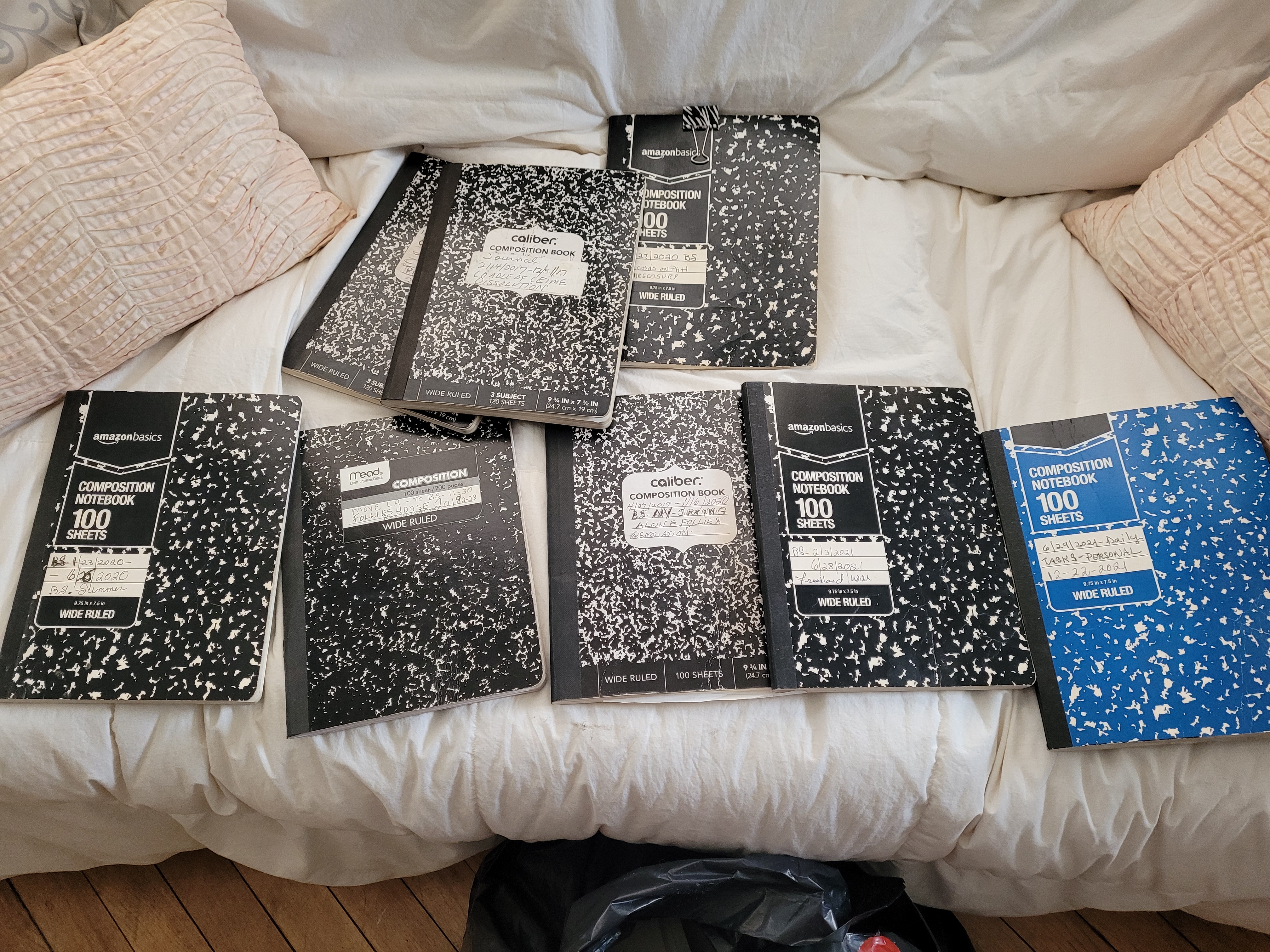
It started last year, when my life was tangled up in two projects that were not progressing. As long as someone didn’t raise the curtain on my imaginary life, I stayed right there, like a gearshift left in neutral. When failure and rejection continued to knock me on the shoulder, I welcomed the familiar knock and remained stationary.
The exact moment I decided to shift gears was a painful one. I let go of both projects that were obstructing my motion. I have extracted the nature of the projects because it really is irrelevant. After I let go, and watched those long-term efforts just dangle from boxes, notebooks, and letters of correspondence, the straight of my back curved. Where is my direction? Where are any of us going anyway, except away from that moment we have no control?
If I asked why this happened, and that happened, I was then distracted by some woman in the car next to me who was having more fun in her convertible talking on her cell phone. Routines were becoming burdens, and my favorite places of comfort were boring. Encouragement came from writing columns, reading letters, and those long, solitary road trips in the night. I felt like I was sleeping, but even in that state of detachment people were finding me, and shaking me up.
I remembered one of the faintest memories of my childhood. I cannot even recall the place I was, or who was there; most certainly, it was not my father and mother. We were camping out and I was in a sleeping bag on the hard gravel ground. It was so unfamiliar to me, the simplicity of the natural surroundings, the heavy black balm of tranquility, and the brightness of each star. I lied awake most of the night talking to my fellow campers, and at some point they said to go to sleep. I could not close my eyes. The adventure had swept me into a state of alertness, the kind that makes you feel extraterrestrial. That night must have taught me to welcome new adventures. Sometimes they have ruined months of my life, but most definitely, at the end, I sprung up with a new line of faith.
Again, I am leaving out particulars because it is not the direction I took or what I’ve chosen. After all, it could be anything. We all want to roam, and love, and find some nugget of truth at the end of the road. I think women need to roam more now than men.
The long list is what you started as a youth or maybe later. It represents one of those adventures you must do before you die. The list you started without even knowing you were making plans for your future. This list does not have to be in writing, keyed in a smartphone, or posted in Outlook. The long list is about shocking the sensibilities: habits, norms, routines, and coming back unharmed. It is an exceptional journey, and we visualize it while waiting for a flight at the airport, waiting in line for a new driver’s license, or the light turning green. All of the things that we monitor in our lives, like the need to have a cavity filled, updating your platform, passwords, or checking the coolant level, are multiplying, and that short list is so long that we rarely have time to consider the long list. If at random I selected ten long list entries they’d read like this: Safari, Lombardi Italy, Greece, a cruise on the Cunard, a gallery of my own, a husband, a dog and cat, and a place that is quiet, like a ranch. The short list, fix the broken window in my bedroom, fix the roof and ceiling in the guest room, get the three non-working electrcial outlets fixed, the dishwasher, garbage disposal, stage the attic and basement cleaned out, and relocating to a place I’ve not named. The short list is a big obstacle in the way of the long list.
By the time we get to the long list, we may be crippled by fear, turned into a sofa shouting grumpy cynic, or worse than all the above, we may have forgotten what we desired.
Waiting too long to start an adventure on the long list is what happened to me two weeks ago. I waited twenty years. The journal entry was written in 1986 after visiting Santa Fe, New Mexico, for the first time. It was the weekend of the Burning of Zozobra. I read about it in the visitor guide and saw pictures of the paper Mache statue standing thirty feet tall. The mystical ritual of the burning of Zozobra is intended to wash away all our grief and sorrow that builds up each year, and so they call him Old Man Gloom. I missed the event that first time, and I made the following dozen visits for business and pleasure. Some years, I was within days of seeing Zozobra, but I left because someone was expecting me, or I ran out of money. After twenty years, Zozobra became a symbolic representation of what I must control.
This September of 2006, nothing would stop me from seeing Zozobra. Dodger and I drove down from Taos to Santa Fe late on the afternoon of September 8, and checked into the La Fonda Hotel. This is where I stayed on my first visit to Santa Fe. The anchor of the Plaza and all that happens outside eventually flows inside and settles beneath the cathedral viega ceilings of the hotel lobby. As we arrived on Fiesta weekend, the traditional celebration culminated in a juxtaposition of historical events, cultural exhibitions, parades, handshaking, hugging and margarita’s tipping from arms air born. La Fonda opened its doors to the entire population of New Mexico. .
You can sit on an old Spanish colonial leather chair , sip a tangy margarita and watch the fiesta kick off right in the lobby. The procession of costumed soldiers replicating the Spanish conquistadors marched through the lobby while Dodger and I were checking in. From here, I wandered over to the Concierge Desk and shouted, over the roaring and singing, about dinner reservations. Nancy, the concierge, made reservations, handed me maps and numbers, and turned us loose. That first night we stood under an umbrella in a downpour and watched the Opening Ceremonies in the Plaza, and later hopped in a Pedi cab to Ristra, where we dined on appetizers at the bar and I watched the activity with my notebook stare. I love being inside a strange room full of people, to me it is like starting a new book. I make up stories about the people, or if I am feeling brave, invade someone’s privacy to find what they are about. The diners were too removed, so we left and returned to the Plaza. In a few hours, I would be descending the far side of town to meet Zozobra. Twenty years had passed, and the moment was finally here. I was wearing my new cowboy boots and seated on the Palace Patio, looking into the sheets of rain that soaked all the out-door booths.
“ Are you ready to trek in the rain little mama?”
“ Yes, finally, trust me this time, you will love it. Do you have your earplugs?” Dodger has tinnitus and is implacable about loud noise.
“ Yep. Hope it’s better than trekking in the rain to see Funny Cide race.”
“ You hated it didn’t you?
“ I hated carrying that thirty-pound tote with all your junk.”
We walked about a half-mile in the rain, Dodger moved in stern choreographed steps to avoid the mud. “Damn, these are brand new boots. I’m going back to the hotel and change”
“ Cowboy boots are supposed to be worn looking. You can go to Lucchese tomorrow and have them polished.”
“ No, I just paid five hundred dollars woman, f I’ll bring you another pair in your closet.”
“ We won’t get the same place and you’ll never find me, I wander. So, just suck it up tough rugged warrior of earth, land and sea?”
“ Oh, all right, but I’m not happy.”
“ Look, there’s Zozobra!” Dodger stood in stillness, eyes wide as marbles.
My head was soaked cause I’d forgotten the umbrella and Dodger harmonized a lot of cuss words as we reached the front gates. Gangs and families, children, old timers in costume, scurried to reach the event’s standing front row. As we trudged through the rain, I noticed a crescent of anticipation that united everyone on the path. When we reached the arena, we looked down at the muddy slope as teenagers, mothers and strollers, slid down the hill to the front gates. I envied their loyalty to Zozobra. I was within a hundred feet of the stage, I could not remove myself from the unified adulation for Zozobra. As a ritual to burning the curses of life, people bring letters, photos, rejected elements of a personal tragedy and place them in the circle before the fire light. The crowd had expanded into a gyrating crush of participants, swaying back and forth, cheering the appearance of Zozobra, as he rocked back and forth in flames of fire. A convergence of strange mystical wailing, and an encore of audience howls ignite the lighting of firecrackers that set Zozobra in flames.
What I saw was the burning to the ground and the howls from the musicians that accompanied his death. That happens if you let the long list precede the short one. Dodger stopped grumbling when we returned to the hotel and exclaimed to guests, “We saw Zozobra!”
Morning comes after two cups of French Press. I sit here at the desk, peeking out the glass door to the shady side of the street. I do not know where I will be living, what I will be doing, or who I will be doing it with next month. Uncertainly, I move in and out of situations and get swept up in my ideas and fantasies. I buy and sell, make and remake, move-in, move-out, leave homes, careers, friends and relationships. I move out of comfort
art nouveau dome of light (Photo credit: e³°°°)
and into uncertainty because it feels more like home moving than staying in one place.
I have to put the words on the paper and look at it to make it real.
Raising a family, sprouting barriers and responsibilities might have changed me, but I didn’t. I’m unchanged in some ways, still running through the hallways of the hotels, gardens, and neighborhoods. Do you know what I mean?
I have to turn the clock back to 1996, to the days of peeling back the first layer of family history. I was sitting at a dining room table in a casita in Taos, NM. It was winter, the first time I’d lived in snow outside a few teenage weekends in Arrowhead. Snow silence that sucks up every imaginable sound, and the absence of any neighbors, I was the only resident in the compound, left me to unravel a secret life, the one my father guarded with irreproachable tenacity.
The first layer came off from the Immigration and Naturalization (INS) files on Allen smiley, birth name Aaron Smehoff, tagged “Armed and Dangerous.”
Allen married, Irene on January 16, 1926, (my father’s nineteenth birthday), in San Francisco. On July 18, 1926 Allen was arrested for robbery in a drug store on Geary Street with another unidentified boy who fled the scene. On September 17, 1926, Allen was convicted of first degree robbery and confined to Preston Reformatory for boys in Ione, California. On November 23, 1926 Irene, who remained in Oakland, gave birth to a baby girl, named Loretta. Allen was released from Preston Reformatory in December of 1927. He returned to Oakland to reunite with his wife and child; but they had vanished. This is what the INS gathered from Dad in an INS hearing. I read from the court transcripts of that hearing, about 300 pages of interrogation and the answers’ in my Dad’s own voice.
The snow sedated the choppy feeling in my stomach, the jaggedness of suddenly discovering, why my father was wired with anxiety. His whole life was occupy Allen Smiley; arrest him, convict him, send him to Russia, and never pull the tap from his apartment, or the FBI guys from his tail.
When I ordered all those government files I had no idea that the government probed into personal lives as much as criminal activities. They recorded all the household conversations, arguments with my mother, his betting on the phone, his visitors, discussions with his housekeeper about the ashtrays, and his hatred for the government, “I wish somebody would drop a bomb, just to get rid of some of these guys.”
What would I say to this daughter now in her eighties, about the father she never knew?
It was a one of a kind experience, to pick up the phone and speak with Chris, the granddaughter, who discovered me from my columns. She went looking for the other Smiley daughter, and confronted her own family secret. The tension cross-circuited our conversation, both of us heaving with questions, anxious for an answer to the family puzzle, the answers we could not wait to get, that I cannot share, even though the names are changed, I do honor the right to privacy.
I paced the room moving unconsciously from one place to another, reaching for my father’s voice to soothe her, rewrite history in between dusk and making dinner. Then the unveiling of the tragedy; the loss and the family shame, surrounding a marriage to a gangster, a father whom they never got to know, as I did. In the passing of an hour or less, my voice resonated the stories of her grandfather; his health and humor, his disciplinary regulations, and his life long battle to remain anonymous, in the public eye of organized crime.
Chris asked if I wanted to speak with Loretta, my half-sister, and I said of course I would. She set up a phone call for the following Sunday,
with a forewarning that her grandmother did not encourage the communication, or the research, she was beyond asking for a resurgence of truth or pain. How does one retrace seventy or eighty years of believing the color red may be the color blue or least a bluish tint. Loretta was not proud of what she read about Allen Smiley.
In the days before the arranged phone call I sifted through my internal index of Dad’s history, and what might console her. I could tell her about the time, he sat me down in the living room, to discuss sex with a gentle sternness;
“ Once you get pregnant your whole life changes, and you’re not even close to being ready for that. It happened to a gal I loved, when I was a young man.”
Was that Loretta’s mother he was speaking about? When this young love of his said she was pregnant, he tried to persuade her against it, because he wasn’t “properly financed.” So I asked him what happened.
“We’re not talking about my life; I’m trying to get you to understand the consequences of sex. You see God made the act beautiful so we would procreate, and if you ignore the consequences, you’re not fulfilling God’s wishes.”
I waited by the phone until it was time to accept that the call wasn’t coming. During that time of waiting, I tried to walk in Loretta’s shoes. I only had to take a few steps to comprehend the combustion of emotions she’d face by having a Sunday evening chat with me.
I made the choice to be public, to be viewed by strangers all over the world, and to receive their rage as well as their rewards.
It wasn’t a year ago that I received an email from the most distant of childhood memories. The email came from Inga, our first Nanny. The last time she saw me I was six years old. She sent me photos of us in the backyard at Bel Air, photos of her watching over me on the swings. She told me by letter, that my father was so good to her, so generous, and she loved being a part of our family. “I had no idea he was involved in anything criminal, and even if he was, it wouldn’t have mattered because he was such a kind man.” The color red is also the color blue, and because of my Dad, I learned to accept the contradictions in all of us.
Our interior life is uncensored, unsuitable to guidance from our parents, our husbands and wives, our lovers; it is uniquely you, red and blue.





 ADVENTURERS IN LIVINGNESS