
ADVENTURES IN EXPECTATIONS


“It has been a time of writing for me. The doctors have all decided that my crippled leg must be amputated. They cannot do it right away because the hospitals are so full. So, in the nights of glare I just cuss out the doctors for making me wait, and cuss out my leg for hurting. I have read Sarah Bernhardt and her superb gallantry and courage have comforted me.” From “Illumination & Night Glare” by Carson McCullers.

More on the adventure in expectations.
I wonder how all of us really accept this incongruity of life. If we experience continuous disappointment, our inner oars, the ones that carry us over the tidal waves, must be accessible so we can bash back at the unsettling news, the absence of truth, the winter storms, the lagging economy, the pain of puttering, and expectations unrealized.
At a window table of Il Piatto, a favorite Italian bistro in Santa Fe, my friend Baron, (www.fotobaron.com) John (no website) and I fervently discussed the state of the people. What we observe, think, fear, and ruminate over at home when the lights are out, the street silent as a meadow, and shadows from winds through the winter branches play like puppets on the walls.
“Baron, if something doesn’t break soon—I’m going to need anti-depressants, or heroin.”
“Have you ever tried it?”
“Heroin? No, never. I tried Prozac for a few weeks years ago. It was ineffective.”
“Look, things are tough everywhere; the shops are closing, and the restaurants empty– look around. This is weird. And where’s the god damn snow?”
“It’s in New York. Rudy was there for a few days.”
“What the hell for?”
“Court. And guess what? He flies across country on Monday, appears in court the next morning, and is asked, ‘Why are you here?’ So you can see Rudy standing there in a cotton zip-up jacket, his face flushed with snow and wind. The judge informs Rudy he didn’t have to come to court.”
“How’s business for you?” I asked.
“Terrible! I keep inventing new prints, new sizes, new shows, a book, you just gotta keep it going, LouLou.”
“I keep it going; but it is beginning to feel like neat little circles.”
John tipped his head, the tip of understanding between two writers whose fingers are bleeding, amongst a country of bloggers, Twitters, and Facebook fetish writing. We wait, as all writers and artists, and in these times, everyone must wait, until our soil is fertile, and the illumination returns.
“Any bites on the script?”
“Yes, we get them, and then you wait, you may wait two or three months to hear anything.”
“Let me explain,” John interjected. “ It’s because ninety-nine percent of the scripts submitted are passed on, and the reason for that is the executive of creative development puts his job on the line when he green lights a script, so it had better be good!”
“In the interim, I repurpose the house as a vacation rental.”
“Then where will you go?”
“I don’t know.”
“LouLou!”
We talked about Egypt, Fox News, CNN, Tunisia, mobsters, photographers, business strategy, and the next Gallery LouLou event, a work in progress. There is visceral nourishment when you congregate over the same obdurate situations. The singular frustration festering inside is softened when commingled. We lingered over coffee, still unloading the burdens of a questionable wintry month.
That night John and I rushed through the front door, seeking warmth. I was on my way upstairs when I noticed a man with long black hair seated at my porch table. I could see his whole upper body through the drapeless French windows. His hand seemed as close to the door knob as my fingers are to this laptop.
“JOHNNNNNNNNNNN, there’s a man on the porch!”
Five “hurry up’s” later, John came running into the living room.
He opened the front door and announced in his radio deep broadcast voice, “We’re closed.” John nodded several times, and closed the door.
“What were they doing?”
“Attempting to light your kerosene lamp.”
“Why?”
“They thought the porch was charming.”
A few days later, another man appeared on the porch, this one wandering back and forth. After all the times a wanderer has been loose on the porch, in the garden, at the front door asking where someone lived (they do that in Santa Fe), and then the night someone climbed on the porch and ripped off the Stratocaster guitar from the hook on the eaves (a rock n roll prop), I had to apply more caution than negligence. If someone wanted to assault me, my defense would be worthless. When all the girls started learning self-defense, and carrying tear gas in their purses, I started locking the doors. Though I am not expecting intruders and assaults, it feels like it is time to take responsibility for myself. The fear of being alone is more tormenting than loneliness.
“I brought the shot-gun. Are you ready to learn?”
“Yes.”
TO BE CONTINUED

DREAMS OF A FLAMINGO HOTEL WEDDING


On Sunday afternoon, while I was sitting in the bridal room at Neiman Marcus, I was in a head on collision with the past and the present. I was not in the bridal room to buy a wedding dress; I was there to store my mink coat. While I waited for a sales clerk, I imagined myself in the chic trench coat with diamond buttons hanging from the rack. If I did have to choose a bridal gown, it would have to be something unconventional, like my mother chose. She wore navy blue taffeta to her wedding. If I did get married, I would have to save my coins for a long time to pay for the reception. Where would I get married? At one time, I dreamt of the Bel Air Hotel, but that was in the 1970s. With inflation, the wedding would cost no less than $100,000 today. By the time, I saved that much, I would be 100 years old! Besides the hotel is not the same. The last time I dropped by, I was chased out of the river walk for taking photographs of the swans. Just before my father took ill in 1982, he told me my wedding would be at the Flamingo in Las Vegas. I remember it, as if it was yesterday. We were walking together in Holmby Park, where he walked his five miles everyday. Very often, he stopped at the public phone booth and made a few calls. He whispered so I could not hear his conversation. I know now he was laying his bets for the day. I waited on the green lawn watching the older men and women playing Croquette. When my father returned from the phone booth, he looked perturbed. That meant he lost money on that day’s sporting event. We walked a long time in heavy silence until he decided to break it.

“You know, I’m very proud of you.” He said looking straight ahead.

“You are?” I was stunned.

“Of course I am! I hope you don’t think any different. I have not said it often, because I’m coaching you all the time, so you will be independent, and know how to look after yourself, after I’m gone. I don’t want you to fall into a rut with the wrong fellow, like so many women. It can ruin your whole life.”

“But I haven’t accomplished anything really great…. like you.”

“What the hell are you talking about!” he stopped in the middle of the path. “I made more mistakes than you ever could. Are you kidding sweetheart, I broke all the rules, and made some new ones, and I’ve paid. Like I’ve always said, you make your bed, and you lie in it. I’m proud of the career you made in real estate, without any help from me. Now you have to concentrate on the right fellow. When you do get around to finding the right one, we’ll have the wedding at the Flamingo.

“The Flamingo? Do you still know people there?” I asked timidly.

“Of course, I was a major stockholder … at one time.” Then he cleared his throat, and I wondered if he was choking on the memories. “That’s where Mommy and I had our wedding reception.” I thought of the photographs of Mommy cutting the white cake. It was the first time he ever mentioned my wedding. It was the first time, he seemed to say, okay find a fellow, and I’ll let you go. I sensed his detachment from everything around us except for me.

“I would like that. How long has it been since you were there?”

“I didn’t want to set foot in that place after Benny… (Benjamin Siegel) I didn’t care if the whole place burnt to the ground. There’s no reason why you can’t have your wedding there. I can still arrange a few things.”

The vision of father, my future husband, and me was an aberration without incident or purpose at that age. However, he was dreaming that the day would come soon. When the sales clerk finally appeared, I was glazed over, in some marbled state of melancholy, clutching the mink coat on my lap. The mink is the oldest garment in my closet. My father gave it to me in 1978.

It’s as if it happened yesterday. My father called one Saturday and asked me to meet him at Mannis Furs in Beverly Hills. When I arrived, my father was seated in a chair, facing a three-way mirror. Manny rushed over to greet me. “This is my daughter, Luellen, “Manny bowed and kissed my hand. In the other hand, he was holding a mink jacket. “Try it on for size,” my father ordered. I hesitated, and looked at him for explanation. It never occurred to me I would be trying on mink coats. He was always asking me to meet him in shops, and restaurants. He held meetings wherever he knew people, so I assumed he had a meeting with Manny.

“Go on—try it on. I didn’t say I was buying it, I just want to see what it looks like.” Manny tucked me into the mink coat, and pulled the waist sash through. He stroked the fur up and down, and then I did the same. The coat was solid, like a cloth wall that buried my body in warmth. I stood before the mirror and watched the transformation.

“Turn around, “my father ordered. I took a few steps in a half circle and slipped my hands into the pockets, and turned around slowly as I’d seen my mother do. Suddenly his eyes welled up with tears and he took out his handkerchief.

“If you dressed in a proper outfit and not those silly jeans all the time, you might look like something!” he barked.

“Well I didn’t know I’d be trying on minks today.”

“What the hell did you think you’d be trying on, pianos? For crying out loud! “I don’t know what you’re thinking sometimes. Take it off.” Manny untied the sash and took the coat. My father was in a mood, it was my fault again. I shouldn’t have worn jeans. Why did he start crying? Manny disappeared, and my father stood in front of the mirror to affirm his reflection. After he took off in his Cadillac, I stood in front of Manny’s and looked at the mink coats. He never mentioned it again, but I knew the coat was going to show up one day. Six or seven months after that first meeting at Mannis, the mink appeared at Chanukah.

“Daddy, this is so extravagant, I won’t have any where to wear it.”

“Oh yes you will! Just wait and see. If you quit going out with those misfits and find yourself a decent fella you’ll have numerous occasions. That’s the reason why I gave it to you, so don’t misuse it!”

When I left Neiman’s I was drenched in his memory. The mink coat has outlived all of my possessions. Every time I put it on, I’m reminded of his wisdom. It’s not the expense or signature status. When I put it on, I feel transformed. I discovered the bill of sale from Manny’s, and the balance due, after my father died. I called Manny and asked him for more time, to pay it off. He told me to forget about it, my father had brought in so much business to the store.

Last year I called Manny to see if I could have the coat remade into a vest; as the sleeves were too short.   ” It’ll cost you the same as the mink,”  he told me.  I had the holes repaired, and the coat glazed and will pack it in the suitcase for the trip to New York, now thrity two years later with a decent fella.

THE MYSTERY OF HOME


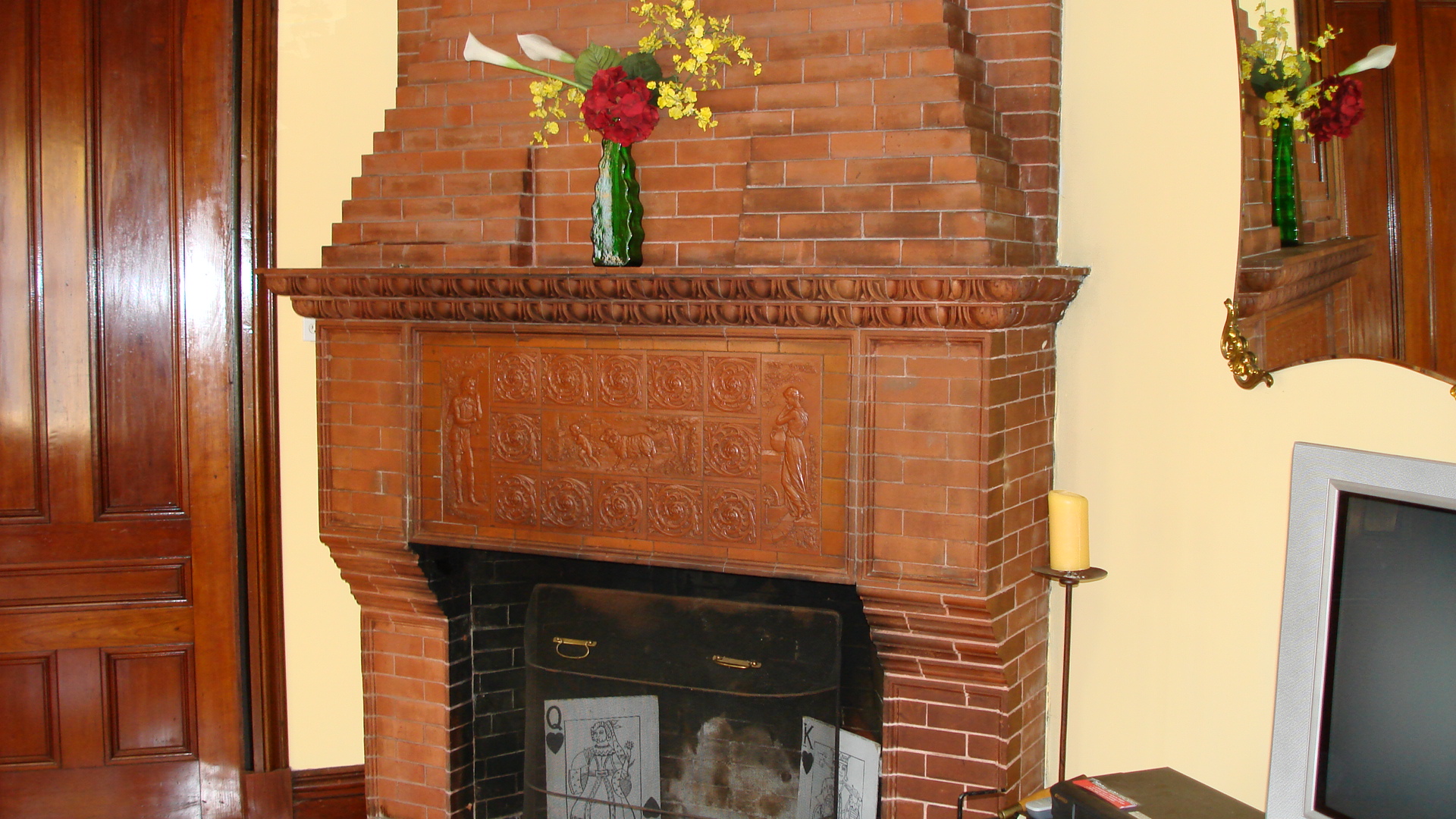
Every morning I rise at dawn to sit in the parlor. Here I watch the sunlight illuminate the, “Cat on a Hot Tin Roof” movie board in the hearth, and drink a cup of coffee in silence. I feel at home. These are the most precious moments of the day, the moment of peace before throwing the dice.

I can see out the window to the street, and this morning a handful of eggplant leaves on the tree next door have been autumnized to a transparent sheen of bronzed gold. The silence following summer has descended down over the rooftops of the people that live on East High Avenue. The sky is seared with streaks of white, and bubblegum pink clouds drift just above the rising of the sun. The moment is a peaceful stroke to a summer that has been indeterminate, chancy and without design. We came here with the intention to sell the house, and we leave without any such idea.

In the moments SC awakes, I hear his footsteps on the creaking wood floor. I close the journal and go in the kitchen to make buttermilk pancakes. When we are in Solana Beach, we eat bran muffins, usually in short order, between telephone calls, and conversations about things that it is too early to discuss. These mornings he lingers on the porch and reads the paper, because he has the time. If my body is willing, I will run down to the stream by Kelly Park, and look for the blue heron. Along the way, I pass by the quiet man with the three beagles, and a mother walking with her children to the bus stop. I will pass the funeral parlor and look the other way, and when I see the Federal Express Truck, he will wave because he knows I am the woman that receives mail addressed to Soaring Crow.

The front porches I pass are the opening pages to the home stories of people inside. If there are children, the remains of their toys will be scattered about. If they are elderly, they will leave their gardening shoes by the back door, and if they are a young couple, they will be in the midst of home repairs, a roof that needs fixing or a new coat of paint. I have observed just one campaign poster board in the neighborhood. It seems to have gone out of style to post your politics on your car or in front of your house. In the front yard of one home, a banner is pitched in the ground that reads, “Remember our Troops.” I have not asked, but it is probable they have a son serving in Iraq. The hanging flower planters have been replaced with mums and corn stalks. Some scatter straw on the lawn. I used to giggle at this September tradition, now I am almost giddy about arranging my seasonal display in the yard.

The run back through town takes me by the high school, a brawny brick building that looks like the setting for a chapter from “Catcher in the Rye.” A teacher passes by, dressed in a conservative suit and pumps, and smiles. She looks wholesome as apple pie, and I wonder if I ever looked like that. On chilly mornings, the fireplaces may be smoking, a scent as perfect as my favorite perfume. Our own fireplace is inoperable until we reline the chimney, which explains why the movie poster is in the fireplace.

By 8:00 a.m. the yellow school buses are chugging up the street and the children, gathered at our corner; bob up and down in innocent bursts of energy celebrating the beginning of a new day. I arrive home about this time, and stop to watch the quaintness of the moment. The habitat of these surroundings strips me bare of my Hollywood entertainment, Southern California roots. I am nourished by quaint tradition and scenery, and that is one answer to this mystery I call home.

I eat cider donuts when I want and instead of working out three or four times a week, I take long walks, past the Sunny Side farms to see the young foals and mothers in the corral. I dress in style-less shoes and pants, whenever I feel like it, without fashion consciousness. I do not watch the television and prefer to go to bed early and read Carson McCullers novels. If I wake up in the middle of the night, I can sit on the porch and look at the hands of a storm forming in the sky.

People come to my house without notice, and sometimes just walk in and yell my name. My favorite Broadway hangout knows who I am, what kind of wine I like and that we like to sit on the patio. Sometimes I meet strangers who have heard of the Follies House, and I feel a twinge of acknowledgment.

It does not matter what everyone else calls home, it is simply the feeling of peace, security, and acceptance. That is how you know you are home.

LYRICAL JIM MARSHALL


JIM MARSHALL AT THE OPENING OF GALLERY LOULOU TAOS. 2006

“Americas ‘true romantics will be the jazz musicians and jazz writers, living by their lyrical emotions, senses.”

From The Diary of Anais Nin volume Six.”

The throw of the dice this week lands on mysteries of character. We all have our closet of masks that we reach for when we need to camouflage our fear, insecurity, disdain, or judgment.

I wore a mask the day I went to pick up Jim Marshall at the Albuquerque airport. I didn’t want to appear unprepared, inexperienced, or effusive. As soon as I recognized Jim taking his last step off the escalator, my mask cracked. I ran to him, hugged him, and clichés poured out of my mouth: I’m so happy to see you, how was the flight, welcome to New Mexico. He nodded, smiled with closed lips, and asked,

“How long does it take to get to Taos?”

“An hour and a half.” Jim’s lips tightened.

In the car, Rudy and I whisked up conversation, but the results were drippy. Jim stared out at the window. We were in the valley of lunar like scrub rush, broken down sheds, and absentee human life.

“WHERE THE FUCK ARE WE?” Jim growled

“We’re almost there, another half-hour.”

“WHERE THE FUCK ARE THE PEOPLE?”

I tried, unsuccessfully to assure Jim, there were lots of people in Taos.  I read his mind; why did he make the decision to exhibit his iconic rock and roll photography in a gallery in  boon-dust Taos. How much longer before he can unwind with a scotch, and call home for a taste of civility.  Who are these morons driving this car anyway?

Inside the B & B suite we’d rented for Jim, I breezed across to the adobe terrace, and opened the curtains, “You like it?”

“THERE’S NO FUCKING HAIR DRYER?”

“You can borrow mine.”

“Are you hungry Jim?”

“No.”

“I have a bottle of your favorite scotch.” He picked it up, and looked for a glass. I ran to the bathroom and brought him a glass.

“See you tomorrow. “ He growled.

“What time?”

“I’ll call.”

The next day, I waited for Jim’s call. Instead I heard from Dave Brolan, Jim’s operator to the world; friend, translator, mediator and stabilizer.

“Dave, is Jim all right?”

“He’ll be all right. He’s tired and cranky. He’ll be fine tomorrow night.

“What can I do anything?”

“No, just take care of your opening business. I take care of Jim.”

I sighed deeply, and returned to the chaotic events preceding the grand opening of our gallery. Jim agreed to exhibit along with Baron Wolman and Michael Zagaris, because they hadn’t been together in a long time. I was about to ease-drop on history, with three distinguished rock and roll photographers.

My heart raced ahead of me, until 6 o’clock when Jim and Dave walked into the gallery.

“How are you Jim?” I followed behind him as he viewed the exhibition.

“Looks good.” He said. Then he was swallowed up into a crowd of guests. He stood patiently for photographs, greeted strangers with a boyish smile and brotherly handshake. He sat down at my desk and began to sign books for a tickly line of buyers.  I filled his glass with scotch and he said, “Thanks sweetheart.” My heart returned to my chest. The evening transcended into a kinetic overture of rock n roll music, reminiscing of the sixties, and feverish excitement. Around midnight, after being the center of 250 to 300 Taosaneos, Jim said, “Let’s eat.” It was snowing and pitch black outside.

Our party of seven charged in and rearranged the vibe of the banal atmosphere. Once inside the dining room Michael Z, was exhibiting impersonations of Jim, while we all laughed. Marshall didn’t twitch, or sneer; he accepted being the force of raucous laughter.

A young professional looking man approached our table.

“I apologize for interrupting. When I got to the opening, you all were leaving.  I’m really sorry I missed it; I’m a huge fan of your work Jim.

“How did you know we were here? I interrupted.

“I followed you.” He said.

“Join us.”

That night and the next three nights, Jim was host to a crowd of fans that followed him around.  I watched the mystery of his character, revealed, untouched, in focus, on what the photographs brought back to him. He was anointed by their admiration, without becoming inflated.

At the airport, Jim took me into his arms, “You did good LouLou.”

Two Years later.

I am in Santa Fe, and my social life is Camus strange. While I try to sell my photographs and write, my life is stifled by the absence of friends and parties. Jim called one afternoon.

“Loulou, my friends just moved to Santa Fe. Take down their number and call them.”

I called these new friends of Jim’s, and a week later, a man drove up, and leaped out of his car.

“Hi LouLou, I’m Jock.”  He sat down, but his spirit was an unbolted kinetic burst of energy.

“I brought this for you.” He handed me a beautifully hand crafted book of his Cuban Series photographs.

A month or so later, I received a party invitation from Jock and his wife, Annaliese. The evening was lyrical, as friends circulated between the portals, while Jock mixed  molita’s and Annaliese served Cuban food. That night, I was introduced to their friends. Now, a year later, I consider them my friends.

I called Jim after the party.

“I called to thank you.”

“What for baby?”

“For introducing me to Jock and Annaliese. Now I have friends.” Jim chuckled.

Jim passed away March 23, 2010. He was a romantic and lived by lyrical emotions and senses.

JAMMERS PART TWO


ME AND MASTER JAM, AND RUDY IN LA

San Diego was still into rage and rock and roll. The people I was calling for gigs didn’t know Hip-Hop yet.   That was too bad, because we were  having the greatest experience of our  life.  When I ran out of money I took a job managing a condominium project, where I lived rent free and had weekends and evenings for Jammers.  After a time of observing their self expression, I asked myself, where is mine?  I still refused to get on stage, Vince used to bawl me out because I made Piper introduce the group. We were good for each other, the three of us. After two years Piper moved to Los Angeles to launch his career, he had showmanship in the way he held his hands.  Vince took over the troupe and added twelve more dancers.  These two young men, they were the sparklers in my life, like that star you think you’ll never hold.  When I left the Jammers I was a different woman. They put the rhythm back in my spirit, and faith into my soul. I mean there are things a business career will never offer, you have to go into the arts for this kind of stuff.

THE JAMMERS LAUNCH


Free your mind and the rest will follow, the words from EnVogue’s latest release became a sort of mantra.

 It was a decision that came at a moment when everything else stopped making sense, except my happiness.  I tossed out the two-piece suits, and turned off the world outside. Insulated in my tiny North Park bungalow, I merged into  music and dance. During the hottest of summer days I was seated cross legged on the worn carpeting  watching MTV and flipping through magazines. 

       Imploded with music videos, magazines, and dancing;   Hip-Hop was the most exhilarating choreography around.  I watched the music videos over and over. When I searched the yellow pages for dance classes; no one was offering Hip-Hop.  With that, I thought why can’t I be the founder of a dance troupe?  

  I needed to find the  dancers to suit my concept of integrating  jazz funk, hip-hop, and Afro-Cuban  into a collage workshop.   

      Piper Jo was the first dancer to join. He came at me with everything he had; talent, faith, intelligence, and belief in this crazy white chick who wanted to hip-hop.  Piper played Miles Davis, emulated jazz-funk, and moved like Michael Jackson.  He was twenty years old and this was his first teaching job. When I asked him who taught him to dance he answered;

“Michael Jackson and James Brown. I danced in my living room every day. My mother couldn’t get me out of the house. God blessed me with this gift, and I want to share it. So if you put me in your dance troupe I guarantee, you won’t be sorry. NO, you won’t.”  

 At our first audition Piper said,  “How you expect to pick dancers, if you don’t know what to look for.  I swear Lue, you are crazy.  But don’t worry,  I’ll show you. And don’t be picking every guy out there cause he can Hip-Hop, there’s nothing to that. We want dancers with classical training.”  He was right.

“Vince Master Jam”  was a former break-dancer and studied classical dance. Vince was the coolest; he sat back and waited for his chance, unhurried, relaxed, but when the music came on, he flipped everyone out. He was thirty. Both of them belonged to the no smoking, no drinking, no drugs, group

At that first audition  I wanted to select half of the thirty some dancers that showed up.  They came dressed in street clothes, wearing scarves and bandannas.  I watched them leap, kick, split and turn inside out for the job.  I knew that I was in the right spot. Then we added Monique, a startling beauty with Afro-Cuban dance training, and a perpetual attitude of carefreeness. 

For the first few months, the Jammers taught classes under a leaky roof, on a tiled floor, without any heat.  Piper rode a bus from the other side of town to get to the building.  Vince drove an hour each way to teach one class at night. The first few months no one showed up for Vince’s Hip-Hop class.  But he kept coming back every week.  When I apologized, he said, “ That’s okay Lue. We get it going on,  they’ll show up soon– I’m sure.” 

They did show up and we moved into a well positioned Health Club downtown San Diego. The classes filled up with students, dancers, and working women looking for a new challenge. They came from all different races;  Asian, White, Hispanic and Black.  I danced with the classes and promoted our troupe. They laughed at my attempt to be a soul sister, and I laughed with them.  We were reviewed by KPBS magazine, and a photographer took photographs of us and featured the Jammers  in the magazine. People began to think I knew what I was doing. The Jammers thought I could take them places.  I pictured them on the front page of Variety, the problem was I was too early. 

THE JAMMERS KICK


In the fall of 1993, I was working for a king-sized jerk in his commercial real estate office.  Dirksen used every opportunity to remind me that I was not as successful as he was.

I was the only female in an office of twelve better suited men. My Chanel 5 was used sparingly and I dressed in navy-blue two piece suits and low-heeled pumps.  With a leather briefcase slung over my shoulder, and a HP calculator that I refused to master, I was a shrimp swimming with the sharks. On hot blue sky days I drove around San Diego searching for new listings, meeting prospects, and showing space. One eye was always drifting; scanning the horizon, museums, artists hang-outs.

I tossed out the two-piece suits, and turned off the world outside. In the next weeks my attention was drawn to music and dance. During the hottest of summer days I was seated cross legged on the worn carpeting of my little bungalow, watching MTV and flipping through magazines.

TO BE CONTINUED


CONFESSIONS OF A MOB KID


SOME children are silenced. The pretense is protection against people and events more powerful than them. As the daughter of Allen Smiley, associate and friend to Benjamin “Bugsy” Siegel, I was raised in a family of secrets.

My father is not a household name like Siegel, partly because he wore a disguise, a veneer of respectability that fooled most.

It did not fool the government. My father came into the public eye the night of June 20, 1947, when Benjamin Siegel was murdered in his home in Beverly Hills. My dad was seated inches away from Siegel, on the sofa, and took three bullets through the sleeve of his jacket.

He was brought in as a suspect. His photograph was in all the newspapers. He was the only nonfamily member who had the guts to go to the funeral.

When I was exposed to the truth by way of a book, I kept the secret, too. I was 13. My parents divorced, and five years later, my mother died. In 1966, I went to live with my father in Hollywood.

I was forbidden to talk about our life: “Don’t discuss our family business with anyone, and listen very carefully to what I say from now on!”

But one night, he asked me to come into his room and he told me the story of the night Ben was murdered.

“When I was spared death, I made a vow to do everything in my power to reform, so that I could one day marry your mother.

“Ben was the best friend I ever had. You’re going to hear a lot of things about him in your life. Just remember what I am telling you; he’d take a bullet for a friend.”

After my father died, I remained silent, to avoid shame, embarrassment and questions. But 10 years later, in 1994, when I turned 40, I cracked the silence.

I read every book in print – and out of print – about the Mafia. Allen Smiley was in dozens. He was a Russian Jew, a criminal, Bugsy’s right-hand man, a dope peddler, pimp, a racetrack tout. I held close the memory of a benevolent father, wise counselor, and a man who worshipped me.

I made a Freedom of Information Act request and obtained his government files. The Immigration and Naturalization Service claimed he was one of the most dangerous criminals in the country. They said he was Benjamin Siegel’s assistant. They said he was poised to take over the rackets in Los Angeles. He didn’t; he sold out his interest in the Flamingo, and he went to Houston to strike oil.

I put the file away, and looked into the window of truth. How much more could I bear to hear?

Born in Kiev, Ukraine, my dad’s family immigrated to Canada. He stowed away to America at 16, and was eventually doggedly pursued for never having registered as an alien. He had multiple arrests – including one for bookmaking in 1944, and another for slicing off part of the actor John Hall’s nose in a fracas at Tommy Dorsey’s apartment.

He met my mother, Lucille Casey, at the Copacabana nightclub in 1943. She was onstage dancing (for $75 a week), and my father was in the audience, seated with Copa owner and mob boss Frank Costello.

“I took one look, and I knew it was her,” was all he had told me on many occasions.

On a trip to the Museum of Motion Pictures Arts and Sciences in Los Angeles, I was handed a large perfectly pristine manila envelope, and a pair of latex gloves with which to handle the file.

Inside were black and white glossy MGM studio photographs, press releases, and biographies of my mother’s career in film, including roles in “The Secret Life of Walter Mitty,” “Ziegfeld Follies of 1946,” “Meet Me in St. Louis” and “Harvey Girls.” She was written up in the columns, where later my father was identified as a “sportsman.”

The woman who pressed my clothes, washed my hair, and made my tuna sandwiches was an actress dancing in Judy Garland musicals, while her own life was draped with film noir drama.

My father wooed her, and after an MGM producer gave her an audition, he helped arrange for her and her family to move to Beverly Hills, where she had steady film work for five years. He was busy helping Siegel expand the Western Front of the Costello crime family and opening the Flamingo casino in Las Vegas.

They were engaged in 1946.

Still, the blank pages of my mother’s life did not begin to fill in until I met R.J. Gray. He found me through my newspaper column, “Smiley’s Dice.”

One day last year, R.J. sent me a book, “Images of America: The Copacabana,” by Kristin Baggelaar. There was my mother, captioned a “Copa-beauty.”

Kristin organized a Copa reunion in New York last September. I went in place of my mother, but all day I felt as if she was seated next to me. I fell asleep that night staring out the hotel window, feeling a part of Manhattan history.

Now, the silence is over.

I don’t hesitate to answer questions about my family. I have photographs of Ben Siegel in my home in Santa Fe, NM, just as my father did. Every few months I get e-mails from distant friends, or people who knew my dad.

It seems there is no end to the stories surrounding Ben and Al. I am not looking for closure. I’ve become too attached to the story.


A GREAT CAUSE


SEE JIM MARSHALL’S OFFICIAL WEBSITE FOR ICONIC ROCK & ROLL COLLECTIBLES AND PHOTOGRAPHY AT AUCTION.

JIM’S A GREAT FRIEND.

ALL PROCEEDS GO TO THE ROCK FOR MS FRIENDS BENEFIT.

ZIGZAGGIN WITH D.H. LAWRENCE


The throw of the dice this week lands on an adventure with D.H. Lawrence. 

Our affair began in the winter of 1970, when the film “Women in Love” was released. 

            “ Let’s go see this movie, Alan Bates is in it.” Lizzie,  and I were madly in love with Alan Bates. Neither one of us had read the book, or had much knowledge of D.H. It was a film that explored sexual relations that interested us, and it was filmed in England.  Back in Junior High Lizzie sang musical songs while I taped her on a recorder.  Now in High School, she was singing Hey Jude, and I was reading the words from the record album.     

I remember sitting in the balcony of the Beverly Wilshire Theater, leaning forward in my seat  as I longed, with adolescent fixation, to be inside the story. I wanted to live in a studio like Gudren’s( the part played by Glenda Jackson) and toast my bread in front of fireplace and paint all day.  Gudren was the artist terrified of being tamed.  Her sister Ursula, who personified Lawrence’s wife Frieda, wished to make her life within a man’s.    

 “Your Gudren, and I’m Ursula,”  Lizzie claimed with clairvoyant assurance.  

 ”  No, I’m not all Gudren.” I protested.

 ” You are– you’ll see.”   Within  a year, Lizzie would be in-love in London, creating a life around a man, and I would be an art student at Sonoma State College.  


But on that lazy matinee afternoon,  we gasped, and squeezed each other’s hands, during particular erotic scenes that shocked our sensibility. It was an  awakening, of the abstraction of relationships. We’d discovered that friendships  were not as they seemed, and that love did not always have a happy ending.   It woke me to what possibilities lay ahead, and turned a defining fold in my growth.  Would I end up like Gudren?  At times the thought haunted me.

Over the last thirty years, I’ve  watched the film every time it screened on television.  It was the benchmark of my youth,   just before I wandered off into relationships with artists and bohemian living.  Several years ago I purchased a copy.  I was convinced there  was something I’d missed.   


Summer 2006 Taos, NM

 I move to Taos and Rudy gives me “Birds, Beast’s & Flowers” a collection of poems written by D.H. during his stay in Taos.   I journey out to Del Monte Ranch where D.H. and Frieda lived on and off for several years.  The ranch keepers took us on a private tour; oral and on foot.  I yearned to learn more.  Several days later I walked down the portal of Ranchos Plaza to see what new treasure books Robert had in his shop. 

   “What do you have by D.H. Robert?” 

   “Kangaroo, and Lorenzo in Search of The Sun,” it’s a biography about DH.

   “I’ll take them.” 

They were placed on the bookshelf in the bedroom and remained there unread.  By now,  I’d seen the famous stained glass window D.H.  painted in Mabel Dodge’s bathroom in Taos, and the sketchings on display at the La Fonda Hotel.  Still, I had not read any of his novels.  

Winter  2008. Santa Fe.

The down blanket is wrapped tightly around my shoulders on a snowy night.   I take “Lorenzo in Search of the Sun”  off the shelf and begin to read.  The book begins with his adventure in Taormina.     

    “I am so thankful to be back in the South, beyond the Straits of Messina, in the shadow of Etna, and with Ionian Sea in front: the lovely, lovely dawn-sea where the sun does nothing but rise toward Greece.”

 This first excerpt  leads me to chisel the cobwebs of memory to the  summer of 1972.  I left my sister in Barcelona, with a Spanish- lover, and took  a solo journey to Sicily. I don’t recall what precipitated my quest;  but the warnings and discouragement from my sister, and fellow travelers didn’t obstruct my vision. I had to go to Sicily. It turned out to be the bittersweet part of my European summer.  An  Italian hotelier rescued me, and put me up for a few weeks in his Taormina hotel; like he did with all the lost American hippie girls

Every night this winter, I huddled inside and read a few pages of the book, savoring them as I would a chocolate souffle. These descriptions of Italy, Mexico, and Taos infiltrated that clamping cold.   D.H mentions the Model T Lizzie in his chapters on the El Monte Ranch in  Taos.  I am reminded of my trip to the ranch.

This is an excerpt of the column I wrote about my visit to ranch in 2006.        

D.H and his wife Frieda moved to the Ranch in 1924.   Imagine that journey–there was no road to the Ranch, that came much later. They must have hiked up the hill or gone on horseback.  The ranch includes a small barn, and two cabins; they chose the larger Homesteader’s Cabin. It is so organic, as if spun together by weeds and timber chips, but actually is a mixture of pine logs, mud, straw and water.  The Homesteader was a man named John Craig. He claimed this property in the 1880’s, and built the cabins with the surrounding Ponderosa pine.  The pueblo Indians helped D.H restore the cabin and he moved in during the summer of 1924. 

I thought about this man sitting under the majestic beauty of the pines, and writing all day long.  The plateau of silence that envelopes this ranch is every writer’s dream.  Here he wrote some of his Taos poetry, “Birds, Beast’s & Flowers” he finished “St. Mawr,” a short novel, the novel “David,” and parts of  “The Plumed Serpent.”    D.H didn’t know how to type;   he left that task to Dorothy Brett, the artist that accompanied D.H and Frieda.  D.H invited Dorothy and several other friends to join him in Taos after his first visit in early 1924.  He was creating a Utopian society, he named Rananim.  Brett was the only artist to accept the offer.

I took a few photographs and then we trotted back to the entrance. Just as we were getting into the Van, a car pulled up. A woman got out, and called out a hello from across the way.   I yelled back that we were just leaving, and she yelled even louder, “I can’t hear you – I’m almost deaf.”  I got out of the car and went to meet her halfway. Immediately taken with her pioneering eyes, and up at dawn spirit, I yelled to Rudy to get out of the car.  

            “ I’m Mary and that’s Al over there, we’re the caretakers.  Al’s been here 50 years.”   I nodded to Al, standing a few feet behind her, watching us with a tinge of curiosity. I noticed his eyes, the color of faded denim, squirming with stories.  I tried not to ask too many questions too quickly;  Al was tired from a long journey so he took a seat on the porch.   

            “ Open up the cabin for them Mary.” He called out.

            Mary nodded and led us up the path to the D.H. cabin. 

Along the way, she talked about the ranch. There is a society named the Friend’s of D.H. Lawrence in Taos, and they want to build a big commercial visitor center on the ranch. Mary and Al think this is a bad idea, because the pines and silence are so happy, why mess up a beautiful memorial.  If you saw the ranch, you’d agree that a visitor center will look like a spaceship in this territory of natural beauty.  Mary opened the door to the cabin and showed us around. The first thing I noticed was the typewriter. 

            “ Is that where he typed? ” (She gave me printed literature that fills in the information I know now.)

            “ Nope,– but that’s the typewriter Dorothy typed on.”  The cabin is well maintained, simple and authentic.  After we examined everything Mary led us back to Al. We gathered around the porch and Al talked about the road that he cleared to the ranch, the typewriter he dug out of the dump, and the time he drove out from Chicago in his Tin Lizzie.  Rudy turned to the Model T in the parking lot.

      ” You drove that out here?”  He asked. 

      ”  Naw, that’s my brother’s. We‘re going to get it workin’ soon.  Go on in and take a look.”    Rudy jogged over and got inside.  I took photographs of him, and Al watched. 

    ” That’s how D.H. and Frieda got around Taos, they’s was great cars.”  


 Mary took me aside and told me that she was throwing a party for Al in a few weeks, and that we’d be welcome. It would be Al’s  90th birthday. I glanced over at him, petting his dog and looking very content.  I didn’t think he heard us, but he did.  “ I’ll be here until I’m 100.”  We exchanged good wishes, and many waves before leaving that afternoon.  

Was Al’s brother Gotzsche, who D.H. writes about and who toured them around in his Lizzie?   Further in my reading,  I discovered that Gudren, personified the author Katherine Mansfield.   I became more keenly acquainted with Katherine  in Saratoga Springs, when I attended a reading of her short stories at Yaddo Arts Colony. 

D.H.  is a puzzle that continues to zigzag around my  “adventures in livingness.”  He is also the author of that slogan.  I found the saying in Anais Nin writings, but in fact I think its origin is with Lawrence. 

Any dice to throw Email: folliesls@aol.com