
Memories are like walking on the sand. You try to walk over them, but they drag you in, and you can’t get out. You got to feel the sand, like memories, you got to walk through them, and know that you got them inside you. Like grains of sand that remain after you left the beach
Category: LIFESTYLE
SINGLE, UNMARRIED
DEL MAR
DEL MAR
THE pacific ocean stung me with awe. I miss her, she’ll see me tomorrow, when I dive in and embrace the currents, so many of them lately, the ocean is t he one I need now.
STARTING OVER
ADVENTURES

in beginnings. Starting over, and rewriting a life you’ve lived many years is the same as re-writing a secret story. It takes the same blind courage. About half between forty and fifty years old, you hear people say, “It’s too late to start over,” It’s not true. Behavioral change is essential to living a full life.
In the middle of the night I woke up as if it was morning. When I looked out the window, an almost full moon, white as a laundered tablecloth, was staring back at me. It said, get up and write. I retreated to my corner of the world; a tiny room bathed in blush pink and gold, and I wrote. The moon watched.
JOHNNY ROSELLI, THE BENEVLOVENT BOSS
My dad was Johnny’s pal, close, like brothers, all through their life. Uncle Johnny
was my hero, he calmed my dad down, and he loved my mother because he knew she was a saint, and he was immensely religious. This is how I imagined his murder.
A blue Ford sedan with tinted windows pulled up in front of a bar in Biscayne Bay. The driver Tony, stared out the windshield looking beyond the boundaries made by man. Two of his men, sat in silence in the back seat. They were staring ahead, in the same mental latitude as the driver, with unblinking surgeon eyes. Tony turned off the ignition, and leaned back. The only sound came from the flapping of the bar screen door.
“Move,” Tony ordered closing his eyes. Abe and Chuck exited the sedan in one long continuous motion as if they were tied together. Tony waited, without changing the position of his right hand on the leather coated steering wheel. He heard the bar door squeak as it opened. He could see Abe and Chuck entering the bar. He did not need to see them physically. This was stored in his memory. The single file procession into the bar, the attachment to the target, and the guarded exit. Tony checked the time on his pocket watch. The minutes went slowly. He lost his concentration, and was tumbling in memories; he filed them in two categories, the ones that belonged to the outfit, and the ones that belonged to him. He slipped back to the sixties, in Las Vegas, when the boys sat poolside at the Desert Inn and bit into olives handed to them by freshly polished show girls in bikinis. Then he saw Johnny, lounging at the pool, his crown of white hair perfectly combed. He was surrounded by showgirls. The dames loved Johnny. He was better than any Hollywood movie star.
Then the door to the passenger side opened. Tony glanced at the blue gabardine slacks, and Gucci loafers. He could smell Johnny, even before he got in the car. His scent was recognizable, as if he’d been born wearing Boucheron.
“For crying out loud boys–I was just getting
an erection. ”
Johnny turned to Tony, the man he met twenty years ago when he was a driver for Santos Trafficante, the Mafia Don in Florida. Johnny slapped his knee and wheezed through his laughter. Tony couldn’t return the glance, or the laughter
“Tony! What’s the long face for, are we going to a funeral?” Tony shook his head from left to right. He gripped the steering wheel, afraid he might put his fist right through the windshield. Johnny nudged his rib.
“Loosen up, you’ll miss the target.” Tony reached into his breast pocket.
“Have a cigar Johnny, fresh from Castro. The same brand you tried to poison him with remember?” Tony’s forced laughter sounded hollow.
“Hell, that wasn’t my idear; you guys are still screwing up the story. That’s your problem, it you’re gonna squeal at least tell it the way it happened.”
“You shouldn’t talk bout squealing Johnny,” Chuck interrupted.
“Shut your trap,” Tony snapped. Johnny did not appear to hear the comments, or if he did chose not to recognize the remarks of the backseat thug.
Johnny took the cigar and fingered it. He twirled it around with two fingers, and then placed it under his nostrils and inhaled deeply.
“Doc says no more–not if I’m gonna live without an oxygen tank tucked into my pocket. How ‘bout that? I even gave up the cigars when I moved down here. I can’t afford them anymore.” His laughter came easy, the way it always did.
“Johnny……I,” Tony stuttered.
“Did you hear the joke about the Italian and the Jew?” Tony nodded yes, but Johnny began telling the joke anyway. Tony turned the ignition on and drove away from town, slowly like they do in a funeral procession. They left the parts of the city ruled by law and order. The white villas shaded by palms, and guarded security gates. They descended into the pit of the buried past, the old rail yards, the site of hollow industrial buildings and warehouses. From there Tony entered an abandoned parking lot inside a junkyard, piled high with tin and steel parts. At one time they were valuable, like Johnny. Those days were gone, the junk piled up, just like dead Mafia Dons.
The sky dimmed in these parts of town, the shadows from the freeway overpass blocked the late crimson sunlight. Johnny was quiet now, sitting calmly with his hands folded together in his lap. His facial muscles relaxed, the jokes were over now. His mind was elsewhere.
“The son of a bitch gave me no choice John! I’m sure dead too if I ….” Tony stammered.
“Stop your babbling, I’m not your priest. I got a few orders for you. I want you to get word to Smiley, before anyone, you hear me. Don’t call his home; he’s got a private service. I’ll give you the number when I’m finished. He’ll know what to tell my sister. He’s a born messenger of bad news. Had to do it too many times.”
“How long you known we was coming?” Tony asked solemnly.
“Just as long as I’ve been taking orders. Tony my boy, I didn’t think I’d go out like Brando in the movie. How long has it been now? …forty-five years. That’s a long life in these shoes. The whole mess is running through my head Tony, as we sit here, it’s like a movie rewinding. You want to know the best of it; I mean the one moment worth remembering. The first night I walked into the Mayflower Hotel as a guest of Capone. My first big shindig was a coming out party for Joey Lewis’s big fight. I was so impressed with Ricca back then, I tried to mimic him. Must have looked like a soiled fool. I thought I had a smart suit on until I got to the party, and took a look around. Suddenly I felt like a paisano clown. I said to myself, I’ll never know this again; never will I feel less than the people around me. Capone treated me good in the beginning, all that money he threw around….. It impressed Rockefeller.”
“Johnny it’s getting late,” Tony interrupted.
“Capone was puffed up that night, shaking hands with Walker and the boys at Tammany Hall. We were all one then, the politicians and the boys. I don’t know how the thing got so screwed up.” The car came to an abrupt stop, and the back door opened. Chuck got out and stretched his legs. Johnny glanced at him, “See, no respect anymore. I would have diced his fingers off in the old days. Get out of the car Abe; go polish your piece or something,” Johnny ordered, and then continued his story.
“That was the night Tony, the best of everything all night and I didn’t sleep for a day afterward because I was so swollen with myself. It sounds silly now.” Just as Tony tipped his head in memory’s path, Johnny clapped his hands loudly. Tony shuddered as Johnny knew he would.
“Lemme see the equipment,” He ordered tossing the sentiment out of his voice. He turned his steely blue eyes on Tony and waited.
“They loaded me up, like I was going to a massacre. They’re still afraid of you John. Even now I have to say.” Tony rattled; he’d lost the last bit of dry eyed machismo.
“That’s a relief.” Johnny answered.
Tony got out of the car and hopped around the front to open the door for Johnny. He felt queasy in his stomach like the first time he had a hit. He watched Johnny now, knowing it would be some story to tell. First Johnny scanned his surroundings, like the eye of the camera. He could take in distant angles without moving a muscle. He could estimate the distance of things, the entrances, and exits of buildings without appearing to even look at that direction. He closed his eyes for a minute. They all watched, and waited.
“You fellas been here earlier?” Johnny shouted. The three men exchanged a mutual questioning glance. Johnny shook his head in disgust.
“How can you show up at a location without knowing every rock and puddle? Christ! Am I gonna have to shoot myself? Show me the equipment before I scare you off.”
Tony reluctantly unlocked the trunk of the car. Johnny stepped forward, pushing Abe and Chuck out of the way.
“Looks like a lot of machinery for a seventy year old veteran. Whatta they think, someone’s gonna drop down here with back up and take you boys on. What the hell are the knives for?” Abe and Chuck rocked nervously on their heels. Tony hunched over, as if drawing breath from the ground.
“Tony!” Johnny yelled.
“I‘m sick Johnny …. lemme catch my breath.”
“Yea, you do that, while Abe and Chuck sharpen the knives. Go on fellas get your pieces.”
“Johnny, we have orders,” Tony whispered
“From who? I don’t care if you skin me! I want to know who gave the order!”
“It’s not who you think Johnny, I could hardly believe it myself.” Johnny moved closer to Tony, he stroked his back, and whispered, “I promise I won’t tell pal,” he said squeezing Tony’s balls.
“The order came from the White House; they called Santos, and told him to take care of it. Johnny I can’t go through it, I can’t do it.” Then he fell to his knees and clutched Johnny’s leg, sobbing.
“It’s all right Tony, get up and give it to me the way they asked.”
“We’ll clean you out first shot,” Abe interjected. Again Johnny did not acknowledge the comment. He reached out and put his hands on Tony’s shoulders, and looked him in the eye.
“It’s bad, they got cement don’t they?”
“Oh Christ! let me take this all back. I can’t do what they ask. They want us to chop the legs, get you inside a steel drum, and in the water.” Tony suddenly heaved up, and vomited, sobbing at the same time.
“Jesus Christ Tony, you’re disgusting,” Abe shouted. He took a cigarette from his pocket. Johnny turned slowly around and glared at the bridge of his nose. He locked in on the spot, and gradually walked toward him. He reached for Abe’s pistol, a 357 magnum and holding it in Abe’s hand guided the pistol until it was pointing directly into his eyes.
“If you’re in a hurry, go ahead and shoot me now.” Abe turned sideways. Then he dropped his aim, and walked away. Johnny leaned against the car, and wiped his brow. “Let me alone for awhile; take a walk, all of you.” He ordered.
Tony pulled himself up and wiped his mouth. That was the least he could do, give the boss one last moment. He signaled for Abe and Chuck to follow and they headed towards one of the abandoned warehouses. Johnny waited until they were exactly thirty-five feet off. Then he slid into the car, and turned on the ignition. In a whirl of smoky dirt, he spun the car around three times, and flew past the boys, laughing his head off. He didn’t stop laughing until he reached the airport. He left the car, and ran all the way to the reservation desk of Air Italia. Perspiring and short of breath, he said to the pretty young clerk. “One way ticket please, to Palermo…. Sicily.” Johnny was going home.

Reference: All American Mafioso, The Johnny Roselli Story. By: Ed Becker.
My responsibility as a writer is to assure people taking a chance in life is the only way to live, and so … I throw the dice.

OUR INTERIOR LIVES.
We hear our voice utter in youth, in our exuberance for life without doubt. In adolescence we begin to question, every nuance, expression, thought and answer.
Then during our academic or wandering career years it is subordinated, for to-do lists, obligatory appearances, exams, false presentations, social expectations, ambition, competition, and a eagerness to achieve. A distortion of our inner voice emerges.
Until one day, a reminder drops in your lap, and you ask yourself, ‘ WHERE HAVE I STRAYED?
This is about returning to the forever young paradigm.
Thanks for all your comments and contributions!
EDITING A LIFE

Many years ago, after my friend, Voice of Reason read my book of poems, he said to me, “ I was a little embarrassed, it was like looking at you naked.”
Truth, it’s almost become an abstraction of the truth. Where did it go? Does it fade with age, or get reshaped by our life experiences? If everyone is lying, then why not join up? I was never a convincing liar. Yes I can stumble through incendiary confrontations, like you have to when, you’re attacked for a simple mistake, filling out applications, balancing money, returning items. I am talking about the truth in relationships, your art or business. It’s tempting to reinvent the truth. That is why it is one of the Ten Commandments.
I could write about the last road trip to San Diego, and the little sign that said Jack Ass Acres, or about all the new gangster movies, or what I’ve observed happening in the interior world of people I’ve met. The truth is, that one of my foremost characteristics is truth, and that is what speeds up the pen when I am writing, and talking, because I like to dig out the top soil and get to the roots. Here goes.
Since my lover left, in a hurry, practically skidded out the driveway, back in January, mornings and evenings feel like thunder storms in my heart. These are the moments that keep infringing on my perception. It’s like being crippled emotionally, leaning on the old crutches of what he did wrong, what I did wrong, what the world did wrong. Answers percolate, but they never satisfy the gap between the truth and my imagination. So, as any hot blooded Russian Irish woman would do, after five months of reclusive living, I got very angry, cynical, anxious, depressed, offensive, impatient, and talked myself out of the gift of life.
In this precarious state of mind, the tiniest disappointment inflates the size of a monster, and the big disappointments, just send me back to TCM to Robert Mitchum week. As it happened, the big billboard answer came on a lovely breezy night, sitting on the portal of Geronimo, with White Zen and Rudy. My cynics and sharp-tongued wit drew a lot of laughter, and my company appreciated the humor, but I was reminded of something, that wasn’t funny, it was frightening.
I was imitating those women, whom I met, every Thanksgiving when Dad pulled me into a be dazzling party scene at the home of his attorney. Every year there was this one woman who sat at the bar and mixed life’s lessons with the worst elements of human behavior. She was the queen of cynicism, and at the time, I was keenly observing of her, and sympathetic, painfully attached to understanding what she was so angry about. I had not been hurt yet.
The final siren of my digression came while Rudy and I were driving out to San Diego. Somewhere along Highway 17, the fields turned into rows of Saguaro Cactus. They didn’t look like Cactus; I perceived them as hands, flipping me off! I turned to Rudy and said, “You know my head is not working properly.”
Landing in San Diego meant I would meet with my GP at Scripps Clinic for the routine round. The visit lasted longer, I told her, that my real sickness was mental. She took a serious interest in my babbling, and emptying out the garbage I’d held back for so long. No, I have not been on any joy pills, or anxiety pills, or anything, so when she suggested a prescription to add, serotonin to my brain, I accepted her advice.
“Do you see a lot of patients with these symptoms?
“Eighty percent of my clients come in for anxiety and depression. You’re not alone.”
Today is day three of pills, and the roses are waving at me. My motor is running smoother, and I am not angry. This is an arguable confession, because I used to sneer at pill poppers for corrective behavior. Psychotherapy was instrumental in my life at one time, and I will use it again when I meet the right therapist.
Truth, about facing what we need to edit and revise cannot be shaded or ignored. If we’re not honest with ourselves, why should we be with others?
It is a day later, and while I was reading the WSJ online, I landed on this article; Why We Lie? Dan Ariely
“We tend to think that people are either honest or dishonest. In the age of Bernie Madoff and Mark McGwire, James Frey and John Edwards, we like to believe that most people are virtuous, but a few bad apples spoil the bunch. If this were true, society might easily remedy its problems with cheating and dishonesty. Human-resources departments could screen for cheaters when hiring. Dishonest financial advisers or building contractors could be flagged quickly and shunned. Cheaters in sports and other arenas would be easy to spot before they rose to the tops of their professions.
But that is not how dishonesty works. Over the past decade or so, my colleagues and I have taken a close look at why people cheat, using a variety of experiments and looking at a panoply of unique data sets—from insurance claims to employment histories to the treatment records of doctors and dentists. What we have found, in a nutshell: Everybody has the capacity to be dishonest, and almost everybody cheats—just by a little. Except for a few outliers at the top and bottom, the behavior of almost everyone is driven by two opposing motivations. On the one hand, we want to benefit from cheating and get as much money and glory as possible; on the other hand, we want to view ourselves as honest, honorable people. Sadly, it is this kind of small-scale mass cheating, not the high-profile cases, that is most corrosive to society. “
MOTHER’S DIARY
MOTHER’S DIARY

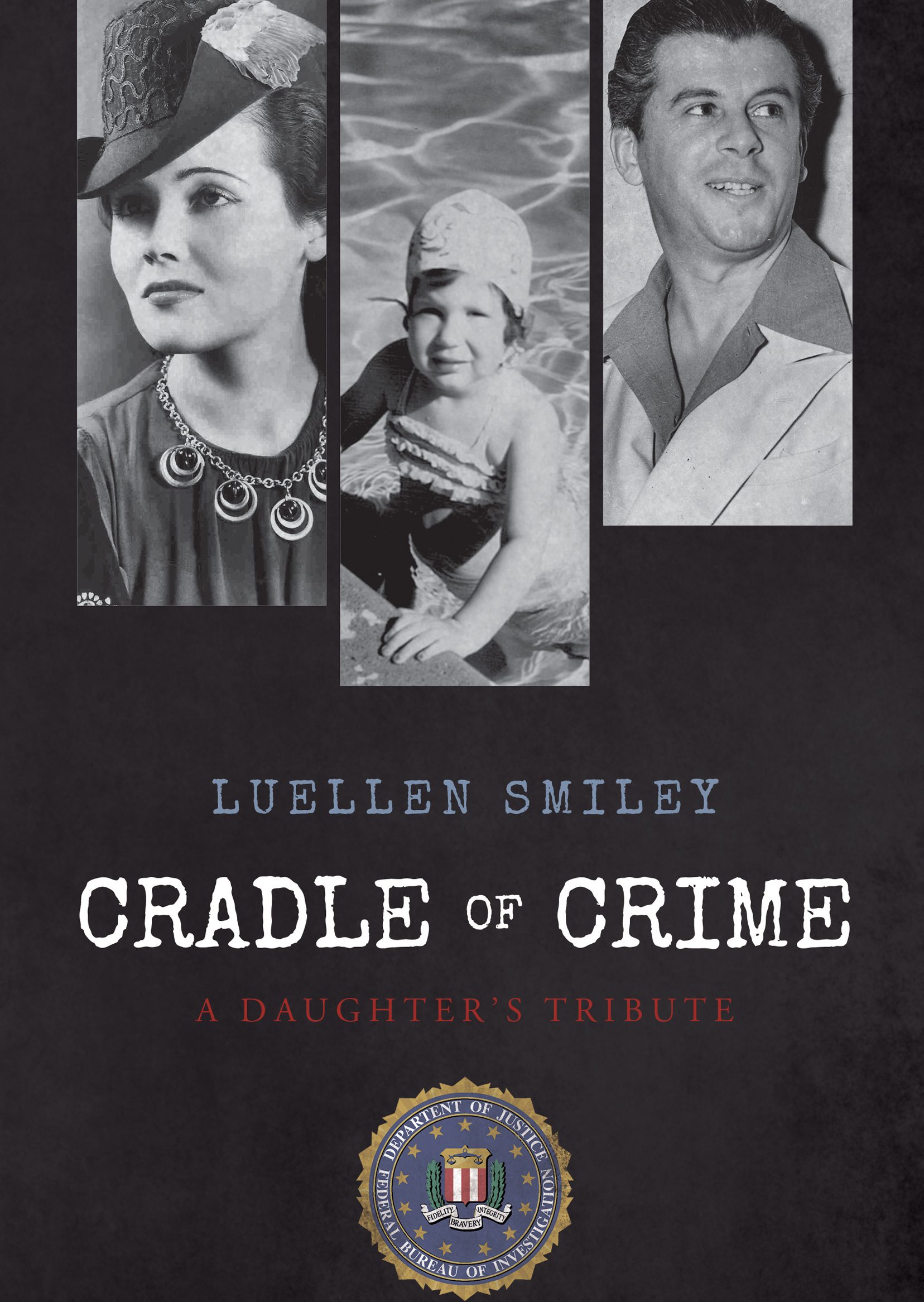
The diary my mother never wrote is from what I read in the FBI surveillance reports, newspaper articles and what my father told me. My mother’s emotion’s and thoughts erupt from years of research, intuition and imagination. When I was eleven she gave me a diary. I’ve been writing ever since. I wanted my daughter or son to understand who I was, in case I died young like her. Instead I became dedicated to writing not childbearing.
I think every mother should keep a diary for her children.
Manhattan, December 1944
I am dancing at the Copacabana Night club for the next few weeks. This tiny smoky club is filled with many interesting people. It’s different from any modeling job.
I’m tired after working all day and night, and then taking the train back home to West Orange. Some of the girls are staying at the Barbizon Hotel, so I may also if it’s not too expensive.
Last night, a group of men were seated in the front row. I didn’t know who they were, but this one stared at me all through the show. He sent a bouquet of long-stemmed roses backstage and asked me to meet him for a drink.
When I declined, he was very insistent, and so persuasive I gave in. Later on, I found out he was seated with Frank Costello, the gangster. His name is Allen, and he asked me to dine with him the following night. I hesitated again, and I’m not sure why. He made me laugh and entertained everyone at the table.
January 1944
A talent agent from Hollywood came to the Copa to see all of us dance. Mum is so excited she is already telling everyone in town, I hate when she does this.
Allen called and I agreed to dine with him. We went to El Morocco. He knows so many people. He says he’s in the film business, but there’s talk amongst the girls that he’s a gangster.
March 1944
I’m going to Hollywood for an audition. Swifty Lazar, the one that came to the Copa to see our show, said MGM is signing musical actors. They liked my photos. Allen lives in Hollywood, and is handling all the details. He’s become very interested in my career. It’s all so sudden. There isn’t time to think.
April 1944
I spent a week in Hollywood. Allen drove me all over the city, took me to Santa Monica to see the ocean, to the nightclubs on Sunset Boulevard, and Beverly Hills.
It’s like a dream. I love the city, and MGM has offered me a contract. Again, Allen is helping me make decisions and understand the film business. I don’t know what he does, but he carries a lot of cash. He gets very disturbed when I question him. I met his friend Benjamin Siegel. They are both so handsome and get anything they want.
Summer 1944
We are moving out to California next month. Allen found an apartment in Beverly Hills for us, near where sister Pat can go to High School. She’s so excited. One of the models told me Ben Siegel is a gangster. I wish Allen would open up to me more.
When we moved, our new apartment was on a beautiful street. The apartment is smaller than home, and Mum misses her garden, but she seems happy. She found a Church she likes. She is going to learn to drive.
I have already learned to drive and am saving for a car. Allen knows someone who sells cars, and said he can get me a very good deal. Sometimes, I don’t hear from him for a week, and then he shows up on the studio set with presents.
Allen, Ben and George Raft were arrested for bookmaking. George called and said it wasn’t like the papers wrote, and that Allen would call me when he could.
I’m not to discuss this with anyone. I hid the paper from Mum.
George took me out to dinner. He wants me to be in a movie with him called Nocturne. He’s very fond of Allen and said not to believe what I read in the papers.
Next week we begin filming “Ziegfeld Follies.” Fred Astaire is magnificent to watch. Life is spinning. There is no time to read, or even think. Everyone in Hollywood wants to be a star. I still daydream of going to college one day.
November 1944
I am in love with Allen. There is no turning back. He is Jewish, and his family lives in Winnipeg, Canada. He won’t talk of them, but said he loved his mother.
I wonder so often about his life, but I cannot ask questions. Maybe one day he’ll trust me more. He’s suspicious of everyone. He said he’s going to marry me when his life settles down.
THE MEMOIR IN PROGRESS
MY HOODLUM SAINT
WHERE TO BEGIN THIS STORY OF A FATHER THAT I ONLY CAME TO UNDERSTAND BY READING HIS FBI FILES, BOOKS ABOUT MOB HISTORY WRITTEN BY LAW ENFORCEMENT AND COLLEGE PROFESSORS, AND DOCUMENTARIES PRODUCED BY FOES OF MY FATHER.
My last year with Dad was 1981. Naive, and unconcerned with where I was headed, or how I’d get there if I figured it out, I was spinning around in an executive chair; waiting for the big hand on the black and white office clock to set me free. Time didn’t pass; I hauled it over my head, in my bland windowless office, under florescent glare. I was trouble shooting for an ambitious group of USC guys as they gobbled up all of Los Angeles real estate. Without any real sense of survival or independence, my life was in the hands of my father.
“Meyer’s coming to see me; haven’t seen the little guy in twenty-five years.” Dad said during a commercial break.
“Meyer Lansky?” I asked as casually as he’d spoken.
“Who else?”
“Why did you two wait so long?”
“It’s no concern of yours; he’s my friend, not yours.” I was twenty-nine years old and still verbally handcuffed.
The three of us went out to dinner, and while the two of them spoke in clipped short wave syndicate code, I
noticed that neither one of them looked at all happy. It was rare to catch my father in public with a friend, without raucous laughter, and storytelling. My attempt to revive the dinner conversation with my own humor,returned two sets of silent eyeball commands to resist speaking.
Several months later I received a call from Dad asking me to come over to his apartment, he had collapsed on the bathroom floor. When I arrived, he pleaded for me to stay close by. “I’ll be all right in a few minutes; I just need to catch my breath. ” I sat outside the bathroom door biting my nails, and waited, like our dog Spice, for my orders. For the first time in my life, he was weaker than I, and my turmoil centered on that unfamiliar reversal of roles.
OBSERVATIONS

Illusions are what deafens , and reality
is too loud.
“THERE IS NO SUCH THING AS THE MAFIA”
Growing up the daughter of a gangster meant that I would remain a little girl forever. My father died when I was 29, but emotionally I was still a teenager.
Had I had known that I was seated next to one of the most powerful and influential men in the Mafia, Johnny Roselli, then I would have listened with sharpened ears, and repeated bits of explosive headline blood curdling stories to my girlfriends. That would have placed myself, my father, Johnny and my friends in jeopardy. An informant from the government may tag me on the way home from school, or tag one of my friends, or an enemy of the Boss, may pick me up from school and not bring me back. Everyone is suspect: an informant, or weak enough to become an informant, a loose lipped wise guy, a bragging connected businessman, a friend of a friend, a cousin of a brother, and a daughter of a gangster. We are all potential targets of this organization known as the Mafia, Mob, syndicate, Costa Nostra, or our thing. Growing up in this circle of gamblers, killers, fixers, enforcers, bookies was like growing up in a novel, it was a fictional tale all the way, until the end of my father’s life. There is a drop down board that appears every time I write about our family business that reads,
“ How dare you open my life to the world, what do you know? You know nothing little sweetheart, and that’s the way I planned it. “
“There’s no such thing as the Mafia! If you ever mention that word again, you’re leaving this house!” I melted down to the floor, and he was ominous as God standing over me. I would never mention the word again, I promised, and I would never believe in the Mafia.
 ADVENTURERS IN LIVINGNESS