
Five mass shootings in one week, and all I hear is prayers. Please forgive me, but I am enraged with the absence of humanity, accountability, and chat all day about how to be famous and healthy. IT IS CALLED MENTAL HEALTH.


Five mass shootings in one week, and all I hear is prayers. Please forgive me, but I am enraged with the absence of humanity, accountability, and chat all day about how to be famous and healthy. IT IS CALLED MENTAL HEALTH.
NOVEMBER 2021

MONTHS LATER ON THIS DAY, she closed the shutters to him and alchemized from a cocoon to a butterfly beneath a circle of friends in tune. She removed the photos, gifts, and letters and put them in a box to reminisce later. Talking out loud, “She takes just like a woman, but she will not break like a little girl.” No more hours fanning the past; on this day, my view is spanning.” She sat peacefully by the fire into the night and let her broken wing sing as she watched the wood turn to gold.

In a current of unexpected life moves, I floated towards the Pacific Ocean and landed along the fragile, factious Santa Monica Mountains to Malibu.
The salty seaweed smell of the ocean streams through my car, driving down the Pacific Coast highway on my way to buy groceries. Vintage Market is new to Malibu, and clerks are giddy about their jobs. They may be aspiring actors or former actors.
I walk in and get a phone call that I’d been waiting for so, I set my cart down on a shelf and took the call. During the half-hour conversation, my eyes were fluttering through the scene: tanned surfers, affluent college students, and diamond-rich men and women of age that don’t check their bank balances. Because of this, expressions are chilled as fine wines, and smiles are sublime or radiating. They are a mostly content population of 13,000. The median home price is $901,000, and the median income household is $127,000. Here in Malibu every thing looks different from Santa Fe: The staging of ‘was in the business, am in the business, or want to be in the business,’ surfaces and dominates the scenery.
They are beautiful-the young teenagers who surf and paddle are true blondes, the blue eyes scintillating pools of water, young women are saddled onto 6” platforms, and then there are the stand-out power people, who will not acknowledge anyone, and expect everyone to acknowledge them. Tucked in the mountains, are extraordinary artists who live off the grid the way most people prefer to live in Santa Fe.
I am learning slowly and still hiding out at Chantal’s, where I am living, two miles up from PCH off Malibu Canyon Road, behind a gate. Bohemians, artists, home-office screenwriters, producers, and famous heirs of recognizable movie stars live there.
In the last hour, I walked down the road in the hands of sloping hillsides, horse ranches, and signature homes behind walls as high as the palm trees, built to withstand the typhoons of nature and mankind. In the daylight a swirl of rain and clouds, it was as if I was in Ireland, walking along a road in Kilkenny. I roped in my imagination and returned to the mountains, which will teach me how far to go, how to duck a racing motorcycle car, or confront a coyote or a snake.
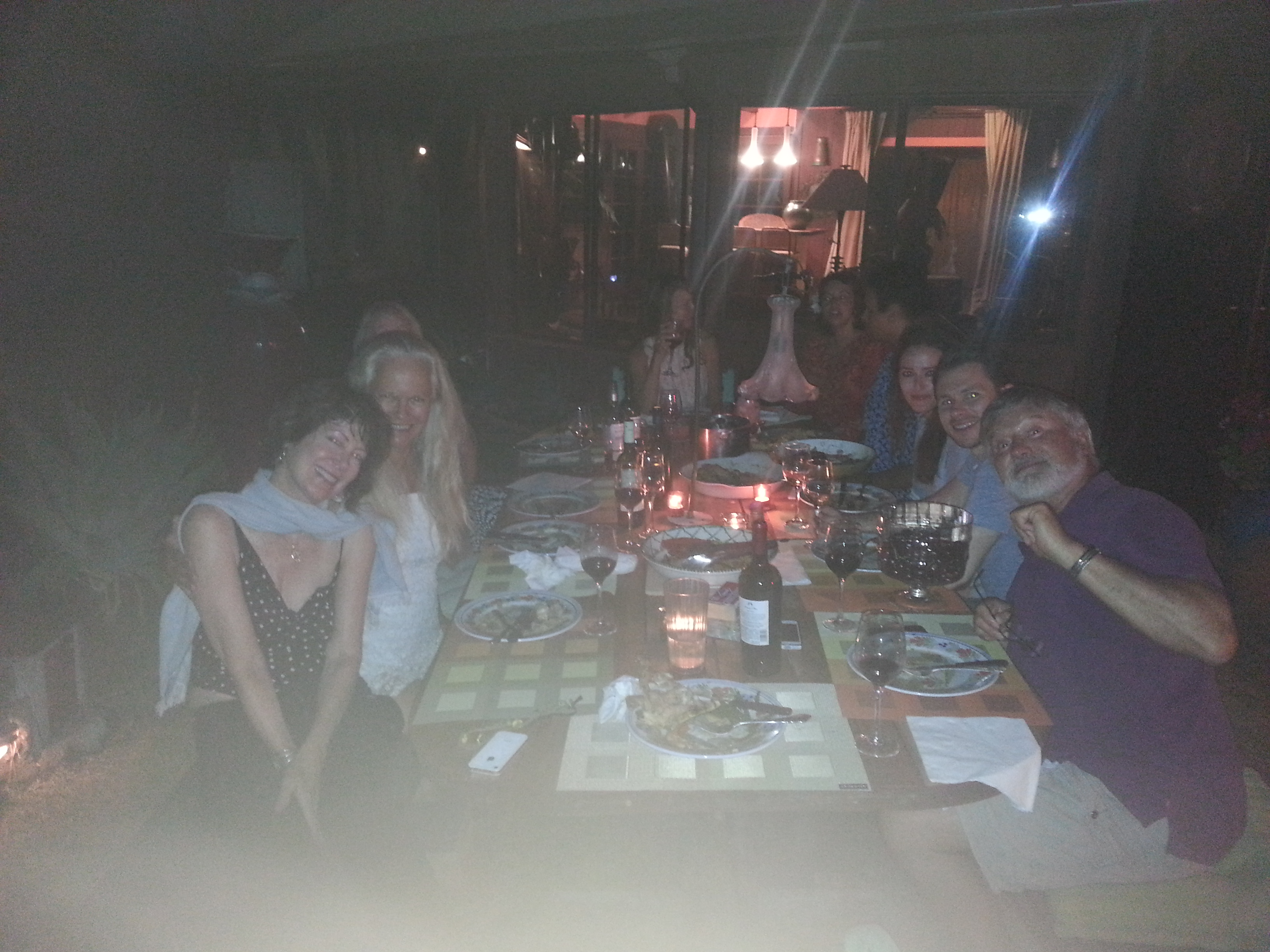
A full transcendental moon dipped into the black-out mountain evening, and has cured me of interior turmoil for the time being. This is part of adventures in livingness in what locals call the bu. Chantal’s artistic compound of eight cottages and seventeen acres burned to chips in the Woolsey Fire. One night with Chantal and Neighbors.
Today, as the Bu, Palisades, and five other fires demolish humanity’s lives, I am grateful I was able to return to my childhood memories in Malibu for one summer in 2017. My family home burned in the Bel Air fire in 1961… No WATER. SAVE THEM THIS TIME, LA, AND DON’T LIE TO THEM.


Adventures in livingness aren’t just about extroversion, what we say, how we behave, or how we respond. More importantly, they are about our inner changes when life demands that from us. No one hears what threads are spoken in our heads, the ones that are flawed from indecisiveness, the ones that have been molded from things long past, the new threads that are unfamiliar, and the ones we need to rip out entirely.

BEFORE I think about how to respond to a stranger, I feel them; the gestures, expressions, tone of voice, movement, conversation, mannerisms, and eyes. I acknowledge feelings first, then I think.

When I’m driving, I feel sprite or gloom. I feel a twirl of sensory perception from the drivers’ faces and witness the joyous reciprocal ink of friendship between shopkeepers, cops and dining customers, city workers, and service technicians trying to fix satellites and cables in a village with inconsistent infrastructure.
SOME of my principles are unsupported by experience, but more with GROWING UP WITH GANGSTERS training that I cannot erase. My theme is unbalanced; I take the extreme path instead of the path with arrows. It is why writing settles my sea-saw. As I sit in my antique wooden chair looking out, feeling Saturday’s silence beneath a blanket of blue sky and radiant sunshine, a tiny thread of peace realigns a week of political profanity, war, and death, but they got Sinwar! The sedate and quiet surroundings relieve my spinning head, and I just continue to sit and not fidget.
I’VE observed the village people; some appear to drag their bodies rather than hotfoot. I wonder if all the global Google news has weighed us down. Teens signal youth’s fascination with experience, newness, and expectation.The exchange of human voices as pedestrians walk along the street, I’ve noticed that New Yorkers speak in voluminous pitch. I can hear their voices from my bedroom on the third floor with closed windows. Humanity is our background symphony, along with the crows, lawnmowers, power saws, blowers, and racing cars. This street is part of my theme; a juxtaposition of historic homes and modern toys. I am a 21st-century flapper clinging to the roar of independence, self-expression, and breaking the rules. If we feel the chord of festivity, we should not hold back. I am going out now to see if I can feel more.
Sunday October 20,
I walked out to the porch and slouched against a pillar to feel warmed by the sun. My dermatologist advised that I should not stay longer than ten minutes, even with fifty UV protection. Today is family day and a car show in the village. I experienced it two years ago, so I remain at home; listening to the geese go south for the winter and feeling solitude. It’s like a branchless tree, a storm without an umbrella, a garden without flowers, and a home without company. Oh, snap out of it. Go to Henry’s Tavern and watch the game with men losing their cool. They get insanely raucous s over football.
Why can the leaves turn lemon, plum, and tangerine? Why does the sky allow storms to shake up its translucent surface? Why can nature reinvent momentarily with wind, rain, hurricanes, and earthquakes? Why can’t I change the colors of my mood? I get daily messages from an Instagram member named Asad—inspiring, and he circulates around the themes of mood, attitude, loneliness, and inner strength. All of these have toppled my life since I can remember. I’m more taciturn than most people perceive. I can display a mannequin of poise and joy, but if you remove the surface, beneath is a conundrum of self-doubt, second-guessing, punishment, and fear. What’s even more destabilizing is I actually think I’m alone.
Last week, I observed the cashier’s facial expression and gestures at the Stop-& Go, which alerted me to her distress. I was buying a Cadbury chocolate bar after reading that chocolate is mood-changing, not just the hip-hop of energy; it can change your mood.
” I read that chocolate helps with depression, and these dreary dark days don’t help,” I admitted.
” Oh, I know. I used to be a registered nurse,” she said, facing me squarely into my eyes. I noticed a lot of cashiers don’t do that anymore.
” I suffer with anxiety and depression so I had to quit. I can mix up a Cadbury bar with a Snickers but not with medication.”
” I have the same as you, it’s changed my life as well. ” I looked at her name tag, without my glasses.
” You’re name is America? She laughed and her smile emerged.
“No, underneath, Dolores.”
” Thank you for listening to me,” I said
” Thank you, customers rarely acknowledge us.”
We don’t want pity or empathy; we all need recognition, and not in a text!

I’m angry. We can go to the moon, build cities, and predict weather, but why are we waiting now to rescue North Carolina, Florida, etc.?
The hurricane was reported days ago. I looked up the exact date but couldn’t find it. All federal resources should have been there before Helene took lives, animals, homes, streets, businesses, and infrastructure.


April 6, 2015

Al Smiley
By MARTIN ZEILIG
On the evening of June 20, 1947, less than six months after he opened the Flamingo Hotel-Casino in Las Vegas, Ben “Bugsy” Siegel died in a barrage of bullets through the front windows while sitting on a couch in his Beverly Hills mansion at 810 Linden Drive. Assassinated at the age of 41, Siegel was one of the USA’s most notorious gangsters.
A former Winnipegger, Al Smiley (1907-1984) was with Siegel that evening.
“My dad was seated inches away from Siegel, on the sofa, and took three bullets through the sleeve of his jacket,” said Luellen Smiley, a creative non-fiction writer, award-winning newspaper columnist, and Mob historian who lives in Sante Fe, New Mexico.
She consented to an interview with The Jewish Post & News earlier this winter.
“He was brought in as a suspect. His photograph was in all the newspapers,” said Luellen.
“He was the only nonfamily member who had the guts to go to the funeral.”
So who was Al Smiley?
Born in Kiev, Ukraine in 1907 as Aaron Smehoff, Smiley and his family – father Hyman, mother Anne, sister Gertrude (who became a school teacher and lived in Winnipeg until her death many decades later), brothers Samuel and Benjamin – immigrated to Winnipeg when he was five, said Luellen Smiley, during a recent telephone interview with this reporter from her home in Sante Fe, New Mexico.
“My grandfather was a kosher butcher and delicatessen owner,” she continued, noting that the family home and butcher shop was located at 347 Aberdeen Avenue.
“He maintained an Orthodox household and expected that his eldest son would become a rabbi. But, my father was rebellious and interested in sports, especially hockey.”
This caused conflict between the willful youth and his rigid, religious father.
So, the teenager fled Winnipeg for greener pastures in Detroit, Michigan via Windsor, Ontario in 1923.
He got a job travelling with the Ringling Brothers Circus and ended up in California where he was arrested for a drugstore robbery in San Francisco and sent to Preston Reformatory School in Ione, California, Luellen noted.
“It was there that he met legendary movie director Cecil B. DeMille,” she said.
“He was doing some sort of research for a movie. My father asked him for a job in the movie industry upon his release, and DeMille agreed. He found my dad work in a wardrobe department.
He later became a property man, then a grip, the person in charge of production on a set, and eventually a producer.”
He befriended celebrities like George Raft, Eddie Cantor, Clark Gable, Lauren Bacall, along with such gangster associates as Ben Siegel.
“I’m pretty sure Dad met Ben through George Raft,” Luellen Smiley speculated.
With Siegel’s help he opened a nightclub in L.A. sometime in the late 1930s.
Smiley would later tell his daughter that Siegel was “the best friend I ever had.”
In her soon-to-published memoir, excerpts of which she agreed to let this newspaper print, Luellen Smiley reveals the conflicted feelings she had growing up, and into later life too, about her father:
“Some children are silenced. The pretense is protection against people and events more powerful than them. As the daughter of Allen Smiley, associate and friend to Benjamin ‘Bugsy’ Siegel, I was raised in a family of secrets.
“My father is not a household name like Siegel, partly because he wore a disguise, a veneer of respectability that fooled most. It did not fool the government.
“When I was exposed to the truth by way of a book, I kept the secret, too. I was 13. My parents divorced, and five years later, my mother died. In 1966, I went to live with my father in Hollywood. I was forbidden to talk about our life: ‘Don’t discuss our family business with anyone, and listen very carefully to what I say from now on!’ But one night, he asked me to come into his room and he told me the story of the night Ben was murdered.
“When I was spared death, I made a vow to do everything in my power to reform, so that I could one day marry your mother.
“Ben was the best friend I ever had. You’re going to hear a lot of things about him in your life. Just remember what I am telling you; he’d take a bullet for a friend.
“After my father died, I remained silent, to avoid shame, embarrassment and questions. But 10 years later, in 1994, when I turned 40, I cracked the silence. I read every book in print – and out of print – about the Mafia. Allen Smiley was in dozens. He was a Russian Jew, a criminal, Bugsy’s right-hand man, a dope peddler, pimp, a racetrack tout. I held close the memory of a benevolent father, wise counselor, and a man who worshipped me.
“I made a Freedom of Information Act request and obtained his government files. The Immigration and Naturalization Service claimed he was one of the most dangerous criminals in the country. They said he was Benjamin Siegel’s assistant. They said he was poised to take over the rackets in Los Angeles. He didn’t; he sold out his interest in the Flamingo, and he went to Houston to strike oil. I put the file away, and looked into the window of truth. How much more could I bear to hear?
“He stowed away to America at 16, and was eventually doggedly pursued for never having registered as an alien. He had multiple arrests – including one for bookmaking in 1944, and another for slicing off part of the actor John Hall’s nose in a fracas at Tommy Dorsey’s apartment. He met my mother, Lucille Casey, at the Copacabana nightclub in 1943. She was onstage, dancing for $75 a week, and my father was in the audience, seated with Copa owner and mob boss Frank Costello.
“‘I took one look, and I knew it was her,’ was all he had told me on many occasions.
“On a trip to the Museum of Motion Pictures Arts and Sciences in Los Angeles, I was handed a large perfectly pristine manila envelope, and a pair of latex gloves with which to handle the file. Inside were black and white glossy MGM studio photographs, press releases, and biographies of my mother’s career in film, including roles in ‘The Secret Life of Walter Mitty,’ ‘Ziegfeld Follies of 1946,’ ‘Meet Me in St. Louis’ and ‘Harvey Girls.’ She was written up in the columns, where later my father was identified as a ‘sportsman.’ The woman who pressed my clothes, washed my hair, and made my tuna sandwiches was an actress dancing in Judy Garland musicals, while her own life was draped with film noir drama.
“My father wooed her, and after an MGM producer gave her an audition, he helped arrange for her and her family to move to Beverly Hills, where she had steady film work for five years. He was busy helping Siegel expand the Western Front of the Costello crime family and opening the Flamingo casino in Las Vegas. They were engaged in 1946.
“Still, the blank pages of my mother’s life did not begin to fill in until I met R.J. Gray. He found me through my newspaper column, ‘Smiley’s Dice.’
“One day last year, R.J. sent me a book, ‘Images of America: The Copacabana,’ by Kristin Baggelaar. There was my mother, captioned a ‘Copa-beauty.’ Kristin organized a Copa reunion in New York last September. I went in place of my mother, but all day I felt as if she was seated next to me. I fell asleep that night staring out the hotel window, feeling a part of Manhattan history.
“Now, the silence is over. I don’t hesitate to answer questions about my family. I have photographs of Ben Siegel in my home in Santa Fe, NM, just as my father did. Every few months I get e-mails from distant friends, or people who knew my dad.
“It seems there is no end to the stories surrounding Ben and Al. I am not looking for closure. I’ve become too attached to the story. To me, he was a benevolent father, a wise counselor, and a man who worshipped me.”
Luellen Smiley can be contacted via email: folliesls@aol.com
E-mail (required, but will not display)
Website
Title (required)
Notify me of follow-up comments


https://wordpress.com/post/odysseyofadventures.com/11523


 CASEY, A WOMAN OF SECRETS
Sometimes, a blank piece of paper is the only way to begin, as it is today. I look out the window at blooming trees and a cupful of flowers rising from the ground. The sky is pale grey, and it is just fifty degrees. May, my birthday month, reminds me of Casey, who threw the dice all her life. She gambled on her dreams.
Casey never told me much about herself. She lived in the present moment and considered her past a private matter. Once I learned of her struggles as a young woman and her chosen life, she became more real than when I’d known her. During the years we were friends, she handed out selected stories, abruptly, with final endings. Being the inquisitive character, the shallowness of her stories bated me. I had to pry the truth out from other people who had known her, and from government documents.
Casey’s first gamble was at sixteen years old. She sent in a photograph of herself for the Redbook Magazine modeling contest. If she’d won, the Powers Modeling Agency in New York City would grant her an audition as a model. Casey lived with her mother and sister in East Orange, New Jersey. Her father had died suddenly, leaving the family without a financier. Her mother was lost without her husband and unsuited to join the workplace. Casey didn’t tell her mother about the contest until she received the letter of congratulations.
John Robert Powers met Casey in his office on East 56th Street and signed her as a Powers Girl. She was stunning to look at, she was photographed like a movie star, and she was modest. John Powers did not look for aggressive, pouty-lipped fearlessness. The Powers Girls were captioned Long Stemmed American Beauties because they were wholesome, beautiful, tasteful, courteous, and virtuous. They were so far from today’s runway models that it is almost a reversal of style. The models of the thirties were ordained to set the highest example of classic good breeding and education. John not only schooled them in fashion, and individual taste, he instructed them in moral integrity, independence, and patriotism for their country. So Casey went to school at John Robert Powers and became one of the top ten models in the country.
She was a blue-black-haired Irish beauty with emerald green eyes and perfect teeth. She stood only 5’ 7”, but that was fairly standard in those days. When I knew her, she was still thin and beautiful, but she did not fuss about herself or spend much time at her vanity. As a Powers model, Casey had a long line of gentlemen callers. Powers Girls were invited to all the nightclub and dinner show openings, sporting events, community galas, and fund-raisers. Social engagements were part of her job. Casey was not a woman of idle chat, in fact a lot of people thought of her as restrained and unfriendly, maybe even snobbish. I think it was more secrecy. People were always prying into her life because it looked glamorous. But there was another side to that glamour she didn’t want to put a mirror to.
One evening, Casey had a dancing engagement at the Copacabana nightclub in New York City. She was on stage with other dancers when a gentleman noticed her. The next chapter of Casey’s life began that night. At twenty-two years old, she fell in love with a man thirteen years older, of the Jewish faith, and who lived in Hollywood. Casey never told me that she fell in love with a gangster. I do know once she felt love for this man, it could not be reversed. The consequences of her love forced her to change and adapt to a new kind of life and different people.
She did not bury or give back her love after she learned what he did for a living. She asked him to reform his criminal activities, and he agreed if only she would marry him. We all know at twenty-two, a woman believes she can change a man, and a man lets her think she can. Without that dream, many lovers would not have found their mates.
Casey married her love and spent her life trying to keep her husband on track with honesty. I met her husband just after he tried to reform and was beaten down by his past mistakes. I called him Daddy.
ADVENTURES IN LIVINGNESS
Achievement knocked down the barrier of fear. It feels like lifting off from ground level; I am floating like I used to be in the swimming pool, and I am only at my desk reading the news from my attorney. From one beginning to an ending, five years later, after tedious research, unscrambling legal language, and searching for the meaning behind the case references, this journey is over. I won the lawsuit against the bank that attempted to foreclose on my home and Dodger, my ex-partner of thirty-five years, who, for still unknown reasons, pursued the foreclosure.

Agape, eyes widened, nerves settled like snowflakes; the joy of achievement cannot be understated. During this phantasmagoria, life beyond research, consulting with foreclosure agencies, banking laws, and regulations, I detached from my passion for adventure, creativity, parades, parties, and socializing; I sat alone, and resilience shadowed, then enflamed like a log of fire, encapsulated into a daily doctrine. Music by Ennio Morricone, blue note Jazz, the everchanging scenery of seasons, phone conversations with friends who released ambers of comfort, confidence, and advice, and TCM films nuzzled my fatigue.

Some days, I remained in bed, staring at my Icart Ladies of Leisure prints, or sat by my favorite window seat and studied clouds, birds, and leaves. The blossom of tenacity grew into a tree trunk and taught me the art of persistence and emotional strength, which were missing links in my character.
Achievement in fine-tuning relationships, setting down the needle gently instead of plummeting riffs and arguments. In the present, as you all know, if you read the news, our culture has replaced argument and debate with assault and violence. I digress; renewed confidence in my aptitude to fight battles, disputes, and disappointments without Dodger is as solid as concrete.
The next episodic internal journey is regaining my passion for opening the door to interaction with strangers and discovering newness in that engine of life. I hope this admission reaches others who are experiencing depriving themselves of love within and without.

My memoir, published in 2017, Cradle of Crime-A Daughter’s Tribute is old news to me. Not to Charlie. I met him as he was renovating a house across the street. I didn’t introduce myself as Luellen Smiley, just Luellen. I asked if he would take a look at my house for an estimate on painting. He was sweet, a mountain man with a long white beard and hunting boots. Last week, he texted me,” I read your book, my friend and I exchanged Goodreads suggestions, and I told him to read your book.” How did he connect me to my book? I didn’t ask, and now it piques my interest. I’d walk across the street and ask him, his truck is there, so is the ice, and I don’t feel like skating and falling on my butt.
Winter in upstate New York to a gal from Los Angeles is likened to living in the North Pole. Going on five years, my last, I’m not resentful and scouring, but I am not acclimated. Indoors I dress in sherpa from head to toe and wear those finger mittens. Today it is full-throttle rain showers. The street is vacated of traffic and the public, it’s a good day to work on my next book. On my desk are a few writing books, the favorites: Henry Miller on Writing, The Diaries of Anais Nin, and Albert Camus’s The Stranger. I haven’t bought a current book in years, the last one was Sam Shepard, The One Inside. I like Miller’s passage: ” The writer lives between the upper and lower worlds.: he takes the path in order eventually to become that path himself.”
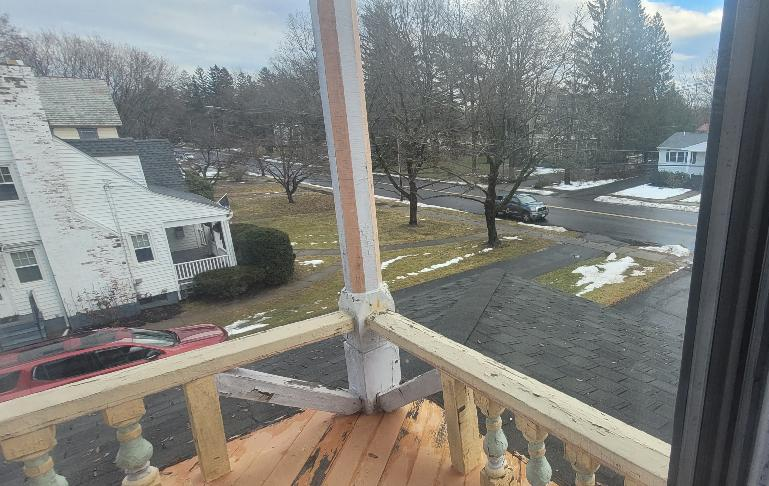
Aging in my seventies delivered opening windows to restoring, rearranging, and repairing my persona, personally and in public. If you’ve read any of my essays, then you know explicit is the vortex that moves my thread. Restoring the brick-and-mortar of truth is at the forefront; the next layer is a confession of what I cannot speak in person to anyone, even my closest pals. The third is abstaining from too swift a pen; I’m always in a hurry: I prepare food quickly, walk as if I’m late for an engagement, and wash dishes with perfunctory interest. Everything when I think about it. I know why that is, my father. His shadow was always behind me as I went about my teenage activities at home, so I rushed to get out.
Last week, I stopped taking the powerful Lorzapam medication for neurotic anxiety. My heart raced when I opened an email from my attorney, when a stranger knocked at the door, or when I entered a public place alone. A new sideways rain shower just filled the window pane above my desk. Here is the fourth restorative: get outdoors! I don’t walk in snow or ice, but good old water rain, which I call God’s tears, is one of my favorite nature adventures.
Admittedly, my writing has granulated since moving here. It is tiny in thought and not always tied up neatly. My persona in public needs to be side by side with wine in a dining setting. What I contribute must be joyous and humorous because one of my favorite human activities is to evoke laughter and smiles. I broke away from my taverns and abstained from alcohol for a week. In the second week, visceral and bodily alarms have gone off. I’m lucid, motivated, and even decisive.
From Anais Nin Diaries 1939-1944.
“I respond to intensity, but I also like reflection to follow action, for then understanding is born, and understanding prepares me for the next act.”

‘
Navigating through my post-work world
Every Day is a Gift!
Entertainment website · Marketing agency · Advertising agency 🎧⽣👠💋
The inner voice where gaps of expression are liberated.
Funny Blogs With A Hint Of Personal Development
Become a Story Hunter!
It's just banter
Larry Harnisch Reflects on L.A. History
Escaping reality or facing reality.
Saratoga Springs, New York - Arthur Gonick, Editor
Space, Travel, Technology, 3D Printing, Energy, Writing
Live Your Dreams Don`t Dream Your Life
Even a bad guy can have redeeming qualities
Books and Lifestyle with Hermione Flavia.
KNOWLEDGE IS POWER / IGNORANCE IS BLISS - YOU DECIDE
Navigating through my post-work world
Every Day is a Gift!
Entertainment website · Marketing agency · Advertising agency 🎧⽣👠💋
The inner voice where gaps of expression are liberated.
Funny Blogs With A Hint Of Personal Development
Become a Story Hunter!
It's just banter
Larry Harnisch Reflects on L.A. History
Escaping reality or facing reality.
Saratoga Springs, New York - Arthur Gonick, Editor
Space, Travel, Technology, 3D Printing, Energy, Writing
Live Your Dreams Don`t Dream Your Life
Even a bad guy can have redeeming qualities
Books and Lifestyle with Hermione Flavia.
KNOWLEDGE IS POWER / IGNORANCE IS BLISS - YOU DECIDE
 ADVENTURERS IN LIVINGNESS