
ADVENTURES IN LIVINGNESS FALLS ON. An unusual time to be writing at four in the afternoon. The clouds drew me up to my writing desk, where layers of clouds forms teased me into believing it wasn’t hot and humid outside. I decided to write the column.
I knew I shouldn’t write on my laptop because it is deconstructing. I can’t part with this laptop until I outline my next book. The sky drew me to the desk, and so I worked around internet outages.
I only had a few paragraphs from the afternoon, and when I returned to the column after dinner, the whole piece took another course, and I was writing not what I intended, but it was like sailing on a perfect course. It was writing without the editor, meaning the inner editor that sometimes swoops down and cuts your nails off. I was writing about many things that happened. When I finished, I went to save the document and the laptop responded negatively. It vanished. I thought about trying to recapture the column, trying to reinvent the stream of consciousness that seemed to be marathoning through my soul.
There were so many voices speaking all at once. I had to figure out how to connect the moment the leaves reminded me of Saratoga Springs, and how we must place our print on the tablet, on the screen, and dismiss the reader who judges where writing takes us. Sometimes, a reader knows me from the halcyon days, when my light was neon and my spirit a flame. They don’t want to see me now, draped in muted gray and hardship hardened. “Nobody loves you when you’re down and out.” Jimmy Cox
Writing somberly is parallel to writer’s block. It’s not a block, really, more like a resistance to engaging feelings. If I place all the options on a puzzle board, this leads to the center. A fractured life impacts emotional posture and is not unlike physical posture. We slump or stand tall. We love instead of neutralizing, we are inspired instead of stagnant, we romance our passions, and we live to love. My heart is at the starting gate to love again, but the racetrack is missing. I’m undercover! I watch Blacklist or some foreign film in the evening. Most weekdays, I’m circulating between finance, selling furnishings online, shoveling snow, and researching acronyms because the news uses them so often.
The vortex of discontent is a punctured life.The windows of my home reflect the splendor of nature that plays all day long in the winter. I’m spending more time watching sky stage plays: clouds still, clouds moving, colliding, changing colors, sculpted into aberrations of animals and faces, than cognitive thinking. My collection of records and CDs accompanies the scenery. When I’m sorrowful, I listen to Ennio Morricone; when I need a lift, Vivaldi, Sundays it is Turandot or some other Opera. When I’m a go-go girl, Swing, Salsa, or The Stones, when I feel alone, Sarah Vaughn, Nancy Wilson, and Etta James, for writing inspiration Bob Dylan, Leonard Cohen, and Annie Lenox.
I don’t see any remedy commercials for a fractured heart. By tomorrow, the despair could vanish, like the rain that puddled us for the last two weeks.Everything I’ve experienced is good in the beginning. So, to begin, I will listen to Begin the Beguine.
“Begin the Beguine” is a popular song written by Cole Porter. Porter composed the song between Kalabahi, Indonesia, and Fiji during a 1935 Pacific cruise aboard Cunard’s ocean liner Franconia. In October 1935, it was introduced by June Knight in the Broadway musical Jubilee, produced at the Imperial Theater.
Henry miller writes in his book, “ Henry Miller on Writing” “Whoever greatly suffers must be, I suppose a sublime combination of a sadist and masochist.’ I suppose that a few of my friends have aligned me as such, and now that I write this, as in all writing, answers blink at you, and then the soul receives them like a wafer of wonder.Perhaps I am, but where that evolved and manifested, I have no time to think about it because the sun is out. I must sit in my newly designed sunroom, a small book library alcove that receives the sun at noon. When I returned with my phone to snap a photograph, the sundisappeared like a footprint in the sky. Every moment needs attention. It’s twenty degrees outdoors. I am modestly adjusted and receive a thousand weekly warnings to get a flu shot. My doctor has tried persuading me to get a flu shot for three years. I responded that I’d never had the flu and that my last cold was in 2012. He chuckled and asked the next question.
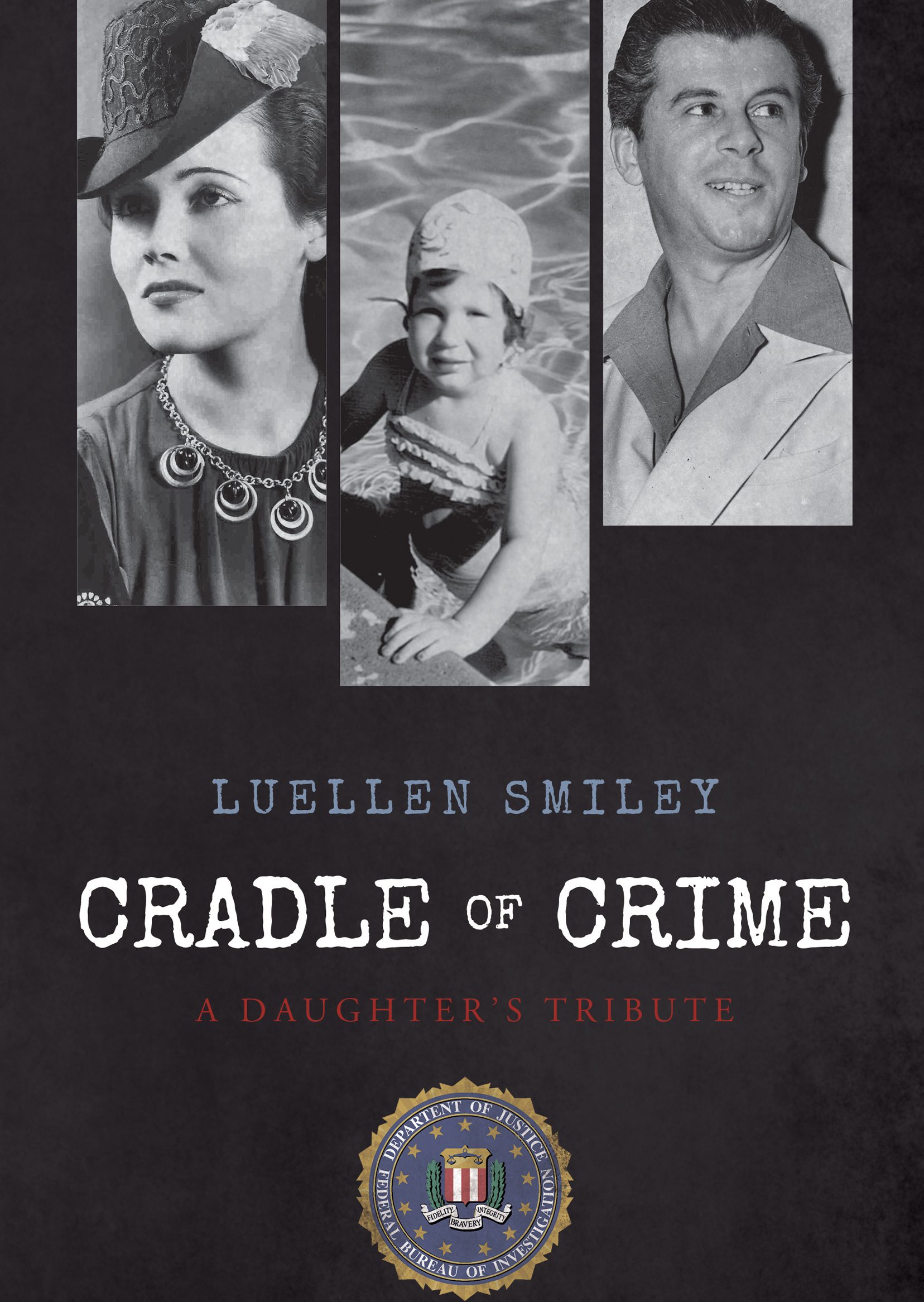
A candid and enthralling memoir, CRADLE OF CRIME – A Daughter’s Tribute is the debut release from Luellen Smiley and it proves one of the most gripping and powerful books in its genre. Certainly no mean feat, given the swelling number of similarly themed offerings but Smiley does well to distinguish hers with painstaking research, a broad narrative sweep and intellectual grip to deliver a fascinating and revealing read, for the events it covers.
The storytelling isn’t redemptive with much of the most compelling material in this book being intensely personal but it is a very human story that dispels hype and myth and gives us a telling glimpse of a remarkable life. Weaving together several stories it makes a vivid and notable contribution to the mafia debate which invariably swings between the codes of honor and family values so often portrayed on the silver screen to a brutal criminal organization focused only on the accumulation of wealth. In contrast, Luellen finds a far more equitable balance in her reflections, and it makes for a genuinepage-turner.
Extremely well written, fans of this ever popular genre will find CRADLE OF CRIME – A Daughter’s Tribute a fascinating read and it is recommended without reservation.
I was walking the streets, and the descriptive details had since evaporated. I mentally pluck myself out of this moment and open the shades to thought and memory, where all writers meet on some psychic level, the place of imagination and creation, an abnormality of reality.
A passage from Anais Nin’s diary says, “Be careful not to enter the world with any need to seduce, charm, conquer what you do not want, only for the sake of approval. This is what causes the frozen moment before people and cuts all naturalness and trust. The real wonders of life lie in the depths. Exploring the depths for truth is the real wonder which the child and the artist know: magic and power lie in truth.”
SOLITUDE will always be a puzzle because our lives, solo or mated, are mystified by either too much or not enough solitude.
I contest what seems endless solitude with my Irish Russian temper, condemning irritants like: street noise, absence of friends, short-tempered customer service reps, world news, and mindless tasks. The fever dulled after the first ice, rain, and snow, and mindfulness triumphed. I imagined my basement of survival would sink. It did not. There is an inner exploration happening, unfolding like spreading new sheets on my bed, that solitude has befriended me all my life. In the best of times and the tedious. I have to find the frolic and follies in the world that I created. I have to laugh alone so I watch screwball comedies, seek humor of my irregularities; wearing a sweater inside out, pouring coffee into a wine glass for a cocktail, and chuckling up and down the staircase, because I keep forgetting where I left my phone. My head is elsewhere daydreaming. I’ve learned how to repair house calamities; unscrew windows, seal up cracks, fix clogged drains, replace air vents, read the meters, and rejuvenate every wood board, handle, chair, and table with Old English Oil. As one pal commented on a visit to the house, ‘ It’s a perfect day for Old English! The winter forecast is blizzardy and full of warnings I haven’t experienced here; and how can I complain when half of Upstate New York is buried in ten feet of snow. The end of the day pleasure comes in the kitchen; my heart and spirit melt while stirring my weekly gumbo, stew, or casserole while listening to Tony Bennett, Nat King Cole, and swing music. Winter is a funnel that strips the trees and branches and lets us see through the forest and ourselves.
Part Two. Solana Beach Morrocan Bungalow 2003.Maurice was 84
Maurice married the love of his life on December 25, 1941. They married in December because Maurice had saved one thousand dollars and made one hundred dollars a month. Agnes, his girlfriend in Grant, Iowa, is the woman who led Maurice out to Rancho Santa Fe, California, from his home in Grant. She and her father worked for Ronald McDonald, a prestigious resident in the ranch. She was responsible for housekeeping and cooking, and her father was the chauffeur.
Agnes and Maurice went to the US Grant Hotel for dinner and stayed at the Paris Inn on Kettner Avenue in San Diego. The following day Agnes went off to work. Maurice stayed in the little guest house she occupied on the McDonald property. Two days later Maurice received his draft notice. On December 31, he left his new bride and reported for duty in Escondido. He had one short visit before he left for overseas. Then, the next time he would see her, he would be changed.
Buna
One summer evening, I was sitting on Maurice’s front porch. Sometimes, we would sit out till after eight o’clock at night talking about different parts of Maurice’s life. Maurice is really busy in the summer; he tends to his garden of fruits and vegetables, he delivers furniture for all the Cedros merchants, and he helps his friends. He never seems tired, he likes to sit on the porch, have a beer, and tell stories. I used to like it when my father told me stories, but they were unlike Maurice’s. There didn’t seem to be anything he
couldn’t talk about. Once he said, ” You can ask me anything you want.”
“Maurice, how old were you when you were drafted?”
“Well, I was thirty-one years old in 1941 when the war broke out. I had to leave my wife, which bothered me, but I wanted to go overseas and fight for my country. There were so many nice soldiers, the best people in the world. I recall two boys from Chicago that were only eighteen years old, they lied to get in the service, and they were the best soldiers you ever saw- they weren’t afraid of anything.”
“Where did they send you after you left San Diego?”
“Well, first, I went to Camp Roberts for thirteen weeks of training, but I got out in nine weeks. Then they sent me to Fort Ord to get my gear, rifles, and clothes. We left San Francisco on April 21, 1942. We got into Adelaide, Australia, after twenty-one days at sea.” Maurice paused like he had to catch his breath. I watched his face, thinking he may want to stop.
“You remember so much… Do you mind talking about it?” I asked.
“No, I don’t mind; it changed my life, everything about it.”
“Where did they send you after that?”
“We trained for a while in Adelaide; the people in Australia were so happy to see us. I remember they met us at the beach with tea and cookies. The enemy soldiers were getting close. We went up the coast to New Guinea and into Port Moresby; we got there on Thanksgiving Day 1942. As soon as we got off the ship, the bombs hit us; it was the hundredth raid that night. The next morning we were supposed to get to the Stanley
Mountain range, we were in such a hurry. The Japanese soldiers built cement pillboxes and the army wanted us there. So we got in this plane, and they flew us there. Twenty-one at a time. When I got to the island of Buna, there were dead soldiers scattered all over the beach. We lost men so fast. Then, on Christmas Day of 1942, General McArthur ordered us to advance, regardless of the cost of lives. My division was one of the first to stop the Japanese army, the 32nd Division. After we were immobilized and a lot of our men killed, they sent in the 41st Division to take over.”
Maurice’s memory was like listening to a documentary, and this was the first time a Veteran confided in me. They didn’t get supplies at first; they had to wait till everything was shipped to Europe. They got what was left over, which wasn’t much. He ate cocoanut bark for two weeks and had no water.
“I can remember so well the first Japanese soldier I saw. He was sneaking through the jungle, only thirty feet off. I don’t know if I shot him, but he dropped. I don’t like to think I killed anyone, and it bothers me to this day that I had to kill. The Japanese were good soldiers; they had better ammunition than us. We fought all day, and we always ran out of ammunition before they did. I’ll never forget Christmas Day of 1942. We went into a trench to get ahead; the fellow ahead of me was cut wide open, and the guy behind was shot. I just lay there on the ground. If you moved you’d be shot. It was so bad; I lay there all day and night. ”
“Did you think you were going to die?”
“I didn’t let myself think that. I promised God that if I ever got out alive I’d never complain about anything in my life again. Nothing… nothing could be worse than that day.”
“You kept the promise, didn’t you?” I asked.
“Yes, I have.”
“And that’s why the war changed your life?” I said.
“That’s right. Every day is a beautiful day after you’ve lived through war, at least for me,” he said.
Excerpt from manuscript. All rights reserved. No part of this work covered by the copyright herein may be reproduced without the author’s prior written permission.
SILHOUETTE of a Taos night out in 2006. It begins with the sunset—a bubble-gum pink sash that swirls like taffy just above the distant hillside. The transcending forms and colors in the sky distract me; they silence me, keeping me from turning on the television or answering the phone.
The sunset has settled into my routine. I watch it from the roof garden over our Adobe Home and Gallery every night. In the midst of dressing to attend an art auction at the Millicent Rogers Museum, the sun has vanished. The sky turns Taos blue; a luminous oil pigment canvas blue that appears like an endless tunnel you can walk through. As I descend the staircase and cross over the ménage of piles shoved in a corner to allow SC to paint, I think, “This is going to be my home. I’m still here” Adventures in Livingness
In the courtyard where new flagstone has been laid, and a mud ditch blocks the exit, Rudy hitches me on his back and carries me out the side entrance through Tony Abeyta’s yard. Tony’s yard is piled with sand from our flagstone project, and my high-heeled black suede shoes are not at all practical for crossing New Mexican dunes. This is how the evening begins. Out in the parking lot, we circle around once and stop in Robert’s gallery. He has offered me his turquoise squash seed necklace to wear at the auction. The necklace is from Turkey, and sells for $1,800. Millicent Rogers events always attract women with extravagant jewelry, and Robert knows I have no such possessions. He hands me the necklace and says, have fun.
At times like this, I can forget the faces and routines I lived in Solana Beach and feel swept into a labyrinth of unfamiliar vignettes. There are two police cars in the rear of the parking lot, the church looms like a fortress of wet mud, and SC is listening to The Band CD we picked up in Santa Fe. I slide into the car, ensuring my shoes don’t fill with gravel.
There is very little street light along the desert road, and cars approach you at disarming speeds. For newcomers, the pale yellow line that separates oncoming traffic, roaming animals, hitchhikers, leather-clad bikers, and abandoned pets is of no comfort or value. Boundaries and civilities between people are vague, and sometimes, conversations elope into poetry.
At the Millicent Rogers Museum, the director, Jill, who is there to welcome each guest, greets us at the carved wooden doors. This museum was once a home, like most museums in Taos.Each room is an envelope of Native American jewelry, ceramics, paintings, weaving, textiles, and metalwork sealed with Millicent Rogers’s ethereal presence. By coming to Taos and bridging her New York chic with southwestern individuality, she set global trends in fashion, art, and living. he museum collection includes some of her designs that evolved from her residency in the desert. She moved here in 1947 and died here in 1953. Although she could have chosen anywhere in the world to live, she settled in the unaltered, surreal lunar beauty of Taos.
I wandered through the tightly packed rooms, alternately viewing the guest’s attire and jewelry. The woven wraps, belts, and hats worn by men and women form a collage of individual expression. Almost everyone seems to attract attention by the texture and color of his or her attire. It is a festive traditional look, with southwestern accessories paired with jeans or silk dresses. If you come to Taos, look for a belt buckle, one piece of Native American jewelry, and one piece of art.
When the auction was announced, I admired the same etching as the woman next to me. She remarked that the artist was also the teacher of one of her children. I learned that Ellen had six children and 11 grandchildren. She was petite with curly blonde hair, and I liked her instantly. I told her I was a writer.
“So am I,” she answered.
Rather than talk about her work, she began talking about her daughter, who is also a writer.
“I’m so lucky–all my children and grandchildren are creative and artistic.”
It was obvious that her life was a garden of earthly delights and that she had raised many roses. When the auction began, she vanished, and I quickly viewed the art before returning to the two etchings. They were both sold.
As I was walking out, I bumped into Ellen. She was clutching the etchings.
“So, you bought them,” I said.
“Oh, yes, I had to have them.”
She left me with a beaming smile and a closing remark I often hear: “Welcome to Taos.”
I love hearing that so much I don’t want to stop saying, I just moved here. After the auction, we stopped in Marco’s Downtown Bistro, where we joined an improvisational party. It started when Marco introduced us to his friends, Pablo and Joan, who were visiting from Santa Fe.
The dim, glowing melon adobe walls of the bistro, Marco hugging everyone, Joan’s melodious, high-pitched laughter, Pablo telling jokes, Rudy laughing, and then Philip arriving to tell stories crossed over from strangers in a bistro to a fast-rolling film. The conversation and laughter surfed breathlessly from one person to another.
Joan remarked, “My fifteen minutes. This is the best for me. The first time you meet someone, you’re both talking without effort. It’s so perfect.”
We closed the bistro past midnight. Marco had gone home. Joan decided to stay at a friend’s house. Philip agreed to drive to Santa Fe the next day, and we took Tylenol before bed.
Not every night out in Taos is like Joan’s fifteen minutes, but chances are you will have something to write home about. The beginning of Gallery LouLou Taos, NM
OLYMPUS DIGITAL CAMERA
OLYMPUS DIGITAL CAMERAOLYMPUS DIGITAL CAMERAOLYMPUS DIGITAL CAMERA
BOOKS FOR SALE FROM MY RESEARCH COLLECTION.BASED IN NEW YORK. PREFERRED SALE OF FIVE OR MORE. HARDBACK $14.00 SB $6.00 + MEDIA MAIL. INDIVIDUAL PHOTOS ON REQUEST.
Luellen Smiley – Some book sections are highlighted but otherwise in good condition.Bugsy Siegel’s book, Mr. Mob & King of the Sunset Strip, sold.
THE BATTLE FOR LAS VEGAS SB – DENNIS GRIFFIN
BUT HE WAS GOOD TO HIS MOTHER – SB R. ROCKAWAY
MOTOR CITY MAFIA SB – SCOTT M. BURSTEIN
THE BOYS FROM NEW JERSEY SB – ROBERT RUDOLPH
CHICAGO HB- DAVID MAMET
DOUBLE CROSS- HB SAM & CHUCK GIANCANA
GANGSTERS AND GOODFELLAS HB AS TOLD BY GUSS RUSSO
THE STARKER HB – JACK ZELIG ROSE KEEFE
MOBBED UP HB – JAMES NEFF
BOUND BY HONOR HB – BILL BONNANO
THE PUBLIC ENEMY SB – HENRY COHEN SCRIPT
NAZIS IN NEWARK SB- WARREN GROVER
THE VALACHI PAPERS PETER MAAS
BLOOD RELATION SB – ERIC KONICSBERG
THE OUTFIT SB – GUSS RUSSO
TOUGH JEWS – SB RICH COHEN
THE MAFIA MURDER OF JFK CONTRACT ON AMERICA-HB DAVID SCHEIM
ORGANIZED CRIME HB – PAUL LINDE
CAPONE HB- JOHN KOLER
LITERARY LAS VEGAS SB -The best writing about America’s Finest City MIKE TRONNES
HONOR THY FATHER SB – ( MY DAD’S) GAY TELESE
MURDER INC SB BURTON TURKAS – SID FEDER
THE LAST MAFIAOSO HB – OVID DEMARIS
ALL AMERICAN MAFIOSO SB- THE JOHNNY ROSELLI STORY CHARLES RAPPLEYE & ED BECKER. SIGNED.
PICTORIAL BOOKS
FABULOUS LAS VEGAS HB – MICHELE FERRARI STEVEN IVES
ORGANIZED CRIME- PLAYBOYS PICTORIAL HISTORY HB RICHARD HANNER