Comfort….
From writing by hand at my tiny Eurasian desk facing the window to the west; framed by time and familiarity into the branches of JD’s pine tree, the black silky toned crows basking like prowesses on the branches, and waiting for La Posada to empty the day’s leftovers in the garbage cans. The silky drape of the winter sky sometimes adorned with lacy clouds, like today, softening the southwest blue to a faded jeans shade. From my desk, I write, without thoughts predefined, just a drain of emotional threads from my heart…
This year isn’t like last year, the absentee man, fussing with the fireplace, making me afternoon espresso, or drying dishes. It is not at all like last year, with Rudy and John intercepting my division of attention, laughing at the kitchen table, eating my blueberry pancakes.
I had the song of Judy Garland’s rainbow in my heart. It was a time I will never forget, or regret, because I was a very lucky lady for several years. Unabridged ecstasy poured out of body, and spread over my attitude, abundant spirit, mood, facial expressions, and my dreams were filled with amusement instead of nightmares.
That’s why now, is so different. The camp has closed, and I wander into these new woods unsteady, and steadier, juxtaposed between, acceptance and anger.
In the last few months, I’ve written my heart out, read Shepard, Colette, Durrell and my Creative nonfiction magazines. I’ve studied, and prepared for radio programs, and collected a bundle of columns to adapt into short stories. I started buying chocolates and jelly beans, so I treat myself, on breaks, when it’s too cold for my frail body to walk around town or up Palace Avenue to see the new for sale listings.
My steps inward resulted in accomplishments, break-troughs’ and a comedic sideshow trying to open boxes, make repairs, until Rudy shows up again, and rake the leaves, stuff that is mundane. More distant relations, and mafia threaded strangers knocked on my door, bolstering my faith in breaking the silence that ruled me, I let rule me. Stepping inside the truth I must face isn’t nearly as harmful as pretending.
Mob on television, in the news, (gross sales global figure of $850 billion) websites, and bloggers, movies and books. They’re all coming out of the closet to inform, turn themselves in, give advice, consult on their own films, sign on for pubic speaking at Library’s, documentaries, and advertisements-the world is all mobbed up and it’s time for some horrific homogenization of the gangsters who wouldn’t break the silence.
My dad was Johnny’s pal, close, like brothers, all through their life. Uncle Johnny
was my hero, he calmed my dad down, and he loved my mother because he knew she was a saint, and he was immensely religious. This is how I imagined his murder.
A blue Ford sedan with tinted windows pulled up in front of a bar in Biscayne Bay. The driver Tony, stared out the windshield looking beyond the boundaries made by man. Two of his men, sat in silence in the back seat. They were staring ahead, in the same mental latitude as the driver, with unblinking surgeon eyes. Tony turned off the ignition, and leaned back. The only sound came from the flapping of the bar screen door.
“Move,” Tony ordered closing his eyes. Abe and Chuck exited the sedan in one long continuous motion as if they were tied together. Tony waited, without changing the position of his right hand on the leather coated steering wheel. He heard the bar door squeak as it opened. He could see Abe and Chuck entering the bar. He did not need to see them physically. This was stored in his memory. The single file procession into the bar, the attachment to the target, and the guarded exit. Tony checked the time on his pocket watch. The minutes went slowly. He lost his concentration, and was tumbling in memories; he filed them in two categories, the ones that belonged to the outfit, and the ones that belonged to him. He slipped back to the sixties, in Las Vegas, when the boys sat poolside at the Desert Inn and bit into olives handed to them by freshly polished show girls in bikinis. Then he saw Johnny, lounging at the pool, his crown of white hair perfectly combed. He was surrounded by showgirls. The dames loved Johnny. He was better than any Hollywood movie star.
Then the door to the passenger side opened. Tony glanced at the blue gabardine slacks, and Gucci loafers. He could smell Johnny, even before he got in the car. His scent was recognizable, as if he’d been born wearing Boucheron.
“For crying out loud boys–I was just getting
an erection. ”
Johnny turned to Tony, the man he met twenty years ago when he was a driver for Santos Trafficante, the Mafia Don in Florida. Johnny slapped his knee and wheezed through his laughter. Tony couldn’t return the glance, or the laughter
“Tony! What’s the long face for, are we going to a funeral?” Tony shook his head from left to right. He gripped the steering wheel, afraid he might put his fist right through the windshield. Johnny nudged his rib.
“Loosen up, you’ll miss the target.” Tony reached into his breast pocket.
“Have a cigar Johnny, fresh from Castro. The same brand you tried to poison him with remember?” Tony’s forced laughter sounded hollow.
“Hell, that wasn’t my idear; you guys are still screwing up the story. That’s your problem, it you’re gonna squeal at least tell it the way it happened.”
“Shut your trap,” Tony snapped. Johnny did not appear to hear the comments, or if he did chose not to recognize the remarks of the backseat thug.
Johnny took the cigar and fingered it. He twirled it around with two fingers, and then placed it under his nostrils and inhaled deeply.
“Doc says no more–not if I’m gonna live without an oxygen tank tucked into my pocket. How ‘bout that? I even gave up the cigars when I moved down here. I can’t afford them anymore.” His laughter came easy, the way it always did.
“Johnny……I,” Tony stuttered.
“Did you hear the joke about the Italian and the Jew?” Tony nodded yes, but Johnny began telling the joke anyway. Tony turned the ignition on and drove away from town, slowly like they do in a funeral procession. They left the parts of the city ruled by law and order. The white villas shaded by palms, and guarded security gates. They descended into the pit of the buried past, the old rail yards, the site of hollow industrial buildings and warehouses. From there Tony entered an abandoned parking lot inside a junkyard, piled high with tin and steel parts. At one time they were valuable, like Johnny. Those days were gone, the junk piled up, just like dead Mafia Dons.
The sky dimmed in these parts of town, the shadows from the freeway overpass blocked the late crimson sunlight. Johnny was quiet now, sitting calmly with his hands folded together in his lap. His facial muscles relaxed, the jokes were over now. His mind was elsewhere.
“The son of a bitch gave me no choice John! I’m sure dead too if I ….” Tony stammered.
“Stop your babbling, I’m not your priest. I got a few orders for you. I want you to get word to Smiley, before anyone, you hear me. Don’t call his home; he’s got a private service. I’ll give you the number when I’m finished. He’ll know what to tell my sister. He’s a born messenger of bad news. Had to do it too many times.”
“How long you known we was coming?” Tony asked solemnly.
“Just as long as I’ve been taking orders. Tony my boy, I didn’t think I’d go out like Brando in the movie. How long has it been now? …forty-five years. That’s a long life in these shoes. The whole mess is running through my head Tony, as we sit here, it’s like a movie rewinding. You want to know the best of it; I mean the one moment worth remembering. The first night I walked into the Mayflower Hotel as a guest of Capone. My first big shindig was a coming out party for Joey Lewis’s big fight. I was so impressed with Ricca back then, I tried to mimic him. Must have looked like a soiled fool. I thought I had a smart suit on until I got to the party, and took a look around. Suddenly I felt like a paisano clown. I said to myself, I’ll never know this again; never will I feel less than the people around me. Capone treated me good in the beginning, all that money he threw around….. It impressed Rockefeller.”
“Johnny it’s getting late,” Tony interrupted.
“Capone was puffed up that night, shaking hands with Walker and the boys at Tammany Hall. We were all one then, the politicians and the boys. I don’t know how the thing got so screwed up.” The car came to an abrupt stop, and the back door opened. Chuck got out and stretched his legs. Johnny glanced at him, “See, no respect anymore. I would have diced his fingers off in the old days. Get out of the car Abe; go polish your piece or something,” Johnny ordered, and then continued his story.
“That was the night Tony, the best of everything all night and I didn’t sleep for a day afterward because I was so swollen with myself. It sounds silly now.” Just as Tony tipped his head in memory’s path, Johnny clapped his hands loudly. Tony shuddered as Johnny knew he would.
“Lemme see the equipment,” He ordered tossing the sentiment out of his voice. He turned his steely blue eyes on Tony and waited.
“They loaded me up, like I was going to a massacre. They’re still afraid of you John. Even now I have to say.” Tony rattled; he’d lost the last bit of dry eyed machismo.
“That’s a relief.” Johnny answered.
Tony got out of the car and hopped around the front to open the door for Johnny. He felt queasy in his stomach like the first time he had a hit. He watched Johnny now, knowing it would be some story to tell. First Johnny scanned his surroundings, like the eye of the camera. He could take in distant angles without moving a muscle. He could estimate the distance of things, the entrances, and exits of buildings without appearing to even look at that direction. He closed his eyes for a minute. They all watched, and waited.
“You fellas been here earlier?” Johnny shouted. The three men exchanged a mutual questioning glance. Johnny shook his head in disgust.
“How can you show up at a location without knowing every rock and puddle? Christ! Am I gonna have to shoot myself? Show me the equipment before I scare you off.”
Tony reluctantly unlocked the trunk of the car. Johnny stepped forward, pushing Abe and Chuck out of the way.
“Looks like a lot of machinery for a seventy year old veteran. Whatta they think, someone’s gonna drop down here with back up and take you boys on. What the hell are the knives for?” Abe and Chuck rocked nervously on their heels. Tony hunched over, as if drawing breath from the ground.
“Tony!” Johnny yelled.
“I‘m sick Johnny …. lemme catch my breath.”
“Yea, you do that, while Abe and Chuck sharpen the knives. Go on fellas get your pieces.”
“Johnny, we have orders,” Tony whispered
“From who? I don’t care if you skin me! I want to know who gave the order!”
“It’s not who you think Johnny, I could hardly believe it myself.” Johnny moved closer to Tony, he stroked his back, and whispered, “I promise I won’t tell pal,” he said squeezing Tony’s balls.
“The order came from the White House; they called Santos, and told him to take care of it. Johnny I can’t go through it, I can’t do it.” Then he fell to his knees and clutched Johnny’s leg, sobbing.
“It’s all right Tony, get up and give it to me the way they asked.”
“We’ll clean you out first shot,” Abe interjected. Again Johnny did not acknowledge the comment. He reached out and put his hands on Tony’s shoulders, and looked him in the eye.
“It’s bad, they got cement don’t they?”
“Oh Christ! let me take this all back. I can’t do what they ask. They want us to chop the legs, get you inside a steel drum, and in the water.” Tony suddenly heaved up, and vomited, sobbing at the same time.
“Jesus Christ Tony, you’re disgusting,” Abe shouted. He took a cigarette from his pocket. Johnny turned slowly around and glared at the bridge of his nose. He locked in on the spot, and gradually walked toward him. He reached for Abe’s pistol, a 357 magnum and holding it in Abe’s hand guided the pistol until it was pointing directly into his eyes.
“If you’re in a hurry, go ahead and shoot me now.” Abe turned sideways. Then he dropped his aim, and walked away. Johnny leaned against the car, and wiped his brow. “Let me alone for awhile; take a walk, all of you.” He ordered.
Tony pulled himself up and wiped his mouth. That was the least he could do, give the boss one last moment. He signaled for Abe and Chuck to follow and they headed towards one of the abandoned warehouses. Johnny waited until they were exactly thirty-five feet off. Then he slid into the car, and turned on the ignition. In a whirl of smoky dirt, he spun the car around three times, and flew past the boys, laughing his head off. He didn’t stop laughing until he reached the airport. He left the car, and ran all the way to the reservation desk of Air Italia. Perspiring and short of breath, he said to the pretty young clerk. “One way ticket please, to Palermo…. Sicily.” Johnny was going home.
John Rosselli (right) checks over a writ of habeas corpus with his lawyer, Frank Desimone after Rosselli surrendered to the U.S. Marshall here yesterday… (Photo credit: Wikipedia)
Reference: All American Mafioso, The Johnny Roselli Story. By: Ed Becker.
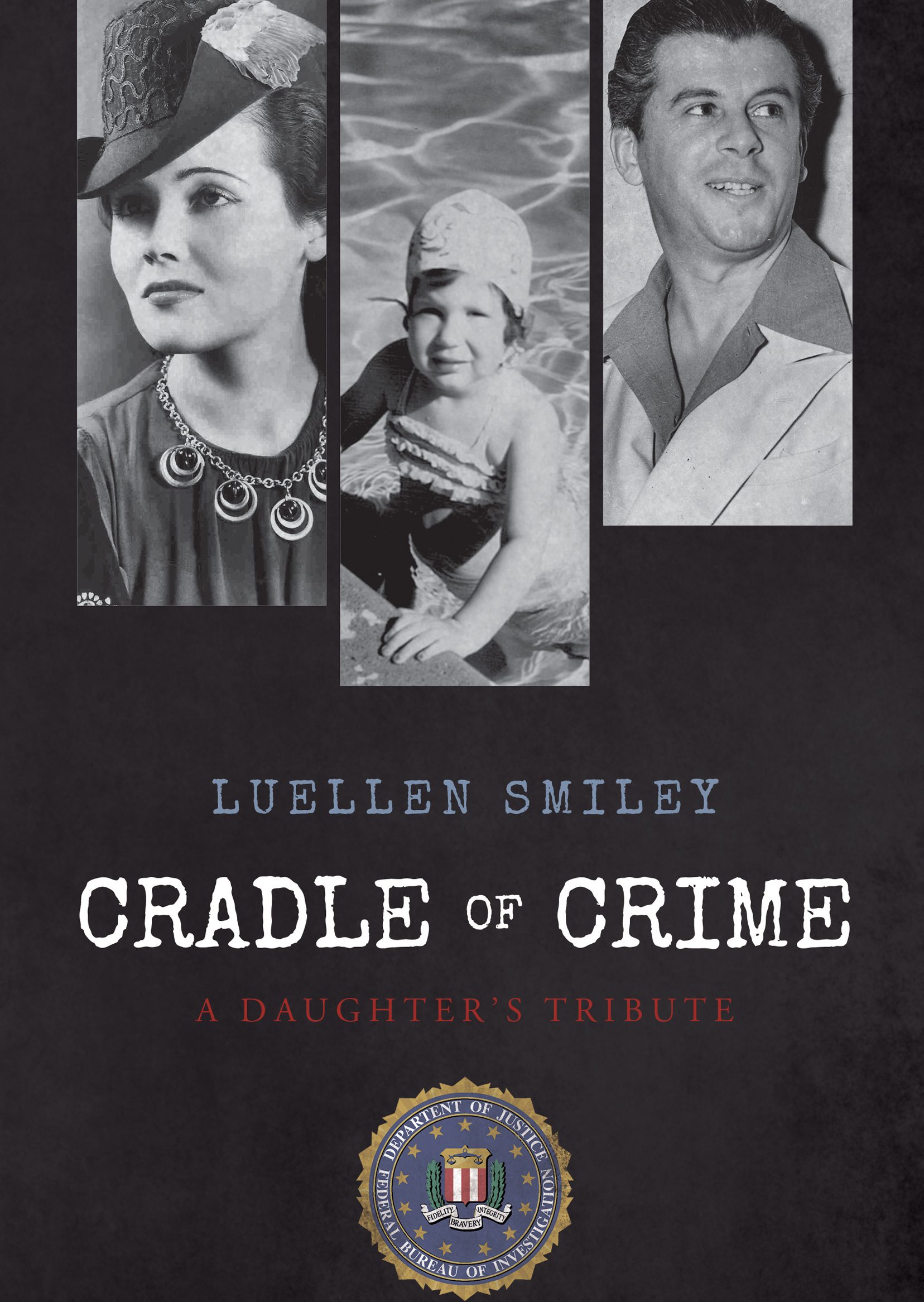
WHERE TO BEGIN THIS STORY OF A FATHER THAT I ONLY CAME TO UNDERSTAND BY READING HIS FBI FILES, BOOKS ABOUT MOB HISTORY WRITTEN BY LAW ENFORCEMENT AND COLLEGE PROFESSORS, AND DOCUMENTARIES PRODUCED BY FOES OF MY FATHER.
My last year with Dad was 1981. Naive, and unconcerned with where I was headed, or how I’d get there if I figured it out, I was spinning around in an executive chair; waiting for the big hand on the black and white office clock to set me free. Time didn’t pass; I hauled it over my head, in my bland windowless office, under florescent glare. I was trouble shooting for an ambitious group of USC guys as they gobbled up all of Los Angeles real estate. Without any real sense of survival or independence, my life was in the hands of my father.
“Meyer’s coming to see me; haven’t seen the little guy in twenty-five years.” Dad said during a commercial break.
“Meyer Lansky?” I asked as casually as he’d spoken.
“Who else?”
“Why did you two wait so long?”
“It’s no concern of yours; he’s my friend, not yours.” I was twenty-nine years old and still verbally handcuffed.
The three of us went out to dinner, and while the two of them spoke in clipped short wave syndicate code, I
noticed that neither one of them looked at all happy. It was rare to catch my father in public with a friend, without raucous laughter, and storytelling. My attempt to revive the dinner conversation with my own humor,returned two sets of silent eyeball commands to resist speaking.
Several months later I received a call from Dad asking me to come over to his apartment, he had collapsed on the bathroom floor. When I arrived, he pleaded for me to stay close by. “I’ll be all right in a few minutes; I just need to catch my breath. ” I sat outside the bathroom door biting my nails, and waited, like our dog Spice, for my orders. For the first time in my life, he was weaker than I, and my turmoil centered on that unfamiliar reversal of roles.
I was a child of the fifties; when raising kids was easily defined. Mommy stayed home and made sure the kids didn’t burn the house down. Daddy went to an office to make money to pay for the house, and children waited until they were grown up to find out anything really useful. It was before the generation-gap was coined, or children knew how to be witty and sharp. In our air-tight neighborhood of Bel Air, Los Angeles, we were naïve, privileged, kids; bogged down with falling off bicycles, not being chosen for the school play, and bringing home the most candy at Halloween.
I believed in Santa Clause, the Easter bunny, and if I was good, Mommy would let me stay up and watch the Sunday night Variety Show.
America was threatened by the Russian Communists and Organized crime. Public enemy Number One was New York Mafia Boss, Frank Costello. Frank became super famous when he refused to testify on national television for Senator Estes Kefauver. The Kefauver Committee delivered explosive headlines between 1950 and 1951, as the government unveiled the hidden hand of the Mafia in the United States.
This is an excerpt from the memoir I’ve been working on many years. The first manuscript was 800 pages; about three of them were worth reading. The book mutated about 2000 times.
“What’s it like knowing your father is a gangster? Did you know when you were a teenager? Did your father kill anyone? Did you ever meet Bugsy? Aren’t you afraid of his friends? You know they kill people.”
I was thirteen years old when my best friend told me my father was a gangster. She didn’t mean any harm. We told each other everything. We were standing in the Brentwood Pharmacy one day in 1966, and we turned the book rack around until we found ”The Green Felt Jungle.”
“That’s the book, let me look first and see what it says.” She whispered. I waited while she flipped trough the pages.
“Oh my God, there he is,” she said grasping my shoulders. We hunched over the book and read the description of my father beneath his photograph.
“Allen Smiley was the only witness to the murder of Bugsy Siegel.”
“What does that mean, who is Bugsy Siegel?” I asked.
“Shush, not so loud, I’m afraid to tell you this Luellen, it’s awful. I don’t believe it. “
“What is it? Tell me.”
“Bugsy Siegel was a gangster, he killed people. Your father was his friend.”
I don’t think I should read this, “I said replacing the book on the rack.
“Don’t tell your father I told you,” she warned.
“Why not?”
“My mother told me not to tell you, swear to me you won’t tell your father.”
“I swear, come on let’s go.”
My father called himself Allen Smiley. The FBI tagged him “armed and dangerous.” The Department of Justice referred to him as the “Russian Jew.” I called him Daddy. e had salty sea blue eyes blurred by all the storms he’d seen. When I said something funny, his eyes crystallized and flattened like glass, smoothing out the bad memories. He was always a different color, dressed in perfectly matched shades of pink, silver and blue. My small child eyes rested cheerfully on his silk ties, a collage of jewel tones. The feel of his fabric was soft like blankets. He was very interesting to look at when I was a child and open to all this detail.
A LITERARY AGENT I know emphasized the importance of rounding up readers. That’s not so easy when you’re exposing your own guarded family secret.
My mother married my father two years after Benjamin “Bugsy” Siegel was murdered. Sitting beside Ben the night of the murder provoked an immediate response from my father; it was time to get the hell out. He promised to reform, and she agreed to marry him. One of her compromises was her religious faith. She was Irish Catholic. She stopped going to church, and she didn’t convert. It was a bitter irritation between them. My father raised us Jewish, we attended Hebrew School and went to Synagogue every Saturday morning. The complexity of being half Jewish and half Catholic surfaced, when some classmate told me I wasn’t really Jewish. I told this to my father. I still remember his answer coming at me like a round of bullets.
” That’s an idiot! It doesn’t matter if you’re half Jewish or a quarter, you’re a Jew! Don’t you ever forget it, and don’t let anyone tell you different. DO YOU HEAR ME?” To this day when people remind me that I’m not really Jewish I say,” For my father, God made an exception.”
Friends are different for men in the Mafia, and for their wives. Real friends have to be connected. You cannot trust anyone else. My mother had three friends. Marianne was married to Gus Alex a powerful political fixer in the Chicago syndicate. She had been a model like my mother. She was the stunning Grace Kelly sort of beauty with coolness much like my mother. She and my mother whispered when I was in the room.
More than any other person, Aunt Bess was beholden to my mother. She wasn’t really an aunt. Bess was Benjamin Siegel’s little sister. The one he favored over the others. I suppose Bess met my mother way before I was born, when Benjamin was alive. She had the same bedroom eyes of her brother, big hound dog eyes that swept sentiment in every glance. She had a heart too big for the turmoil in her life, and she cried about everything. She squeezed my face, and forever referred to me as her gorgeous baby. Bess was as content crying as she was laughing. There wasn’t any in between. She dressed in high heels, tailored suits and carried a hand bag with lots of tissue. She and my Nana, my mother’s mother were very close friends. Bess, her husband, and daughter lived in a house on Doheny Drive that Ben Siegel bought for her. Bess’s husband Solly never uttered a word, and worked for Ben doing odd jobs.
In later years I would live across the street from them, but by then my father had distanced Bess’s family for reasons never revealed.
How I loved to watch Miriam; a saucy brassy Italian from Brooklyn. She propped up her bosom like two statues, waved a long red lacquered nail, and smoked one cigarette after another without ever taking a breath. She shopped everyday, charged everything, and when we were in the room she did not change her act, she let us see what it was really like to be a gangsters wife. Beneath all the enamel and cosmetics she loved my mother unconditionally. Although their characters were strikingly different, they shared that bond. Miriam was married to Doc Stacher, who rose in the ranks to become enforcer for Abner “Longy” Zwillman, the boss of New Jersey. Doc walked with his hands clasped behind, a cigar stub lived on his lip, and he was bald and heavy lidded. He lived in short pants and little white sneakers. Beneath his somewhat harsh and metallic skin was a wreath of worship for Joanne. He didn’t restrict her humor, appetite, or spirit. The more outrageous her behavior the more he approved.
Mafia men make the most outrageously entertaining hosts; nothing is ever out of the question. All they have to do is pick up the phone, and someone in the network will make it happen.
Mafia men don’t get up and go to work. Not one day in his life did my father ever report to an office. When I wasn’t in school, he took me with him in the powder blue Cadillac and we drove the streets of Hollywood visiting friends in delicatessens. We sat in big leather booths while my father and the owners talked. I didn’t know what work was all about. No doubt the conversation was the rackets, the races, or Vegas. I was a very good decoy. What kind of a man takes his daughter to mob meetings? The kind that doesn’t want to look like a mob guy. My father didn’t think I was listening, but I heard a lot.
Rory Calhoun was one of the characters that stood out. He was a western movie star; the Clint Eastwood of his day. Rory was also in the same reformatory as my father as a teen. The Calhoun family and ours spent a lot of time together. They had two daughters and lived in an exotic Spanish villa on a corner of Sunset Boulevard. Inside it was like a movie set, with animal rugs, oil paintings of Spanish Troubadours and Moorish decorations. Rita, Rory’s wife, wore tiny stacked high heels and she clicked across the Spanish tiles like a flamenco dancer. The whole family was blessed with dreamy looks. I remember looking at my reflection in the mirror as Rita combed my hair, and discovering I was not at all pretty. I didn’t realize that I was surrounded with extraordinary beauty; everyone had these exceptional vogue looks. The importance placed on that kind of beauty was just as distorted.
Rita exhumed a stern feminine demeanor, extremely seductive but not without a battle. I learned my first lessons about temptation just by watching her. She fanned the room with perfume and laughter, and men just succumbed like drugged animals. I felt my first tingle of sexuality in the arms of Rory. He was a treasure of natural emotion, conversation, and jokes. They both gambled, borrowed money from the other, and bet on everything.
FLAMINGO HOTEL WEDDING 1949.
My mother was raised in East Orange, New Jersey, before the neighborhood changed. My grandmother always said that East Orange used to be a very nice place to live. There is a photograph of my mother at age seven or eight posing in the garden with her German Shepard. She is holding a ruffled parasol, and dressed like a doll. Her face is a bud of innocence, but with a hint of pained modesty. She didn’t flaunt her beauty; it was more of an embarrassment. When her father died suddenly, she elected to help her family financially, and entered her photograph in a Redbook magazine contest. At seventeen years old she won a modeling contract with John Robert Powers in New York City. My mother ascended to an identity that suited her in some ways and restricted her in others. The Powers girls were invited to grand openings of hotels, restaurants and nightclubs. She appeared on stage at New York’s Copacabana Night Club in 1943. On one of those nights my father was in the audience, and that was where the Smiley Casey bridge from East Orange to Hollywood began.
Sixty-four years have passed since Ben Siegel was murdered, and my father stood in the Beverly Hills police station defending his innocence. I am the link to his truth.
Last week, I received an unrecognized e-mail. It was from a relative of Mr. Robert’s; who was a friend of my father’s in Houston. I met Mr. Roberts on a business trip to Houston back in the 70’s, he pulled a royal flush in the oil business.
This relative discovered one of the Smiley’s Dice memoir columns. He wanted to share some stories with me, and so I responded I would love to hear them. A few weeks later, Susan, a former classmate from Emerson Junior High, sent me a link to a New York Times feature, “Looking For My Father in Las Vegas.” Susan suggested I read it, get inspired, and go back to my own memoir. A week later, I received two DVD’s in the mail from a man I never met. A friend had informed me this man was on a synagogue lecture circuit, and that his subject was Jews in Sing Sing Prison. He was using Ben Siegel and Meyer Lansky as models in his presentation on genealogical research.
The DVD’s went into the drawer, and only recently, I pulled one out and played it. Ben and Meyer were used as subjects to add humor to his presentation. Everyone in the audience laughed at his Siegel/Lansky anecdotes. I ejected the disk, relieved Allen Smiley was not part of the presentation.
In the middle of reinventing a new life, having placed my memoir in a trunk in a storage unit, so it will not be visible or even accessible, the memoir haunts me. A story that has to be written cannot be hidden. About a month ago, a pastor wrote to me, and related this story:
“I am pastor of a church in L. A. I have studied the mob for years. I ran across your name as I studied about your father that night on Linden Drive. I have been approached by a man who claims to have knowledge about who killed Mr. Siegel. The guy was a right-hand man of Mickey Cohen.(and claims Mickey told him). Well, I wondered if you had any preference on the theories that have been put forth. What stories you must have to tell. God Bless you and yours.”
What am I supposed to think? Did the killer confess in his church? This brings to memory another letter I received about a year ago. The name mentioned in the letter was one I had hunted for many years. Harry Freedlander was discovered back in 1995 in the pages of my father’s testimony before the Immigration and Naturalization Service. Harry was a friend to my father back home in Winnipeg. They were childhood chums. When my father stowed away to Detroit, he wrote letters to Harry who informed my grandmother of my father’s travels. A few years later, Harry joined my father in Detroit and began working in the automobile industry. I remember Harry stating to the INS officer that he was very close to Allen’s family.
When an e-mail arrived from the grandson of Harry, the letter remained on the screen for a long time. Truths revealed by government documents, informants, and books are harsh on my father. The companions, friends, and associates are the ones who give me introspection. The grandson remembered hearing stories about my dad, and he wanted to know more about his grandfather. I told him that his grandfather had testified in court to their early friendship. Harry said my father stopped corresponding after he was in Los Angeles.
Several books were released this year with references to dad. The first book arrived compliments of the author, who interviewed me in 2003. I’d forgotten all about it. In Gus Russo’s “Supermob: The Story of Sidney Korshak,” Russo referred to my father in an incident in 1988, with attorney Robert Shapiro, and a lesser know Las Vegas club owner, Gianni Russo, no relation. According to Gus, Korshack told Gianni to see my father in his penthouse apartment on Doheny Drive, after Korshack shot someone in his Vegas nightclub. This is highly impossible, since my father passed away in 1982, and had moved out of the Doheny Towers several years prior.
Throughout the year, I am jabbed, teased, and taunted by the ruminations of strangers on my dad. I feel protective of his legacy. I feel protective of Ben Siegel too. It is part of growing up with gangsters.
Last month, a man who had given me the very first insight into my father passed away. I never met Ed Becker in person. We corresponded regularly. I found my journal marking the first entry of our correspondence. Ed guided me through the labyrinth of half-truths and myths. Without his perspective, the story was all trumped-up headlines. Ed Becker was the one man I could always turn to when I was tangled up in truth. It appears growing up with gangsters is still a work-in-progress.
GUEST ALERT: Daughter Of Reputed Mobster, Making The Radio Rounds
THE MOUTH, NOVEMBER 8TH, 2011 — Luellen Smiley is the daughter of reputed mobster, Allen Smiley. Smiley’s dad was a close friend and confidant of famous Las Vegas mobster Benjamin “Bugsy” Siegel and he was sitting on the couch just feet away from Siegel the night he was murdered. While Luellen Smiley hadn’t been born at the time of the shooting, she’s conducted research on her father’s life and the events leading up to the shooting and wants to dispel the common belief that her father might have been involved in the shooting. Luellen Smiley has contributed artifacts to the Las Vegas Mob Experience and she joins us to discuss her family history. She’s out promoting the fact that the gangsters of old were not trigger-happy murderers and that J. Edgar Hoover was someone who was out to get them in a big way. Not letting them go straight, etc. She also believes that J. Edgar Hoover was behind the killing of Bugsy Siegel. (Bugsy’s killing was never solved). This week, she joined KNPR for chat. LISTEN TO AUDIO HERE To set up, contact Scott Segelbaum HERE
On Sunday afternoon, while I was sitting in the bridal room at Neiman Marcus, I was in a head on collision with the past and the present. I was not in the bridal room to buy a wedding dress; I was there to store my mink coat. While I waited for a sales clerk, I imagined myself in the chic trench coat with diamond buttons hanging from the rack. If I did have to choose a bridal gown, it would have to be something unconventional, like my mother chose. She wore navy blue taffeta to her wedding. If I did get married, I would have to save my coins for a long time to pay for the reception. Where would I get married? At one time, I dreamt of the Bel Air Hotel, but that was in the 1970s. With inflation, the wedding would cost no less than $100,000 today. By the time, I saved that much, I would be 100 years old! Besides the hotel is not the same. The last time I dropped by, I was chased out of the river walk for taking photographs of the swans. Just before my father took ill in 1982, he told me my wedding would be at the Flamingo in Las Vegas. I remember it, as if it was yesterday. We were walking together in Holmby Park, where he walked his five miles everyday. Very often, he stopped at the public phone booth and made a few calls. He whispered so I could not hear his conversation. I know now he was laying his bets for the day. I waited on the green lawn watching the older men and women playing Croquette. When my father returned from the phone booth, he looked perturbed. That meant he lost money on that day’s sporting event. We walked a long time in heavy silence until he decided to break it.
“You know, I’m very proud of you.” He said looking straight ahead.
“You are?” I was stunned.
“Of course I am! I hope you don’t think any different. I have not said it often, because I’m coaching you all the time, so you will be independent, and know how to look after yourself, after I’m gone. I don’t want you to fall into a rut with the wrong fellow, like so many women. It can ruin your whole life.”
“But I haven’t accomplished anything really great…. like you.”
“What the hell are you talking about!” he stopped in the middle of the path. “I made more mistakes than you ever could. Are you kidding sweetheart, I broke all the rules, and made some new ones, and I’ve paid. Like I’ve always said, you make your bed, and you lie in it. I’m proud of the career you made in real estate, without any help from me. Now you have to concentrate on the right fellow. When you do get around to finding the right one, we’ll have the wedding at the Flamingo.
“The Flamingo? Do you still know people there?” I asked timidly.
“Of course, I was a major stockholder … at one time.” Then he cleared his throat, and I wondered if he was choking on the memories. “That’s where Mommy and I had our wedding reception.” I thought of the photographs of Mommy cutting the white cake. It was the first time he ever mentioned my wedding. It was the first time, he seemed to say, okay find a fellow, and I’ll let you go. I sensed his detachment from everything around us except for me.
“I would like that. How long has it been since you were there?”
“I didn’t want to set foot in that place after Benny… (Benjamin Siegel) I didn’t care if the whole place burnt to the ground. There’s no reason why you can’t have your wedding there. I can still arrange a few things.”
The vision of father, my future husband, and me was an aberration without incident or purpose at that age. However, he was dreaming that the day would come soon. When the sales clerk finally appeared, I was glazed over, in some marbled state of melancholy, clutching the mink coat on my lap. The mink is the oldest garment in my closet. My father gave it to me in 1978.
It’s as if it happened yesterday. My father called one Saturday and asked me to meet him at Mannis Furs in Beverly Hills. When I arrived, my father was seated in a chair, facing a three-way mirror. Manny rushed over to greet me. “This is my daughter, Luellen, “Manny bowed and kissed my hand. In the other hand, he was holding a mink jacket. “Try it on for size,” my father ordered. I hesitated, and looked at him for explanation. It never occurred to me I would be trying on mink coats. He was always asking me to meet him in shops, and restaurants. He held meetings wherever he knew people, so I assumed he had a meeting with Manny.
“Go on—try it on. I didn’t say I was buying it, I just want to see what it looks like.” Manny tucked me into the mink coat, and pulled the waist sash through. He stroked the fur up and down, and then I did the same. The coat was solid, like a cloth wall that buried my body in warmth. I stood before the mirror and watched the transformation.
“Turn around, “my father ordered. I took a few steps in a half circle and slipped my hands into the pockets, and turned around slowly as I’d seen my mother do. Suddenly his eyes welled up with tears and he took out his handkerchief.
“If you dressed in a proper outfit and not those silly jeans all the time, you might look like something!” he barked.
“Well I didn’t know I’d be trying on minks today.”
“What the hell did you think you’d be trying on, pianos? For crying out loud! “I don’t know what you’re thinking sometimes. Take it off.” Manny untied the sash and took the coat. My father was in a mood, it was my fault again. I shouldn’t have worn jeans. Why did he start crying? Manny disappeared, and my father stood in front of the mirror to affirm his reflection. After he took off in his Cadillac, I stood in front of Manny’s and looked at the mink coats. He never mentioned it again, but I knew the coat was going to show up one day. Six or seven months after that first meeting at Mannis, the mink appeared at Chanukah.
“Daddy, this is so extravagant, I won’t have any where to wear it.”
“Oh yes you will! Just wait and see. If you quit going out with those misfits and find yourself a decent fella you’ll have numerous occasions. That’s the reason why I gave it to you, so don’t misuse it!”
When I left Neiman’s I was drenched in his memory. The mink coat has outlived all of my possessions. Every time I put it on, I’m reminded of his wisdom. It’s not the expense or signature status. When I put it on, I feel transformed. I discovered the bill of sale from Manny’s, and the balance due, after my father died. I called Manny and asked him for more time, to pay it off. He told me to forget about it, my father had brought in so much business to the store.
Last year I called Manny to see if I could have the coat remade into a vest; as the sleeves were too short. ” It’ll cost you the same as the mink,” he told me. I had the holes repaired, and the coat glazed and will pack it in the suitcase for the trip to New York, now thrity two years later with a decent fella.


 ADVENTURERS IN LIVINGNESS