


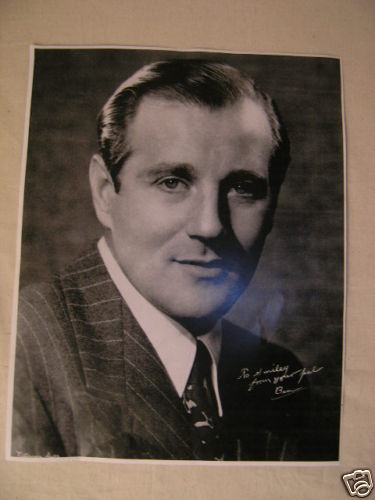
Sixty-four years have passed since Ben Siegel was murdered, and my father stood in the Beverly Hills police station defending his innocence. I am the link to his truth.
Last week, I received an unrecognized e-mail. It was from a relative of Mr. Robert’s; who was a friend of my father’s in Houston. I met Mr. Roberts on a business trip to Houston back in the 70’s, he pulled a royal flush in the oil business.
This relative discovered one of the Smiley’s Dice memoir columns. He wanted to share some stories with me, and so I responded I would love to hear them. A few weeks later, Susan, a former classmate from Emerson Junior High, sent me a link to a New York Times feature, “Looking For My Father in Las Vegas.” Susan suggested I read it, get inspired, and go back to my own memoir. A week later, I received two DVD’s in the mail from a man I never met. A friend had informed me this man was on a synagogue lecture circuit, and that his subject was Jews in Sing Sing Prison. He was using Ben Siegel and Meyer Lansky as models in his presentation on genealogical research.
The DVD’s went into the drawer, and only recently, I pulled one out and played it. Ben and Meyer were used as subjects to add humor to his presentation. Everyone in the audience laughed at his Siegel/Lansky anecdotes. I ejected the disk, relieved Allen Smiley was not part of the presentation.
In the middle of reinventing a new life, having placed my memoir in a trunk in a storage unit, so it will not be visible or even accessible, the memoir haunts me. A story that has to be written cannot be hidden. About a month ago, a pastor wrote to me, and related this story:
“I am pastor of a church in L. A. I have studied the mob for years. I ran across your name as I studied about your father that night on Linden Drive. I have been approached by a man who claims to have knowledge about who killed Mr. Siegel. The guy was a right-hand man of Mickey Cohen.(and claims Mickey told him). Well, I wondered if you had any preference on the theories that have been put forth. What stories you must have to tell. God Bless you and yours.”
What am I supposed to think? Did the killer confess in his church? This brings to memory another letter I received about a year ago. The name mentioned in the letter was one I had hunted for many years. Harry Freedlander was discovered back in 1995 in the pages of my father’s testimony before the Immigration and Naturalization Service. Harry was a friend to my father back home in Winnipeg. They were childhood chums. When my father stowed away to Detroit, he wrote letters to Harry who informed my grandmother of my father’s travels. A few years later, Harry joined my father in Detroit and began working in the automobile industry. I remember Harry stating to the INS officer that he was very close to Allen’s family.
When an e-mail arrived from the grandson of Harry, the letter remained on the screen for a long time. Truths revealed by government documents, informants, and books are harsh on my father. The companions, friends, and associates are the ones who give me introspection. The grandson remembered hearing stories about my dad, and he wanted to know more about his grandfather. I told him that his grandfather had testified in court to their early friendship. Harry said my father stopped corresponding after he was in Los Angeles.
Several books were released this year with references to dad. The first book arrived compliments of the author, who interviewed me in 2003. I’d forgotten all about it. In Gus Russo’s “Supermob: The Story of Sidney Korshak,” Russo referred to my father in an incident in 1988, with attorney Robert Shapiro, and a lesser know Las Vegas club owner, Gianni Russo, no relation. According to Gus, Korshack told Gianni to see my father in his penthouse apartment on Doheny Drive, after Korshack shot someone in his Vegas nightclub. This is highly impossible, since my father passed away in 1982, and had moved out of the Doheny Towers several years prior.
Throughout the year, I am jabbed, teased, and taunted by the ruminations of strangers on my dad. I feel protective of his legacy. I feel protective of Ben Siegel too. It is part of growing up with gangsters.
Last month, a man who had given me the very first insight into my father passed away. I never met Ed Becker in person. We corresponded regularly. I found my journal marking the first entry of our correspondence. Ed guided me through the labyrinth of half-truths and myths. Without his perspective, the story was all trumped-up headlines. Ed Becker was the one man I could always turn to when I was tangled up in truth. It appears growing up with gangsters is still a work-in-progress.


Leave a Comment