THIS ERA OF ADAPTATION is how I feel, think, and react. Tumbling through all the transitory advise forces me to examine more closely who to believe. I’ve never been a leader, nor a follower, I walk in between, trying to pave a pathway to peace of mind. Perhaps that is unattainable, as we live in a culturally, politically, medically, and socially reimagined world. It reminds me of being a teenager when life was questionable, and confusion was like a stinging bee we couldn’t swap away.
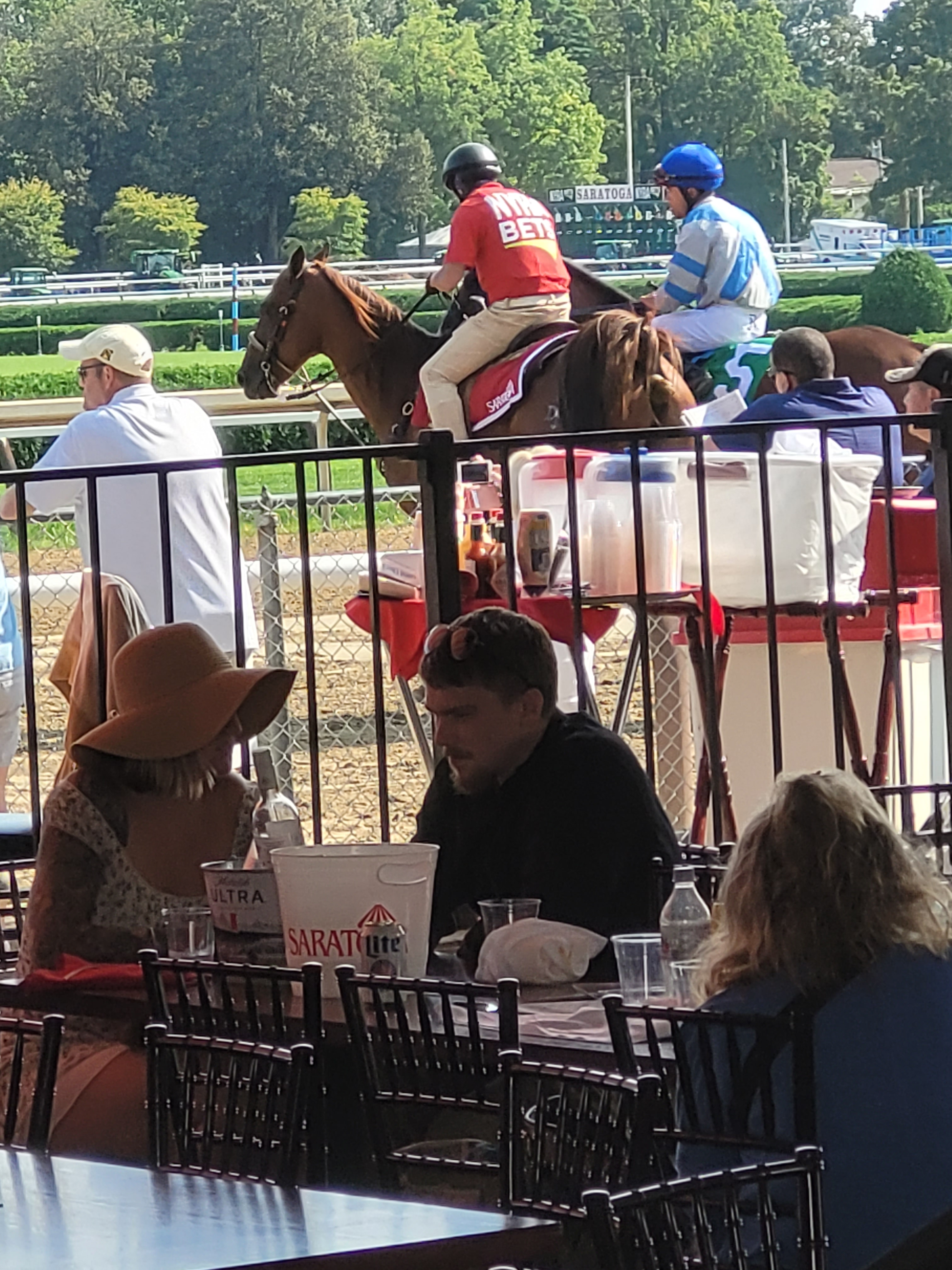
This week, my discipline raged and said, ‘Structure your day or go in disarray. As a long-time, rebel of structure, I listened and made a daily plan. Get out of bed by eight, answer correspondence, get dressed, work out on the treadmill, take a shower, eat something, then back to the home office and that’s when the improvisation kicks in. Do I write a column, work on my next book, or look for an attorney for an unsolved tribulation? Mother Nature punctuates my attention as she blooms into spring; the neighbors begin mowing and planting, The adorable little children next door play in their front yard, joggers, walkers, and horse-carrying vans pass in front of my window. The Season in Saratoga is about to open, masked and limited attendance will be at Saratoga Race Track, Saratoga Performing Arts Center, Bistros, Bars, outdoor concerts, Theater and Chamber Music, Lakeside sailing and motor boating, fairs, and wine tasting.
A quintet of small-town celebrations that will inaugurate us to each other once again.
After several summers in Saratoga Springs, I discovered I loved thoroughbred horseracing. All my life I’ve been a performing arts spectator. I never watched any sports on television and only attended baseball games when my father needed a companion. The art of performance led me to experience the racetrack as live theater.
The racetrack is a stage, the jockeys are the actors, and the men and women that fill the bleachers, the picnic grounds, the Turf Club, and the private boxes are the audience. The racehorse is the star celebrity.
The tickets for admission, like any show, are based on your seating. You can walk through the gates for $3.00 or buy a box for $100,000 a year. The collage of human emotions, drama, suspense, and danger are key components to good theater.
Gambling personifies the Shakespearean twist of the racetrack. High rollers and drugstore cowboys wager to win. Some men walk out with a grocery cart of recycled cans; some walk out with enough money to buy a racehorse. They leave by the same gate, and the next day, they return for more. But why, I ask, is thoroughbred racing not considered an all-around American sport? Why don’t jockeys get athletic respect? These two spheres of lightning truth struck me while I trampled through the mud one rainy August day at Saratoga Racetrack.
I asked around for opinions. The Governor’s bodyguard remarked that it was a good question. He did not think gambling was the reason because people always bet on sports. He thought maybe that it was because, as kids, we don’t learn to race horses, like baseball and football. The public is naïve about jockeys because they have never raced. Another answer I heard was that 200,000 fans fill a ballgame on any given day and that those numbers don’t compare with horseracing.
I’m not a gambler, and I don’t ride very well, but I am a drama whore. I took my notebook to the jocks’ room to ask the jockeys what they thought about this irregularity in sports. Jose Santos had a few minutes to spare.
“Jose, do you feel like America thinks of you as an athlete?”
“We don’t get the respect that we should. I think it’s the gambling. This is the greatest racetrack in America, and there is gambling in every sport, but when you come to the track, you see it right there, and people cannot avoid it. Pound for pound, we are more fit than most athletes.”
I asked Jose what he does aside from riding. He jogs three miles every day and walks for a mile. He reminded me that if he goes down with the horse, his strength is what gets him back up again. Another misconception is that jockeys only ride for 2 minutes. Well, the race is 2 minutes, but they ride every day of the year. They do not take breaks.
“How does the public perceive you?” I asked.
“In Europe, they are treated like movie stars. Over here the jockey is just another person, and in sports, the jockey is low. I wish we had more respect, but we don’t get the publicity.”
This feels like the guts of the truth; our little minds like to align with other like minds. The leaders of the pack go to football and baseball, and the media follows behind.
Jose remarked that he only felt real enthusiasm and support when he won the Triple Crown. Otherwise, they get a little column in the paper with the results. “The Racing Form is 100 pages, and nothing is written about us.”
“What if there was a Jockey Magazine?”
“Well, that would be great. Then, the companies would be interested, and we’d get sponsors. When I go out to the park and run, I wear Nikes too.” He chuckled.
“Have they ever approached you for sponsorship?”
“No, I don’t expect they will.”
A few days later, I found Jerry Bailey before a race. It was a cinch to get into the jocks’ room in those days. That was before Elliott Spitzer sipped all the fizz out of Saratoga Race Track. These days the Press can’t walk inside the Jocks’ room. Jerry hopped onto a counter and extended his hand.
“How are you?”
“Great, Jerry, thank you for meeting me.”
“Sure.”
“Jerry, I’m very interested in the lack of sports sponsorship offered jockeys. Why do you think that is?
“Because no one is promoting us. If you don’t do anything to promote us, how does anyone know? They have bobbleheads and gimmicks like that, but there isn’t even a Jockey Calendar. Excuse me now; I’ve got to ride a race.”
Of all the risk-takers and entrepreneurs in the world, horse racing is the champion in all categories. If I decided to understand the business, attend every race, meet every owner, jockey, and trainer, there’s no chance I’d understand anything more because I do not love the horse the way a jockey does, and you can’t fool the horse!
During the Hall of Fame Induction presentation at Saratoga a few years back, D. Wayne Lucas made a speech that drew a full house of gregarious applause. This is an excerpt:
“You ride a great horse, and the owner wakes up the next day and decides to switch to Bailey. The adversity is gut-wrenching, bringing you to your knees and humbling, whether you’re a rider, trainer, owner, or breeder. There’s one thing that will keep you going, and that is simply your attitude. Attitude is the most important decision you make every day. Make it early, and make sure you make the right one. You will have a very full and very peaceful life.”
Maybe it’s time for a Jocks Nike, call it the Two Minute Nike.
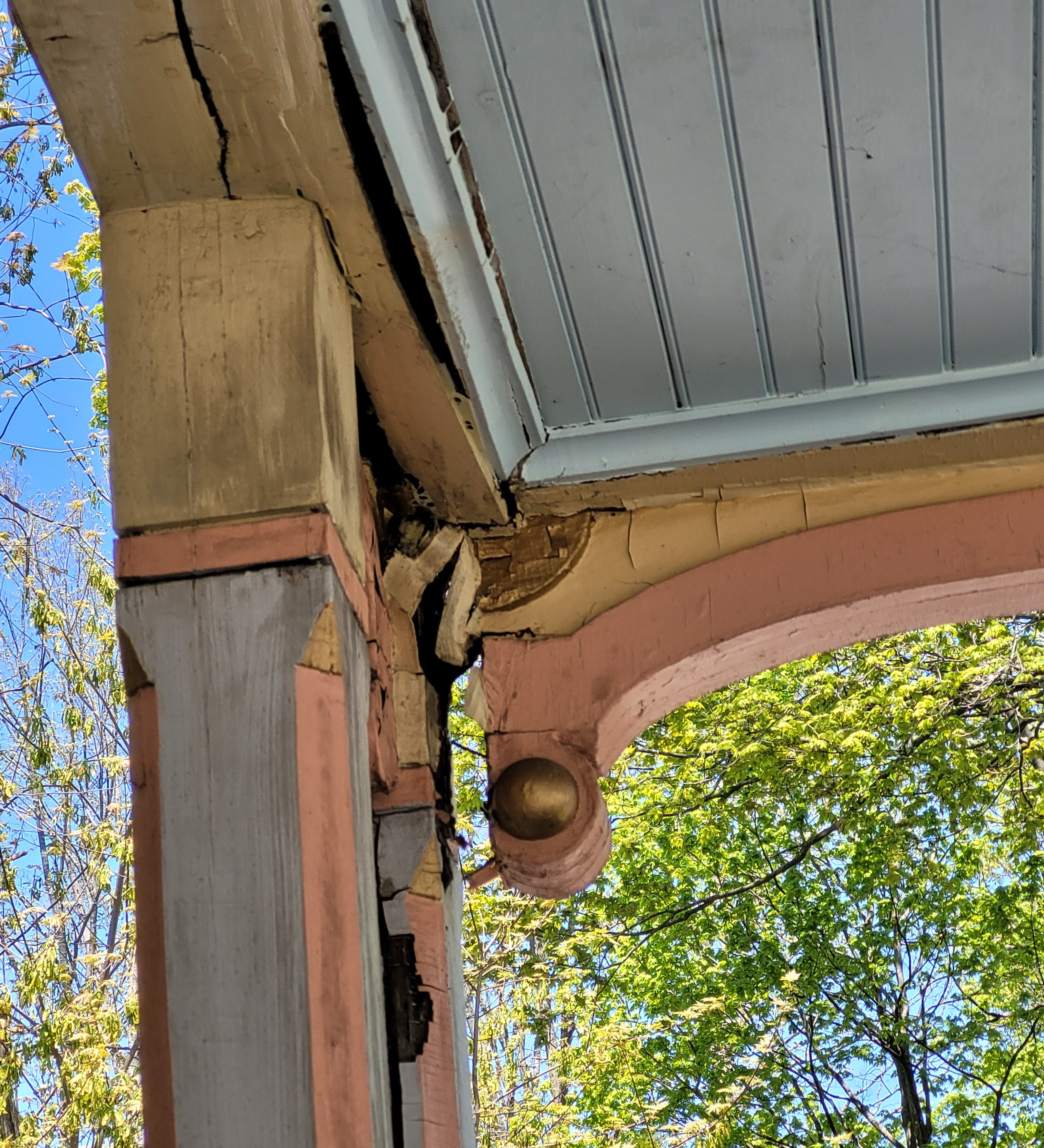
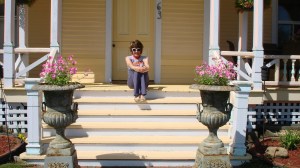
I won the 4.5-year lawsuit against the bank’s foreclosure of my Follies House. She will sell at market value. I toast with my FB friends, who hung in as I wedged against impossible odds with your patience and comfort. !!!!!!. The photo is from 2000 when we bought her. An enormous hug to my real estate broker, Scott Varley (aka Superman), and my attorney, who had educated and believed in me when I did not!
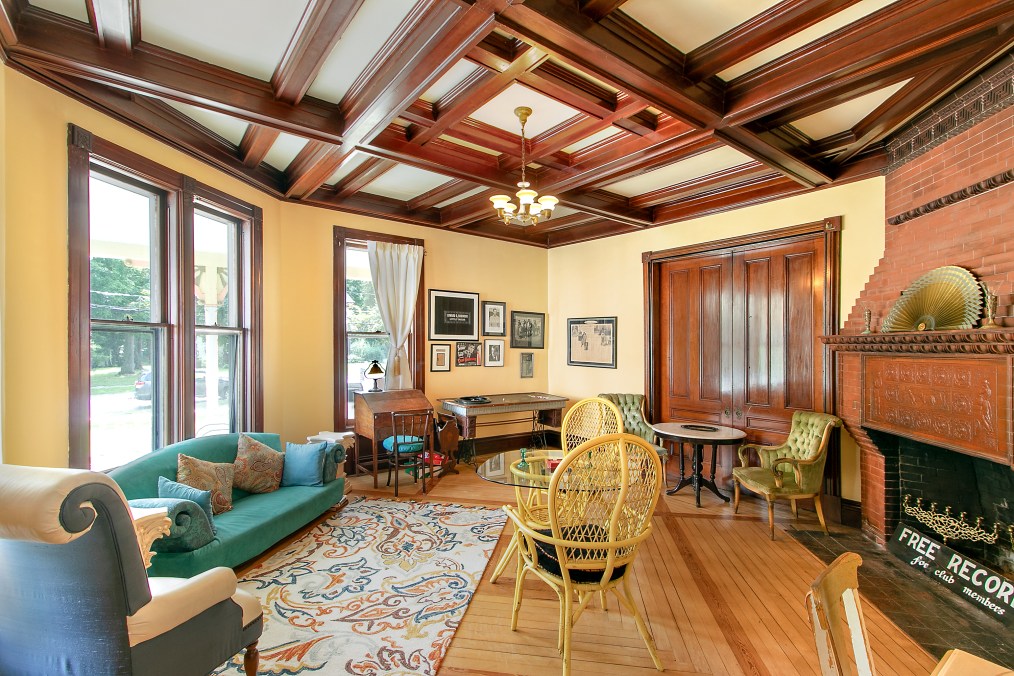
Looks like an open dragon mouth, in a way it is. Follies House is begging for a brace. The horrors and hahas of owning a 137-year-old home. We’ve had twenty-two years of sustainable wood, but this year is the end of luck. A dear and wise friend once told me this, ” Don’t love what doesn’t love you back.” As a woman of insatiable imagination and impracticability, I do love her. So I spent a few weeks interviewing masonry contractors. The first four said this, ” I wouldn’t park your car under there.” “What? The carport is going to collapse?” “It could.” ” And that costs? ” Fifteen thousand at minimum.” ” What about a temporary fix.” ” Too much liability. Sorry, mam.”
Five interviews later talking to a man whose been in the business thirty years, ” I cannot restore the entire job, is there a temporary fix?” “Well, we could bring in a platform plank to hold it up.” ” How much would that cost?” “Twenty-five hundred tops. You should really let us remove the foundation above it, that’s rotted and sinking. Is there a room above it?” “Yes, a bedroom in my unit. How much would that cost?” ” Between ten thousand and fifteen. We have to get in there and see how much water damage.” ” No, I can’t do that, no impossible.” ” I understand. I’ll do the temporary fix, the house is so gorgeous, and I’ve seen them all.” ” Thank you, I have tenants and have to be responsible for their safety.” ” Would you like to see the bedroom?” ” I’m in a rush.” I smiled a lot and walked up the stairs and opened the front door so he could see. “Wow, this is incredible.” Once he was in the house he was in love and granted me a discount of five hundred dollars. Do you know why? He said he’d love to be a part of her history after he’s gone. Historic homes are leaving our country, replaced by what he called tinderboxes that only last thirty years.
A metallic sky is blowing the cotton ball clouds with the force of a lawn blower, a collage of sunflower leaves brush beauty in the windows of my home, and the act of observation becomes my pastime, here in the Northeast.
The Village of Ballston Spa.
When I used to sit on the stoop in front of my Westwood studio, it was the dogwalkers and gardeners, visitors and residents that my eyes laid on, with a backdrop of high rise two million dollar condominiums, with concrete terraces, usually vacant, that formed the view and from that, thoughts randomly trapped, wish I owned that, wish I had that car, wish I had that man. It is amusing, how one’s view can determine one’s thoughts.
West Los Angeles.
On the street where I live now, homes are two hundred years old, or newly built to imitate the Victorian era. The automobile is sturdy, practical, and unwaxed. The way of this wonderment brings simplicity into my life. No need to dress up and fit in, it’s the opposite here, dress down to fit in, or like me, a combination. You are not watched, observed, questioned or complimented, because, well I don’t know the answer, not yet. This is the day after a storm. Half of a tree collapsed in my front yard.
The Polar Freeze had to arrive with me, and the test was not so much about the snow outdoors, it was how to stay warm indoors without running up my gas bill to five hundred a month. Luckily, I found my Irish wool sweater in the basement, that is so large I can wear three sweaters under it, then the leggings, knee-high woolen socks, hats, and gloves even indoors. My activity was limited to bringing the furniture from the attic, basement and unloading the UBox from Los Angeles. Boxes of books and china, photographs, records, and bric a brack from so much antiquing. Three months later the house was staged. I was left with a fractured elbow, but the scenery indoors plays a critical part in your emotional health, because it is too cold to play outdoors.
Most of my conversations came in Nomads, where I’d have a Cortado and some eggs, and talk with the owners who were also my tenants. I begged myself to interview them properly with a recorder, but I never did. They astounded my fictional idea of a millennial, not being general but based on what I observed in Los Angeles. In LA they don’t talk to adults unless you have a common bond; a tattoo or a protest sign. Nick and Alex have the play stations, all the tech knowledge of a Microsoft department, but, instead, they talked about literature, foreign films, and psychology. These are my subjects so if we began the conversation at eleven am, we finished at noon, minus the interruption of a customer. Many times, I’d ask for an explanation, and they’d answer without snickering or amusement. I recall one time I asked, ” Don’t you get tired of hearing adults say, you’ll understand when you get older (they are both nineteen years old) and Nick answered within a second, ‘No, because I know a lot they don’t. ‘Don’t forget I used the internet when I was five years old.’
The customers, mostly local residents, come solo or in large groups, families with toddlers, mothers and daughters, uncles, and nephews, everyone here that I met has a huge amount of family, which caused me some hesitation when asked, ‘you have family here, don’t you?’ After that question dozens of times, I thought maybe I should make one up. I’m not and never have been a believable liar.
The volume of their voices is another adjustment, not in a bad way, just a curiosity, they do not contain their vocal strength. Maybe it is a part of the heritage, just the New York way of conversing, but it is self-effacing genuine. I never detected a play on pretense or arrogance. Imagine how refreshing, like a gulp of spring water from a waterfall, after the playacting that overrides conversation in Los Angeles. To be continued.
Remember when you opened the door to your own car and took hold of the steering wheel without any parental supervision.
As a teen, my Chevrolet Impala was a haven away from my father. I rolled all the windows down, turned the volume up on the radio, and smoked. My secret joy was hoping the driver next to me would hear the music and notice me. If he was a suitable face I turned around and bobbed my head. Then, just as he looked over at me, I turned away, and looked in the rearview mirror, or sang my heart out to show off brazen behavior, the kind I couldn’t express at home. There was a sense of freedom from examination and explanation. When I drove my spinning Impala that leaped over road bumps in three waves, I was going somewhere alone. It was the only self-contained space my father wasn’t attached to, and he didn’t like driving with me, because he didn’t like me being in control. That is the sensation that life brings to us in volumes as teens; explosions of discovery. Today I don’t experience that sweat of discovery; my life is deodorized.
Remembering the sensations I felt as a teenager, reminds me to intertwine more challenges, sports, mental and academic thought into emotional adventures. If I’m lucky to break through all the percentages of disease, that the late night commercials warn me off, the edge of my rhythm is asking me to make a commitment; to put the Bo’ Jangles back in my steps. I heard the voice yesterday, almost a whisper, asking me why I exclude long term commitments: joining groups, classes, associations, serving on committees, planning ahead, even magazine subscriptions are not worth the trouble because I am always planning on moving.
The answer always comes in the photographs that bring back that moment in time, and the immediate recollection of the internal places I moved from venturing into the unknown. Many years ago, I was in therapy, and in one discussion, this discourse occurred that I considered an awakening then. “I think you jump into unknown places, and situations, to test yourself, and you do that because that is what your father did most of his life.” That is what adolescent behavior is meant for, to learn by experiment, to see how far our strength of character will take us. We each have a different set of alarms and temptations. Why compare what one has to the other? My path is familiar to me, I am a born mistress of unfamiliarity; the quest for discovery keeps me moving.
As a teenager, I remember the most remarkable configuration of images, that passed by while I was driving, the faces of shopping mothers walking the streets of Beverly Hills and Westwood, the prostitutes positioned along one section of Sunset Boulevard, and their counterpart degenerate gin-soaked soul mates inched up against abandoned buildings, the Ocean Park joggers, and walkers, and picnickers, waving to each other, as they slapped together hard boiled egg and tuna sandwiches. Like a playroom without walls for Europeans’ and senior citizens to elope with each other. I didn’t favor one street life over another, they all made sense to me.
Living in the Northeast calls your pragmatic and sensible strings. I’m still learning how to tame my lust for unpreparedness; like going out without an umbrella, leaving delicate brick a brac on the porch, driving with caution for deer, rabbits, and turtles, maintaining a close eye on water in the basement,and dressing down so I don’t look like I’m from Los Angeles.Every day is experimental in some way. I don’t know how long I’ll be here, maybe that is how I like it. With every intention on writing about living in a village of five thousand, surrounded by forests and fields, my pen of expression is a bit too wobbly to publish. I’ve had this post up for editing all week, and it’s not a new one. Most of it was published in 2011. Is that cheating?









 ADVENTURERS IN LIVINGNESS
Leave a Comment