SATISFYING PRINT ON AL SMILEY AT LAST: IN JEWISH POST & NEWS


April 6, 2015

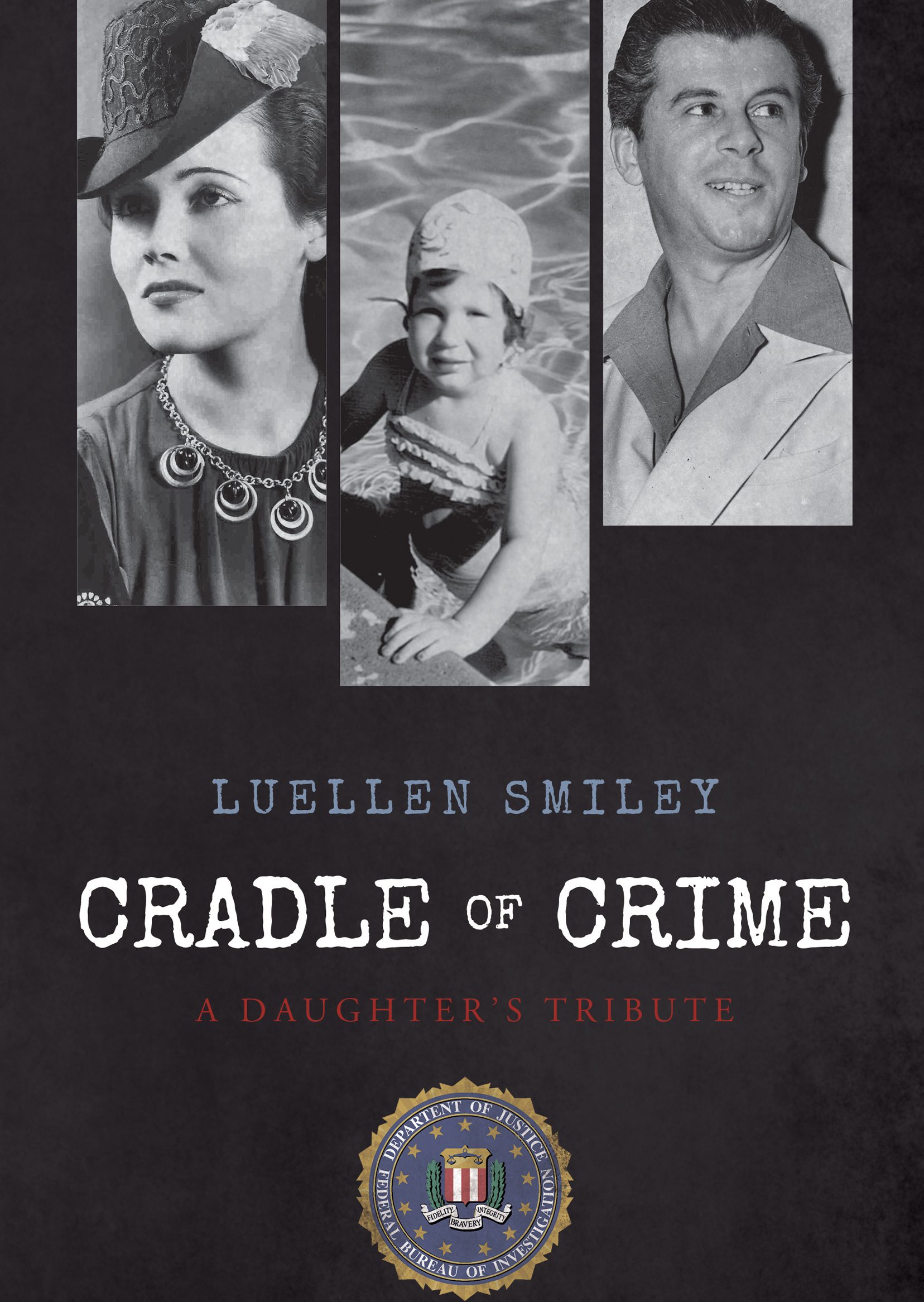
Former Winnipegger Al Smiley had a close association with “Bugsy” Siegel


Al Smiley

By MARTIN ZEILIG
On the evening of June 20, 1947, less than six months after he opened the Flamingo Hotel-Casino in Las Vegas, Ben “Bugsy” Siegel died in a barrage of bullets through the front windows while sitting on a couch in his Beverly Hills mansion at 810 Linden Drive. Assassinated at the age of 41, Siegel was one of the USA’s most notorious gangsters.
A former Winnipegger, Al Smiley (1907-1984) was with Siegel that evening.
“My dad was seated inches away from Siegel, on the sofa, and took three bullets through the sleeve of his jacket,” said Luellen Smiley, a creative non-fiction writer, award-winning newspaper columnist, and Mob historian who lives in Sante Fe, New Mexico.
She consented to an interview with The Jewish Post & News earlier this winter.
“He was brought in as a suspect. His photograph was in all the newspapers,” said Luellen.
“He was the only nonfamily member who had the guts to go to the funeral.”
So who was Al Smiley?
Born in Kiev, Ukraine in 1907 as Aaron Smehoff, Smiley and his family – father Hyman, mother Anne, sister Gertrude (who became a school teacher and lived in Winnipeg until her death many decades later), brothers Samuel and Benjamin – immigrated to Winnipeg when he was five, said Luellen Smiley, during a recent telephone interview with this reporter from her home in Sante Fe, New Mexico.
“My grandfather was a kosher butcher and delicatessen owner,” she continued, noting that the family home and butcher shop was located at 347 Aberdeen Avenue.
“He maintained an Orthodox household and expected that his eldest son would become a rabbi. But, my father was rebellious and interested in sports, especially hockey.”
This caused conflict between the willful youth and his rigid, religious father.
So, the teenager fled Winnipeg for greener pastures in Detroit, Michigan via Windsor, Ontario in 1923.
He got a job travelling with the Ringling Brothers Circus and ended up in California where he was arrested for a drugstore robbery in San Francisco and sent to Preston Reformatory School in Ione, California, Luellen noted.
“It was there that he met legendary movie director Cecil B. DeMille,” she said.
“He was doing some sort of research for a movie. My father asked him for a job in the movie industry upon his release, and DeMille agreed. He found my dad work in a wardrobe department.
He later became a property man, then a grip, the person in charge of production on a set, and eventually a producer.”
He befriended celebrities like George Raft, Eddie Cantor, Clark Gable, Lauren Bacall, along with such gangster associates as Ben Siegel.
“I’m pretty sure Dad met Ben through George Raft,” Luellen Smiley speculated.
With Siegel’s help he opened a nightclub in L.A. sometime in the late 1930s.
Smiley would later tell his daughter that Siegel was “the best friend I ever had.”
In her soon-to-published memoir, excerpts of which she agreed to let this newspaper print, Luellen Smiley reveals the conflicted feelings she had growing up, and into later life too, about her father:
“Some children are silenced. The pretense is protection against people and events more powerful than them. As the daughter of Allen Smiley, associate and friend to Benjamin ‘Bugsy’ Siegel, I was raised in a family of secrets.
“My father is not a household name like Siegel, partly because he wore a disguise, a veneer of respectability that fooled most. It did not fool the government.
“When I was exposed to the truth by way of a book, I kept the secret, too. I was 13. My parents divorced, and five years later, my mother died. In 1966, I went to live with my father in Hollywood. I was forbidden to talk about our life: ‘Don’t discuss our family business with anyone, and listen very carefully to what I say from now on!’ But one night, he asked me to come into his room and he told me the story of the night Ben was murdered.
“When I was spared death, I made a vow to do everything in my power to reform, so that I could one day marry your mother.
“Ben was the best friend I ever had. You’re going to hear a lot of things about him in your life. Just remember what I am telling you; he’d take a bullet for a friend.
“After my father died, I remained silent, to avoid shame, embarrassment and questions. But 10 years later, in 1994, when I turned 40, I cracked the silence. I read every book in print – and out of print – about the Mafia. Allen Smiley was in dozens. He was a Russian Jew, a criminal, Bugsy’s right-hand man, a dope peddler, pimp, a racetrack tout. I held close the memory of a benevolent father, wise counselor, and a man who worshipped me.
“I made a Freedom of Information Act request and obtained his government files. The Immigration and Naturalization Service claimed he was one of the most dangerous criminals in the country. They said he was Benjamin Siegel’s assistant. They said he was poised to take over the rackets in Los Angeles. He didn’t; he sold out his interest in the Flamingo, and he went to Houston to strike oil. I put the file away, and looked into the window of truth. How much more could I bear to hear?
“He stowed away to America at 16, and was eventually doggedly pursued for never having registered as an alien. He had multiple arrests – including one for bookmaking in 1944, and another for slicing off part of the actor John Hall’s nose in a fracas at Tommy Dorsey’s apartment. He met my mother, Lucille Casey, at the Copacabana nightclub in 1943. She was onstage, dancing for $75 a week, and my father was in the audience, seated with Copa owner and mob boss Frank Costello.
“‘I took one look, and I knew it was her,’ was all he had told me on many occasions.
“On a trip to the Museum of Motion Pictures Arts and Sciences in Los Angeles, I was handed a large perfectly pristine manila envelope, and a pair of latex gloves with which to handle the file. Inside were black and white glossy MGM studio photographs, press releases, and biographies of my mother’s career in film, including roles in ‘The Secret Life of Walter Mitty,’ ‘Ziegfeld Follies of 1946,’ ‘Meet Me in St. Louis’ and ‘Harvey Girls.’ She was written up in the columns, where later my father was identified as a ‘sportsman.’ The woman who pressed my clothes, washed my hair, and made my tuna sandwiches was an actress dancing in Judy Garland musicals, while her own life was draped with film noir drama.
“My father wooed her, and after an MGM producer gave her an audition, he helped arrange for her and her family to move to Beverly Hills, where she had steady film work for five years. He was busy helping Siegel expand the Western Front of the Costello crime family and opening the Flamingo casino in Las Vegas. They were engaged in 1946.
“Still, the blank pages of my mother’s life did not begin to fill in until I met R.J. Gray. He found me through my newspaper column, ‘Smiley’s Dice.’
“One day last year, R.J. sent me a book, ‘Images of America: The Copacabana,’ by Kristin Baggelaar. There was my mother, captioned a ‘Copa-beauty.’ Kristin organized a Copa reunion in New York last September. I went in place of my mother, but all day I felt as if she was seated next to me. I fell asleep that night staring out the hotel window, feeling a part of Manhattan history.
“Now, the silence is over. I don’t hesitate to answer questions about my family. I have photographs of Ben Siegel in my home in Santa Fe, NM, just as my father did. Every few months I get e-mails from distant friends, or people who knew my dad.
“It seems there is no end to the stories surrounding Ben and Al. I am not looking for closure. I’ve become too attached to the story. To me, he was a benevolent father, a wise counselor, and a man who worshipped me.”
Luellen Smiley can be contacted via email: folliesls@aol.com

Add comment

Name (required)

E-mail (required, but will not display)

Website

Title (required)


Notify me of follow-up comments


Category: Features


https://wordpress.com/post/odysseyofadventures.com/11523
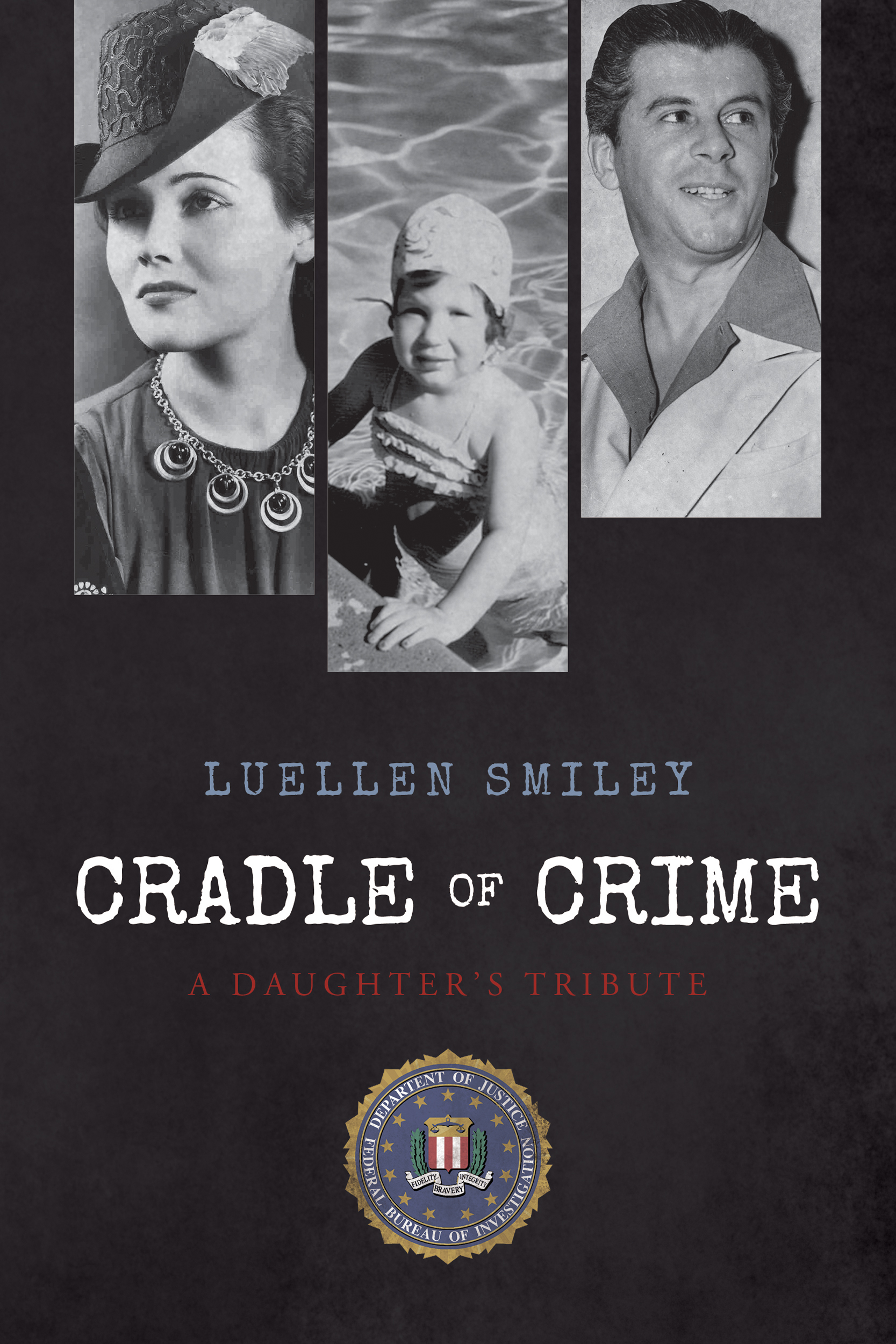
WHO WAS MY FATHER?


I began my research WITH WHAT I HAD; one of my father’s books; “The Mark Hellinger Story.” I leafed through the index and there was my father’s name along with Ben Siegel’s. According to the biographer, my father visited Mark at his home the night before he died. Mark had stood up in court for my father and Ben at one of their hearings. He was fond of Ben, like so many people were, that aren’t here to tell their story.
After reading the book I rented, The Roaring Twenties, written by Mark, and from there the connections, relationships, and characters began to leap out from all directions. I
submerged myself in history and photocopied pictures of my father’s movie star friends, George Raft, Eddie Cantor, Clark Gable, and his gangsters friends. I found photographs of the nightclubs he frequented, the Copacabana, El Morocco, and Ciro’s and nightclubs that he referred to in his mysterious conversations. I made a collage of the pictures and posted them above my desk. I played Tommy Dorsey records while I wrote. This microcosm of life that was created, allowed me to listen to the whispers and discover the secrets.
I dug into my father’s history without knowing how deep I had to go, or what shattering evidence would cross my path. In my heart I felt this was crossing a spiritual bridge to my parents. The flip side was a gripping torment, tied to my
prying mind. I needed to break into the files in order to break my silence, and discover my parents, not glamorized stereotypes that fit into the category of Copa dancer and gangster. No matter what I uncovered, I always knew it would be ambiguous, and controversial. I did not expect to find a record of murder, dope peddling, and prostitution. I believed that his crimes were around the race track and in gambling partnerships. Even so, I could never understand the similarities we shared, unless I knew them as people. Though I have not rebelled against authority as my father did, I‘m not a team player, I resist authority, and I don’t like waiting in lines.
I had to reinvent my mother through the subconscious. I skated over thin ice trying to set her truth apart, from what I
had invented, dreamed, or had been told. I listened to Judy Garland’s recordings, and premonitions surfaced, of how my mother loved Judy, how it must have felt to be under the spot lights of MGM, and dancing in ginger bread musicals while her own life was draped with film noir drama.
I studied my mother’s face in all her films, rewinding and stopping the tape, as if she might suddenly return my glance. She had dancing and background shots in the musicals produced by Arthur Freed. I remembered dad talking about Arthur, and how prestigious it was to be in his department.
When I discovered the Museum of Motion Pictures Arts and Sciences in Los Angeles, I went down and filled out a slip of paper with my mother’s name on it and waited for my number to be called. I felt something like a mother discovering her child’s first triumph. They handed me a large perfectly stainless manila envelope, and a pair of latex gloves to handle the file. I had to look through it in front of a clerk.
“That’s my mother,” I proclaimed. He blinked and returned his attention to a memo pad. Inside the envelope were black and while glossy studio photographs, press releases, and studio biographies of my mother. The woman who pressed my clothes, washed my hair, and made my tuna sandwiches. There she was in front of the train, for Meet Me in St. Louis, and a promotional photograph in The Secret Life of Walter Mitty, dated 1947. That was the year Ben was shot. I looked further to find more clues. I needed to know where she was the night Ben was murdered. Maybe she was on location when it happened. Maybe she was in New York at the opening of the film. I could not place her on June 20, the day Ben was murdered. I imagined my father called her and told her the news. The marriage plans were postponed, their engagement suspended. My father had to get out of town.
I spent everyday picking through the myths I’d heard and read. I heard a clear chord of scorn, for exposing family secrets, “It’s nobody’s business what goes on in our family, don’t discuss our family with anyone, Do You Hear Me!” I must have heard that a thousand times.
I began to dig with an iron shovel. I asked every question I wasn’t supposed to ask, and preyed into every sector of their life. I wanted to know about his childhood, where he grew up, and why he left home when he was thirteen years old. Who were my grandparents, and why didn’t he talk about them. How did he meet Ben Siegel and Johnny Roselli, and when did he cross over into the rackets?
I contacted historians, archivists, judges, attorneys, Police Chiefs, FBI agents, authors and reporters across the United States. He always said, “Reporters can destroy your life overnight.” And here I was, uncovering what he had sheltered all his life.

I wrote to the INS in WDC and asked for their assistance. Six months later I received a letter from the INS in Los Angeles. They acknowledged his file, it was classified and they could not locate it. The progress was tediously slow, and the waiting oppressive.
While I waited for the files, I read Damon Runyon, and Raymond Chandler stories and attempted to identify which character personified which gangster. The stories were about the people that came to my birthday parties, Swifty Morgan, Nick the Greek, Frank Costello and Abner Zwillman,(the Boss of the New Jersey syndicate.) The dialect of Runyon and Winchell mimicked the same anecdotes my father used over and over! By understanding Runyon’s characters I began to know my father. At night I watched old gangster movies and that opened another door of familiarity.

I read almost every book in print about the Mafia and ordered out of print books from all over the country. They began to topple on my head from the shelf above the desk. Allen Smiley was in dozens of them. Every author portrayed him differently, he was a Russian Jew, a criminal, Bugsy’s right hand man, a dope peddler, a race track tout, and sometimes the words bled on my arm. To me, he was a benevolent father, a wise counselor and a man who worshipedscan0002 me.
The INS claimed my father was one of the most dangerous criminals in the United States. They said he was Benjamin Siegel’s assistant. They said he was taking over now that Ben was gone.
That day I put the file away, and looked into the window of truth. How much could I bear to hear more?

Mom and Dad second from Left. I don’t know the other people.

MY FATHER, THE GENTLE GANGSTER


This is an excerpt from the memoir I’ve been working on many years. The first manuscript was 800 pages; about three of them were worth reading. The book mutated about 2000 times.

“What’s it like knowing your father is a gangster? Did you know when you were a teenager? Did your father kill anyone? Did you ever meet Bugsy? Aren’t you afraid of his friends? You know they kill people.”     

            I was thirteen years old when my best friend told me my father was a gangster. She didn’t mean any harm. We told each other everything.  We were standing in the Brentwood Pharmacy one day in 1966, and we turned the book rack around until we found ”The Green Felt Jungle.”

“That’s the book, let me look first and see what it says.” She whispered. I waited while she flipped trough the pages.

“Oh my God, there he is,” she said grasping my shoulders.  We hunched over the book and read the description of my father beneath his photograph.

“Allen Smiley was the only witness to the murder of Bugsy Siegel.”

“What does that mean, who is Bugsy Siegel?” I asked.

“Shush, not so loud, I’m afraid to tell you this Luellen, it’s awful. I don’t believe it. “

“What is it? Tell me.”

“Bugsy Siegel was a gangster, he killed people. Your father was his friend.”

I don’t think I should read this, “I said replacing the book on the rack.

“Don’t tell your father I told you,” she warned.

“Why not?”

“My mother told me not to tell you, swear to me you won’t tell your father.”

“I swear, come on let’s go.”

My father called himself Allen Smiley. The FBI tagged him “armed and dangerous.” The Department of Justice referred to him as the “Russian Jew.” I called him Daddy.   e had salty sea blue eyes blurred by all the storms he’d seen.  When I said something funny, his eyes crystallized and flattened like glass, smoothing out the bad memories.  He was always a different color, dressed in perfectly matched shades of pink, silver and blue. My small child eyes rested cheerfully on his silk ties, a collage of jewel tones. The feel of his fabric was soft like blankets.  He was very interesting to look at when I was a child and open to all this detail.

SHALLOW END OF THE BEVERLY HILLS POOL


In this segment I am in my mid-twenties, living alone in a sparse studio apartment in Westwood, and I do not have a boyfriend. On Saturday mornings, my father would call me before I had decided what to do.

“Irv has room in the cabana today. What time do you want to go over?”

Irving was my father’s walking partner. Whenever my father wanted to walk, he called Irv. They discussed business deals, and talked a lot about Marvin Davis. That meant nothing to me, because I did not want to know my father’s business. Irv could have been a pinup for everything Beverly Hills. He was George Hamilton, evenly tanned all year, dressed in seasonal custom suits, Gucci loafers, carried a Gucci attaché, drove a Cadillac and like my father, dined out five nights a week. Irv reserved a poolside cabana at the Beverly Hills Hotel most weekends to play rummy, maintain his tan and watch the women.

“Daddy, I was going to do something else today.”

“Yea, like what?”

“I wanted to see a movie.”

“Well, you can see a movie anytime, Irv doesn’t always have room for you and I’ve made special arrangements, so for Christ’s sake take advantage of it.”

“Who else will be there?”

“Friends, I don’t know who exactly, what the hell does that matter.”

“How come you never go?”

“What the hell do I need to go for—I’m not looking to meet anybody, and I can’t take the sun anymore, you know that.”

I conceded in going, otherwise my father would slam the phone down on the receiver and refuse to talk to me the rest of the weekend, or maybe the whole week depending on his mood.

The first few times I went, it was educational, on the art of superficiality. After that, I denounced the routine charade of women imitating movie stars and men mimicking movie moguls.

Reluctantly I submitted to the agony of my own disguise. I dressed up in a ghastly bathing suit ensemble I bought at Saks, and presented my forced smile to Irv on Saturday.

“Hey, there she is–come in sweetheart, that’s Al Smiley’s daughter,” he said to his friends, and without looking up from their hands, they shouted hello. Irv stood up in his Clorox white shorts and matching shoes and kissed me on the cheek. His skin smelled of coconut oil and cologne.

“Luellen honey, take a lounge, the towels are in the dressing room, what’s Dad doing today?”

“I don’t know, why doesn’t he come here?”

“I’ve asked him a million times, haven’t I Sammy, why doesn’t Al come over here. You can’t argue with Al, right Luellen?”

“Right Irv.”

“Tell your Dad I saw Jimmy here today.”

“Jimmy who?”

“He’ll know, OK, Luellen, you all right – I gotta get back to my hand, before these guys start cheating,” and the laughter of all three filled the room.

I undressed in the dressing room, lathered up with sunscreen, applied more make-up, and wrapped my hair in a terry cloth bandana. Then I self-consciously stretched out on the yellow terry cloth lounge and closed my eyes. The sunlight bounced off Irv’s sun reflector, and within minutes, my entire body was steam bath wet.

“Sun’s great isn’t it?”

“It’s hotter than Las Vegas in here, I’m going in the pool.” The men laughed again, without taking their eyes from their cards.

Only a handful of bathers broke the surface, almost everyone waded. Even under water, I could hear the faint resonating echo of the paging operator, calling guests to the telephone. From the shallow end, I watched the poolside games people play in Hollywood’s desirable circles. Some girls were my age or younger, and they gleefully participated in the poolside masquerade. Beneath my scorn and disapproval, I imagined myself wearing a strapless bikini, tanned and glowing in my strut around the pool, calling out ‘darling, let’s have lunch,’ to some handsome actor.

From the pool, I would then return to the cabana, dry off, slide the lounge upright, and try to read. All of my actions discouraged interest, because I was positive, I would not like anyone, and if someone did come over, he’d have to cross over Irv, and eventually my father, and none of this seemed to have a happy ending.

At the end of the day, I reported to my father on the days events.

“Well, did you meet anyone?” he asked.

“No, not this time.”

“Well you keep going, you will if you give someone the chance.”

“Daddy, I have other things I like to do on the weekends too.”

“Yea, like what?”

“I like to be with my friends.”

“Well, this is an opportunity to meet a different caliber of person. You haven’t had much luck on your own.”

“Daddy they’re all so phony, it’s not like it used to be when you went there in the forties.”

“How do you know? You’re something else! You think you know better than I do? Do you know how many young girls would chop off their leg to be sitting in a private cabana at the Beverly Hills Hotel? What do you think I’m doing this for? It’s not for my benefit; I’m sitting over here trying to keep things going, amidst all this turmoil. I want you to meet the right sort of man who can help you, and introduce you to some real advantages.”

“Daddy I’m doing fine, I like my job and….”

“Yea, yea, I won’t ask you again. I won’t even think of it, you don’t deserve it. I’ll invite a girl who will appreciate the offer.” While he tried to ensure my financial security, I molded myself into an idealistic, rebellious fool.

What I did take advantage of were my father’s dinner parties. The men that we dined with did not go to an office, or meet in conference rooms with secretaries taking notes. They took their meetings in restaurants, and delicatessens. They never ordered off the menu, and fought over the check. They witnessed corruption the rest of us do not even know exists, and they killed one another. They are far more interesting than the Gucci men at the Beverly Hills Hotel. Between the two groups, I favored the gangsters, which was of interest to any therapist I have met in the past.

Recently I have learned that during the time of these cabana visits, many of my father’s friends were under investigation with the government. My father was also under federal investigation, and that is why he did not join us at the Beverly Hills Cabana.

Any dice to throw Email: folliesls@aol.com.