

There are themes to our lives. Sometimes a year, sometimes one single day launches the theme, or it may just tumble into our path unexpected and replace whatever we were holding on to dearly. The sensations leading up to my theme, reverse the order, peeked through the quagmire of disillusionment, frustration and mud heavy quibbling in my head. Reverse the order, blew into the quibbling, and straightened my piles of projects. Writing,editing, not believing in my word, leasing the house, getting into a relationship, deferred maintenance on myself and property I own, and sweeping leaves etc.
“ Stop writing as a means of self-gratification and start submitting what you have written. Leave the leaves to fall.
Category: GROWING UP WITH GANGSTERS
LONELY IN WRITING
WRITING did not missle me into loneliness. It was a voice inside that asked to be alone that missled me to writing.
I’M NOT LIEING
 Photo credit to: LOREN TUPLER aka White Wolf.
The throw of the dice this week lands on adventures in livingness; friendships.
The subject pierced me yesterday morning, and came by way of Anais Nin, a passage in her diary.
“Each friend represents a world in us, a world possibly not born until they arrive, and it is only by this meeting that a new world is born.”
― Anaïs Nin, The Diary of Anaïs Nin, Vol. 1: 1931-1934 Today, the first in several months that the atmosphere is ripe with thought, and has brought me back to the writing of the moment. The delivery trucks have not opened their doors and dropped their ramps, the garbage trucks have already passed, and the traffic is so slight it feels like Sunday.
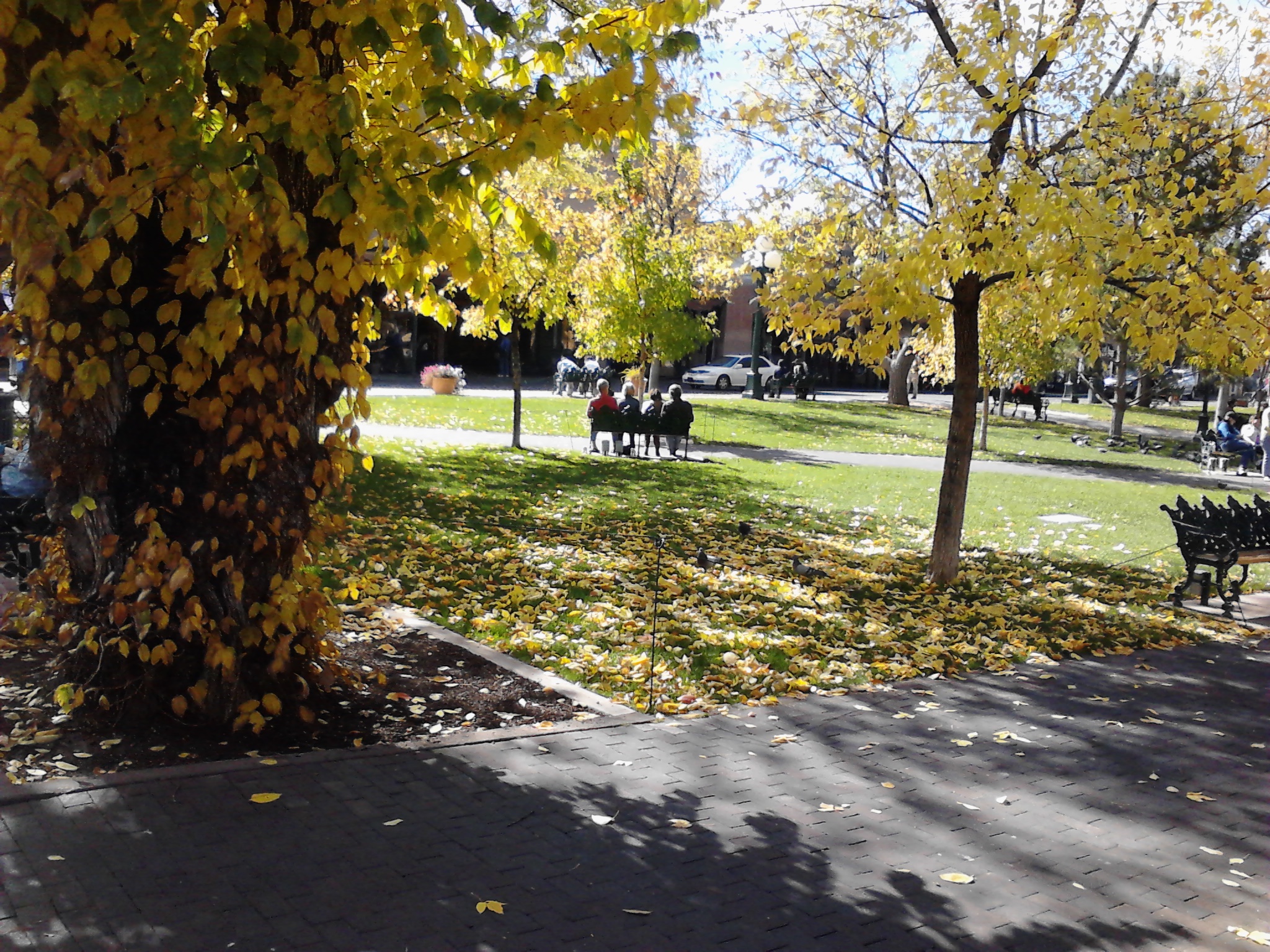
Fall is brushing nature with a varnish of sunshine all day, the sky is swimming pool blue, and so I sit in the garden on the lounge chair, shaded by the droopy elm tree. I hear some cheerful shouting on the sidewalk, a horn breaks the sanctuary, and then a dove lands on the wooden lattice and we watch each other. I breathe deep, close my eyes, and feel my noon time tuna sandwich thumping in my belly.
The stream of consciousness is threaded to the deeper blanket of anxiousness. I am going in circles, not physically like I have been moving from one bedroom to another, one closet to another to accommodate, the vacation rental guests. I am in the circle of chaos that seeps into every day activities. Tempers are flaring, combative street encounters rouse the hum of music on my porch, authoritarian behavior is exhuming from Managers and Owners, employees are jumping ship everywhere. People are relocating, selling possessions, or using succulent lips and breasts to lease men for financial support. We are all a bit edgy.
Just as we adapt to one highland of composure we lose another. On Yom Kippur I attended synagogue in Santa Fe. There were only a few empty seats, so I took one and opened my prayer-book. I tried to read the portion I missed but the two women behind me were chatting. The expectation of searching your soul does not come easy when two women are talking. The same annoyance follows me everywhere; I always end up seated next to the talkers. Whether it’s in on an airplane, a restaurant, or a movie theater, the talkers seem to trail me. The passages from Yom Kippur service remind us of: sensitivity, tolerance, love of thy neighbor, selflessness, jealously, and trust. There I sat, silently scolding the two women who continued to chatter and laugh. Rather than deter my soul-searching, I changed seats, and asked forgiveness for my intolerance. Above all my flaws and quirks, the altar of shame lies in the hiss of distrust. It is a hiss that rises from my gut, and enters my brain. It wasn’t always a malignancy; as a young adult I trusted everyone, unless they asked me questions about my Dad. In recent years, the tumor of trust has splintered friendships. The Rabbi chose the subject of trust as his closing narrative. He said that a person who suffers from lack of trust, runs the risk of becoming paranoid. I sank lower on my inner backbone. Yes, that seepage of paranoia has invaded my trusting heart. When I got home Rudy was painting the new double pane door to my room.
“How was the service? Hand me that screw will you?” He asked
“Guess what the Rabbi talked about?” I said and handed him the screw.
“Israel.”
“Well of course that’s embedded in the Torah. But his personal message was about trust.”
Rudy continued to insert the door into the archway with his screw-gun. “You inherited distrust from your father, I don’t know if you can rid yourself of it.”
“I have to!”
“Good. I’m so hurt when you don’t trust me, I mean after thirty years.”
“You still lie.”
“They’re not lies; they’re white lies, so people don’t get hurt.”
“But I know when you’re lying.”
“I know you do.”
“And the lies really hurt.”
“Well then we’re both guilty.”
“You still don’t get it.”
“Yes, I do. You’re not listening to me.”
“You’re right. I’m about feeling, and you’re about telling. ”
Why do we lie; is it to protect the other person’s feelings or
is it because we use deceit and dishonesty to get what we want, If we could change a single human gene; it would be the fib factor. Just imagine how different our life would be.
HOW MUCH MORE NEWS CAN WE TAKE
As a writer I read the newspapers; Wall Street Journal, USA Today, Los Angeles Times, New York Times, and the Santa Fe New Mexico papers, where I live. I watch all the news stations. I quit MSNBC, cause Chris Mathews made me hyperventilate. I think Charles Krauthammer is the most knowledgeable and sustainable journalist of our time.
Do to an act of nature, lightening, I lost Cable for a month. This was when Syria broke. No one talked about it here, and I felt the communities disillusionment. When my service was repaired, I turned on the news. I felt more insulted than the time a young boy told me my legs were hairy. Who did you think you are kidding? You want us to watch both sides fisting each other like a street gang! Please someone tell them, the Press, chill out a bit and stop turning the news into a talk show. You talk to us as we were mutes. The Government has evolved as false as who we see in the mirror. If you are plain you see beautiful, if you are beautiful you see plain. I see you government, and I am ashamed.
I haven’t read the papers since June. This Thursday I went to the bank to make a deposit to cover my negative, and I looked at the newspapers on the customer coffee table. , My eyes shut after two headlines. How much more can we take? I really have lost track of priorities.
Should I get a job because my writing remains unrecognized. I need a retirement guidance counselor. I don’t like the title of financial advisor; they sound too rigid. Should I respond to the dreadful vacillation of American Policy. How much more debating can they do? It’s like when I worked in corporate real estate. The meetings I attended and had to present were progress reports on whether I was an effective employee. I don’t know how I lasted as long as I did; my act was good, and I impressed some of the boys, but communication was too formal to bring out honesty. Maybe that’s what has evaporated in our government, or am I seeing it differently because I’ve aged into it slowly. I think it started when the cool shit act came about. Some artists have it, Musicians, yea they got it, gangsta’s got it, but they always had it. Those of us who feigned cool acts, became feigned. Rambling now. Got to sweep fall leaves and start editing 350 columns.
I’m listing to Nessun Dorma, and I was thinking how much I detest all this multitasking. I can now handle five projects at once; write, sweep mop the floor, water plants, contemplate resolutions to my finances, all the while feeling my nerves tighten, and even though I stretch four times a day; this crushing operatic play in life is over strung. I watch those Sandals vacation commercials and practically cry because how many of us haven’t had a vacation in years, or a chance to
play a round or golf or read More Magazine all the way through?
THE ORDER OF DISORDER


The order of this week is disorder. Not the trivial disorder of a closet, or a work in progress; this week is the unraveling of the self which comes with separating from someone you love dearly. It is the subject of: poetry, theater, film, literature, dance, visual arts and music — all forms of music from opera to rap. For all of you who have mothers’ and fathers’ close to death, and you don’t want them to leave.
Adults protect you from the brutality of death when you’re very young. They keep it behind locked phrases like ‘she had to go away to a better place; you’ll understand when you grow up.’
The camouflage of death may go on indefinitely until one day, you are hit over the head with a block of ice, and it splits you right down the middle. You can see your guts spilling out, and everything is all out of order. Walking is an effort. Thinking clogs with the big question: Why? Why can’t we all stay here together and live forever?
Flashback to 1966 — I was very young, not so much in years, but when I was 13 my mental and emotional age were more of an 8-year-old. I don’t know if I was ADD or DDT because those acronyms were not in vogue yet.
My development was arrested because I was raised on a fantasia of false identities, fiction, and privledge. I thought we were rich, happy, and would live together forever. The fantasia of falseness was abruptly taken away on June 19, 1966. On that day, I saw for the first time, my father weep uncontrollably. I was told my mother was in heaven. My father was seated on my mother’s avocado green sofa in our tidy mid-century apartment in Westwood. Nana — mother’s mother — was seated on the sofa next to my father. Nana and Dad had reconciled for the period of time my mother was sick with cancer. They both were sobbing. I was not. There was nothing inside of me but resistance; a blockage of emotion that remained there for so many years.
I was left in my father’s care. He was busy out chasing government subpoenas’ and running the Fontainebleau Hotel in Florida. He kept a command post on my emotions. He would not tolerate my grief, because he could not tolerate his own. So, I had to chin-up, chest out, walk up and down Doheny Drive in Hollywood where he lived and pretend I was going to be fine.
When I turned eighteen and left my father’s apartment was the first time I was free to unravel my feelings. The emptiness filled with confusion, anger and drugs. If college was supposed to be my best years, then I missed that chapter. Looking back, the real leap to personal growth came at that time when I was left unattended to wander through life with my own eyes as guardian, and my heart as my compass. That is when I missed my mother the most. It was my fortune to have my father back in Los Angeles, throwing his weight around from a distance. He kept me under radar by having a friend’s son working in the admittance office of Sonoma State College.
I remember days when my mental attitude needed electric shock therapy. Miraculously, I did find my way home, and to the matter of my mother, and growing up with gangsters. From a wafer of stability, very slowly, I’ve built a nice lifeboat to keep me afloat. My screaming, cantankerous, and intimidating father who loved me beyond measure is in this imaginary boat, and my mother who loved with a silent gentle hand she gave to me whenever I needed assurance.
All I have to do is look at her photograph placed in every corner of my house, and I regain momentum in my lifeboat. When I am particularly insolvent with life’s measures, I recall the years she spent fighting cancer so she could continue to hold my hand. How can I disappoint such a woman? I cannot, and I know that with more certainty than I know anything.
We all have a basement strength that rises up and balances us when we need it. Each time we cross that unpleasant road, and say good-bye to our friends, our pets, our parents, or our siblings, we have to find our basement strength.
You can read poetry and essays, listen to opera or rap and find five-thousand ways of expressing the same painful stab of separation. If the comfort comes in just knowing — we all have that in common — then all you have to do is tap the shoulder of the man in front of you, and ask, “How did you handle it?”
Or as Henry Miller said, “All growth is a leap in the dark, a spontaneous unpremeditated act without the benefit of experience.”
Any dice to throw, e-mail it to folliesls@aol.com.
LAS VEGAS WHEN WE WERE YOUNG

I wasn’t allowed in the Copa when the Rat Pack performed; I listened to the uproar

from outside the door, and caught a glimpse when Uncle Jack let someone in. It was a wild charade of slapstick, improvisation, and politically incorrect slurs, swearing and insults, all dressed up in comedic song and dance.
That’s how I remembered Las Vegas. When I returned for the grand opening of the Mob Experience Las Vegas, I bounced into the spot lights, press conferences,
introductions, and interviews in a shiny aquamarine pants suit, I hadn’t worn in six years. Congregating with the sons and daughters of my Dad’s associates, who were raised in a similar fashion of privilege and secrecy, was my homecoming to
Las Vegas. There I was, speaking into a microphone about my father, who obsessed over me, as I was now doing in Las Vegas. What was the importance of this seventeen year battle? To re write history that was written about him, by people who never even met him. They couldn’t get the camera off of me, “Luellen, we’ll turn it over to the station now,” while I am still stating the case of Allen Smiley. What would Meyer and Dad and Roselli think of all this. They’d say, “Wish the Brain (Arnold Rothstein) could have seen this racket.
FILM TO THOUGHTS
Silent Sunday, before the raucous of Cinco de Mayo in Santa Fe. Awakening to the thread of emotion after watching
“The Only Thrill” a movie made in 1997 with Shepard and Keaton. Shepard says,” NO! Things don’t just work out,
you have to make it happen.”
SPREAD OF JOY
When the joy rises let it fly to the ones who
are in need. May be the UPS man, the
grocery clerk, or a neighbor. 
WHAT DO YOU GUYS KNOW ABOUT THE MOB


Dead Don’s, shopkeepers, policeman, government employees, drivers, wives, and sons are slaughtered every week. You won’t know unless you study it, like I do. They are in Calgary, Montreal, Sicily, Rome, the UK, Russia, India, Asia, Macao, …. You have no idea how different organized crime is compared to the founders. Read about Arnold Rothstein, and ask people who knew Benny, what kind of man he was.
SWIMMING WITH GANGSTERS-VEGAS 1960s


PART THREE
THE CROWD TWITCHED IN ANTICIPATION, except for overly sensitive children, (OSC) without a prescription. My heart beat like a wild Pinto running from the rope as the doors to the Copa Room closed, and the lights dimmed. Streams of Parliament and Marlboro smoke desensitized the spring scent of Shalimar, Aramis cologne, and steaks grilling close by. The horizon of necks seen from the stage must have looked like a display at Tiffany’s.

We were in the front row of tables, two steps from the stage, so I had to raise my head vertically to see Ella.
I sat transfixed by this sensory tsunami at a table with a group of Uncles; Uncle Joey, (Joey Adonis, or Joey Fusco, or Joey whomever) Nick the Greek, Chuckie Del Monico (son of Charlie the Blade. I still squint when I read about him) and Uncle Charlie, (The Babe Baron) who enlisted or service in WW11 in Canada because the United State denied his application due an arrest record. Charlie was a stiff suited Four Star General under the hand of *General Curtis LeMay when he wasn’t managing the Riviera. Someone put that in “Vegas” the new television series.
The men and women composed a landscape of histories, though their costume like wardrobes were similar, except for the gangsters, who dressed according to Johnny Roselli standards. The women wore spaghetti strap cocktail dresses and strapless full length gowns, like a spring bouquet of color, transparency, and glitter. They, (I mean most of them that I met) were in a state of unconsciousness; shifting from cocktails, sun, lovemaking, gambling, and entertainment. Mad Women in the desert enjoyed their decorations of diamonds, fox fur wraps, and pointy spiked patent leather heels. Cocktail trays flew by in succession, because their husbands were not watching them. What was all the fuss about?
I could feel their panting exuberance before we even walked in the Copa Room. I felt it when we walked through the lobby, and everyone scampered before they knew where they were headed. It looked like an off stage performance; jittery anticipatory gestures that made any girl even without OSC dizzy. I was inside this swirl of liberation from the age of six to about twelve. We went to Vegas three or four times a year that I can recall. It was before I started my journal so the memories are part substance and part reflection. TO BE CONTINUED
.
PART TWO: SWIMMING WITH GANSTERS
“ Mommy the door knocked.’ I said
“ Okay, let me get it.”
The valet reminded me of the munchens in Wizard of Oz, because of their berets, and tightly fitted double breasted coats. But it wasn’t the valet or room service, or anyone that I recognized.
“Lucille, darling is everything to your satisfaction?”
“Hello Jack. Yes the room, flowers, and fruit basket are so lovely. Thank You.”
by Ronzoni
It was the smiling big faced, former bouncer of the Copacabana New York whose name I knew only as Uncle Jack.
Jack was subtle as a semi-truck; and if the world was coming to an end, I’d follow Jack. He had fingers thick as sticks of dynamite and he squeezed my blubbery cheeks until they turned purple. I knew a cheek squeeze meant the person loved me, so Jack didn’t frighten me. I learned thirty years later it was Jack Entratter; a man of chest heavy bullying, dinosaur New York threats, and answered to Frank Costello. I don’t believe he pulled out the Casino movie style butcher chopping that we always see. I just think Jack did what Frank asked, and Frank didn’t randomly demand nail stripping, ball butchering violence you see in the movies. Remember it is a movie.
My mother dressed up with a fur wrap (they wore furs in Vegas) and dressed me in a Pixie Town ensemble that was so starched I couldn’t bend my arm, and we went to the Copa, for the dinner show. Ella Fitzgerald was the feature entertainer of the night. If I wasn’t in a room at La Posada tonight, listening to Tito Puente and Johnny Pacheco, tipping a glass of Chilean wine, without all my files, and notes, I could reference many things about that night. I rented the house for the twelve days of Christmas and I cannot access anything other than what I brought. I could go googling all night, but it is close to time to eat, and parlay my chances in the lobby, meeting and greeting, as I feel I should do, because hotels are the only socially invasive venues left. I greet everyone who knows how to walk without revealing their miserable or self congratulating lives. I really like people who keep their triumphs and sorrows until the second or third time we meet. I don’t like digesting four courses unless I ordered them.
Ella, came out on stage, and we were seated under her heaving breasts, the first row, the closeness was dressing room intimate. There were others at our table but they were sort of like faded ghosts after Ella started her fireworks. TO BE CONTINUED.
SWIMMING WITH GANGSTERS IN LAS VEGAS
1961
I held my mother’s hand, as she led me through the casino, stopping to accept embraces, cheek kisses, and an occasional wink, before opening the door to our suite. The patio view to the pool was a kaleidoscope of flashing jewelry because back then women wore their jewelry everywhere. Umbrellas, stacks of white towels, shiny Ban de Soliel arms and legs, silver platters of cheeseburgers, dripping with blood, because back then rare was bleeding, and little toy poodles, that men smoking Cuban cigars and wearing Gucci loafers held up for the world to see. A bit of Mad Men in the desert, only the men were gamblers, celebrities or gangsters, who’d invite their wives to soften the martini’s and manage the children.
To be continued.
 ADVENTURERS IN LIVINGNESS