
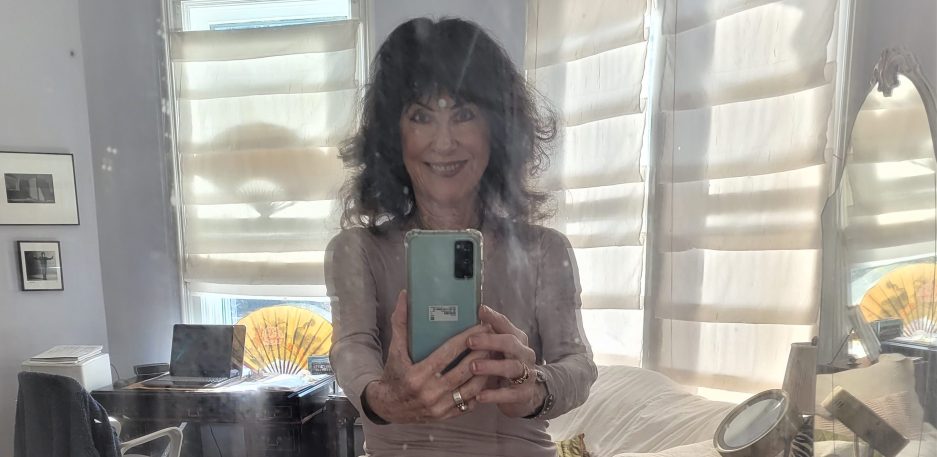
AN UN-ENDING LEGACY


!Bh4GdiwBmk~$(KGrHqYH-C4EsMLP8z9dBLLYjivCm!~~_12

Sixty-four  years have passed since Ben Siegel was murdered, and my father stood in the Beverly Hills police station defending his innocence. I am the link to his truth.

Last week, I received an unrecognized e-mail. It was from a relative of Mr. Robert’s; who was a friend of my father’s in Houston. I met Mr. Roberts on a business trip to Houston back in the 70’s, he pulled a royal flush in the oil business.

This relative discovered one of the Smiley’s Dice memoir columns. He wanted to share some stories with me, and so I responded I would love to hear them.   A few weeks later, Susan, a former classmate from Emerson Junior High, sent me a link to a New York Times feature, “Looking For My Father in Las Vegas.” Susan suggested I read it, get inspired, and go back to my own memoir.   A week later, I received two DVD’s in the mail from a man I never met. A friend had informed me this man was on a synagogue lecture circuit, and that his subject was Jews in Sing Sing Prison. He was using Ben Siegel and Meyer Lansky as models in his presentation on genealogical research.

The DVD’s went into the drawer, and only recently, I pulled one out and played it. Ben and Meyer were used as subjects to add humor to his presentation. Everyone in the audience laughed at his Siegel/Lansky anecdotes. I ejected the disk, relieved Allen Smiley was not part of the presentation.

In the middle of reinventing a new life, having placed my memoir in a trunk in a storage unit, so it will not be visible or even accessible, the memoir haunts me. A story that has to be written cannot be hidden.   About a month ago, a pastor wrote to me, and related this story:

“I am pastor of a church in L. A. I have studied the mob for years. I ran across your name as I studied about your father that night on Linden Drive. I have been approached by a man who claims to have knowledge about who killed Mr. Siegel. The guy was a right-hand man of Mickey Cohen.(and claims Mickey told him). Well, I wondered if you had any preference on the theories that have been put forth. What stories you must have to tell. God Bless you and yours.”

What am I supposed to think? Did the killer confess in his church? This brings to memory another letter I received about a year ago.  The name mentioned in the letter was one I had hunted for many years. Harry Freedlander was discovered back in 1995 in the pages of my father’s testimony before the Immigration and Naturalization Service.  Harry was a friend to my father back home in Winnipeg. They were childhood chums. When my father stowed away to Detroit, he wrote letters to Harry who informed my grandmother of my father’s travels.  A few years later, Harry joined my father in Detroit and began working in the automobile industry. I remember Harry stating to the INS officer that he was very close to Allen’s family.

When an e-mail arrived from the grandson of Harry, the letter remained on the screen for a long time. Truths revealed by government documents, informants, and books are harsh on my father. The companions, friends, and associates are the ones who give me introspection. The grandson remembered hearing stories about my dad, and he wanted to know more about his grandfather. I told him that his grandfather had testified in court to their early friendship. Harry said my father stopped corresponding after he was in Los Angeles.

Several books were released this year with references to dad. The first book arrived compliments of the author, who interviewed me in 2003. I’d forgotten all about it.  In Gus Russo’s “Supermob: The Story of Sidney Korshak,” Russo referred to my father in an incident in 1988, with attorney Robert Shapiro, and a lesser know Las Vegas club owner, Gianni Russo, no relation.  According to Gus, Korshack told Gianni to see my father in his penthouse apartment on Doheny Drive, after Korshack shot someone in his Vegas nightclub. This is highly impossible, since my father passed away in 1982, and had moved out of the Doheny Towers several years prior.

Throughout the year, I am jabbed, teased, and taunted by the ruminations of strangers on my dad. I feel protective of his legacy. I feel protective of Ben Siegel too. It is part of growing up with gangsters.

Last month, a man who had given me the very first insight into my father passed away. I never met Ed Becker in person. We corresponded regularly.  I found my journal marking the first entry of our correspondence. Ed guided me through the labyrinth of half-truths and myths. Without his perspective, the story was all trumped-up headlines.  Ed Becker was the one man I could always turn to when I was tangled up in truth.  It appears growing up with gangsters is still a work-in-progress.
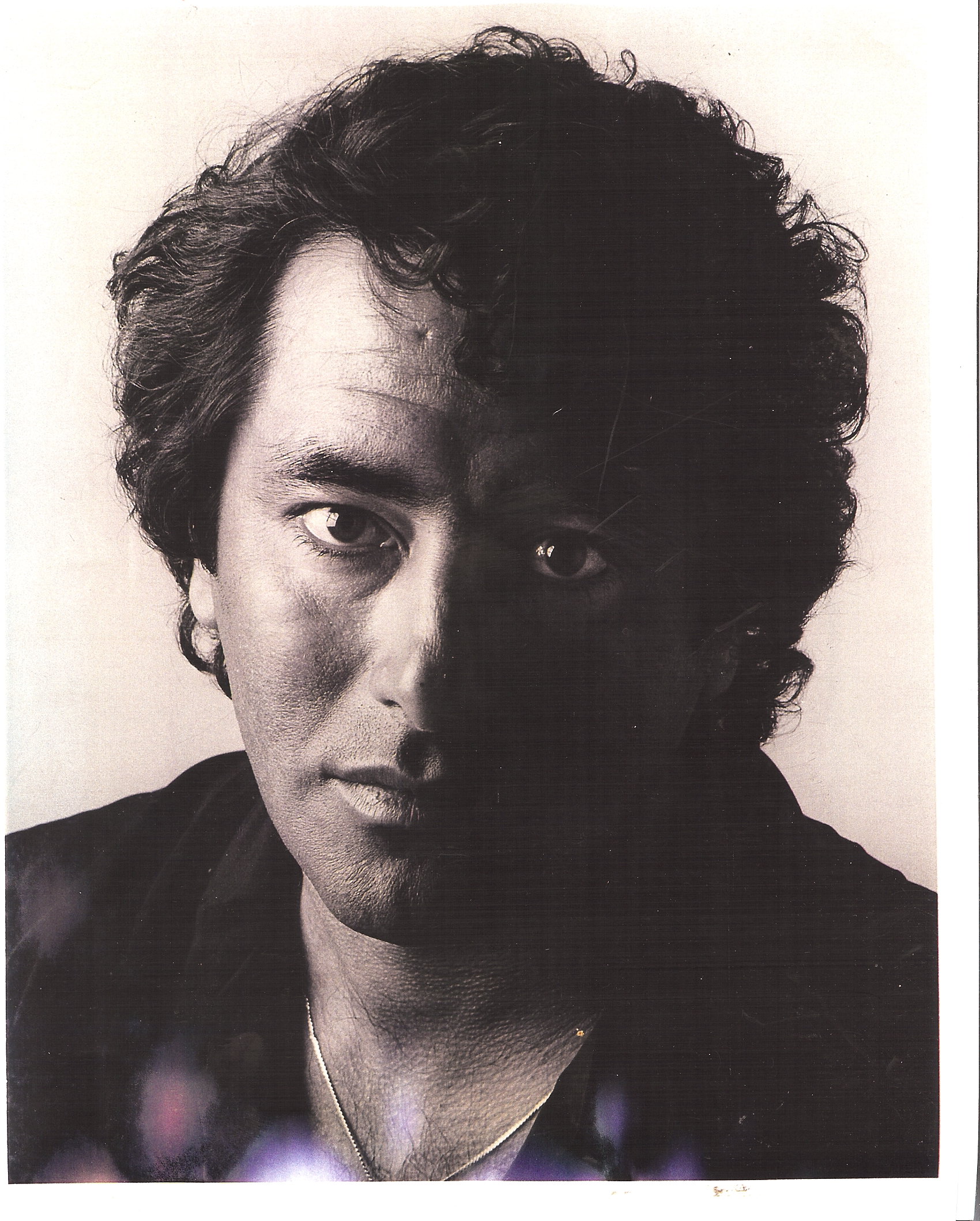


THE DOHENY TOWERS-HOLLYWOOD LIFE


I was thirteen the summer I moved into my father’s apartment in The Doheny Towers. My mother just died, and my father had weird habits. I didn’t understand why suddenly I had to ‘behave like a lady.’   It seemed like yesterday that I was running with a pack of friends up and down the hallways of the Hilgard House in dripping wet swimming suits, while Mommy was barbequing hamburgers on the balcony  for all of us.

My father wasn’t prepared for a teenager; I had to grow up quickly, or pretend I was grown up.  I sat on my bed in my new bedroom looking at the drapes. They matched the lime green and royal blue crushed velvet bedspreads.   The drapes and spreads were so heavy I could barely lift them, and when the drapes were closed, the room was so black I couldn’t see my feet. My father had the room decorated by a friend who owed him a favor.  Friends were always doing us favors.

Every morning I opened the drapes, and wrapped them around my body, pressed myself against the glass, and watched the Hollywood sunrise. Some days there was a coating of thick brown paste that hung over everything.  Other days, after a rainstorm, or in the aftermath of a Santa Ana wind, all the soot dispersed. The colors splashed across the Spanish tiled roofs, palm trees, the big dreamy Sunset Boulevard billboards, and the crystal sharp edges of the San Bernardino Mountains. The East was my favorite view from the 12 th floor; because I didn’t know what was out there.  It got me to thinking a lot about the East.   The farthest I’d been was downtown Los Angeles to the Good Samaritan Hospital.

My father ran back and forth in the apartment barking orders to house maintenance, decorators, and telephone installers. He was adjusting things–furnishings, phone lines, new locks on the door; and he was removing guarded personal items. As I observed all this preparation, he kept telling me, ‘everything’s going to be all right, he has everything in order, new phones, more hangers, food in the refrigerator.’ I had no idea how many adjustments my presence required. Thinking back now, I know he was trying to erase any evidence of  gambling, or mafia activities.

My father’s apartment belonged to him as a bachelor, and we did not fit together comfortably at the dining room table because it was really a card table.  The hifi ensemble was polished mahogany wood with gold leaf trim. My father liked gold; it seemed to frame everything in the house, even the silverware. I ran my fingers along the corners of his record collection to see whom he liked: Frank Sinatra, Peggy Lee, Johnny Mercer, and Tommy Dorsey.  The records were in perfect condition and I wanted to play them.

“ I spent all my life in night clubs with music–I can’t stand it in my home. You can play the stereo when I’m out.”

“When were you in nightclubs all the time?” I asked.

“What? Don’t be concerned with my life; concentrate on yours.”

From our terrace facing west, the view was organized beauty. Every thing was in squares and straight lines in Beverly Hills 90210.  I liked to sit on the terrace and look out; imagining all the lives going on at once. Every time I sat down, my father asked me to come inside and do something.  He didn’t like me sitting on the terrace, exposed and vulnerable.  When he came in to say goodnight, he reminded me to close the drapes.   The drapes pestered him all his life; ever since the night the bullets shattered the glass of Benjamin Siegel’s undraped window.

I loved my father’s shadow in the door before I went to sleep. He blew me a kiss, and said, “Sweet dreams my little girl.”  He liked me being a little girl at certain times.

I came to live my father in 1966, when he was fifty-nine. He wasn’t active int he oil business, but he received royalty checks every month .  He had tiny gold oil-well paperweights on his desk. When his checks came in, he showed them to me and said, “That’s royalty income from my oil wells in Texas.”  I heard him talk about his friend, Lenoir Josey, who sponsored him in business.  Josey died the same year I was born, but my father wanted me to know the name–Lenoir Josey. I was proud to fill in “Oil Engineer” as my father’s occupation on school applications.  None of my friends had fathers in the oil business. I imagined my father was very rich.

When he left the apartment,  I studied his possessions.  He had a black-and- white photograph of my mother hanging on the wall above the couch.  It was one of those glossy modeling photographs that she had hidden from us.   My father told me it was published in the newspaper, an advertisement for Bullock’s.   After inspecting my own reflection in the mirror, I considered myself adopted.  At thirteen, I was flat-chested,  with thick frizzy brown hair that I continually tried to straighten, long shapeless legs, and braces on my teeth. My lips quivered when I was forced to smile, and my eyes were so light that the sun bothered them.  I despised the way I looked.

There was a swimming pool on the roof garden of the Doheny Towers. On the weekends, a lunch counter opened and served hot dogs and hamburgers.  Every Saturday my father went up to the roof to swim, and kibbitz with the neighbors.  He cheerily demanded that I join him, because he said, “I want to get to know my girl.”  I think he wanted me to watch him as he entertained everyone. He told the best stories. Even tough I didn’t understand most of them–the neighbors laughed like they do on television shows when the applause sign flashes on and off. All of them sat around Allen Smiley and listened. Telling stories was my father’s favorite past time.

ADVENTURES IN LIVINGNESS


Two worlds in opposition: nature and neurosis. The external world, the salon, the garden, the mirrors, and the reflections of them in the mirror. The sense of unreality in the neurotic comes when he is looking at the reflections of his life, when he is not at one with it.

   Anais Nin-Volume Four   1944-1947

The throw of the dice this week falls on adventures in reflection.  The morning began with an ardent rose pink sunrise, threaded into a pale solemn blue sky, (even the sky has emotions) and a Chaplin breakfast, as I dutifully spooned  coffee into the filter, closed it shut, pressed start, and returned to find the pot in the sink, and coffee splashed everywhere.    As the first attempt to write since the Dragon series, I am unwinding with you, not at you, because you’re all closer to me than you think.

I begin late on Friday, looking out to Palace Avenue, half- lit with descending sunlight, the other bathed in asphalt gray,  the solid remains of Tuesday’s snowfall. It is the hour before gallery openings, and free food at the Museum Christmas party, and the first Marcy Street Art Walk, and a wedding at La Posada.  The city is drowsily, awaiting Christmas festivities, redeemed coupons at Albertsons, invitations to parties,  unwanted and wanted guests from back home, the end of the year profits, what there are of them, and the ringing of the Church Bells on Christmas Eve at the St Francis Church.

My bedroom window is sketched with a cloudless blurry blue sky, and a pine tree, that drops buckets of needles onto my driveway. I am zipped into my down jacket and still have my boots on from a short walk, up Palace and down Alameda, passing by withdrawn sour tails, who looked as downtrodden as me.  The artist can tolerate solitude, it is a skill we must learn, and I was born with it. That is both a blessing and a bummer, because when the party is over, I do not seek companionship, I hide.

It was a month ago, just after reading an email from Rudy, where, in paraphrase, he demanded I move out, and not ever write him again,  that I got this idea.  John and I were in the kitchen, beginning or ending dinner, and I felt pressed to seek escape, ‘I’m going to live on Amtrak!’ The idea blossomed over some cabernet, and we lingered there in the kitchen, while I cooked up this idea, of riding Amtrak across America, while writing about subjects I choose from a long list, and develop it into a documentary, and a book.      “You’re thinking too small. You get the History Channel or the Travel Channel to finance it. You could ride all over; assuming you could live in one of those rooms,” John said. “Of course I can. I lived in 99 square feet for a year and half, with ……what’s his name. ”

Then, in the blinding morning light of reality, I realized how much effort it would take to launch, and live this idea that was born in the kitchen over a bottle of cab. We spent the day researching and looking at the bedroom suites on Amtrak. I went to sleep imagining myself on the train, and the inherent comedy that would roll out, from living in a room the size of shoe box. I watched movies about trains, and started reading Paul Theroux, The Old Patagonian Express.

There I am on Amtrak, with a laptop and a recorder,  strolling through the isles, interviewing people, and then I’m in some unfamiliar city, and hopping from one place to another, and writing in cafes and adventuring. The illusion became real, like a dream that represents reality. I do see myself on such an adventure.  This is what I consumed, day and night, to cross over from the Dragon, to the mouth of recovery. My life as I knew it has been dismantled, in the way the stage is after the play has finished its run. My run with Rudy ended, and so I must sculpt new routines, learn how to do the things he used to do, avoid reading his retired loving emails, make decisions without his opinion, blink twice when I look at the furnishings, gifts, and Southern comfort that erupt into a vivid memory.

After John left; the stage was mine to decorate so that every object and corner would ooze with a stroke of serenity that my inner wrath needed.  I filled the candy dishes with chocolate, and the vase with poppies and lilies, lit aromatic candles that promise to smell like the French countryside, light a fire, and keep the Christmas lights burning all day. These pacifiers have proven to lighten the burden of a malfunctioning life, but they do not sedate my wrath.  The Dragon, as I refer to the Bird, has marched  into my soul, and is scratching at the core of my goodness.   When we are tested for resilience and self examination,  then we get know who we are. I don’t like who I’ve become; she is as discontented and repellant as a young woman on the verge of puberty.

My reference is the last two years, with John and, our blossoming patch of love, that drew out the most luscious and talented gifts I possess. He has remained in the corner, my trainer, wiping the sweat and blood from my face, urging me to stand up, to fight, to dream, to rewrite the ending.  But the  Dragons fire lit  a flame of destruction that gives rise to wasteful protests,  that if one of our beams fall, our foundation cracks.  The final admission howls;   how can a best friend turn into an enemy. I hear the chorus; ‘it happens everyday, it’s common, that’s why we have divorce,’ and so on.

As the  moon fades into a rising Sunday morning, I am perched in between, clinging to the wisdom of my posse, whom I call on for solace, for answers, for encouragement,and you readers, who keep me adventuring in writing.


BITTERSWEET LEGEND OF MACEDONIO


I was in New York when the story was percolating and I went searching for the  Macedonio Obledo. After living with one stable, loving man, and knowing enough men to distinguish the characters from the counterfeits, I realized how singular Mace lived. I wanted to know his story. I searched the Internet and discovered a Macedonio Obledo in Florida. I wrote him a letter, circumventing the possibility of a hang up or bad news.

The last time I’d seen Mace, he was sitting across from me, drawing a picture of the exotic life we’d lived together in Florida. He showed up in an older Cornice Rolls Royce dressed in a dark blue pin-stripped suit and tie. He was a lot like the early criminally chic Jean Paul Belmondo of the French new wave films.

It was twenty years since we’d love nested in Marin county.   I sat very still while Mace served me lunch and talked euphorically about Boca Raton. He was magnificently persuasive as he outlined his love for me and the destiny we would share. We would travel to Argentina, ride horses across the Pampa, and dance the tango. There was an immediacy in his gestures, as if he was being chased, that overlapped his ruminations of life at age 52. His hair was still blue black and closely framed his forehead. His bronzed skin stretched tight across his Indian cheekbones, and his farcical humor punctuated each sentence. He possessed an ethereal view of life that nullified the effects of aging. He tempered his Latin sensuality with Greek philosophy.

It was not easy to let Mace go, because I never stopped loving him. I was not considering his proposal, but I wasn’t ready to let him go either. He waited several weeks for me to make up my mind.

For the past nine years, Mace had lived a few miles away. Once we were reunited speeding on the freeway; and exchanged phone numbers at the next exit. That was the kind of serendipity in our history. I could not seem to move without Mace rising in the background with a force majeure to undermine whatever I happened to be doing—with whomever. He defied the laws of my father years ago, when he asked for an introduction into the Mob!

Mace left without me in early 1993. Eight years passed before I went looking for him. My life piloted me in different directions until two years ago. I began searching again. This time the Internet showed Mace living on San Marcos Island. Throughout our history, Mace had skinned off clippings of his adolescence. His abbreviated childhood began in Chicago. His mother died while they were on a plane. His father was wealthy and mean. Mace served in the Korean War. He later moved to Los Angeles, and married a wealthy Swedish woman. He ran with a fast crowd, and hung around Brentwood.

What he did not reveal was his interior self: the origin of his philosophy, his parent’s ancestry, and what trials of life he’d suffered. What fire burned at his heels? Why did he want to marry a woman with a distinctive background, and where’d he get the nerve to ask my father for an introduction into the Mafia? How can you write about such a character without knowing the entire story?

This year I went searching again. The Internet had him living in Ft. Lauderdale. No address or phone number. I remembered what he’d said, “Just think about me and I’ll know, and come find you.” I wrote a three part series in my column about him. Still, no sign of Macedonio.

Two weeks ago, I tried another search. This time his name came up in a puzzling excerpt on a church website. I emailed the Minister. A few days later, I received a note from his sister. I don’t have to tell you what it said.

Mace lived the rest of his life in Costa Rica. I imagine him living in a tropical villa with a beautiful woman. He is dressed in white tennis shorts, and spends his days surfing, riding horses, and dancing the tango.


PART TWO, MY LOVE, MY GANGSTER


MACEDONIO

Mace and I returned to San Rafael and rented a little cottage of our own. Mace painted the rooms lemon yellow, and I glided around in dreamy domestic ecstasy.  In the sensuous seventies, the preamble to the essentials of living was not a prospering career, and getting ahead. It was with a minimal amount of work, improvise, meditate, and stay high. Some Indian guru coined it, “going with the flow.”

I learned to cook fettuccine, entertain Mace ’s guests, and polish tennis shoes. Above all, I learned how to read adults, in a way I had never considered before. Mace explained the concealed messages in spoken language, and how to recognize the signals of deception, arrogance, racism, and affectation.  He was continually pointing out, people’s affectations, while he drove me around in our vintage MBZ 250 SEL.

For money, resources fluctuated between teaching tennis, calling his agent in San Francisco, (he did commercials for Gallo Wine) and working on various deals.  There was never one steady job, he was the Rocket Man, and people gravitated towards us. After meeting someone one day, they would be at our dinner table that night.

Amidst all the activity, I was suffering the guilt of watching my college funds vanish. That was the tragedy, but there is always sacrifice in this kind of passion. Just as my father had warned me, Mace did not refrain from spending my money.  I withdrew from the College of Marin, and for a while worked part time in a small bohemian cafe in Mill Valley.

One very early morning, while we were still sleeping, the doorbell rang. Mace rushed to the door prepared to admonish whomever was knocking.  When I came striding over in my silk Rita Hayworth negligee, I was astounded.

“Luellen, who is this guy, he says you know him?”

“Dale, it’s all right Mace, I know him, he’s a friend of my father’s.

“What kind of friend?” Mace demanded. Dale stood there in the archway, dressed in a wrinkled suit, his sandy hair heavily slicked to appear arranged, and eyes shaded behind rose tinted sunglasses.

“Mace , I’m just here to make sure Luellen is all right.”  Dale shifted his weight between both legs. He looked taller than I remembered.

“She’s fine, you can see that.” Mace replied.

“Mace , let Dale in the door.”  I embraced Dale momentarily, as I always had in the past. His edginess did not alarm me; he was always burdened by some desperate measures. My father was continually counseling him about his tribulations.

Mace hustled Dale into the living. I went into the bedroom to get dressed. My mind raced between images of my father and Dale, the run-around guy that obeyed orders. He did not resemble a tough guy; he was the Sterling Hayden type, the guy always on the run. Mace appeared in the doorway, and rushed over to me.

“Who is that guy?”

“He’s just a friend of my Dad, don’t worry he’s not dangerous…. I don’t think. ”

“He came to get you, your father sent him Lue,” he looked at me apprehensively.

“Is that what he said?”

“He doesn’t have to. We’ll take him out to breakfast; I want to be in public, just in case.”

“In case of what?”

“Just get dressed quickly.”

“You won’t let him take me will you?” I said panicking.

“NO! I can handle it.” Mace assured.

We drove into Larkspur to our favorite café. Mace led us to a table outside in the garden, in the warmth of sunlight. Mace orchestrated the meeting, so it was relaxed and enjoyable for Dale, and slowly Dale began to unwind. He removed his suit jacket and ate heartily after the long drive. They talked, and I confirmed what Mace offered.

“We live modestly now, but not for long, I’m going to manage the Tennis club, and Lue’s going to get her real estate license.  Isn’t that right honey?”

“Yes, that’s right.” I acknowledged. Mace had been advising me to get a license.

“Dale, you should hang out with us a while, I’ll take you around. You can see for yourself what our life is about. I’m not hiding anything Dale, I love Luellen, and her father knows it.”

“How is my father Dale?” I interrupted.

“Luellen, your father isn’t angry with you. He just wants to make sure you’re all right.”

“Why didn’t he come with you?” Dale hunched over the table and looking directly at Mace .  “He was afraid of what he might do.”  Mace stood up suddenly.

“ Dale, I’m not a stupid man. I know about him too.”

Things deteriorated from there.  Mace and Dale argued, I pleaded to leave the restaurant. In the car, I managed to dissuade the arguing with a hysterical outburst, and tears. Then I mediated Mace and Dale, whose conflicting assignments were bordering on a hit in an alley.

“I need you both to calm down. Dale has to return without me, and my father is going to be angry. Mace , Dale needs our help.”  Mace responded by retiring his grudge and substituting some personal stories along with several rounds of backgammon. When Dale was ready to leave, I took him aside.

“ See Dale, I’m happy here,  I can’t go back with you.”

“Are you sure? I can still take care of Mace !  I will not hurt him, just stall him so you can get in the car. I’m not coming back again Luellen.” He said.

“Dale, he won’t let me go. He really loves me.”

“If that’s so, let him prove it. Come with me now, he’ll follow after you when he can handle things.”

“Dale, I just can’t go with you.”

“Luellen, your father’s gonna blame me.”

“I’m sorry Dale, please understand.”

“ He’s going to be furious.”

“Well, you’ve seen him that way before right? He’ll calm down.” I spoke with feigned confidence. I had no idea how he would respond, but I knew he would blame Dale. He passed me his telephone number on a piece of paper, shook hands with Mace and told him to take care of me. Then he took of in his Cadillac.

Mace returned to the living room boasting of his conquest.

“Dale was supposed to threaten me with a gun, but he liked me too much to go through with it.”

“Did he show you the gun?”

“Yea. Lue, I told you-I am not easily intimidated.”

In the next six months, I passed my real estate exam and Mace was setting up a business.  Mace had a friend who owned a Mortgage Banking Company in San Francisco. I was going to sell new residential developments and Mace was going to secure clients.  We moved into a charming little house in Ross and commuted to the city to have meetings. We dined with successful men and their wives and I tried to read all the signals. Soon my father would see me on the sophisticated side of the street, leaving the hippie hibernating spell for good.

Then one day the meetings stopped. Mace retreated to the tennis court and played the rocket man. He ignored my questions and concern for our future.  The car was sold, the guests stopped coming over, and Mace lived in stubborn silence.   The day came I had to make the phone call.

“Hi Daddy, it’s me.”

“Yea, what is it you want?”

“I want to come home and start over.” I replied.

“On one condition.”

“What?”

“You never go back to him; you have to be absolutely sure.”

“I’m sure; I want to leave right away.” I said.

Within a week, I was back in my father’s apartment sitting on the blue and green crushed velvet sofa.

“Look now sweetheart, stop your crying, at least you didn’t come back pregnant. There is nothing to cry about now, you made a mistake and it’s over, you got your whole life ahead of you. Don’t bury yourself in the sand, nothing to be ashamed of; you ought to know the mistakes I’ve made. You couldn’t come close.”

Mace continued to pursue me. He was met by my father’s warning, ”If you come within ten feet of her, I’ll scratch your eyes out and stuff them down your throat.”  Any dice to throw Email:folliesls@aol.com

RADIO INTERVIEW


d7

GUEST ALERT: Daughter Of Reputed Mobster, Making The Radio Rounds

THE MOUTH, NOVEMBER 8TH, 2011 — Luellen Smiley is the daughter of reputed mobster, Allen Smiley. Smiley’s dad was a close friend and confidant of famous Las Vegas mobster Benjamin “Bugsy” Siegel and he was sitting on the couch just feet away from Siegel the night he was murdered. While Luellen Smiley hadn’t been born at the time of the shooting, she’s conducted research on her father’s life and the events leading up to the shooting and wants to dispel the common belief that her father might have been involved in the shooting. Luellen Smiley has contributed artifacts to the Las Vegas Mob Experience and she joins us to discuss her family history. She’s out promoting the fact that the gangsters of old were not trigger-happy murderers and that J. Edgar Hoover was someone who was out to get them in a big way. Not letting them go straight, etc. She also believes that J. Edgar Hoover was behind the killing of Bugsy Siegel. (Bugsy’s killing was never solved). This week, she joined KNPR for chat. LISTEN TO AUDIO HERE To set up, contact Scott Segelbaum HERE

hh h

WAITING


As children our waiting depends on how long it takes Mom and Dad to finish what they’re doing and pay attention to our needs.  It takes hold of us, like a fever, and we resort to nudging them, whining, even sobbing, if we are made to wait longer than we expected. During the school year, I waited all semester for the summer.  In Los Angeles that meant it was hot enough to go swimming in the ocean.  When I lived in Hollywood, I rode two buses, to get to Santa Monica.  The second bus dropped me off on Ocean Avenue, above Santa Monica Beach.   I ran down the ramp that connects to Pacific Coast Highway, and headed north to Sorrento Beach,   another long block away, and when I got there I stumbled in the sand in  my tennis shoes trying to run,  and find the place where my schoolmates clustered,  in a caravan of towels, beach chairs, radios, and brown bag lunches. I couldn’t just run to the ocean, I had to sit and talk and have something cold to drink, and then  I made myself wait, until I couldn’t stand it any longer, and then I ran down to the shore, and embraced the waves, tumbling inside their grasp until I lost my breath, and floated into abandonment.

After I moved to New Mexico, I stopped thinking about the ocean, I had to remove the memories from my thoughts, and so I could continue to experience this spark of the world. The dry sage ocean of pink soil, and radiant blue sky that pinches your eyes when you’re driving,   the sunlight, and the warmth of a desert night  and the white snow on pink adobe.  It has postcard perfection, even now, with fallen leaves spread like trash everywhere, and the trees almost naked, and the dead plants in the garden.  I try not to think of the ocean, the look of the sea from watery suntanned eye lids, or from the bluff at Del Mar, or the splashing of waves around my shoulders as I sink beneath the surface.

I waited, like I did as a teenager, for that summer to come, so I could return to the sea.

Last week,  I stood at the water’s edge in Del Mar,  it was like summer without all the kids playing ball and screaming, hey dude what’s up, and the running of the dogs, and  lifeguards  thrashing the beach in their jeeps shouting, , no swimming, no dogs off the leashes, no glassware,  and no surfing.  They were missing, so as the caravan of beach runners, and surfers. In fact, I was only one swimming, on that first day at the beach.   Before I went into the water, I reclined on a big black boulder, and faced the sea, and let my eyes wander amongst the scenes of the beach on a Tuesday afternoon. In front of me was an older man with graying hair, in a wal-mart beach chair reading. He must be retired, he looked perfected adapt to his spot about five feet from the shoreline.   I thought about that Dennis Hopper commercial, about retirement, and how I still cannot come to grips with retirement, and spending my days on park benches or in cafes watching younger men and women live.

There was one swimmer, on a bogey board, he was far out, and floating along, and I wished I’d brought mine with me, but it was in SC’s van, and the last time I used it was when I lived in Solana Beach.  I also wished I had a new bathing suit, because the one I was wearing was ripped, and the neck straps were tied together in a knot so I could swim without losing my top.   The sun baked my body, and I let it without abatement, without shading my limbs,  or wearing a hat, just enough sunscreen to keep the rays  from trotting over to my skin, and I closed my eyes and I opened them, and this is when the waiting business suddenly felt so important, so much so that I began to think about waiting as an aphrodisiac or something like a good cocktail that you have to make last for sometimes, years, while you wait for that moment that makes you feel immortal, and childlike, and senses sharpened as an animal.

I felt the beach flies, and the tang of salt water on my lips, and the when the seagulls swarmed above the water’s surface, like so many beads of a necklace, I thought, that this is about the most beautiful day I could have, and it’s all because I WAITED, I didn’t give up on the ocean, or my place in it, or believing that I would have my day in the sand, under a faded denim blue sky, with cotton ball clouds floating above me.   I baked until the sweat drenched my pours, and then I raised myself up, and walked slowly to the edge of the water, the flat surface made tiny breaks not enough to shatter my body warmth and I felt the first sting of the water on my feet, and then my knees, and then I submerged, and found that the best way to celebrate this day was to keep flopping backward on top of each wave as it crashed, and I did this for a dozen rounds, until I felt silly and weak, and dented with the surf, and I found that waiting thing again, meant something that I should write about because  all of us are waiting for the election, and the economy to recover, and our real estate to be worth something again, we are all waiting for this big change so we can feel secure and optimistic about the future.  There is something useful about waiting, something predisposed, that gives us the support and substance we need, so when the waiting is over, and we are all flush with success again, it will feel like the first time, it will overwhelm with us with power and joy, like the ocean.

When I left, I had enough jubilation  bouncing through my blood to take the risk of driving by Maurice’s home, the one he left three years ago, when he died under his favorite orange tree.


ON BOARDWALK EMPIRE


The extravagance of a gangster is not in flatware and double paneled drapes I would like to see their generosity, pranks, deli conversations, it is all too high brow for a gangster.  They need to read Damon Runyon and rewrite the episodes with the boyish behavior that was integral to their courage and bravado.


FOR IMMEDIATE RELEASE

Monday, Oct. 24, 2011

MOB EXPERT POINTS TO ‘FOWL’ PLAY OVER LAS VEGAS MOB EXPERIENCE BANKRUPTCY: ‘IT’S A CHICKEN MOVE’

“Someone is lining his pockets with cash, and it isn’t the family members who contributed the Mafia Collection” says Mob expert LUELLEN SMILEY, of the declaration of bankruptcy filed last week by the Las Vegas Mob Experience at the Tropicana Hotel in Las Vegas.

Smiley’s father, Hollywood gangster Allen Smiley, was featured in the exhibit’s Benjamin “Bugsy” Siegel room as Siegel’s best friend and partner in the 1930s and ‘40s.  Allen Smiley was seated next to best friend Siegel the night he was murdered.

Declaring bankruptcy is “a chicken move,” continues Smiley.  “Family members have been waiting months for payments.  I saw it coming, a month ago.”

The Wall Street Journal, in its bankruptcy blog, reported this week that JVLV Holdings LLC would take over ownership in exchange for putting $2 million to pay off some of the museum’s creditors.  The bankruptcy case comes as investor and contractor lawsuits brew against the projects former developer, Jay Bloom, who faces accusations of fraud that he’s fought in court.  The proposed sale would allow the buyer of the Las Vegas Mob Experience to leave those lawsuits against Bloom behind.

“The Mob Experience brought together both visual and narrative about the gangster history,” continues Smiley. “This was an extraordinary gamble for Jay Bloom but he earned my trust and other family members. I expected to be out there every few months for personal tours, discussions, and interviews, and if he can resurrect this sinking museum, I’ll stand on my head on the Strip.”

Luellen Smiley’s “Growing Up With Gangsters” stories have appeared in the New York Post, MORE Magazine and numerous publications throughout Southern California.  She currently is finishing a feature length script based on her life as the daughter of Hollywood gangster, Allen Smiley   Luellen’s extensive research has led to numerous TV and documentary film interviews regarding the Los Angeles mob scene, and especially Benjamin Siegel, her father’s best friend and business partner.

Luellen Smiley is available for interviews about the Las Vegas Mob Experience and “Growing up with Gangsters,” as well as HBO’s Boardwalk Empire and PBS’ Prohibition.


KABC-TV interview on Las Vegas Mob Experience


www.liliespen.wordpress.com.


Media Contacts:

Scott Segelbaum / Right Brain Agency

610.389.1807 / scott@rightbrainagency.com

Randy Alexander / Randex Communications

856.596.1410 / randex@randexpr.com

Online press kits with downloadable jpegs at www.randexpr.com

###


MORE ON MICE AND MAYHEM


ADVENTURES IN LIVINGNESS

The throw of the dice this week lands on Part Two of Mice and Mayhem.

“John, I found a place! Let’s go tomorrow to check it out. This will be such an
adventure! It’s next to a riding stable, and creeks, and trees… and DH Lawrence lived up the hill.”

Part Two

Highway
64 toTaos…

My anticipation smoked from the back seat where I sat, listening to Rudy and John
in conversation, the kind that ripples like a stream, as Rudy evokes his fervor
for New Mexican history, the battles, and bravery, the legend of Billy the Kid,
and Geronimo. The summer scenery galloped past as we headed up the canyon
through Pilar, as bobbing rafters walloped the Rio Grande, as tourists snapped
photographs, as hitchhikers and wayward hobos staggered on the death trap
shoulder turn-outs… a sort of carnival that makes driving to Taos interrupt the
mundane repetition of asking myself questions I cannot answer: Why do I gamble?

“Turn left here, Rudy.”  We were on the last turn into the Writer’s
Retreat in San Cristobal.
It was virgin land, spindly wild flowers, unpaved roads, no-name streets, and
the three of us, searching for some sign of life.

“This is it,” Rudy climbed out of the car,
while John and I remained seated, unbelieving.

“Rudy, this isn’t it.” I shouted. He turned
around and on the edge of hysterics, and said, “Oh yes, it is.”

“LouLou, you threw the dice off the table
this time.” John’s laughter stunned the silence as we viewed the three attached
leaning log cabins, with barred windows, beat up furniture, and week old trash,
glaring back, as if to say, “Well, whatta you expect for $600.00 a week.”

John and Rudy went off in the direction of
the barn, and that was when I had the feeling we needed to get out fast before
the owners approached us with rifles or crack needles.

The
image of Rudy and John, poking in the field, exploring the barn, two men that
rescued and wrestled with pieces of my persona, were now joined. For most of
life, I went solo, everywhere. There
was in my mind the resolution I would remain unattached, out-of-love because
“love is more painful than lust,” a phrase I took out of this mornings NY book
review of “A Book of Secrets.”

I wandered into the multifarious pasture where
I was greeted with chickens, goats, and manure, and with a sudden rush of
urgency, I shouted: “Let’s get the hell out of here,” and dashed back to the
car. I could hear John and Rudy’s crackling laughter, and that solidified the
momentary disappointment that follows a lousy throw of the dice.

I followed my interior compass, that has been
known to deliver supreme surprises, and we ended up on Kit Carson Road, in a shower of sunshine,
and cotton balls drifting down like snowflakes.

“Turn there. Look Rudy, San Geronimo Lodge.
We made an offer on it, remember?’

“Wow,
I forgot about that one.”

“How
many places have you guys made offers on inTaos?” John asked.

In the course of remembering the different
times we lived in Taos, and the real estate agents, like Linda from Texas who
accused of us being charlatans, until our friend David kicked in and warned
her, “They’re morons, they’re not that smart,” we landed at the cross bridge to San Geronimo.

“Twelve. We forgot about the Martinezplace; the one I wanted to fix up
into polished efficiencies.” I said.

“What were you planning for the Lodge?”

“The Woodstock House, concerts in the field,
performances in the dining room, musician rooms. There was a grand piano in the
main Salon.”

The
Lodge was devotedly remodeled. The slimy green pool had turned Mediterranean blue, the grounds were riddled with pathways,
the mammoth lobby was now comfortably appointed with antiques, and the grand
piano, well, that was shut-down and used as a plant stand.

The owner, a rugged beauty with brimming
passion for her turf, showed us half a dozen rooms to choose from.

“You must have spent a fortune fixing it up.”
“You have no idea! What we were told
going in, wasn’t what we got.”

I left with resumed faith in my compass, and
knowing we made the right decision not buying San Geronimo.

Decisions about traveling, joining, meeting,
and moving, drop me in the path of mental collision. Instead of applying
academic analysis, calculations, or tried and true pragmatic reasoning, I try
to beat the odds, because I am a gambler.

John and I headed up to Taoswhile Rudy took refuge in a friend’s
casita. I suppose most vacation renal owners have alternate accommodations; but
this is a work-in-progress, like a play that doesn’t have an ending yet.

For the next six days, I wandered from the Geronimo
pool, to the terrace, to Taos on foot, and
during those hours, we rewrote the script in the privacy of our steadily silent
working room, or on the second story terrace, overlooking the fields and the Jemez Mountains.

When Rudy
called and said Mike, our renter, invited us to the reception party at the
house, I called Mike to decline. He turned me down.

“Loulou you have to come, everyone wants to
meet you.”  Everyone is a lot of people;
seventy-five guests inside the house when I am not the host stirred up my
imagination.

When we arrived, the reception party was
sprouting on the front porch, in the driveway around bistro tables, on the back
porch at a buffet table, and in the garden movie theater.

Suddenly, this face comes at me, up close: “Loulou,
I’m Mike. Come-in… What are you drinking? We love it! Come meet everyone.”  Mike has a light bulb personality, one
hundred and twenty volts of unplugged warmth and sincerity. I followed him into
the living room, and was immersed with questions and praise, at rapid
fire.  Within the hour I wilted and
tugged on John and Rudy to cross the street for dinner. “Why’d you leave?” Rudy
asked. He was eyeing a pretty blonde in the driveway.

“I don’t feel it’s right; presiding in our
house while it’s their house. I’m afraid I’ll start cleaning.”

I returned to the party when a vintage Galaxy
pulled into our driveway, and I was abandoned because John led Rudy over to see
the automobile.

By now, the party was surging and as I
recommenced my socializing the trepidation vanished. In every direction were
handshakes and hugs, conversations zigzagging from Mike’s family to Erin’s, the
bride and groom, and their friends, who came from Los Angeles.
But these were not just friends; they were neighbors.

“Neighbors inLos Angeles?” I jested.

“Oh yeah, we live in the Hollywood Hills. We
have parties every weekend. Are you THE Loulou?” I nodded. “I am THE Carlos,
and you must visit us inHollywood.”

“What
do you do Carlos?”

“Everything!
I sing, act, cook, and make trouble!” In every party there should be a Carlos.
The evening crescendo curled into a wave of anticipation when Carlos took
center stage and sang arias, from Turnadot and La Boehme. His bravura tenor
voice raised the guests from every cavity of the house. Strangers out strolling
stopped to listen and guests from La Posada spilled out in the streets.  The house was transformed, in some ways to
former visions of the artist salons I imagined and once held at Follies House.

There
were times over the last two years when Rudy and I discussed selling Gallery
LouLou, leasing it long term, and even renting rooms; options that occupied
sleepless nights, and never materialized. Now we know it is a vacation home, a
party house, a reception salon… all the things that I imagined came together
here, even Rudy and John.

Any dice to throw email: folliesls@aol.com

Out of Control


This week is on control, and losing it. You hear that phrase often enough, “she has control issues.” I’m not sure what that means. I don’t understand how a society of rules and regulations that delivers more commands every day is expected to produce a society without control issues. I lost control of my life and so I am getting in touch with “out of control.”
Bohemian living was always in my dreams, having been raised in a perfectly pressed pinafore and seated on fragile furniture. I am not really very gypsy like when it comes to home. Once upon a time I lived in a suitcase, but I have since been corrupted by the joy of controlling all the things that come into the house and find a place there.

Once faced with this alarming epiphany I vowed to give up control and accept the disorder and disruption. What I’ve rediscovered is that without a lot of stuff to organize the mind is free to think. The house chores are minimal, leaving more time to create and effect important things. Narcissism is sacrificed and replaced with more visceral reflections.

Once I place myself inside the double yellow line of society, I feel those controls closing in on me. Losing control is a replenishment of youthful spirit. It’s free and painless. Try it, take off the leash and run free.

Two days later I was in a hotel, preparing for a reunion, a day of shopping, and luxuries of a woman on the road, when the news broke.. How did you feel when you heard the news. John and I went silent, and drove two hours in more conscientious silence.

JAMMING UP HIP-HOP


Free your mind and the rest will follow; the words from EnVogue’s latest release played all day on the radio. Every time I got in the car to hunt up real estate listings, I heard that song.
I worked in an industrial building along an industrial highway in San Diego. I shared a warehouse with twelve men, eleven of them tall, weight trained football on Sunday guys, who ate at expensive restaurants amongst a club of commercial real estate agents, where they’d be noticed. They were pretty decent guys, except the partners who each had severe a case of ego malnutrition and competed for attention like two tottlers. Greg was the only short one in the bunch, and he wore a rug, manicured his nails, and surfed on the weekends. He was always talking about his Karate black belt, and how he knocked guys out. He rarely laughed and when he did he sounded like a chirping bird. Greg used to give me his wife’s unworn clothes and waited in my living room while I tried them on. It was sort of strange, but he never played the trump card and asked for anything in return.
One day in the summer of 1992 I called the office secretary.
“Gail, I’m not coming in for awhile. Will you forward my calls to my home?”
“Are you all-right?”
“Oh yea. I’m fine.”
“What should I tell Sam?”
“Tell him I’m on leave of absence.”
I lived in a little cottage house in North Park. It was all white with a picket fence and a squared grass yard where my dog played. The front room was small but the carpeting was new, so I could curl up on the rug and watch the clouds from the windows.
I threw my nylons and navy pumps in the garbage, and folded the business suits into boxes. I knew I wasn’t going back, but where I was headed was a throw of the dice.
Mornings I ran through Balboa Park before the crowds arrived, and got to see the zoo keepers feeding the animals, and the actors going into The Old Globe Theater. I filled my senses with virgin light and morning silence, unfamiliar sensations to office workers living with florescent lighting and partition walls. In the afternoon I lounged around in sweats watching music videos, reading magazines and dancing.

I watched some new music videos, maybe EnVogue or Bobby Brown, and tried to imitate the hip-hop moves on the carpet. It was like watching a cat in the snow. I called all the dance schools, and no one was teaching hip-hop. I didn’t know back then my mother was a dancer; so this impulsive and implausible scheme to start a dance troupe startled me as much as everyone I told.
The last lease deal I did was for a group of soccer players from Jamaica. They needed a space to open a reggae dance club. They told me they’d called other agents and no one would take their business. I found a disheveled warehouse and struck a deal for them. They fixed up the warehouse themselves, with colored lights, and some tables, but Rockers was really about the dancing. I walked into the club one night, and they were all doing their part; greeting customers, spinning vinyl, and serving drinks. I danced with Leroy, the leader of the group, and watched him unfold from the waist down. He danced so low to the floor, he appeared boneless.
“Leroy, I’m going to start a dance troupe. You guys inspired me.”
“What kind of dance?’
“Hip-Hop and jazz funk.”
Leroy covered his mouth with one hand and laughed.
“What’s so funny?”
“You’re a business woman; I didn’t know you was a dancer.”
“Well, I took lessons a long time ago.”
“Hip Hop?”
“No, Jazz. I’m going to find the dancers to teach. I know there out there.”
“Yea, they out there all right; lots of them.”
“Well see! I’d like to use your space, pay rent of course, when you’re not open.”
“Well that’s all right. You don’t need to pay me.”
I hugged him, and he shook his head. “I don’t think there’s much money in teaching hip-hop.” he said.


At the community college I posted a sign for dancers, and observed some classes. When I got the call from Piper, he asked me to come see him teach at the Church on University Avenue. I drove over one night, and found Piper in a little room upstairs, teaching Jazz Funk to one woman. He was tall and lanky with a smile that creased his whole jaw. He came over, shook my hand, and said, ‘How you doing? I’m Piper.’ He wore an immaculate shield of confidence that defied his nineteen years, and moved at the intersection of Michael Jackson and James Brown. The groove spiraled through his body.
“I’ll help you get it started; if you’re not a trained dancer you need help.”
So Piper and I met every week and finally landed on a group that incorporated Jazz-Funk, Hip-hop and Afro-Cuban. I named the company United Steps Dance Productions, and the Jammers were the hip-hop troupe.


I’ll never forget the look on the partner’s faces when I told them I was starting a multicultural dance troupe. They just stared at me blankly. Then within weeks all five of my unclosed lease deals were signed at the same time. I walked out with enough money to live six months. That was real security in my mind.


Piper and I held our first audition at Rockers. When I opened the doors that morning, dancers were already lined up outside. They came dressed in street clothes; wearing scarves, baseball caps, loose pants, and tank tops. I watched them leap, kick, split, and turn inside out for the job. I knew that I was in the right spot.  One dancer walked out, stood still for a moment, and then leaped into a break-dance pop-lock routine that silenced the crowd. “Him Piper, definitely him.” He’s bad, yea he’s real bad.” At the end of the auditions, Piper mocked me.
“Lue, we can’t sign every dancer just cause they hip-hop. Anyone can do that.”
I can’t hip hop and it’s my company.”
“Yea, and you’re crazy. I swear, Lu you’re crazy.”
We agreed on pop-locker Vince-Master Jam, and Monique, a young Afro-Cuban dancer. That was the beginning.
When Vince and I met, he told me he lived in Escondido.
“But that’s an hour away.”
“It’s cool, I’ll be here. Just give me the chance.”
Vince showed up twice a week at night for his class. Many times, we sat in the cold damp club, listening to music and Vince tried to teach me to pop-lock. I apologized for not having students and he looked at me, and said, “ Don’t worry Lue, will get it going on.”


Our first performance was at the Red Lion Hotel. I hired a video tech to record the performance. We got a free dinner and a hundred dollars. We had a good crowd, and everyone loved them. Afterwards in the dining room, they were talking, laughing and elbowing each other. Piper was ranting about Monique taking too much time, and Vince was telling Piper to chill because Monique was so good. I sat there just listening, with a big smile on my face.
The Jammers belonged to the no smoking, no drinking, no drugs group. For the first few months, they taught on tiled floors under a leaky roof, without any heat. But they kept coming back to teach and their dedication moved me to find a better location. We relocated to a well-heeled Health Club downtown San Diego and the classes filled up with students, dancers, and office workers searching for a new lunch. They came from all different races; Asian, White, Hispanic and Black. I danced with the classes and promoted our troupe. The Jammers laughed at my attempt to be a soul sister, and I laughed with them. We were reviewed by KPBS magazine, and a photographer took pictures of us and featured us in the magazine.
Searching for gigs proved to be an exasperating struggle. I called department stores, festival producers, shopping centers, nightclubs, hotels and everyone had the same line, “I don’t think hip-hop is right for our clientele.”
When I ran out of money I took a job managing a condominium project, where I lived rent free. After a time of observing the Jammers self expression, I asked myself, what is mine? I still refused to get on stage. Vince used to bawl me out because I made Piper introduce the group.
After two years Piper moved to Los Angeles to launch his dancing career, and I let Vince take the troupe where he wanted it to go. He turned it around, adding twelve dancers and broke more ground in San Diego. Monique developed into a serious stage actress and we all lost touch. They were the sparklers in my life; like that star you think you’ll never hold. I left the Jammers a different woman. They put the rhythm back in my spirit and soul.
When I recently located Vincent on an Actors website, I called him right away. He is a missing link in the chain of my life. Without that adventure, I might still be imitating the kind of business woman I wasn’t. We met in Los Angeles, and watched Vince perform in a club. He kept his vision and now acts on television and video. “ Lue, now you have to find Piper.”
It was Piper, who said to me one day after reading some of my poetry, “ Lu, you’re not a dancer. You’re a writer.”
Any dice to throw Email: folliesls@aol.com