Photo by u041au0430u0440u0438u043du0430 u041au0430u0440u0436u0430u0432u0438u043du0430 on Pexels.com
I watch film noir with an admitted addiction. The grainy black and white stillness, the music scores, the cinematography satisfies more than current cinema . The message comes through, live gracious, selfless, forgiving, brave, and passionate? As I feel these thoughts streaming along, the one that stabs like a knife is passion. That visceral sensibility has driven me throughout my life: about men, mystery,adventure, accomplishment, art, music, dancing, unfamiliar places and faces, and café society rendezvous. A temporary grasp of glee. And when it ends, it goes like this.
Undisclosed strangers will walk in our paths. Cross our hearts and Tread on our minds
Uncertainly We traverse our heart’s discourse Shooting for dreams of undiscovered lands More weightless plans I don’t know if I can see ahead My steps, like pebbles, follow the rush in the river On the edge of the quiver
Skipping towards freedom In summer, rays of light Like a leaf, I break free from the branch,
In 2024, antisemitic incidents in the U.S. rose for the fourth consecutive year, reaching 9,354 total incidents. Behind these alarming statistics are real people. Hear about the antisemitism they faced.
Writing somberly is parallel to writer’s block. It’s not a block, really, more like a resistance to engaging feelings. If I place all the options on a puzzle board, this leads to the center. A fractured life impacts emotional posture and is not unlike physical posture. We slump or stand tall. We love instead of neutralizing, we are inspired instead of stagnant, we romance our passions, and we live to love. My heart is at the starting gate to love again, but the racetrack is missing. I’m undercover! I watch Blacklist or some foreign film in the evening. Most weekdays, I’m circulating between finance, selling furnishings online, shoveling snow, and researching acronyms because the news uses them so often.
The vortex of discontent is a punctured life.The windows of my home reflect the splendor of nature that plays all day long in the winter. I’m spending more time watching sky stage plays: clouds still, clouds moving, colliding, changing colors, sculpted into aberrations of animals and faces, than cognitive thinking. My collection of records and CDs accompanies the scenery. When I’m sorrowful, I listen to Ennio Morricone; when I need a lift, Vivaldi, Sundays it is Turandot or some other Opera. When I’m a go-go girl, Swing, Salsa, or The Stones, when I feel alone, Sarah Vaughn, Nancy Wilson, and Etta James, for writing inspiration Bob Dylan, Leonard Cohen, and Annie Lenox.
I don’t see any remedy commercials for a fractured heart. By tomorrow, the despair could vanish, like the rain that puddled us for the last two weeks.Everything I’ve experienced is good in the beginning. So, to begin, I will listen to Begin the Beguine.
“Begin the Beguine” is a popular song written by Cole Porter. Porter composed the song between Kalabahi, Indonesia, and Fiji during a 1935 Pacific cruise aboard Cunard’s ocean liner Franconia. In October 1935, it was introduced by June Knight in the Broadway musical Jubilee, produced at the Imperial Theater.
Henry miller writes in his book, “ Henry Miller on Writing” “Whoever greatly suffers must be, I suppose a sublime combination of a sadist and masochist.’ I suppose that a few of my friends have aligned me as such, and now that I write this, as in all writing, answers blink at you, and then the soul receives them like a wafer of wonder.Perhaps I am, but where that evolved and manifested, I have no time to think about it because the sun is out. I must sit in my newly designed sunroom, a small book library alcove that receives the sun at noon. When I returned with my phone to snap a photograph, the sundisappeared like a footprint in the sky. Every moment needs attention. It’s twenty degrees outdoors. I am modestly adjusted and receive a thousand weekly warnings to get a flu shot. My doctor has tried persuading me to get a flu shot for three years. I responded that I’d never had the flu and that my last cold was in 2012. He chuckled and asked the next question.
In one of my books on writing, I read that most writers face the demon in the middle of the novel. The beginning is a gallop, and the end is a relief, but the middle wiggles in and out of your grasp. The middle of our lives reflects this same obscurity.
The middle of a life span reflects all we have accomplished and all we have left incomplete. This is what they call a mid-life crisis. I get it every year. I’ve finally accepted that my constant relocation, reinventing, and restlessness will not be solved. At the bottom of the restlessness is the fear of finding rest more enjoyable than movement. This flotation of comedy rotated around me last night while I stoodout on the porch observing the peacefulness. The scenery of this street is a comforting, historical beauty that comes from the harmony of architecture and nature. The flow of villagers downtown is along two main two-lane streets; all the shops, services, and restaurants are a patchwork, and all the business owners know each other.
I chose Sunday to shut down all communication with the mainland, take the longest bath I can stand, and write. I need a rest, like a chaise lounge on a spacious veranda with honeysuckle, wisteria, and lavender. If you are an artist, the limit is not the sky; it’s everywhere. Nature’s artistry is a full-time exhibition in the Northeast. The view now is of tumbling clouds rolling over; they move slowly, like dough, across the road, while squirrels dart about. Outdoors is where we see the best of life.
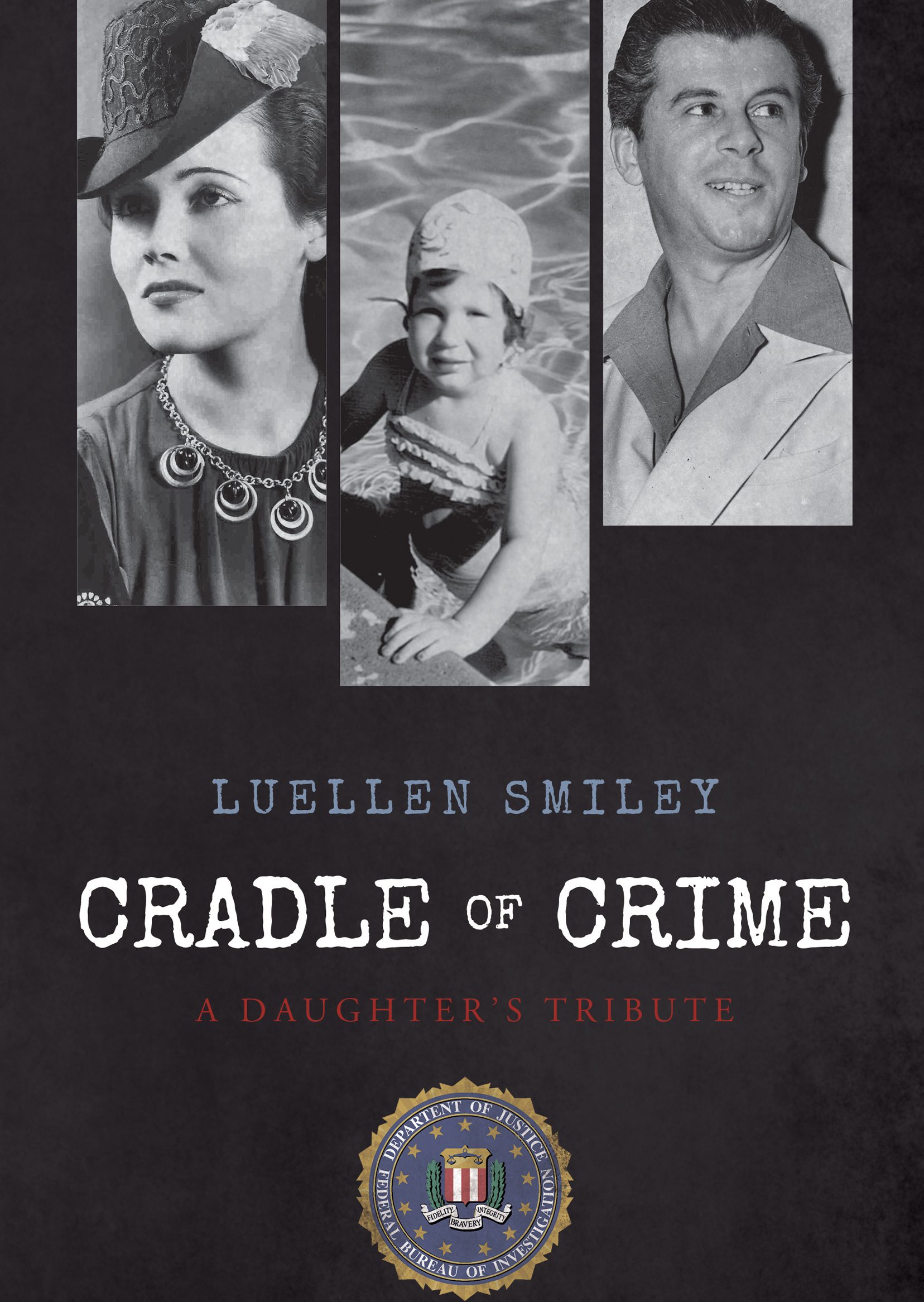
A candid and enthralling memoir, CRADLE OF CRIME – A Daughter’s Tribute is the debut release from Luellen Smiley and it proves one of the most gripping and powerful books in its genre. Certainly no mean feat, given the swelling number of similarly themed offerings but Smiley does well to distinguish hers with painstaking research, a broad narrative sweep and intellectual grip to deliver a fascinating and revealing read, for the events it covers.
The storytelling isn’t redemptive with much of the most compelling material in this book being intensely personal but it is a very human story that dispels hype and myth and gives us a telling glimpse of a remarkable life. Weaving together several stories it makes a vivid and notable contribution to the mafia debate which invariably swings between the codes of honor and family values so often portrayed on the silver screen to a brutal criminal organization focused only on the accumulation of wealth. In contrast, Luellen finds a far more equitable balance in her reflections, and it makes for a genuinepage-turner.
Extremely well written, fans of this ever popular genre will find CRADLE OF CRIME – A Daughter’s Tribute a fascinating read and it is recommended without reservation.
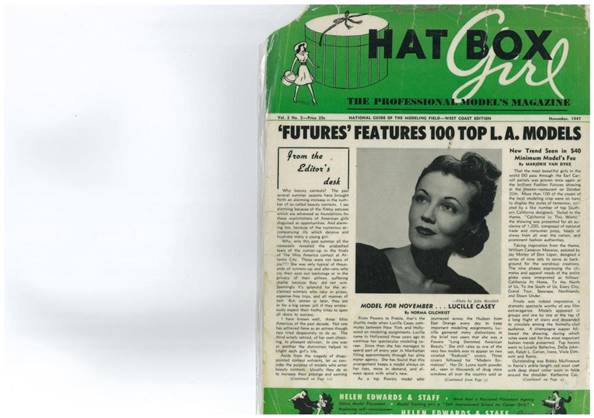
MY BEST FRIEND, Lucille Casey was a woman who threw the dice all her life. She gambled on her instincts as if they were already tested and approved. She never told me much about herself. When I learned of her struggles as a young woman and her chosen life, she became more real than when I’d known her. During the years we were friends, she handed out selected stories, abbreviated and censored. Being the inquisitive character I am, the shallowness of her stories bated me. I had to pry the truth out from other people who had known her.
Casey’s first gamble was at sixteen years old. She sent in a photograph of herself for the Redbook Magazine modeling contest. If she’d won, the Powers Modeling Agency in New York City would grant her an audition as a model. Casey was living in East Orange, New Jersey with her mother and sister. Her father had died suddenly, leaving the family without a financier. Casey’s mother was lost without her husband and unsuited to join the workplace. Casey didn’t tell her mother about the contest until she received the letter of congratulations.
John Robert Powers met Casey in his office on East 56th Street and signed her as a Powers Girl. She was stunning to look at, photographed like a movie star, and was modest. John Powers did not look for aggressive, pouty-lipped fearlessness. The PowersGirls were captioned “Long Stemmed American Beauties” because they were wholesome, beautiful, tasteful, courteous, and virtuous. They were so far from the runway models of today that it is almost a reversal of the industry.
The models of the thirties were ordained to set the highest example of classic good breeding and education. John not only schooled them in fashion, and individual taste, he instructed them in moral integrity, independence, and community service. Casey went to school at John Robert Powers and became one of the top ten models in New York.
She was a blue-black-haired Irish beauty, with emerald green eyes and perfect teeth. She stood only 5’ 7″ in those days that was fairly standard. When I knew her, she was still thin and beautiful but she did not fuss about herself or spend a lot of time at her vanity. As a Powers model, Casey had a long line of gentlemen callers. Powers Girls were invited to all the nightclub and dinner show openings, sporting events, community galas, and fund-raisers. Social engagements were part of her job. Casey was not a woman of idle chat, in fact, a lot of people thought of her as restrained and unfriendly, maybe even snobbish. I think it was more secrecy. People were always prying into her life because it looked glamorous. There was another side to that glamour she didn’t want to put in the mirror.
One evening Casey had a dancing engagement at the Copacabana nightclub in New York City. She was on stage with some other dancers when a certain gentleman noticed her. The next chapter of Casey’s life began that night. At twenty-two years old, she fell in love with a man thirteen years older, of the Jewish faith, who lived in Hollywood. The consequences of her love forced her to change and adapt to a new lifestyle and different people.
She did not bury or rescind her love after she learned he was Bugsy Siegel’s partner and best friend and that Allen was a part of the Jewish Mafia. She asked him to reform his criminal activities. He agreed, provided she would marry him. We all know at twenty-two a woman believes she can change a man, and a man lets her think she can. Without that dream, many lovers would not have found their mates.
Casey did marry her love and spent her life trying to keep her children from harm and Allen from going to prison. I met her husband just after he tried to reform, and was beaten down by the FBI. I called him Daddy.




 ADVENTURERS IN LIVINGNESS