This a refreshing, wonderful story in the fact that I got to see the unfolding of Allen Smiley and Ben Siegel’s story through the eyes of Allen Smiley’s daughter. I got to see the point of view of someone who personally knew Allen Smiley, the other side of him: the family man and her reactions to discovering her father’s past, secrets, and how people viewed her father and the Mafia. To my delight, the author also included journals and files relating to the criminal speculations of Ben Siegel’s murder which helped shape the book’s framework. I felt like a detective myself as I read through the story and found out more and more about her father’s other life.
Excerpt from Robert Rockaway’s book. “BUT HE WAS GOOD TO HIS MOTHER. ”
Another Haganah emissary, Reuvin Dafni, who came to the United States in 1946 to raise money for the Haganah, also met with some well-known Jewish gangsters. Dafni had been born in Croatia in 1913. He immigrated to Palestine in 1936 where he became one of the founders of Kibbutz Ein Gev. In 1940, he joined the Jewish Brigade of the British army. In 1944, he parachuted with other paratroopers behind enemy lines into Yugoslavia and joined the partisans. After the war, he returned to his kibbutz. He did not stay there long. In 1946, the Haganah sent him to the United States to raise funds.
A few months later, the Haganah sent Dafni to Los Angeles. One day, he received an intriguing phone call from a man who identified himself as “Smiley” and requested a meeting. When they met, Smiley asked Dafni to “Tell me what you’re doing. My boss is interested.” Smiley’s boss turned out to be Benjamin “Bugsy” Siegel. Smiley was Allen Smiley, Siegel’s right-hand man.
Smiley arranged a meeting between Siegel and Dafni at the LaRue restaurant. At the appointed time, Smiley and Dafni went into an empty room at the rear of the restaurant. After a few moments, Smiley left, leaving Dafni alone. Soon two tough-looking goons entered and searched the room. When they were satisfied it was safe, they left.
Shortly thereafter, Siegel came in. He sat opposite Dafni and asked him to tell why he was in Los Angeles. As Dafni relates, “I told him my story, how the Haganah was raising money to buy weapons with which to fight. When I finished, Siegel asked, ‘You mean to tell me Jews are fighting?’ Yes, I replied. Then Siegel, who was sitting across the table, leaned forward till his nose was almost touching mine. ‘You mean fighting, as in killing?’ Yes, I answered. Siegel leaned back, looked at me for a moment and said, ‘OK, I’m with you.’ ”
“From then on,” recalled Dafni, “Every week I got a phone call to go to the restaurant. And every week I received a suitcase filled with $5 and $10 bills. The payments continued till I left Los Angeles.” Dafni estimates that Siegel gave him a total of $50,000.
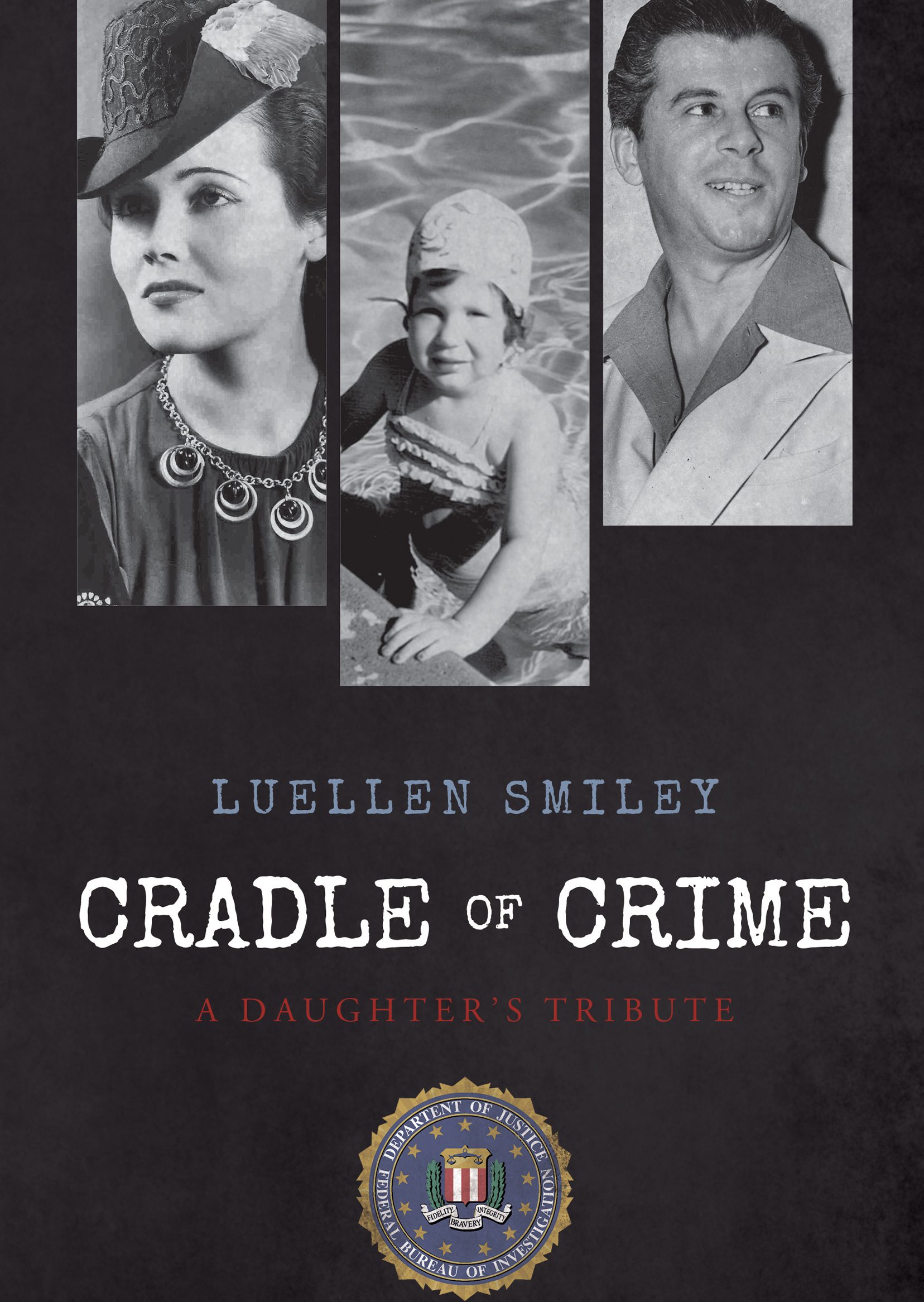
My memoir, published in 2017, Cradle of Crime-A Daughter’s Tribute is old news to me. Not to Charlie. I met him as he was renovating a house across the street. I didn’t introduce myself as Luellen Smiley, just Luellen. I asked if he would take a look at myhouse for an estimate on painting. He was sweet, a mountain man with a long white beard and hunting boots. Last week, he texted me,” I read your book, my friend and I exchanged Goodreads suggestions, and I told him to read your book.” How did he connect me to my book? I didn’t ask, and now it piques my interest. I’d walk across the street and ask him, his truck is there, so is the ice, and I don’t feel like skating and falling on my butt.
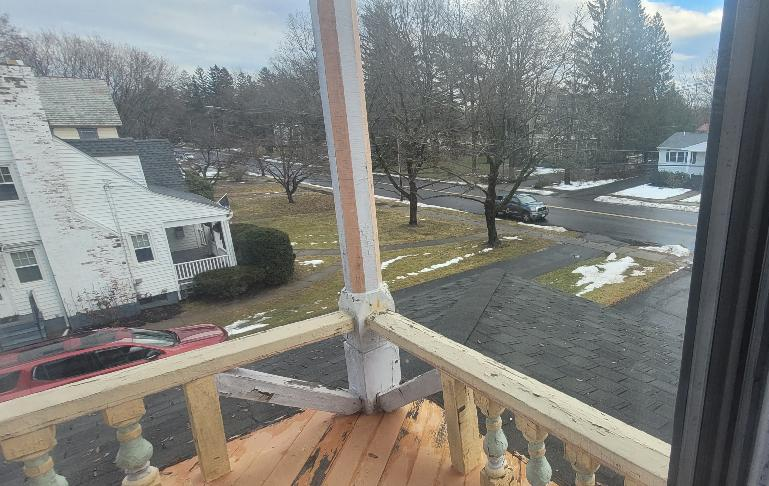
Winter in upstate New York to a gal from Los Angeles is likened to living in the North Pole. Going on five years, my last, I’m not resentful and scouring, but I am not acclimated. Indoors I dress in sherpa from head to toe and wear those finger mittens. Today it is full-throttle rain showers. The street is vacated of traffic and the public, it’s a good day to work on my next book. On my desk area few writing books, the favorites: Henry Miller on Writing, The Diaries of Anais Nin, and Albert Camus’s The Stranger. I haven’t bought a current book in years, the last one was Sam Shepard, The One Inside. I like Miller’s passage: ” The writer lives between the upper and lower worlds.: he takes the path in order eventually to become that path himself.”
Aging in my seventies delivered opening windows to restoring, rearranging, and repairing my persona, personally and in public. If you’ve read any of my essays, then you know explicit is the vortex that moves my thread. Restoring the brick-and-mortar of truth is at the forefront; the next layer is a confession of what I cannot speak in person to anyone, even my closest pals. The third is abstaining from too swift a pen; I’m always in a hurry: I prepare food quickly, walk as if I’m late for an engagement, and wash dishes with perfunctory interest. Everything when I think about it. I know why that is, my father. His shadow was always behind me as I went about myteenage activities at home, so I rushed to get out.
Last week, I stopped taking the powerful Lorzapam medication for neurotic anxiety. My heart raced when I opened an email from my attorney, when a stranger knocked at the door, or when I entered a public place alone. A new sideways rain shower just filled the window pane above my desk. Here is the fourth restorative: get outdoors! I don’t walk in snow or ice, but good old water rain, which I call God’s tears, is one of my favorite nature adventures.
Admittedly, my writing has granulated since moving here. It is tiny in thought and not always tied up neatly. My persona in public needs to be side by side with wine in a dining setting. What I contribute must be joyous and humorous because one of my favorite human activities is to evoke laughter and smiles. I broke away from my taverns and abstained from alcohol for a week. In the second week, visceral and bodily alarms have gone off. I’m lucid, motivated, andeven decisive.
From Anais Nin Diaries 1939-1944.
“I respond to intensity, but I also like reflection to follow action, for then understanding is born, and understanding prepares me for the next act.”




 ADVENTURERS IN LIVINGNESS