
EXCERPT FROM SMILEY’S DICE- DAD’S MERRYMAKING


The day I was born, May 11, 1953 the headlines of the The Los Angeles Time read:

GANGSTERS INVADE SOUTHLAND CITIES.
Among gangsters and their hangers-on named were Abe (Longy) Zwillman, Frankie Carbo, Meyer Lansky, Allen Smiley, whose true name is Aaron Smehoff, Gerald Catena and William Bischoff.
When I met Daddy he had salty sea blue eyes and when my actions were worthy of laughter, his eyes retracted into a blur of skin. Dressed in perfectly matched shades of pink, silver and blue my child eyes rested cheerfully on his silk ties, a collage of jewel tones. The feel of his fabric was soft like blankets. He was very interesting to look at when I was a child and open to all this detail.
I clung to his neck in the back seat of his baby blue Cadillac. He sang songs and his hand fluttered about, catching me by surprise behind my head, and his laughter echoed in my ears. Sometimes we drove through the Paramount Studio Gates, and I was chauffeured in a cart to the Western Stage where we watched cowboys and musical dancers. I was too young to understand this was just a film; thus began my insatiable yearning to be a dancer.

Rory Calhoun was one of the stars Dad was close pals with.  Just this week I dug into research about Rory Calhoun. I learned he died in 1999, and that he’d also been a ward in Preston Reformatory where Dad was sent at eighteen years old. Rory came a few years later.

We spent a lot of time with the Calhoun family. They had two girls the same age as me. Their exotic Spanish villa on Whittier Drive and Sunset enraptured my girlish senses.  Inside it was like a movie set, with animal rugs, oil paintings of Spanish Troubadours and Moorish decorations. Rita, Rory’s wife, wore tiny stacked high heels and she clicked across the Spanish tiles like a flamenco dancer. The whole family was blessed with dreamy looks. I didn’t realize that I was surrounded with extraordinary beauty; everyone had these exceptional vogue looks. The importance placed on that kind of beauty was just as distorted as my examination.
Rita danced a stern feminine demeanor, extremely seductive but not without a battle. I learned my first lessons about temptation just by watching her. She fanned the room with perfume and laughter, and men just succumbed like drugged animals. I felt my first tingle of sexuality in the arms of Rory. He was a treasure of natural emotion, physically and orally.   They both gambled, borrowed money from the other, and they bet on everything.
On Sunday we went to Beverly Park, a cherished  amusement park across from where the whimsical Beverly Center shopping Mall is today. I was only two years old when Dad slung me over a big stinky pony, and insisted I ride around the ring so he could snap photographs.
Inside the Cadillac, insulated from the outside world by metal and glass, he drove without intention of destination, or so it seemed. Though I didn’t know it, he often changed directions to confuse a tailing federal agent. The places he took me became our secret. Sometimes he asked me to close my eyes and count to a hundred. It was a game; he wouldn’t tell me where we were going. I’d open my eyes and we’d be somewhere unfamiliar, a storefront, hotel room, or someone’s home.
When the Ringling Brothers Circus came to town, Dad took me every weekend and I met some of the performers. He was no less enthusiastic about the circus than I was. Now I understand as I’ve learned he traveled with Ringling Brothers for a year just after he landed in New York. He was in the wardrobe department! How suitable to his style. Everyone we knew was in some kind of act.

I remember places like Canters Deli on Fairfax. We always had the same waitress, the one with a big air-tight bee-hive.
“ What’ll it be today honey?”
“ I’ll have a hot dog.”
“ No. Last time you got sick. Honey, get her a turkey sandwich. I have to talk to some people outside–make sure she doesn’t leave. “
“Sure thing Mr. Smiley, you go ahead.”
“When are you coming back Daddy?”
“When you finish your lunch. Be a good girl.”
While I waited for the sandwich, I watched the waitresses very closely. They entertained me; their husky voices and swift mannerisms as they swooshed between tables, calling out orders, “ Matzo ball soup–chicken on the side, Russian on rye no mayonnaise.” Sometimes he left me long after the sandwich was gone. I’d turn and watch the door, to see if he’d come in, or ask the waitress.
“ Would you please tell my father I’m finished.”
“Finished already! What about dessert? How about a slice of cheesecake?” Even if I said no, she’d bring me dessert. Several times I was left so long that I got up and went outside looking for him. I noticed my father down the street talking with some other men. I ran back to the booth and waited. When he came back to the table, I asked him,
“Where were you Daddy?”
“I had to meet someone about business. You remember what I told you—Mommy doesn’t have to know about this.”
“I remember.” Why my outings with Dad remained fixated as birth marks is because they were filled with wonder, amusement, and mystery. My father mixed a little business with my pleasure, but it wasn’t obvious because no one had an office. His business associates worked out of shoe stores, cigar stands, hotels, barber shops; all sorts of fronts that camouflaged the booking of bets.

I bet too. That when I lose I  never give up on the silver lining.

0b7849ec465dda5a7fc7168f12ac6e14 moon and me

WHO IS BUGSY?


!Bh4GdiwBmk~$(KGrHqYH-C4EsMLP8z9dBLLYjivCm!~~_12

LUCILLE CASEY SMILEY

MGM MotherAll my life people have asked me the same questions:” What’s it like knowing your father is a gangster? How old were you when you found out? Aren’t you afraid of his friends? You know they kill people.”
I live in a temporary tide-pool, a lily
floating against the current, weighted
down by a suit of armor that shields me
from the beauty, love and freedoms stirring in my bud.

What seemed insignificant at the time was the diving board into my Dad’s history. I was watching a Bugsy Siegel documentary on my television in San Diego during 1993. It was the first one I’d seen. Three historians joined in on the violence Bugsy honored and esteemed. Half-way through the celebratory lynching of Bugsy and his pals, a reporter made the statement that ‘It’s obvious Allen Smiley was there to set Bugsy up for the hit.’ Andy Edmonds stated that Dad conveniently disappeared into the kitchen during the time of the shooting. It wasn’t until a photograph of my dad appeared on the screen; a man with thick graying hair that I noticed an expression I’d never seen, horrifying misery. I moved closer to the television to see his face up close. A kaleidoscope of emotions rose to the surface: anger, shame, curiosity, and disbelief. I was forty years old.
smiley aThe first time I’d seen those photographs of Ben Siegel slumped on that sofa; an eye bleeding down his face was a day back in 1966 at the age of thirteen. My best friend Dena lived in Brentwood with her divorced mother and siblings. We hooked in the unfamiliar and confusing imbalance of a broken home life. Dena was suffering depression after her parents divorced and I was dangling from my father’s fingertips hopelessly conflicted after my mother died. Dena wouldn’t let a day go by without calling me. ‘Are you all right?’ She didn’t like my father and her reasons were mature beyond her years, ‘Your father scares me.’ After school one afternoon we stopped in the Brentwood Pharmacy. Dena was looking at the book rack and I was following along.
“Lily, my mother told me your father is in a book, The
Green Felt Jungle. It’s about gangsters. Wanna see if they have it?” I agreed to look because Dena was interested, but it meant nothing to me. She twirled the book rack around as I stood behind her watching.
“That’s the book! Let me look first and see what it says,” she whispered. I could feel her arm tense up as I grasped it.
“Oh my God! There he is,” she said. We hunched over the book and read the description of my father, “Allen Smiley, one of Ben Siegel’s closest pals in those days, was seated at the other end of the sofa when Siegel was murdered.” Dena covered her mouth with one hand and kept reading silently.
“What does that mean? Who is Siegel?” I asked.
“Shush–not so loud. I’m afraid to tell you this. It’s awful.”
“What’s awful? Tell me.”
“Bugsy Siegel was a gangster in the Mafia. He killed people. Your father was his associate.”
“I don’t think I should see this.” I turned around abruptly to leave the drugstore. Dena followed me out.”
“Lily you can’t tell your father you saw this book. Please don’t tell him I told you.”
“Why not?”
“My mother told me not to tell you. Swear to me you won’t tell your father!”
“I won’t. Don’t you tell anyone either.”
A few days later after Dad left for the evening I opened the door to his guarded bedroom. I walked around the bed to a get a closer look at the photographs on the wall. It was the first time I could read the inscription.

DSC01871 - Copy


BOOM BOOM BOOM I’m DEAD


READING FROM DAD’S FBI FILE SOMETIMES BRINGS LAUGHTER.

TO: DIRECTOR, FBI  STRICTLY CONFIDENTIAL- ALLEN SMILEY:  WHITE SLAVE TRAFFIC, RACKETEERING, CRIME SURVEY LOS ANGELES, FALSELY CLAIMING CITIZENSHIP, PERJURY

TA-1 – (Means FBI agent one- There were twelve of them working the case.)

On February 25, 1948 Mickey Cohen invited Smiley and his girlfriend, Lucille Casey ( Mom) to the Cohen home for dinner. The invitation was accepted, and it is noted that this is one of the few times Smiley has visited the Cohen residence since the killing of Bugsy. During the Christmas holidays, Smiley refused to attend a dinner at Cohen’s stating he could not be seen with Cohen due to his own legal difficulties. On February 26, Smiley contacted ——-and stated he had been betting on Cohen’s stinking horses. Smiley expressed the idea that “it is going to blow up there any day.” Referring to Cohen’s place.”  During the course of the conversation between Smiley and —- it was interesting to note that Smiley did not care to discuss any matters and at one time stated, “ Listen: if this room is miked, boom! boom! boom! And I’m dead. The attitude of Smiley toward the Bureau is reflected on page two of the attached letter. Smiley stated “This country ought to be at war, with the FBI, the Gestapo, that Hoover, who indicted me for picking my nose, with all those other elements here threatening to overthrow the government and this and that.”  With reference to his arrest by three Agents, in a somewhat braggadocio manner Smiley informed one of his guests that “ I would be glad to strip to the waist and take each one of those three guys on, one at a time, even if it killed me.”  He continued that in his opinion the FBI were a bunch of idiots and that he wished someone would drop an atom bomb on this country and he would take his chances on getting out alive just to get rid of the FBI.

That’s my Dad.

A PITCH FOR PUBLICATION


IN NOVEMBER OF 2005 I reserved a space at the San Francisco Writers Conference. I was nervous and edgy when I boarded the plane. My pitch proposal, pitch suit, and pitch necklace, were tucked inside my suitcase. The pitch convinces an agent or publisher, that you know your subject well enough to feel one hundred percent confident.  It may sound irrational that a writer could work five years on a book and not know what it is about. As an emerging writer I view my work through a kaleidoscope lens. I see multiple themes, subplots, and messages, and they change with each reading. Then there are loose knots of personal misery, lost versions and rejections ringing in my ears. My pitch has to convince an agent, that at least 5,000 people will buy my book. The pitch suit is the outfit you wear for an interview; only for writers, the guidelines are very loose. Some writers wear their narrative. I brought my tailored, looking successful, pants suit. My pitch necklace is a gold Buddha medallion that my father had designed for my mother. I wear it for good luck and because I know the necklace has survived all the family tragedies. The conference is at the St. Francis Hotel at Union Square. From experience, I have learned that choosing a conference because of its alluring location is meaningless; I never pay attention to past experience.

OLYMPUS DIGITAL CAMERA

It was pouring when I arrived. The staff at the front desk greeted me with musical familiarity. Every time I swished by they called out, “Hello, Ms. Smiley.” I imagined them as a chorus singing my name. I arrived one day early to pace the galleries, cafes, museums and Saks. After the first night, I had to switch rooms. I was directly above the street dumpsters, where for hours the chugging of trash kept me awake. I moved frantically, to scoop everything up and not miss a moment of San Francisco. After switching rooms, I dashed over to the Espresso Bar. It faces the corner of Powell and Sutter. Outside, the streetcars clanged by, passengers dangling from the bars like vines on a tree. In between the tracks, workers both blue and white-collar, and some without any collar at all, jammed the sidewalks on foot, bicycle, moped and skateboard. With phones and iPods attached, eyes alert, they buzzed on the vibe of Saturday, moving like musical notes in a symphony.

OLYMPUS DIGITAL CAMERA

In the café an elderly woman wearing a SFWC name tag was seated next to me. I noticed she positioned her book on the corner of her table. She looked overwhelmed and frightened. As I introduced myself she smiled courteously, and said she was a neurotic housewife all her life and didn’t have much to write about, so she wrote about her husband’s war stories. I told her she should write about the neurotic housewife. Just as I was leaving, she stopped me and thanked me for speaking to her. “There’s always a guardian angel around.” Her voice lingered in my thoughts all weekend.
At six o’clock that evening, I was gliding around my room dressing for the gala. I reached for my jewelry bag. It was gone. The weekend was ruined! I would never get published, I’m too wired, too reckless, too distracted. I called the front desk. Heather said she would call me back. Bang, bang, bang, went my shoe against the bed frame. Then the phone rang.
“Hello, Ms. Smiley. I’m sending the bellman up with your jewelry.”
I answered the door recoiling with pained joy. The bellman listened attentively. I rushed upstairs to Harry Denton’s Starlight Room. There I began wine tasting with Maggie, Peg and George; three new comrades in a room of hundreds.
I spent the next day among more comrades, writers with unpublished stories, books, and works-in-progress. I listened to panels of writers; agents and editors discussed the fateful downward spin of publishing and upward battle towards reward.  We sat in our chairs looking overly anxious, taking copious notes, and waiting for answers to our questions. At the end of the panel discussion we all lined up to meet the agents and editors. While we stood in line we met each other.
“What’s your story about?” the woman behind me asked.
“Growing up with gangsters,” I replied.
“ Oh well! That will get you an agent.”
“ I hope so.”

During the conference, I experienced a lucky throw of the dice. I met one of my mentors; Joyce Maynard. Her book, “At Home in the World,” is on my beside table. Joyce was published in the New York Times when she was sixteen years old. JD Salinger read the piece and invited her to live with him. Joyce’s story will send you back to reading Nine Stories.
As I progressed through the circle holding my pitch stick, the fear and apprehension subsided just a tiny bit. Three agents responded; ‘send me your manuscript.’ Naturally when I returned home, my hands were tied to editing. I rushed through, did not employ someone to copy-edit, and then ran about announcing my almost to be signed contract. Three months later I recovered from the rejections and began another rewrite and another until today, when I am on my fifth manuscript. This one feels right because I am not rushing through it expectant of publication; this time I know it will be published.

OLYMPUS DIGITAL CAMERA

EXCERPT FROM BOOK- SMILEY’S DICE


In the summer of 1994, infuriated from a broken affair, another job displacement, and skimpy funds to support me, I found myself in Beverly Hills, walking along with half-hearted interest in seeking employment.

I stopped in the shops Dad frequented; Geary’s, Schwab’s, and Nate ‘n  Al Delicatessen  seeking a root to hang onto.
Beverly Hills has the most powerful effect on me. As soon as I hit Beverly Drive I want to shop, need to shop, must shop! A rise of envy turns into jealously and my attention to wealth fades as Rodney Dangerfield crosses the street, his face contorted by some agitation.  I walked past Jack Taylor’s Men’s Haberdashery and hesitated a moment. I had not seen Jack in ten years. The last time was 1982, at my father’s memorial service. Jack was the only friend Dad trusted outside of the Mob.

JACK TAYLOR SUIT

“Hi Jack, I was in the neighborhood, I wanted to say hello?”
“Jesus Christ! What a surprise,” he said rushing over to kiss me.
“Come in and sit down. My God, where have you been-what have you been doing?” Jack’s attention toward me was exacting and unavoidable.
“I’m in transition right now. I’ve changed careers-well, several times. I was in real estate in San Diego for a long time.”
“I knew you were in real estate, your Dad told me. What are you doing now?” Are you married?”
“No, not married. I’m living here now, and looking for a job.”
“What kind of job?”
“Well, something where I can use my skills in marketing and…”
“Why not come work for me?” he said leaning closer.
“Here, in the store?”
“Yeah, why not? You’ll be great.” he beamed.
“But I’ve never sold men’s clothes before.”
“So what! I’ll teach you. I need someone–my girl just left. I want to get out and play golf. I’ve spent my whole life in this goddamn business. Forty years for Christ’s sake. I’m tired, you know, I’m not a young man anymore,” he said without sentiment.
I hope he’s not doing this because he feels sorry for me, was what I was thinking. I heard my Dad’s voice, and he said, ‘Be grateful he offered you a job! You’ll be in the centerfold of high rollers.’ Dad still managed to interface my life in admonishment and disapproval. He was not just in my head. He was in command of my choices. His disapproval was still the beam I ducked from. Sometimes I felt his presence; like you do when a cat enters a room silent as snow.
The next day I called Jack and told him I could start the following Monday. Jack is a legend in Beverly hills; he cut cloth for the Rat Pack, Jackie Gleason, Tony Martin, Cary Grant President Truman and Allen Smiley.

JACK TAYLOR ADVA custom suit starts at three-thousand dollars. I stood by the front windows folding the finest cotton shirts, cashmere sweaters, and ties. Jack jogged back and forth, from the tailor shop to the retail shop, to the telephone, juggling all their demands with explosive keenness and a lot of cussing. This was a stage I wasn’t prepared for; the illustrious display of wealth on the street. I’d forgotten people still have their own drivers, and valets open the shop doors, and limousines double park in the middle of the street. It just dazzled me into a sort of trance.
“Lily! You’re standing there like a lick of honey in a hive of rich bees. Want me to introduce you to one of them?”
“I’m not ready.”
“For crying out loud! What are you waiting for? Stop looking out the window for Christ’s Sake. Get them to look at you!” Jack escorted me to the women’s collection and yanked out a suit.
“Try this on. You’re a six right?”
“Yes, how’d you know?”
“Whatta’ you think I do in this shop? Weigh turkeys.”

The best time of the day was four o’clock in the afternoon. Jack fixed himself a high ball, turned up the volume on a Frank Sinatra CD, and took off his mask. He poured me a drink, placed a bowl of mixed nuts on the coffee table and stretched out on the leather sofa.

We both wanted to talk about Dad.
“I watched a documentary on Ben Siegel; they alluded that dad had something to do with Ben’s murder.” I said.
“You’re lucky your father will never hear you say that.  Dad spent a lifetime in fear that they’d take him out too. He tried to stay away from the business, he wasn’t even allowed back in Vegas after one incident. You know about the Ryan business?”
“No. What was that?”
“Forget it.” He stood up and filled his glass again.
“Your father had a temper, but he was a rose petal compared to Siegel. Anyway, Dad couldn’t leave this goddamn town; he was afraid they wouldn’t let him come back.”
“But he got his citizenship in 1966. Why couldn’t he leave after that?”
“It was you— he was afraid something might happen. These other guys like Meyer and Costello–they were afraid of nothing.”
“I met Meyer.” I said.
“Yeah, so you know.”
“I don’t know. Meyer was very gentle.”
“You’re Al Smiley’s daughter! That’s different. He wasn’t always so gentle.” Jack shook his head, private thoughts stirred.
“Your Dad tried to stay low, but he couldn’t walk away from the thing,” he said shaking his head.
“What thing?” I persisted.
“For Christ’s sake, what are we talking about? You know, the Mafia.”
“My father wasn’t in the Mafia!”
“Sweetheart I’m just telling you what I know. Maybe I’m wrong.”
“But he couldn’t have been. I mean my mother wouldn’t have married him.” Jack threw his arms up in frustration.
“He was Siegel’s partner, and then Roselli’s right arm! When Johnny was murdered your father changed.” Jack shook his head regrettably and continued.
“How did he change?” I asked.
Just then the door swung open and a distinguished man in a suit and overcoat walked in.

LIGHTS ON SANTA FE


A NATIVE AMERICAN  LIGHT SHOW.

YOU CAN BECOME WHO YOU DREAMED OF, DO WHAT YOU DREAMED OF IN SANTA FE , because Santa  Feans do not care.

I heard this slogan a lot when I first moved here seven years ago.  My understanding was vague, unrealized, and I didn’t think much about it until  this winter.   I began to  approach strangers,  walk across the street to the spa in a robe,  or  leave my pajama top under my sweater because I like the texture of it.
I’ve  given  up the diving board of scrutiny and plunge into the dreamy, stony,  outdated, simplistic extravagance, and unrealistic vibe of Santa Fe.

I keep dreaming, and preparing,  with a face blotched red by cold, that THE LIGHTS, SHADOWS,  MOON AND CHARACTERS ARE MY BROADWAY FOR NOW.   NOT FOREVER. EVERYTHING CAN BE TEMPORARY IF WE TAKE ADVENTURES IN LIVINGNESS.

PARIS WILL NOT PERISH


I watched coverage today in Paris from an online British station. It is important to me. More important than writing or dressing or going out. The journalists were sympathetic, the interviews soulful, the images–silencing. I don’t believe prayers are enough. President Hollande declared war.

Last night I watched a French film, Lola, before I heard the news. This was a film of Paris as golden and grainy as autumn. I thought I must go to Paris. Today I still must go to Paris.  BN-LG537_1114FR_J_20151114151709

SINGULAR DAYDREAMING


DAYDREAMING
When I watch my wild birds, I daydream of their freedom.

When I listen to Wes Montgomery I dream of Brazil, and riding on a float at Mardi Gras, just once, with a feather hat, and dressed like Rita Hayworth.

When I sit at my desk and look at my mother’s photograph, I dream of the lunch we never had, and the lunch we did have, in  Bullock’s Garden Room, watching the fashion show and discovering tuna salads.

When I lie in bed at night I dream of him, whomever he is, wherever he is, and his strong shoulder cupped around my head, watching an old Cagney movie.

When I shovel snow I dream of California, of old Del Mar and running along the shore barefoot.  When I walk along Palace Avenue in Santa Fe,  I dream of walking in Brooklyn, or 5th Avenue at about 6 pm, when everyone pours into the street, a fountain of limbs and accessories.

Daydreaming unlike night dreaming where we are flying, conquering, or battling some inner masked trauma, illuminates where we want to be, and who we want to be, and if you take it seriously, how to get there. The medicine of daydreaming is unmatched by books, health food, vitamins, yoga, religion, mind altering experiences, it’s the essence of who we are, it defines our reality.

Mostly these days, I daydream6a011168668cad970c0120a94abd12970b-400wim of finishing the longest work-in progress book and as my pal Blair says, finish and move on with your life. For those of you who know me, when the time comes for a diligent writing routine, the act is outwardly selfish. Engagements canceled,  phone is not answered, and my email correspondence drops off.  If a trauma settles in my mind while I’m writing, the rhythm dissipates. Avoidance of the temptations that can draw me away from the work; men, my gal pals problems, Rudy falling off the ladder, and a vacant income.

As I assemble my columns, government transcripts, book excerpts, and emotions into a page of writing what is different this time is I know what belongs and what doesn’t. The worst part of writing for me is vacillating, that mind twist of indecision. It is like the indecision of moving, or breaking up, or taking a different outlook, one you’ve never even considered before.

The world we are living is not familiar; everyday it erupts with an inconceivable corruption, act of violence, and viciousness against humanity. It’s not the Italian roast coffee that wakes me up, it’s world news.  I feel less and less a part of the humanity and more like a wild creature that is fighting for the past. My outlook on social clubs, synagogue and church congregations, group classes, and all that let’s meet up organizing makes a lot of sense now. Especially if you don’t have children, or a life mate the temptation to retreat into your own world of fantasy is irresistible. My next thread will be on the single life, I can claim expertise in that!

Last night a stranger in a sports jacket, silver hair, and polished shoes sat beside me at the Staub House. He struck a conversation and within fifteen minutes he said, ” I’m going to the Chamber Music Concert series tonight  and next week I go to three operas. ” My interior dialogue is assessing him; he’s very presentable, wears glasses well, and loves the arts. Maybe he will invite me. We continue chatting and then suddenly he switches tenses; it is no longer I, now it is we don’t live in Colorado in the winter, we have a house in Tuscon.

After a few travel stories he says,” I have an extra ticket for tonight. Would you like to go? I’m meeting some friends afterward at the Compound.”  A second of hesitation on my part, as this is the temptation I was talking about.

” I’d have to change and you’re running late.”

”  I guess you’re right. Will you be here tomorrow night?”

” Maybe.”

What’s interesting today looking back, is that he didn’t even lie about being married or involved long-term.  Men use to lie about that didn’t they?  I mean what’s so unusual about having a tryst with a married man today? Daydreaming is not indecisive or dishonest. Maybe one of the most genuine of vices.
http://www.positivelypresent.com

SUMMER IN SANTA FE


All I SEE AT THIS HOUR IS
dinner for most of the USA. Imagine all those people, dining in separate uniqueness. The walls of imagination merge with internal images, from the media, personal experience, and true life stories. What I think of at dinner time is never the same at ten o’ clock in the morning. The labyrinth of safety, family, friends, security ALL colliding with the unknown, seems to be the most innocent of emotions. It is also a time that springs bright-eyed realizations, recognition, and a time when our mirrors move toward us. Who we surround us with is who we are.

The wind is sullen as it has gone from the spruce tree outside my window.

I want to get up and take a long walk, listening to the sound of my own steps on the brick walkway. I walk outdoors onto my steps and sit on a pillow watching the birds flock to a fresh pour of seeds. The silence is like a mirror to me. This un-sound so clear and virgin in Santa Fe, brings me back to my adolescent years in Hollywood. The nights my father went out, allowing me the freedom to explore outside. I would run down Doheny Drive to Santa Monica Boulevard and just keep running. It was on those windy Santa Ana nights that I’d run the longest. I was running because the need to express something was bulging through my soul. This night is like that, only I don’t feel like running, I am listening to the sounds of silence. Watching the shadows that look like ghosts, and the clouds that appear to have messages, and how everything is different when you are alone.

July is expectant there is expectancy everywhere you look. The blossoms on the tree limbs are blooming, the birds have evacuated their nests and begin singing early in the morning, and insects eject themselves from their hidden corners. I don’t know what summer is like for a man, I’ve never asked any man, but I am going to tell you what summer is like for one woman.

The essence is sensuous, and for a woman, it is an overture.
We strip down the layers of clothing; replacing socks with sandals, and sweaters with t-shirts. When I hear birds and watch them in the trees, I think of babies and innocence. There are flowers shooting through the heavy clasp of winter dormancy, and when they do, the colors remind me to replace all the black pants and turtlenecks with pastel shades of coral and blue.

20151011_161455

The sunlight radiates through my skin and warms everything. My heart feels like it has has been through a tune-up. My body wants to dose in sea water, eat less, run up Canyon Road, listen to music, dine al fresco, and get pedicures. All of this preparation is to tune up the romantic notes and to get YOUR ATTENTION. It is time to bring you out of the garage, or wherever you go in spring, and to notice that we are blooming.
Surprise us with flowers, a new hat, or a picnic on the banks of the Rio Grande. Our attention is on our surroundings; we will want to buy flowers, and baskets and new cushions for the patio furniture. We change our lipstick color, comb our hair different, and we look for new ways of expressing how good we feel.

If you live in Santa Fe then you understand when I say slow down summer do not leave us.
“Is there any feeling in a woman stronger than curiosity? What would a woman not do for that? Once a woman’s eager curiosity is aroused, she will be guilty of any folly, commit any imprudence, venture upon anything, and recoil from nothing.”
Excerpt from Guy De Maupassant, “An Adventure in Paris.”


A RATTLER OR A PAL


A full transcendental moon dipped into the black-out mountain evening, has cured me of interior turmoil for the time being. This is part of adventures in livingness what locals call the bu. TO BE CONTINUED
I WALKED ALONG THE BLUFF OF DECKER CANYON  overlooking the Santa Monica mountains and listened to the breeze stream through palm and eucalyptus trees.  Medication from nature loosened the wires in my guarded nervous system.   A new current of suspicion, tension and distrust entered the zone between Madam C. 20150407_133844_resized As a woman who beholds her best gal pals, and runs into the arms of women who send out invitations for friendship, I’m susceptible and gullible to hidden motivations.

After the rain walk, doused in mist and droplets I scurried up the hill to my shack. The room I rented from Madam C smelled musty after the rain.  It is linked to her boudoir by an open patio where we shower.   During the day, our paths cross a dozen times in the kitchen, in the hallway, and in my room.
“ LouLou, are you there? LouLou, let me see what you are wearing, I love those earrings, where did you get them? LouLou we are going to Westlake tonight. There are a lot of very rich men there. Is my hair color okay? Yes you look beautiful. Loulou did you lock the door? Did you close the gate? You left your clothes in the dryer. Where is Lily, (the cat) Will you watch Koui, (her furry partner) for me tonight?   Yes, yes yes.
As I entered my room, rain water was dripping in bold droplets on the rock floor. Madam  stuck her head in to speak.
“Oh my god, what is this? Oh I can’t believe it. Her hands massaged her forehead, and her face twisted into a vaccination of anguish.
“ It’s not that bad, ” I assuredly replied. I meant it too.
“ Oh the money I will have to spend! Juan, (her runaround helper) is called and ordered to come at once.”
“ Look Juan! What are we going to do?”
Juan  mumbled something I can’t recall and we all stared at the rain coming down.
“ You will have to move, you can’t stay there. I will put you in the Artists Studio. It’s more money. That’s all I can do”
“ How much more?”
“ Two hundred.”
“ Eck.”
“Or you can leave?”
I turned away to hide my alarm.
That night I watched over Koui in C’s living room and played with the remote mostly because the screen wasn’t taking effect on my disposition. I felt a bit unwelcome, as if I pulled the rain from the sky.
In the morning, she greeted me courteously, “ Are you ready to move.. Juan  and I moved my suitcases, bedding, photos and twelve pairs  of shoes to the studio. It was lovely, a high-pitched ceiling, aquamarine walls, and private patio with shower, bathroom and kitchen.
“ Well, you like it?”
“ I love it!”
“ Well then show it. You should be happy all the time. Life is not easy, I know my dear.  Adjustments are necessary. You don’t have a mama and papa to look after you. It’s up to you.
“ But C I am happy?”
Later on she sent me a text. She invited her neighbor Andrew to dine with us, “ I am doing this for you. He is a producer, Maybe he can help you.”
I prepared dinner in my new studio, listening to Ray Charles, dancing in a celebratory mood.
“ LouLou, Andrew is here, C breezed into the patio, draped in scarf, and a exotic maxi dress. I waved them in.

Andrew handed me a lemon frosted cake and a bottle of red wine.” We all chatted at once. then C blurted out,  “Why didn’t you use my kitchen?”
I am making dinner and cleaning up. You just sit and enjoy.

Dinner rocked along with intensity;  C and Andrew discussing water rights, neighbors, and her vacation rentals. After dinner Andrew stood up, 6’3” and whispered , ‘ can we go into your area?’ C must have heard, because she spun away.

We drank wine and Andrew unbuttoned his witty humor, on-set  stories, and compliments. I immediately caressed his presence and we ended up at his quarters;  an unruly wedge of land so blackened we could not see anything but the stars.  Behind us was his lodge; a spit and glue log cabin covered in palm frowns.  I found his eccentricity appealing as his smile. He really didn’t give any thought to conventionality.

“ What kind of movies do you make?” I asked.
“ Rotten ones, I mean really bad. The last one I didn’t even see. B sci-fi flicks, reality shows, that I can’t stand to watch, and documentaries.”
“ Documentaries have turned into dramas, I love them.”
“Yea, they’re good. I filmed Sundance and Cannes.  Listen, I’m not a devotee of the business, I don’t kiss ass, and I don’t go to star parties, or read about them. I got fired off a film because I addressed Reese Witherspoon without knowing who she was.”
“What?”
“ Yea, there’s a hierarchy to the business you have to deal with. Are you cold? You’re shivering. Here put my jacket on. “
Andrew walked me down the uneven dirt road with a flashlight and a steady arm. His size in height and bulk denotes power, but it is his effortless mannerisms, laughter and shuffling footsteps that remind me of a comfortable sitting chair.
‘ Do you like museums?”
“Yes!”
“You want to go tomorrow? You been to LCMCA?”
I wasn’t even sure which one he meant but I said yes!
We took off the next morning in my Rover, so I would adjust to driving in Los Angeles again. We stopped at Duke’s for breakfast, sat on the patio under a canopy of bougainvillaea.
“ I  am having a panic attack.”
“ Why?”
“ I’m so happy!” Life was so spectacular at that moment; to lean back and set my heart into the sea, sky, and eat a fish sandwich.
Andrew threw his head back and laughed.
“ Could we make one stop first at Saks. I have some jewelry they have to send out?”
“ Do you know how to get there?” He asked.  Andrew moved from Manhattan four years ago.  “ “Are you kidding? Saks Beverly Hills is my Tiffany’s.”
To be continued

SMILEY & SIEGEL


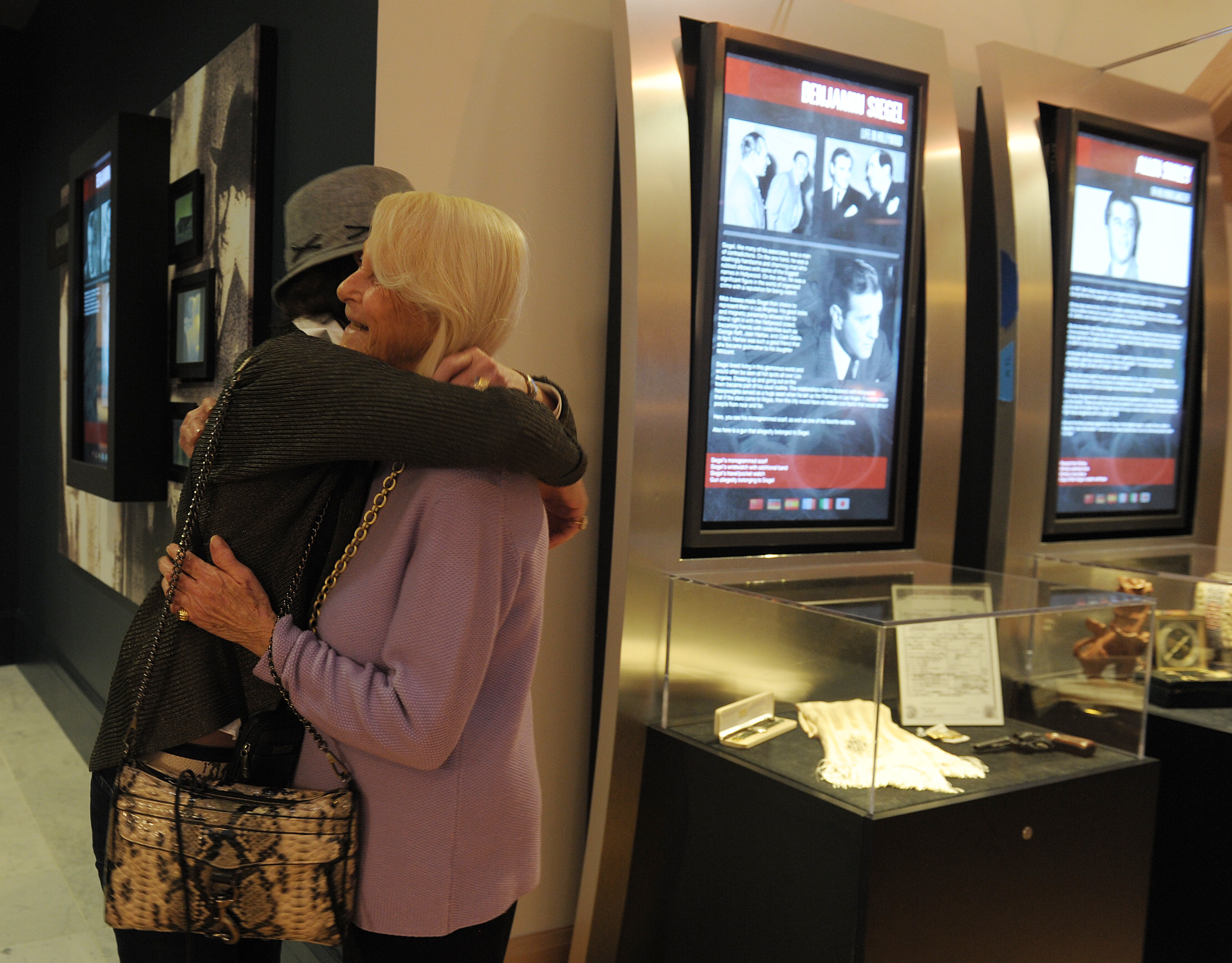
THE SIEGEL SMILEY LEGACYReuniting with Millicent at the Mob Experience.
BY: Luellen Smiley
When I was eleven years old  our home burnt to the ground in the Bel Air fire, and everything we owned fell to ash. Shortly after my mother moved us to an apartment in Brentwood, a mammoth carton arrived and was placed in the center of the living room. My mother cut it open and urged me to look inside. I sat cross-legged on the avocado green carpeting and discovered bundles of garments; Bermuda shorts, blouses, sweaters, and shirts.
I quickly shed my worn trousers and stepped into a new outfit, dancing about as I zipped myself in. My mother watched, and echoed my childish yelps of elation.
“Mommy, who are these from?”
“They’re from your Aunt Millicent.”
“Who is she? I don’t remember her.”
“You were a little girl. She loves you very much.”
Years later, my father, Allen Smiley, called and told me to come over to his apartment in Hollywood.
“Why Dad?”
“Millicent is coming by; I told you she moved here, didn’t I?”
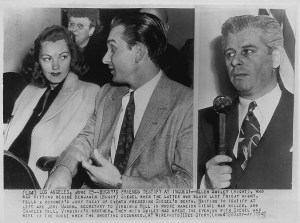
I’d learned Millicent was Benjamin Siegel’s daughter, and Ben was my father’s best friend. Dad was sitting on the same chintz covered sofa the night Ben was murdered.
“You mean Ben Siegel’s daughter?”
“Don’t refer to her that way ever again; do you hear me? She is Aunt Millicent to you.”
When my father answered the door, I watched as they embraced. Millicent had tears in her eyes. She walked over to me, and took my hand. I looked into her swimming pool blue eyes and felt as if I was drowning. She sat on the edge of the sofa and lit a long brown Sherman cigarette. I studied her frosted white nails, the way she crossed her legs at the ankles, her platinum blonde hair, and the way her bangs draped over one eye. What impressed me most was her voice; like a child’s whisper, her tone was delicate as a rose petal.
I spent the rest of that afternoon memorizing her behavior. She emanated composure and a reserve that distanced her from uninvited intrusion.
Over the next few years, Millicent and I were joined through my father’s arrangements, but I was never alone with her. When he died in 1982, she was one of only three friends at his memorial service.
As the years passed, and my tattered address books were replaced with new ones, I lost Millicent’s phone number. I had been researching my father’s life in organized crime, and had gained an understanding of my father’s bond with Ben Siegel. My discoveries were adapted into a memoir and recently into a film script about growing up with gangsters. During this time, I had reconnected with several of Dad’s inner-circle, but Millicent was underground, and now I understood why.
Last year I received an email from Cynthia Duncan, Meyer Lansky’s step-granddaughter. She told me about Jay Bloom, the man behind the Las Vegas Mob Experience, a state of the art museum that will take visitors into the personal histories of Las Vegas gangsters. Cynthia contributed her significant collection of Meyer Lansky memorabilia, and assured me Jay was paying tribute to the historical narrative of these men by using relatives rather than government and media sources. She wanted me to be involved.
Despite my apprehensions about the debasing and one-sided publicity that characteristically surrounds gangster history, I contacted Jay. In his return note, he invited me to participate, and added, “Millicent would like to contact you.”
A month later I was seated in Jay’s office waiting for Millicent. When she walked in, I stood to embrace her, and this time the tears were in my eyes.
Millicent’s voice was unchanged and so was her regal posture. “Our fathers were best friends, attached at the hip. Your Dad was at the house all the time. I’ll never forget when he and my mother met me at the train station to tell us about my father’s… death. Smiley was very good to us. My mother adored him too.”
Jay took me on a tour of the collection warehouse, and the history I’d read about unfolded before my eyes. The preview room was like a family room to me, because some of the men had been my father’s lifelong friends and protectors. I stopped in front of the Ben Siegel display case and saw an object that was very familiar.
“My father has the identical ivory figurine of an Asian woman. I still have it.” So much of their veiled history was exposed; between these two men was a brotherly bond that transcended their passing and was even evident in their shared taste in furnishings.
Jay showed me a layout of the Mob Experience in progress. I turned to him and asked, “Is it too late to include my father? All the rooms are assigned.”
“Millicent and I already spoke about it. She wants your Dad in Ben’s room.”
After I returned home, Millicent and I talked on the phone.
“Your father belongs in my Dad’s room. They’ll just have to make Mickey Cohen’s room smaller.”
“My father hated Mickey,” I said.
“So did mine! When are you coming back? I’ll kill you if you don’t become part of this.”

Reuniting with Millicent at the Mob Experience.


WHO WAS MY FATHER?


I began my research WITH WHAT I HAD; one of my father’s books; “The Mark Hellinger Story.” I leafed through the index and there was my father’s name along with Ben Siegel’s. According to the biographer, my father visited Mark at his home the night before he died. Mark had stood up in court for my father and Ben at one of their hearings. He was fond of Ben, like so many people were, that aren’t here to tell their story.
After reading the book I rented, The Roaring Twenties, written by Mark, and from there the connections, relationships, and characters began to leap out from all directions. I
submerged myself in history and photocopied pictures of my father’s movie star friends, George Raft, Eddie Cantor, Clark Gable, and his gangsters friends. I found photographs of the nightclubs he frequented, the Copacabana, El Morocco, and Ciro’s and nightclubs that he referred to in his mysterious conversations. I made a collage of the pictures and posted them above my desk. I played Tommy Dorsey records while I wrote. This microcosm of life that was created, allowed me to listen to the whispers and discover the secrets.
I dug into my father’s history without knowing how deep I had to go, or what shattering evidence would cross my path. In my heart I felt this was crossing a spiritual bridge to my parents. The flip side was a gripping torment, tied to my
prying mind. I needed to break into the files in order to break my silence, and discover my parents, not glamorized stereotypes that fit into the category of Copa dancer and gangster. No matter what I uncovered, I always knew it would be ambiguous, and controversial. I did not expect to find a record of murder, dope peddling, and prostitution. I believed that his crimes were around the race track and in gambling partnerships. Even so, I could never understand the similarities we shared, unless I knew them as people. Though I have not rebelled against authority as my father did, I‘m not a team player, I resist authority, and I don’t like waiting in lines.
I had to reinvent my mother through the subconscious. I skated over thin ice trying to set her truth apart, from what I
had invented, dreamed, or had been told. I listened to Judy Garland’s recordings, and premonitions surfaced, of how my mother loved Judy, how it must have felt to be under the spot lights of MGM, and dancing in ginger bread musicals while her own life was draped with film noir drama.
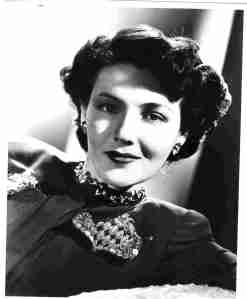
I studied my mother’s face in all her films, rewinding and stopping the tape, as if she might suddenly return my glance. She had dancing and background shots in the musicals produced by Arthur Freed. I remembered dad talking about Arthur, and how prestigious it was to be in his department.
When I discovered the Museum of Motion Pictures Arts and Sciences in Los Angeles, I went down and filled out a slip of paper with my mother’s name on it and waited for my number to be called. I felt something like a mother discovering her child’s first triumph. They handed me a large perfectly stainless manila envelope, and a pair of latex gloves to handle the file. I had to look through it in front of a clerk.
“That’s my mother,” I proclaimed. He blinked and returned his attention to a memo pad. Inside the envelope were black and while glossy studio photographs, press releases, and studio biographies of my mother. The woman who pressed my clothes, washed my hair, and made my tuna sandwiches. There she was in front of the train, for Meet Me in St. Louis, and a promotional photograph in The Secret Life of Walter Mitty, dated 1947. That was the year Ben was shot. I looked further to find more clues. I needed to know where she was the night Ben was murdered. Maybe she was on location when it happened. Maybe she was in New York at the opening of the film. I could not place her on June 20, the day Ben was murdered. I imagined my father called her and told her the news. The marriage plans were postponed, their engagement suspended. My father had to get out of town.
I spent everyday picking through the myths I’d heard and read. I heard a clear chord of scorn, for exposing family secrets, “It’s nobody’s business what goes on in our family, don’t discuss our family with anyone, Do You Hear Me!” I must have heard that a thousand times.
I began to dig with an iron shovel. I asked every question I wasn’t supposed to ask, and preyed into every sector of their life. I wanted to know about his childhood, where he grew up, and why he left home when he was thirteen years old. Who were my grandparents, and why didn’t he talk about them. How did he meet Ben Siegel and Johnny Roselli, and when did he cross over into the rackets?
I contacted historians, archivists, judges, attorneys, Police Chiefs, FBI agents, authors and reporters across the United States. He always said, “Reporters can destroy your life overnight.” And here I was, uncovering what he had sheltered all his life.

I wrote to the INS in WDC and asked for their assistance. Six months later I received a letter from the INS in Los Angeles. They acknowledged his file, it was classified and they could not locate it. The progress was tediously slow, and the waiting oppressive.
While I waited for the files, I read Damon Runyon, and Raymond Chandler stories and attempted to identify which character personified which gangster. The stories were about the people that came to my birthday parties, Swifty Morgan, Nick the Greek, Frank Costello and Abner Zwillman,(the Boss of the New Jersey syndicate.) The dialect of Runyon and Winchell mimicked the same anecdotes my father used over and over! By understanding Runyon’s characters I began to know my father. At night I watched old gangster movies and that opened another door of familiarity.

I read almost every book in print about the Mafia and ordered out of print books from all over the country. They began to topple on my head from the shelf above the desk. Allen Smiley was in dozens of them. Every author portrayed him differently, he was a Russian Jew, a criminal, Bugsy’s right hand man, a dope peddler, a race track tout, and sometimes the words bled on my arm. To me, he was a benevolent father, a wise counselor and a man who worshipedscan0002 me.
The INS claimed my father was one of the most dangerous criminals in the United States. They said he was Benjamin Siegel’s assistant. They said he was taking over now that Ben was gone.
That day I put the file away, and looked into the window of truth. How much could I bear to hear more?

Mom and Dad second from Left. I don’t know the other people.