

IF I DON’T KNOW WHAT TO DO, I THINK OF THE CHARACTERS MERYL STREEP HAS PLAYED; THEY ALWAYS MAKE THE RIGHT DECISION
ABOUT
Luellen Smiley is a creative nonfiction writer, author, columnist, and historian whose writing is deeply rooted in a controversial personal history. She is the daughter of Allen Smiley, a close friend, associate, and business partner of notorious Las Vegas gangster Benjamin “Bugsy” Siegel. Her father was sitting only feet from Siegel when Siegel was murdered in Beverly Hills on June 20, 1947.
That extraordinary childhood history became the foundation for Smiley’s first book, Cradle of Crime: A Daughter’s Tribute, published in 2017. The memoir explores what it was like to grow up as the daughter of a man connected to organized crime while trying to reconcile her love for her father with the secrecy, fear, and criminal world surrounding him.
Smiley’s work has appeared in publications including the New York Post, MORE Magazine, Southern California newspapers, and Authorlink. She wrote the newspaper column Smiley’s Dice—Adventures in Livingness, which earned a Blue-Ribbon Award from the California Newspapers Association for her Growing Up With Gangsters columns.
Her interest in her father’s history also led her to become a researcher and commentator on organized crime history. She has participated in television, radio, and documentary interviews.
Smiley’s next book, Gaslighting Greta, will be published this year. A personal story that reads like fiction. Her own website describes the project as exploring a woman whose life is destabilized by gaslighting and psychological manipulation.
Her writing career reflects a recurring theme: using personal experience and research to uncover the truth behind complicated relationships and extraordinary lives. From the secretive world surrounding her father and Bugsy Siegel to the deeply personal territory of Gaslighting Greta, Smiley’s work transforms difficult experiences into stories of survival, discovery, and ultimately reclaiming one’s voice.
Luellen Smiley is an author whose life has given her an unusual perspective on secrecy, manipulation, family loyalty, betrayal, and survival—and she uses that perspective as the raw material for her nonfiction storytelling.

IF I DON’T KNOW WHAT TO DO, I THINK OF THE CHARACTERS MERYL STREEP HAS PLAYED; THEY ALWAYS MAKE THE RIGHT DECISION
This is not a “How to Recognize Gaslighting” or a “Step-by-Step Guide to Gaslighting.” This is a true story, drawn from my experience.
I’ve written in the genre of Creative Nonfiction, integrating the events through dialogue, journal entries, and a third-person narrative. Within three locations, Santa Fe, New Mexico, Los Angeles, California, and Saratoga Springs, NY. Greta (me) exposes the mutilation gaslighting abuse inflicts on her emotions, psychology, mental and physical health, and her finances.

” The History of the Jewish gangster is as ambiguous as a shadow; and this is reflected
in the thinly drawn characters of Benjamin Siegel and Meyer Lansky on Boardwalk Empire.”
This is not a “How to Recognize Gaslighting” or a “Step-by-Step Guide to Gaslighting.” This is a true story, drawn from my experience.
I’ve written in the genre of Creative Nonfiction, integrating the events through dialogue, journal entries, and a third-person narrative. Within three locations, Santa Fe, New Mexico, Los Angeles, California, and Saratoga Springs, NY. Greta (me) exposes the mutilation gaslighting abuse inflicts on her emotions, psychology, mental and physical health, and her finances.

This is not a “How to Recognize Gaslighting” or a “Step-by-Step Guide to Gaslighting.” This is a true story, drawn from my experience.
I’ve written in the genre of Creative Nonfiction, integrating the events through dialogue, journal entries, and a third-person narrative. Within three locations, Santa Fe, New Mexico, Los Angeles, California, and Saratoga Springs, NY. Greta (me) exposes the mutilation gaslighting abuse inflicts on her emotions, psychology, mental and physical health, and her finances.
BEING A GOOD WRITER DOESN’T MEAN YOU LIVE LIFE MORE WISELY;
IT’S THE OPPOSITE, MOST OF US
WADE IN DISASTER.
This is not a “How to Recognize Gaslighting” or a “Step-by-Step Guide to Gaslighting.” This is a true story, drawn from my experience.
I’ve written in the genre of Creative Nonfiction, integrating the events through dialogue, journal entries, and a third-person narrative. Within three locations, Santa Fe, New Mexico, Los Angeles, California, and Saratoga Springs, NY. Greta (me) exposes the mutilation gaslighting abuse inflicts on her emotions, psychology, mental and physical health, and her finances.
This is an excerpt from the memoir I’ve been working on many years. The first manuscript was 800 pages; about three of them were worth reading. The book mutated about 2000 times.
“What’s it like knowing your father is a gangster? Did you know when you were a teenager? Did your father kill anyone? Did you ever meet Bugsy? Aren’t you afraid of his friends? You know they kill people.”
I was thirteen years old when my best friend told me my father was a gangster. She didn’t mean any harm. We told each other everything. We were standing in the Brentwood Pharmacy one day in 1966, and we turned the book rack around until we found ”The Green Felt Jungle.”
“That’s the book, let me look first and see what it says.” She whispered. I waited while she flipped trough the pages.
“Oh my God, there he is,” she said grasping my shoulders. We hunched over the book and read the description of my father beneath his photograph.
“Allen Smiley was the only witness to the murder of Bugsy Siegel.”
“What does that mean, who is Bugsy Siegel?” I asked.
“Shush, not so loud, I’m afraid to tell you this Luellen, it’s awful. I don’t believe it. “
“What is it? Tell me.”
“Bugsy Siegel was a gangster, he killed people. Your father was his friend.”
I don’t think I should read this, “I said replacing the book on the rack.
“Don’t tell your father I told you,” she warned.
“Why not?”
“My mother told me not to tell you, swear to me you won’t tell your father.”
“I swear, come on let’s go.”
My father called himself Allen Smiley. The FBI tagged him “armed and dangerous.” The Department of Justice referred to him as the “Russian Jew.” I called him Daddy. e had salty sea blue eyes blurred by all the storms he’d seen. When I said something funny, his eyes crystallized and flattened like glass, smoothing out the bad memories. He was always a different color, dressed in perfectly matched shades of pink, silver and blue. My small child eyes rested cheerfully on his silk ties, a collage of jewel tones. The feel of his fabric was soft like blankets. He was very interesting to look at when I was a child and open to all this detail.
This is not a “How to Recognize Gaslighting” or a “Step-by-Step Guide to Gaslighting.” This is a true story, drawn from my experience.
I’ve written in the genre of Creative Nonfiction, integrating the events through dialogue, journal entries, and a third-person narrative. Within three locations, Santa Fe, New Mexico, Los Angeles, California, and Saratoga Springs, NY. Greta (me) exposes the mutilation gaslighting abuse inflicts on her emotions, psychology, mental and physical health, and her finances.
LOVE isn’t about holding on, it’s about letting go. That kind of love, the physical need, physic release, it cannot last.
This is not a “How to Recognize Gaslighting” or a “Step-by-Step Guide to Gaslighting.” This is a true story, drawn from my experience.
I’ve written in the genre of Creative Nonfiction, integrating the events through dialogue, journal entries, and a third-person narrative. Within three locations, Santa Fe, New Mexico, Los Angeles, California, and Saratoga Springs, NY. Greta (me) exposes the mutilation gaslighting abuse inflicts on her emotions, psychology, mental and physical health, and her finances.

Adventures in Livingness
A sunrise of prosperity and a sunset on hardship.
In my home there is one large staircase window that faces east. Each morning before I descend the stairs I stop at the landing, to watch the day begin. The sun must rise past an assortment of tree limbs and trunks, and up over the hillside of the mountains. By the time I’ve had my coffee, the sun has risen above the obstructions. I am now jerked awake, like a slight nudge a parent might give you, ‘Come on–wake up! You have school.” The sunlight guides me through the morning, and argues with my disagreement of the days activity.
The moment the café took effect, I want to begin writing, but shameless sunlight in my eyes and the dance of the birds are tempting me to step outdoors. When you live in seasonal climate, days and nights lure you outside, like old lovers that you must see again. The gradual awakening unfolds layers of thoughts, beginning with the anxiety of the times. The impending hardship oozes out like a bad smell. Some mornings I cannot look at the newspaper, the headlines read like promotional movie advertisements, banks bankrupt, homes foreclosing, woman commits suicide, the shocking prick of national disasters is a surgical awakening.
There is no time to waste, no money to squander, it is a time of reduction and refusal. How can I not spend money today.
This is what brings me to the sunrise of prosperity, I have to keep studying the illumination of light, and I’ll move forward, and diffuse the chaos.
As the interruption of minor mishaps knock on my door, my head turns away from it. I’ve learned to erase the panic, and do what I have to do, and that is write.
Last week, while I was upstairs, prone on the sofa, figuring out a transition between two men, whom I love, someone came to the door, knocking, ringing the bell fiercely, oh what is that. I open the door,
“ Yes,”
“ Are you all right? I’m from the security company, your alarm isn’t connected. We came to check on you.”
I stood there with a dumber than dumb expression, and assured him I wasn’t held captive or about to throw myself out the window. When I returned to the desk, I kept seeing his expression, he really didn’t believe me. I turned the alarm off when Rudy left for San Diego. Real estate agents our showing our house because it’s up for lease. My mind is a closet of mafia memoir notes, and I can’t remember to close the refrigerator door.
Later in the day, if I haven’t ventured outdoors, I take a walk around the plaza, and muse over the herds of tourists, and search their expressions for interior moods. I don’t see panic and anxiety, I see relief; couples are rigid from ice and chill, and they shuffle in boots, directionless, gaping at the churches and adobe arches, they shoot photographs, standing in the middle of the street. Vacation is bliss in the middle of discontent.
When I return to my desk, it is time to print the days work. This is always a ritual of great expectation, filled with disappointments, surprise, and sometimes a whiff of elation. The sun has made it’s journey to the other side of the house, the back porch is like starched light, it burns the eyes and flesh, like hardship, the immediate effect is callous. There I sit and review the pages. The transition worked; the crawl from uncertainty to confidence broke through. Now is the time to slouch in the chair, close my eyes, and rewind a few scenes back.
Hardship is like the sun, unmerciful when it is met face to face, and transforming when we are protected. That translates to less spending and more creating.
While I am lounging in this beautifully historic old home, one track of time keeps appearing in my images. It is a time when space was limited, finances on a string as long as my finger, and uncertainty a nightmare that became a lullaby. It is that time again, nothing at all unfamiliar With the same resources I had then, all is well, the sunset can go down, and I can laugh because the adventure has risen above the circumstances.
This is not a “How to Recognize Gaslighting” or a “Step-by-Step Guide to Gaslighting.” This is a true story, drawn from my experience.
I’ve written in the genre of Creative Nonfiction, integrating the events through dialogue, journal entries, and a third-person narrative. Within three locations, Santa Fe, New Mexico, Los Angeles, California, and Saratoga Springs, NY. Greta (me) exposes the mutilation gaslighting abuse inflicts on her emotions, psychology, mental and physical health, and her finances.

This is not a “How to Recognize Gaslighting” or a “Step-by-Step Guide to Gaslighting.” This is a true story, drawn from my experience.
I’ve written in the genre of Creative Nonfiction, integrating the events through dialogue, journal entries, and a third-person narrative. Within three locations, Santa Fe, New Mexico, Los Angeles, California, and Saratoga Springs, NY. Greta (me) exposes the mutilation gaslighting abuse inflicts on her emotions, psychology, mental and physical health, and her finances.

\
I was about twenty-three at the time, living in one of the blandest bachelor apartments in Westwood, working in an office cubicle, and daydreaming about places in Travel & Leisure magazine. My father called one afternoon with a no reply command to come to his apartment.
“I have something to discuss with you.” Growing up with gangsters involves many face-to-face meetings because the telephones are tapped. It is of no consequence what I happen to be doing at 7:00 PM that night– if Dad has something to discuss, we have to meet in person.
“What about?” I ask.
“What did I say? Didn’t I say we have to discuss it here?”
In those years, my head was waxed with false perceptions that Daddy was what Daddy told me – in the oil business. It did not occur to me that all those meetings at his apartment, in restaurants and parks were because he did not want any uninvited listeners from the FBI or other government agency.
After clearing my passage with the receptionist, I rode up the elevator to his Century City Park apartment. After peaking through the peephole, and asking if I was alone, he opened the door. I greeted him with a kiss on the cheek, and he asked, what kind of out fit is that. My attire on any given occasion should be a colorful coordinated double-breasted pants suit.
“I have some zucchini and rice in the refrigerator –will you make your old dad that vegetable dish? My father didn’t cook anything beyond boiled eggs, and broiled fish. I nodded and started for the kitchen.
“Wait a second, I’m not through talking–sit down. Well– I’m finally able to do what I’ve wanted to do for some time. It hasn’t been possible until now; I’m sending you to New York. Can you take a week off work?”
“I will of course-but aren’t you going?
“No. I’ve lived New York in the best years and wouldn’t go back if you paid me a million dollars.
‘Why?”
“Why? Because I did it all, and now it’s your turn.” I moved closer to him on the couch so I could wrap my arms around and kiss his cheek.
“The first thing you have to do is get a new outfit. You won’t go to Manhattan in those jeans-for crying out loud. You’re staying at the St. Regis Hotel… I have it arranged, the guy owes me a favor and I had a bit of a windfall this month. Your mother and I stayed there. ”
“When? Where is the St. Regis?”
“Don’t interrupt-don’t you think I know where to send you? As I was saying, I booked a week for you. Now, I have it all set-up. You’ll have a driver, and do not get into a cab or any other car, you stay with the driver I hired, do you hear me Luellen?”
“Can’t I walk?
“You can walk after he takes you to the places you want to go. Do not argue with me, I know what I’m doing. You’re just a little naïve about New York. Anything can happen; it’s a jungle and you’re little red-riding hood. A fella will walk pass you on the street, clip your purse, and you’ll never know, a guy will carry your bag for you, and you’ll never see it again.”
The year was 1978, but I cannot remember which month. It was still cold enough to wear the mink coat he had given me for this occasion. I wrapped that mink around me everyday for a week. The Hotel Valet was familiar with the name Smiley, as was the hotel manager and the driver he hired was a double agent. He was also a bodyguard. The black Lincoln continental never left my sight.
The St. Regis is on West 55th, a few short blocks from Tiffany’s. That was my destination of choice, not for the diamonds, but a glimmer of where Audrey Hepburn sipped coffee and nibbled on a doughnut. I didn’t really care where the driver led me; I was visually climaxing on the traffic cops, the horses in central park, the side walkers streaming in one band as if all connected, horns blaring, lights flashing and the hi-rise silhouettes against slices of the sky.
My father expected me to have lunch at the World Trade Center, dinner at La Cirque, and in between long drives through Little Italy, Central Park, and Riverside Drive. My breath stopped when we were launched into the sky to have lunch at Windows on the World. While sipping my first Manhattan the city spun me around and for the first time I realized I was a real nobody-that I’d been no where– if I hadn’t been to Manhattan, and the impression cut off my short tail of confidence. The psychological departure that turned me from Daddy’s little girl into Luellen the woman will continue.
a continuation.
Windows on the World for anyone who has not been there supplied even the sourest puss, a great big slice of hope, because you were on the same level as the tallest building.
I wish I would have saved the matches or the napkins from that day. The fact that my father and Bobby Short are both gone, the World Trade Center is gone, and I am still a nobody amplifies the memory.
The night I went to see Bobby Short I was seated at a table, and while I tried to inhale the glitterati of the evenings crowd, I was ineffectually blowing cigarette smoke into the thick stream of smoke lingering above our heads. The room was New York jammed every table a colorful mixture of cocktails, handbags, and beautiful arms adorned with strands of gold. I had been on the town in Hollywood, seen movie stars up close, and dined with them. This crowd generated more mystery. Their body language was fluid; they did not purposely draw attention, because they were not there to be discovered by Lefty Lazar, or Robert Altman.
Bobby Short was a nightclub piano player after everyone went home. You could picture him sitting at the piano, as you would Will Rogers on his horse, long after the image was diluted. His eyes tap-danced with the eyes of the audience; they were all together. I was young, naïve and impressionable, and that is why my father sent me so I would get the impression.
During the day we were driven around by the tight lipped body guard, and we watched New York. It wasn’t until we met Al Davis (not the Raiders Owner) but a man who owned a distillery in Kentucky and liked my father enough to buy him a new Cadillac. Dad told us we were to meet Al at the Carlyle for Sunday Brunch. There is a stage like ambiance walking on 5th Avenue on a Sunday in New York. New Yorkers dress for a walk and I was again impressed at how sophisticated everyone looked so early in the morning.
Al Davis brought along a tall good looking man, that reminded me of a run around guy; he does everything he’s told and is of good temperament until somebody insults his boss. He poured Champagne, made phone calls, and Al Davis was WC Fields liquored by the time the eggs benedict arrived. He was not only a prankster, and a tease, he was bloated with years of drink and laughter, and anything else was just not worth his time. Knowing that my father was not going to walk in and surprise us, allowed us to feel slightly deserving of fanning that freedom. Al’s associate moved closer to me, and taunted my feminine prowess, which until that particular day had not been taunted by any friend of my father’s. It was then that I felt like a woman in New York. I have not felt that particular brand of womanliness since. No offense to any other gentlemen that spoiled me on occasion. It was that Sunday in New York, sitting in a booth, with worldly older men that made the lasting impression my father didn’t anticipate. During the brunch Al kept repeating, “ Don’t tell your father, he’ll have me shot.”
Several weeks later Al and his friend were in town and asked me to join them at a nightclub for dinner. Was I to tell my father, or just go along. I decided to go. We ended up going to Pip’s, an exclusive night club in West Hollywood. That evening, I tossed my adolescence around and swirled on the dance floor with frightening vulnerability. I didn’t get home until very late. The next day, my father called.
“ What time did you get home?”
“ I went out with Al Davis, he kept me there.”
“ I know where you were, and I know who you were with, and everything else you do. Don’t you ever accept an invitation from one of my friends unless I am with you! What kind of idiot are you? Haven’t I taught you anything? I cannot be responsible for a guy like Davis if I’m not there! I’m too upset to look at you; don’t bother coming to see me. ”
I returned to the Carlyle one more time to see Bobby Short, but I have never enjoyed a more outrageously mischievous Sunday in New York like that day with Al Davis.
This is not a “How to Recognize Gaslighting” or a “Step-by-Step Guide to Gaslighting.” This is a true story, drawn from my experience.
I’ve written in the genre of Creative Nonfiction, integrating the events through dialogue, journal entries, and a third-person narrative. Within three locations, Santa Fe, New Mexico, Los Angeles, California, and Saratoga Springs, NY. Greta (me) exposes the mutilation gaslighting abuse inflicts on her emotions, psychology, mental and physical health, and her finances.

I read in one of my books on writing that the middle of the novel is where most writers face the demon. The beginning is a gallop, the end is a relief, but the middle wiggles in and out of your grasp. The middle of our lives reflects this same obscurity.
The middle of a life span reflects all we have accomplished and all we have left incomplete. This is what they call a mid-life crisis. I get it every year. This year it is more comical. I’ve finally accepted that my constant relocating, reinventing, and being restless are not going to be solved. I am going to keep doing these. At the bottom of the restlessness is the fear of finding rest more enjoyable than movement. This flotation of comedy rotated around me last night while I was standing out on the porch observing the peacefulness. The scenery of Santa Fe is a comforting, ethereal beauty that comes at all times of the day and night, and the flow of people is integrated and festive. All I could think of was where I should go next. The discomfort of mid-life comes from trying to assimilate what you have and what you want.
Many years ago, in the summer of 1987, I was seated in a café in Monaco, truly, and a man that I was traveling with told me, “You have to make a choice.” He embarked on a long discussion about choices we make in life and how everything depends on these choices: how you live and with whom, and what you do. He pointed out to me over my first really authentic Salad Niçoise that I was an oblivious example of a woman refusing to choose. I was more interested in the salad, the yachts, the casino around the corner, and the fact that I didn’t have an evening gown to wear to dinner. I listened without argument or insult, but I was disturbed by what he said. I didn’t understand completely, but he was older and had much experience and conviction. That conversation now fits into the mid-life crisis, the comedy of errors in my life, and maybe in yours, and just how much travesty we can ignore. For my fault, as it is, I do not want to sign, commit, or make final decisions. I want it all to be a temporary placement that allows me the freedom to change.
I have lost track of my European friend, but if he met me today, he would say, “You have not changed at all.” So that is why I was standing there in the darkness on the porch and laughing like a silly girl, because it is true. I have not changed at all.
The choice facing us at mid-life is making a change now, risking losing all we have accomplished, compiled, and attached, or throwing the dice.
Beyond the obvious changes in activity, relationships, and scenery are the internal travels. They are not so easily booked. You cannot wake up one day and say, “I ‘m off to become more compassionate, or more practical, or more generous.” These journeys are taken when other factors play into our lives, such as when we get sick, demoted, or experience a trauma.
It is a very subtle inconsistency. When I unplug all the voices and listen to the one that understands, that is when I write. The middle of the story and the middle of life are the same. We and our characters have to make a choice.
***
This is not a “How to Recognize Gaslighting” or a “Step-by-Step Guide to Gaslighting.” This is a true story, drawn from my experience.
I’ve written in the genre of Creative Nonfiction, integrating the events through dialogue, journal entries, and a third-person narrative. Within three locations, Santa Fe, New Mexico, Los Angeles, California, and Saratoga Springs, NY. Greta (me) exposes the mutilation gaslighting abuse inflicts on her emotions, psychology, mental and physical health, and her finances.
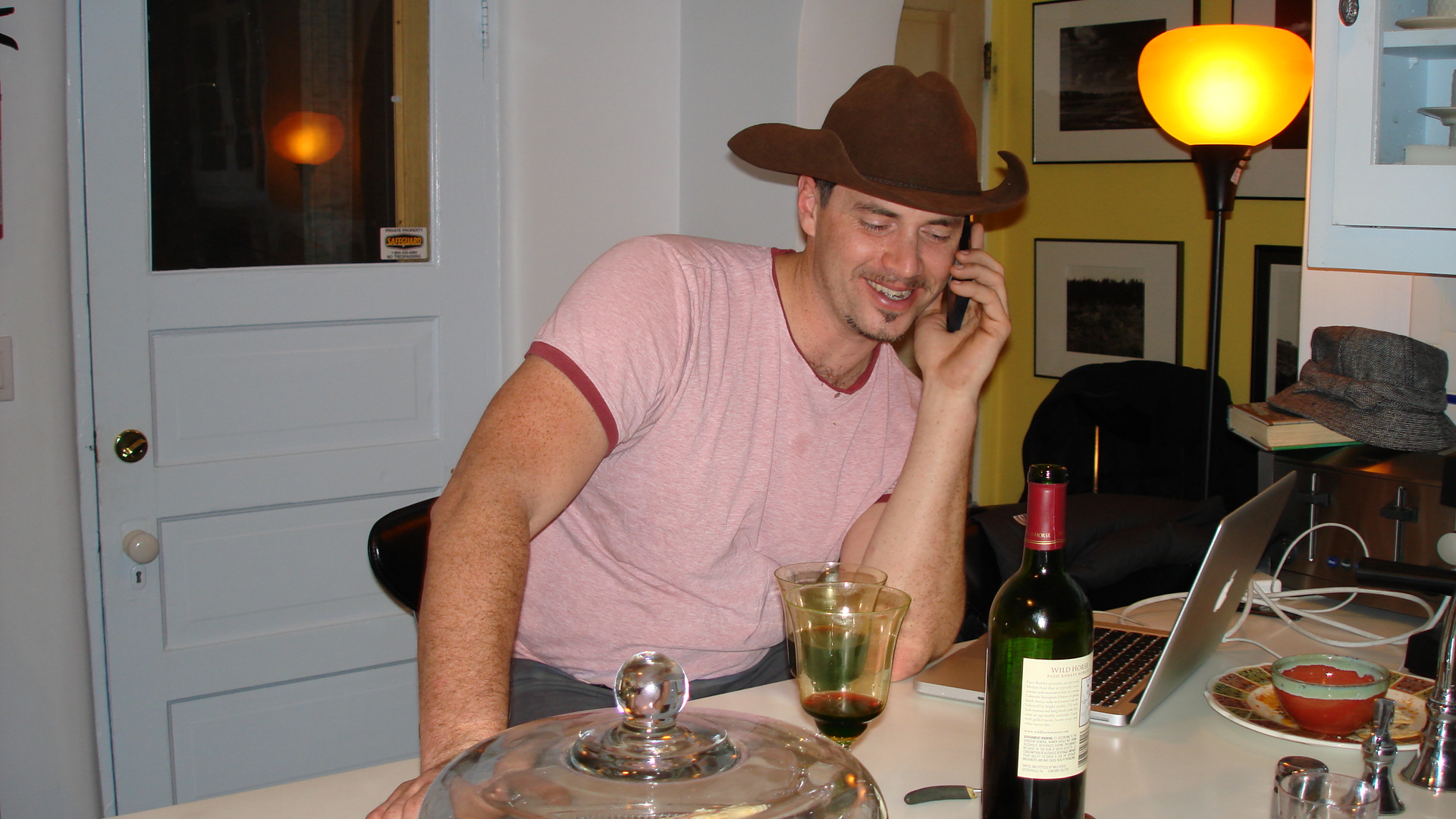
The course we choose to study doesn’t begin in school; it begins the moment we recognize that life is our teacher. I chose the course of love between a man and a woman. Yet all I’ve learned from Anais Nin, Joan Didion, and Lawrence Durrell, about love isn’t guiding me. I have to start over, and develop wisdom based on my own experiences.
How do I word his laughter, a long winded guttural explosion without pause, that struck my humor and I joined him, and our laughter sort collapsed into one, like making love or something, and it felt so good, I didn’t want to stop.
This is not a “How to Recognize Gaslighting” or a “Step-by-Step Guide to Gaslighting.” This is a true story, drawn from my experience.
I’ve written in the genre of Creative Nonfiction, integrating the events through dialogue, journal entries, and a third-person narrative. Within three locations, Santa Fe, New Mexico, Los Angeles, California, and Saratoga Springs, NY. Greta (me) exposes the mutilation gaslighting abuse inflicts on her emotions, psychology, mental and physical health, and her finances.
On adventures in lovingness. The course we choose to study doesn’t begin in school; it begins the moment we recognize that life is our teacher. I chose the course of love between a man and a woman. .
This is not a “How to Recognize Gaslighting” or a “Step-by-Step Guide to Gaslighting.” This is a true story, drawn from my experience.
I’ve written in the genre of Creative Nonfiction, integrating the events through dialogue, journal entries, and a third-person narrative. Within three locations, Santa Fe, New Mexico, Los Angeles, California, and Saratoga Springs, NY. Greta (me) exposes the mutilation gaslighting abuse inflicts on her emotions, psychology, mental and physical health, and her finances.

