Luellen Smiley is a creative nonfiction writer, author, columnist, and historian whose writing is deeply rooted in a controversial personal history. She is the daughter of Allen Smiley, a close friend, associate, and business partner of notorious Las Vegas gangster Benjamin “Bugsy” Siegel. Her father was sitting only feet from Siegel when Siegel was murdered in Beverly Hills on June 20, 1947.
That extraordinary childhood history became the foundation for Smiley’s first book, Cradle of Crime: A Daughter’s Tribute, published in 2017. The memoir explores what it was like to grow up as the daughter of a man connected to organized crime while trying to reconcile her love for her father with the secrecy, fear, and criminal world surrounding him.
Smiley’s work has appeared in publications including the New York Post, MORE Magazine, Southern California newspapers, and Authorlink. She wrote the newspaper column Smiley’s Dice—Adventures in Livingness, which earned a Blue-Ribbon Award from the California Newspapers Association for her Growing Up With Gangsters columns.
Her interest in her father’s history also led her to become a researcher and commentator on organized crime history. She has participated in television, radio, and documentary interviews.
Smiley’s next book, Gaslighting Greta, will be published this year. A personal story that reads like fiction. Her own website describes the project as exploring a woman whose life is destabilized by gaslighting and psychological manipulation.
Her writing career reflects a recurring theme: using personal experience and research to uncover the truth behind complicated relationships and extraordinary lives. From the secretive world surrounding her father and Bugsy Siegel to the deeply personal territory of Gaslighting Greta, Smiley’s work transforms difficult experiences into stories of survival, discovery, and ultimately reclaiming one’s voice.
Luellen Smiley is an author whose life has given her an unusual perspective on secrecy, manipulation, family loyalty, betrayal, and survival—and she uses that perspective as the raw material for her nonfiction storytelling.
I’ve written in the genre of Creative Nonfiction, integrating the events through dialogue, journal entries, and a third-person narrative. Within three locations, Santa Fe, New Mexico, Los Angeles, California, and Saratoga Springs, NY. Greta (me) exposes the mutilation gaslighting abuse inflicts on her emotions, psychology, mental and physical health, and her finances.
Official seal of City of Newark (Photo credit: Wikipedia)
I sent out a box of sweaters and jeans. It cost less than $10.00 priority. I then stopped by Ooh La La
consignment, and commented she would have gotten more from me, but they went to the Hurricane Relief.
” Where can I send clothes? I’ve got a ton.” She said. So I will pass on the address I have posted.
On the way home it struck me that thousands of families will go without Thanksgiving this year.
Newark is part of my roots, my mother being born there, and my roots are hurting for all of those people.
I’ve written in the genre of Creative Nonfiction, integrating the events through dialogue, journal entries, and a third-person narrative. Within three locations, Santa Fe, New Mexico, Los Angeles, California, and Saratoga Springs, NY. Greta (me) exposes the mutilation gaslighting abuse inflicts on her emotions, psychology, mental and physical health, and her finances.
I think of men as the solid substance in my life; the ones I’ve loved have always
acted as guidance counselors to my wavering fluid steps through the maze of decisions. If you’re a dreamer like I am, you know what I am talking about. We live in a blurred world of reality and what we imagine and the lines are blurry. It’s easy to cross-over to imagination and where that leads us can be more dangerous than the actual occurrence of events.
I’ve written in the genre of Creative Nonfiction, integrating the events through dialogue, journal entries, and a third-person narrative. Within three locations, Santa Fe, New Mexico, Los Angeles, California, and Saratoga Springs, NY. Greta (me) exposes the mutilation gaslighting abuse inflicts on her emotions, psychology, mental and physical health, and her finances.
Once again after a lengthy and gushing nourishment of his body and mind, I return to this mask of myself. Sunken eyes and droopy cheeks; a hollowness that overwhelms the spirit.
The insomnia of separation from a man’s thunder. When his shoulder hooks my head, and tweaks my worries like soft bread. The mind that directs me when I am driving directionless, and maps my journey, and to walk beside me, a guardian of my fragility. The voice that encourages me, and applauds my success, rather than let it drip from jealously or preoccupation.
More to come.
How the laughter erupts in a moment of spontaneous passion.
My observation of his secret revealed, unknowingly.
The gestures of him shaving, and the modest vanity after I re-wardrobe him.
Feeling his eyes in a crowd, undressing or admiring me, for some folly or expression.
The humor he finds in my misguided attempts to open bottles, and packages with a dull spoon,
and figure out electronics.
How he will pardon and pamper my unwarranted fears of stalkers, misplacing my Progressive Prada glasses, and falling down the slippery wooden stairs.
The man whose balance evens my wrinkles.
Let’s the light into my eyes.
Opens my shell with wonder and tenderness.
WHY I write this is because the danger of reversing the purest form of love is tempting me. This dragon argues with me for dressing up, for believing in love, for wanting romance, for giving the guy next to me a chance, and for dating. She tries to stop me from waving at neighbors, for whistling winds of change, hope, and all those iridescent rainbows I lived with my man, and now are like submarine weights to lift each day.
It’s like taking down the Christmas Ornaments, and returning to the blemishes of winter.
Yes, the dragon sees me in the mirror, and maybe you, but we cannot allow her to trample over our feminine skin.
I’ve written in the genre of Creative Nonfiction, integrating the events through dialogue, journal entries, and a third-person narrative. Within three locations, Santa Fe, New Mexico, Los Angeles, California, and Saratoga Springs, NY. Greta (me) exposes the mutilation gaslighting abuse inflicts on her emotions, psychology, mental and physical health, and her finances.
WEEKS BEFORE RUDY’S, insultingly witty and honest mother passed away, she looked at me over the rim of a Lemon Drop at the Ripe Tomato in San Juan Capistrano her unfading brown eyes acutely aimed at me.
“You’re too emotional ; it’s going to be your ruin.”
“It’s passion Harriett, and part of my character.”
“It will do you no good. You have to listen to me. I’m 97!”
Harriett learned early on how to wear pearls and refuse pointless suffering.
I write this after a wakened sense of transformation. I didn’t have to go far, or pay any money for this mud bath. It was after reading an email from my former almost engaged to man.( me never!) and the concentrate of my last standing hope for truth between us was treated as a formality.
So my emotions have been replaced with a cooler temper for both love and sensitivity. That’s okay, the real danger is in developing into a cynic; tossing out jazzy lines about, how a man can destroy your life, and all of that. There’s a Middle Aged group of women “men suffrages’’, that live in Santa Fe. Sometimes I see myself in that group, chanting, doing yoga, going to lectures, out to lunch.
What percolated this epiphany? I’ve never been emotionally damaged by a man. There have been sorrowful break-ups, but when we split up, all eight of the men became close friends over the years.
My gal posse offer advise; light a match to his love letters, treat yourself to all therelaxation rituals, and spa treatments, take a trip to visit them and indulge in friendship, and joining Match.com. You see, everyone knows your voice, and even if your thousands of miles away, friends can hear despair.
It’s all very similar to “A Book of Common Prayer .” Witty Joan Didion , the ways she says, something I am paraphrasing, “I’m not calling at a bad time am I Charlotte? You’re not in the middle of a nervous breakdown or anything? “
I wonder if you lie to yourself it gives you an edge on how to lie without conscience. Seems to be in vogue or something. That is the fault-line innocence and adulthood. Once you cross that line you know it. I’ve always been told I was a late bloomer in everything!
I’m on my way out the door; I rented the house for twelve days. The big white Suburban just drove up. A wide shouldered, grinning forty something just got out of the car. I see a woman, then the two teenagers, and a dog! They didn’t tell me about the dog, but it’s a little limply Cocker Spaniel, so I wave,
“Hi, come in I’ll show you around.”
To be continued. Hariett and I pictured in 2004 at a San Diego Opera Gala.
I’ve written in the genre of Creative Nonfiction, integrating the events through dialogue, journal entries, and a third-person narrative. Within three locations, Santa Fe, New Mexico, Los Angeles, California, and Saratoga Springs, NY. Greta (me) exposes the mutilation gaslighting abuse inflicts on her emotions, psychology, mental and physical health, and her finances.
I moved in with my Dad when I was thirteen years old. My mother had just passed away, and I arrived with innocence and untrained cooking skills. Mom was an Irish Catholic meatloaf and corn-beef cook. Dad was a Russian Orthodox raised moderate vegetarian, and decided to hire a chef to teach me how to cook.
I came home from school one day, and found Caesar in the kitchen. He was a stand-in for Paulie in the Godfather, only he had curly black hair, and apple red cheeks. Caesar was dressed in a black suit, white shirt, and an apron that fell short of fitting him. Dad instructed Cesar to teach me how to make salads, baked fish, and spaghetti with oil and garlic. Everyday after school, Caesar was in the kitchen preparing dinner for us, and I stood beside him, observing his chubby knuckled fingers, slice and chop vegetables. We started with what Dad ordered; a meal in a salad, and later coined it Farmer’s Chop Suey. The salad was not just prepared, it was a decorated masterpiece when he finished. During the preparation, I noticed beads of sweat on Caesar’s face, and a jittery nervousness, surfaced just before my father arrived home, “What do you think? Will Dad approve?” He asked. I assured him Dad would love the salad. Cesar and I became pals, and waited anxiously for Dad’s arrival. He wasn’t all that agreeable. Fastidiousness and perfection are common traits amongst gangsters. Usually, Dad remarked there wasn’t enough garlic, or there were too many croutons, and Caesar would swiftly correct the complaint.
After Cesar went home, Dad would talk to me about food, and how everything starts in the stomach, and how the vegetables have to be scrubbed, and the seeds removed. Three or four times a week Dad dined out, and he didn’t order salads. He frequented Italian restaurants, and his favorite was Bouillabaisse, with a side of pasta. I never saw him enjoy any food as much as Borsch with sour cream, and smoked white fish. That was his favorite childhood meal. His father was a Orthodox Butcher, a very scared skill that requires a thorough understanding of Kosher preparation.
About six months had passed, and I came home one day and Cesar wasn’t there. Instead I found my father in a rage. I asked about Cesar and he told me it was none of my business, and to start preparing dinner. After my first salad preparation, Dad applauded my presentation, and assured me everything he was teaching me would serve me later on in life. He explained he had to be harsh and demanding, because he wanted me to be able to take care of myself properly.
I developed into a moderate vegetarian and have used that salad as a blueprint for most of my meals. Now I create a variety of salads, and a lot more ingredients: like white beans, garbanzos, walnuts, tuna, or shrimp, artichokes, sun-dried tomatoes etc. My friends call me a free-style cook because I only use recipes when I’m making soups or stews.
I was very fortunate to grow up with a father who spent hours teaching me what I would need to know in life. This is something you won’t read or see in a film about growing up with gangsters.
I’ve written in the genre of Creative Nonfiction, integrating the events through dialogue, journal entries, and a third-person narrative. Within three locations, Santa Fe, New Mexico, Los Angeles, California, and Saratoga Springs, NY. Greta (me) exposes the mutilation gaslighting abuse inflicts on her emotions, psychology, mental and physical health, and her finances.
I’ve written in the genre of Creative Nonfiction, integrating the events through dialogue, journal entries, and a third-person narrative. Within three locations, Santa Fe, New Mexico, Los Angeles, California, and Saratoga Springs, NY. Greta (me) exposes the mutilation gaslighting abuse inflicts on her emotions, psychology, mental and physical health, and her finances.
Many years ago, after my friend, Voice of Reason read my book of poems, he said to me, “ I was a little embarrassed, it was like looking at you naked.”
Truth, it’s almost become an abstraction of the truth. Where did it go? Does it fade with age, or get reshaped by our life experiences? If everyone is lying, then why not join up? I was never a convincing liar. Yes I can stumble through incendiary confrontations, like you have to when, you’re attacked for a simple mistake, filling out applications, balancing money, returning items. I am talking about the truth in relationships, your art or business. It’s tempting to reinvent the truth. That is why it is one of the Ten Commandments.
I could write about the last road trip to San Diego, and the little sign that said Jack Ass Acres, or about all the new gangster movies, or what I’ve observed happening in the interior world of people I’ve met. The truth is, that one of my foremost characteristics is truth, and that is what speeds up the pen when I am writing, and talking, because I like to dig out the top soil and get to the roots. Here goes.
Since my lover left, in a hurry, practically skidded out the driveway, back in January, mornings and evenings feel like thunder storms in my heart. These are the moments that keep infringing on my perception. It’s like being crippled emotionally, leaning on the old crutches of what he did wrong, what I did wrong, what the world did wrong. Answers percolate, but they never satisfy the gap between the truth and my imagination. So, as any hot blooded Russian Irish woman would do, after five months of reclusive living, I got very angry, cynical, anxious, depressed, offensive, impatient, and talked myself out of the gift of life.
In this precarious state of mind, the tiniest disappointment inflates the size of a monster, and the big disappointments, just send me back to TCM to Robert Mitchum week. As it happened, the big billboard answer came on a lovely breezy night, sitting on the portal of Geronimo, with White Zen and Rudy. My cynics and sharp-tongued wit drew a lot of laughter, and my company appreciated the humor, but I was reminded of something, that wasn’t funny, it was frightening.
I was imitating those women, whom I met, every Thanksgiving when Dad pulled me into a be dazzling party scene at the home of his attorney. Every year there was this one woman who sat at the bar and mixed life’s lessons with the worst elements of human behavior. She was the queen of cynicism, and at the time, I was keenly observing of her, and sympathetic, painfully attached to understanding what she was so angry about. I had not been hurt yet.
The final siren of my digression came while Rudy and I were driving out to San Diego. Somewhere along Highway 17, the fields turned into rows of Saguaro Cactus. They didn’t look like Cactus; I perceived them as hands, flipping me off! I turned to Rudy and said, “You know my head is not working properly.”
Landing in San Diego meant I would meet with my GP at Scripps Clinic for the routine round. The visit lasted longer, I told her, that my real sickness was mental. She took a serious interest in my babbling, and emptying out the garbage I’d held back for so long. No, I have not been on any joy pills, or anxiety pills, or anything, so when she suggested a prescription to add, serotonin to my brain, I accepted her advice.
“Do you see a lot of patients with these symptoms?
“Eighty percent of my clients come in for anxiety and depression. You’re not alone.”
Today is day three of pills, and the roses are waving at me. My motor is running smoother, and I am not angry. This is an arguable confession, because I used to sneer at pill poppers for corrective behavior. Psychotherapy was instrumental in my life at one time, and I will use it again when I meet the right therapist.
Truth, about facing what we need to edit and revise cannot be shaded or ignored. If we’re not honest with ourselves, why should we be with others?
It is a day later, and while I was reading the WSJ online, I landed on this article; Why We Lie? Dan Ariely
“We tend to think that people are either honest or dishonest. In the age of Bernie Madoff and Mark McGwire, James Frey and John Edwards, we like to believe that most people are virtuous, but a few bad apples spoil the bunch. If this were true, society might easily remedy its problems with cheating and dishonesty. Human-resources departments could screen for cheaters when hiring. Dishonest financial advisers or building contractors could be flagged quickly and shunned. Cheaters in sports and other arenas would be easy to spot before they rose to the tops of their professions.
But that is not how dishonesty works. Over the past decade or so, my colleagues and I have taken a close look at why people cheat, using a variety of experiments and looking at a panoply of unique data sets—from insurance claims to employment histories to the treatment records of doctors and dentists. What we have found, in a nutshell: Everybody has the capacity to be dishonest, and almost everybody cheats—just by a little. Except for a few outliers at the top and bottom, the behavior of almost everyone is driven by two opposing motivations. On the one hand, we want to benefit from cheating and get as much money and glory as possible; on the other hand, we want to view ourselves as honest, honorable people. Sadly, it is this kind of small-scale mass cheating, not the high-profile cases, that is most corrosive to society. “
I’ve written in the genre of Creative Nonfiction, integrating the events through dialogue, journal entries, and a third-person narrative. Within three locations, Santa Fe, New Mexico, Los Angeles, California, and Saratoga Springs, NY. Greta (me) exposes the mutilation gaslighting abuse inflicts on her emotions, psychology, mental and physical health, and her finances.
I’m sitting outside in a flowerless garden because no matter how many flowers I plant, they only last one season, if that long. The garden is erupting out of its winter coat, and lime green buds will have to do for now. The sky that seals me in is licked with revisionary hope; the kind that comes back laundered and fresh after a recess from disbelieving in the possibility of a life correction.
Behind the garden, a neighbor is drumming a soft tribal beat, and on Palace Avenue, the choir is singing inside the Episcopal Church. Between these distinctive tastes, there are sparrows fluttering from fan to nest to fountain. The chattering sounds like, “here she comes, don’t come over here, get out of my nest, watch out for that fat crow.”
It’s a mind drift, to be caught in such unstructured beauty, away from the manuscripts, remotes, doors, and phones. It’s like being on an island out here. Everything we bring into our experience can be revised; a work of art, a way of speaking, thinking, portraying yourself, your way of loving, or lusting, and we all know about appearance, because our society shoves it down our throat.
Look at the possibilities in revising our patterns of behavior. What we accepted 20 years ago doesn’t mean it’s carved in our organs. We can transmute. The interior life needs lifting and tightening, just as our mind and muscles do. You won’t find any immediate remedy, or advertisements, or books on the subject because we’re consumers of products that change and revise only the visible tangibles. I wonder if I traded in my 11-year-old Land Rover for a new one if I’d be really happy, and for how long?
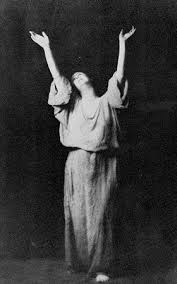
ISADORA DUNCAN
My homework for the next few weeks. Life corrections begin with edits, then revisions, and then you have a new story!
I’ve written in the genre of Creative Nonfiction, integrating the events through dialogue, journal entries, and a third-person narrative. Within three locations, Santa Fe, New Mexico, Los Angeles, California, and Saratoga Springs, NY. Greta (me) exposes the mutilation gaslighting abuse inflicts on her emotions, psychology, mental and physical health, and her finances.
The diary my mother never wrote is from what I read in the FBI surveillance reports, newspaper articles and what my father told me. My mother’s emotion’s and thoughts erupt from years of research, intuition and imagination. When I was eleven she gave me a diary. I’ve been writing ever since. I wanted my daughter or son to understand who I was, in case I died young like her. Instead I became dedicated to writing not childbearing.
I think every mother should keep a diary for her children.
Manhattan, December 1944
I am dancing at the Copacabana Night club for the next few weeks. This tiny smoky club is filled with many interesting people. It’s different from any modeling job.
I’m tired after working all day and night, and then taking the train back home to West Orange. Some of the girls are staying at the Barbizon Hotel, so I may also if it’s not too expensive.
Last night, a group of men were seated in the front row. I didn’t know who they were, but this one stared at me all through the show. He sent a bouquet of long-stemmed roses backstage and asked me to meet him for a drink.
When I declined, he was very insistent, and so persuasive I gave in. Later on, I found out he was seated with Frank Costello, the gangster. His name is Allen, and he asked me to dine with him the following night. I hesitated again, and I’m not sure why. He made me laugh and entertained everyone at the table.
January 1944
A talent agent from Hollywood came to the Copa to see all of us dance. Mum is so excited she is already telling everyone in town, I hate when she does this.
Allen called and I agreed to dine with him. We went to El Morocco. He knows so many people. He says he’s in the film business, but there’s talk amongst the girls that he’s a gangster.
March 1944
I’m going to Hollywood for an audition. Swifty Lazar, the one that came to the Copa to see our show, said MGM is signing musical actors. They liked my photos. Allen lives in Hollywood, and is handling all the details. He’s become very interested in my career. It’s all so sudden. There isn’t time to think.
April 1944
I spent a week in Hollywood. Allen drove me all over the city, took me to Santa Monica to see the ocean, to the nightclubs on Sunset Boulevard, and Beverly Hills.
It’s like a dream. I love the city, and MGM has offered me a contract. Again, Allen is helping me make decisions and understand the film business. I don’t know what he does, but he carries a lot of cash. He gets very disturbed when I question him. I met his friend Benjamin Siegel. They are both so handsome and get anything they want.
Summer 1944
We are moving out to California next month. Allen found an apartment in Beverly Hills for us, near where sister Pat can go to High School. She’s so excited. One of the models told me Ben Siegel is a gangster. I wish Allen would open up to me more.
When we moved, our new apartment was on a beautiful street. The apartment is smaller than home, and Mum misses her garden, but she seems happy. She found a Church she likes. She is going to learn to drive.
I have already learned to drive and am saving for a car. Allen knows someone who sells cars, and said he can get me a very good deal. Sometimes, I don’t hear from him for a week, and then he shows up on the studio set with presents.
Allen, Ben and George Raft were arrested for bookmaking. George called and said it wasn’t like the papers wrote, and that Allen would call me when he could.
I’m not to discuss this with anyone. I hid the paper from Mum.
George took me out to dinner. He wants me to be in a movie with him called Nocturne. He’s very fond of Allen and said not to believe what I read in the papers.
Next week we begin filming “Ziegfeld Follies.” Fred Astaire is magnificent to watch. Life is spinning. There is no time to read, or even think. Everyone in Hollywood wants to be a star. I still daydream of going to college one day.
November 1944
I am in love with Allen. There is no turning back. He is Jewish, and his family lives in Winnipeg, Canada. He won’t talk of them, but said he loved his mother.
I wonder so often about his life, but I cannot ask questions. Maybe one day he’ll trust me more. He’s suspicious of everyone. He said he’s going to marry me when his life settles down.
I’ve written in the genre of Creative Nonfiction, integrating the events through dialogue, journal entries, and a third-person narrative. Within three locations, Santa Fe, New Mexico, Los Angeles, California, and Saratoga Springs, NY. Greta (me) exposes the mutilation gaslighting abuse inflicts on her emotions, psychology, mental and physical health, and her finances.
Morning comes after two cups of French Press. I sit here at the desk, peeking out the glass door to the shady side of the street. I do not know where I will be living, what I will be doing, or who I will be doing it with next month. Uncertainly, I move in and out of situations and get swept up in my ideas and fantasies. I buy and sell, make and remake, move-in, move-out, leave homes, careers, friends and relationships. I move out of comfort
art nouveau dome of light (Photo credit: e³°°°)
and into uncertainty because it feels more like home moving than staying in one place.
I have to put the words on the paper and look at it to make it real.
Raising a family, sprouting barriers and responsibilities might have changed me, but I didn’t. I’m unchanged in some ways, still running through the hallways of the hotels, gardens, and neighborhoods. Do you know what I mean?
I’ve written in the genre of Creative Nonfiction, integrating the events through dialogue, journal entries, and a third-person narrative. Within three locations, Santa Fe, New Mexico, Los Angeles, California, and Saratoga Springs, NY. Greta (me) exposes the mutilation gaslighting abuse inflicts on her emotions, psychology, mental and physical health, and her finances.
Sometimes I skim through the works in progress folder and stumble upon something I never finished. This is from that folder, started in 2004.
They make the best friends, and you never have to wonder what it’s like to make love to them… lovers from the past are not forgotten, and if they are, then they were not true loves, they were just flings. In my life, lovers have remained in my heart in a separate compartment, just as their letters, and photographs and mementos are kept in separate stationary boxes in my trunk.
Some lovers keep in touch with me, and others vanished after the break-up. Last month two former lovers contacted me. One from 1977, and one in 1984. I have always said one man is not enough; I need three or four circulating my life. Even if I was married, my mantra of ‘the more men the better’ would not be negotiable, and today, that holds true. I’ve been advised by Rudy, that men will read this and assume that I am intimate with my men friends; and I said not all men will, and he said, oh yea, that’s how men think.
This is a story of lovers reuniting, in different cities than where they met, older, refined in sentiment, and loved in a capacity greater than they once were, as lovers. To be continued.
I’ve written in the genre of Creative Nonfiction, integrating the events through dialogue, journal entries, and a third-person narrative. Within three locations, Santa Fe, New Mexico, Los Angeles, California, and Saratoga Springs, NY. Greta (me) exposes the mutilation gaslighting abuse inflicts on her emotions, psychology, mental and physical health, and her finances.