Luellen Smiley is a creative nonfiction writer, author, columnist, and historian whose writing is deeply rooted in a controversial personal history. She is the daughter of Allen Smiley, a close friend, associate, and business partner of notorious Las Vegas gangster Benjamin “Bugsy” Siegel. Her father was sitting only feet from Siegel when Siegel was murdered in Beverly Hills on June 20, 1947.
That extraordinary childhood history became the foundation for Smiley’s first book, Cradle of Crime: A Daughter’s Tribute, published in 2017. The memoir explores what it was like to grow up as the daughter of a man connected to organized crime while trying to reconcile her love for her father with the secrecy, fear, and criminal world surrounding him.
Smiley’s work has appeared in publications including the New York Post, MORE Magazine, Southern California newspapers, and Authorlink. She wrote the newspaper column Smiley’s Dice—Adventures in Livingness, which earned a Blue-Ribbon Award from the California Newspapers Association for her Growing Up With Gangsters columns.
Her interest in her father’s history also led her to become a researcher and commentator on organized crime history. She has participated in television, radio, and documentary interviews.
Smiley’s next book, Gaslighting Greta, will be published this year. A personal story that reads like fiction. Her own website describes the project as exploring a woman whose life is destabilized by gaslighting and psychological manipulation.
Her writing career reflects a recurring theme: using personal experience and research to uncover the truth behind complicated relationships and extraordinary lives. From the secretive world surrounding her father and Bugsy Siegel to the deeply personal territory of Gaslighting Greta, Smiley’s work transforms difficult experiences into stories of survival, discovery, and ultimately reclaiming one’s voice.
Luellen Smiley is an author whose life has given her an unusual perspective on secrecy, manipulation, family loyalty, betrayal, and survival—and she uses that perspective as the raw material for her nonfiction storytelling.
My first experience with antisemitism was at twenty years old. I was working for a Bank in Beverly Hills in the loan department. One day my supervisor gathered us around and told a joke. I cannot remember it exactly, I do remember that he compared Pizza in the oven to Jews in the Holocaust gas chambers. I told my father. He ordered me to call the President of Gibraltar S & L and repeat the comment. The president was Jewish. I did so. I was assigned a new supervisor, and the supervisor was not fired. .
When I moved to San Diego in 1983, I witnessed derogatory comments about Jews, I don’t look what is the stereotype Jewish female, so people assume I am not. My father had passed and wasn’t there to advise me. If I was in a social or business situation, and offensive Jewish comments were made, I remained silent and never went back to whatever event I had joined. I was more interested in what people thought, then reprimanding them.
That all changed over the years, and I am emboldened to announce my Jewish heritage. I still hear that vapid response, ” I have a really good friend who is Jewish.” Or “You don’t look Jewish.”
I am not prepared for what has mobilized into a national campaign promise from some politicians, antisemitism. What? Are we in Germany? Who started this and who will end it? Are Jews protesting? I don’t see it. How many non-Jews celebrated the return of the hostages, or the end of the Gaza War? Why hasn’t a film been made about this historical event. I hope and pray I’m wrong, but antisemitism is in vogue. And who follows trends, the youth.
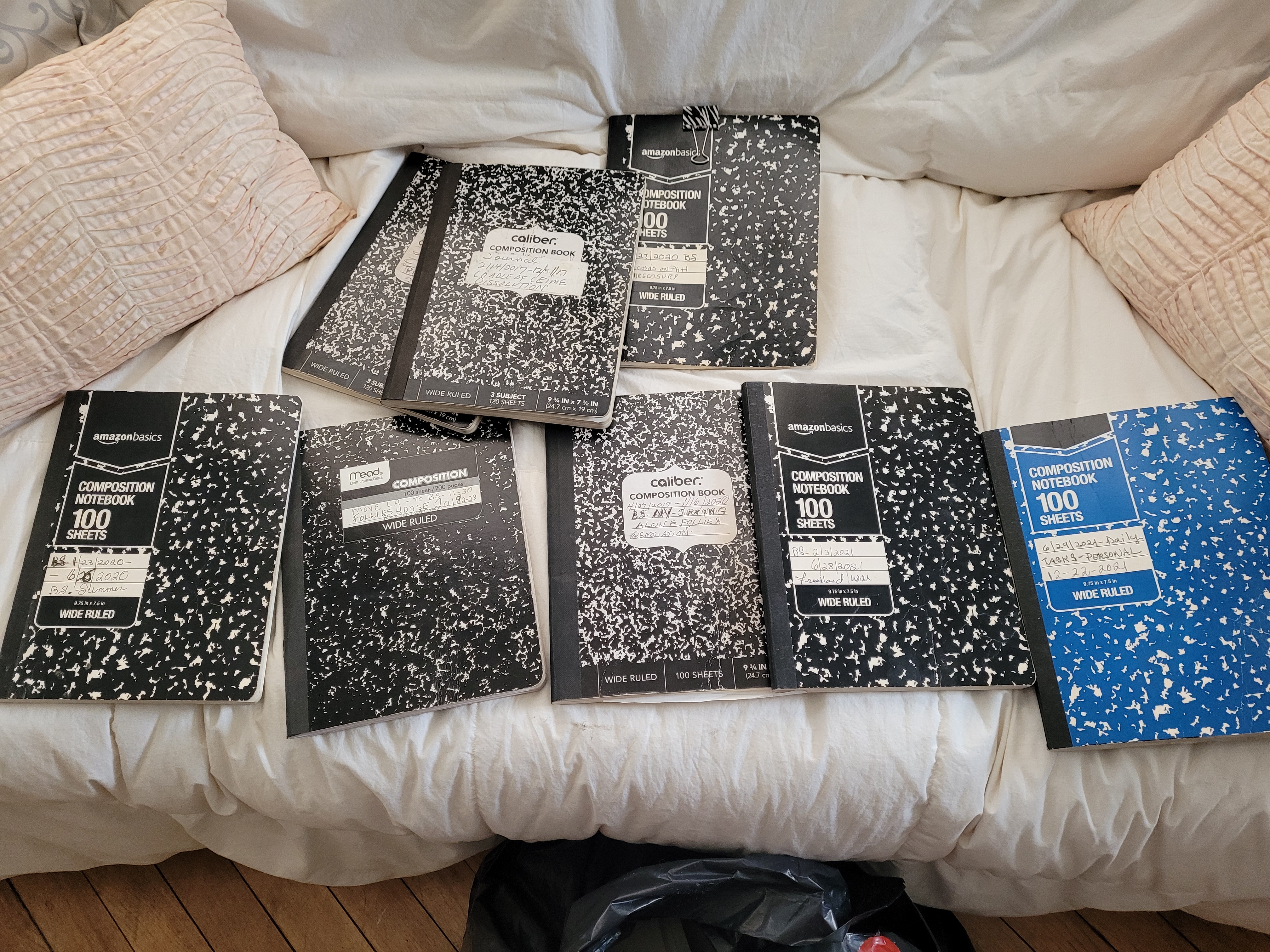
I’ve written in the genre of Creative Nonfiction, integrating the events through dialogue, journal entries, and a third-person narrative. Within three locations, Santa Fe, New Mexico, Los Angeles, California, and Saratoga Springs, NY. Greta (me) exposes the mutilation gaslighting abuse inflicts on her emotions, psychology, mental and physical health, and her finances.
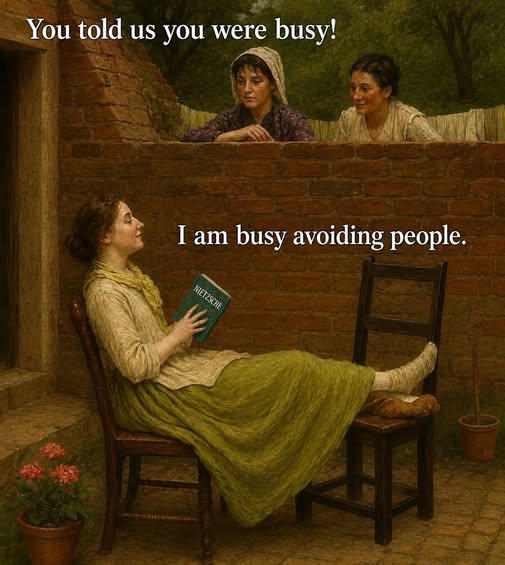
FEEL, THINK, AND REACT. Tumbling through all the transitory advice forces me to examine more closely whom to believe. I’ve never been a leader, nor a follower, I walk in between, trying to pave a pathway to peace of mind. Maybe that is unattainable as I am in a cultural, political, medical, financial, and socially reimagined world. It reminds me of being a teenager when life was questionable, and confusion was like a stinging bee we couldn’t swap away. So, in my senior year in high school I started writing in a notepad. Gradually, almost supernaturally I withdrew from my gang, and spent the weekends in a Cafe with adults, or in the library. The loner label pleated my pants.
Loners were portrayed in film, books, and art as mysterious, untouchable icons. They even became romanticized as people of superior cerebral awareness. I’ve met and gained friendships with several over the last few decades. It may be that loners have thin skin, they absorb the ethereal and reality, so in many situations the absorption is too weighty and the loner cuts loose before the party is over, cancels at the last minute, and doesn’t answer the phone. Talking, engaging, evaporating into another person feelsherculean for me sometimes.
Does isolation relate to the intensification of rancorous physical assaults in streets and shops, which is my pestering pursuit today. Are all these perpetrators unloving, and live amongst the unloved? People are shot because their hamburger wasn’t properly served on time, or they have a different opinion. I was living in Los Angeles in 2018, and one day driving down Pico Blvd I noticed a sign, “Walk in Anger Management.” Maybe we need to convert a few drive-thru food diners to Anger Management centers. It sounds amusing. If I was financially able, I’d open one in every major city.
WHAT HAS HAPPENED TO THIS CULTURE is unimaginable for a woman who grew up in the Love and Peace generation, or even into the eighties and nineties. We didn’t shoot one another, maybe a fist fight, or a shouting match, but not murder in cold blood.Could this macabre movement be abated by friends who love you more when you are gentle and kind? It cannot be that simple, or could it? When I used to rage about some occurrence that tattered me personally, Dodger would come to me and say,
‘Greta put your guns down,’ that always made me laugh, and then we’d talk out what triggered my fury.
THE COMFORT OF EXHIBITINGlife on paper. It is not the act of writing with pen and paper moving along at a steady rhythm; it’s the activation of the heart and mind, collaborating to unravel the relevant from the irrelevant. To reach this state of matrimony, a writer doesn’t need a Tuscan Villa or an English Castle, but experiences that flake off the skin and shake out relevance. What I’ve rediscovered is that without a lot of stuff to organize, the mind is free to think, more time to create and effect essential decisions. Narcissism is sacrificed and replaced with more visceral makeup. Minimalist living has erased my past, and that is as transforming as day to night.
PUZZLE OF SOLITUDE will always be a puzzle because our lives, solo or mated, are puzzled by too much solitude, or not enough. There is an inner exploration happening, unfolding like spreading new sheets on my bed, that solitude has befriended me all my life, in the best of times and the tedious. I have to find the frolic and follies in the world that I created. I have to laugh alone, so I watch screwball comedies, seek humor in my irregularities; wearing a sweater inside out, pouring coffee into a wine glass for a cocktail, and chuckling when I keep forgetting where I left my phone. Laughing at myself is a funnel that leads to writing.
I’ve written in the genre of Creative Nonfiction, integrating the events through dialogue, journal entries, and a third-person narrative. Within three locations, Santa Fe, New Mexico, Los Angeles, California, and Saratoga Springs, NY. Greta (me) exposes the mutilation gaslighting abuse inflicts on her emotions, psychology, mental and physical health, and her finances.